Refractor Telescope
Refractor telescopes are a type of optical telescope that uses a lens to collect and focus light. These telescopes are among the oldest and most popular types of telescopes, and they are used to observe distant objects in the sky such as stars, planets, galaxies, and nebulae. Here are some great options available.
Sort
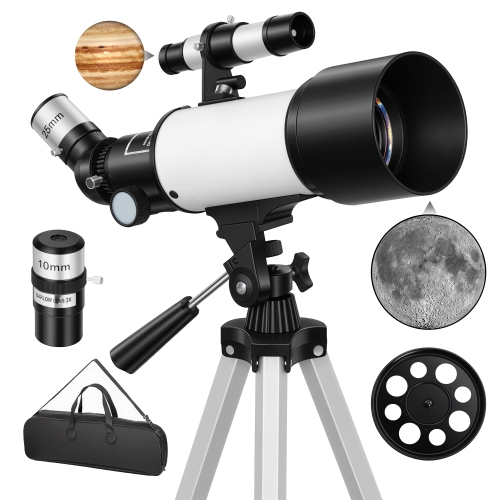
![GREEN SCENIC [Entry-Level Stargazing/long-Range Viewing] 90X High-Power Monocular Telescope 360MM Focal Length Refraction Portable Astronomical](https://multimedia.bbycastatic.ca/multimedia/products/500x500/193/19326/19326211.jpeg)
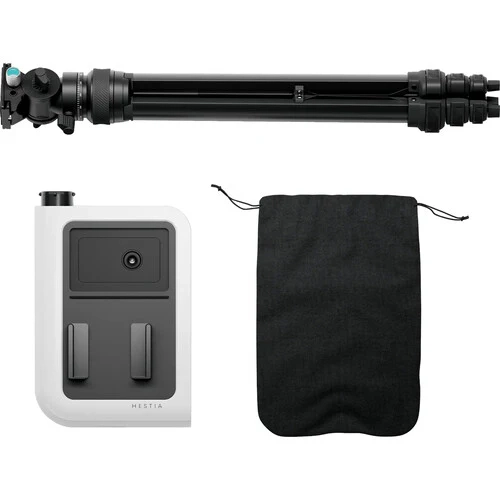
Sharp views from lunar craters to distant landscapes
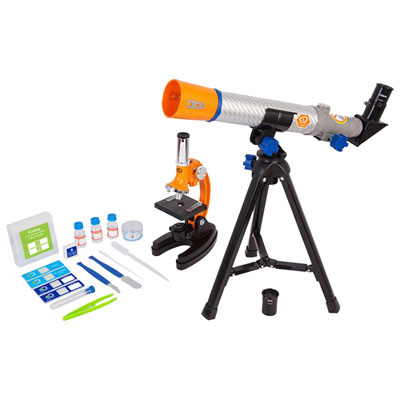
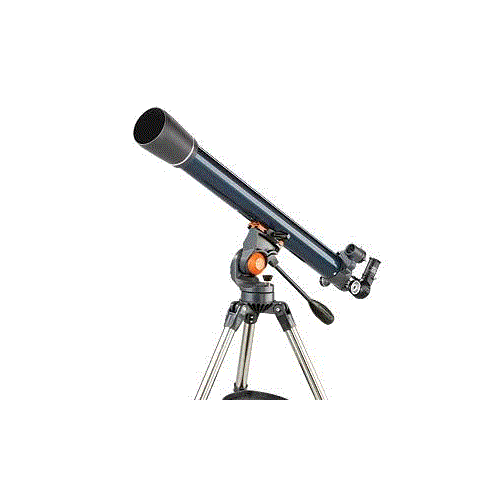
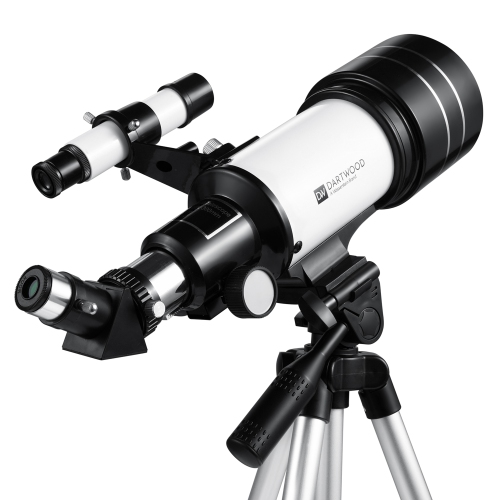
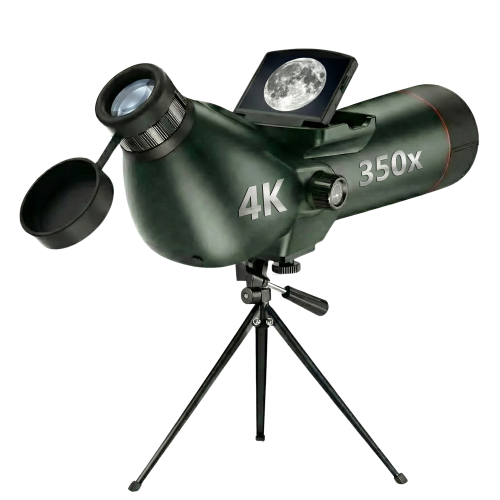
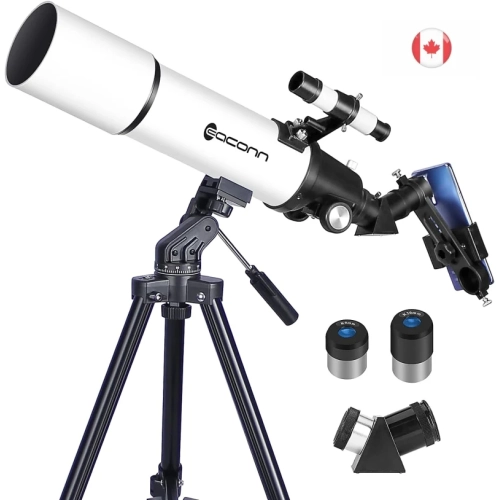
A refractor telescope uses glass lenses to gather and bend light, bringing distant objects to focus at the eyepiece. Unlike a reflector telescope, which uses mirrors, a refractor has a primary objective lens at the front and an eyepiece at the rear of a sealed optical tube. This straightforward design makes refractor telescopes popular with beginners, families, and experienced observers who appreciate sharp, high-contrast views with little maintenance. The Moon is an especially rewarding first target: craters, ridges, and shadowed edges become more distinct as the light changes across its surface. On clear evenings, a refractor can also reveal the rings of Saturn, the moons of Jupiter, bright star clusters, and the changing positions of prominent planets. During the warmer end of the observing season, it can be enjoyable to set up in a backyard or at a cottage, while cooler months often bring crisp, steady skies and earlier opportunities for stargazing. A refractor telescope can also be used during the day with the right accessories for viewing distant landscapes, wildlife, boats, or architectural details, making it a flexible choice for anyone who enjoys both astronomy and nature observation. For additional information about how lenses and other optical systems work, explore Telescope Optics.
When choosing a refractor telescope, start with the intended use and the observer’s experience level. Aperture, or the diameter of the objective lens, affects how much light the telescope can collect and how much detail it can show. A smaller, lighter aperture is often easier to carry and set up, making it well suited to casual stargazing, children learning the night sky, or anyone who wants a telescope that can be used without a lengthy preparation routine. A larger aperture can gather more light and support more detailed views, though it may add weight and require a sturdier mount. Focal length also matters: a longer focal length generally suits lunar and planetary viewing, while a shorter focal length can provide wider views of star fields and bright clusters. The mount deserves just as much attention as the optical tube. A stable tripod helps keep the image steady, and an adjustable mount makes it easier to track objects as they appear to move across the sky. Some mounts are manually controlled for a hands-on experience, while others include electronic assistance for locating and following celestial targets. Check what is included, since useful accessories may include eyepieces with different magnifications, a finder scope, a diagonal for more comfortable viewing, a carrying case, or a smartphone adapter. Magnification is not the only measure of performance; clear optics, a solid mount, and a practical field of view usually contribute more to an enjoyable observing session than very high advertised power. It is also worth considering storage space, portability, and how quickly the telescope can be taken outdoors. A design that can be carried outside in one trip is more likely to be used regularly than one that stays packed away.
Refractor telescopes are a thoughtful gift for curious children, teens, families, and adults who enjoy learning through direct observation. They can turn an ordinary evening into a memorable activity: a patio becomes an observing station, a notebook records the Moon’s changing appearance, and a few minutes of patience may reveal a planet that was invisible at first glance. Beginners will often appreciate a model with simple controls and a manageable setup, while more experienced observers may look for improved colour correction, interchangeable eyepieces, a larger aperture, or compatibility with photography accessories. Achromatic refractors use a lens design that reduces, but may not completely eliminate, colour fringing around very bright objects. Apochromatic refractors use more advanced optical designs and specialized glass to provide stronger colour correction, which can be valuable for detailed planetary viewing and astrophotography. Entry-level models may show a faint purple or blue edge around the Moon or bright stars, particularly at high magnification; this is known as chromatic aberration and varies with the optical design and viewing conditions. For the clearest results, allow the telescope to adjust to the outdoor temperature, place it on firm ground away from sources of vibration, and avoid aiming over rooftops, pavement, or other surfaces that release stored heat. Let your eyes adapt to darkness, use a dim red light when reading star charts, and begin with a low-power eyepiece before moving to higher magnification. A refractor telescope does not need complicated alignment of its lenses in normal use, and its enclosed tube helps keep the internal optics protected, but the front lens should still be handled carefully and cleaned only with appropriate optical materials. With sensible care and realistic expectations, a refractor can provide years of approachable celestial viewing, whether it is brought out for a planned observing session, shared at a family gathering, or kept ready for those unexpectedly clear evenings when the stars seem especially close.
When choosing a refractor telescope, start with the intended use and the observer’s experience level. Aperture, or the diameter of the objective lens, affects how much light the telescope can collect and how much detail it can show. A smaller, lighter aperture is often easier to carry and set up, making it well suited to casual stargazing, children learning the night sky, or anyone who wants a telescope that can be used without a lengthy preparation routine. A larger aperture can gather more light and support more detailed views, though it may add weight and require a sturdier mount. Focal length also matters: a longer focal length generally suits lunar and planetary viewing, while a shorter focal length can provide wider views of star fields and bright clusters. The mount deserves just as much attention as the optical tube. A stable tripod helps keep the image steady, and an adjustable mount makes it easier to track objects as they appear to move across the sky. Some mounts are manually controlled for a hands-on experience, while others include electronic assistance for locating and following celestial targets. Check what is included, since useful accessories may include eyepieces with different magnifications, a finder scope, a diagonal for more comfortable viewing, a carrying case, or a smartphone adapter. Magnification is not the only measure of performance; clear optics, a solid mount, and a practical field of view usually contribute more to an enjoyable observing session than very high advertised power. It is also worth considering storage space, portability, and how quickly the telescope can be taken outdoors. A design that can be carried outside in one trip is more likely to be used regularly than one that stays packed away.
Refractor telescopes are a thoughtful gift for curious children, teens, families, and adults who enjoy learning through direct observation. They can turn an ordinary evening into a memorable activity: a patio becomes an observing station, a notebook records the Moon’s changing appearance, and a few minutes of patience may reveal a planet that was invisible at first glance. Beginners will often appreciate a model with simple controls and a manageable setup, while more experienced observers may look for improved colour correction, interchangeable eyepieces, a larger aperture, or compatibility with photography accessories. Achromatic refractors use a lens design that reduces, but may not completely eliminate, colour fringing around very bright objects. Apochromatic refractors use more advanced optical designs and specialized glass to provide stronger colour correction, which can be valuable for detailed planetary viewing and astrophotography. Entry-level models may show a faint purple or blue edge around the Moon or bright stars, particularly at high magnification; this is known as chromatic aberration and varies with the optical design and viewing conditions. For the clearest results, allow the telescope to adjust to the outdoor temperature, place it on firm ground away from sources of vibration, and avoid aiming over rooftops, pavement, or other surfaces that release stored heat. Let your eyes adapt to darkness, use a dim red light when reading star charts, and begin with a low-power eyepiece before moving to higher magnification. A refractor telescope does not need complicated alignment of its lenses in normal use, and its enclosed tube helps keep the internal optics protected, but the front lens should still be handled carefully and cleaned only with appropriate optical materials. With sensible care and realistic expectations, a refractor can provide years of approachable celestial viewing, whether it is brought out for a planned observing session, shared at a family gathering, or kept ready for those unexpectedly clear evenings when the stars seem especially close.
Top selling and popular products
-
 Your price for this item is $349.99
 -
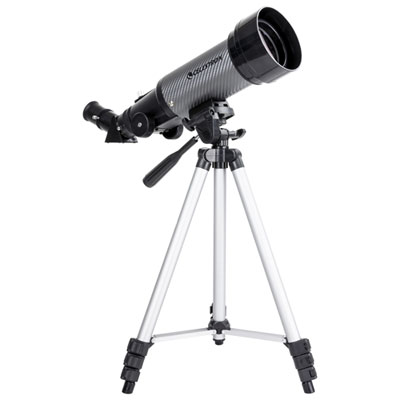 Your price for this item is $139.99
 -
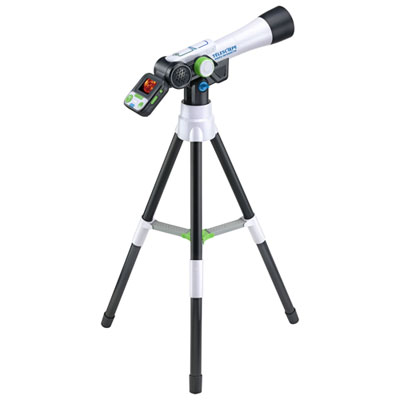 Your price for this item is $109.99
 -
 Your price for this item is $69.99
 -
 Your price for this item is $399
 -
 Your price for this item is $119.99
 -
 Your price for this item is $389.9
 -
 Your price for this item is $239.99
Discover more categories related to Refractor Telescope
Top Collections:
Pokemon Centers, Kindle Devices, Best Cell Phones Under $500, Alarm Clock, Canon G7X Cameras, iPhone 15 Apple, Apple iPhones 16, Laptops for Students, iPhone 14 256GB, Budget Smartphones
Some products may be subject to Environmental Handling Fees
(EHF) depending on your province.
Learn more about EHFs.