Checkers Game Tables
Looking for a fun way to gather family and friends together for some friendly competition? Look no further than our collection of Checkers game tables. These versatile and stylish game tables are perfect for adding a touch of excitement to any space. Whether you're a seasoned Checkers pro or just looking to enjoy some casual gameplay, our selection has something for everyone. With their durable construction and sleek designs, these game tables are not only functional but also make a stylish addition to any room.
Sort
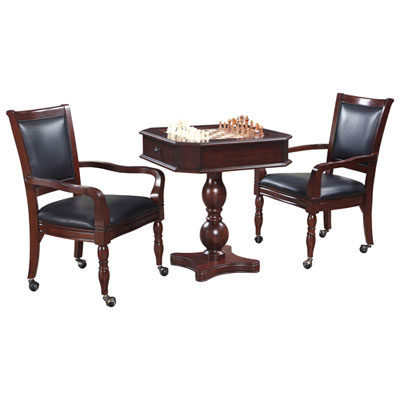
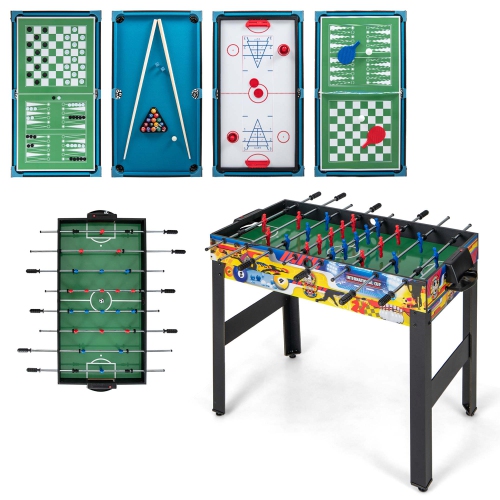
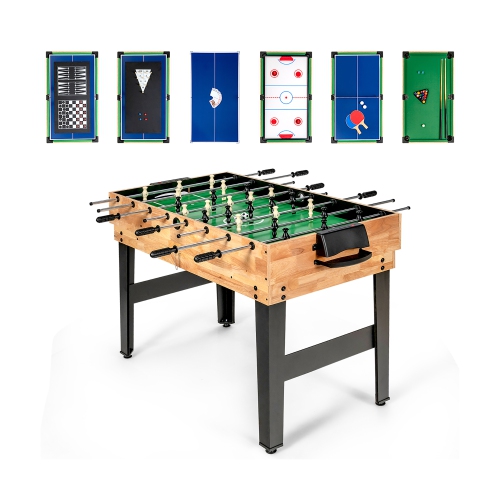
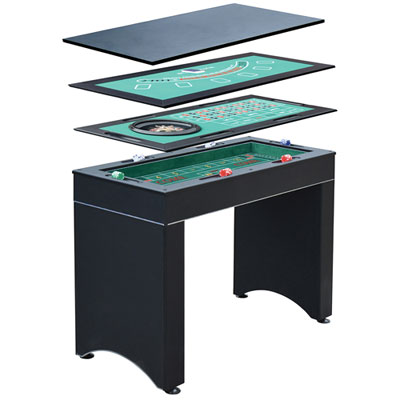
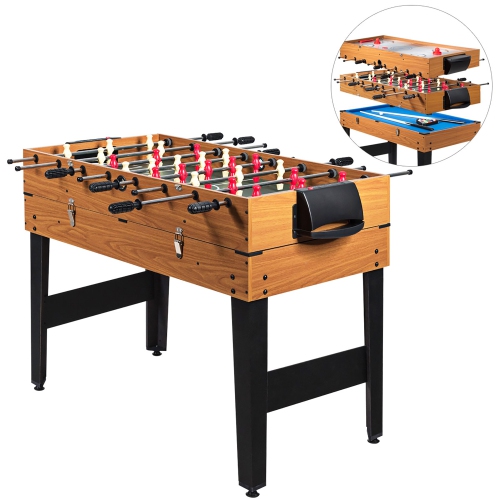
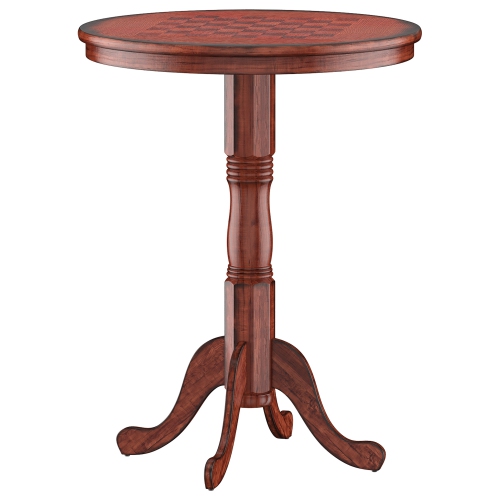
A permanent place for your next checkers match
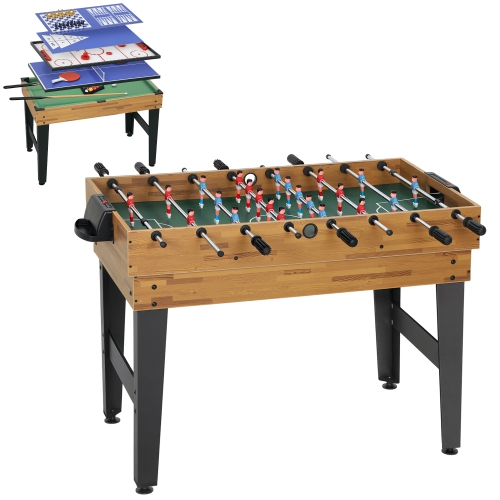
Checkers game tables bring a familiar strategy game into a piece of furniture, pairing a playable checkerboard with a surface designed for a living room, den, or dedicated games room. Unlike a loose board that needs to be unpacked and put away, a built-in playing surface gives the game a permanent place in the home. Common formats include compact side tables, coffee-table designs, upright pedestal tables, and multi-game tables with interchangeable or reversible tops. A small accent table can create a comfortable spot for two players beside a pair of chairs, while a larger table can anchor a gathering space where friends take turns playing. Some designs keep the checkerboard visible as part of the tabletop; others have a plain reverse side that lets the furniture return to everyday use once the pieces are stored. Hidden compartments, shallow drawers, and storage beneath a removable top can help keep playing pieces together without taking up shelf space elsewhere. The familiar eight-by-eight board is used for standard checkers, with each player starting with twelve pieces on the dark squares. Clearly defined squares and contrasting pieces make it easier to follow a sequence of jumps, particularly for younger players or anyone who prefers a highly readable board. Square size matters, too: pieces should sit comfortably within each space, with enough room to pick them up without disturbing their neighbours. For households that enjoy more than one game, a shared chess-and-checkers surface can serve both activities, provided the appropriate pieces are included or supplied separately. Other multi-game designs add different playing surfaces beneath the top or on its reverse. The appeal is as much about the setting as the game itself: a ready-to-play table makes a short match after dinner or a relaxed afternoon visit feel easy to arrange, without clearing the dining table or searching for a missing board. It also gives an unfinished game somewhere to remain, as long as that surface is not needed for another purpose.
The right fit depends on how the table will be used and where players will sit. Coffee-table height works best with lounge seating for casual play, although leaning forward through a longer match may be less comfortable than sitting at an upright table. A taller game table paired with suitable chairs can offer a more natural seated position, with room for knees beneath the apron and enough space to move the pieces without stretching. Overall tabletop dimensions do not tell the whole story: the usable playing area, the width of the border, and the position of drawers or supports all affect comfort. A broad border can provide a place for captured pieces, while a narrow surround keeps the furniture compact. In a smaller room, allow space not only for the table itself but also for chairs to pull out and for people to walk past occupied seats. Pedestal bases may leave more freedom for chair placement, whereas corner legs can create a familiar furniture profile; either style benefits from a stable base that does not rock when someone rests a forearm on the edge. Materials influence both appearance and day-to-day care. Solid wood can bring distinctive grain and a substantial feel, while wood veneer offers a real-wood surface over a supporting core. Engineered wood with a laminate finish may suit spaces where straightforward surface cleaning is a priority. The quality of the joints, the smoothness of the edges, and the protection over the playing surface are useful details to compare alongside the material description. An inlaid board can integrate the squares into the tabletop design, while a printed board relies on its finish to protect the pattern from wear. A low-glare surface and clear colour contrast can make the layout easier to read under a nearby lamp. Finishes ranging from light wood tones to dark stains or painted surfaces allow the table to sit comfortably alongside existing furniture rather than looking like equipment brought out only for game night.
Practical details often determine how enjoyable a checkers table remains after the first few matches. Storage should be easy to reach, with enough space for a full set of pieces and any additional game components the table is designed to hold. Shallow compartments can keep pieces visible, while divided sections help separate sets used for different games. On a reversible tabletop, accessible lifting points and a manageable panel weight make changing surfaces less awkward; the panel should sit securely once it is back in place. A table supplied with chairs can simplify matching seat height and style, but the chair dimensions, back support, and clearance beneath the tabletop still deserve attention. For family use, smooth edges, a steady base, and pieces appropriate to the players’ ages are especially relevant. Small playing pieces should be kept away from children who may put them in their mouths, and any age guidance supplied with the game should be followed. Checkers offers an approachable setting for practising turn-taking, thinking ahead, and noticing patterns, while experienced players can enjoy the tactical choices hidden within its simple rules. That broad appeal can make a game table a thoughtful gift for a board-game enthusiast, a couple furnishing a shared space, or a family that enjoys screen-free activities together. Households interested in another traditional two-player game may also enjoy exploring Backgammon Game Tables for a different style of play and playing surface. Everyday care helps preserve both the furniture and the board: remove dust with a soft cloth, wipe spills promptly, and follow the maker’s cleaning directions rather than assuming every finish tolerates the same products. Coasters can protect the surrounding tabletop during a match, and placing pieces gently helps limit scuffs. Avoid dragging a heavy table when rearranging the room, and check fittings periodically if the design requires assembly. With comfortable seating, accessible storage, and a surface suited to regular handling, a checkers table can become a well-used part of everyday life rather than a piece reserved for special occasions.
The right fit depends on how the table will be used and where players will sit. Coffee-table height works best with lounge seating for casual play, although leaning forward through a longer match may be less comfortable than sitting at an upright table. A taller game table paired with suitable chairs can offer a more natural seated position, with room for knees beneath the apron and enough space to move the pieces without stretching. Overall tabletop dimensions do not tell the whole story: the usable playing area, the width of the border, and the position of drawers or supports all affect comfort. A broad border can provide a place for captured pieces, while a narrow surround keeps the furniture compact. In a smaller room, allow space not only for the table itself but also for chairs to pull out and for people to walk past occupied seats. Pedestal bases may leave more freedom for chair placement, whereas corner legs can create a familiar furniture profile; either style benefits from a stable base that does not rock when someone rests a forearm on the edge. Materials influence both appearance and day-to-day care. Solid wood can bring distinctive grain and a substantial feel, while wood veneer offers a real-wood surface over a supporting core. Engineered wood with a laminate finish may suit spaces where straightforward surface cleaning is a priority. The quality of the joints, the smoothness of the edges, and the protection over the playing surface are useful details to compare alongside the material description. An inlaid board can integrate the squares into the tabletop design, while a printed board relies on its finish to protect the pattern from wear. A low-glare surface and clear colour contrast can make the layout easier to read under a nearby lamp. Finishes ranging from light wood tones to dark stains or painted surfaces allow the table to sit comfortably alongside existing furniture rather than looking like equipment brought out only for game night.
Practical details often determine how enjoyable a checkers table remains after the first few matches. Storage should be easy to reach, with enough space for a full set of pieces and any additional game components the table is designed to hold. Shallow compartments can keep pieces visible, while divided sections help separate sets used for different games. On a reversible tabletop, accessible lifting points and a manageable panel weight make changing surfaces less awkward; the panel should sit securely once it is back in place. A table supplied with chairs can simplify matching seat height and style, but the chair dimensions, back support, and clearance beneath the tabletop still deserve attention. For family use, smooth edges, a steady base, and pieces appropriate to the players’ ages are especially relevant. Small playing pieces should be kept away from children who may put them in their mouths, and any age guidance supplied with the game should be followed. Checkers offers an approachable setting for practising turn-taking, thinking ahead, and noticing patterns, while experienced players can enjoy the tactical choices hidden within its simple rules. That broad appeal can make a game table a thoughtful gift for a board-game enthusiast, a couple furnishing a shared space, or a family that enjoys screen-free activities together. Households interested in another traditional two-player game may also enjoy exploring Backgammon Game Tables for a different style of play and playing surface. Everyday care helps preserve both the furniture and the board: remove dust with a soft cloth, wipe spills promptly, and follow the maker’s cleaning directions rather than assuming every finish tolerates the same products. Coasters can protect the surrounding tabletop during a match, and placing pieces gently helps limit scuffs. Avoid dragging a heavy table when rearranging the room, and check fittings periodically if the design requires assembly. With comfortable seating, accessible storage, and a surface suited to regular handling, a checkers table can become a well-used part of everyday life rather than a piece reserved for special occasions.
Top selling and popular products
-
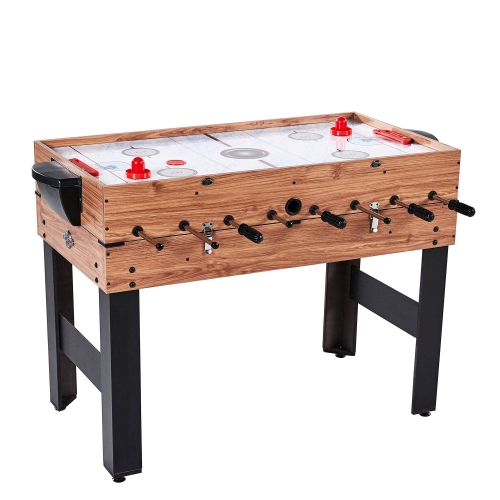 Your price for this item is $358.99
 -
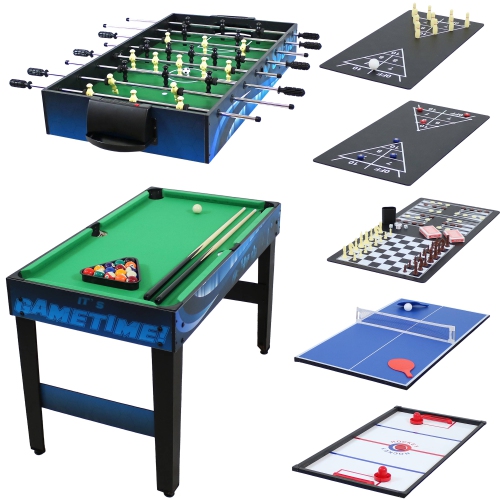 Your price for this item is $368.05
 -
 Your price for this item is $388.87
 -
 Your price for this item is $368.05
 -
 Your price for this item is $175.99
 -
 Your price for this item is $206.99
 -
 Your price for this item is $199.99
 -
 Your price for this item is $169.95
Discover more categories related to Checkers Game Tables
Top Collections:
Pokemon Centers, Kindle Devices, Best Budget Office Chairs, Apple iPhones 16, Samsung Galaxy Phones, Canon G7X Cameras, iPhone 15 Apple, Flip Phones, Best Laptops for Writers, Alarm Clock
Some products may be subject to Environmental Handling Fees
(EHF) depending on your province.
Learn more about EHFs.