Electric Downriggers
Looking to take your fishing game to the next level? Look no further than our selection of electric downriggers. These powerful and efficient tools are a must-have for any serious angler, providing precise depth control and helping you catch more fish with ease. Whether you're trolling in deep waters or targeting specific species, electric downriggers offer unmatched convenience and accuracy. With a range of options to choose from, you'll find the perfect electric downrigger to enhance your fishing experience and bring home the big ones.
Sort
Controlled depth placement for smoother, more efficient trolling
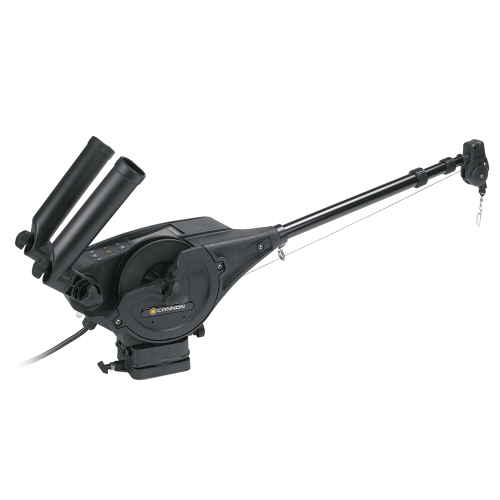
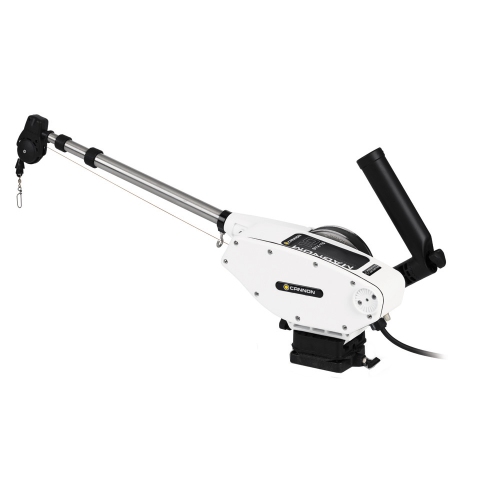
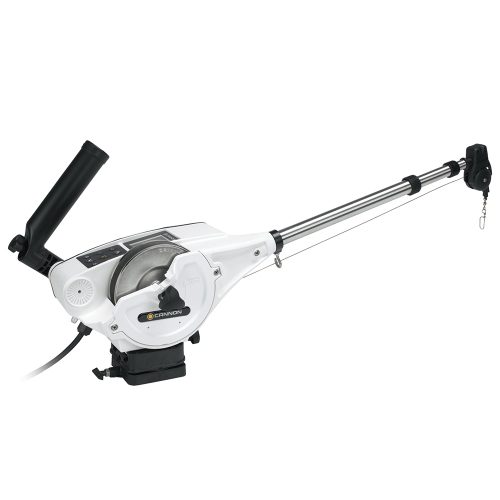
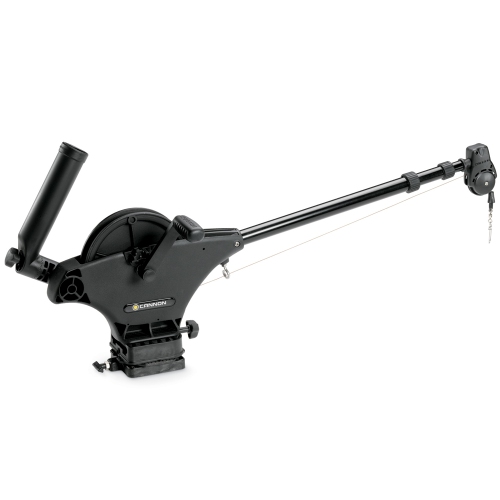
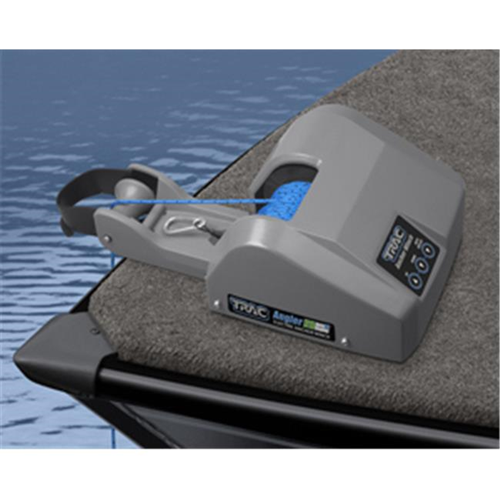
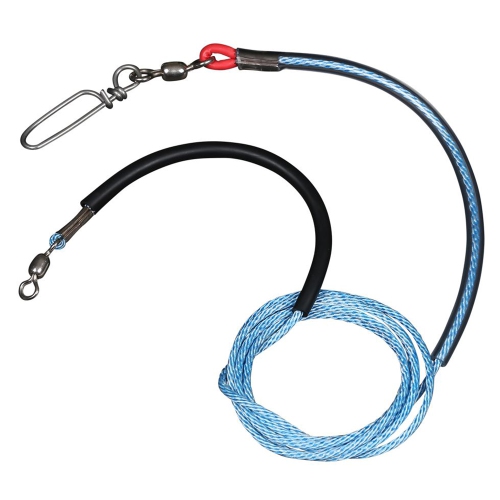
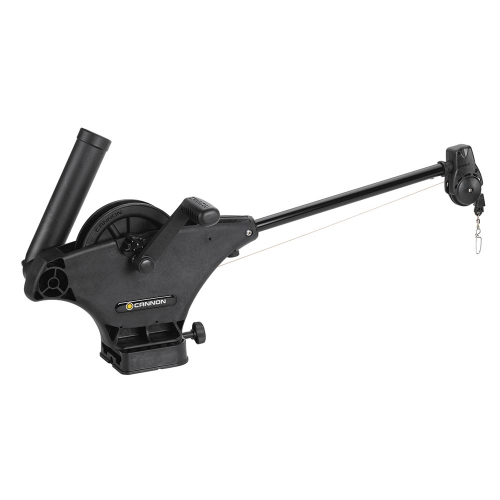
Electric downriggers are designed to make controlled deep-water trolling more efficient by using a powered 12V motor to lower, position, and retrieve a heavy trolling weight. Instead of manually cranking a weight through the water, anglers can use an electric switch or control to adjust the line depth while keeping their attention on rod movement, sonar readings, boat speed, and changing water conditions. This can be especially helpful when fishing from a compact boat, where every movement around the gunwale matters, or when several lines are being managed at once. A downrigger holds the fishing line at a selected depth with a release clip, allowing the lure or bait to travel through a precise part of the water column. When a fish strikes, the line releases from the clip so the angler can fight the fish directly, while the weight remains attached to the downrigger cable. Powered retrieval is also useful when changing locations, clearing lines, or bringing the weight up quickly as the boat approaches shallower water. Depending on the model and conditions, some electric downriggers can retrieve cable at speeds of up to 250 feet per minute. This added speed is valuable when a sudden change in weather rolls across the lake, when a school of fish moves to a different depth, or when multiple lines need to be reset without a long pause in the action. For anglers who spend long days on the water, the convenience of motorized operation can make trolling feel more organized and less physically demanding, especially when repeatedly lifting heavier weights.
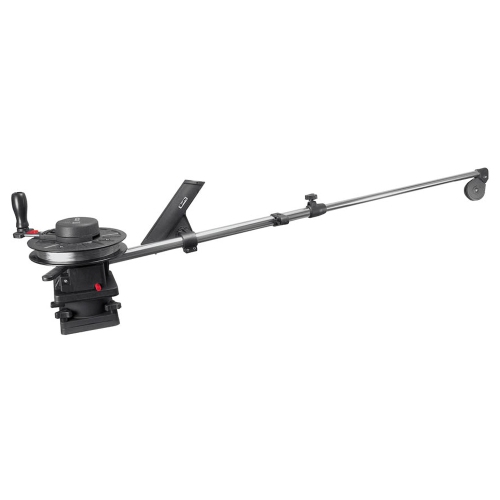
When comparing electric downriggers, start by considering the size and layout of the boat, the usual fishing depth, and the kind of water where the equipment will be used. A compact setup may be suitable for smaller boats and moderate depths, while anglers who troll in deeper water or carry heavier weights may prefer a stronger motor, a larger spool, and a longer boom. Boom reach is important because it determines how far the weight can be positioned away from the side of the boat. Telescopic booms, often ranging from about 24 inch to 60 inch, can provide extra clearance around wide gunwales and may collapse for easier storage and transport. Look for a design that matches the mounting space available and leaves enough room to operate the controls without interfering with seats, rod holders, railings, or other equipment. A digital depth counter can make it easier to repeat productive presentations, particularly when fish are holding at a consistent depth. Auto-stop waterline protection is another useful feature: a bead or stop on the cable can trigger the motor to halt when the weight reaches the surface, helping prevent the weight from striking the boat or placing unnecessary strain on the boom and cable. Consider the control layout as well. Some units provide powered switches for both raising and lowering the weight, while others use a powered lift with a gravity-release clutch or brake lever to regulate descent. A positive, predictable descent is important when setting a lure at a specific depth, and smooth retrieval helps reduce tangles and sudden movement. For use in salt water, examine the construction and protective features carefully, including corrosion-resistant materials, sealed components, and cable and hardware suited to the environment. It is also worth checking the power requirements, mounting accessories, cable capacity, included release hardware, and whether the unit can be removed or folded for storage. Anglers who move equipment between boats may also want to explore Portable Downriggers for setups that are easier to transport between launches, cabins, and different fishing locations.
Electric downriggers can appeal to experienced anglers refining a carefully controlled trolling pattern as well as newcomers who want a more approachable way to reach deeper fish. They are commonly used for freshwater species such as salmon, trout, and lake trout, and can also be useful in suitable saltwater environments when the equipment is rated and maintained for those conditions. Families may appreciate the hands-free control when children are learning to fish, since the adult operating the boat can manage depth adjustments without leaving the helm for long. An electric downrigger can also be a thoughtful gift for a boating enthusiast, an angler preparing for a new season on the water, or someone upgrading from a manual system. Picture a calm morning with the boat moving steadily across a glassy lake: the depth counter shows the target range, the cable drops smoothly, and the rod settles into a steady rhythm while the angler watches for the subtle pull that signals a strike. During warmer outings and the cooler months that follow, dependable depth control can help anglers adapt as fish move through different parts of the water column. Before purchasing, confirm that the mounting arrangement is compatible with the boat and that the electrical system can support the downrigger’s 12V draw. Think about how many lines will be used, how often the weight will be raised, and whether compact storage matters between trips. With the right combination of motor power, boom reach, depth display, auto-stop protection, control style, and marine-ready construction, an electric downrigger can bring repeatable depth placement and faster line management to a wide range of trolling setups.
When comparing electric downriggers, start by considering the size and layout of the boat, the usual fishing depth, and the kind of water where the equipment will be used. A compact setup may be suitable for smaller boats and moderate depths, while anglers who troll in deeper water or carry heavier weights may prefer a stronger motor, a larger spool, and a longer boom. Boom reach is important because it determines how far the weight can be positioned away from the side of the boat. Telescopic booms, often ranging from about 24 inch to 60 inch, can provide extra clearance around wide gunwales and may collapse for easier storage and transport. Look for a design that matches the mounting space available and leaves enough room to operate the controls without interfering with seats, rod holders, railings, or other equipment. A digital depth counter can make it easier to repeat productive presentations, particularly when fish are holding at a consistent depth. Auto-stop waterline protection is another useful feature: a bead or stop on the cable can trigger the motor to halt when the weight reaches the surface, helping prevent the weight from striking the boat or placing unnecessary strain on the boom and cable. Consider the control layout as well. Some units provide powered switches for both raising and lowering the weight, while others use a powered lift with a gravity-release clutch or brake lever to regulate descent. A positive, predictable descent is important when setting a lure at a specific depth, and smooth retrieval helps reduce tangles and sudden movement. For use in salt water, examine the construction and protective features carefully, including corrosion-resistant materials, sealed components, and cable and hardware suited to the environment. It is also worth checking the power requirements, mounting accessories, cable capacity, included release hardware, and whether the unit can be removed or folded for storage. Anglers who move equipment between boats may also want to explore Portable Downriggers for setups that are easier to transport between launches, cabins, and different fishing locations.
Electric downriggers can appeal to experienced anglers refining a carefully controlled trolling pattern as well as newcomers who want a more approachable way to reach deeper fish. They are commonly used for freshwater species such as salmon, trout, and lake trout, and can also be useful in suitable saltwater environments when the equipment is rated and maintained for those conditions. Families may appreciate the hands-free control when children are learning to fish, since the adult operating the boat can manage depth adjustments without leaving the helm for long. An electric downrigger can also be a thoughtful gift for a boating enthusiast, an angler preparing for a new season on the water, or someone upgrading from a manual system. Picture a calm morning with the boat moving steadily across a glassy lake: the depth counter shows the target range, the cable drops smoothly, and the rod settles into a steady rhythm while the angler watches for the subtle pull that signals a strike. During warmer outings and the cooler months that follow, dependable depth control can help anglers adapt as fish move through different parts of the water column. Before purchasing, confirm that the mounting arrangement is compatible with the boat and that the electrical system can support the downrigger’s 12V draw. Think about how many lines will be used, how often the weight will be raised, and whether compact storage matters between trips. With the right combination of motor power, boom reach, depth display, auto-stop protection, control style, and marine-ready construction, an electric downrigger can bring repeatable depth placement and faster line management to a wide range of trolling setups.
Top selling and popular products
-
 Your price for this item is $31.43
 -
 Your price for this item is $30.54
 -
 Your price for this item is $38.85
 -
 Your price for this item is $92.99
 -
 Your price for this item is $917.79
 -
 Your price for this item is $844.31
 -
 Your price for this item is $31.46
 -
 Your price for this item is $34.93
Discover more categories related to Electric Downriggers
Top Collections:
Pokemon Centers, Kindle Devices, Best Budget Office Chairs, Apple iPhones 16, Samsung Galaxy Phones, Canon G7X Cameras, iPhone 15 Apple, Flip Phones, Best Laptops for Writers, Alarm Clock
Some products may be subject to Environmental Handling Fees
(EHF) depending on your province.
Learn more about EHFs.