Listening Room Essentials: Build Your Perfect Hi‑Fi Setup
Turn any space into a true listening room with immersive audio gear—dial in your speakers, power them with the right amp, add vinyl or streaming, and fine-tune the room for a bigger, clearer soundstage.
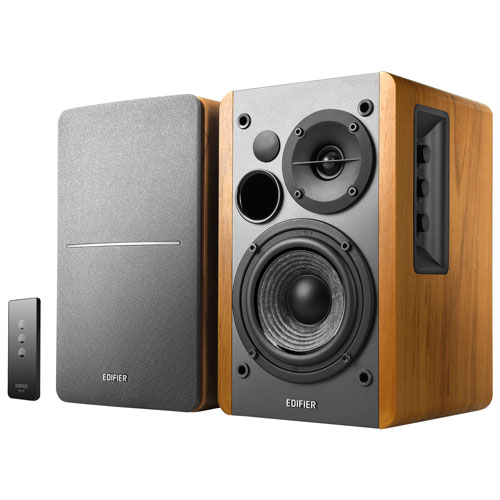
Speakers for a True Stereo Soundstage
From classic passive bookshelf speakers to powered pairs—choose the set that brings vocals forward and instruments to life.
Stereo Receivers & Integrated Amps
Power your speakers with the right stereo amp—plus the connections you need for vinyl, streaming, and more.
Turntables & Vinyl Setup
Spin your records with a turntable that matches your style—then build the rest of your vinyl chain with confidence.
Music Streamers & Digital Sources
Add modern streaming to your hi‑fi—Wi‑Fi playback, digital outputs, and app control that fits your listening routine.
Subwoofers for Deeper, Tighter Bass
Bring out the low end—add a subwoofer that fills the room without muddying the mids.
Audiophile Headphones for Late‑Night Listening
When you want every detail without waking the house—open-back and reference-style headphones for focused listening.
Stands, Isolation & Room Tuning
Small upgrades that make a big difference—speaker stands, vibration control, and acoustic panels to help your system sound its best.
Tips
- Start with speaker placement: aim for an equilateral triangle between you and your left/right speakers, then adjust by inches for the best imaging.
- Get tweeters to ear level. If your speakers sit on a shelf or desk, add stands or angled risers to improve clarity and focus.
- Experiment with toe‑in (angling speakers toward your seat). Small changes can sharpen vocals and widen the soundstage.
- Tame early reflections: adding soft furnishings (rug, curtains) or wall panels near the first reflection points can reduce harshness and echo.
- For subwoofers, try the “sub crawl”: place the sub at your seat, play bass-heavy music, walk the room to find the smoothest bass spot, then put the sub there.
- If you’re adding a turntable, level it and keep it away from speaker vibration to help reduce skips and rumble.
- Match your amp to your speakers: check impedance compatibility, and choose an amp with enough power headroom for your room size and listening volume.
- Using a streamer? Connect by optical/coaxial or line-out (depending on your gear), then set your music app to the highest available audio quality.
- Keep cable runs neat and secure. Proper cable management makes future upgrades (like adding a sub or streamer) much easier.
Frequently Asked Questions
A stereo receiver or integrated amp is focused on two-channel music (left/right) and is a great fit for a dedicated listening room. An AV receiver is designed for multi-speaker home theatre setups and includes features like surround processing and multiple HDMI inputs. If music is your priority, a stereo-focused setup is often the simplest path to great sound.
Not always. Many bookshelf and tower speakers deliver satisfying bass on their own. A subwoofer can add deeper low-end impact and help your main speakers play cleaner at higher volumes—especially in larger rooms or if you listen to bass-forward genres.
In smaller rooms, bookshelf speakers on solid stands can sound incredibly full and precise. In bigger rooms, larger bookshelf models or floorstanding speakers can move more air and maintain impact at distance. If you want the flexibility to scale bass, consider pairing speakers you love with a subwoofer.
It depends. Some turntables include a built-in phono preamp, and some stereo receivers/integrated amps include a dedicated phono input. If neither your turntable nor your amp has a phono stage, you’ll need an external phono preamp to bring the signal up to line level.
A music streamer is one of the cleanest upgrades: connect it to your amp via optical/coaxial (digital) or RCA (analog), join it to Wi‑Fi, and control playback from your phone or tablet. Many streamers also support multi-room playback and popular music services.
A common starting point is the first reflection points on the side walls (where sound from each speaker bounces toward your seat), plus the wall behind the speakers or behind your listening position. Even a small amount of treatment can make vocals clearer and reduce “echoey” room sound.