Best Air Purifiers for Allergy Sufferers
Find the best air purifiers for allergy sufferers, ranked by customer review ratings to help you compare top-rated options. Air purifiers can help reduce airborne allergens such as pollen, dust and pet dander. Explore features like HEPA filtration, room coverage and quiet operation to find the right fit for your space and daily routine.

Read More

What to look for in air purifiers for allergy sufferers

1. HEPA Filtration

Look for a HEPA filter to capture fine airborne particles, including common allergens. Air purifiers can complement regular cleaning but do not remove allergens that have settled on surfaces.

2. Room Size and Clean Air Delivery Rate

Match the purifier’s recommended room size to your space and check its clean air delivery rate (CADR) for pollen, dust and smoke. A higher CADR indicates faster delivery of filtered air, which can be helpful in larger rooms.

3. Noise Levels and Fan Settings

Compare noise ratings at the fan speed you expect to use, especially for bedrooms. Quiet modes can make overnight use more comfortable, but lower speeds typically filter less air.

4. Filter Maintenance and Ozone

Check replacement filter costs, availability and recommended replacement intervals before buying. Avoid ozone-generating air cleaners, as ozone can irritate the lungs; if a model includes an ionizer, check whether it can be switched off.
Citrus catapult arrow
  1. 1

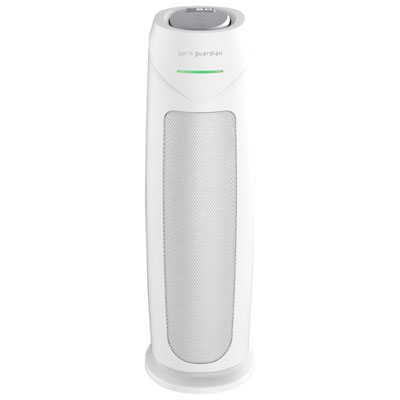
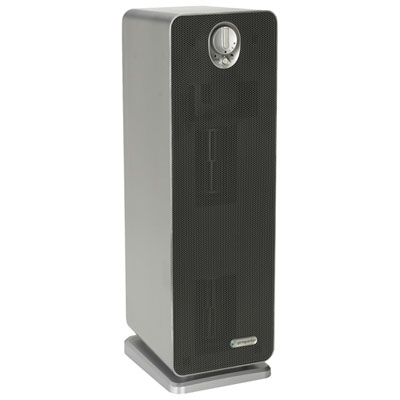
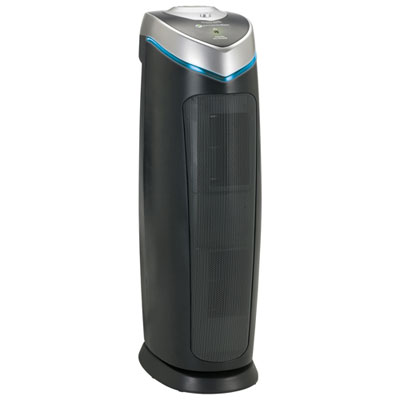
    GermGuardian AC4880W Intelligent 22" Tower Air Purifier with HEPA Pure Filter - White

    About this product

    An intelligent white tower air purifier with HEPA and carbon filters to capture allergens and reduce odours.

    (2)
    $159.99 Your price for this item is $159.99
  2. 2

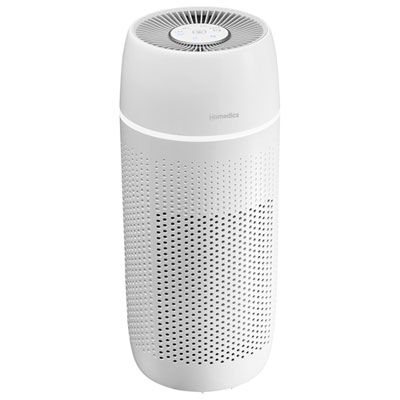
    Pure Enrichment PureZone Elite 4-in-1 Air Purifier with HEPA Filter - White

    About this product

    A white 4-in-1 air purifier featuring a True HEPA filter and smart air quality monitor.

    What customers like

    • Modern and attractive design
    • Effective air purification
    • Quiet operation
    • Easy to use and set up
    • Noticeable improvement in air quality
    (361)
    $239.99 Your price for this item is $239.99
  3. 3

    Pure Enrichment PureZone Halo Air Purifier with HEPA Filter - White

    About this product

    A white air purifier featuring a HEPA filter, two-stage purification, three fan settings, and nightlight.

    What customers like

    • User-friendly and easy to use
    • Customizable lighting and fan settings
    • Compact and space-saving design
    • Quiet operation
    • Effective air purification
    (335)
    $129.99 Your price for this item is $129.99
  4. 4

    HoMedics TotalClean PetPlus 5-In-1 Air Purifier with UV-C & HEPA Filter

    About this product

    A white air purifier that removes 99.97% of allergens and pet odours with HEPA and UV-C technology.

    What customers like

    • Eliminates pet odors and reduces dander
    • Compact, portable design with night light and essential oil options
    • Effective air purification and allergen removal
    • UV-C and HEPA technology for added protection
    • Quiet operation with customizable settings
    (76)
    $298.98 Your price for this item is $298.98
  5. 5

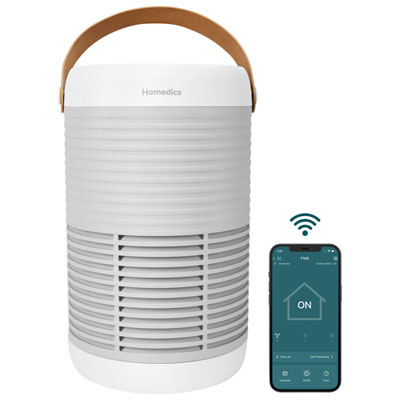
    HoMedics TotalClean T100 3-in-1 Smart Air Purifier with HEPA Filter

    About this product

    A white smart air purifier with HEPA filtration and oil tray, capturing 99.97% of airborne allergens.

    What customers like

    • Compact and portable design
    • Quiet operation with calming white noise
    • Effective air purification
    • Aromatherapy option with essential oil tray
    • Smart features and app control
    (58)
    $219.99 Your price for this item is $219.99
  6. 6

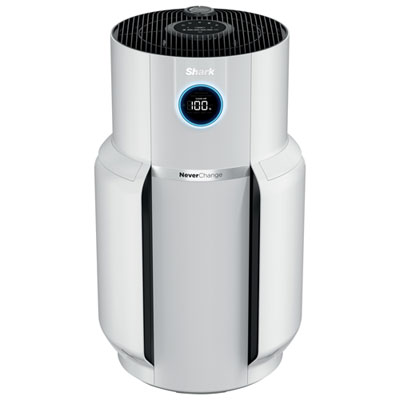
    Shark NeverChange HP302C Air Purifier MAX with HEPA Filter - White

    About this product

    A white air purifier with HEPA filter and odour neutralizer technology for cleaner, fresher indoor air.

    What customers like

    • Long-lasting, low-maintenance filter
    • Sleek, modern design
    • Odor and allergen elimination
    • Quiet operation
    • Effective air purification
    (316)
    $339.99
    SAVE $68
    Your price for this item is $339.99
  7. 7

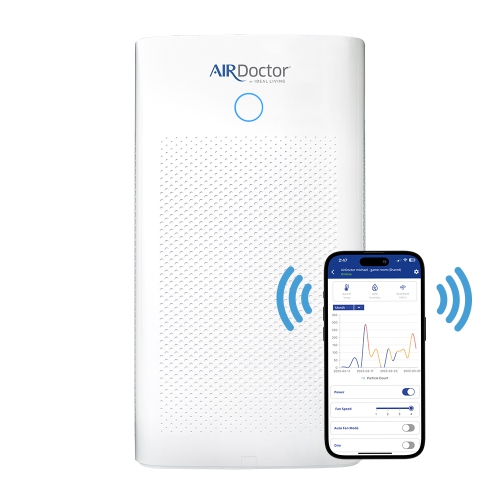
    AIRDOCTOR Ad5500I Smart 4-In-1 Air Purifier for Extra Large Spaces, Ultrahepa, Carbon & Voc Filters, Removes Particles 100X Smaller Than Hepa

    About this product

    A smart air purifier with UltraHEPA, carbon, and VOC filters, plus Wi-Fi app control for large spaces.

    (4)
    $1,617.75 Your price for this item is $1617.75
  8. 8

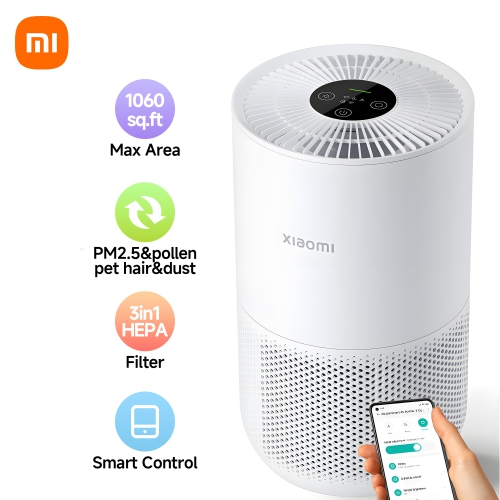
    XIAOMI Mi Air Purifier 4 Compact, True Hepa H13 3-Stage Filter System Removes 99.97% Of Pollutants, Oled Touch Display,ultra-Quiet

    About this product

    An ultra-quiet air purifier with a True HEPA H13 3-stage filter and OLED touch display.

    (2)
    $109.99
    SAVE $120
    Your price for this item is $109.99
  9. 9

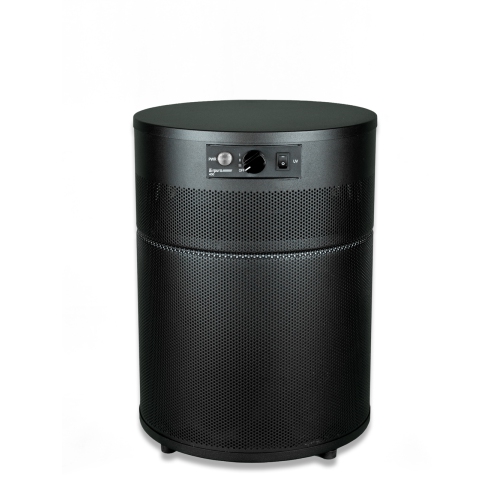
    AIRPURA R400 - The Everyday Air Purifier (Hepa Filter) - In Black

    About this product

    A black HEPA filter purifier that removes chemicals, allergens, and odors for cleaner, fresher air.

    $739.98
    SAVE $100
    Your price for this item is $739.98
  10. 10

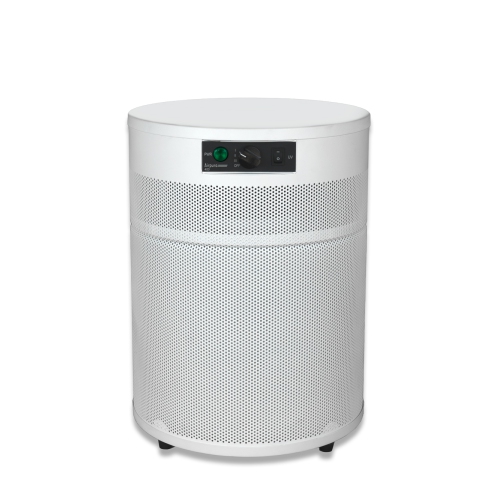
    AIRPURA R400 - The Everyday Air Purifier (Hepa Filter) - In White

    About this product

    A white HEPA filter purifier that removes household chemicals, allergens, dust, mold spores, and odors.

    $739.98
    SAVE $100
    Your price for this item is $739.98

Why a HEPA filter is only the starting point

The best air purifiers for allergy sufferers combine effective particle filtration, sufficient airflow for the room, and a noise level that makes everyday use practical. A well-matched purifier can reduce airborne pollen, pet dander, and dust mite allergens that pass through its filter, although it cannot remove every allergy trigger or guarantee symptom relief. For particle capture, true HEPA filtration is a useful starting point: a HEPA filter is designed to capture at least 99.97% of particles measuring 0.3 micrometres under specified test conditions. That filter rating does not mean a purifier instantly removes the same percentage of allergens from an entire room. Real-world performance also depends on how much air the machine processes, where it sits, and how consistently it runs. Clean air delivery rate, usually shortened to CADR, helps connect filtration with airflow. A higher CADR generally means faster removal of the particles measured in the test, with separate ratings often listed for smoke, dust, and pollen. For a bedroom where dust is a concern or a living room shared with a shedding pet, these ratings are more useful than a broad claim about powerful cleaning. A pre-filter catches larger debris such as hair and lint before it reaches the finer filter, helping keep the main filtration stage from loading up too quickly. Activated carbon serves a different purpose, helping reduce certain odours and gases rather than replacing the particle filter needed for airborne allergens. The amount and type of carbon matter, so a thin carbon layer should not be mistaken for extensive gas removal. Mechanical filtration is a straightforward choice for allergy-focused use; ozone generators are not suitable air cleaners for occupied rooms because ozone can irritate the lungs. Where ionization or another electronic treatment is included, clear information about emissions and the ability to switch that feature off can help shoppers assess suitability. The strongest match is not necessarily the model with the longest feature list, but one with clearly documented filtration and airflow suited to the space.

Room size is the next important distinction between air purifiers for allergies. A compact unit intended for a small home office may not move enough air through an open living and dining area, even if both use similar filter materials. Coverage claims deserve a close look because some describe just one air change per hour, while others are based on more frequent cleaning. For allergy-focused use, comparing coverage at roughly four to five air changes per hour provides a more useful benchmark than comparing maximum square footage alone. An air change describes an equivalent room volume passing through the purifier, not a guarantee that every particle has been removed. Ceiling height also affects the amount of air that needs treatment, making a room with a high ceiling more demanding than its floor area might suggest. In a bedroom, a purifier with enough capacity at a tolerable fan speed can be more practical than a smaller machine that needs to run at its loudest setting. Check noise information alongside airflow: the quietest advertised sound level and the highest CADR usually refer to different operating speeds. A sleep setting, dimmable display, and the option to silence button tones can matter when the machine sits near a bed. For a desk or reading corner, a steady fan sound may be less distracting than frequent changes in speed. Automatic modes use sensors to adjust airflow, but many sensors measure general particle levels rather than identifying pollen or pet allergens specifically. A reassuring display therefore does not prove that a room is free of triggers. Placement matters just as much as controls. Air needs a clear route into the intake and out of the outlet, with the clearance specified by the manufacturer. Tucking a purifier behind a sofa, crowding it with curtains, or enclosing it beneath a shelf can restrict circulation. A single portable purifier also should not be expected to clean several closed bedrooms; matching treatment to the rooms where people spend the most time makes its intended use clearer.

Day-to-day ownership often determines whether an air purifier remains useful long after the first setup. Durable housing, a stable base, accessible controls, and a filter compartment that closes securely all support regular use. A carrying handle can help when moving a unit between a workspace and a bedroom, while a manageable footprint leaves room for the required intake clearance. In households with children or pets, cord placement and a control lock are practical considerations, though neither replaces safe positioning. Filter fit is especially important: the replacement must match the purifier and seat properly so air follows the intended filtration path. Most HEPA filters are not washable, and rinsing one without explicit manufacturer approval can damage the fine filter material. Washable pre-filters should be cleaned only as directed and dried fully before being reinstalled. Replacement reminders are helpful, but some are based on elapsed operating time rather than a direct measurement of filter condition. Homes with substantial pet hair or dust may need more frequent checks, so easy access to the pre-filter can make maintenance less of a chore. When changing a used filter, handle it gently and avoid shaking collected particles back into the room. An air purifier works best alongside measures that address allergens on surfaces, such as regular vacuuming with a well-sealed vacuum, damp dusting, and laundering bedding according to its care label. It cannot pick up dust settled into a rug or resolve an underlying moisture problem that allows mould to grow. For people who also want air movement, Best Fans for Allergy Sufferers offers a related category to explore, but a standard fan circulates air rather than filtering allergens from it. Keeping that distinction clear helps each appliance serve its purpose. For pet owners, people sensitive to airborne dust, and households seeking particle filtration in frequently used rooms, a properly sized purifier with straightforward upkeep is a practical addition to an established cleaning routine.
Read More

FAQ

Some products may be subject to Environmental Handling Fees (EHF) depending on your province. Learn more about EHFs.