Best Electric Knives

Slice roasts, carve poultry, and cut bread with ease using the best electric knives, ranked by customer review ratings. Whether you’re preparing a holiday feast or making everyday meals, explore top-rated options and compare features such as blade design, grip comfort, and ease of cleaning to find the right fit for your kitchen.

Read More

What to look for in electric knives

1. Blade Type and Versatility

Choose blades suited to the foods you slice most often, such as roasts, poultry, or bread. Some electric knives include interchangeable carving and bread blades, while blade length affects the size of food you can comfortably cut.

2. Power Source

Corded electric knives provide consistent power without charging, but cord length can limit your reach. Cordless models offer more freedom of movement, so check their stated runtime and charging time.

3. Comfort and Control

Look for a comfortable handle, manageable weight, and a trigger you can operate easily while maintaining a secure grip. A safety lock can help prevent accidental activation when the knife is not in use.

4. Cleaning and Storage

Removable blades make cleanup easier, and some are dishwasher-safe—check the manufacturer’s care instructions. A blade cover or storage case helps keep sharp edges protected between uses.
Citrus catapult arrow
  1. 1

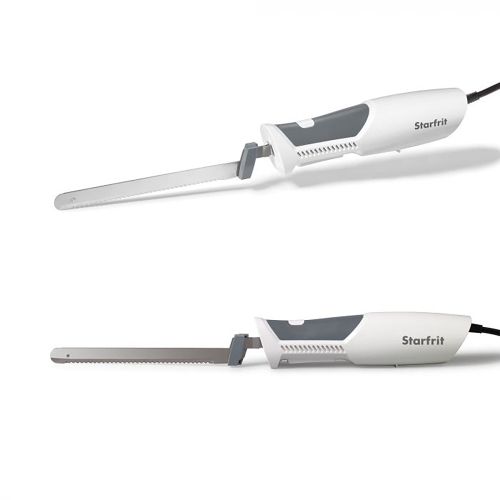
    STARFRIT - Electric Knife With Staggered Stainless Steel Blades In White

    About this product

    A white electric knife featuring staggered stainless steel blades for smooth, precise slicing of meats and breads.

    What customers like

    • Slices meats and breads easily
    • Lightweight and easy to handle
    • Compact and practical design
    • Sharp, efficient stainless steel blades
    • Quiet and smooth operation
    (25)
    $29.99
    SAVE $10
    Your price for this item is $29.99
  2. 2

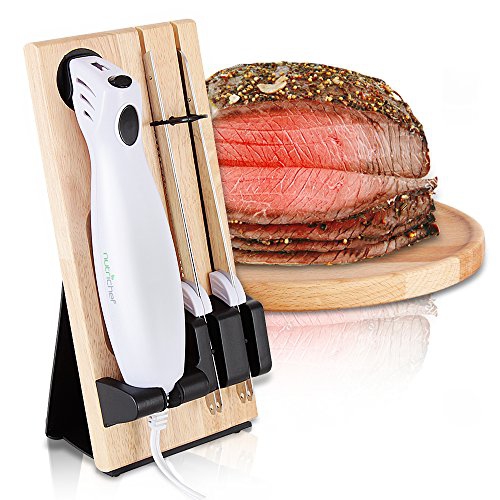
    NUTRICHEF Electric Carving Slicer Kitchen Knife - Portable Electrical Food Cutter Knife Set With Bread And Carving Blade

    About this product

    A portable electric kitchen knife set in white plastic with bread and carving blades plus wood stand.

    (6)
    $51.99 Your price for this item is $51.99
  3. 3

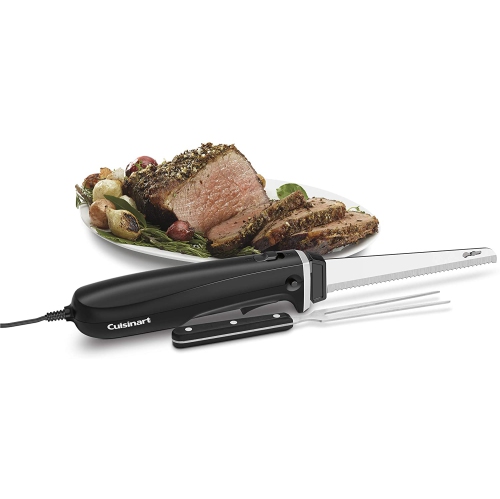
    CUISINART - Electric Knife With Stand

    About this product

    An electric knife with a convenient stand, ideal for effortless slicing of meats and breads.

    What customers like

    • Sharp and precise cutting
    • Effortless slicing of meats and breads
    • Easy to use
    • Convenient storage with included stand
    • Easy to clean
    (120)
    $73.68
    SAVE $15
    Your price for this item is $73.68

How powered blades ease slicing roasts and bread

The best electric knives combine steady slicing performance, a comfortable handle, and controls that feel natural during everyday food preparation. Rather than relying entirely on a back-and-forth hand motion, an electric knife uses a motor to move its blades, helping the user guide each cut through suitable foods with less manual sawing. Many designs have two interlocking serrated blades that move against one another, making them useful for carving boneless roasts, portioning cooked poultry breast, and slicing bread when the blade is intended for that purpose. The difference is especially noticeable when preparing several servings: slices of roast beef can be portioned for a platter, while a soft sandwich loaf can be cut without as much downward pressure on its crumb. Results still depend on the food, the blade design, and the way the knife is handled. A crisp crust, a delicate interior, and a firm cooked roast each offer a different kind of resistance, so intended use matters more than a claim of power alone. Electric knives are not substitutes for every kitchen blade; chopping vegetables, peeling fruit, and working around small joints generally call for other tools. Cutting through bones, frozen food, or unusually hard ingredients should be avoided unless the manufacturer expressly permits it. For a kitchen centred on serving roasts and larger cooked cuts, Electric Carving Knives offer a focused category for those tasks. These appliances can suit frequent hosts, home cooks preparing meals in batches, or households that regularly slice bread and cooked meat. They can also make a practical housewarming or wedding gift for someone who enjoys preparing shared meals, particularly when their preferred foods and kitchen storage space are known. A good match is a knife that feels manageable for the person using it and suits the foods they actually prepare, rather than one chosen for the largest accessory set or the most elaborate appearance.

Blade material, usable blade length, handle shape, and power source all influence how an electric knife fits into a kitchen routine. Stainless steel is common for food-contact blades because it offers resistance to corrosion and a surface that is straightforward to clean, although it still needs proper washing and drying. Serration patterns and blade profiles vary, and some designs use different attachments for bread and meat. A bread attachment may help move through a crust without compressing the softer centre, while a carving attachment is shaped for slicing suitable cooked meats. Where interchangeable blades are included, their intended uses and compatibility matter; attachments are not necessarily interchangeable between different knife designs. Blade length also affects handling. A longer blade can span a wider loaf or roast, but it needs enough clear space on the cutting board and may feel less convenient in a compact preparation area. Handle comfort involves more than a soft surface. The angle of the grip, the balance between the motor housing and blade, and the position of the operating switch determine how naturally the wrist can stay aligned while slicing. A lightweight body may be easier to hold for a longer task, though vibration and the pressure needed to keep a trigger engaged also influence comfort. For users with reduced hand strength, powered slicing may lessen the sawing effort, but a heavy handle or stiff switch can offset that benefit. Corded electric knives provide power without a battery charging step, provided a suitable outlet is within reach and the cable can remain clear of the blade and hot cookware. Cordless designs offer more freedom of movement, which can be useful at a serving station or on a kitchen island without a conveniently placed outlet. Their usefulness depends on battery runtime, charging time, and storage arrangements. Neither format is automatically better at cutting: blade condition, motor performance under load, and the suitability of the food all play a part. Noise and vibration are also practical considerations, particularly for anyone who expects to use the knife frequently rather than only for occasional carving.

Care and storage help an electric knife stay useful beyond its first few meals. Removable blades make it easier to wash food-contact surfaces separately from the powered handle, but dishwasher suitability varies by design and by component. The motor housing should not be immersed in water; cleaning normally involves wiping it as directed after disconnecting the power. Blades need careful handling during removal, washing, drying, and reassembly because the serrated edges remain sharp even when the appliance is switched off. Food residue can collect where paired blades meet, so separating them for cleaning, when the design permits it, helps reach those narrow surfaces. Thorough drying before storage limits moisture left around the blade connection and keeps the set ready for its next use. A fitted case, blade sheath, or designated storage compartment can protect the edges and keep hands from brushing against them in a drawer. Any supplied serving fork also needs a secure place rather than sitting loose beside the blades. Durability involves both the metal attachments and the powered body: a secure blade lock, an undamaged cord, and controls that operate consistently are important over time. Replacement blade compatibility can matter for long-term ownership, since serrated electric knife blades should not be treated like a plain-edged chef’s knife on a household sharpening steel. In use, a stable cutting board and a clear work area are just as important as the appliance itself. Letting cooked meat rest before carving, holding it securely with an appropriate fork, and guiding the blade without forcing it can improve control and presentation. Fingers should stay away from the cutting path, and power should be disconnected before fitting or removing attachments, following the manufacturer’s procedure. An electric knife that is easy to assemble, comfortable to control, and simple to clean is more likely to become a useful part of meal preparation, whether it is portioning a roast for dinner or slicing a loaf for sandwiches.
Read More

FAQ

Some products may be subject to Environmental Handling Fees (EHF) depending on your province. Learn more about EHFs.