Best Budget Calculators for Students Under $100
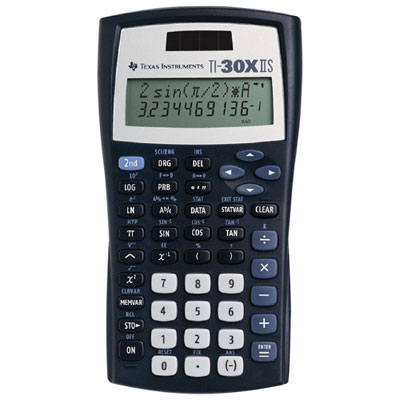
Find the best budget calculators for students under $100, ranked by user review ratings to help you compare well-rated options. Whether you’re tackling everyday arithmetic or more advanced coursework, explore affordable choices and check each calculator’s functions against your class requirements and exam rules.

Read More

What to look for in budget calculators for students under $100

1. Course and Exam Requirements

Check your teacher’s requirements and exam rules before choosing a calculator. Some courses call for scientific or graphing functions, while certain exams restrict programmable models.

2. Functions for Your Subjects

Basic calculators handle everyday arithmetic, while scientific models add functions for fractions, exponents, logarithms, and trigonometry. If your course requires graphing or financial calculations, confirm that the model includes those tools and costs less than $100.

3. Display and Keypad

Look for a readable display and clearly labelled keys that make common calculations easy to enter. A multi-line display can help you review expressions, while textbook-style notation makes fractions and equations easier to follow.

4. Power and Durability

Compare battery-powered, solar-assisted, and rechargeable options to find what suits your school routine. A protective cover and sturdy keys are useful for daily travel in a backpack, and replacement battery costs are worth factoring into your budget.
Citrus catapult arrow
  1. 1

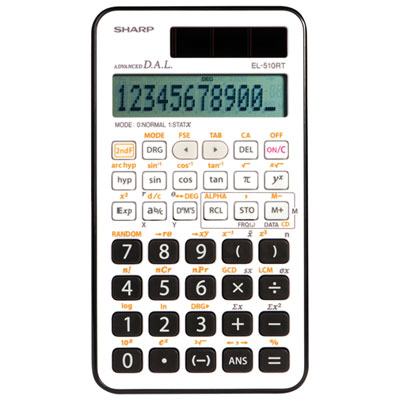
    Sharp Scientific Calculator (EL510RTB)

    About this product

    A versatile scientific calculator featuring Direct Algebraic Logic display, 169 functions, and dual power options.

    (1)
    $16.99 Your price for this item is $16.99
  2. 2

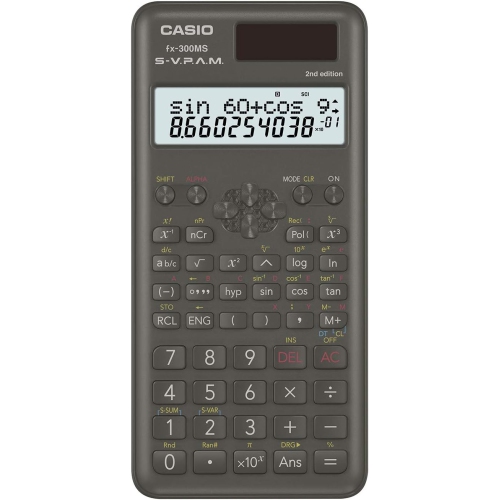
    CASIO Fx300Msplus2 Scientific 2Nd Edition Calculator

    About this product

    A versatile scientific calculator designed for advanced mathematical functions and efficient problem-solving.

    $24.95
    SAVE $15
    Your price for this item is $24.95
  3. 3

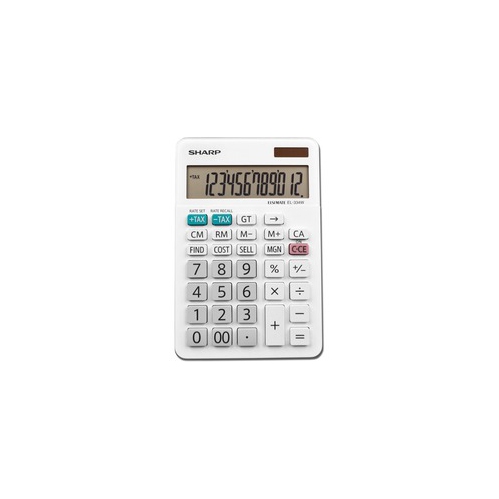
    SHARP 12-Digit Desktop Calculator (El334Wb)

    About this product

    A white desktop calculator featuring a 12-digit LCD display, dual power, auto power off, and built-in memory.

    $17.99 Your price for this item is $17.99
  4. 4

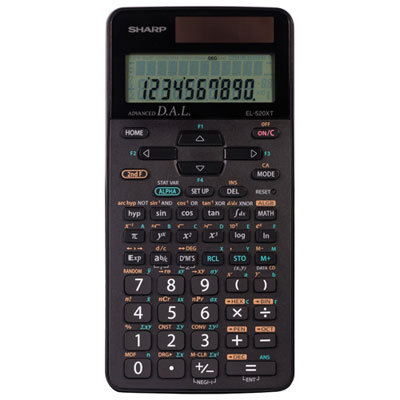
    Sharp Scientific Calculator (EL520XTBBK)

    About this product

    A versatile calculator featuring a 12-digit two-line LCD, 420 functions, and solar plus battery power.

    $25.99 Your price for this item is $25.99
  5. 5

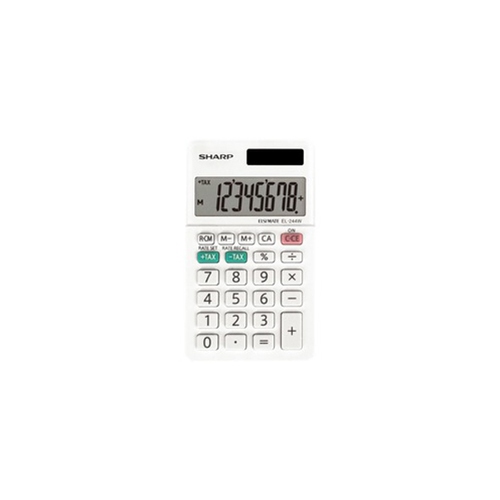
    SHARP Calculators El-244Wb 8-Digit Professional Pocket Calculator (El244Wb)

    About this product

    A compact white calculator featuring an 8-digit LCD display, 3-key memory, and auto power off.

    $7.99 Your price for this item is $7.99
  6. 6

    CASIO Fx991Msplus2

    About this product

    A scientific calculator offering advanced functions for complex mathematical and engineering calculations.

    $15.00
    SAVE $24
    Your price for this item is $15
  7. 7

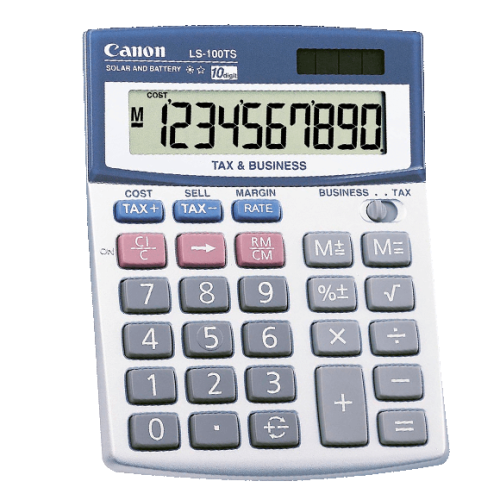
    CANON 10-Digit Calculator (Ls-100Ts)

    About this product

    A portable calculator with a large angled LCD display and dual battery and solar power options.

    $33.37
    SAVE $3
    Your price for this item is $33.37
  8. 8

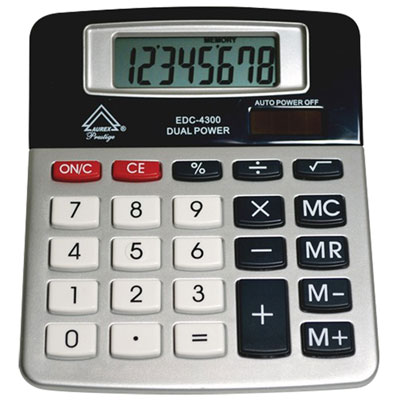
    Aurex 8-Digit Desktop Calculator (EDC4300)

    About this product

    A desktop calculator with large angled display, dual power, and memory, percent, and square root functions.

    $16.99 Your price for this item is $16.99
  9. 9

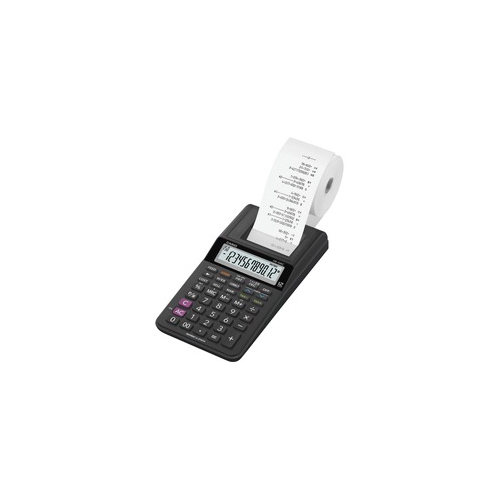
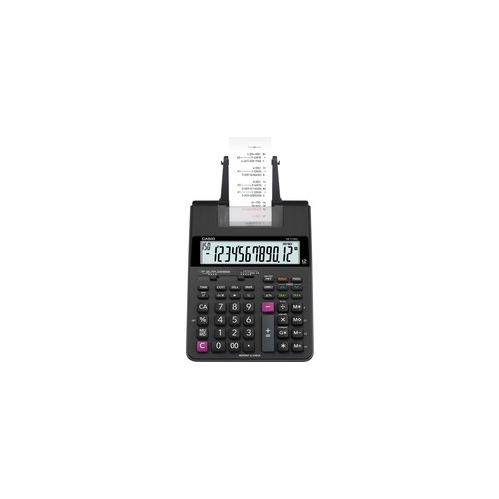
    CASIO Hr-10Rc Printing Calculator (Hr10Rc)

    About this product

    A portable, battery-powered printing calculator with a 12-digit display, ideal for quick calculations on the go.

    $43.99
    SAVE $8
    Your price for this item is $43.99
  10. 10

    CASIO Hr-170Rc Printing Calculator (Hr170Rc)

    About this product

    A compact black calculator with dual power, two-color printing, and a 12-digit easy-to-read LCD display.

    $52.99
    SAVE $9
    Your price for this item is $52.99

Why useful calculator functions beat a longer feature list

A student calculator earns its place in a pencil case by making everyday maths easier to follow, from checking a fraction during homework to working through a chemistry calculation in class. For students choosing a budget calculator, the most useful features are the ones their coursework actually requires: clear number entry, a readable display, and the right mathematical functions. Basic calculators handle arithmetic, percentages, and simple memory operations, making them suitable for straightforward numerical tasks. Scientific calculators add functions such as powers, roots, logarithms, trigonometry, and scientific notation, which are commonly used in secondary school maths and science courses. Fraction entry and conversion between fractions and decimals can be particularly helpful when an assignment moves between different ways of expressing the same value. A display that presents fractions, exponents, and roots in a layout similar to a textbook can make longer expressions easier to check before pressing the equals key. Multi-line displays may also keep an expression and its answer visible together, reducing the need to copy numbers back and forth. These practical details often matter more than a long list of functions that a student may never use. For a learner practising order of operations, visible brackets and an editable expression can help reveal a misplaced entry; for a chemistry student, clear scientific notation supports work with very large or very small quantities. Calculators complement written working rather than replace it, giving students a way to carry out numerical steps while keeping their reasoning on the page. They can also help check whether a final answer is plausible, although rounding, entry errors, and incorrect settings still affect results. For routine classroom arithmetic and homework, budget calculators for students' daily use fit naturally alongside notebooks, pencils, and other frequently used study supplies. The best fit is a calculator that feels straightforward enough for daily practice while supporting the operations expected in the student's course.

Intended use becomes especially important as students move into more specialised subjects. Algebra and geometry may call for powers, roots, and trigonometric functions, while statistics assignments can involve entering a set of values and finding a mean or standard deviation. Where supported, statistical modes and paired-data calculations can make repeated numerical work less cumbersome, but the required functions depend on the syllabus. Engineering and technical coursework may use engineering notation, complex numbers, or other advanced operations that are not included on every scientific calculator. Business and finance courses can have different requirements again, particularly when assignments involve interest calculations or time-value-of-money functions. A scientific calculator is not automatically a substitute for a financial or graphing calculator, and having more capabilities does not automatically make a device suitable for an assessment. Schools, instructors, and examination bodies may restrict programmable functions, stored information, graphing, or symbolic algebra. Approval therefore depends on the exact calculator and the rules for the particular course or exam, rather than a broad description such as “scientific” or “non-programmable.” Familiarity also matters: using the same permitted calculator throughout practice sessions makes it easier to locate a fraction key or change an angle setting when working under a time limit. Degree and radian settings deserve particular attention in trigonometry, since an otherwise correctly entered expression can produce an unexpected result in the wrong mode. For repeated calculations, an accessible previous-answer function and an editable calculation history can reduce unnecessary retyping where those features are included. Clear mode indicators, distinct brackets, and visible negative signs help students notice what they have entered. A dedicated calculator also gives numerical work its own small workspace, separate from messages and other phone activity, and can be useful in classrooms where phones are not permitted. Across these uses, an understandable keypad and a display that makes expressions easy to review are central to a comfortable study routine, whether the task is a short worksheet or a full page of multi-step problems.

Physical design makes a noticeable difference when a calculator travels between home, a classroom, the library, and a study group. Many student calculators have lightweight plastic housings that are easy to carry, while the shape of the case, the firmness of the keys, and the protection around the display influence how they feel in daily use. A compact body can slip into a pencil case, but very closely spaced buttons may be awkward for larger fingers or students who need more room between keys. Larger numerals and strong display contrast can make a screen easier to read without leaning over the desk, while clearly printed function labels help distinguish primary operations from functions accessed through a shift key. A slightly raised keypad or gently angled body may feel more comfortable during longer sessions, depending on the student's working position. A slide-on cover or protective case helps shield the keys and screen from pens, rulers, and loose objects inside a school bag, though it does not make the calculator resistant to every impact. Keeping it away from spilled drinks, damp clothing, and heavy pressure helps protect both the housing and the electronics. Routine care is usually simple: a soft, dry cloth can remove surface dust, and cleaning methods should follow the manufacturer's directions rather than involve spraying liquid directly onto the keypad. Power arrangements are another practical distinction. Battery-powered designs need the specified replacement battery when it runs low, while solar-assisted designs depend on their particular power system and lighting conditions; a solar panel alone does not guarantee operation in dim light. Storage and automatic shut-off features can also affect day-to-day convenience. For a student receiving a calculator as a school-related gift, course compatibility and comfortable handling are more meaningful than extra functions without a clear purpose. A durable cover, legible markings, and a familiar layout support the ordinary rhythm of student life: opening a notebook at the kitchen table, checking a lab calculation, and packing everything away for the next class.
Read More

FAQ

Some products may be subject to Environmental Handling Fees (EHF) depending on your province. Learn more about EHFs.