Brushed Nickel Pull Down Kitchen Faucets
Brushed Nickel Pull Down Kitchen Faucets bring a sleek, modern touch to any kitchen while offering reliable performance for everyday tasks. The brushed nickel finish adds a sophisticated look that complements a variety of décor styles, making it a popular choice for both new builds and kitchen upgrades. With their convenient pull-down design, these faucets help make cleaning and food preparation more efficient. Explore a wide selection of Brushed Nickel Pull Down Kitchen Faucets to find the perfect fit for your space and enjoy an elevated kitchen experience.
Sort
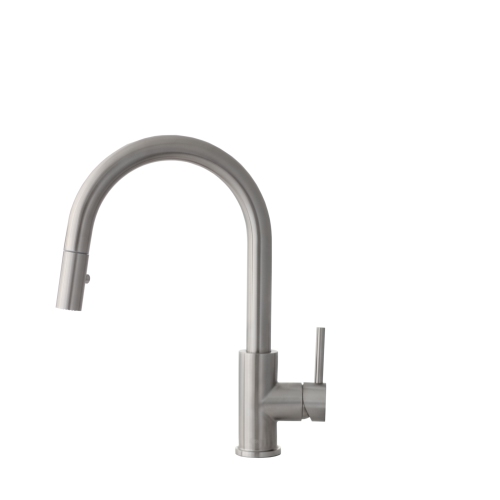
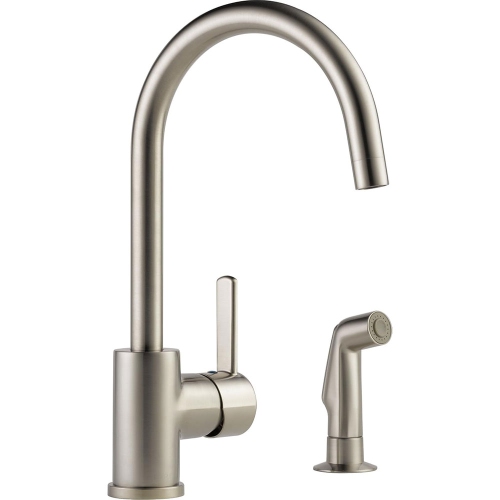
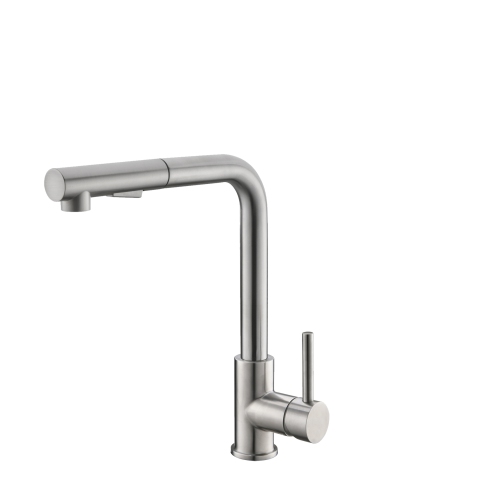
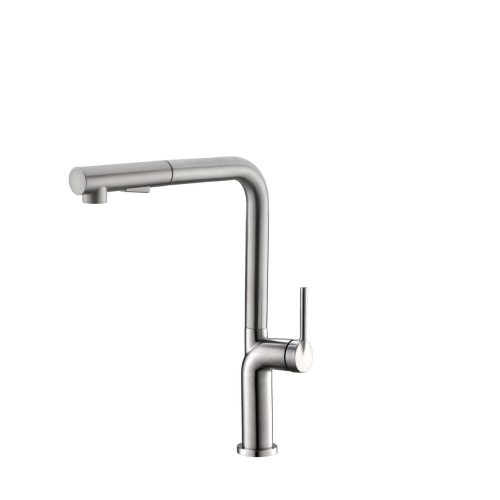

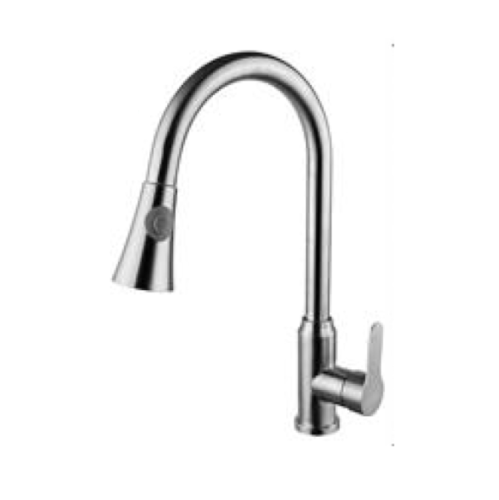
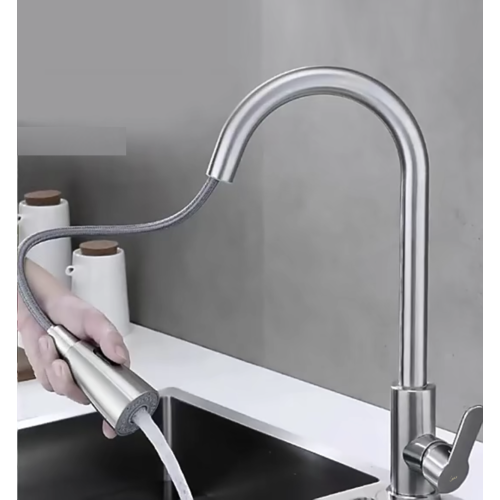
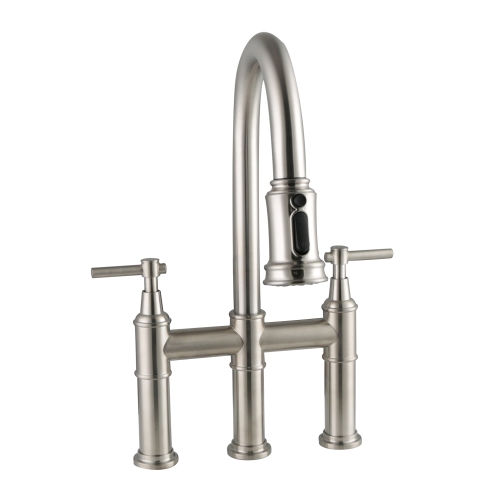
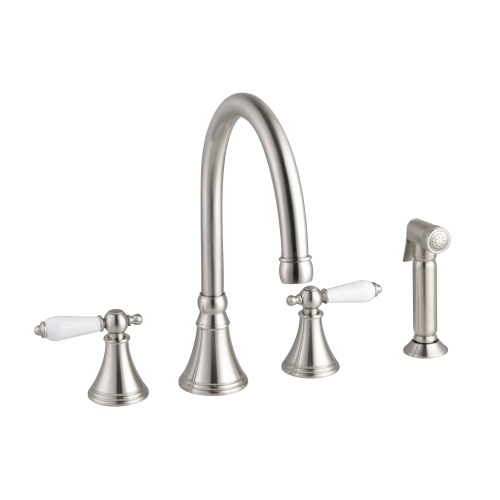
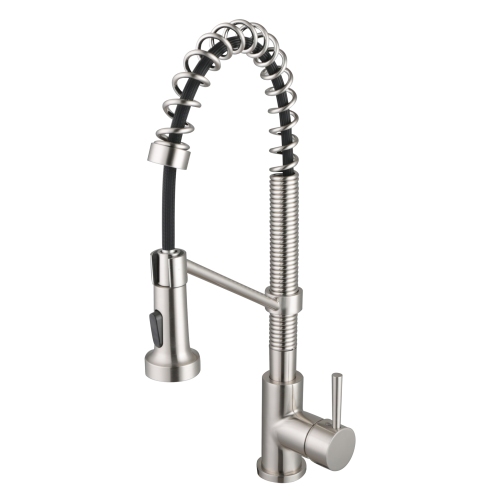
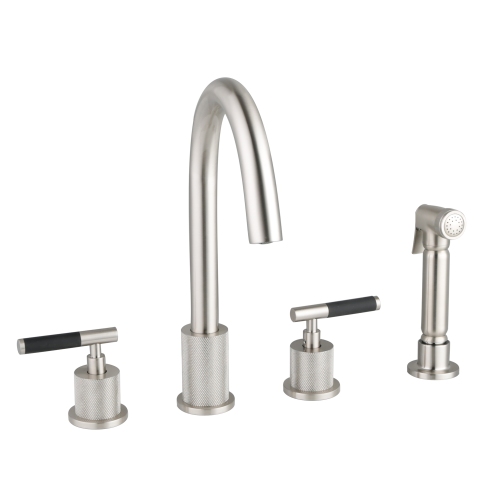
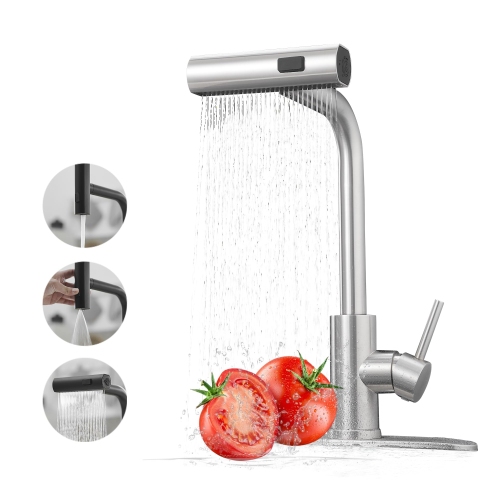
A softer sheen with reach for everyday rinsing
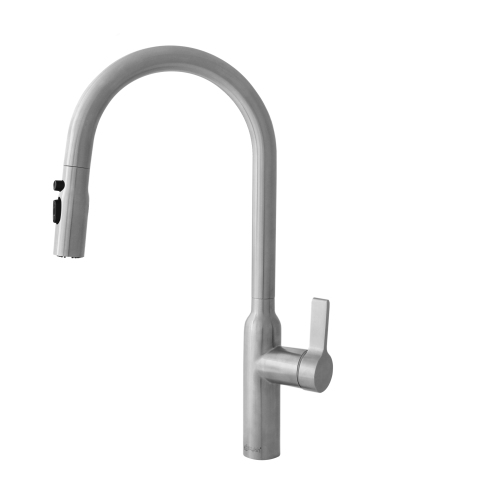
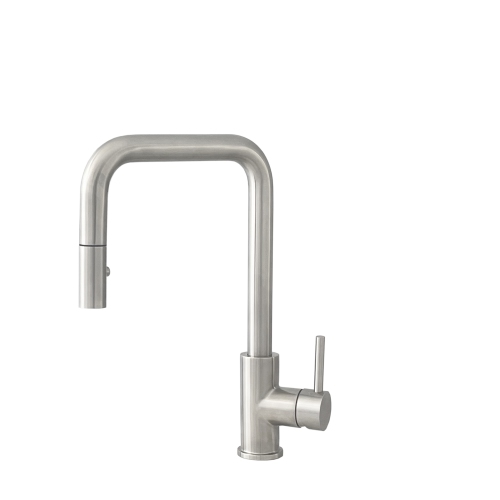
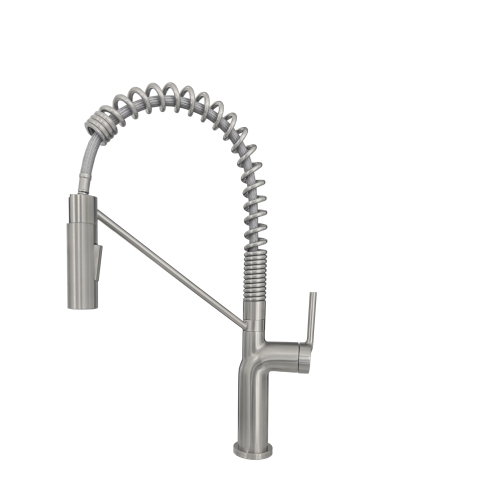
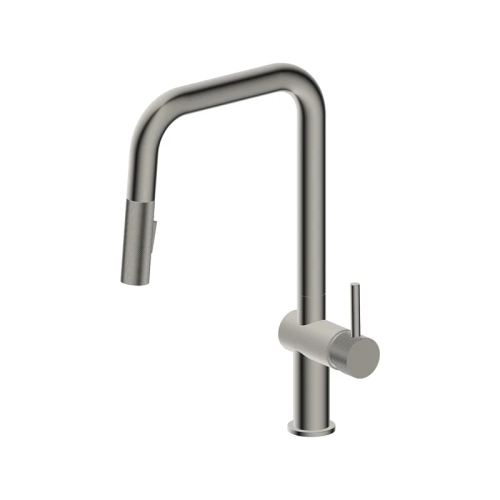
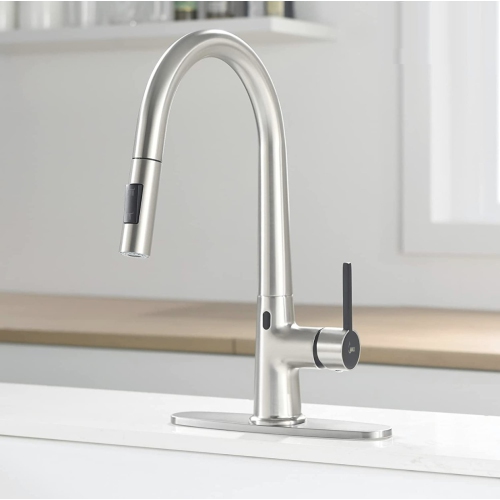
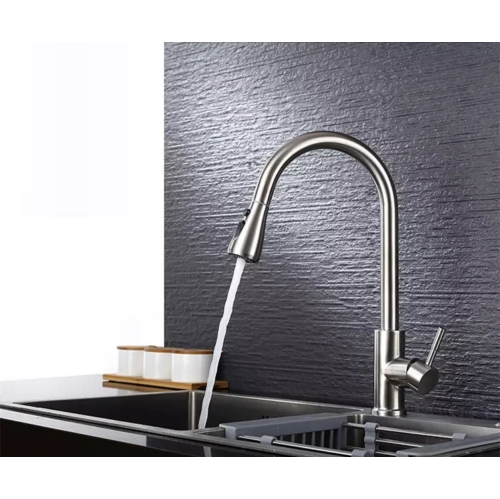
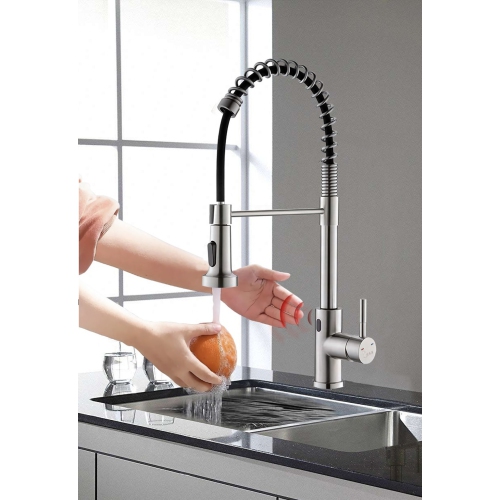
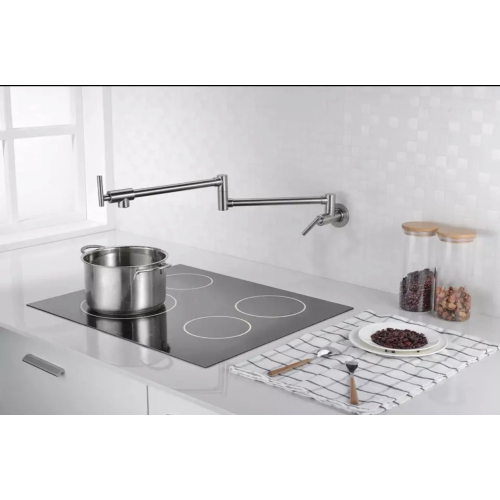
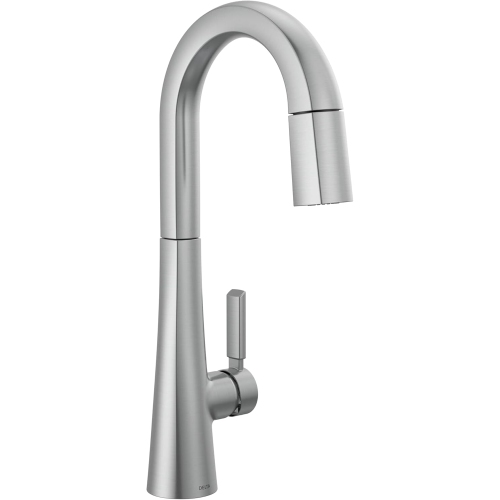
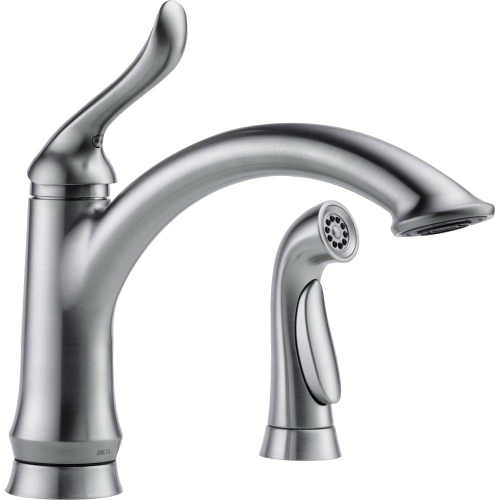
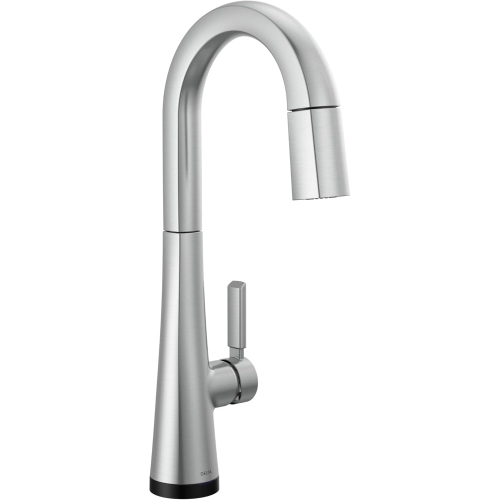
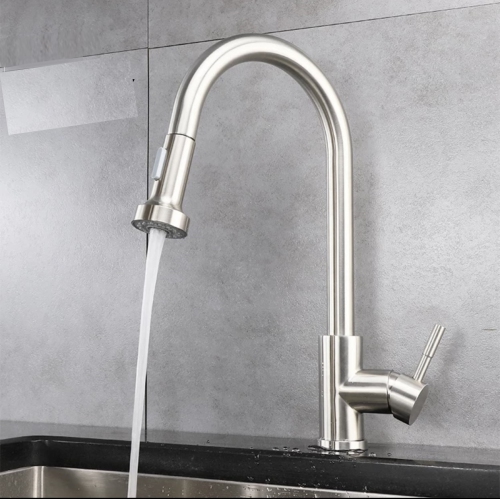
Brushed nickel pull-down kitchen faucets pair a softly textured metallic finish with a spray head that draws downward from the spout, bringing water closer to dishes, produce, and the corners of the sink. The finish usually has a warmer grey tone than polished chrome, with fine brushing that diffuses reflections rather than creating a mirror-like surface. That understated appearance works with painted cabinetry, natural wood, stone countertops, and many stainless steel sinks, making it a versatile choice for both a full kitchen renovation and a straightforward fixture replacement. Brushed nickel can make fingerprints and dried droplets less noticeable than a highly polished finish, although resistance to marks depends on the surface treatment, and regular cleaning is still necessary. Within the broader range of Brushed Nickel Faucets, pull-down kitchen designs are distinguished by their flexible hose and docking spray head. Many have a high, curved spout that leaves room beneath it for a stockpot or a stack of dinner plates. Others use a more compact curve or an exposed spring-style neck for a different look and handling experience. The pull-down action is particularly useful when rinsing a colander of berries, directing water along the sides of a roasting pan, or clearing food particles towards the drain. An aerated stream typically suits handwashing and filling containers, while a spray setting spreads water across a wider area for rinsing. Some designs also have a pause control or an additional spray pattern, but these functions are not universal. A switch that is easy to reach with a thumb can make everyday tasks feel smoother, especially when the other hand is holding a heavy dish. For households that cook often, the appeal is less about adding a striking centrepiece and more about having a faucet that comfortably supports repeated prep, washing, and cleanup throughout the day. The best fit balances that practical movement with a shape and finish that feel at home beside the sink.
Fit depends on more than the height of the faucet. Spout reach determines where the water lands in the basin, while overall height affects clearance below cupboards, shelves, or a window ledge. A tall arc can provide useful working space, but it does not automatically extend far enough into a large sink. Conversely, a long reach over a small basin may place the stream too close to the front edge, increasing the chance of splashing. The relationship between the mounting hole, sink depth, and drain position helps determine how comfortable the setup will be. For a double-bowl sink, swivel range matters because the spout needs to move between bowls without hitting a wall or nearby fixture. Some faucets rotate through a full circle; others have a limited arc that may suit a sink positioned against a backsplash. Handle clearance is equally important. A side lever needs room to move through its full range, and its position can affect ease of use for someone working from either side of the sink. Mounting configurations vary, with many pull-down faucets designed for a single hole and some able to cover additional existing holes with a compatible deck plate. Whether that plate is included, and whether it spans the existing openings, should be confirmed rather than assumed. Countertop thickness, mounting hardware, supply-line connections, and access beneath the sink also influence installation. The hose needs an unobstructed path below the counter so it can extend and retract without catching on plumbing, storage bins, or a waste container. A counterweight or another retraction mechanism helps return the head to its resting position, while some designs add magnetic docking to hold it neatly against the spout. For busy shared kitchens, a spray head that returns smoothly and stays seated can be more useful than an extra spray mode that rarely gets used. The usable hose reach matters most when considered alongside the actual sink layout, rather than as an isolated measurement.
Materials and construction influence how a brushed nickel pull-down faucet feels and performs over time. Brushed nickel describes the visible finish, not necessarily the metal beneath it; faucet bodies may use brass, stainless steel, or other materials, and spray heads may combine metal and engineered plastics. A lighter spray head is not automatically unsuitable, since lower weight can make it easier to handle, but the hose connection, controls, and docking fit should feel secure. Ceramic disc cartridges are commonly used to control water flow and can provide smooth operation and dependable shutoff when properly made and maintained. No cartridge is immune to sediment or wear, so access to replacement parts, clear care instructions, and warranty coverage remains relevant to long-term ownership. For a fixture supplying drinking and cooking water, documented compliance with applicable Canadian plumbing requirements and recognized drinking-water safety standards is an important consideration. Flow rate also affects the daily experience: filling a deep pasta pot and rinsing delicate herbs place different demands on the same faucet, and spray pattern, household water pressure, and the cleanliness of the outlet all influence performance. Single-lever controls can make flow and temperature adjustments convenient, while touch or sensor operation, where offered, introduces additional considerations such as battery access, power requirements, and manual operation. Care is usually straightforward, but finish-specific directions take priority. A soft cloth with mild soap, followed by rinsing and drying, generally helps preserve the brushed appearance without unnecessary abrasion. Scouring pads, harsh cleaners, and prolonged contact with acidic solutions can damage some finishes, so mineral buildup should be treated only with an approved method. Spray nozzles and aerators may also need periodic attention to keep the water pattern even. For home cooks, families sharing cleanup duties, and anyone replacing a stiff or awkward older fixture, these details contribute to a more comfortable sink area. A well-matched brushed nickel pull-down kitchen faucet combines useful clearance, controlled rinsing, reliable hose movement, and manageable care in a finish that complements the room without demanding attention.
Fit depends on more than the height of the faucet. Spout reach determines where the water lands in the basin, while overall height affects clearance below cupboards, shelves, or a window ledge. A tall arc can provide useful working space, but it does not automatically extend far enough into a large sink. Conversely, a long reach over a small basin may place the stream too close to the front edge, increasing the chance of splashing. The relationship between the mounting hole, sink depth, and drain position helps determine how comfortable the setup will be. For a double-bowl sink, swivel range matters because the spout needs to move between bowls without hitting a wall or nearby fixture. Some faucets rotate through a full circle; others have a limited arc that may suit a sink positioned against a backsplash. Handle clearance is equally important. A side lever needs room to move through its full range, and its position can affect ease of use for someone working from either side of the sink. Mounting configurations vary, with many pull-down faucets designed for a single hole and some able to cover additional existing holes with a compatible deck plate. Whether that plate is included, and whether it spans the existing openings, should be confirmed rather than assumed. Countertop thickness, mounting hardware, supply-line connections, and access beneath the sink also influence installation. The hose needs an unobstructed path below the counter so it can extend and retract without catching on plumbing, storage bins, or a waste container. A counterweight or another retraction mechanism helps return the head to its resting position, while some designs add magnetic docking to hold it neatly against the spout. For busy shared kitchens, a spray head that returns smoothly and stays seated can be more useful than an extra spray mode that rarely gets used. The usable hose reach matters most when considered alongside the actual sink layout, rather than as an isolated measurement.
Materials and construction influence how a brushed nickel pull-down faucet feels and performs over time. Brushed nickel describes the visible finish, not necessarily the metal beneath it; faucet bodies may use brass, stainless steel, or other materials, and spray heads may combine metal and engineered plastics. A lighter spray head is not automatically unsuitable, since lower weight can make it easier to handle, but the hose connection, controls, and docking fit should feel secure. Ceramic disc cartridges are commonly used to control water flow and can provide smooth operation and dependable shutoff when properly made and maintained. No cartridge is immune to sediment or wear, so access to replacement parts, clear care instructions, and warranty coverage remains relevant to long-term ownership. For a fixture supplying drinking and cooking water, documented compliance with applicable Canadian plumbing requirements and recognized drinking-water safety standards is an important consideration. Flow rate also affects the daily experience: filling a deep pasta pot and rinsing delicate herbs place different demands on the same faucet, and spray pattern, household water pressure, and the cleanliness of the outlet all influence performance. Single-lever controls can make flow and temperature adjustments convenient, while touch or sensor operation, where offered, introduces additional considerations such as battery access, power requirements, and manual operation. Care is usually straightforward, but finish-specific directions take priority. A soft cloth with mild soap, followed by rinsing and drying, generally helps preserve the brushed appearance without unnecessary abrasion. Scouring pads, harsh cleaners, and prolonged contact with acidic solutions can damage some finishes, so mineral buildup should be treated only with an approved method. Spray nozzles and aerators may also need periodic attention to keep the water pattern even. For home cooks, families sharing cleanup duties, and anyone replacing a stiff or awkward older fixture, these details contribute to a more comfortable sink area. A well-matched brushed nickel pull-down kitchen faucet combines useful clearance, controlled rinsing, reliable hose movement, and manageable care in a finish that complements the room without demanding attention.
Top selling and popular products
-
 Your price for this item is $69.95
 -
 Your price for this item is $130
 -
 Your price for this item is $150
 -
 Your price for this item is $150
 -
 Your price for this item is $109.99
 -
 Your price for this item is $79.99
 -
 Your price for this item is $87.99
 -
 Your price for this item is $120
Discover more categories related to Brushed Nickel Pull Down Kitchen Faucets
Top Collections:
Pokemon Centers, Kindle Devices, Best Budget Office Chairs, Apple iPhones 16, Best Laptops for Writers, iPhone 15 Apple, Canon G7X Cameras, Refurbished Apple Laptops, Alarm Clock, Motorola Razr Phones
Some products may be subject to Environmental Handling Fees
(EHF) depending on your province.
Learn more about EHFs.