Bed Wedges for Sleeping
Elevate your sleep experience with our collection of bed wedges designed to provide optimal comfort and support while you rest. Whether you're looking to alleviate acid reflux, reduce snoring, or simply enhance your sleeping posture, bed wedges offer a range of options to suit your needs. Our selection of bed wedges comes in a variety of sizes and shapes to fit almost any mattress. Explore our selection of bed wedges to find the perfect one for you.
Sort
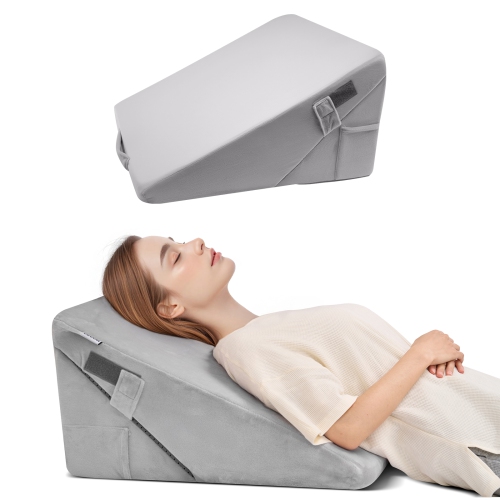
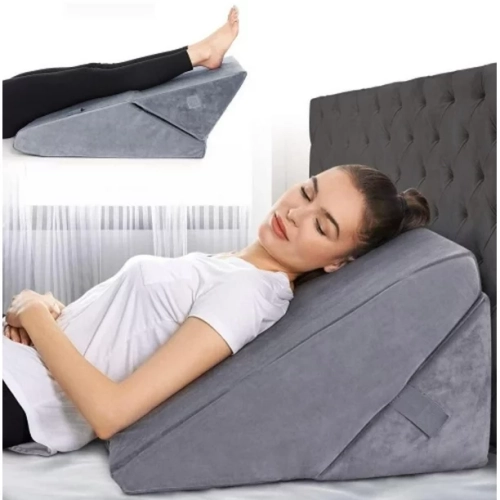
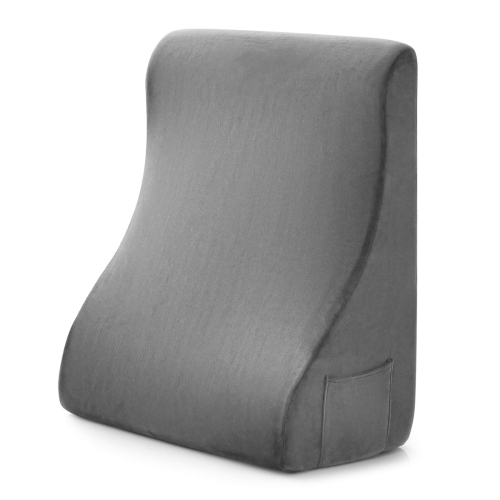
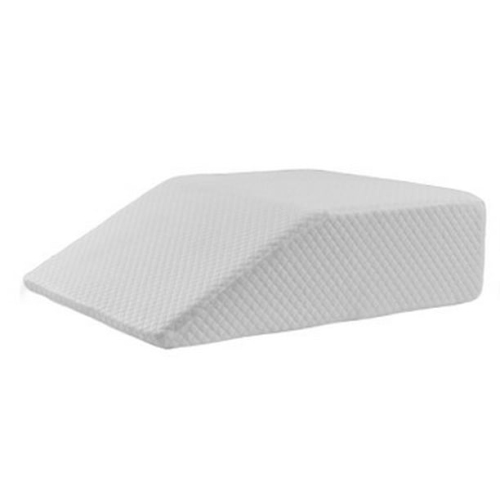
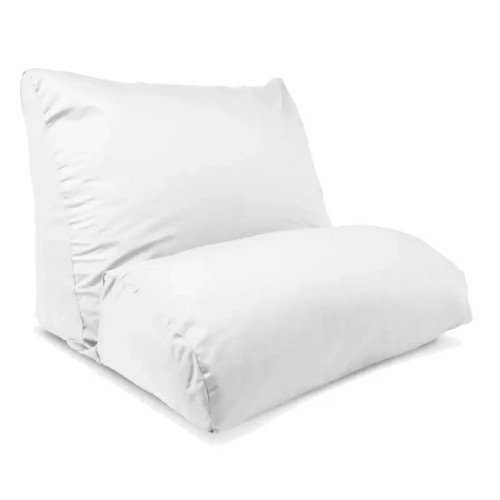
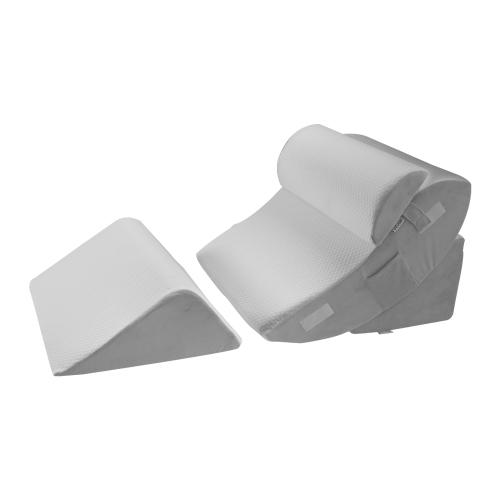
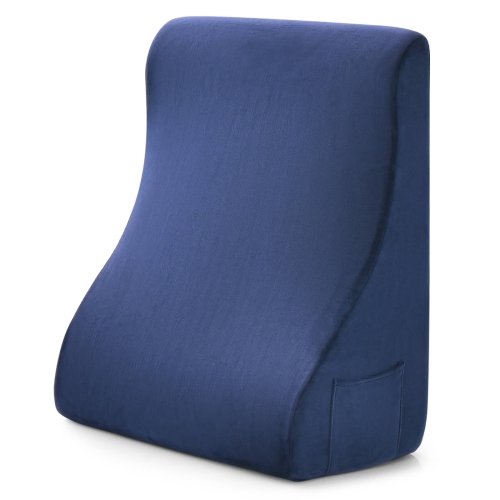
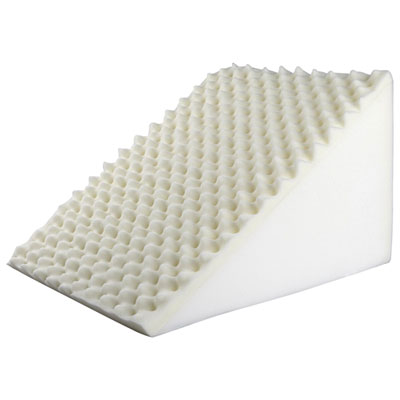
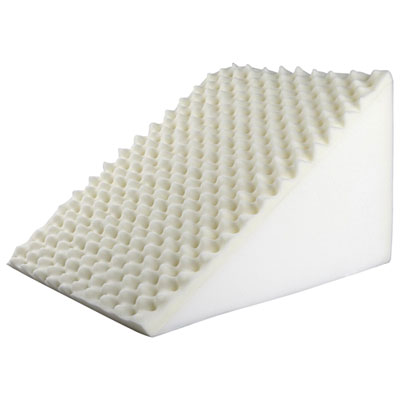
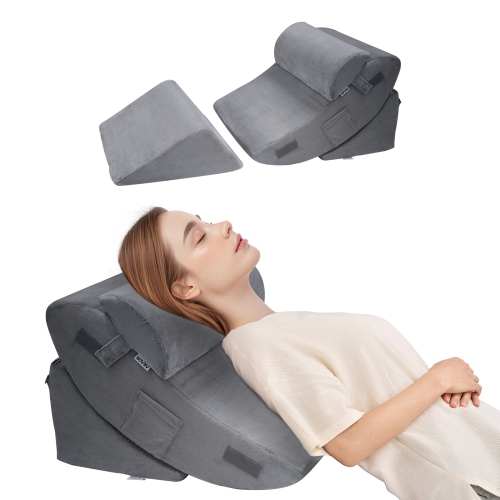
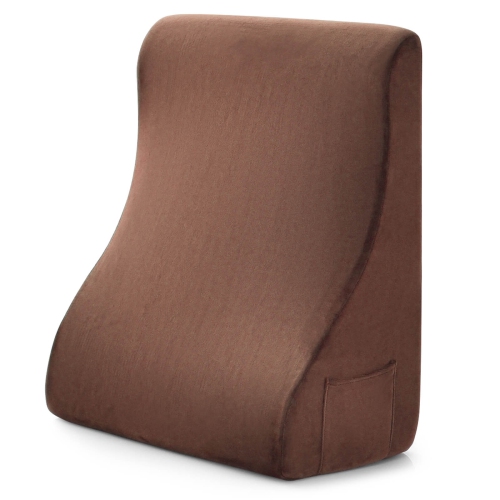
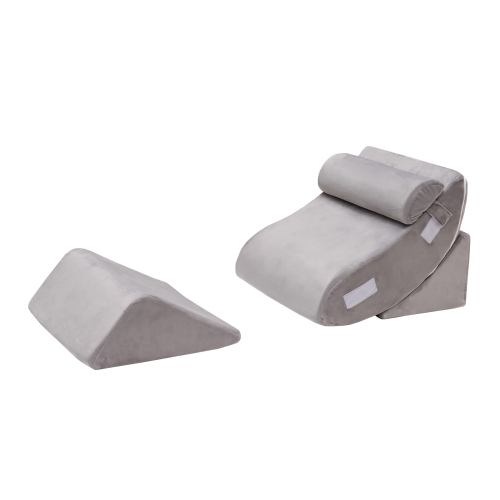
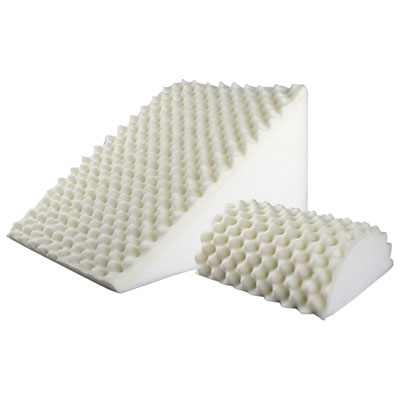
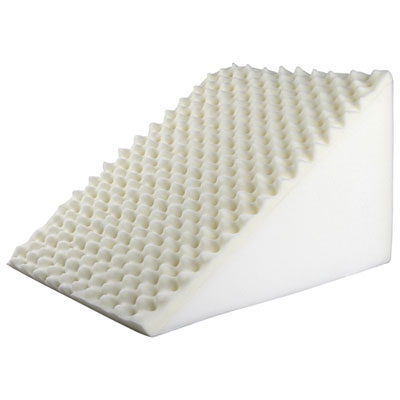
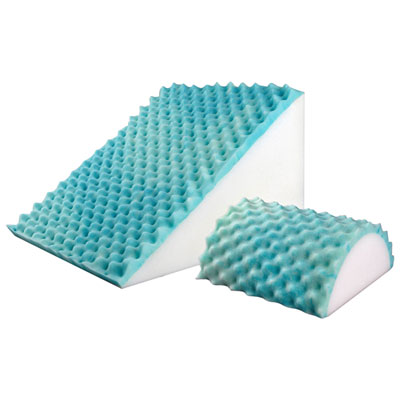
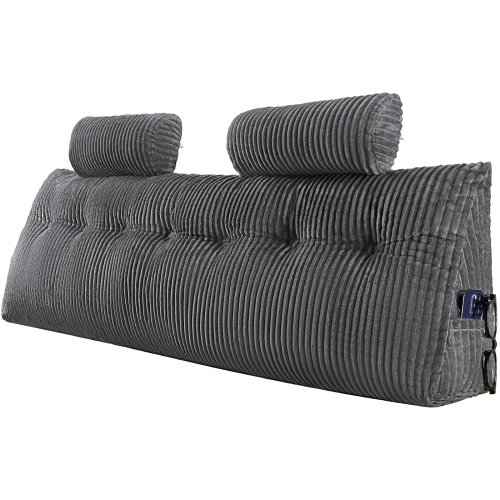
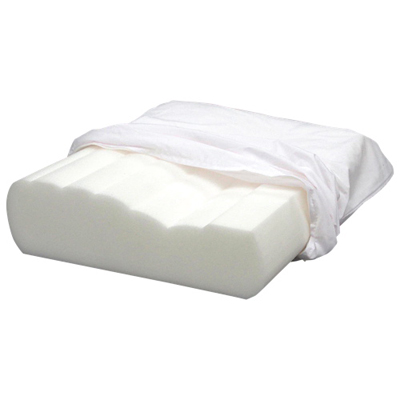
Supportive elevation for more comfortable rest and relaxation
Bed wedges for sleeping are triangular foam supports designed to create a gradual incline beneath the upper body, legs, or knees while you rest. Unlike a standard rectangular pillow, a wedge has a thicker end and a lower edge, helping your body remain raised across a broader area rather than bending sharply at the neck. Many people use one to make lying down more comfortable when dealing with occasional acid reflux, nighttime congestion, snoring, back discomfort, or the need to rest in a more upright position. Raising the upper body can use gravity to help keep stomach contents from moving upward, while an elevated position may also help some sleepers breathe more comfortably. A wedge may be useful after certain procedures or during pregnancy when lying completely flat feels uncomfortable, although anyone recovering from surgery or managing a medical condition should follow advice from a healthcare professional before changing their sleeping position. These cushions can also provide practical support during quiet activities in bed, such as reading, watching a film, using a laptop, or enjoying a morning cup of coffee. When shopping, begin by considering where the wedge will be placed and how it will be used. A lower incline, often around 6 to 8 inch, can offer gentle elevation for general support or mild snoring, while a medium incline of approximately 10 to 12 inch may feel more substantial for people who want help maintaining an elevated upper-body position. A taller wedge, such as one measuring about 15 inch at its highest point, creates a deeper angle that may suit sitting up in bed or sleepers who need pronounced elevation. The most suitable height depends on your mattress, body shape, preferred sleep position, and comfort level, so dimensions are worth checking carefully rather than choosing by appearance alone. A longer wedge generally creates a more gradual slope, which can feel easier on the back and shoulders than a short, steep cushion.
Firmness and shape matter just as much as height. High-density foam can provide stable, supportive elevation and may be preferable for people who want the wedge to hold its shape night after night. Memory foam or contoured foam may offer a softer, more moulded feel, particularly for side sleepers who are sensitive around the shoulder and hip. Back sleepers often place the thick end of the wedge beneath the upper torso, allowing the shoulders and head to rest on the incline instead of relying on a stack of loose pillows. Side sleepers may prefer a design with a gentler slope or a more forgiving surface, since an overly firm or steep wedge can place pressure on the shoulder or cause the body to rotate. Some sleepers position the wedge under the knees or lower legs instead, which can reduce the feeling of strain in the lower back by encouraging a more relaxed spinal position. A separate pillow beneath the knees may also help prevent the body from sliding down the incline, while a supportive pillow under the head should keep the neck aligned without pushing the chin toward the chest. Look for a removable, washable cover if the wedge will be used every night, especially in a warm bedroom or by someone who prefers fresh bedding. A non-slip base, secure fabric, and a shape that fits the width of the mattress can make the cushion easier to use. It is also helpful to measure the available space before buying, as a full-length wedge can extend well beyond the head of the bed and may affect bedside tables, reading lamps, or fitted sheets. For a softer layering approach, some people combine a wedge with a regular pillow, while others prefer the uncomplicated feel of one continuous support. Those comparing different styles may also wish to browse Wedge Pillows for Sleeping for additional shapes and sleeping arrangements.
A bed wedge can be a thoughtful practical gift for someone setting up a more comfortable guest room, recovering at home, spending more time reading in bed, or preparing for the cooler months when colds and nighttime congestion can make lying flat less appealing. It may also suit a student, frequent reader, or television viewer who wants support without constantly rearranging several pillows. Before giving one as a gift, consider the recipient’s mattress size, typical sleeping position, available storage, and whether they prefer a firm or cushioned feel. A folding style may be convenient in smaller rooms or for travel between bedrooms, while a solid foam design can feel steadier for regular use. Wedge cushions are not a replacement for diagnosis or treatment, and persistent heartburn, loud snoring, pauses in breathing, chest discomfort, or ongoing pain should be discussed with a qualified healthcare professional. People with mobility concerns should also make sure the incline is easy to get on and off safely. Once selected, place the wedge on a stable, supportive mattress and allow new foam to air out according to the care instructions. Keep the surface free from heavy objects when not in use, avoid folding a non-folding cushion, and check the cover and foam periodically for signs of wear. The right bed wedge should feel supportive rather than restrictive, creating a comfortable transition from lying flat to gently elevated rest. With the appropriate height, firmness, and placement, it can become a useful part of a bedtime routine, a convenient aid for relaxing upright, and a simple way to make everyday rest feel more settled.
Firmness and shape matter just as much as height. High-density foam can provide stable, supportive elevation and may be preferable for people who want the wedge to hold its shape night after night. Memory foam or contoured foam may offer a softer, more moulded feel, particularly for side sleepers who are sensitive around the shoulder and hip. Back sleepers often place the thick end of the wedge beneath the upper torso, allowing the shoulders and head to rest on the incline instead of relying on a stack of loose pillows. Side sleepers may prefer a design with a gentler slope or a more forgiving surface, since an overly firm or steep wedge can place pressure on the shoulder or cause the body to rotate. Some sleepers position the wedge under the knees or lower legs instead, which can reduce the feeling of strain in the lower back by encouraging a more relaxed spinal position. A separate pillow beneath the knees may also help prevent the body from sliding down the incline, while a supportive pillow under the head should keep the neck aligned without pushing the chin toward the chest. Look for a removable, washable cover if the wedge will be used every night, especially in a warm bedroom or by someone who prefers fresh bedding. A non-slip base, secure fabric, and a shape that fits the width of the mattress can make the cushion easier to use. It is also helpful to measure the available space before buying, as a full-length wedge can extend well beyond the head of the bed and may affect bedside tables, reading lamps, or fitted sheets. For a softer layering approach, some people combine a wedge with a regular pillow, while others prefer the uncomplicated feel of one continuous support. Those comparing different styles may also wish to browse Wedge Pillows for Sleeping for additional shapes and sleeping arrangements.
A bed wedge can be a thoughtful practical gift for someone setting up a more comfortable guest room, recovering at home, spending more time reading in bed, or preparing for the cooler months when colds and nighttime congestion can make lying flat less appealing. It may also suit a student, frequent reader, or television viewer who wants support without constantly rearranging several pillows. Before giving one as a gift, consider the recipient’s mattress size, typical sleeping position, available storage, and whether they prefer a firm or cushioned feel. A folding style may be convenient in smaller rooms or for travel between bedrooms, while a solid foam design can feel steadier for regular use. Wedge cushions are not a replacement for diagnosis or treatment, and persistent heartburn, loud snoring, pauses in breathing, chest discomfort, or ongoing pain should be discussed with a qualified healthcare professional. People with mobility concerns should also make sure the incline is easy to get on and off safely. Once selected, place the wedge on a stable, supportive mattress and allow new foam to air out according to the care instructions. Keep the surface free from heavy objects when not in use, avoid folding a non-folding cushion, and check the cover and foam periodically for signs of wear. The right bed wedge should feel supportive rather than restrictive, creating a comfortable transition from lying flat to gently elevated rest. With the appropriate height, firmness, and placement, it can become a useful part of a bedtime routine, a convenient aid for relaxing upright, and a simple way to make everyday rest feel more settled.
Top selling and popular products
-
 Your price for this item is $300
 -
 Your price for this item is $350
 -
 Your price for this item is $175
 -
 Your price for this item is $150
 -
 Your price for this item is $295
 -
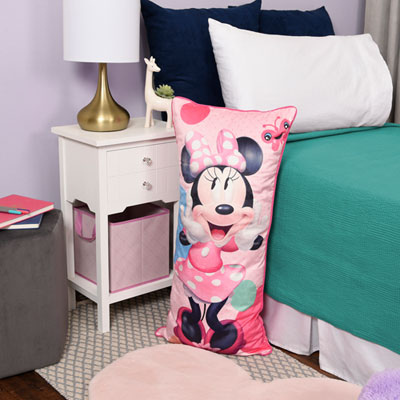 Your price for this item is $24.99
 -
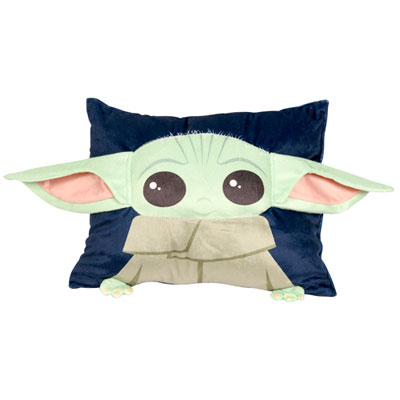 Your price for this item is $19.99
 -
 Your price for this item is $24.98
Discover more categories related to Bed Wedges for Sleeping
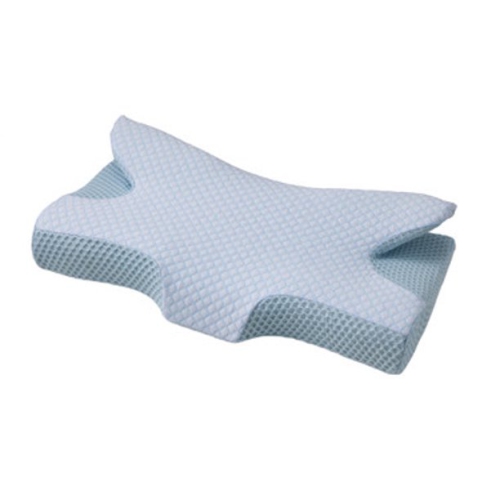
Top Collections:
Pokemon Centers, Kindle Devices, Best Budget Office Chairs, Apple iPhones 16, Canon G7X Cameras, iPhone 15 Apple, Alarm Clock, Refurbished Apple Laptops, Flip Phones, Best Laptops for Writers
Some products may be subject to Environmental Handling Fees
(EHF) depending on your province.
Learn more about EHFs.