Clothing Drying Racks
If you're looking for a practical solution to air dry your laundry without taking up too much space, these clothing drying racks offer a range of options to suit your needs, whether you have limited space in your home or simply prefer the eco-friendly and gentle drying method that air drying provides. With sturdy construction and versatile designs, these racks are perfect for drying everything from delicate garments to towels and linens.
Sort





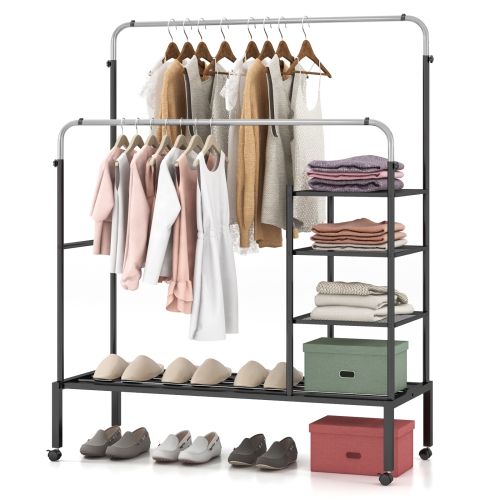
Air-drying space that fits your laundry and your home
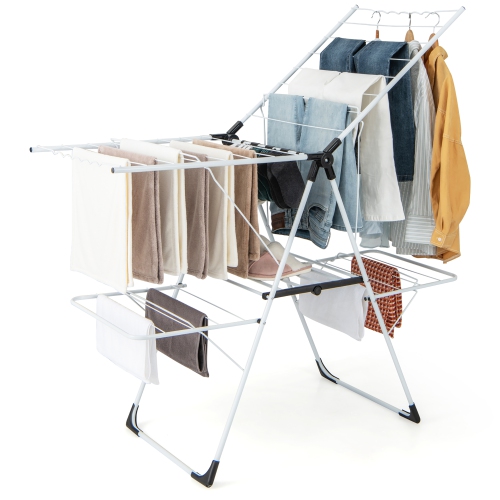
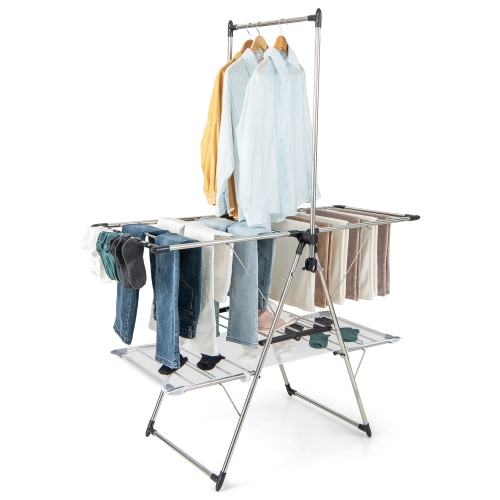
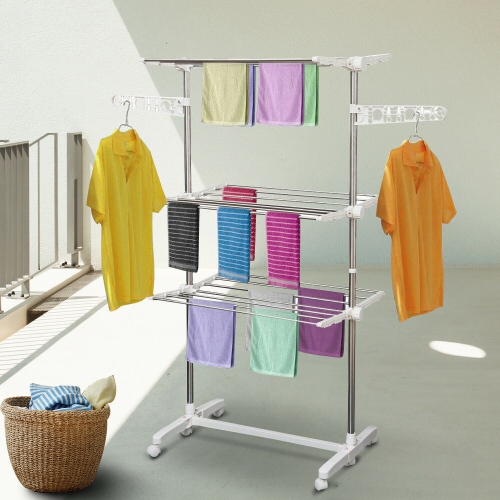
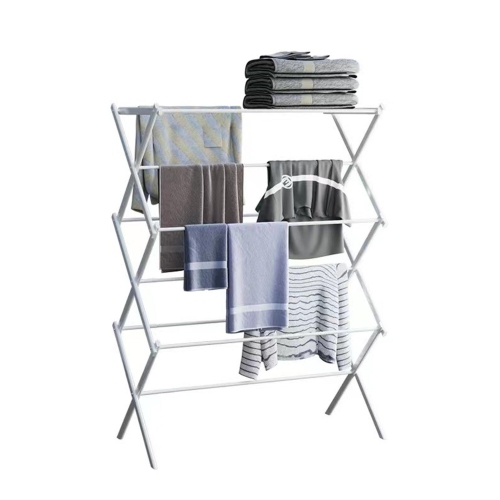
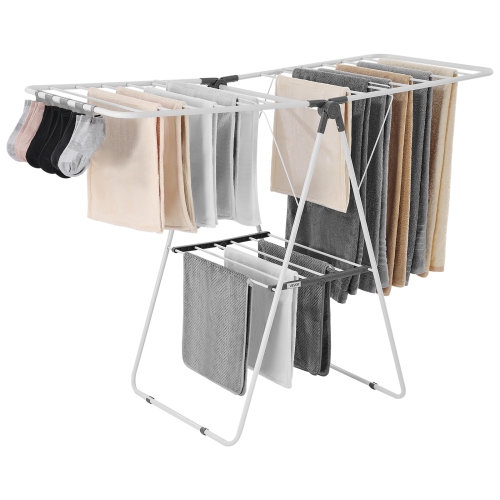
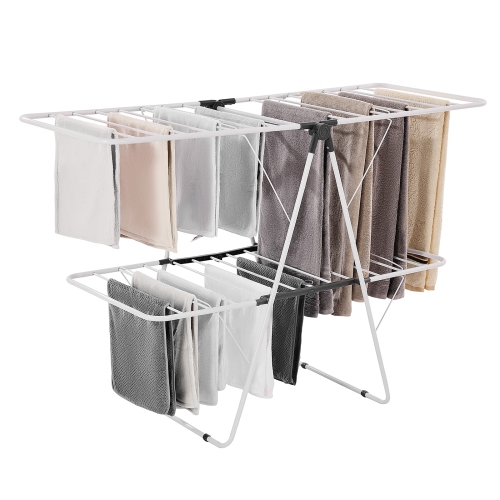
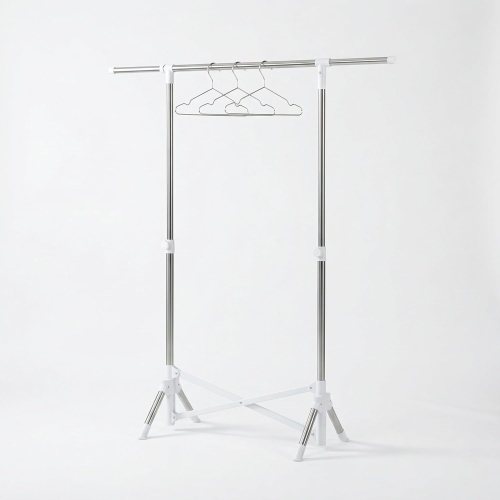
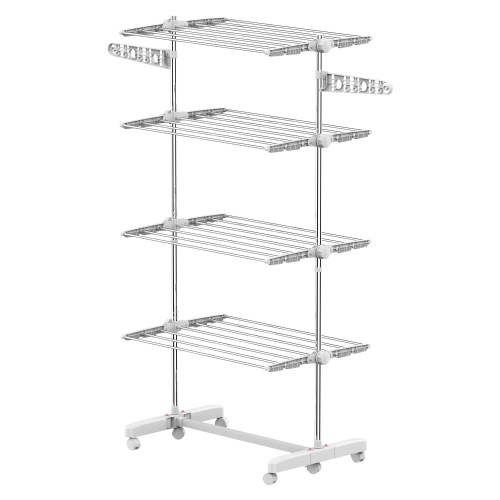
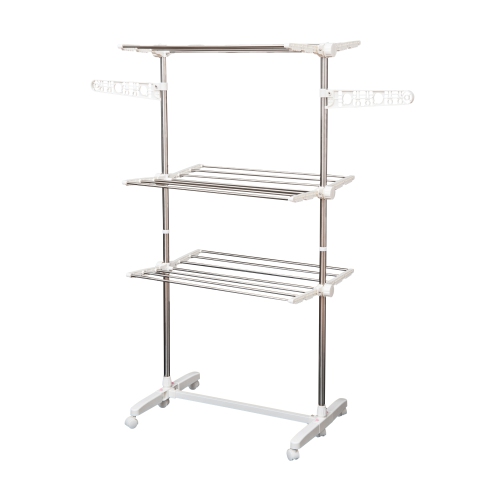
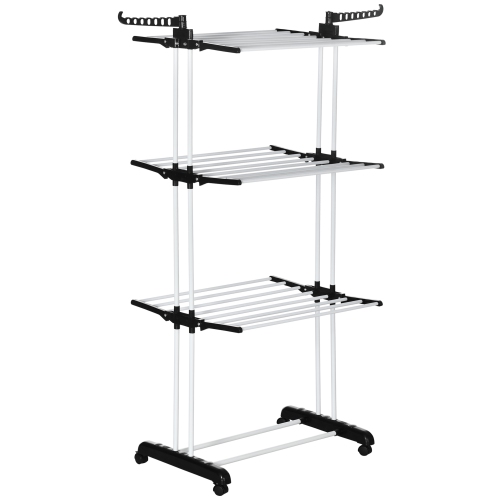
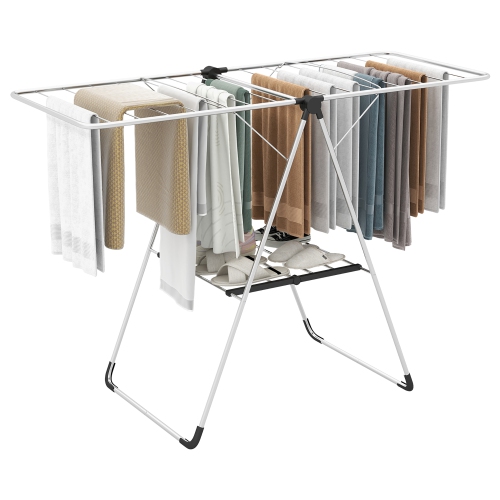
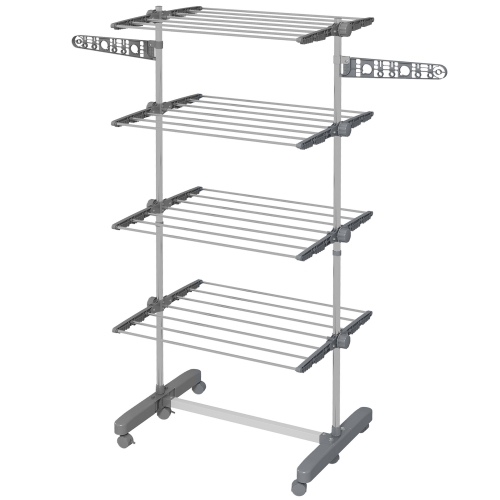
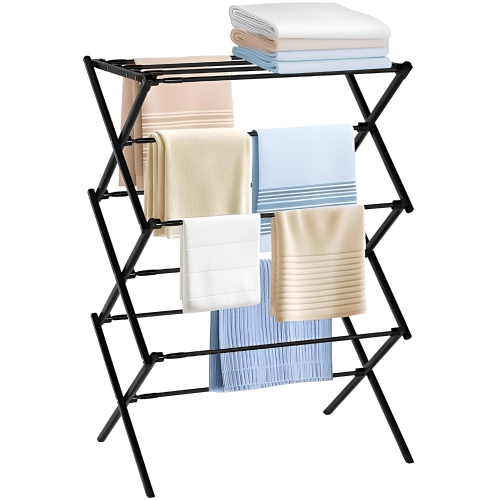
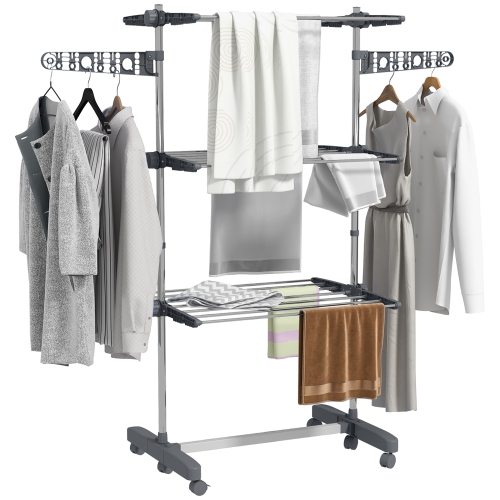
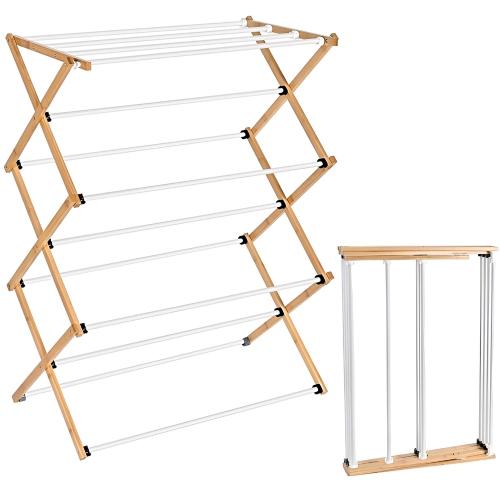
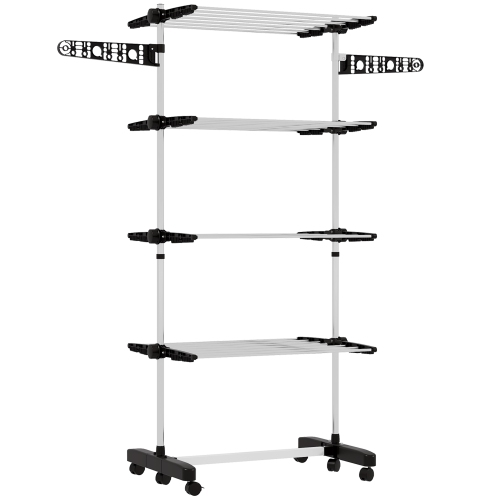
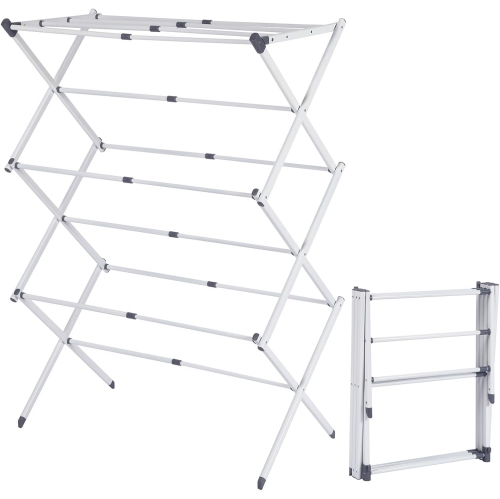
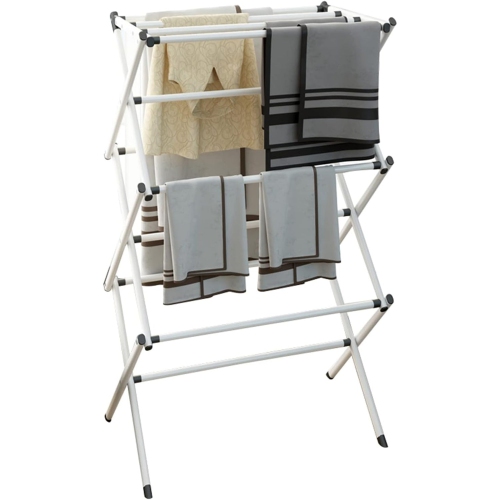
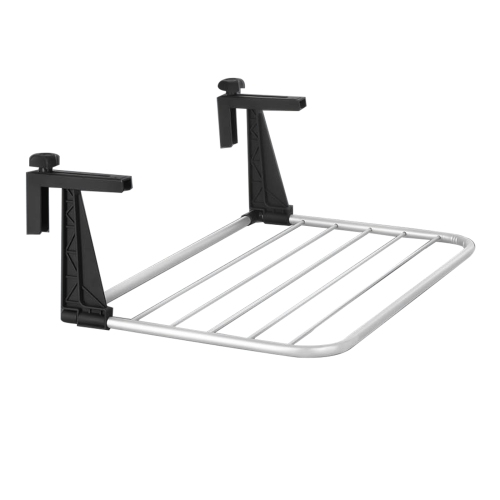
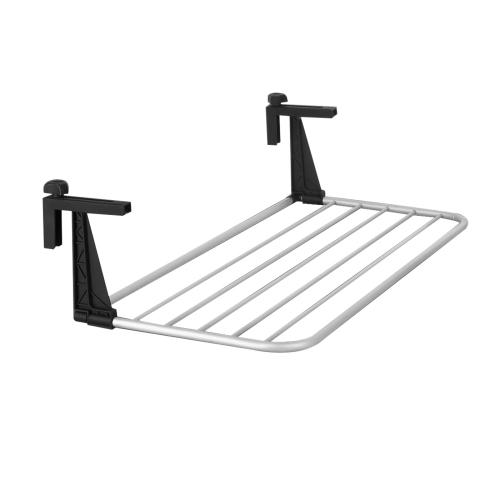
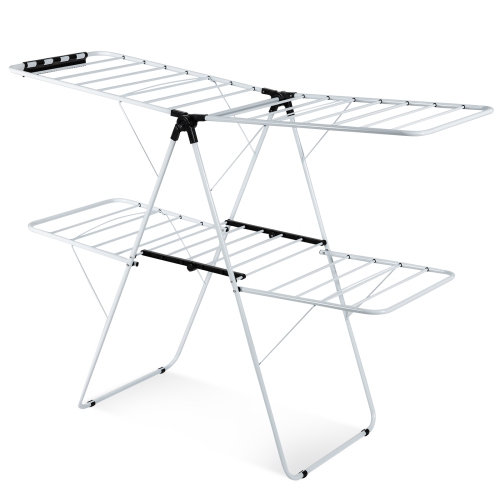
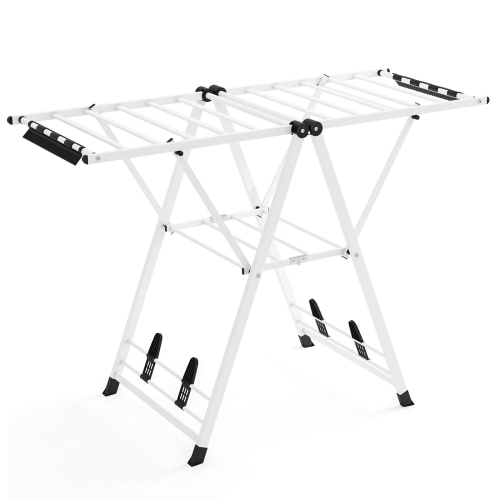
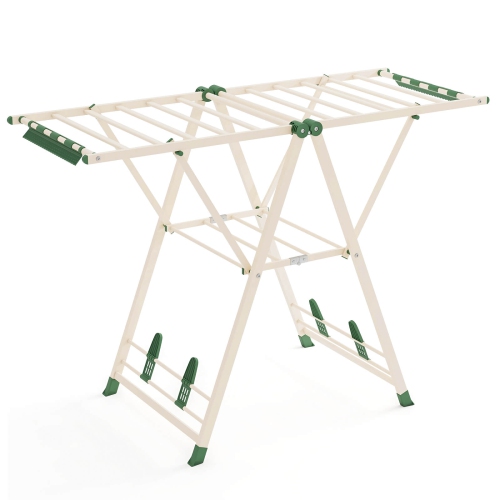
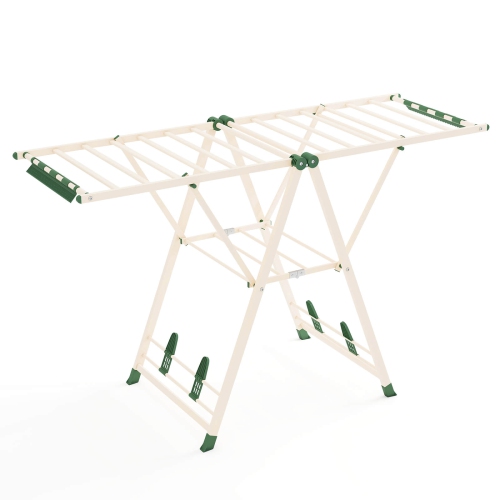
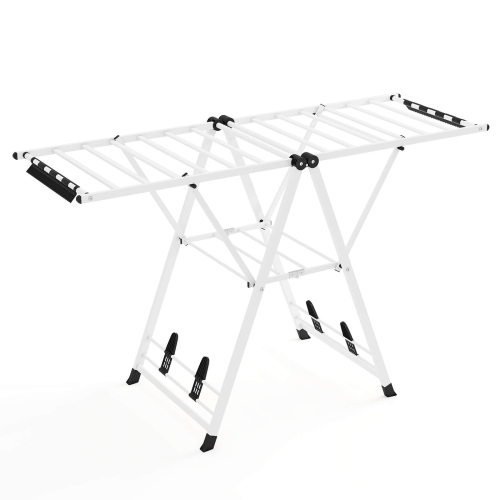
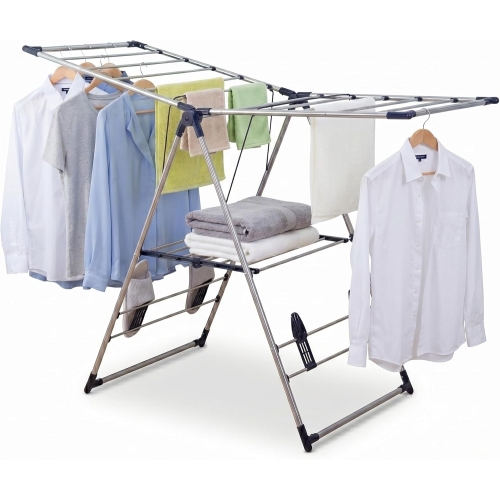
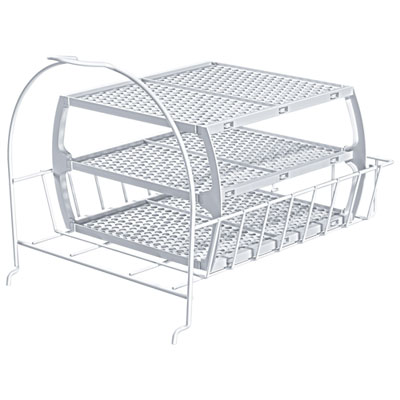
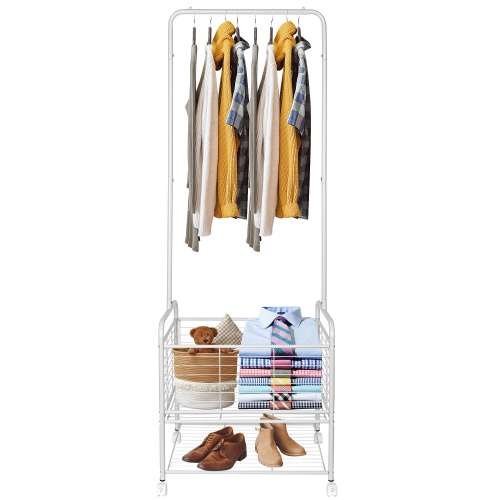
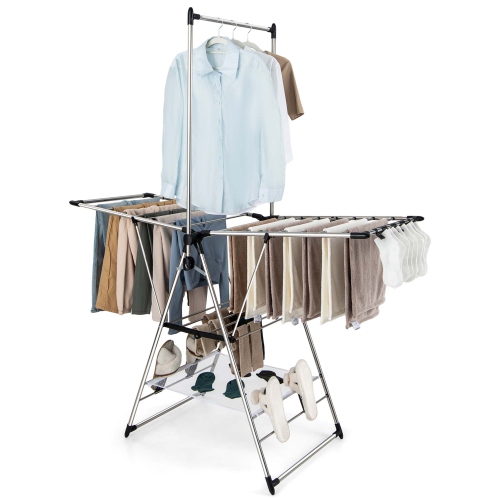
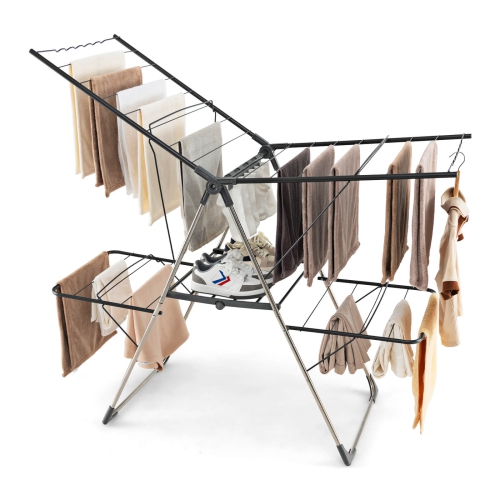
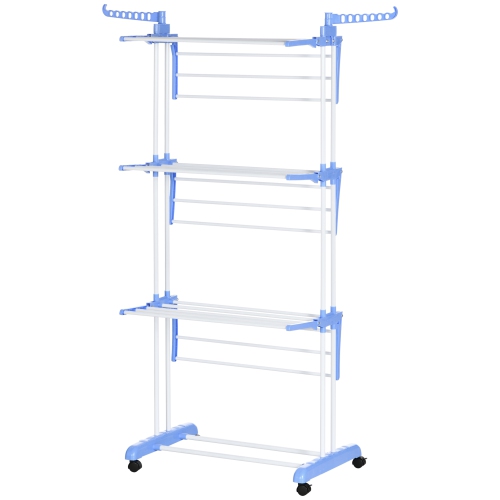
Clothing drying racks provide a dedicated place to air-dry laundry, with rails, wings, shelves, or hanging space that support different fabrics and garment shapes. They are useful for clothing labelled for air drying, pieces that need to dry flat, and everyday loads that do not all belong in a tumble dryer. A rack can hold the shirts you wear throughout the week, the workout clothes washed after an evening session, or the small household linens that otherwise end up draped over chair backs. The right shape depends as much on your available space as on the amount of laundry you do. Accordion drying racks expand into a series of raised rails and usually fold into a narrow profile for storage. X-frame racks offer a straightforward freestanding layout, while gullwing designs have side sections that open out to create additional drying space. Depending on their height and arrangement, those wings can accommodate longer garments without letting hems trail on the floor. Tiered or tower drying racks stack usable space vertically, making them practical for households with plenty of smaller pieces but limited floor space. Wall-mounted and over-the-door styles keep the floor clear, although their suitability depends on the mounting surface, door clearance, and stated weight capacity. Flat drying racks, including mesh-supported designs, serve a different purpose: they support garments horizontally rather than leaving their weight suspended from a rail. That can be especially helpful for washable knitwear whose care label calls for drying flat. In an apartment, a folding rack might open beside the laundry area and tuck away before guests arrive; in a larger home, a permanent rack can give delicate loads their own spot. During the cooler months, when outdoor drying is less convenient, an indoor rack also makes it easier to keep a familiar laundry routine without relying on the weather. It is a simple household addition, but its proportions and layout make a noticeable difference in daily use.
When comparing clothes drying racks, look beyond the number of rails and consider how much of the advertised drying space your own laundry can actually use. Closely spaced bars may work well for socks and lightweight pieces, but thick towels and jeans need more room around them. A tall rack can offer generous capacity in a small footprint, yet long trousers may need an open section beneath the upper rails so they do not rest on another load. For shirts dried on hangers, check that the rack is designed to accommodate hangers and that there is enough clearance below. Measure the fully opened width, depth, and height, including any extended wings, rather than judging by folded dimensions alone. Leave enough room to walk past comfortably, open nearby cupboards, and load the washing machine. Storage matters just as much in a shared living space: a rack that folds flat may slide beside a cabinet, while a narrow tower may fit into a utility cupboard only if its shelves fold inward. If you are setting up a dedicated laundry area, Laundry Room Drying Racks can help bring that part of the room together without taking over the working space. Materials and construction deserve a close look, too. Metal, plastic, and wood each have different care requirements, and any surface touching damp fabric should be smooth, clean, and suitable for repeated moisture exposure. Protective feet can help limit slipping and floor marks, while secure hinges and locking supports help an opened rack stay in position. Check the manufacturer's load rating, remembering that wet denim and towels weigh considerably more than they do when dry. For wall-mounted designs, confirm the installation requirements and whether the necessary fixings suit your wall. Over-the-door racks need a compatible door thickness and enough clearance to close properly. Useful extras, such as sock clips, adjustable wings, or wheels, are worth considering when they solve a recurring problem rather than simply adding complexity.
A well-chosen drying rack should make laundry feel less scattered, whether you wash a few pieces at a time or sort several household loads each week. Good results still depend on how the clothing is arranged. Leave gaps between garments so air can move around them, spread bunched fabric along the rails, and avoid layering several wet pieces over one another. Where the garment care label permits, a suitable washing-machine spin cycle removes excess water before hanging; delicate pieces may need gentler handling, such as pressing moisture out with a towel rather than wringing. Reshape washable sweaters while damp and lay them flat when instructed, supporting sleeves as well as the body. For garments that can hang, smoothing seams and straightening hems before drying can reduce creases, though some fabrics will still need ironing or steaming. Think of a thick jumper draped over a single narrow bar: its weight sits in one place, and the fold can hold moisture long after the outside feels dry. A suitable flat surface or a broader spread across the rack gives that fabric more support and breathing room. Position the rack in a room with good air circulation, away from walls and furniture that should not remain damp, and follow appliance safety clearances rather than placing clothing against a heater. Indoor drying adds moisture to the air, so ventilation is important, especially if windows develop condensation. Drying time varies with fabric thickness, room temperature, humidity, and spacing; a full rack of towels will not dry at the same pace as a few lightweight shirts. For students, renters, busy families, and anyone caring for washable delicates, a rack can become an unremarkable but much-used part of the home. It can also be a thoughtful practical gift for someone moving into their first place, provided its size suits their rooms and storage. The most useful choice is one that opens easily, holds the laundry comfortably, and puts away without a struggle when everything is dry.
When comparing clothes drying racks, look beyond the number of rails and consider how much of the advertised drying space your own laundry can actually use. Closely spaced bars may work well for socks and lightweight pieces, but thick towels and jeans need more room around them. A tall rack can offer generous capacity in a small footprint, yet long trousers may need an open section beneath the upper rails so they do not rest on another load. For shirts dried on hangers, check that the rack is designed to accommodate hangers and that there is enough clearance below. Measure the fully opened width, depth, and height, including any extended wings, rather than judging by folded dimensions alone. Leave enough room to walk past comfortably, open nearby cupboards, and load the washing machine. Storage matters just as much in a shared living space: a rack that folds flat may slide beside a cabinet, while a narrow tower may fit into a utility cupboard only if its shelves fold inward. If you are setting up a dedicated laundry area, Laundry Room Drying Racks can help bring that part of the room together without taking over the working space. Materials and construction deserve a close look, too. Metal, plastic, and wood each have different care requirements, and any surface touching damp fabric should be smooth, clean, and suitable for repeated moisture exposure. Protective feet can help limit slipping and floor marks, while secure hinges and locking supports help an opened rack stay in position. Check the manufacturer's load rating, remembering that wet denim and towels weigh considerably more than they do when dry. For wall-mounted designs, confirm the installation requirements and whether the necessary fixings suit your wall. Over-the-door racks need a compatible door thickness and enough clearance to close properly. Useful extras, such as sock clips, adjustable wings, or wheels, are worth considering when they solve a recurring problem rather than simply adding complexity.
A well-chosen drying rack should make laundry feel less scattered, whether you wash a few pieces at a time or sort several household loads each week. Good results still depend on how the clothing is arranged. Leave gaps between garments so air can move around them, spread bunched fabric along the rails, and avoid layering several wet pieces over one another. Where the garment care label permits, a suitable washing-machine spin cycle removes excess water before hanging; delicate pieces may need gentler handling, such as pressing moisture out with a towel rather than wringing. Reshape washable sweaters while damp and lay them flat when instructed, supporting sleeves as well as the body. For garments that can hang, smoothing seams and straightening hems before drying can reduce creases, though some fabrics will still need ironing or steaming. Think of a thick jumper draped over a single narrow bar: its weight sits in one place, and the fold can hold moisture long after the outside feels dry. A suitable flat surface or a broader spread across the rack gives that fabric more support and breathing room. Position the rack in a room with good air circulation, away from walls and furniture that should not remain damp, and follow appliance safety clearances rather than placing clothing against a heater. Indoor drying adds moisture to the air, so ventilation is important, especially if windows develop condensation. Drying time varies with fabric thickness, room temperature, humidity, and spacing; a full rack of towels will not dry at the same pace as a few lightweight shirts. For students, renters, busy families, and anyone caring for washable delicates, a rack can become an unremarkable but much-used part of the home. It can also be a thoughtful practical gift for someone moving into their first place, provided its size suits their rooms and storage. The most useful choice is one that opens easily, holds the laundry comfortably, and puts away without a struggle when everything is dry.
Top selling and popular products
-
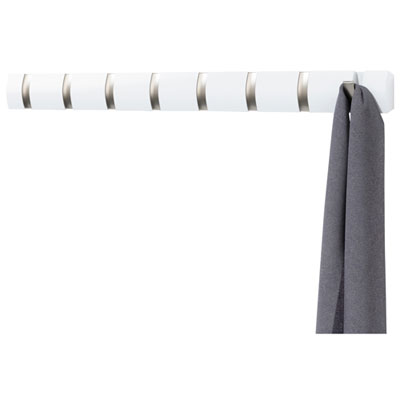 Your price for this item is $55.98
 -
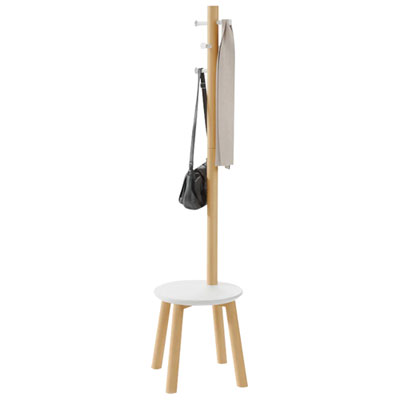 Your price for this item is $119.98
 -
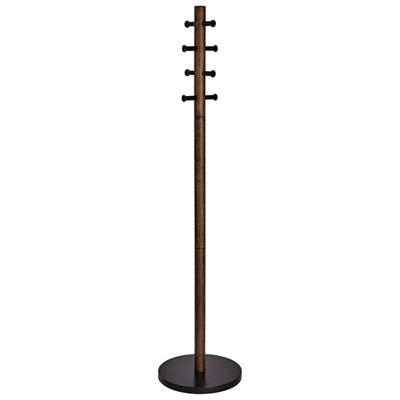 Your price for this item is $144.98
 -
 Your price for this item is $75.9
 -
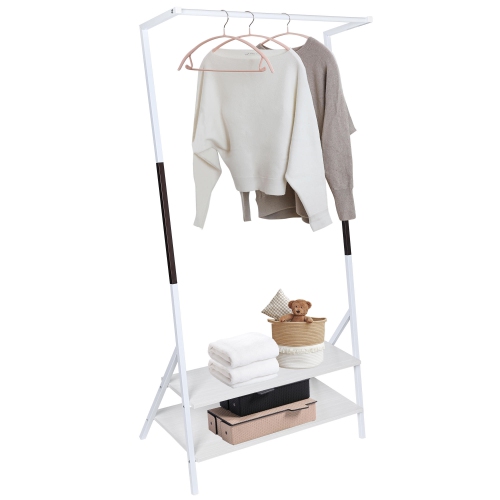 Your price for this item is $49.99
 -
 Your price for this item is $46.97
 -
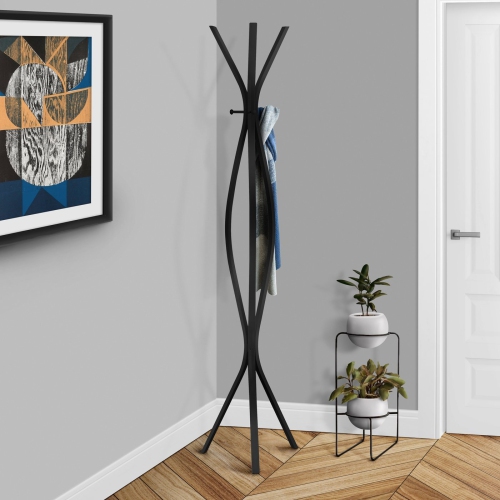 Your price for this item is $69.97
 -
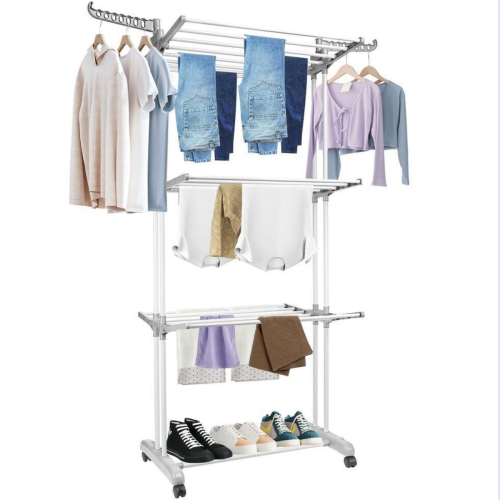 Your price for this item is $49.99
Discover more categories related to Clothing Drying Racks
Top Collections:
Pokemon Centers, Kindle Devices, Best Budget Office Chairs, Apple iPhones 16, Best Laptops for Writers, iPhone 15 Apple, Canon G7X Cameras, Refurbished Apple Laptops, Alarm Clock, Motorola Razr Phones
Some products may be subject to Environmental Handling Fees
(EHF) depending on your province.
Learn more about EHFs.