Fade Resistant Patio Umbrellas
Fade Resistant Patio Umbrellas offer a stylish way to enhance your outdoor space while maintaining a fresh, vibrant look season after season. Perfect for patios, decks, and poolside lounging, these umbrellas provide reliable shade and add a touch of color to any backyard setting. Explore a variety of sizes, colors, and designs to find the ideal Fade Resistant Patio Umbrella that complements your outdoor décor and creates a comfortable retreat for relaxing or entertaining guests.
Sort

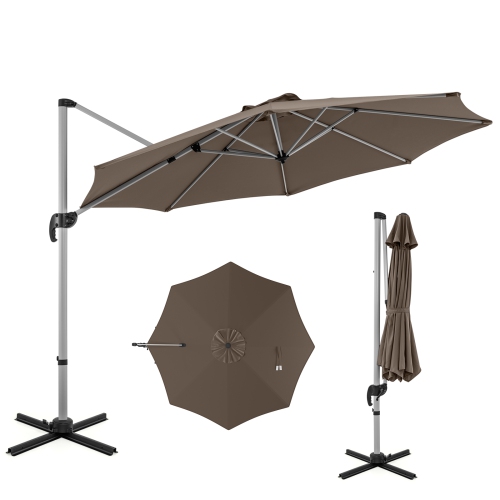
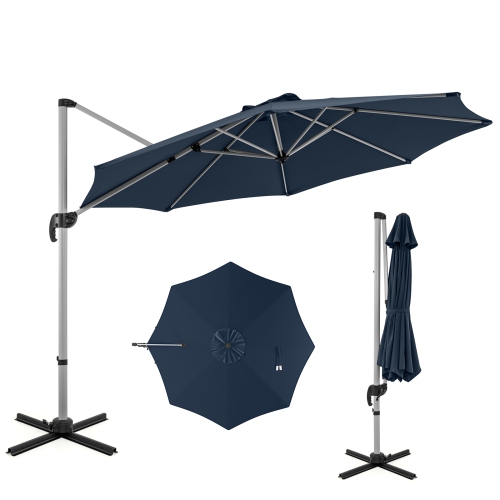
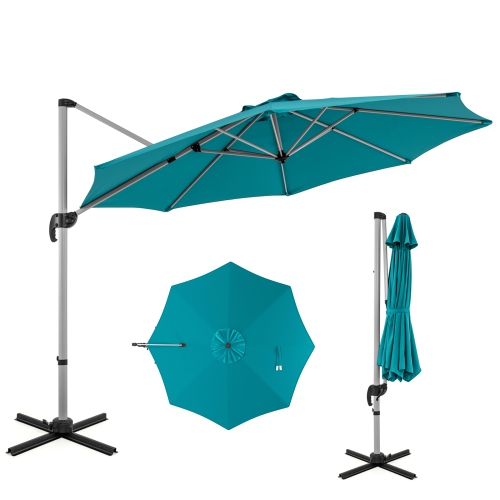
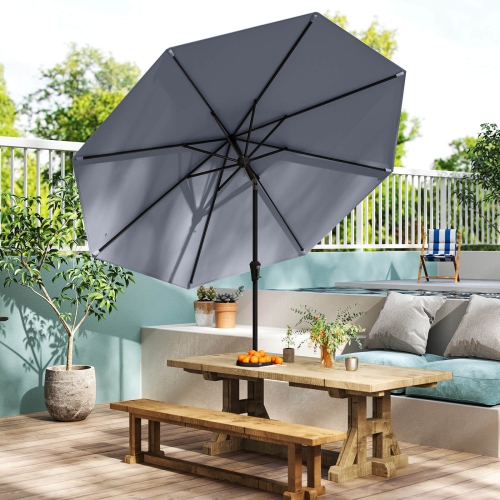
Why canopy fabric matters more than colour alone
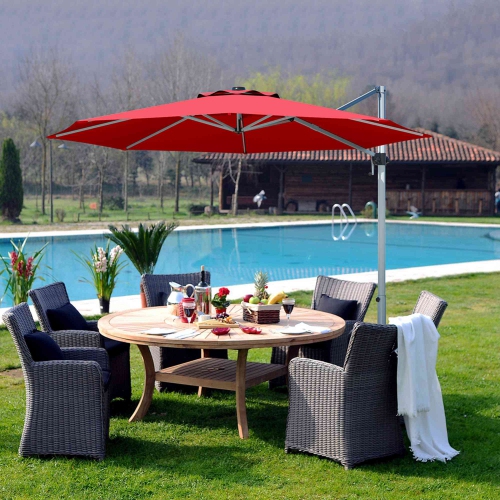
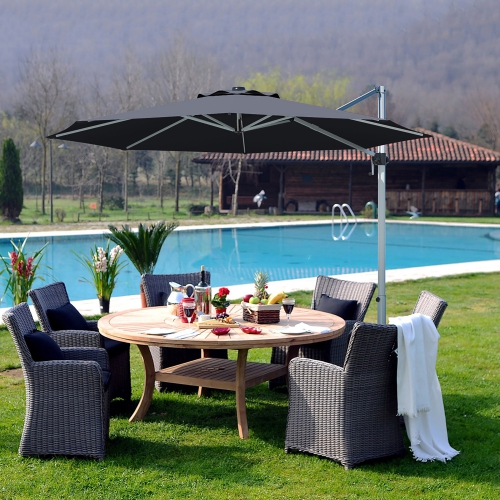
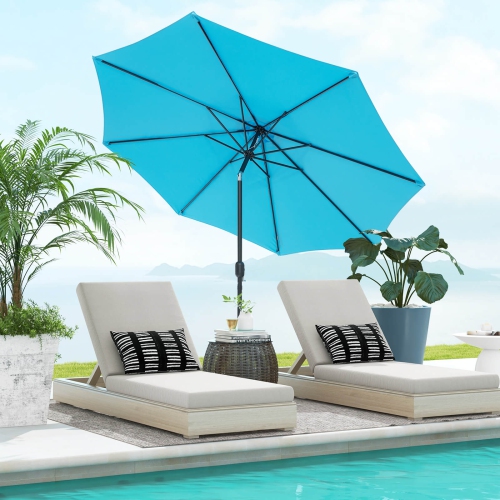
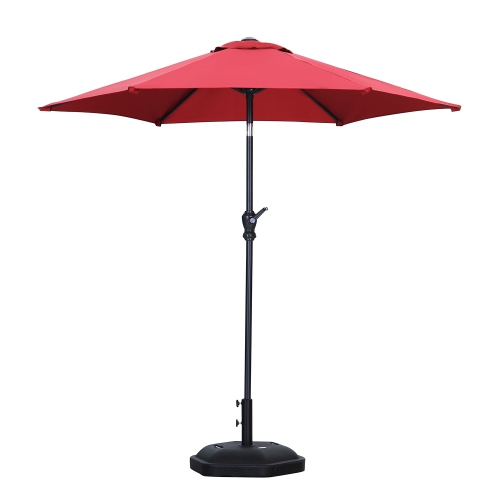
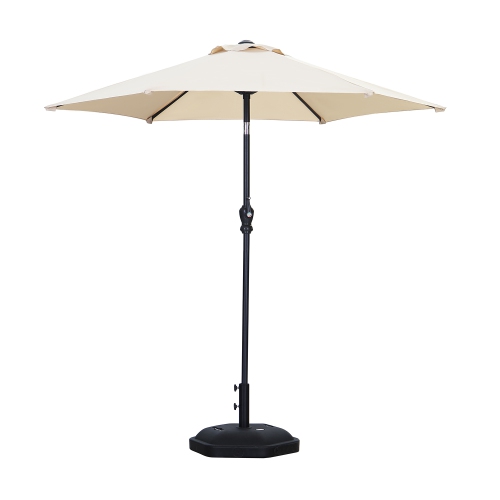
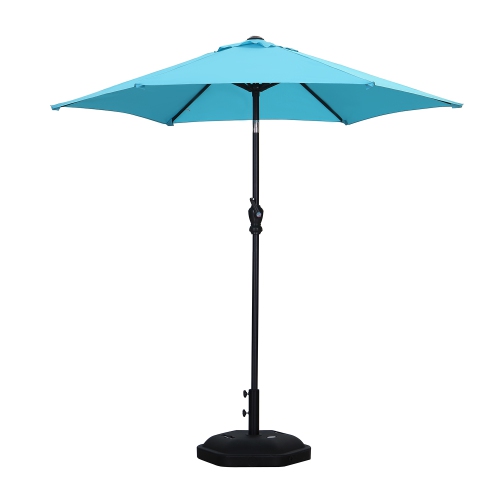
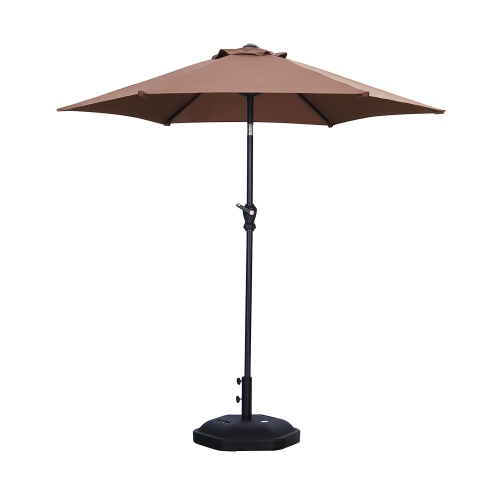
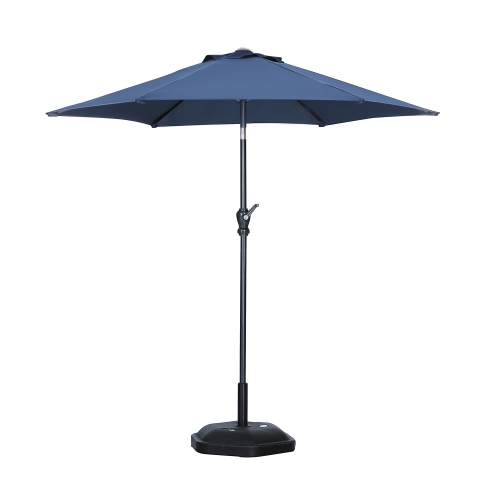
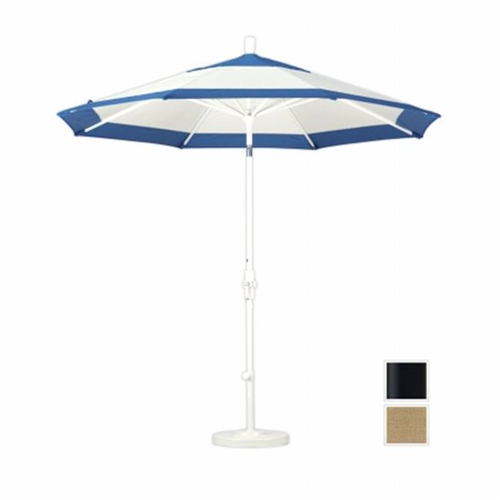
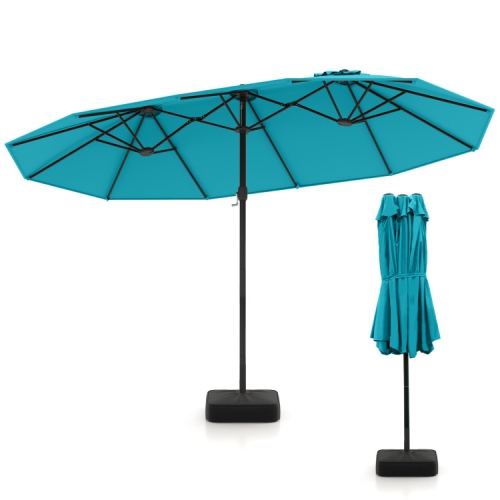
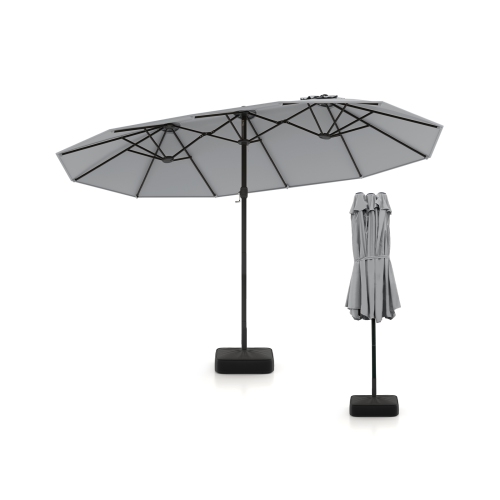
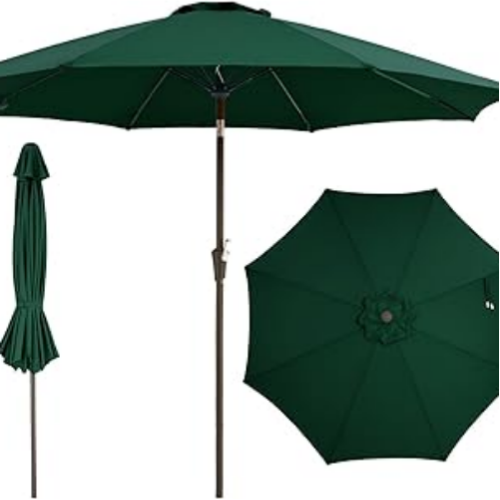
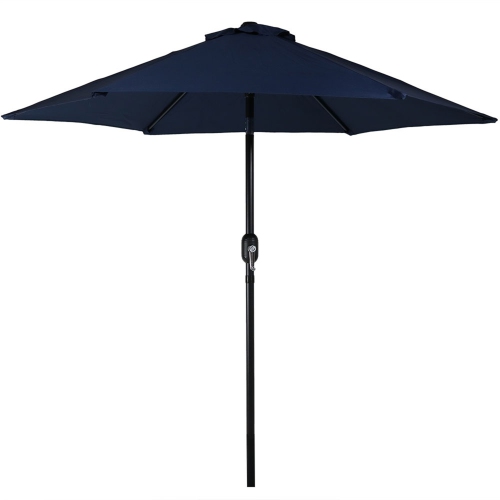
Fade-resistant patio umbrellas provide outdoor shade with canopy fabrics designed to retain their colour through repeated exposure to sunlight. They suit dining areas, balconies, poolside seating, and backyard conversation spaces where an umbrella is both a practical fixture and a visible part of the furniture arrangement. Fade resistance comes mainly from the fabric’s fibres, colouring process, and protective treatments, rather than from its colour or thickness alone. Solution-dyed acrylic and solution-dyed polyester are common choices because pigment is introduced before the fibres are formed, distributing colour throughout the material rather than only colouring finished yarn or fabric. This can help a canopy hold its appearance longer than comparable fabrics coloured by other methods, although performance still depends on fabric quality and exposure. Polyester can also have treatments that improve resistance to fading, but the material name alone does not establish how well it will retain its colour. Fabric weight, often expressed in grams per square metre, describes mass per area; a higher figure does not automatically mean better fade resistance or greater UV protection. A canopy can feel substantial and still need a separate rating or performance claim to establish those qualities. Fade-resistant also does not mean fade-proof: prolonged sunlight, moisture, dirt, and cleaning methods can gradually affect appearance. Neutral shades create a quiet backdrop for wood furniture and woven seating, while deeper colours offer a stronger contrast against pale cushions or stone paving. Either approach benefits from fabric with clearly stated colour-retention properties. Resistance to fading and protection from ultraviolet radiation are related considerations, but they are not interchangeable. Shoppers comparing UV Protection Patio Umbrellas can look for stated ultraviolet protection factor ratings rather than assuming that a colourfast canopy provides a particular level of protection. Shade also does not block all reflected or scattered UV radiation, so an umbrella works alongside other sun-protection measures rather than replacing them.
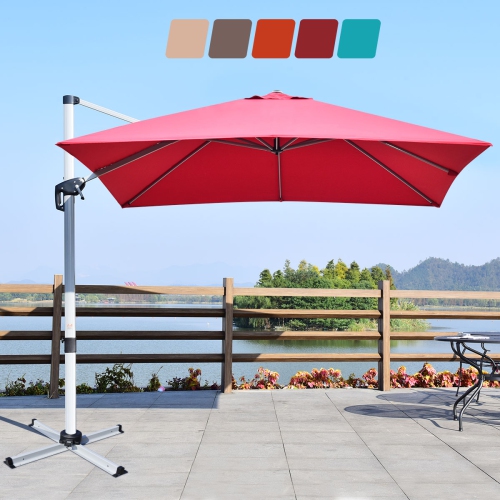
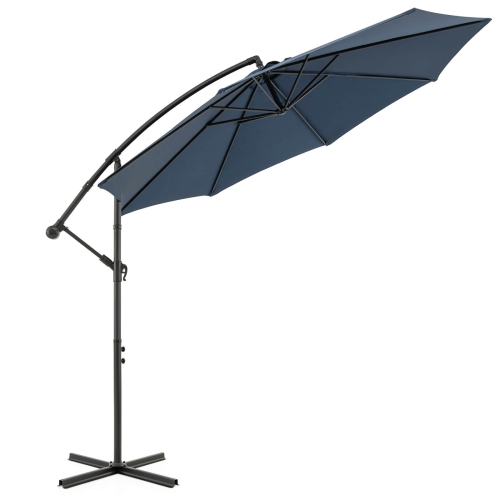
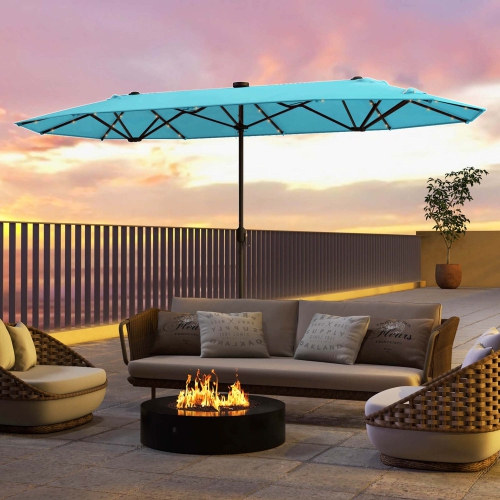
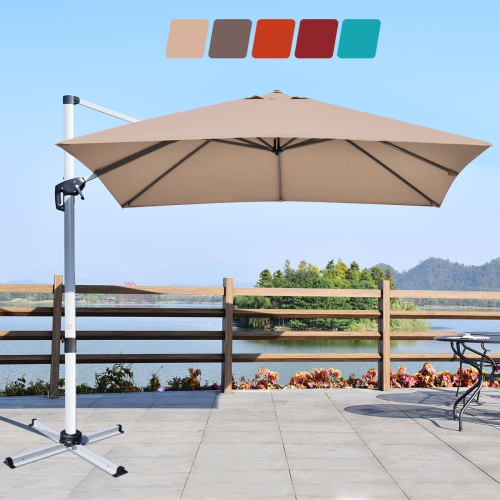
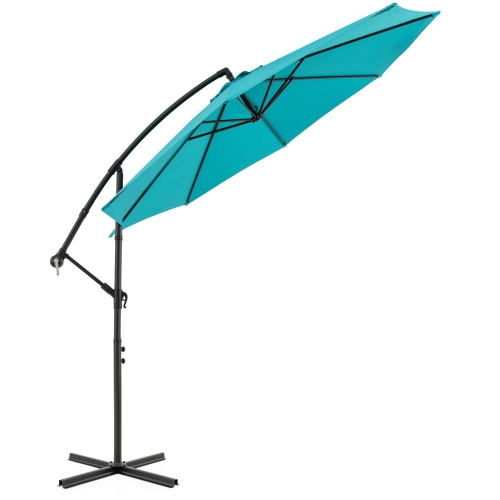
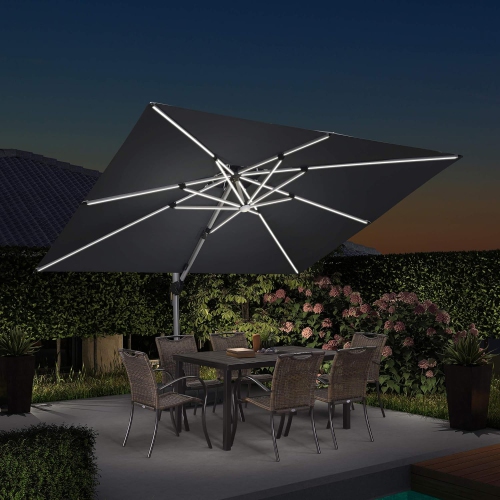
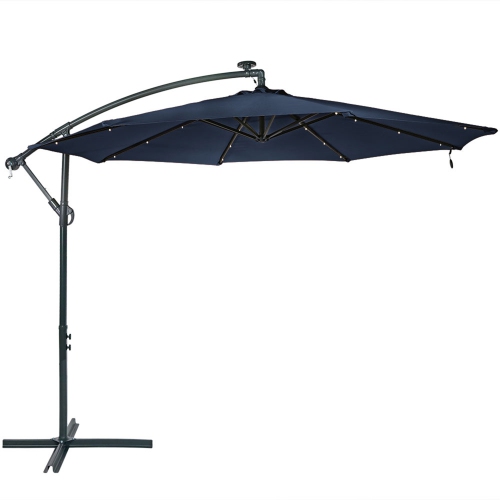
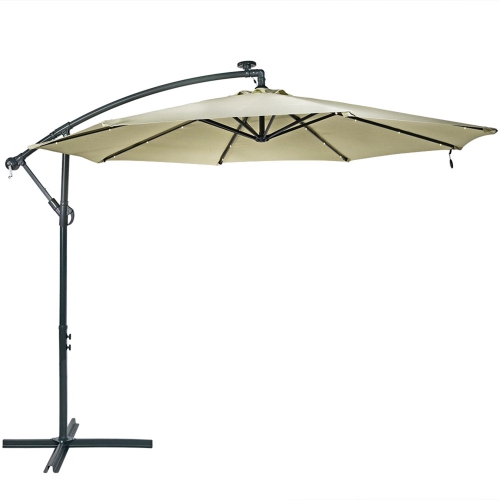
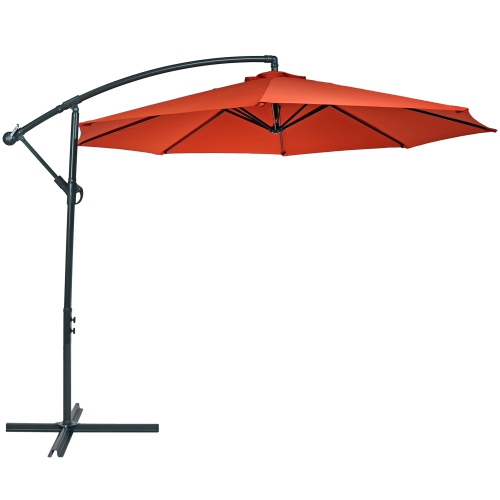
The most useful fade-resistant patio umbrella fits the way a space is arranged, not simply the largest canopy that will fit within its boundaries. A centre-pole market umbrella is a familiar choice for an outdoor dining table with an umbrella opening, placing shade over the meal without requiring an offset support beside the seating. Pole diameter, table-hole size, and clearance beneath the tabletop all affect whether that arrangement works. A freestanding centre-pole design can also shade a pair of chairs, provided its base and pole do not obstruct the walking route between them. Cantilever umbrellas keep the main support to one side, leaving room beneath the canopy for a sectional, loungers, or a dining table without a centre opening. Their generous reach can be helpful over a broad seating area, but the support and weighted base need their own floor space. Canopy dimensions describe the umbrella itself, not a fixed patch of shade throughout the day; the sun’s angle changes where the shadow falls. Tilt mechanisms and rotating cantilever arms can make that shade easier to position, while crank lifts reduce the effort needed to open a larger canopy. These features are especially useful where a dining area shares space with lounge seating. Clearance matters above and beside the umbrella, including around doors, railings, roof overhangs, branches, and the canopy’s opening path. Frame construction contributes to everyday durability as much as the fabric does. Aluminum is relatively light and resists rust, while coated steel can provide a sturdy structure but may need attention if its finish is scratched. Wood brings a natural grain and may require periodic finish maintenance. Fibreglass ribs offer flexibility, although no rib material makes an umbrella safe in every wind condition. Vented canopies can allow some airflow, but they do not replace a properly matched base or safe operating practices. Base requirements vary with canopy size, design, placement, and manufacturer specifications; a dining table is not a substitute for the support the umbrella requires.
Keeping a fade-resistant canopy looking even and well cared for involves more than closing it at the end of a meal. Loose dirt, pollen, leaves, and bird droppings can settle into folds or leave marks if they remain on the fabric. Gentle brushing and cleaning with mild soap and water are often suitable, subject to the fabric’s care directions. Strong cleaners, abrasive tools, and pressure washing can damage fibres, finishes, or protective treatments, so a method suitable for patio paving may be unsuitable for the umbrella above it. Even fabrics that tolerate certain stronger cleaning solutions need the correct dilution and thorough rinsing. Drying the canopy fully before closing it for extended periods or fitting a storage cover helps limit trapped moisture and mildew. Water-repellent fabric can shed a light shower, but that property is distinct from waterproof construction, and an umbrella should not be treated as a permanent rain shelter. Closing and securing it when unattended, before strong winds, and whenever the manufacturer advises helps protect the canopy, ribs, pole, and nearby furniture. Snow and ice loads are outside the intended use of many patio umbrellas, making sheltered, dry storage important where freezing weather occurs. A protective cover should fit the closed umbrella without forcing the fabric into awkward folds, and stored components benefit from being clean and dry. Accessible replacement canopies, compatible parts, and clear warranty terms can also matter for long-term ownership. Fabric coverage may differ from frame coverage, and any stated protection against fading should be read alongside its duration, exclusions, and care requirements. For households that eat outdoors, a well-fitted umbrella can shade the table while leaving chairs easy to pull out. For someone who prefers a quiet reading corner, adjustable shade over a single lounge chair may be more useful than a sprawling canopy. As a housewarming gift, an umbrella is most practical when the recipient’s space, preferred style, and base requirements are known. The right combination of colour-retaining fabric, suitable dimensions, dependable support, and manageable care makes it easier to enjoy an outdoor seating area without letting the umbrella dominate it.
The most useful fade-resistant patio umbrella fits the way a space is arranged, not simply the largest canopy that will fit within its boundaries. A centre-pole market umbrella is a familiar choice for an outdoor dining table with an umbrella opening, placing shade over the meal without requiring an offset support beside the seating. Pole diameter, table-hole size, and clearance beneath the tabletop all affect whether that arrangement works. A freestanding centre-pole design can also shade a pair of chairs, provided its base and pole do not obstruct the walking route between them. Cantilever umbrellas keep the main support to one side, leaving room beneath the canopy for a sectional, loungers, or a dining table without a centre opening. Their generous reach can be helpful over a broad seating area, but the support and weighted base need their own floor space. Canopy dimensions describe the umbrella itself, not a fixed patch of shade throughout the day; the sun’s angle changes where the shadow falls. Tilt mechanisms and rotating cantilever arms can make that shade easier to position, while crank lifts reduce the effort needed to open a larger canopy. These features are especially useful where a dining area shares space with lounge seating. Clearance matters above and beside the umbrella, including around doors, railings, roof overhangs, branches, and the canopy’s opening path. Frame construction contributes to everyday durability as much as the fabric does. Aluminum is relatively light and resists rust, while coated steel can provide a sturdy structure but may need attention if its finish is scratched. Wood brings a natural grain and may require periodic finish maintenance. Fibreglass ribs offer flexibility, although no rib material makes an umbrella safe in every wind condition. Vented canopies can allow some airflow, but they do not replace a properly matched base or safe operating practices. Base requirements vary with canopy size, design, placement, and manufacturer specifications; a dining table is not a substitute for the support the umbrella requires.
Keeping a fade-resistant canopy looking even and well cared for involves more than closing it at the end of a meal. Loose dirt, pollen, leaves, and bird droppings can settle into folds or leave marks if they remain on the fabric. Gentle brushing and cleaning with mild soap and water are often suitable, subject to the fabric’s care directions. Strong cleaners, abrasive tools, and pressure washing can damage fibres, finishes, or protective treatments, so a method suitable for patio paving may be unsuitable for the umbrella above it. Even fabrics that tolerate certain stronger cleaning solutions need the correct dilution and thorough rinsing. Drying the canopy fully before closing it for extended periods or fitting a storage cover helps limit trapped moisture and mildew. Water-repellent fabric can shed a light shower, but that property is distinct from waterproof construction, and an umbrella should not be treated as a permanent rain shelter. Closing and securing it when unattended, before strong winds, and whenever the manufacturer advises helps protect the canopy, ribs, pole, and nearby furniture. Snow and ice loads are outside the intended use of many patio umbrellas, making sheltered, dry storage important where freezing weather occurs. A protective cover should fit the closed umbrella without forcing the fabric into awkward folds, and stored components benefit from being clean and dry. Accessible replacement canopies, compatible parts, and clear warranty terms can also matter for long-term ownership. Fabric coverage may differ from frame coverage, and any stated protection against fading should be read alongside its duration, exclusions, and care requirements. For households that eat outdoors, a well-fitted umbrella can shade the table while leaving chairs easy to pull out. For someone who prefers a quiet reading corner, adjustable shade over a single lounge chair may be more useful than a sprawling canopy. As a housewarming gift, an umbrella is most practical when the recipient’s space, preferred style, and base requirements are known. The right combination of colour-retaining fabric, suitable dimensions, dependable support, and manageable care makes it easier to enjoy an outdoor seating area without letting the umbrella dominate it.
Top selling and popular products
-
 Your price for this item is $160.99
 -
 Your price for this item is $146.95
 -
 Your price for this item is $248.55
 -
 Your price for this item is $146.95
 -
 Your price for this item is $146.95
 -
 Your price for this item is $146.95
 -
 Your price for this item is $146.95
 -
 Your price for this item is $248.55
Discover more categories related to Fade Resistant Patio Umbrellas
Top Collections:
Pokemon Centers, Kindle Devices, Best Budget Office Chairs, Apple iPhones 16, Canon G7X Cameras, iPhone 15 Apple, Alarm Clock, Refurbished Apple Laptops, Flip Phones, Best Laptops for Writers
Some products may be subject to Environmental Handling Fees
(EHF) depending on your province.
Learn more about EHFs.