Foldable Dog Cages
Looking for a convenient and space-saving solution for your furry friend? Look no further than our collection of foldable dog cages. These versatile and practical cages are designed to provide a comfortable and secure environment for your pet, while also being easy to store and transport when not in use. Whether you're heading on a road trip, need a temporary containment solution, or simply want a portable option for your pup, our foldable dog cages have got you covered.
Sort
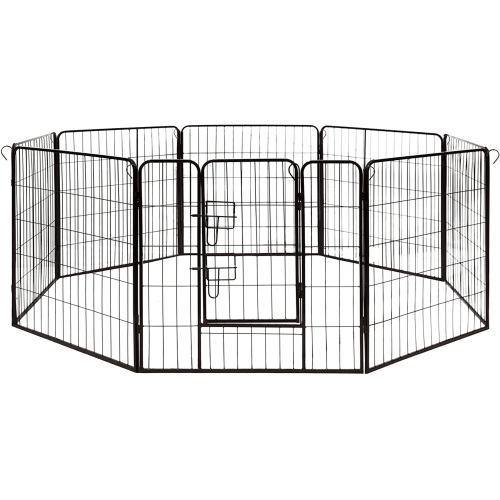
A dog’s quiet retreat that folds away
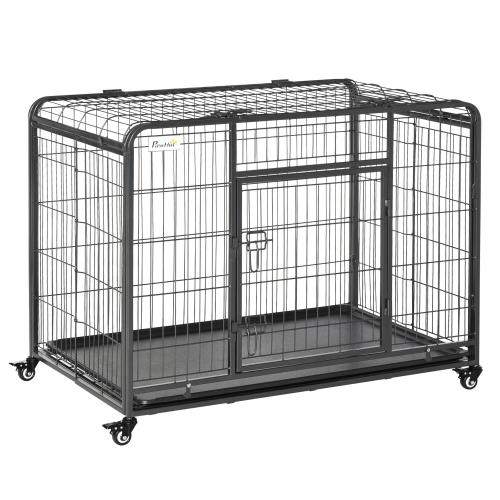
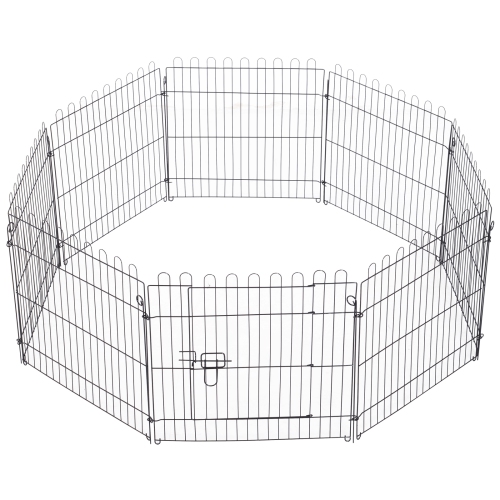
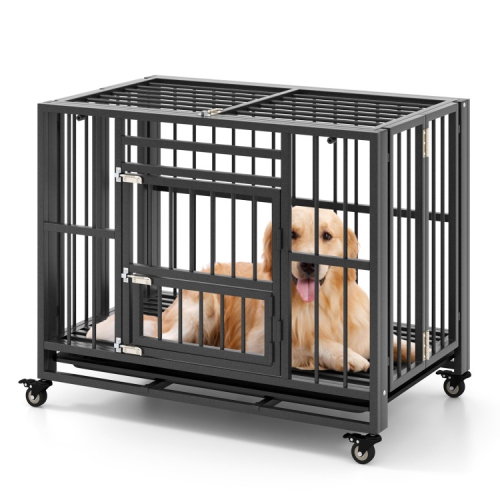
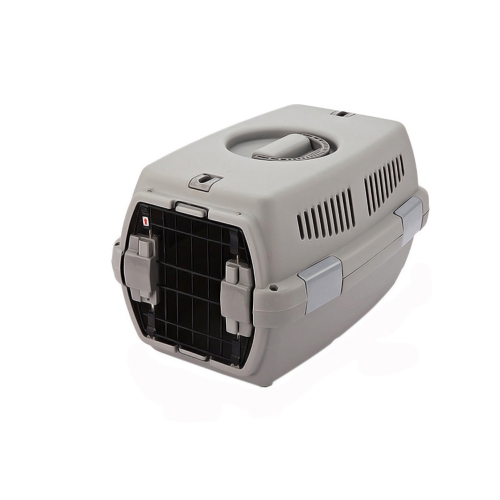
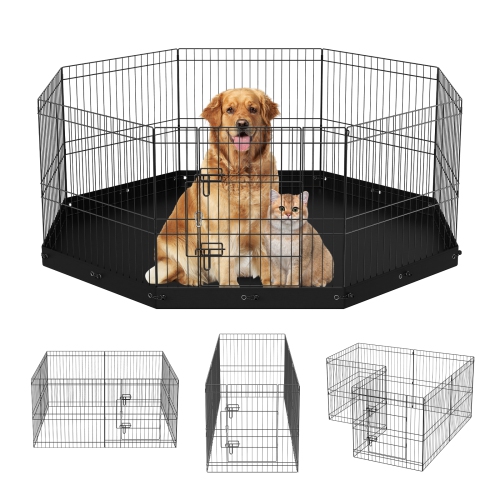
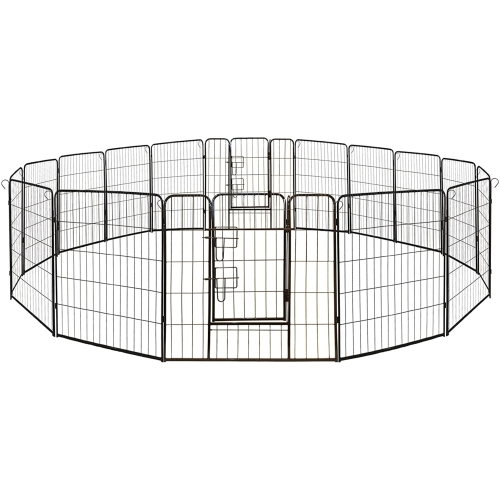
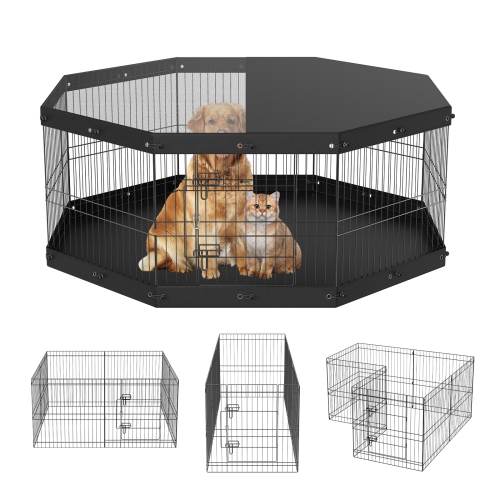
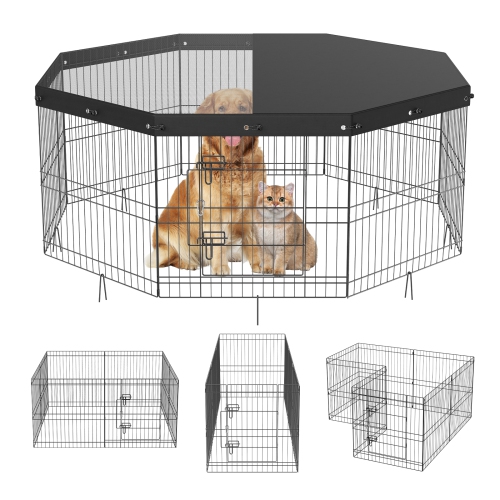
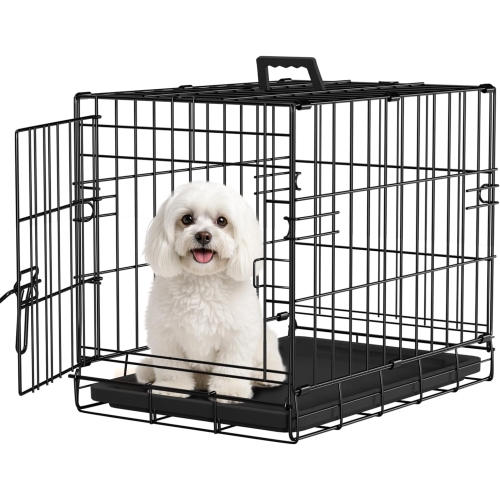
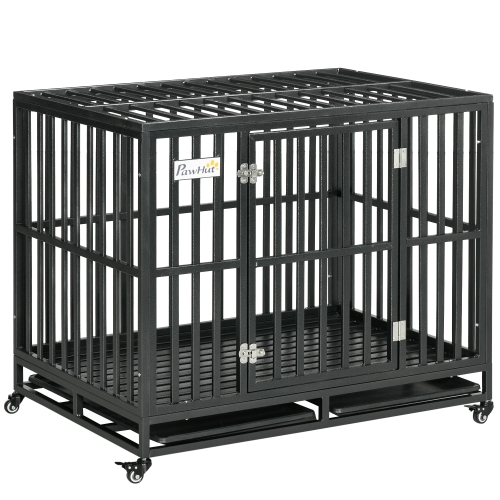
Foldable dog cages, also called folding dog crates or collapsible dog crates, provide a defined resting space that can be packed away when not in use. Their main advantage is a frame that folds into a flatter or more compact shape, making them practical for homes where floor space serves several purposes, visits with family, and trips that involve setting up a familiar place for a dog to settle. A crate beside the sofa can become a quiet retreat during the day, then fold away when the room needs rearranging. The main styles include folding wire crates, soft-sided fabric crates, and rigid metal designs with collapsible panels. Wire models offer clear sightlines and airflow, often with a removable floor tray; some also include a divider that adjusts the usable space as a puppy grows. Soft-sided crates typically combine a folding frame with fabric walls and mesh panels, keeping carrying weight manageable for people moving between a home, a vehicle, and a destination. They are generally better suited to dogs that are already comfortable in a crate and do not chew or scratch at the enclosure. Rigid metal designs, including some made from aluminium, may provide sturdier panels, although their weight, folded dimensions, and setup method vary considerably. No material alone makes a crate escape-proof or suitable for every dog. Temperament matters as much as size: a relaxed adult dog may settle comfortably in a fabric enclosure, while a persistent chewer needs a different approach and closer attention to construction. A crate is a place for rest and appropriately managed containment, not a substitute for exercise, companionship, toilet breaks, or training. Dogs showing panic, repeated escape attempts, or distress need support rather than a stronger enclosure alone. For households welcoming a puppy, sharing care with a relative, or making room for an older dog’s established routine, a folding design offers flexibility without requiring a permanent fixture in every room.
The right fit starts with the dog’s measurements rather than a breed label or weight range alone. An appropriately sized dog cage allows the dog to stand naturally without crouching, turn around comfortably, and lie down in a relaxed position. Internal dimensions are especially important because the usable space can be smaller than the outside measurements suggest. A tall, lean dog and a shorter, broader dog of similar weight may need quite different proportions. Door height and width also matter, particularly for a dog that hesitates at narrow openings or has difficulty stepping over a raised threshold. If bedding will be added, its thickness should be included when assessing headroom and ease of entry. For puppies, a securely fitted divider can adjust the interior as they grow, provided the space still supports comfortable standing, turning, and resting. At home, the crate’s footprint needs to account for an open door, nearby furniture, and a clear walking route. A side door can make access easier beside a sofa, while a front door may suit a narrow nook; a two-door layout offers more placement options but also introduces another latch to check. Folded size deserves equal attention. A crate that fits the dog well may still be awkward to carry through a stairwell or store in a shallow cupboard. Carrying handles, overall weight, and whether loose panels or trays stay attached can affect how manageable it is during regular moves. For car travel, a folding mechanism does not establish crash protection: suitability for transport, secure attachment, and any crash-testing claims must be checked separately. Airline requirements also differ, so a collapsible crate should not be assumed suitable for flying. Shoppers comparing enclosure layouts can also explore Affordable Dog Cages, keeping the dog’s measurements, behaviour, and intended use at the centre of the choice. The most useful design is one that fits both the dog and the places where it will actually be used.
Construction details become more noticeable after repeated folding, cleaning, and daily use. On wire dog crates, smooth welds, evenly finished edges, firmly attached hinges, and a sound protective coating help distinguish a well-finished enclosure from one with potential snagging points. Bar spacing should be appropriate for the dog, with no openings that could trap a head, paw, or jaw. Doors should sit squarely in their frames, and latches should engage fully without needing the panels to be forced into position. With collapsible metal designs, panel joints and locking points deserve particular attention because they hold the assembled shape. Fabric crates call for a different inspection: reinforced seams, intact mesh, protected frame corners, and smoothly working zips all contribute to everyday durability. Fabric weight alone does not establish chew resistance, and damaged mesh or an opening zip can quickly compromise containment. Before each setup, check that the frame is fully extended and every required lock or clip is secured, keeping paws and fingers clear of folding joints. A removable tray can simplify cleaning after muddy paws, shed hair, or a toilet accident, while accessible corners make it easier to remove trapped debris. Cleaning methods should follow the care instructions for the material; washable fabric does not necessarily mean the entire enclosure can go into a washing machine. Mild, pet-safe cleaning products, thorough rinsing where appropriate, and complete drying before folding help prevent residue, lingering odours, and moisture damage. Bedding should lie flat, leave adequate room, and suit the dog’s chewing habits rather than simply filling the base with cushioning. A quiet location away from busy doorways can make rest easier, while gradual introductions with an open door and positive associations help the crate become familiar. Collars, tags, and harnesses can catch on crate components, so snagging risks also need attention. For a gift to someone bringing home a dog, confirming measurements and care plans first is far more useful than choosing by appearance. Thoughtful sizing, reliable assembly, and straightforward upkeep make a foldable dog cage easier to incorporate into a comfortable daily routine.
The right fit starts with the dog’s measurements rather than a breed label or weight range alone. An appropriately sized dog cage allows the dog to stand naturally without crouching, turn around comfortably, and lie down in a relaxed position. Internal dimensions are especially important because the usable space can be smaller than the outside measurements suggest. A tall, lean dog and a shorter, broader dog of similar weight may need quite different proportions. Door height and width also matter, particularly for a dog that hesitates at narrow openings or has difficulty stepping over a raised threshold. If bedding will be added, its thickness should be included when assessing headroom and ease of entry. For puppies, a securely fitted divider can adjust the interior as they grow, provided the space still supports comfortable standing, turning, and resting. At home, the crate’s footprint needs to account for an open door, nearby furniture, and a clear walking route. A side door can make access easier beside a sofa, while a front door may suit a narrow nook; a two-door layout offers more placement options but also introduces another latch to check. Folded size deserves equal attention. A crate that fits the dog well may still be awkward to carry through a stairwell or store in a shallow cupboard. Carrying handles, overall weight, and whether loose panels or trays stay attached can affect how manageable it is during regular moves. For car travel, a folding mechanism does not establish crash protection: suitability for transport, secure attachment, and any crash-testing claims must be checked separately. Airline requirements also differ, so a collapsible crate should not be assumed suitable for flying. Shoppers comparing enclosure layouts can also explore Affordable Dog Cages, keeping the dog’s measurements, behaviour, and intended use at the centre of the choice. The most useful design is one that fits both the dog and the places where it will actually be used.
Construction details become more noticeable after repeated folding, cleaning, and daily use. On wire dog crates, smooth welds, evenly finished edges, firmly attached hinges, and a sound protective coating help distinguish a well-finished enclosure from one with potential snagging points. Bar spacing should be appropriate for the dog, with no openings that could trap a head, paw, or jaw. Doors should sit squarely in their frames, and latches should engage fully without needing the panels to be forced into position. With collapsible metal designs, panel joints and locking points deserve particular attention because they hold the assembled shape. Fabric crates call for a different inspection: reinforced seams, intact mesh, protected frame corners, and smoothly working zips all contribute to everyday durability. Fabric weight alone does not establish chew resistance, and damaged mesh or an opening zip can quickly compromise containment. Before each setup, check that the frame is fully extended and every required lock or clip is secured, keeping paws and fingers clear of folding joints. A removable tray can simplify cleaning after muddy paws, shed hair, or a toilet accident, while accessible corners make it easier to remove trapped debris. Cleaning methods should follow the care instructions for the material; washable fabric does not necessarily mean the entire enclosure can go into a washing machine. Mild, pet-safe cleaning products, thorough rinsing where appropriate, and complete drying before folding help prevent residue, lingering odours, and moisture damage. Bedding should lie flat, leave adequate room, and suit the dog’s chewing habits rather than simply filling the base with cushioning. A quiet location away from busy doorways can make rest easier, while gradual introductions with an open door and positive associations help the crate become familiar. Collars, tags, and harnesses can catch on crate components, so snagging risks also need attention. For a gift to someone bringing home a dog, confirming measurements and care plans first is far more useful than choosing by appearance. Thoughtful sizing, reliable assembly, and straightforward upkeep make a foldable dog cage easier to incorporate into a comfortable daily routine.
Top selling and popular products
-
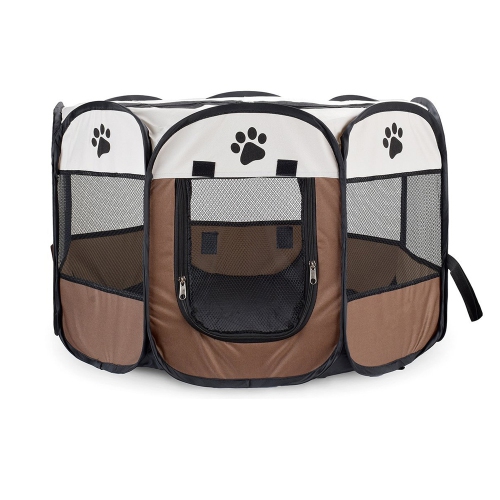 Your price for this item is $25.99
 -
 Your price for this item is $139.99
 -
 Your price for this item is $75.99
 -
 Your price for this item is $65.9
 -
 Your price for this item is $40.99
 -
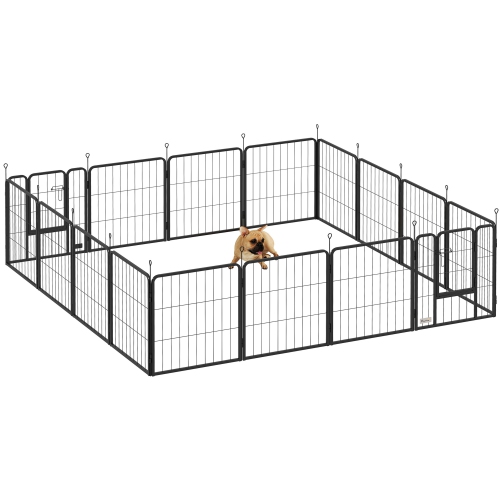 Your price for this item is $156.99
 -
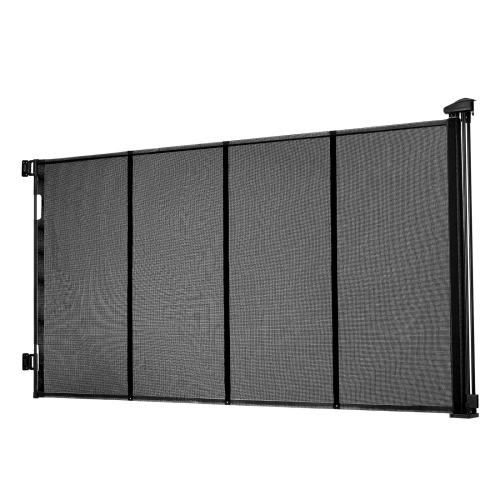 Your price for this item is $69.9
 -
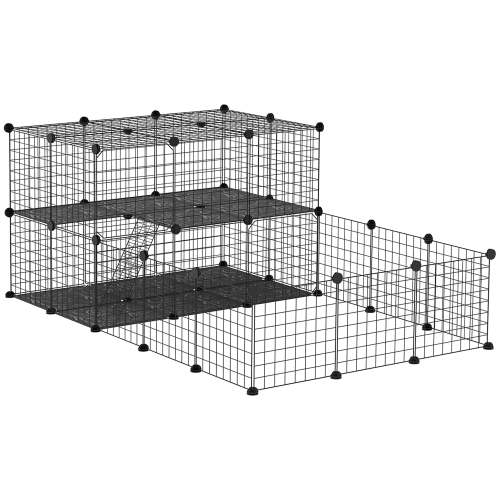 Your price for this item is $84.99
Discover more categories related to Foldable Dog Cages
Top Collections:
Pokemon Centers, Kindle Devices, Best Budget Office Chairs, Apple iPhones 16, Canon G7X Cameras, iPhone 15 Apple, Alarm Clock, Refurbished Apple Laptops, Flip Phones, Best Laptops for Writers
Some products may be subject to Environmental Handling Fees
(EHF) depending on your province.
Learn more about EHFs.