Hamster Cages
If you're looking to create a cozy and safe space for your furry friend, you've come to the right place. Our hamster cages are designed with both your pet's comfort and your convenience in mind. Whether you have a curious dwarf hamster or a playful Syrian hamster, our range of cages provides ample room for them to explore, exercise, and rest. From multi-level habitats to secure wire enclosures, we offer a variety of options to suit your hamster's needs and your home decor. Scroll through our selection below to find the perfect cage that will keep your hamster happy and healthy.
Sort
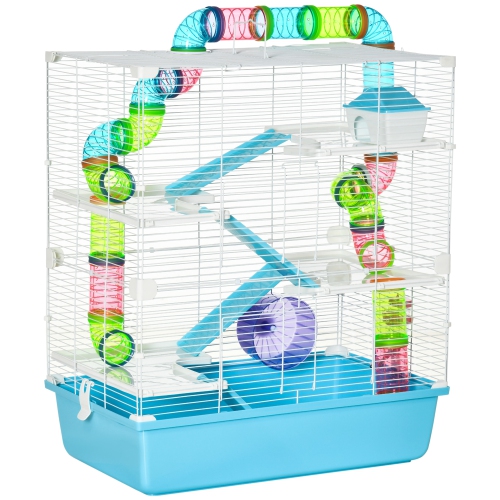
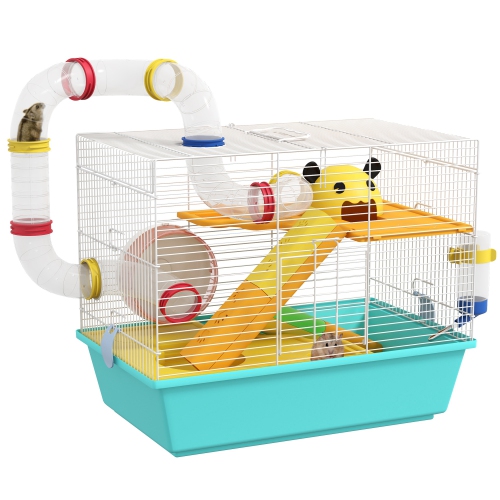
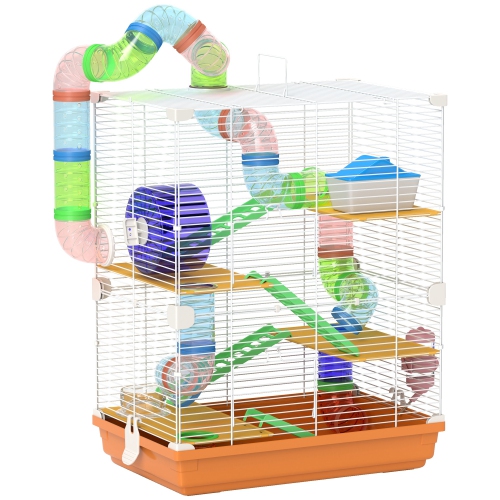
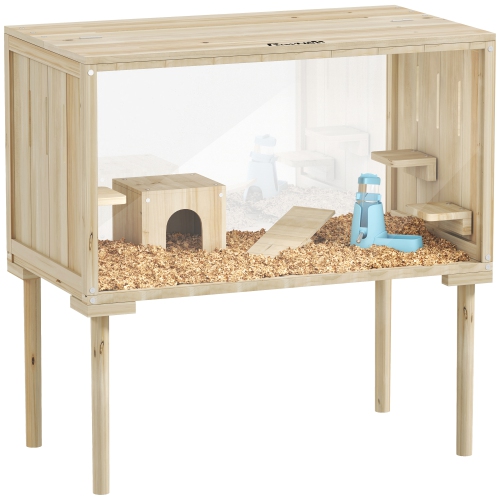



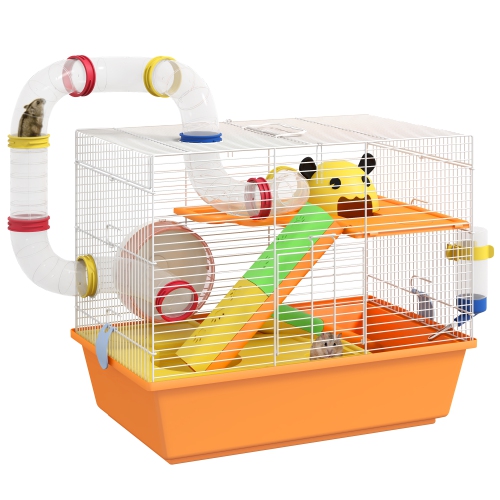
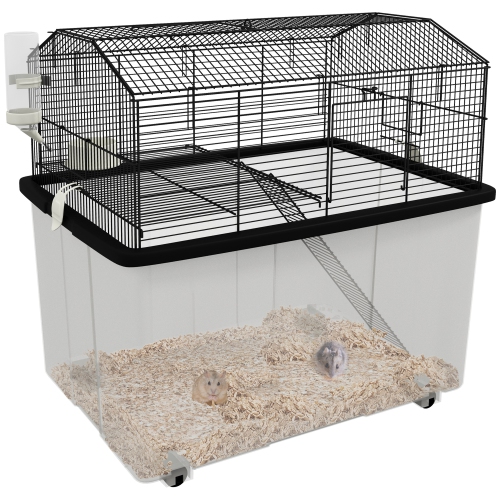
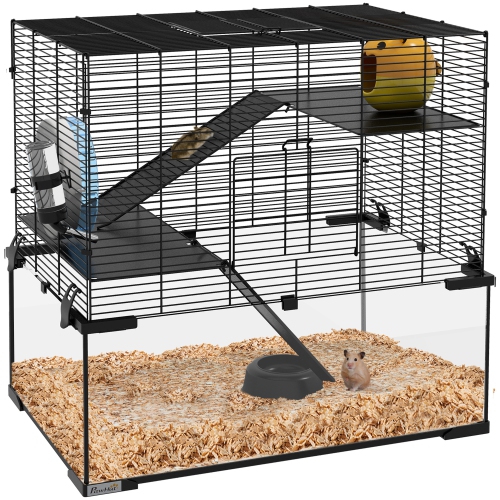

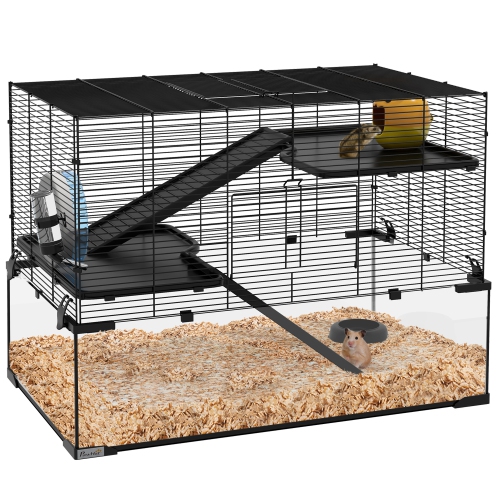

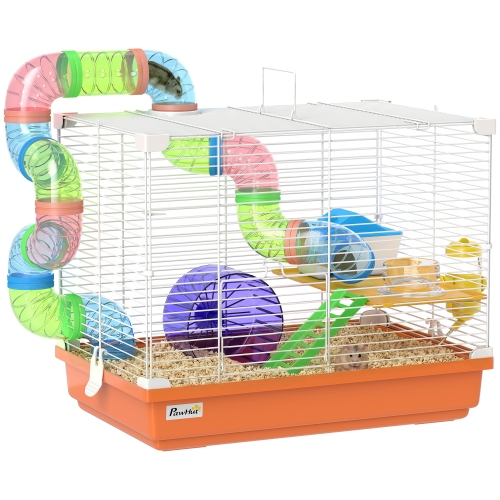
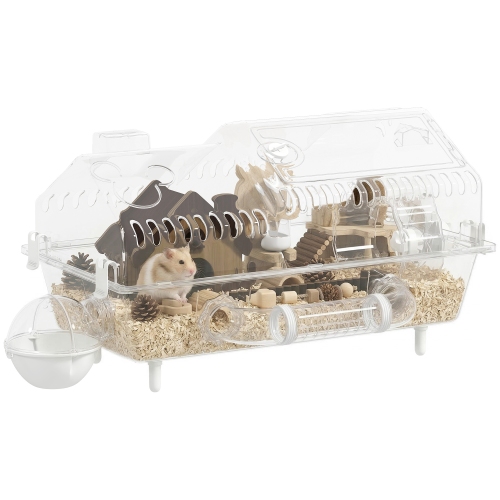

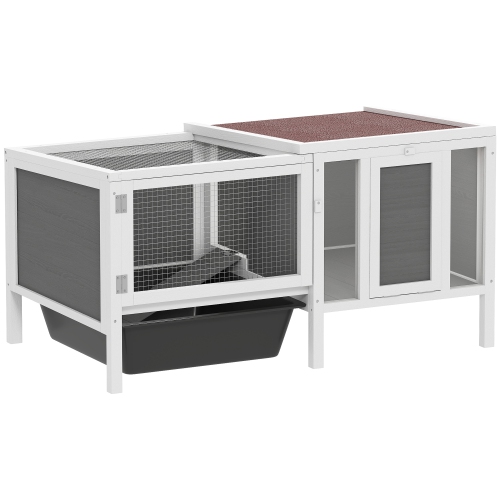
Why floor space matters more than extra levels
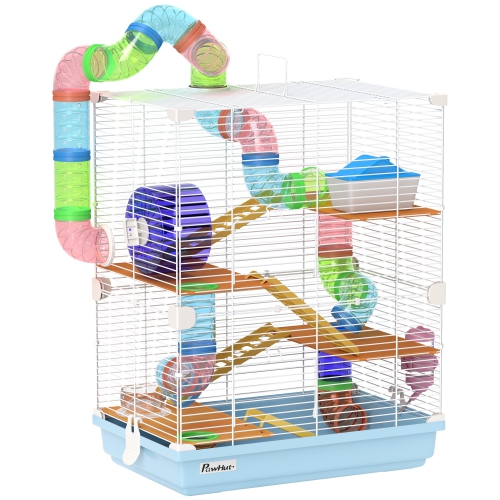
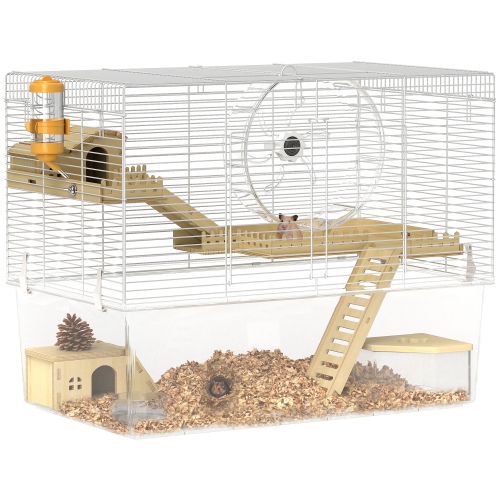
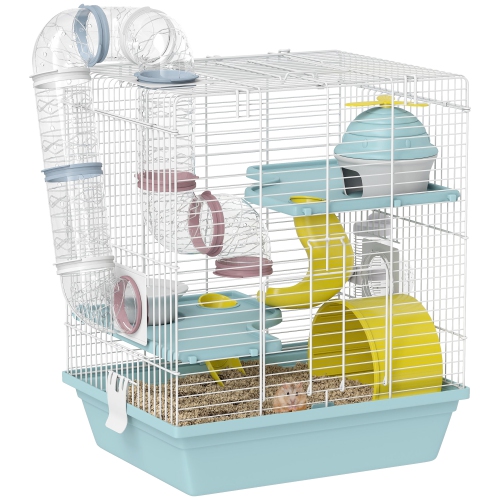
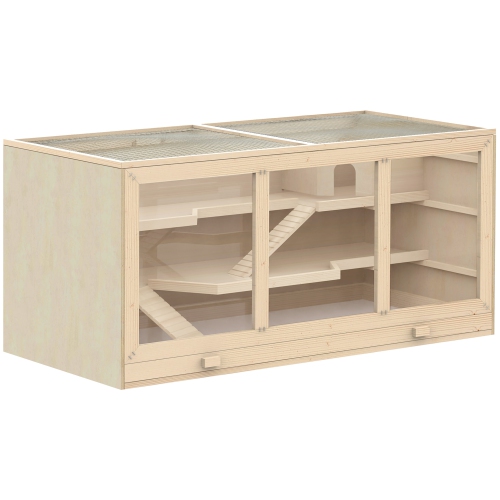
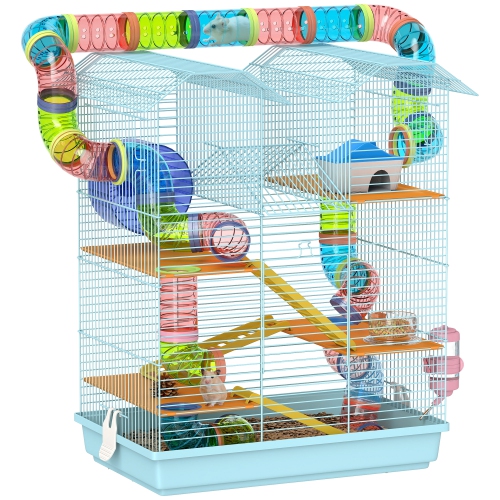
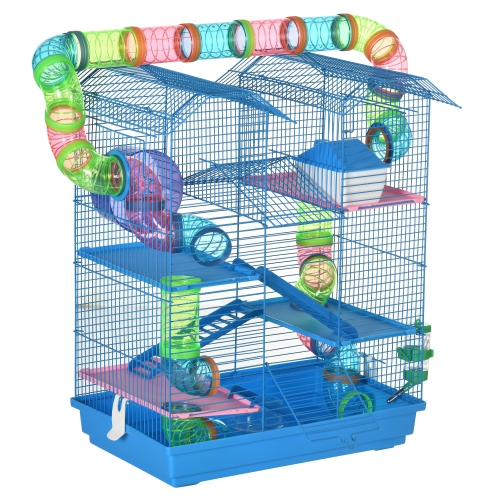
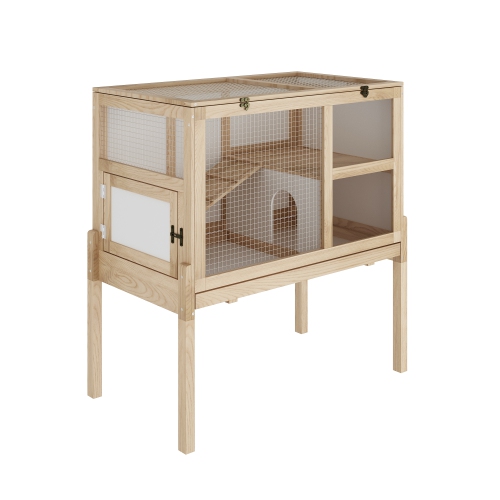
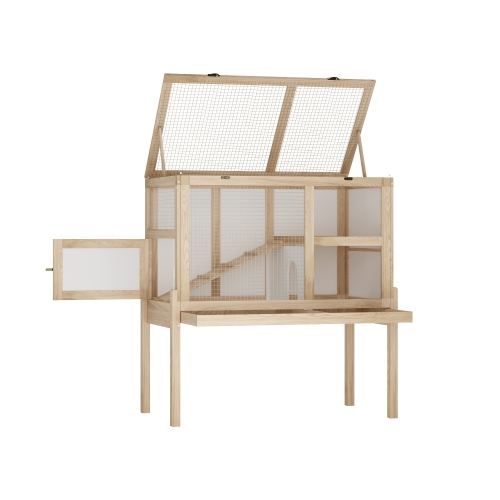
Hamster cages provide more than a place to sleep: they give a small, active animal room to burrow, forage, run, and retreat into a sheltered nest. For Syrian and dwarf hamsters alike, a spacious enclosure with a deep bedding area is a better starting point than a tall cage with several small platforms. A useful minimum benchmark is 100 × 50 cm of continuous internal floor space, approximately 775 square inches, with more room beneficial when it is thoughtfully arranged. Measure the usable space inside the base rather than relying only on the outside dimensions, since tapered trays can leave less room than expected. Upper levels and connecting tubes do not replace a broad, uninterrupted footprint. Bedding depth matters just as much: allow at least 25 cm, or about 10 inch depth, across a substantial area so a hamster can build tunnels rather than simply scrape at a thin layer of litter. An enclosure needs enough height to accommodate that bedding, a suitable exercise wheel, and safe clearance beneath its lid. Syrian hamsters generally need larger wheels, hideouts, and entrances than dwarf hamsters, but a smaller animal still needs generous floor space and plenty of digging opportunities. Narrow passageways can be unsuitable for a Syrian hamster, particularly when its cheek pouches are full, while small gaps around doors can present an escape route for dwarf hamsters. Syrian hamsters must live alone, and individual housing is also the safest general choice for pet dwarf hamsters because sharing can lead to serious fighting. For households welcoming a first hamster, the cage is therefore best understood as a complete living space for one animal, not simply a container sized to its body. A wide base allows separate areas for nesting, bathing in suitable sand, drinking, and running, while leaving room for the winding routes and covered corners that help a hamster feel secure.
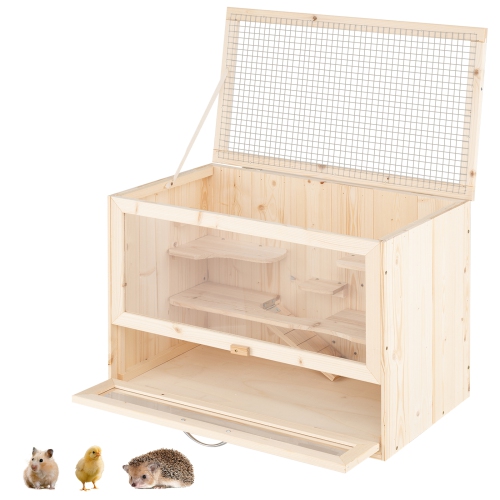
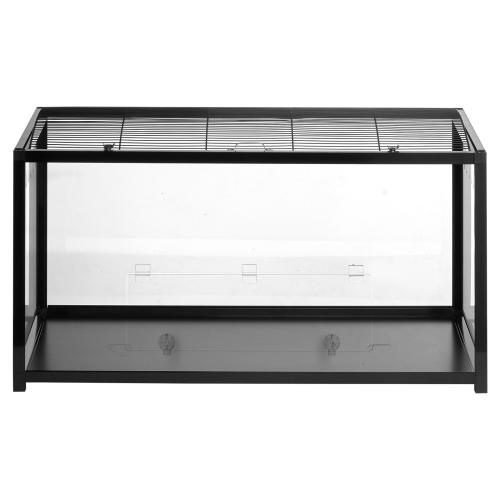
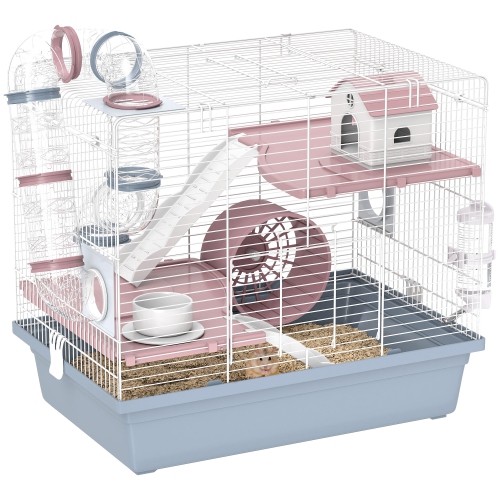
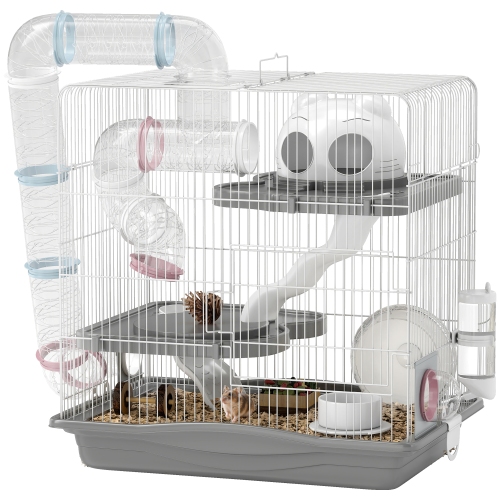
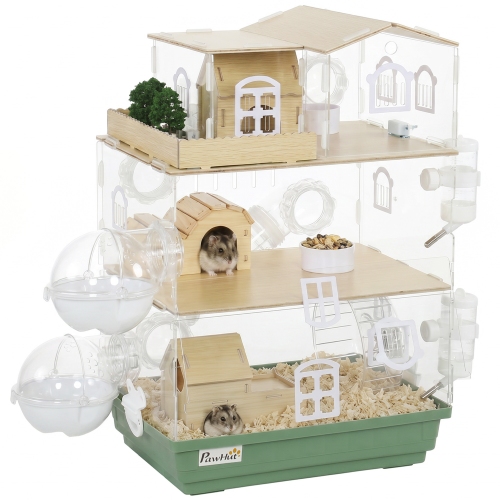
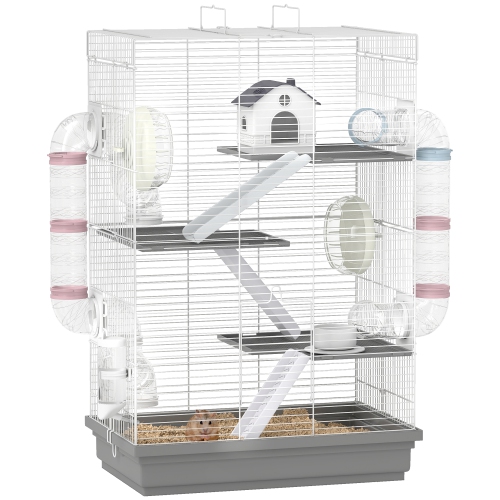
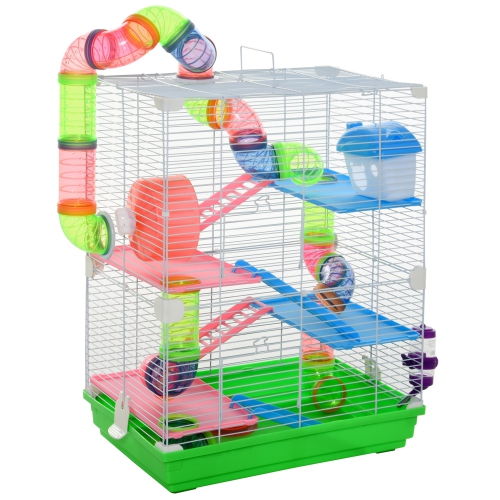
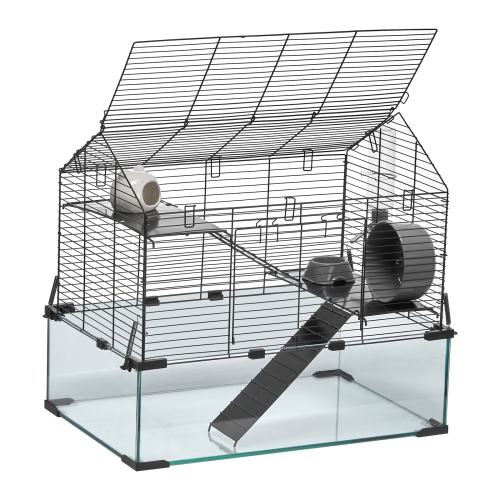
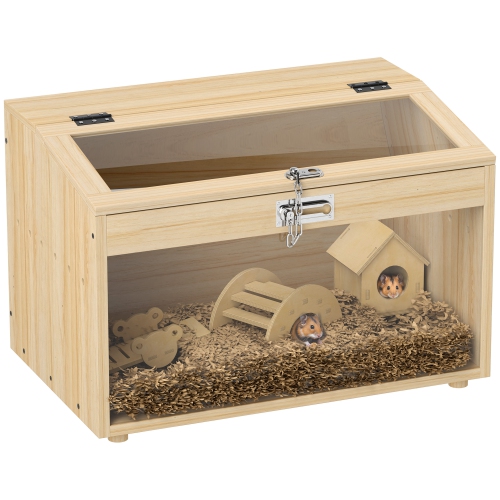
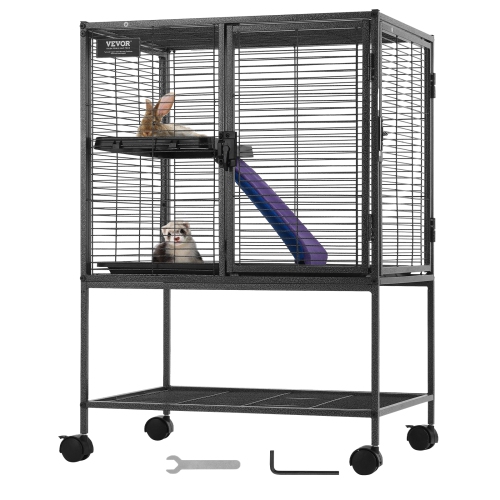
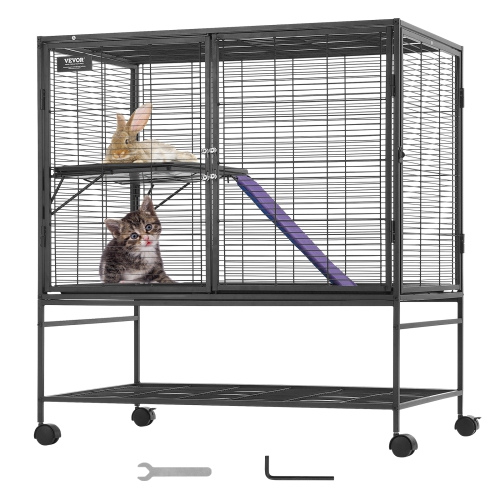
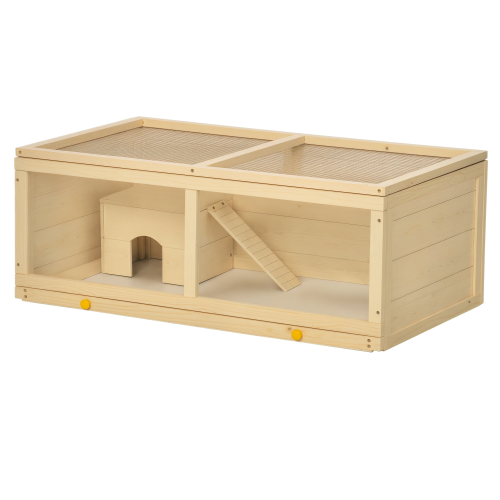
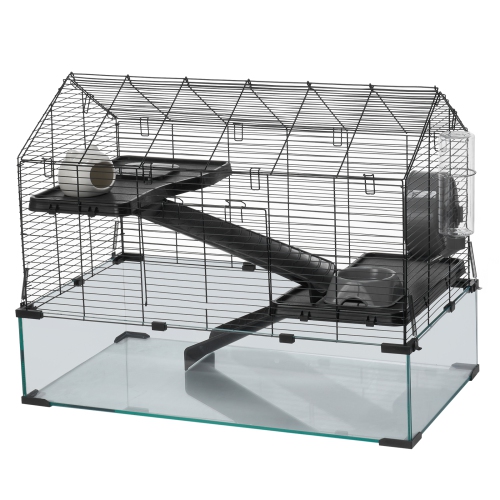
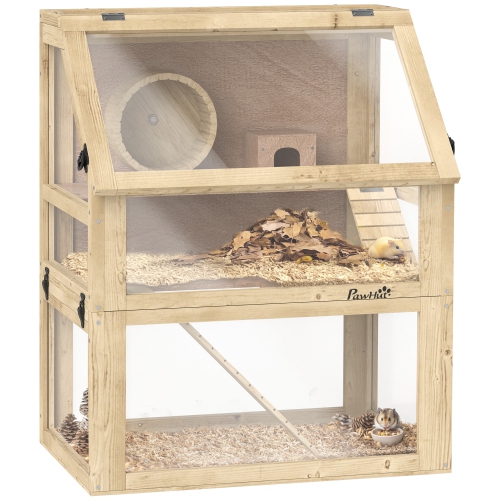
Materials shape how a hamster cage looks, how it handles daily wear, and how easily it supports a deep layer of bedding. Glass enclosures offer clear views and solid sides that contain loose substrate, making it possible to watch a tunnel take shape along the wall without bedding spilling onto the floor. They can be heavy, so their supporting furniture needs to hold the weight of both the enclosure and its contents across the full base. Acrylic offers similar visibility with less weight, although it scratches more easily and needs careful cleaning. With either material, generous ventilation is essential; a secure mesh lid can support airflow without creating large openings for escape. Wire cages allow good airflow and convenient access, but they need a sufficiently deep, solid base to hold the required bedding. Closely spaced bars, firmly fitted corners, and dependable latches matter, especially for dwarf hamsters that can squeeze through surprisingly small gaps. Bar spacing of 6 mm or less is a cautious choice for small dwarf hamsters, though door gaps and other openings need checking too. Solid flooring is preferable to exposed wire floors or wire running surfaces, which can injure feet. Wood can create a warm-looking enclosure, but exposed edges may be chewed, and untreated porous surfaces can absorb urine. Smooth, accessible surfaces and replaceable components can make ongoing care more manageable. Whatever the material, build quality is most noticeable at the details: a lid that sits squarely, hinges that stay firm, edges without sharp points, and a base that does not flex when moved. Wide access openings make it easier to lift out a wheel or reach a damp bedding patch without dismantling the whole setup. Tall layouts intended for climbing animals are not a substitute for hamster-friendly floor space. Households looking for housing for a different small pet can browse Chinchilla Cages, as chinchillas have different space, layout, and furnishing needs.
A well-proportioned hamster enclosure should still feel spacious once its everyday furnishings are in place. An upright exercise wheel needs a solid running surface and a diameter that allows the hamster to run with a straight back, without arching or lifting its head awkwardly. A wheel that fits an empty cage may not fit once the bedding reaches burrowing depth, so the full interior arrangement matters. Heavy furnishings need stable support rather than resting loosely above tunnels that could collapse beneath them. Low shelters, broad entrances, and covered pathways let a hamster move between activities without crossing a completely exposed floor. Paper-based, low-dust bedding can support nesting and digging, while a suitable sand bath provides another outlet for natural behaviour; fine bathing dust is not appropriate. Water must remain easy to reach, whether supplied through a securely fitted bottle or a stable, shallow dish. In a family home, a cage with practical access can make adult-supervised feeding and care easier, but children still need help with gentle handling and secure closure after each visit. Hamsters are often active during the evening and overnight, so a quiet wheel does not make a bedroom the ideal location for every household. A stable surface in a calm room, away from direct sunlight, draughts, heating vents, and the reach of other pets, helps keep the enclosure comfortable through the cooler months and beyond. Day-to-day care usually involves removing spoiled food and damp or soiled bedding, checking the water supply, and inspecting chewable edges and fastenings. Retaining clean, familiar bedding during routine cleaning helps preserve the hamster’s scent and reduces disruption to its nest; a full clean may be necessary for illness or contamination under veterinary direction. Washable components should be cleaned with a pet-safe method, rinsed thoroughly where appropriate, and dried before being returned. Strong fragrances and harsh residues have no place in a hamster’s living space. For an established pet owner receiving an enclosure as a gift, confirming the animal’s size, the available room, and the planned layout beforehand makes the choice more useful. The strongest fit combines room to express natural behaviour with secure construction and access that makes consistent care straightforward.
Materials shape how a hamster cage looks, how it handles daily wear, and how easily it supports a deep layer of bedding. Glass enclosures offer clear views and solid sides that contain loose substrate, making it possible to watch a tunnel take shape along the wall without bedding spilling onto the floor. They can be heavy, so their supporting furniture needs to hold the weight of both the enclosure and its contents across the full base. Acrylic offers similar visibility with less weight, although it scratches more easily and needs careful cleaning. With either material, generous ventilation is essential; a secure mesh lid can support airflow without creating large openings for escape. Wire cages allow good airflow and convenient access, but they need a sufficiently deep, solid base to hold the required bedding. Closely spaced bars, firmly fitted corners, and dependable latches matter, especially for dwarf hamsters that can squeeze through surprisingly small gaps. Bar spacing of 6 mm or less is a cautious choice for small dwarf hamsters, though door gaps and other openings need checking too. Solid flooring is preferable to exposed wire floors or wire running surfaces, which can injure feet. Wood can create a warm-looking enclosure, but exposed edges may be chewed, and untreated porous surfaces can absorb urine. Smooth, accessible surfaces and replaceable components can make ongoing care more manageable. Whatever the material, build quality is most noticeable at the details: a lid that sits squarely, hinges that stay firm, edges without sharp points, and a base that does not flex when moved. Wide access openings make it easier to lift out a wheel or reach a damp bedding patch without dismantling the whole setup. Tall layouts intended for climbing animals are not a substitute for hamster-friendly floor space. Households looking for housing for a different small pet can browse Chinchilla Cages, as chinchillas have different space, layout, and furnishing needs.
A well-proportioned hamster enclosure should still feel spacious once its everyday furnishings are in place. An upright exercise wheel needs a solid running surface and a diameter that allows the hamster to run with a straight back, without arching or lifting its head awkwardly. A wheel that fits an empty cage may not fit once the bedding reaches burrowing depth, so the full interior arrangement matters. Heavy furnishings need stable support rather than resting loosely above tunnels that could collapse beneath them. Low shelters, broad entrances, and covered pathways let a hamster move between activities without crossing a completely exposed floor. Paper-based, low-dust bedding can support nesting and digging, while a suitable sand bath provides another outlet for natural behaviour; fine bathing dust is not appropriate. Water must remain easy to reach, whether supplied through a securely fitted bottle or a stable, shallow dish. In a family home, a cage with practical access can make adult-supervised feeding and care easier, but children still need help with gentle handling and secure closure after each visit. Hamsters are often active during the evening and overnight, so a quiet wheel does not make a bedroom the ideal location for every household. A stable surface in a calm room, away from direct sunlight, draughts, heating vents, and the reach of other pets, helps keep the enclosure comfortable through the cooler months and beyond. Day-to-day care usually involves removing spoiled food and damp or soiled bedding, checking the water supply, and inspecting chewable edges and fastenings. Retaining clean, familiar bedding during routine cleaning helps preserve the hamster’s scent and reduces disruption to its nest; a full clean may be necessary for illness or contamination under veterinary direction. Washable components should be cleaned with a pet-safe method, rinsed thoroughly where appropriate, and dried before being returned. Strong fragrances and harsh residues have no place in a hamster’s living space. For an established pet owner receiving an enclosure as a gift, confirming the animal’s size, the available room, and the planned layout beforehand makes the choice more useful. The strongest fit combines room to express natural behaviour with secure construction and access that makes consistent care straightforward.
Top selling and popular products
-
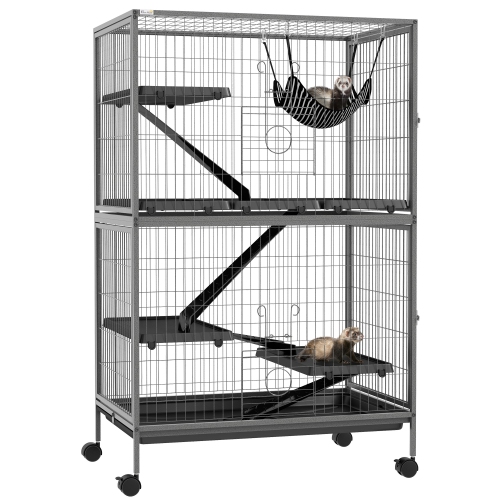 Your price for this item is $159.99
 -
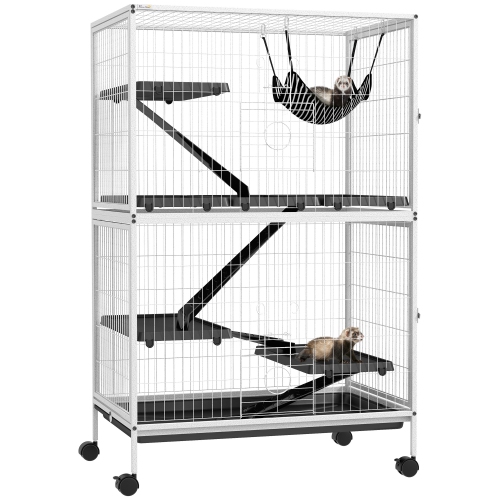 Your price for this item is $177.99
 -
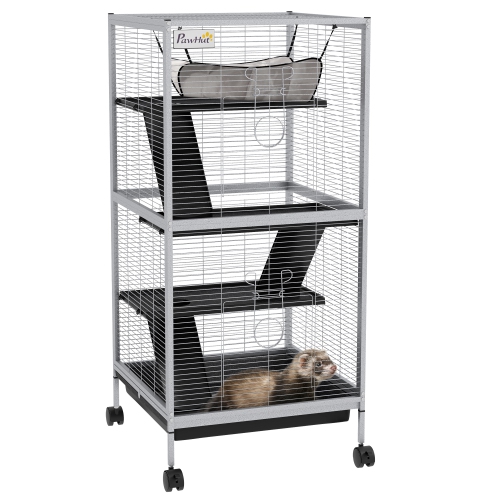 Your price for this item is $154.99
 -
 Your price for this item is $94.99
 -
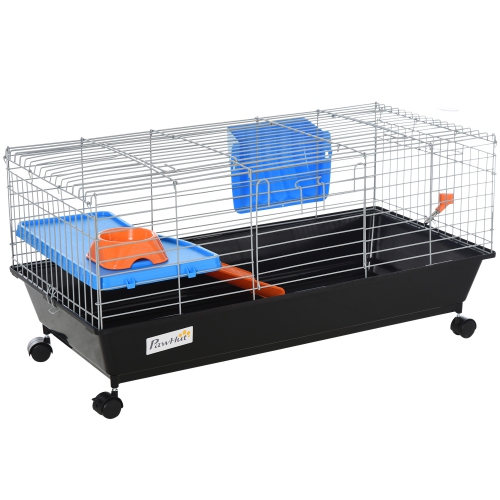 Your price for this item is $91.99
 -
 Your price for this item is $453.79
 -
 Your price for this item is $66.9
 -
 Your price for this item is $134.99
Discover more categories related to Hamster Cages
Top Collections:
Pokemon Centers, Kindle Devices, Best Budget Office Chairs, Apple iPhones 16, Best Laptops for Writers, iPhone 15 Apple, Canon G7X Cameras, Refurbished Apple Laptops, Alarm Clock, Motorola Razr Phones
Some products may be subject to Environmental Handling Fees
(EHF) depending on your province.
Learn more about EHFs.