Wall Mounted Lighted Vanity Mirrors
Wall Mounted Lighted Vanity Mirrors bring both style and convenience to your daily routine, making it easy to achieve flawless grooming and makeup application. Perfect for bathrooms, bedrooms, or dressing areas, these mirrors add a touch of sophistication while helping you get ready with confidence. Discover a variety of designs and sizes to complement any décor and enhance your space with the elegance and functionality of Wall Mounted Lighted Vanity Mirrors.
Sort
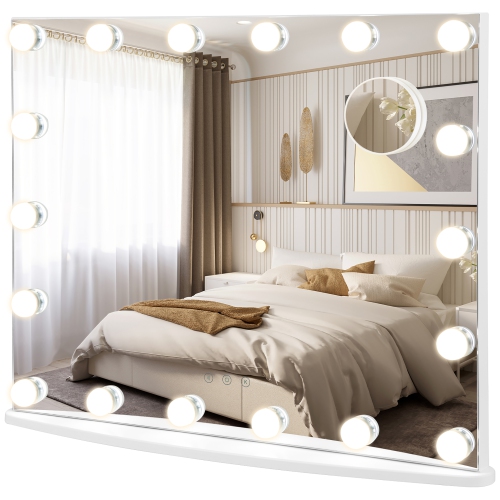
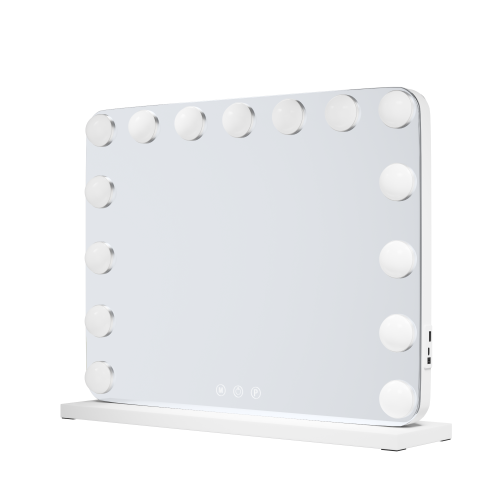

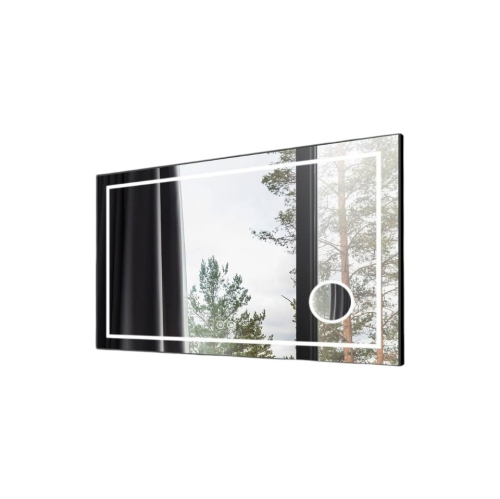
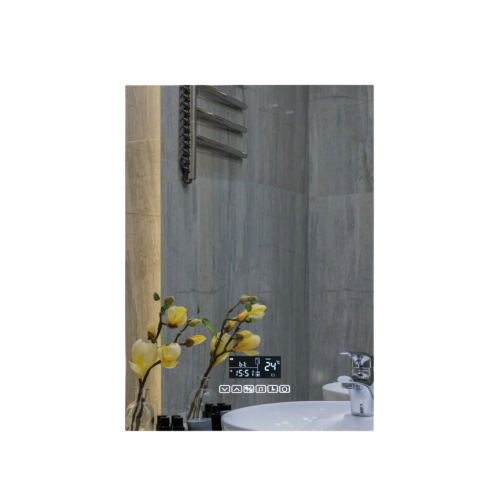
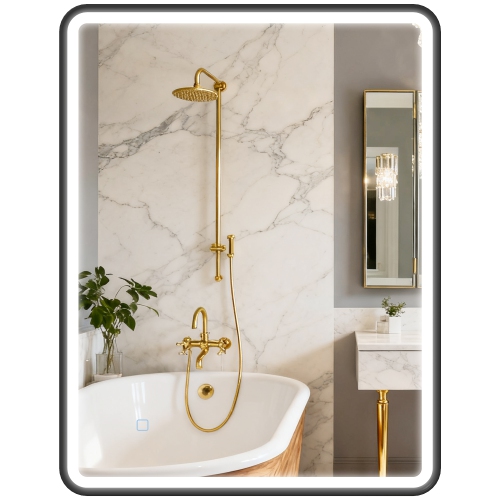
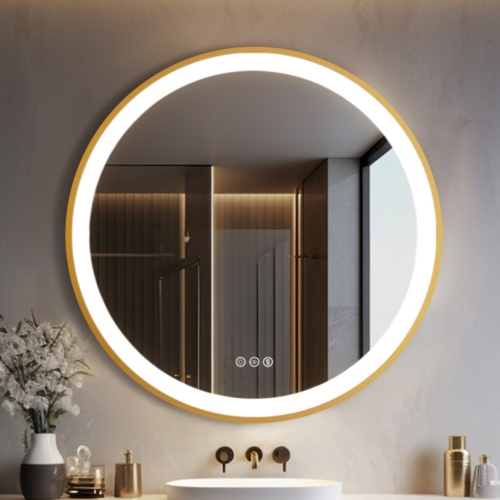
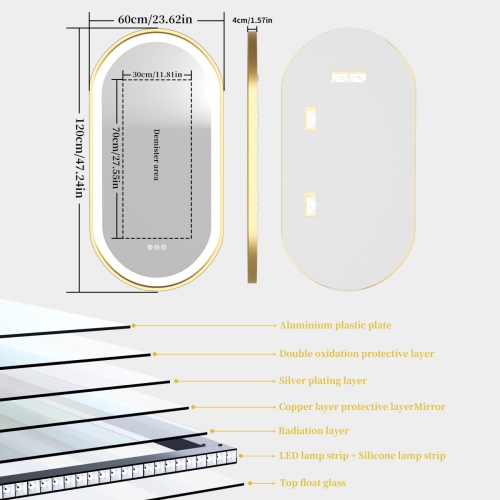

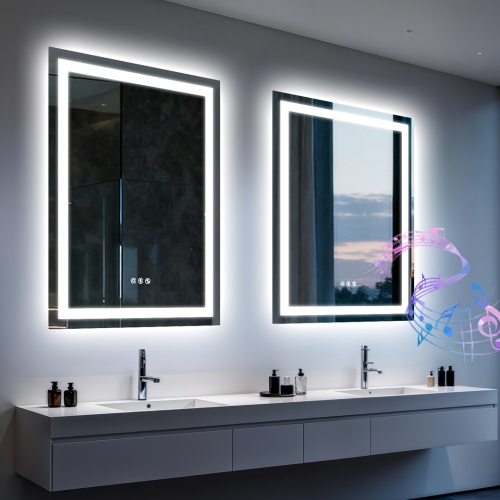
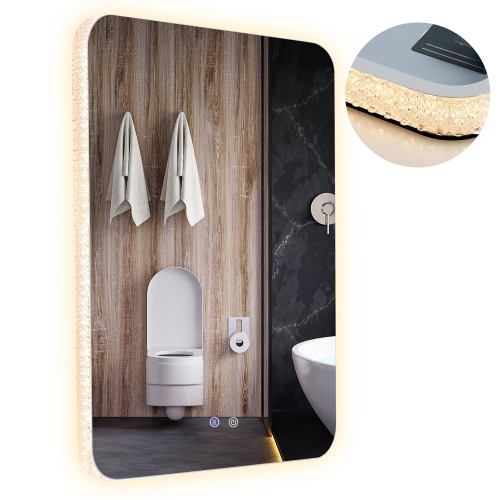
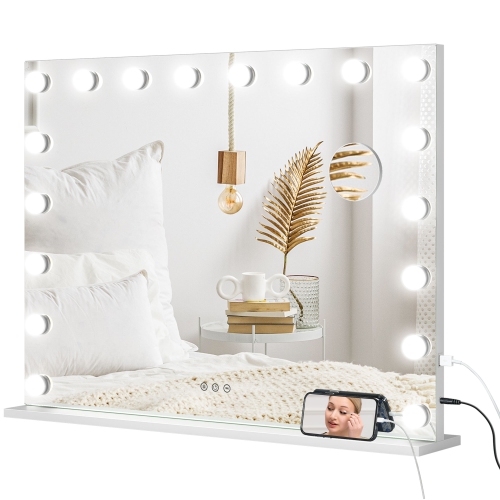
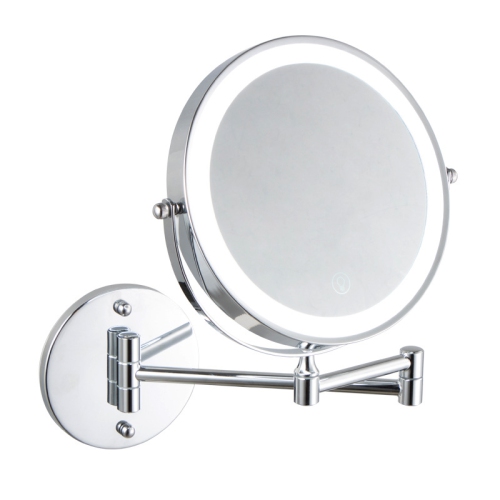
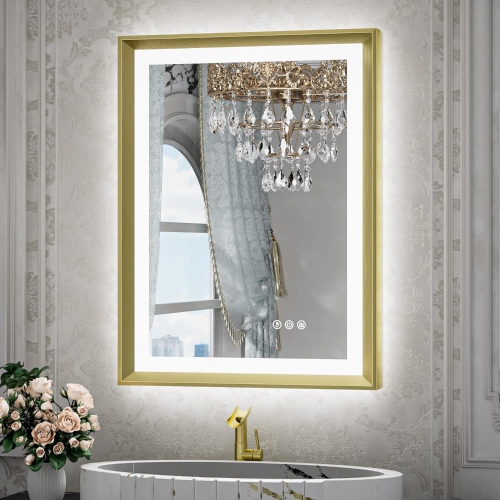
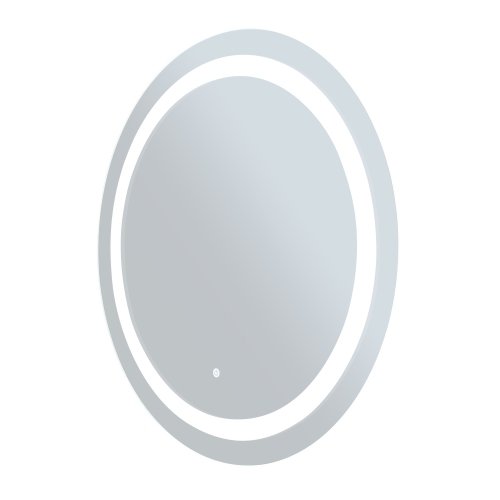
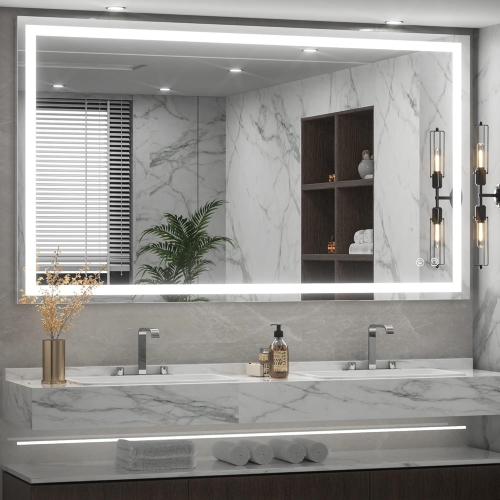
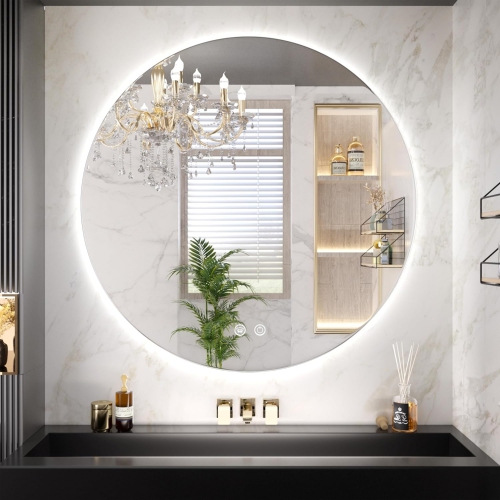
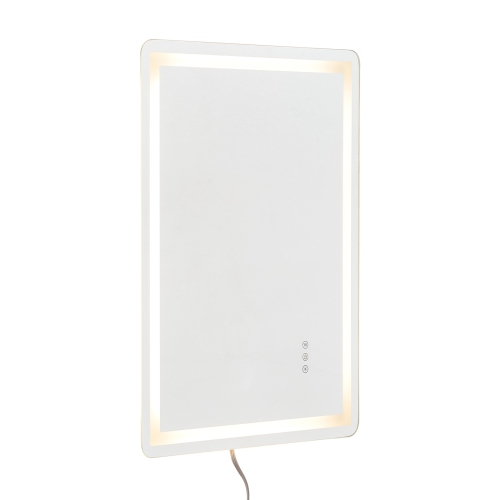
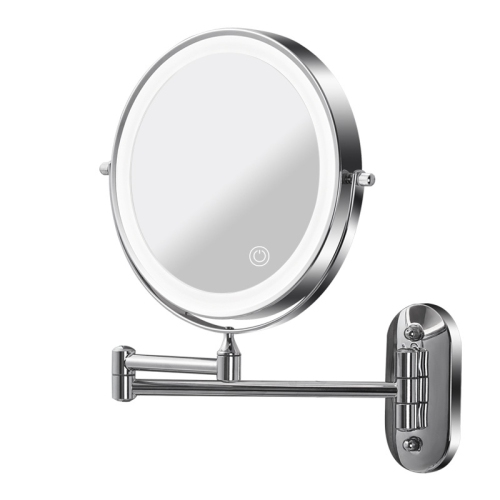
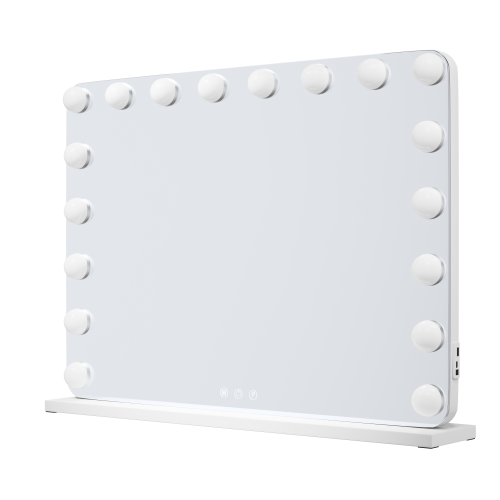
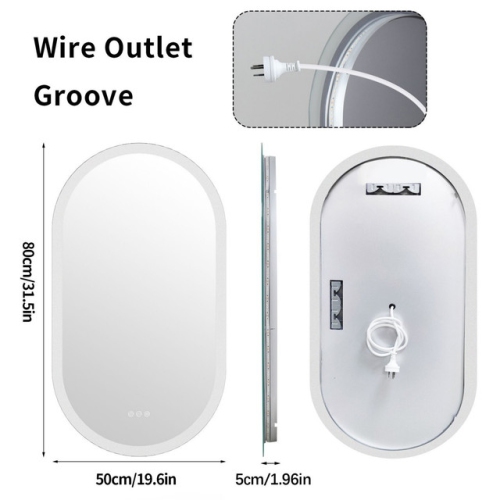
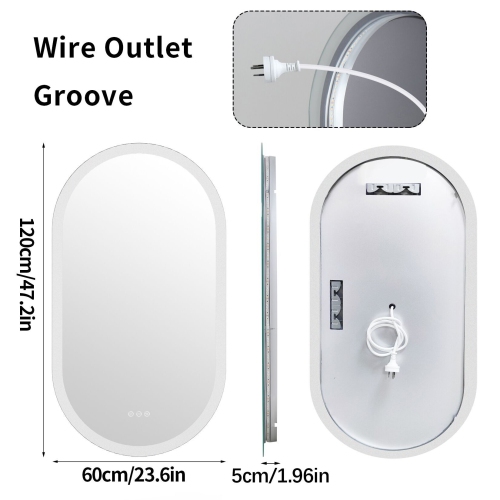
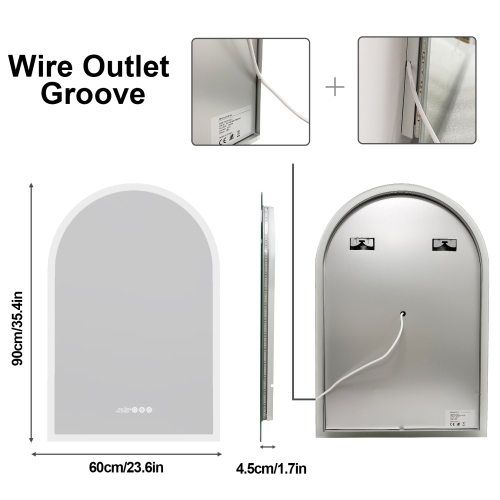
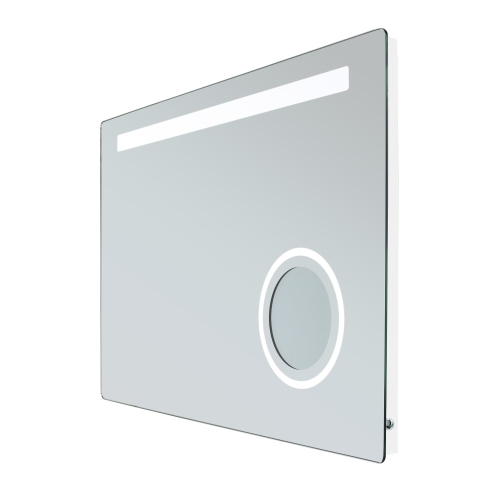
A closer view without crowding your countertop
Wall-mounted lighted vanity mirrors bring a clear reflection and built-in illumination to everyday tasks such as applying makeup, shaving, arranging hair, and putting in contact lenses. Mounting the mirror on the wall keeps the countertop open for toiletries and gives a bathroom or dressing area a more organized feel. The category includes two distinct formats: compact mirrors on extendable arms for close-up grooming, and larger illuminated panels that serve as the main mirror above a vanity. An extendable makeup mirror pulls forward when needed and folds back towards the wall afterwards, making it useful beside a basin or at a seated dressing table. A swivelling, double-sided design can pair a standard reflection with a magnified view, allowing someone to check their overall appearance before turning the mirror for detailed work. Magnification levels such as 5x or 10x offer a closer view of small areas, although stronger magnification generally requires moving nearer to the glass to bring the reflection into focus. Full-size wall mirrors provide a broader view, with round, oval, square, and rectangular shapes suited to different vanity layouts. Front-facing lighting directs light towards the face and can help reduce the shadows cast by an overhead fixture. Backlighting creates a glow around the mirror’s edges and adds visual depth against the wall, but may need support from other bathroom lighting for precise grooming. Designs that combine front lighting and backlighting offer both effects. For anyone comparing wall-mounted formats with other options, the broader selection of Lighted Vanity Mirrors provides context for choosing a mirror that suits the space and routine. A compact magnifying mirror can complement an existing bathroom mirror, while a large illuminated panel can become the focal point above a single or double vanity. The most useful format depends on whether the priority is detailed close-up work, a comfortable everyday reflection, or a combination of both.
Proportion and positioning make a noticeable difference to how a wall-mounted illuminated mirror feels in daily use. Above a vanity, mirror width works in relation to the basin, countertop, taps, and nearby cabinets rather than the wall alone. A generous rectangular mirror can give two people room to get ready, while separate mirrors over individual basins create clearly defined spaces. A round or oval shape introduces softer lines beside angular cabinetry, and a narrow vertical mirror can suit a smaller dressing area without overwhelming it. The mirror’s height also affects comfort: a shared bathroom needs a useful viewing area for people of different heights, while a seated makeup station calls for a lower viewing position. With an extendable mirror, the arm’s reach, pivot range, and folded depth matter as much as the glass diameter. There needs to be enough clearance to pull the mirror into position without hitting a tap, opening cabinet door, or adjacent wall. A mounting point that looks tidy when the arm is folded may still be awkward if the user has to lean across a deep countertop. Power arrangements influence placement too. Battery-operated designs avoid a visible power cord but require access for battery changes; rechargeable versions need a practical way to reach their charging connection. Plug-in mirrors depend on an appropriately located outlet, while hardwired designs conceal the electrical connection and call for installation by a qualified electrician in accordance with local requirements. Suitability for bathroom use should be confirmed from the mirror’s electrical certification and stated installation requirements, especially near water. Secure mounting is equally important, since a full-size glass panel and an articulated mirror place different demands on their fixings. Wall construction, mirror weight, and the mounting hardware specified by the manufacturer all affect the installation. Where tile is involved, careful planning helps protect the surface and locate secure fixing points. Checking dimensions and connection locations before installation helps avoid a mirror that blocks an outlet, crowds a light fixture, or cannot extend comfortably.
Lighting controls, materials, and care details distinguish mirrors that look similar at first glance. Adjustable brightness allows a brighter setting for detailed grooming and a gentler level for less demanding tasks, without relying on a single fixed output. Selectable light tones change the appearance of the reflection: warm white produces a softer effect, while neutral or cooler white offers a different view of makeup and clothing colours. Good colour rendering matters when judging foundation, blush, or concealer, because brightness alone does not establish how accurately colours appear. Even illumination across the face is also more useful for close-up work than a bright outline that leaves the centre in shadow. Touch controls keep the front surface visually simple, though their placement and visibility can affect ease of use. Depending on the design, memory settings may retain a previous lighting choice, and a defogging function may help clear condensation from part of the glass after a shower. These features vary, so the size of the heated area and the way each control operates are worth checking. Frames and mounting arms may use stainless steel, brass, aluminium, or other materials with protective finishes. Chrome, brushed metal, matte black, and frameless edges each create a different relationship with surrounding taps and cabinet hardware. In a frequently used bathroom, moisture resistance, protected mirror edges, and sturdy joints contribute to lasting performance. An articulated arm should hold its position rather than drift during use, and smooth pivots make daily adjustments easier. Care is usually straightforward: a soft, non-abrasive cloth removes fingerprints, while a cleaner approved by the manufacturer helps protect coatings and finishes. Applying cleaner to the cloth rather than spraying the mirror reduces the chance of liquid reaching edges, controls, or electrical components. Abrasive pads and harsh cleaners can damage both glass treatments and metal surfaces. For someone setting up a dressing space or refreshing a bathroom, a wall-mounted lighted vanity mirror can also be a thoughtful practical gift when the mounting location, power requirements, and preferred magnification are already known. Those everyday details help make the mirror a comfortable, useful part of the room.
Proportion and positioning make a noticeable difference to how a wall-mounted illuminated mirror feels in daily use. Above a vanity, mirror width works in relation to the basin, countertop, taps, and nearby cabinets rather than the wall alone. A generous rectangular mirror can give two people room to get ready, while separate mirrors over individual basins create clearly defined spaces. A round or oval shape introduces softer lines beside angular cabinetry, and a narrow vertical mirror can suit a smaller dressing area without overwhelming it. The mirror’s height also affects comfort: a shared bathroom needs a useful viewing area for people of different heights, while a seated makeup station calls for a lower viewing position. With an extendable mirror, the arm’s reach, pivot range, and folded depth matter as much as the glass diameter. There needs to be enough clearance to pull the mirror into position without hitting a tap, opening cabinet door, or adjacent wall. A mounting point that looks tidy when the arm is folded may still be awkward if the user has to lean across a deep countertop. Power arrangements influence placement too. Battery-operated designs avoid a visible power cord but require access for battery changes; rechargeable versions need a practical way to reach their charging connection. Plug-in mirrors depend on an appropriately located outlet, while hardwired designs conceal the electrical connection and call for installation by a qualified electrician in accordance with local requirements. Suitability for bathroom use should be confirmed from the mirror’s electrical certification and stated installation requirements, especially near water. Secure mounting is equally important, since a full-size glass panel and an articulated mirror place different demands on their fixings. Wall construction, mirror weight, and the mounting hardware specified by the manufacturer all affect the installation. Where tile is involved, careful planning helps protect the surface and locate secure fixing points. Checking dimensions and connection locations before installation helps avoid a mirror that blocks an outlet, crowds a light fixture, or cannot extend comfortably.
Lighting controls, materials, and care details distinguish mirrors that look similar at first glance. Adjustable brightness allows a brighter setting for detailed grooming and a gentler level for less demanding tasks, without relying on a single fixed output. Selectable light tones change the appearance of the reflection: warm white produces a softer effect, while neutral or cooler white offers a different view of makeup and clothing colours. Good colour rendering matters when judging foundation, blush, or concealer, because brightness alone does not establish how accurately colours appear. Even illumination across the face is also more useful for close-up work than a bright outline that leaves the centre in shadow. Touch controls keep the front surface visually simple, though their placement and visibility can affect ease of use. Depending on the design, memory settings may retain a previous lighting choice, and a defogging function may help clear condensation from part of the glass after a shower. These features vary, so the size of the heated area and the way each control operates are worth checking. Frames and mounting arms may use stainless steel, brass, aluminium, or other materials with protective finishes. Chrome, brushed metal, matte black, and frameless edges each create a different relationship with surrounding taps and cabinet hardware. In a frequently used bathroom, moisture resistance, protected mirror edges, and sturdy joints contribute to lasting performance. An articulated arm should hold its position rather than drift during use, and smooth pivots make daily adjustments easier. Care is usually straightforward: a soft, non-abrasive cloth removes fingerprints, while a cleaner approved by the manufacturer helps protect coatings and finishes. Applying cleaner to the cloth rather than spraying the mirror reduces the chance of liquid reaching edges, controls, or electrical components. Abrasive pads and harsh cleaners can damage both glass treatments and metal surfaces. For someone setting up a dressing space or refreshing a bathroom, a wall-mounted lighted vanity mirror can also be a thoughtful practical gift when the mounting location, power requirements, and preferred magnification are already known. Those everyday details help make the mirror a comfortable, useful part of the room.
Top selling and popular products
-
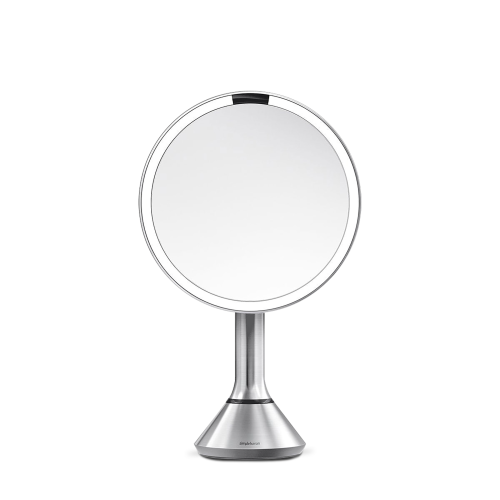 Your price for this item is $270
 -
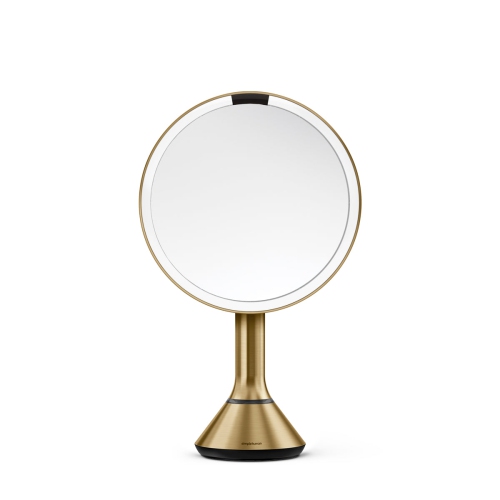 Your price for this item is $270
 -
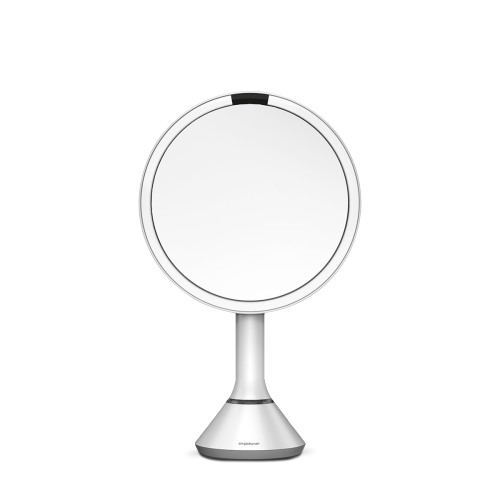 Your price for this item is $270
 -
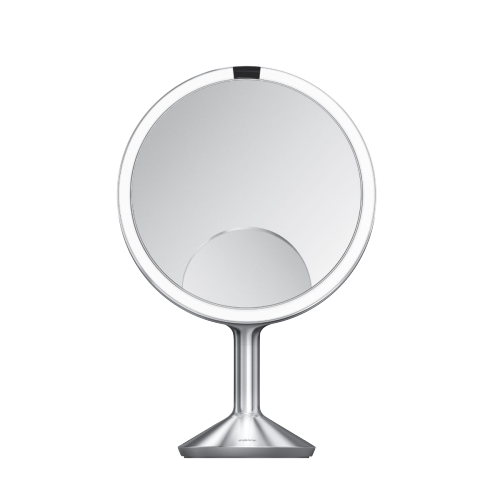 Your price for this item is $450
 -
 Your price for this item is $158.98
 -
 Your price for this item is $149.99
 -
 Your price for this item is $400
 -
 Your price for this item is $834.5
Discover more categories related to Wall Mounted Lighted Vanity Mirrors
Top Collections:
Pokemon Centers, Kindle Devices, Best Budget Office Chairs, Apple iPhones 16, Canon G7X Cameras, iPhone 15 Apple, Alarm Clock, Refurbished Apple Laptops, Flip Phones, Best Laptops for Writers
Some products may be subject to Environmental Handling Fees
(EHF) depending on your province.
Learn more about EHFs.