Standard Staples
If you're looking to stock up on office supplies, look no further than these standard staples. These essential items are a must-have for almost any workplace, providing reliable and secure fastening for all your documents. From securing important papers to organizing files, these standard staples offer the perfect solution for your everyday office needs. Whether you're restocking your home office or outfitting a large corporate space, you'll find a wide range of options to choose from.
Sort

Why staple fit matters for everyday paperwork
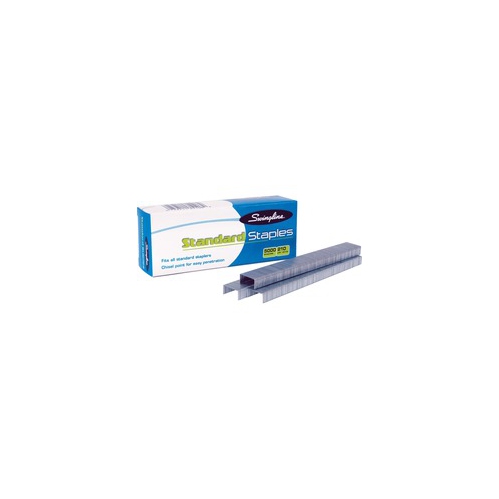
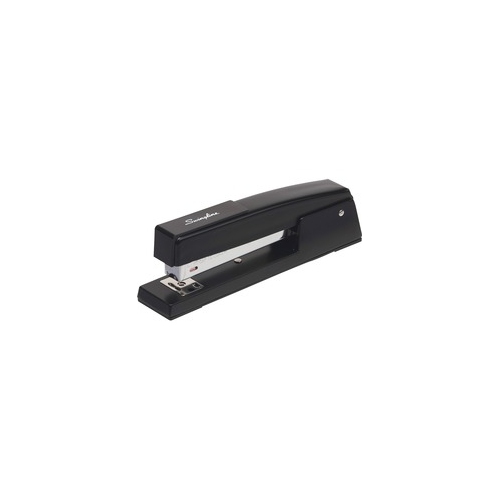
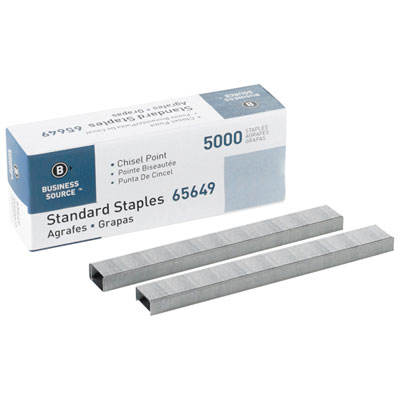
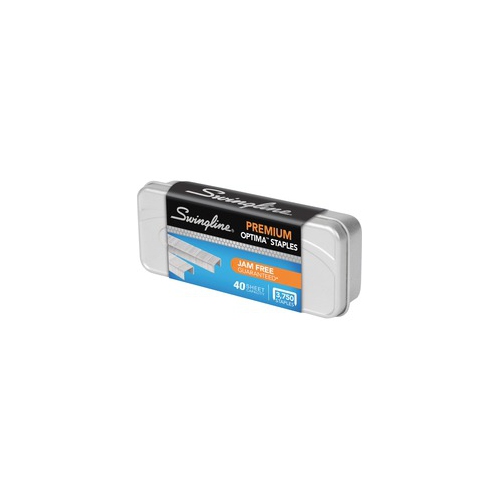
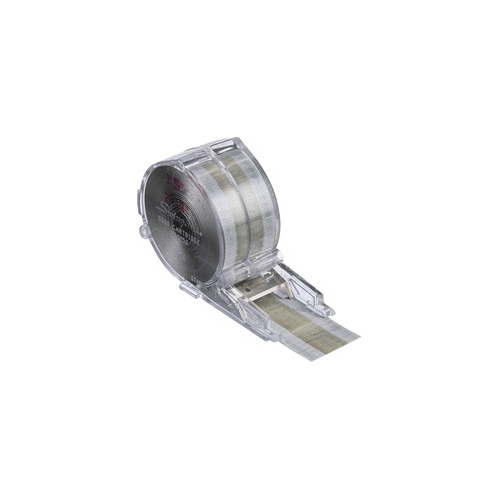
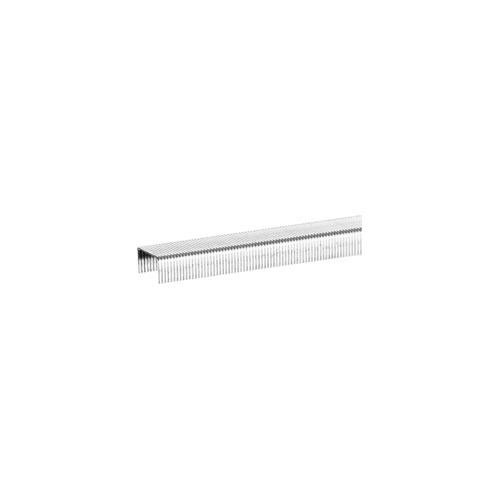
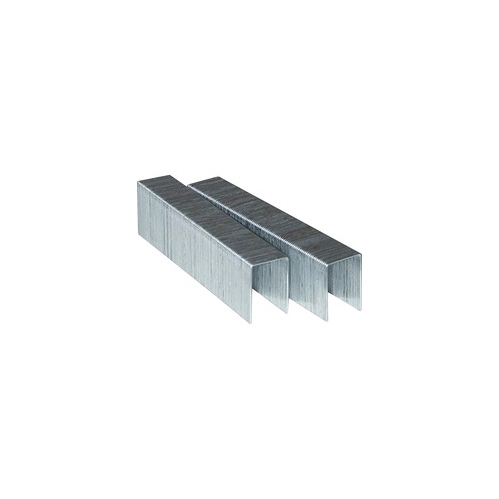
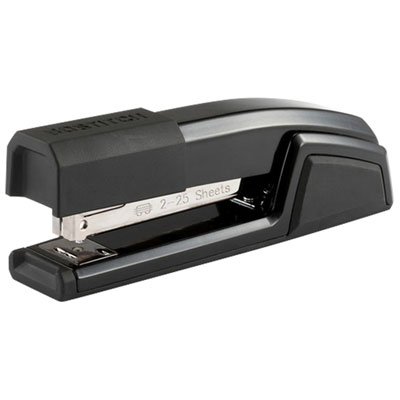
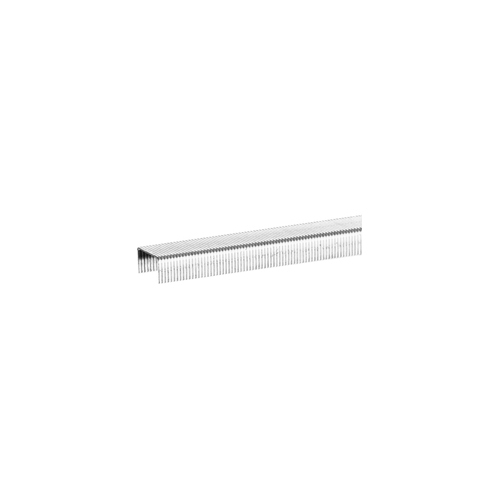
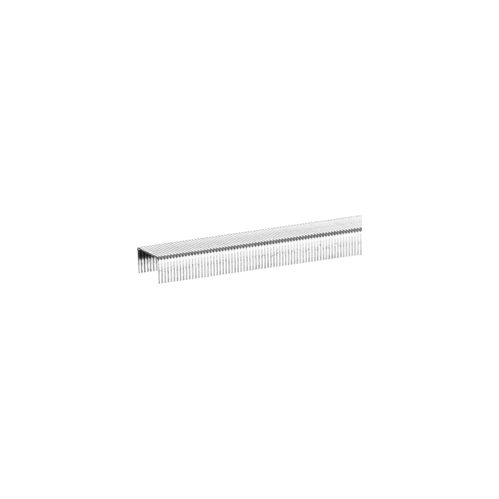
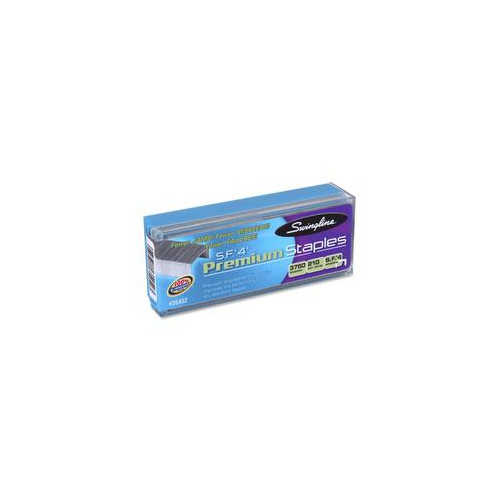
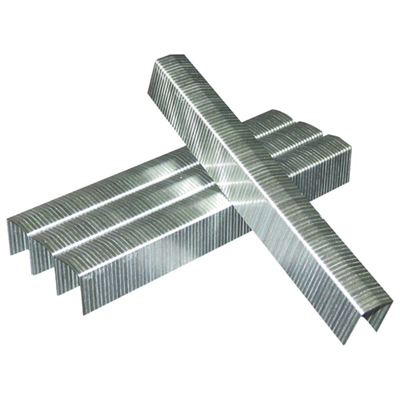
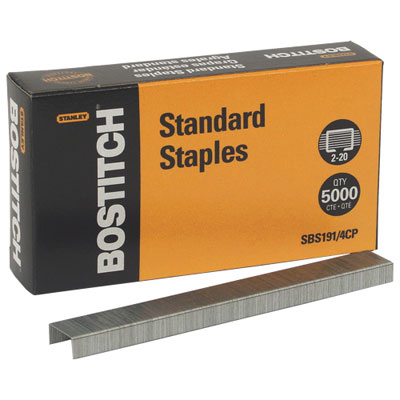
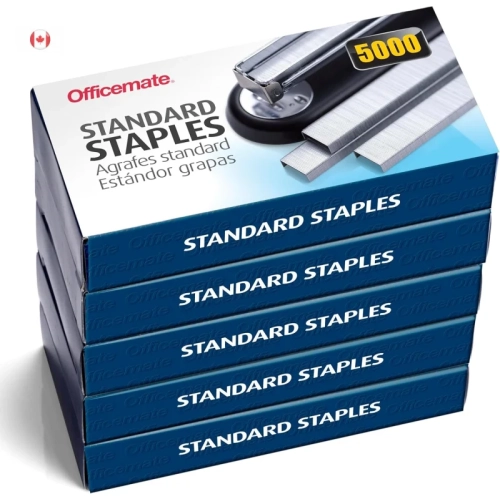
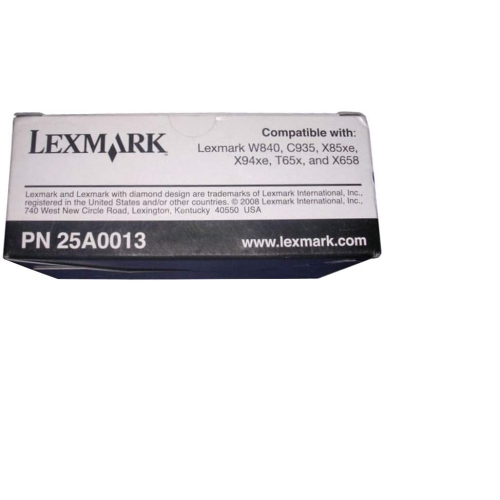
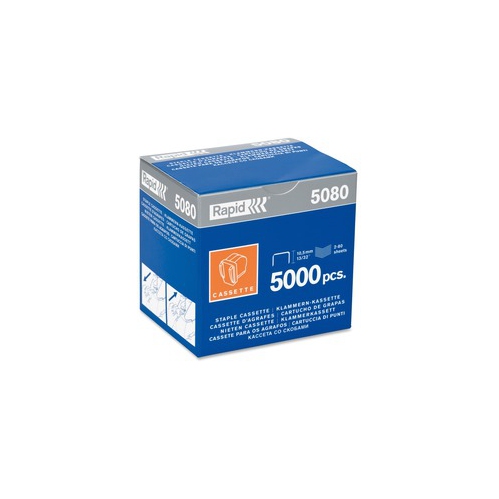
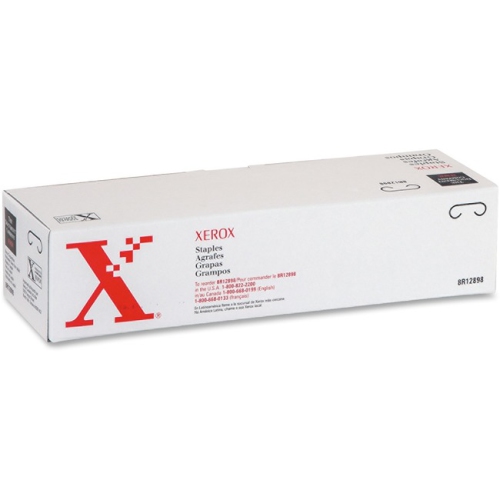
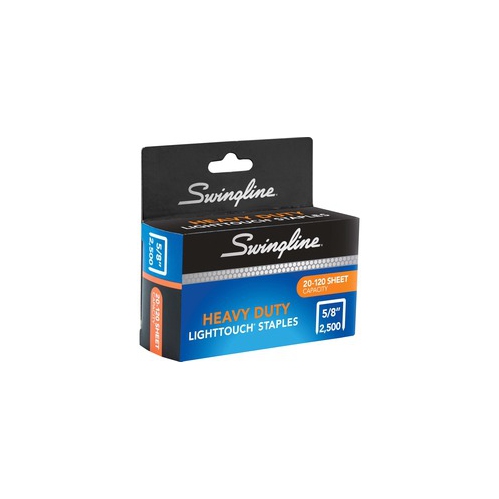
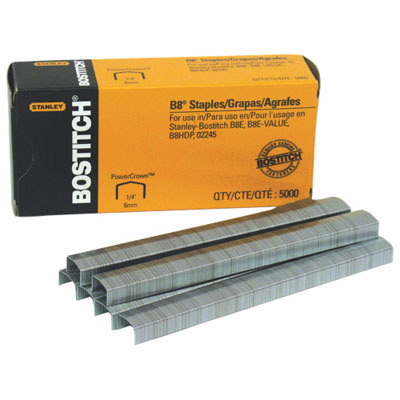
Standard staples are small metal fasteners made for joining everyday paper documents with a compatible desktop stapler. A common standard staple has a 1/4-inch leg length, approximately 6 mm, and is used for stapling around 20 to 25 sheets of ordinary office paper, depending on the stapler, staple specifications, and paper thickness. That capacity is a general reference rather than a guarantee: a stack of lightweight forms behaves differently from the same number of sheets printed on heavier paper. For home offices, classrooms, reception desks, and shared workspaces, standard staples provide a straightforward way to keep related pages together without adding much bulk. A meeting agenda stays with its supporting notes, a signed form remains attached to its accompanying documents, and a student's assignment can travel between a backpack and a teacher's desk as one complete packet. Each staple has a crown, the horizontal section visible across the top of the paper, and two legs that pass through the sheets. In a typical desktop stapler, the metal plate beneath the paper bends those legs inward to hold the pages in place. A properly formed staple sits close to the surface, with its folded ends resting against the back of the stack rather than sticking out. This compact closure suits documents that need to remain together while being read, carried, or filed. Standard staples are particularly useful for modest paper bundles handled throughout a normal working day, rather than thick reports, padded materials, or fastening tasks outside ordinary paper use. Their familiar shape can make them seem interchangeable, but the word “standard” does not mean that every staple fits every stapler. Leg length, crown width, wire dimensions, and the stapler's loading system all contribute to compatibility. The most useful fit information is the staple size specified on the stapler or in its documentation, along with the supported sheet capacity.
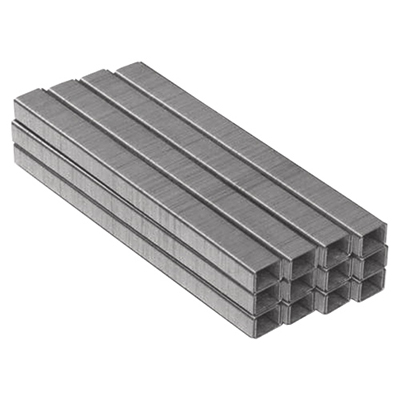
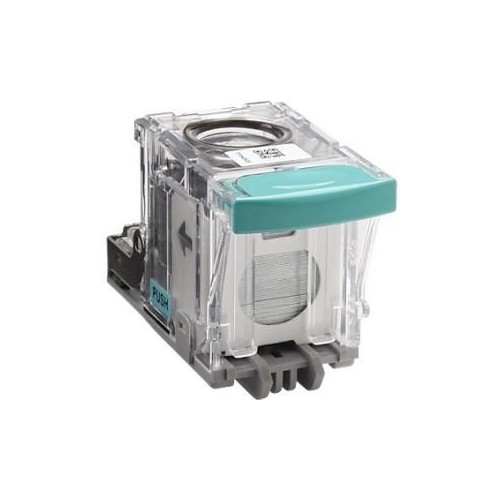
Most standard office staples are made from steel wire, often with a metallic coating that helps protect the surface during normal storage and handling. The wire needs enough stiffness to penetrate paper cleanly while still bending neatly against the stapler's base plate. Consistent shaping matters: even legs, a straight crown, and clean points help staples feed and close as intended. Many standard staples come joined in strips that sit inside the stapler's magazine, ready to advance one fastener at a time. Strip length and loading space can vary between compact and full-size desktop staplers, so two staplers that accept the same staple dimensions may hold different quantities. A strip should rest in its channel without being forced, twisted, or bent. Packaging may show dimensions in inches or millimetres, or use a size designation associated with a particular wire and leg length; the designation supported by the stapler is more dependable than appearance alone. Paper thickness also affects the finished result. A thin bundle needs enough leg length to pass through the sheets and fold securely, while a thicker bundle leaves less wire available to bend underneath. A cover sheet, folded insert, or heavier presentation paper can bring a packet closer to the stapler's limit even when its page count looks modest. When the pairing is right, the crown lies flat and the folded legs hold the pages without leaving a loose gap. Bent crowns, legs that remain upright, and incomplete fastening can point to a mismatch, an overloaded stack, or a stapler that needs attention. Durability in everyday use comes from this combination of suitable wire, correct fit, and a clean closure. Standard staples are designed for paper handling, not for carrying weight or securing fabric, wood, or packaging. Heavy-duty office staplers and fastening tools may require very different staple dimensions, even when their fasteners look similar at a glance.
The value of standard staples is most apparent in the small routines that keep paperwork manageable. At a kitchen-table workspace, they keep a printed application with its supporting pages until it is ready to submit. At a reception counter, they help prevent a multi-page handout from becoming separated as it changes hands. In a classroom or study area, they turn loose worksheets into a packet that is easier to follow and store. They also have a place alongside bound stationery: pages kept in Staples Notebooks can hold ongoing notes, while separately stapled handouts keep reference material together without needing to attach it to a notebook page. For paperwork read in sequence, a staple near a corner often allows pages to turn comfortably, provided it does not cover text or sit so close to the edge that the paper tears. Documents that will be revised repeatedly, separated for scanning, or fed through a printer generally benefit from a removable fastening method instead. Staples should be removed before pages enter equipment that is not designed to handle metal fasteners, and originals with long-term preservation needs may require storage methods that avoid piercing the paper. Care for unused staples is uncomplicated but worthwhile. A dry drawer or closed stationery container helps keep strips clean, straight, and away from spills or damp conditions that can encourage corrosion. Keeping loose strips from being crushed under heavier desk supplies also helps preserve their shape and makes loading less fiddly. Small metal fasteners need to stay out of reach of young children and pets, and removed staples belong in a suitable waste container rather than loose on a desk or floor. For households, students, and office teams alike, standard staples serve a narrow but dependable purpose: holding ordinary paper bundles together neatly. Correctly matched to the stapler and the thickness of the work, they make frequently handled documents easier to carry, read, and file.
Most standard office staples are made from steel wire, often with a metallic coating that helps protect the surface during normal storage and handling. The wire needs enough stiffness to penetrate paper cleanly while still bending neatly against the stapler's base plate. Consistent shaping matters: even legs, a straight crown, and clean points help staples feed and close as intended. Many standard staples come joined in strips that sit inside the stapler's magazine, ready to advance one fastener at a time. Strip length and loading space can vary between compact and full-size desktop staplers, so two staplers that accept the same staple dimensions may hold different quantities. A strip should rest in its channel without being forced, twisted, or bent. Packaging may show dimensions in inches or millimetres, or use a size designation associated with a particular wire and leg length; the designation supported by the stapler is more dependable than appearance alone. Paper thickness also affects the finished result. A thin bundle needs enough leg length to pass through the sheets and fold securely, while a thicker bundle leaves less wire available to bend underneath. A cover sheet, folded insert, or heavier presentation paper can bring a packet closer to the stapler's limit even when its page count looks modest. When the pairing is right, the crown lies flat and the folded legs hold the pages without leaving a loose gap. Bent crowns, legs that remain upright, and incomplete fastening can point to a mismatch, an overloaded stack, or a stapler that needs attention. Durability in everyday use comes from this combination of suitable wire, correct fit, and a clean closure. Standard staples are designed for paper handling, not for carrying weight or securing fabric, wood, or packaging. Heavy-duty office staplers and fastening tools may require very different staple dimensions, even when their fasteners look similar at a glance.
The value of standard staples is most apparent in the small routines that keep paperwork manageable. At a kitchen-table workspace, they keep a printed application with its supporting pages until it is ready to submit. At a reception counter, they help prevent a multi-page handout from becoming separated as it changes hands. In a classroom or study area, they turn loose worksheets into a packet that is easier to follow and store. They also have a place alongside bound stationery: pages kept in Staples Notebooks can hold ongoing notes, while separately stapled handouts keep reference material together without needing to attach it to a notebook page. For paperwork read in sequence, a staple near a corner often allows pages to turn comfortably, provided it does not cover text or sit so close to the edge that the paper tears. Documents that will be revised repeatedly, separated for scanning, or fed through a printer generally benefit from a removable fastening method instead. Staples should be removed before pages enter equipment that is not designed to handle metal fasteners, and originals with long-term preservation needs may require storage methods that avoid piercing the paper. Care for unused staples is uncomplicated but worthwhile. A dry drawer or closed stationery container helps keep strips clean, straight, and away from spills or damp conditions that can encourage corrosion. Keeping loose strips from being crushed under heavier desk supplies also helps preserve their shape and makes loading less fiddly. Small metal fasteners need to stay out of reach of young children and pets, and removed staples belong in a suitable waste container rather than loose on a desk or floor. For households, students, and office teams alike, standard staples serve a narrow but dependable purpose: holding ordinary paper bundles together neatly. Correctly matched to the stapler and the thickness of the work, they make frequently handled documents easier to carry, read, and file.
Top selling and popular products
-
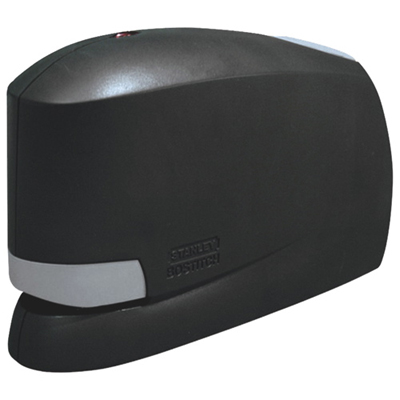 Your price for this item is $103.99
 -
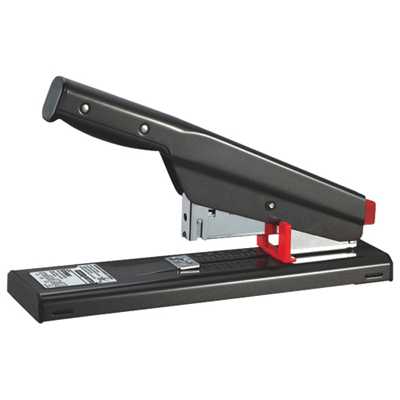 Your price for this item is $44.99
 -
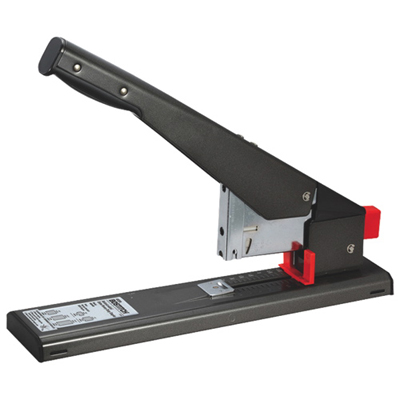 Your price for this item is $118.99
 -
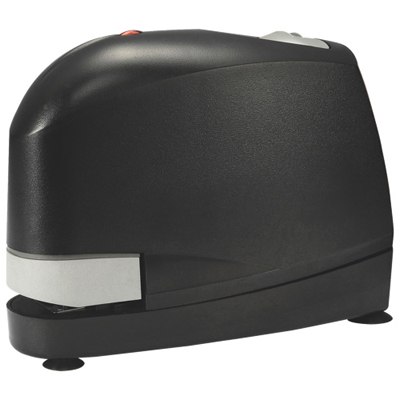 Your price for this item is $125.99
 -
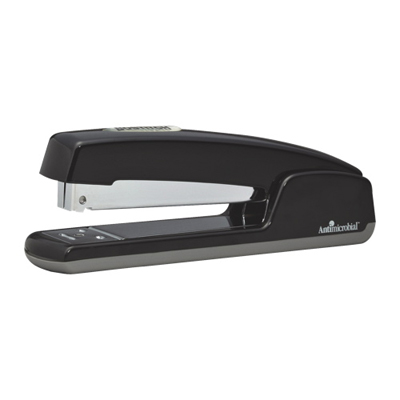 Your price for this item is $19.99
 -
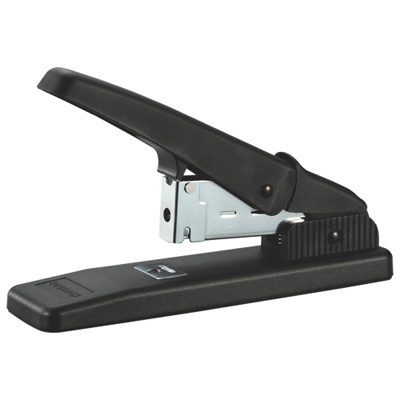 Your price for this item is $57.99
 -
 Your price for this item is $6.99
 -
 Your price for this item is $67.99
Discover more categories related to Standard Staples

Top Collections:
Pokemon Centers, Budget 4K TVs, Best Budget Office Chairs, Kindle Devices, Canon G7X Cameras, Apple iPhones 16, iPhone 15 Apple, Laptops for Business Work, Xiaomi Phones, Flip Phones
Some products may be subject to Environmental Handling Fees
(EHF) depending on your province.
Learn more about EHFs.