Statistics Calculators
Looking to simplify complex statistical calculations? Look no further than our comprehensive selection of statistics calculators. Whether you're a student, researcher, or professional in the field, these powerful tools are designed to make number crunching a breeze. From calculating standard deviations and confidence intervals to conducting hypothesis tests and regression analyses, our range of statistics calculators have got you covered. With their user-friendly interfaces and advanced features, you'll be able to tackle even the most intricate statistical problems with ease. Explore our collection today and take your data analysis skills to new heights.
Sort

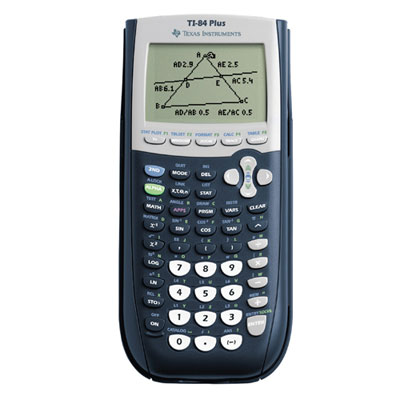
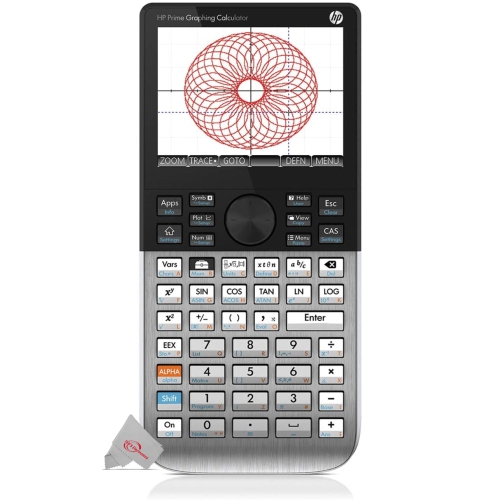
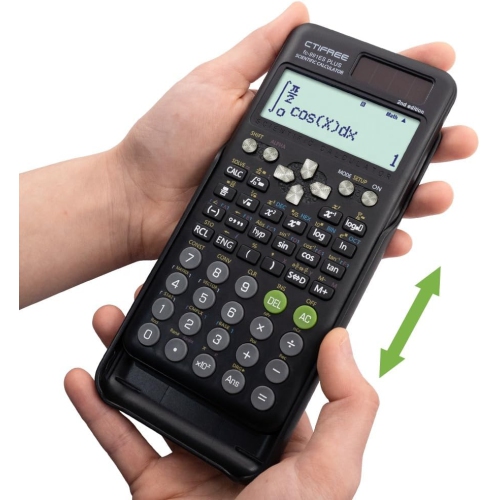
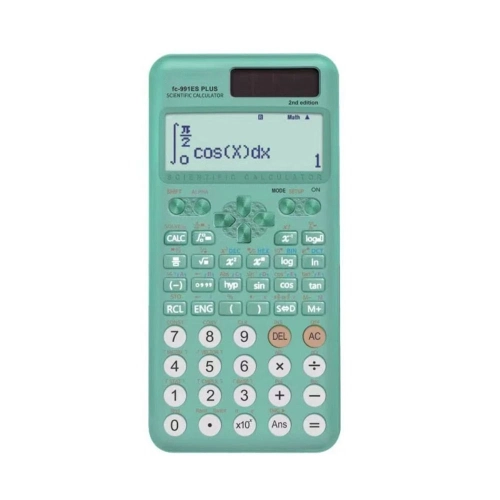
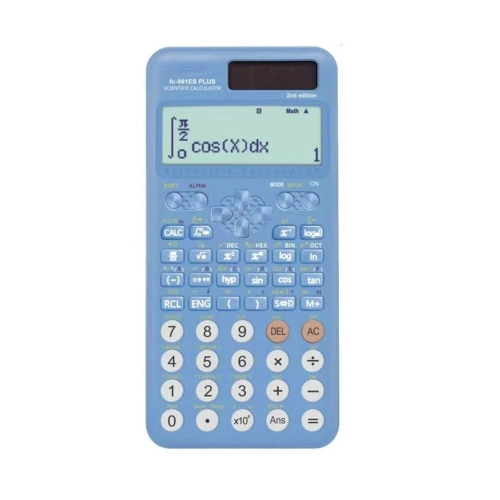
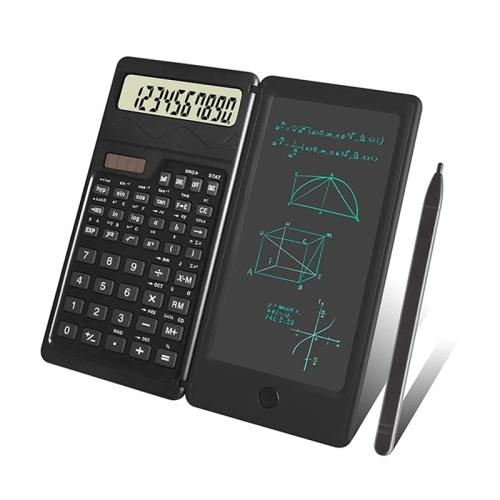
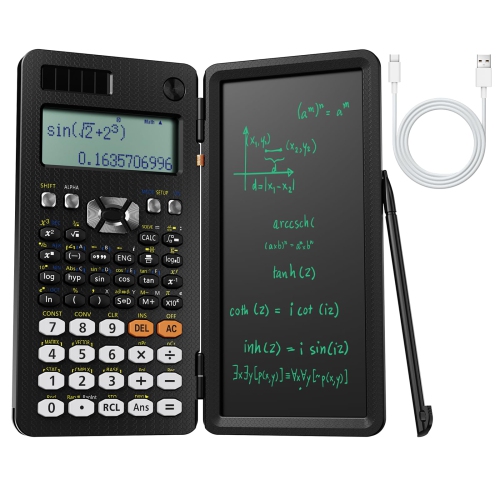
Practical support for data analysis, coursework, and research
Statistics calculators are designed to make common data analysis tasks more manageable, whether you are reviewing a small set of measurements, completing coursework, or checking calculations for a research project. Unlike a basic calculator, a statistics-focused model may include dedicated functions for entering lists of data, organizing one-variable statistics, and calculating the mean, median, mode, range, variance, and standard deviation. These summaries can help turn a column of figures into information that is easier to interpret. For example, a student comparing test results can use the mean to find the average score, the median to identify the middle result, and the range to see how widely the scores differ. Standard deviation provides additional context by indicating how closely values cluster around the average. Depending on the model, you may also find functions for combinations and permutations, probability, regression, correlation, distributions, and confidence intervals. Some advanced calculators support hypothesis testing, p-values, t-tests, ANOVA, chi-square calculations, or other inferential statistics, but available features vary considerably, so checking the specifications and instruction manual is an important part of choosing the right tool. For a broader selection of tools for school, work, and home use, browse Math Calculators.
When comparing statistics calculators, begin with the type of work you expect to do most often. A straightforward model with statistics mode and one-variable data entry may be well suited to introductory classes, basic lab work, household planning, and occasional calculations. Look for clearly labelled keys, a readable display, and a menu system that makes it easy to move between data entry, summaries, and results. If you regularly work with several variables or need to compare relationships between data sets, consider a calculator with two-variable statistics, linear regression, correlation coefficients, and a larger memory capacity. Students taking senior secondary or post-secondary mathematics may benefit from a scientific or graphing calculator with a wider selection of probability and distribution functions, while researchers, instructors, analysts, and technicians may need more advanced statistical options. A natural display can show fractions, exponents, roots, and expressions in a format that resembles written mathematics, which can make checking a long calculation less frustrating. Solar-assisted operation, replaceable batteries, a protective cover, and a durable keypad can also be useful practical features, especially when a calculator travels between home, class, a laboratory, or an office. For examinations, always confirm that the model is permitted under the applicable rules; some assessments restrict graphing, programmable, or communication features. It is also worth considering whether you prefer physical keys for entering raw data or software for handling large data sets, since a handheld calculator is most useful for focused calculations, verification, and learning the steps behind a result.
Statistics calculators can be helpful for a wide range of people and can make a thoughtful gift for a student beginning a mathematics, business, economics, psychology, health sciences, engineering, or social sciences programme. They are equally useful for adult learners returning to school, educators preparing examples, and professionals who want a dependable way to verify a result without opening a full spreadsheet. A compact calculator tucked into a backpack can be ready during a quiet study session at a library table, on a lab bench between measurements, or beside a notebook while reviewing a survey or sales report. Learning to use one effectively involves more than entering numbers and accepting the first answer: users should check that the data has been entered correctly, confirm whether the calculation uses a sample or population formula, and keep track of units and rounding. It is helpful to record the data set, selected function, and final result so the work can be reviewed later. For probability and distributions, pay attention to whether a function returns a probability, a cumulative value, or an inverse result such as a critical value. For regression and correlation, remember that a strong relationship between two variables does not by itself prove that one causes the other. Clear menus, reliable memory, and an accessible manual can support this process, helping new users build confidence while giving experienced users a quick way to check descriptive statistics, probability calculations, and selected inferential results during the cooler months and throughout the school year.
When comparing statistics calculators, begin with the type of work you expect to do most often. A straightforward model with statistics mode and one-variable data entry may be well suited to introductory classes, basic lab work, household planning, and occasional calculations. Look for clearly labelled keys, a readable display, and a menu system that makes it easy to move between data entry, summaries, and results. If you regularly work with several variables or need to compare relationships between data sets, consider a calculator with two-variable statistics, linear regression, correlation coefficients, and a larger memory capacity. Students taking senior secondary or post-secondary mathematics may benefit from a scientific or graphing calculator with a wider selection of probability and distribution functions, while researchers, instructors, analysts, and technicians may need more advanced statistical options. A natural display can show fractions, exponents, roots, and expressions in a format that resembles written mathematics, which can make checking a long calculation less frustrating. Solar-assisted operation, replaceable batteries, a protective cover, and a durable keypad can also be useful practical features, especially when a calculator travels between home, class, a laboratory, or an office. For examinations, always confirm that the model is permitted under the applicable rules; some assessments restrict graphing, programmable, or communication features. It is also worth considering whether you prefer physical keys for entering raw data or software for handling large data sets, since a handheld calculator is most useful for focused calculations, verification, and learning the steps behind a result.
Statistics calculators can be helpful for a wide range of people and can make a thoughtful gift for a student beginning a mathematics, business, economics, psychology, health sciences, engineering, or social sciences programme. They are equally useful for adult learners returning to school, educators preparing examples, and professionals who want a dependable way to verify a result without opening a full spreadsheet. A compact calculator tucked into a backpack can be ready during a quiet study session at a library table, on a lab bench between measurements, or beside a notebook while reviewing a survey or sales report. Learning to use one effectively involves more than entering numbers and accepting the first answer: users should check that the data has been entered correctly, confirm whether the calculation uses a sample or population formula, and keep track of units and rounding. It is helpful to record the data set, selected function, and final result so the work can be reviewed later. For probability and distributions, pay attention to whether a function returns a probability, a cumulative value, or an inverse result such as a critical value. For regression and correlation, remember that a strong relationship between two variables does not by itself prove that one causes the other. Clear menus, reliable memory, and an accessible manual can support this process, helping new users build confidence while giving experienced users a quick way to check descriptive statistics, probability calculations, and selected inferential results during the cooler months and throughout the school year.
Top selling and popular products
-
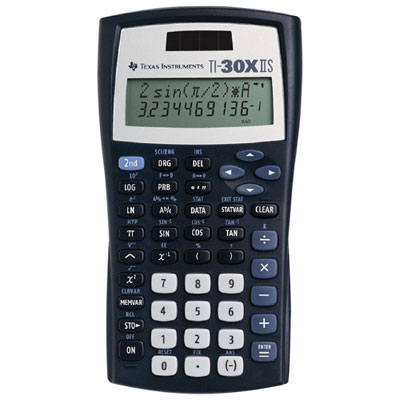 Your price for this item is $18.99
 -
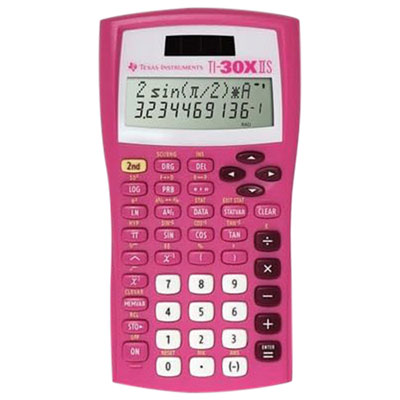 Your price for this item is $25.99
 -
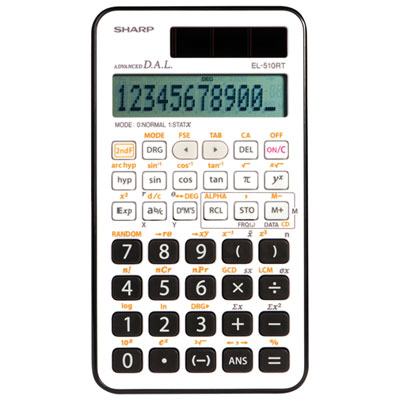 Your price for this item is $16.99
 -
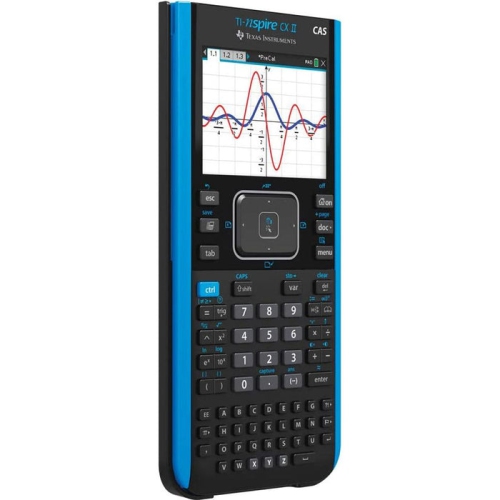 Your price for this item is $1822.99
 -
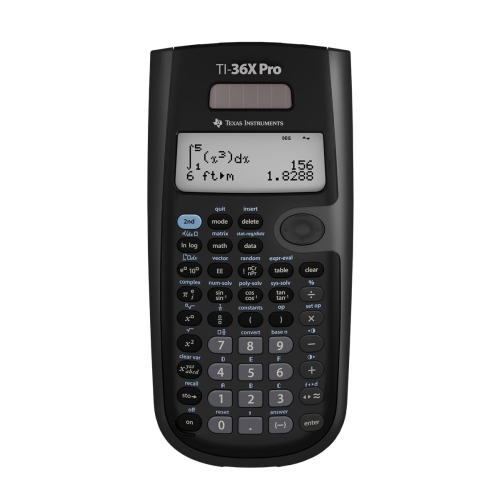 Your price for this item is $55.99
 -
 Your price for this item is $29.98
 -
 Your price for this item is $13.99
 -
 Your price for this item is $25.99
Discover more categories related to Statistics Calculators
Top Collections:
Pokemon Centers, Kindle Devices, Best Cell Phones Under $500, Alarm Clock, Canon G7X Cameras, iPhone 15 Apple, Apple iPhones 16, Laptops for Students, iPhone 14 256GB, Budget Smartphones
Some products may be subject to Environmental Handling Fees
(EHF) depending on your province.
Learn more about EHFs.