Garmin Watch Enduro
Garmin's watches are known for their high quality and their wide range of features. These have all the features you'd expect from a top-of-the-line Garmin watch including the fitness and heartrate tracking that is also made with high functionality and are stylish. Here are some great options for Garmin Enduro watches available today.
Sort

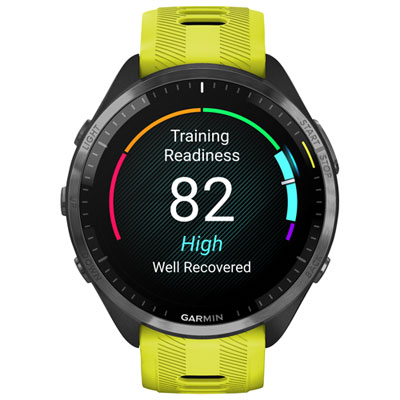
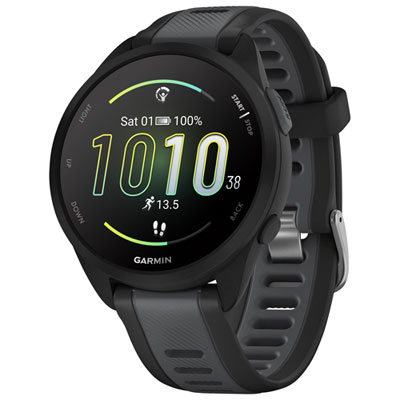
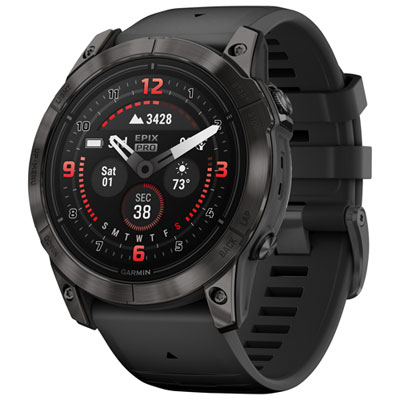
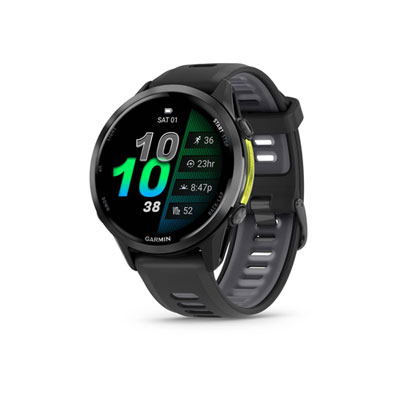
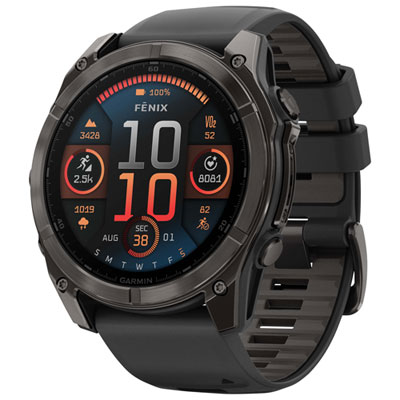
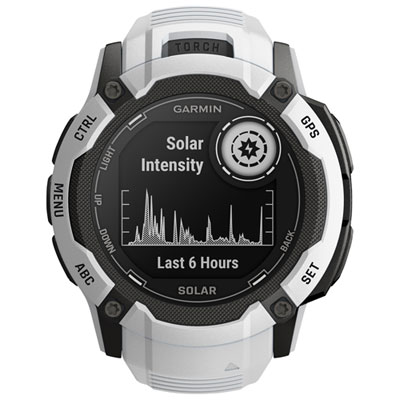

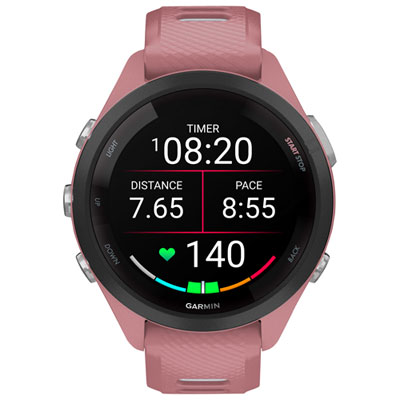
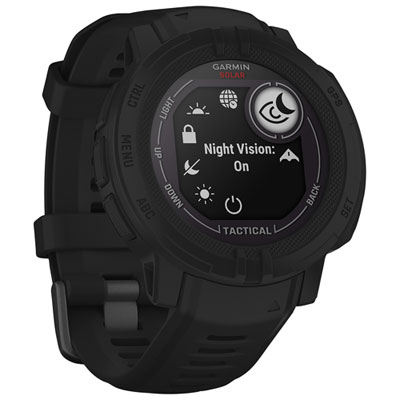
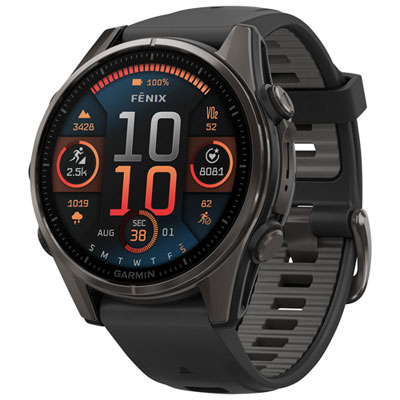
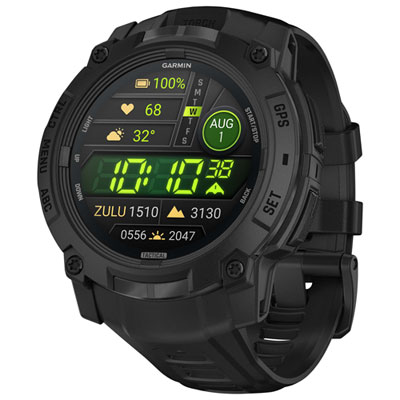
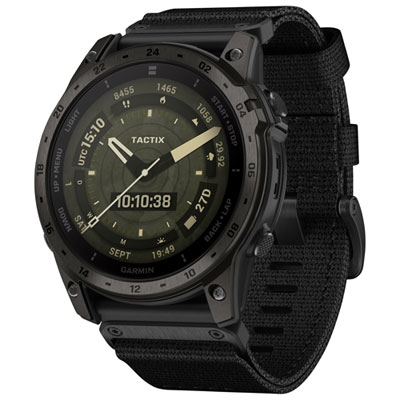
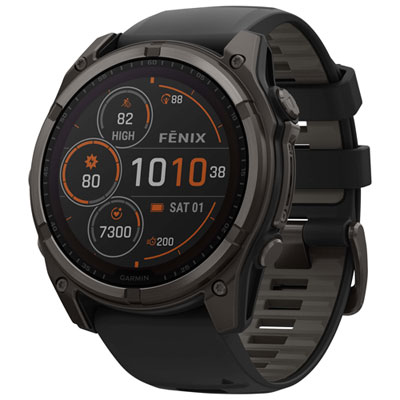
What makes a watch ready for longer distances
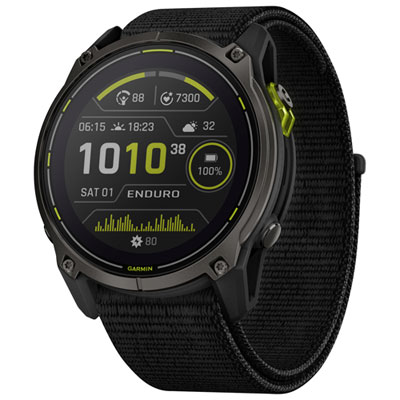
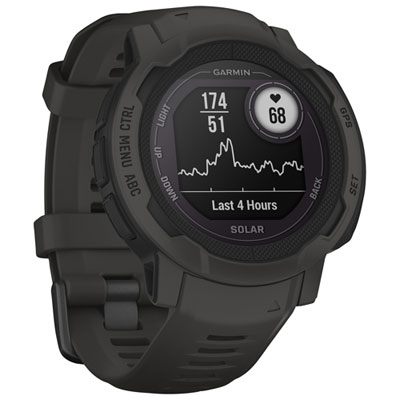
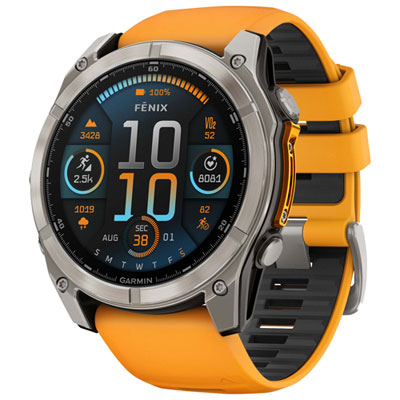
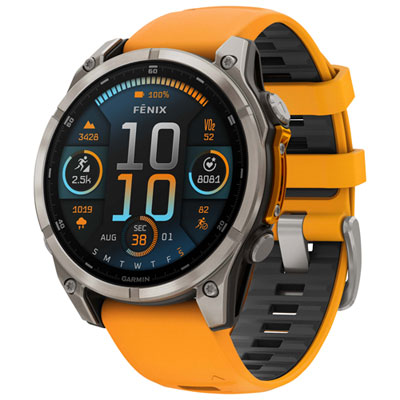
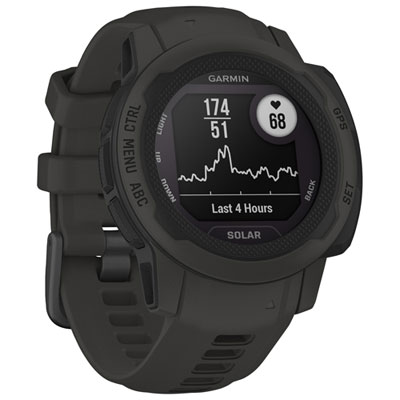
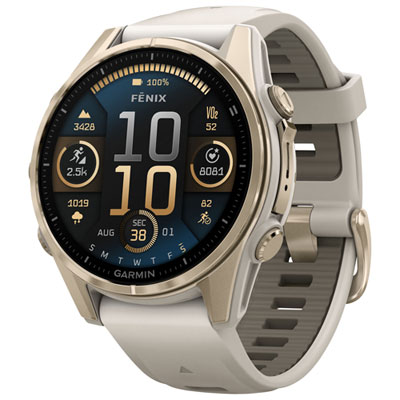
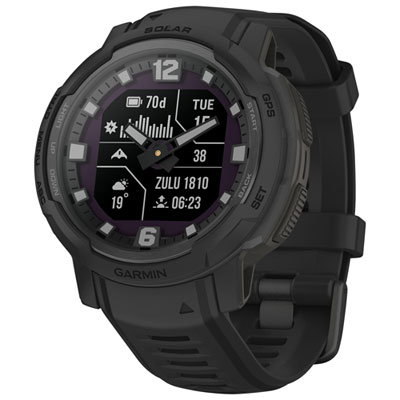
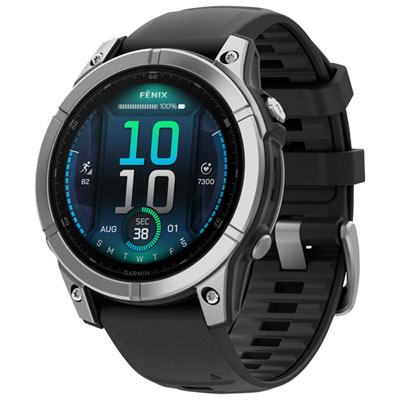
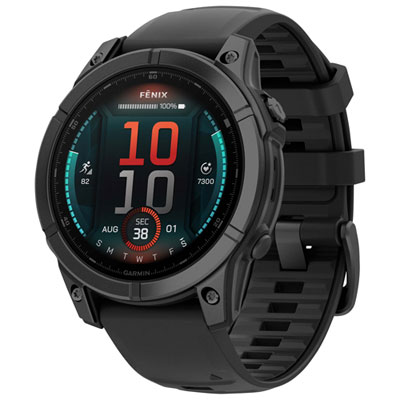
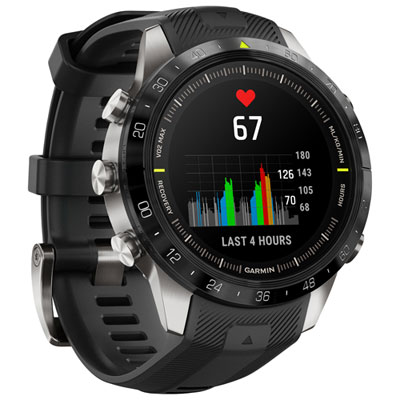
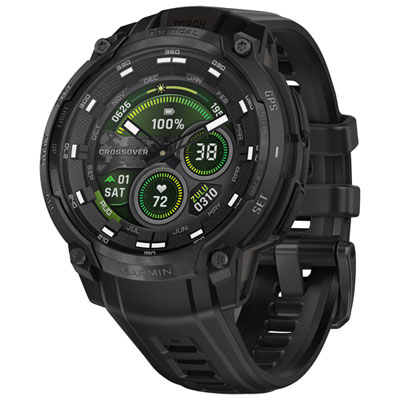
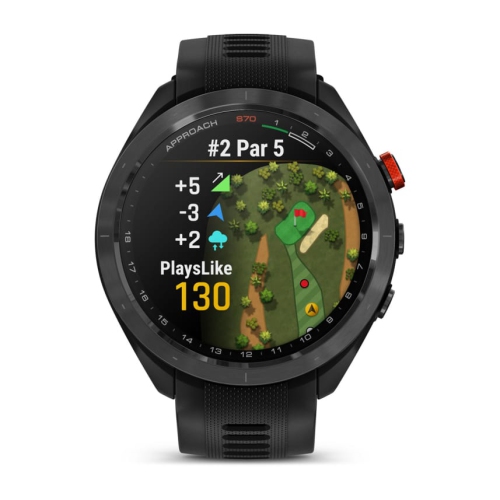
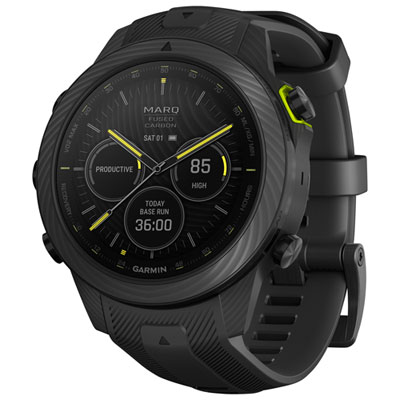
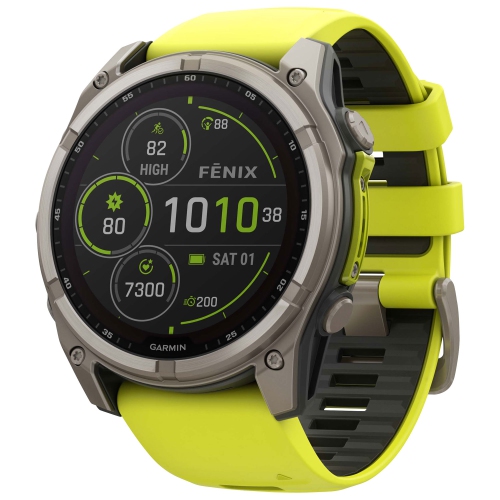
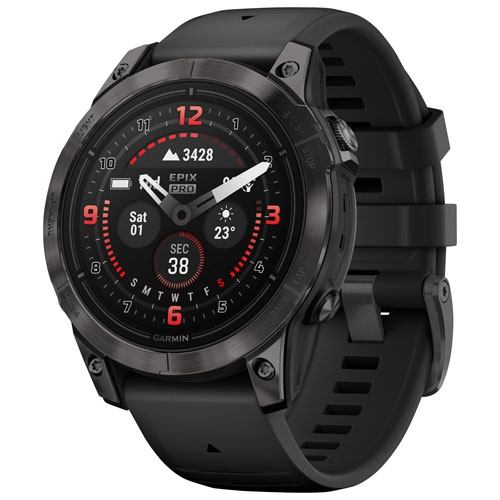
Endurance GPS watches are built for activities where distance, navigation, and battery life matter more than a simple step count. Long trail runs, multi-day hikes, extended cycling routes, and structured training blocks call for a watch that can track sustained effort without becoming a distraction. This category combines sports tracking with outdoor navigation and everyday smartwatch functions, giving athletes a way to follow a route, monitor their pace, and review an activity afterwards. Battery performance is a defining consideration, but a single runtime figure rarely tells the whole story. Everyday smartwatch use, continuous GPS recording, music playback, and different satellite settings place different demands on the battery. For someone preparing for an ultramarathon, the useful figure is the expected runtime with the tracking and navigation settings they intend to use, with a comfortable margin for a slower finish. Solar-assisted charging can extend the time between plug-in charges on compatible watches, although the benefit depends on light exposure, how the watch is worn, and the features running during an activity. It supplements charging rather than guaranteeing unlimited operation. The Garmin Solar collection offers a related way to explore watches with solar-charging capabilities. Beyond battery life, the screen and controls shape the experience on every outing. A readable display makes it easier to check distance or elevation at a glance, while physical buttons can help with starting laps and moving between data screens without relying entirely on touch input. Customizable activity screens are useful when different sports require different information: elapsed time and vertical gain on a climb, pace and heart rate during a run, or distance and route direction on a ride. The right combination depends less on having the longest feature list and more on keeping the information that matters easy to reach throughout a long session.
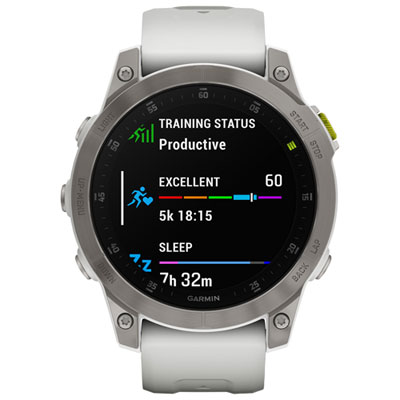
Navigation and training features give endurance watches much of their practical value, though their scope varies by model. A basic route line shows the direction of a planned course, while onboard maps can add the surrounding trails, junctions, and terrain needed to put that route in context. Those differences become tangible at a fork in a trail, where seeing nearby paths may be more helpful than following an arrow alone. Route import options, turn prompts, elevation profiles, and return-to-start functions deserve attention for anyone who regularly explores unfamiliar routes. Multi-band satellite positioning, where supported, can improve tracking in places with challenging reception, such as near tall buildings or steep rock faces, but no wrist device guarantees a perfect position in every setting. A watch is a navigation aid rather than a replacement for route planning, appropriate supplies, or a separate means of communication. Training tools serve a different purpose: they help connect an individual workout with a broader pattern of effort and recovery. Heart-rate trends, training load estimates, suggested recovery time, and sleep tracking can give useful context when viewed together over time. These readings are estimates, not medical assessments, and wrist-based heart-rate accuracy can be affected by fit, movement, and the activity itself. Runners who want more consistent readings during intervals may value compatibility with an external chest strap. Cyclists may look for support for power meters or cadence sensors, while hikers may care more about elevation tracking and route visibility. For long races, supported features such as aid-station rest tracking or climb information can make the activity record easier to interpret afterwards. Everyday functions also matter between training sessions. Phone notifications, contactless payment support, and music features can make a sports watch more convenient, but compatibility varies by phone, service, financial institution, and model. Checking these details helps distinguish functions that will become part of a daily routine from those that may rarely be used.
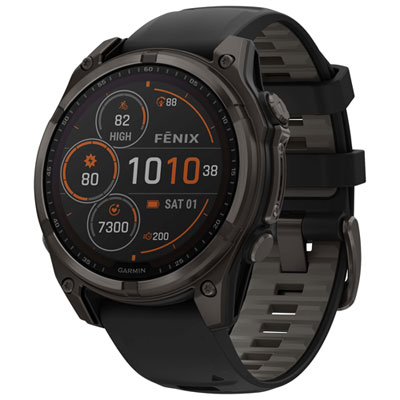
Materials, dimensions, and strap construction are especially important in a watch intended to stay on the wrist for hours at a time. Titanium components can reduce weight while providing strength, and hard surface coatings can help limit visible wear, although neither makes a watch immune to scratches or impacts. Sapphire lenses generally offer strong scratch resistance, but they still benefit from careful handling around rock, metal equipment, and hard edges. Case diameter alone does not determine comfort: thickness, total weight, the shape of the lugs, and the way the strap wraps around the wrist all affect how securely a watch sits. A larger display may make maps easier to read, yet a smaller wrist may find the same case bulky during sleep or repetitive exercise. Soft nylon straps can offer fine fit adjustments and comfortable wear over long distances, while silicone straps are often straightforward to rinse after a sweaty workout. Strap choice is personal, and checking replacement-band compatibility is worthwhile when a watch will serve as both a training tool and an everyday accessory. For optical sensors to work as intended, the watch should sit securely without pinching or sliding excessively; following the maker’s fit guidance is more useful than tightening the strap as much as possible. Routine care is simple but important. Rinse away sweat and dirt as directed, let the watch and strap dry thoroughly, and keep charging contacts clean and dry before connecting the cable. Water-resistance ratings should be read alongside the manufacturer’s permitted activities, since a rating does not mean every type of water exposure is suitable. Endurance watches can be thoughtful gifts for dedicated runners, hikers, cyclists, or anyone moving towards longer-distance goals, especially when the recipient’s wrist size, preferred activities, and phone compatibility are already known. A person training for a first all-day event may appreciate dependable tracking and straightforward controls, while an experienced athlete may place greater value on detailed maps, sensor support, and flexible battery settings. Across those uses, comfort and dependable operation help turn a capable piece of equipment into something that earns its place on the wrist every day.
Navigation and training features give endurance watches much of their practical value, though their scope varies by model. A basic route line shows the direction of a planned course, while onboard maps can add the surrounding trails, junctions, and terrain needed to put that route in context. Those differences become tangible at a fork in a trail, where seeing nearby paths may be more helpful than following an arrow alone. Route import options, turn prompts, elevation profiles, and return-to-start functions deserve attention for anyone who regularly explores unfamiliar routes. Multi-band satellite positioning, where supported, can improve tracking in places with challenging reception, such as near tall buildings or steep rock faces, but no wrist device guarantees a perfect position in every setting. A watch is a navigation aid rather than a replacement for route planning, appropriate supplies, or a separate means of communication. Training tools serve a different purpose: they help connect an individual workout with a broader pattern of effort and recovery. Heart-rate trends, training load estimates, suggested recovery time, and sleep tracking can give useful context when viewed together over time. These readings are estimates, not medical assessments, and wrist-based heart-rate accuracy can be affected by fit, movement, and the activity itself. Runners who want more consistent readings during intervals may value compatibility with an external chest strap. Cyclists may look for support for power meters or cadence sensors, while hikers may care more about elevation tracking and route visibility. For long races, supported features such as aid-station rest tracking or climb information can make the activity record easier to interpret afterwards. Everyday functions also matter between training sessions. Phone notifications, contactless payment support, and music features can make a sports watch more convenient, but compatibility varies by phone, service, financial institution, and model. Checking these details helps distinguish functions that will become part of a daily routine from those that may rarely be used.
Materials, dimensions, and strap construction are especially important in a watch intended to stay on the wrist for hours at a time. Titanium components can reduce weight while providing strength, and hard surface coatings can help limit visible wear, although neither makes a watch immune to scratches or impacts. Sapphire lenses generally offer strong scratch resistance, but they still benefit from careful handling around rock, metal equipment, and hard edges. Case diameter alone does not determine comfort: thickness, total weight, the shape of the lugs, and the way the strap wraps around the wrist all affect how securely a watch sits. A larger display may make maps easier to read, yet a smaller wrist may find the same case bulky during sleep or repetitive exercise. Soft nylon straps can offer fine fit adjustments and comfortable wear over long distances, while silicone straps are often straightforward to rinse after a sweaty workout. Strap choice is personal, and checking replacement-band compatibility is worthwhile when a watch will serve as both a training tool and an everyday accessory. For optical sensors to work as intended, the watch should sit securely without pinching or sliding excessively; following the maker’s fit guidance is more useful than tightening the strap as much as possible. Routine care is simple but important. Rinse away sweat and dirt as directed, let the watch and strap dry thoroughly, and keep charging contacts clean and dry before connecting the cable. Water-resistance ratings should be read alongside the manufacturer’s permitted activities, since a rating does not mean every type of water exposure is suitable. Endurance watches can be thoughtful gifts for dedicated runners, hikers, cyclists, or anyone moving towards longer-distance goals, especially when the recipient’s wrist size, preferred activities, and phone compatibility are already known. A person training for a first all-day event may appreciate dependable tracking and straightforward controls, while an experienced athlete may place greater value on detailed maps, sensor support, and flexible battery settings. Across those uses, comfort and dependable operation help turn a capable piece of equipment into something that earns its place on the wrist every day.
Top selling and popular products
-
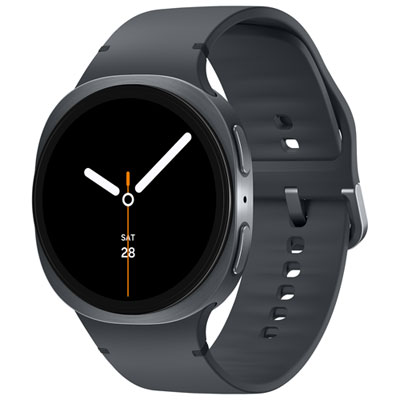 Your price for this item is $399.99
 -
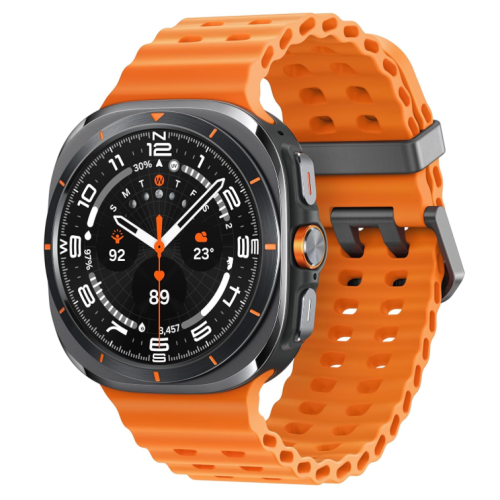 Your price for this item is $579.99
 -
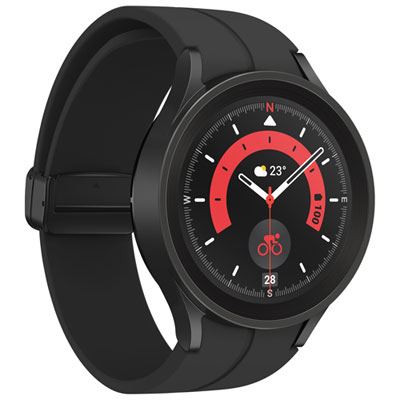 Your price for this item is $629.97
 -
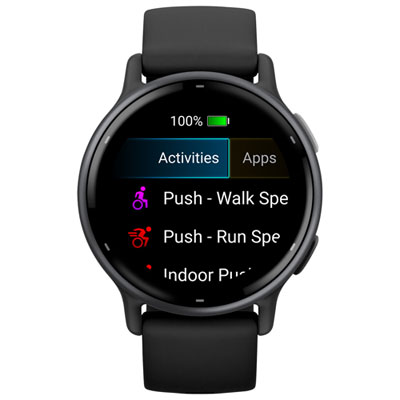 Your price for this item is $349.99
 -
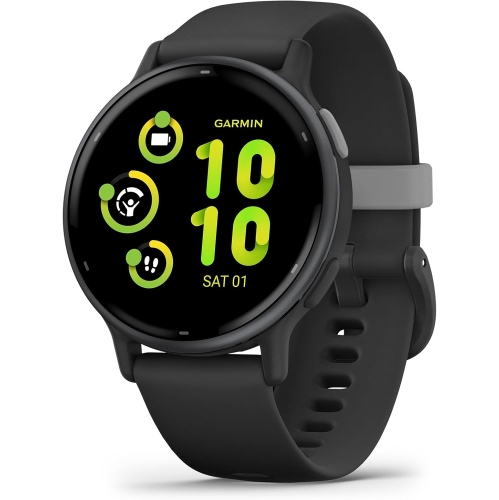 Your price for this item is $371.79
 -
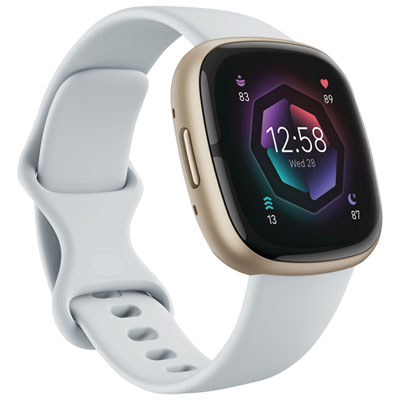 Your price for this item is $209.99
 -
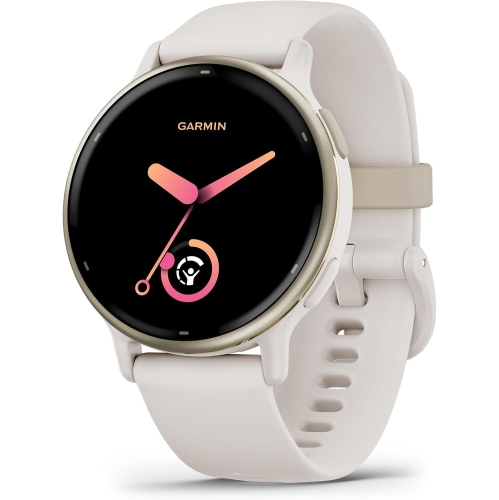 Your price for this item is $328.89
 -
 Your price for this item is $659.99
Discover more categories related to Garmin Watch Enduro
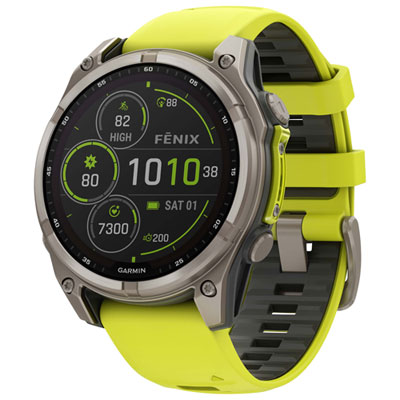
Top Collections:
Pokemon Centers, Kindle Devices, Best Budget Office Chairs, Apple iPhones 16, Canon G7X Cameras, iPhone 15 Apple, Alarm Clock, Refurbished Apple Laptops, Flip Phones, Best Laptops for Writers
Some products may be subject to Environmental Handling Fees
(EHF) depending on your province.
Learn more about EHFs.