Fit Boat Covers
Protect your boat in style with our selection of high-quality fit boat covers. Whether you're looking to shield your watercraft from the elements during off-season storage or simply need a reliable cover for transportation, we have you covered. Our range of fit boat covers is designed to provide a snug and secure fit for various boat sizes and styles, ensuring maximum protection against sun damage, rain, dirt, and more. Browse our collection today to find the perfect fit for your beloved vessel.
Sort
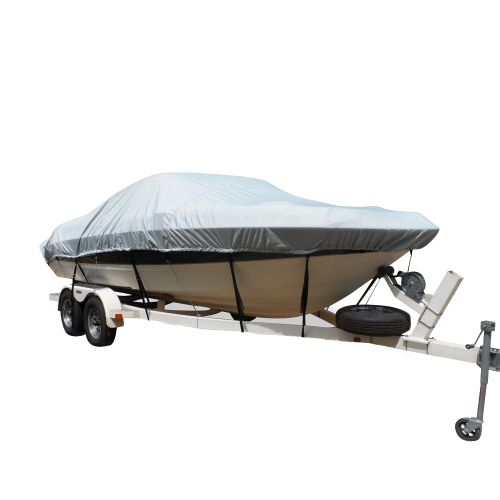
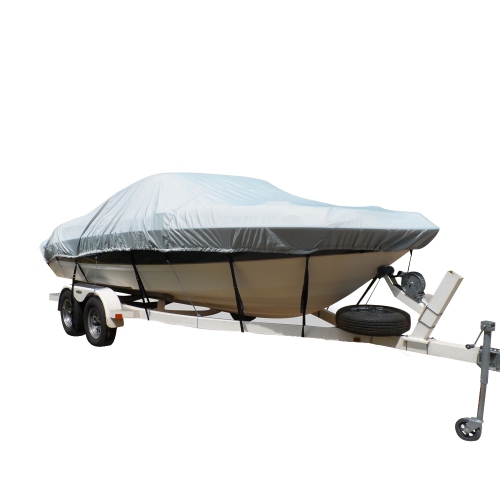
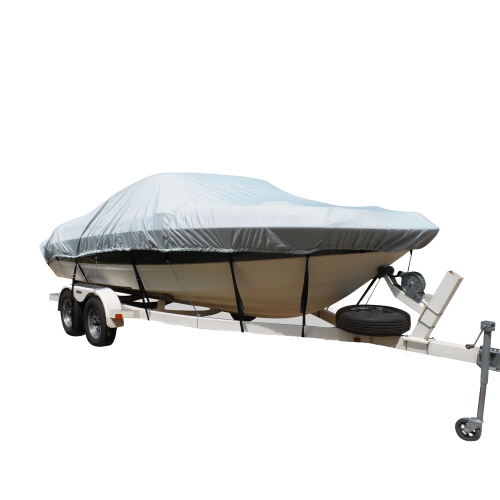
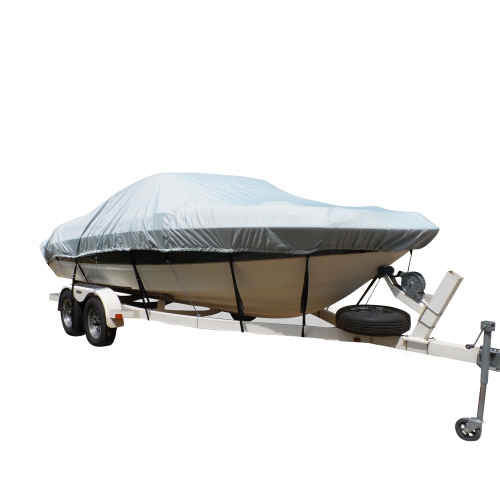
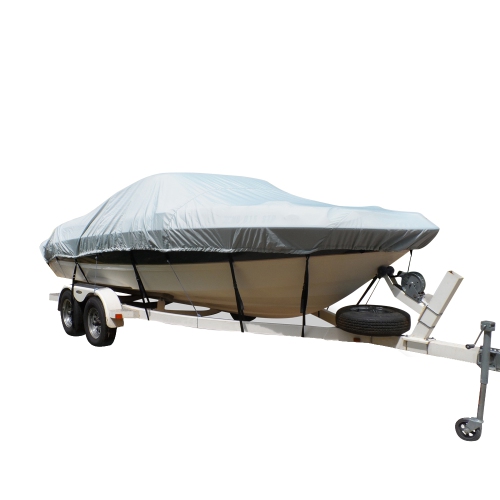
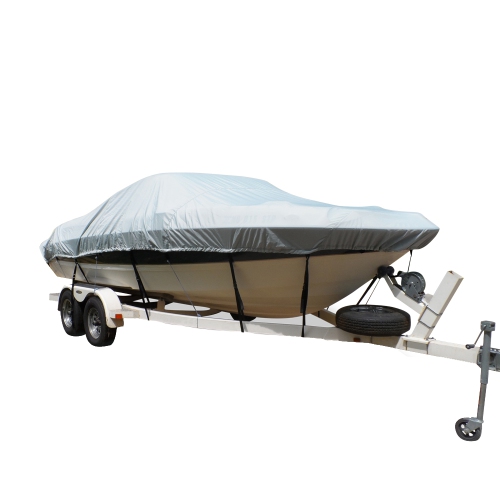
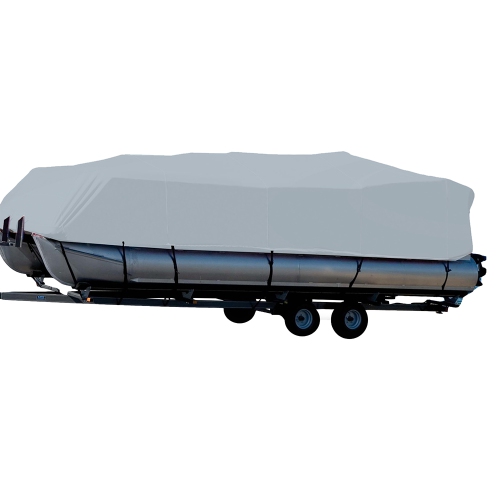
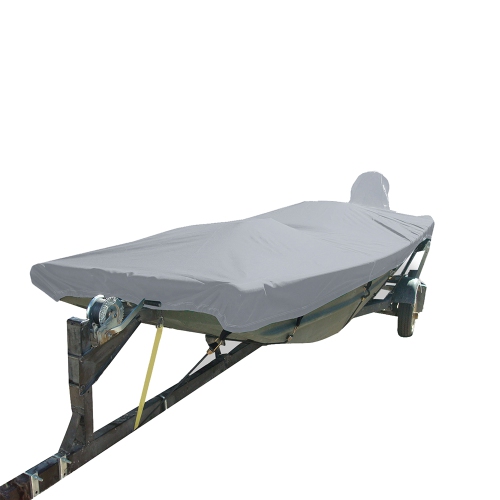
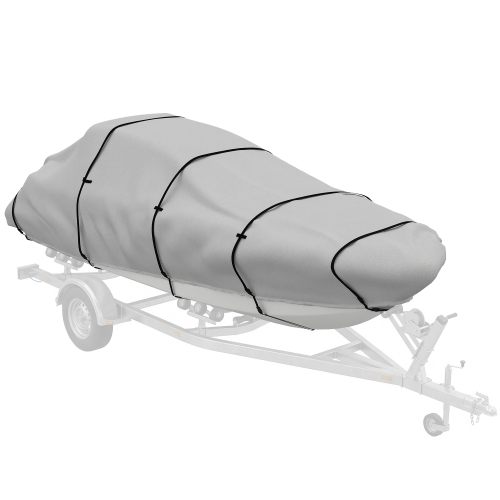
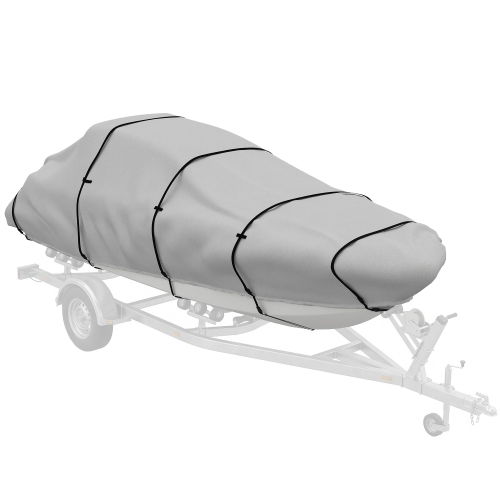
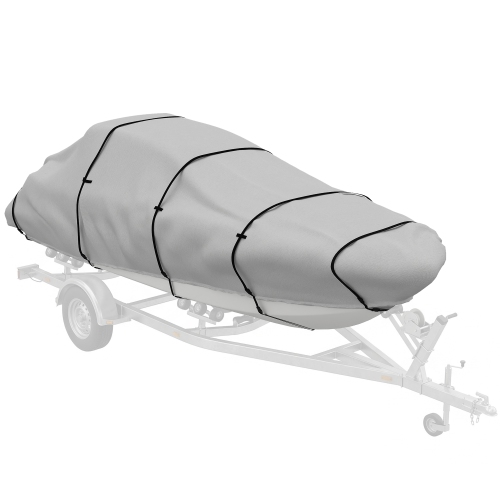
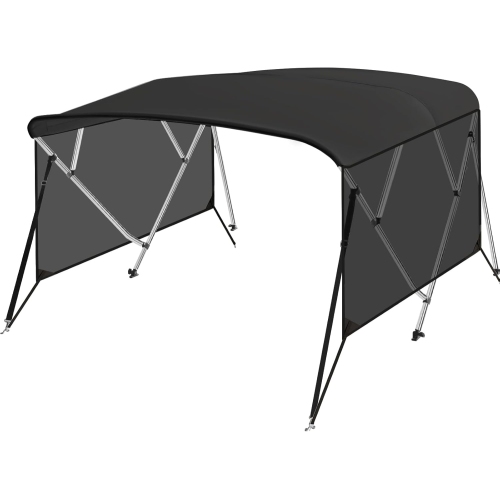
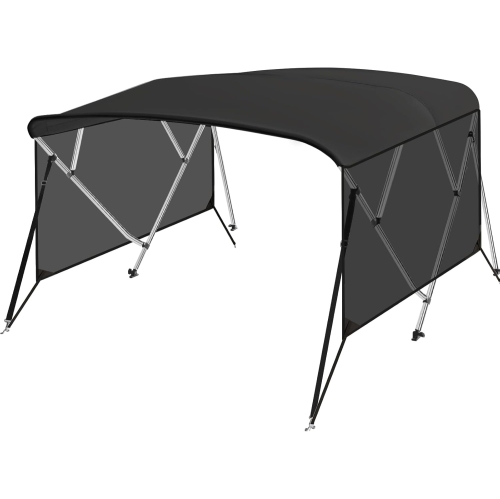
The right cover starts with accurate measurements and preparation
Finding a boat cover with the right fit helps protect the vessel from rain, dust, leaves, bird droppings, and the everyday wear that can accumulate while it is parked at a dock, stored in a driveway, or transported on a trailer. Fit boat covers are available in several sizing styles, so the most suitable choice depends on the boat’s dimensions, hull shape, deck layout, and intended use. Custom-fit covers are made for a specific make, model, and year, giving them a close, tailored profile around the bow, cockpit, windshield, and stern. Semi-custom or select-fit covers are shaped for common boat styles, such as V-hull, mod-V, fishing, runabout, and centre-console designs, while universal-fit covers use broader size ranges, adjustable straps, elastic hems, and shock cords to accommodate different boats. A snug cover can help prevent loose fabric from collecting water or catching wind, while the correct cut leaves enough room for consoles, rails, seats, and other raised features. Boat owners who keep their vessel outdoors, move it between storage locations, or take it out on the water throughout the warmer season may appreciate having a dependable cover ready whenever the weather changes. A well-chosen cover can also be a practical gift for a new boat owner, a family member who enjoys fishing, or someone preparing a watercraft for storage during the cooler months. For shoppers comparing options, Waterproof Boat Covers can be considered alongside covers designed primarily for storage, mooring, or trailering.
Accurate measurements are the starting point for a secure fit. Measure the centre-line length in a straight line from the tip of the bow to the stern, excluding the motor and any outboard extension; do not follow the curve of the windshield, deck, or hull. Measure the beam at the widest point from one side of the boat to the other. It is also important to account for features that change the overall profile, including a tall windshield, bow rail, fishing seats, trolling motor, wakeboard tower, console, or other equipment that sits above the gunwales. Compare these measurements with the cover’s listed size range and shape description rather than relying on the boat’s general category alone. A cover that is too small may place unnecessary tension on seams and corners, while one that is too large can sag, collect water, and flap in strong wind. Pay attention to the fabric construction, reinforced stress points, integrated vents, adjustable support poles, tie-down systems, elastic hems, and trailering straps. Vents may help air circulate beneath the cover, while support poles can create a peak that encourages rain to run off instead of pooling on the fabric. For boats stored on trailers, straps should be long enough to reach the trailer frame and strong enough to keep the cover steady during transport. Covers intended for dockside or stationary use may rely more heavily on snaps, buckles, or mooring adjustments. Checking the manufacturer’s sizing information and the recommended hull style can make the selection process more straightforward, especially when a boat falls near the upper or lower end of a listed length range.
Proper preparation and installation can make a noticeable difference in how a cover performs over time. Before covering the boat, remove loose gear and make sure the interior and exterior surfaces are reasonably clean and dry. Grit, twigs, fishing hooks, and other sharp objects can rub against the fabric or create small punctures, so it is worth checking seating areas, rails, cleats, and storage compartments. Padding sharp corners and protruding hardware can provide an additional layer of protection. Look for a label marked “front” or “bow” before positioning the cover, then unroll it from the bow towards the stern so the shaped sections settle into place. Centre the cover evenly from side to side, fit the elastic hem around the hull, and attach the straps or tie-downs in a balanced pattern. For trailering, secure every strap to the trailer frame rather than relying on the boat’s hardware, and tighten the system enough to prevent fabric from flapping without placing excessive strain on the seams. After the boat has been exposed to rain or wind, inspect the cover for pooled water, shifted straps, or areas where the fabric is rubbing against a hard edge. When the cover is removed, allow it to dry fully before folding it for storage, as damp fabric can develop an unpleasant odour and may be harder to use the next time the boat is ready to be protected. These simple habits are useful through changing late-season conditions, from warm afternoons on the water to cooler evenings when a covered boat may remain outside for longer periods.
Accurate measurements are the starting point for a secure fit. Measure the centre-line length in a straight line from the tip of the bow to the stern, excluding the motor and any outboard extension; do not follow the curve of the windshield, deck, or hull. Measure the beam at the widest point from one side of the boat to the other. It is also important to account for features that change the overall profile, including a tall windshield, bow rail, fishing seats, trolling motor, wakeboard tower, console, or other equipment that sits above the gunwales. Compare these measurements with the cover’s listed size range and shape description rather than relying on the boat’s general category alone. A cover that is too small may place unnecessary tension on seams and corners, while one that is too large can sag, collect water, and flap in strong wind. Pay attention to the fabric construction, reinforced stress points, integrated vents, adjustable support poles, tie-down systems, elastic hems, and trailering straps. Vents may help air circulate beneath the cover, while support poles can create a peak that encourages rain to run off instead of pooling on the fabric. For boats stored on trailers, straps should be long enough to reach the trailer frame and strong enough to keep the cover steady during transport. Covers intended for dockside or stationary use may rely more heavily on snaps, buckles, or mooring adjustments. Checking the manufacturer’s sizing information and the recommended hull style can make the selection process more straightforward, especially when a boat falls near the upper or lower end of a listed length range.
Proper preparation and installation can make a noticeable difference in how a cover performs over time. Before covering the boat, remove loose gear and make sure the interior and exterior surfaces are reasonably clean and dry. Grit, twigs, fishing hooks, and other sharp objects can rub against the fabric or create small punctures, so it is worth checking seating areas, rails, cleats, and storage compartments. Padding sharp corners and protruding hardware can provide an additional layer of protection. Look for a label marked “front” or “bow” before positioning the cover, then unroll it from the bow towards the stern so the shaped sections settle into place. Centre the cover evenly from side to side, fit the elastic hem around the hull, and attach the straps or tie-downs in a balanced pattern. For trailering, secure every strap to the trailer frame rather than relying on the boat’s hardware, and tighten the system enough to prevent fabric from flapping without placing excessive strain on the seams. After the boat has been exposed to rain or wind, inspect the cover for pooled water, shifted straps, or areas where the fabric is rubbing against a hard edge. When the cover is removed, allow it to dry fully before folding it for storage, as damp fabric can develop an unpleasant odour and may be harder to use the next time the boat is ready to be protected. These simple habits are useful through changing late-season conditions, from warm afternoons on the water to cooler evenings when a covered boat may remain outside for longer periods.
Top selling and popular products
-
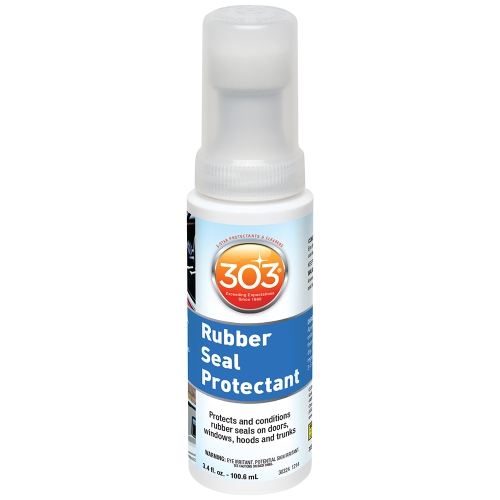 Your price for this item is $31.43
 -
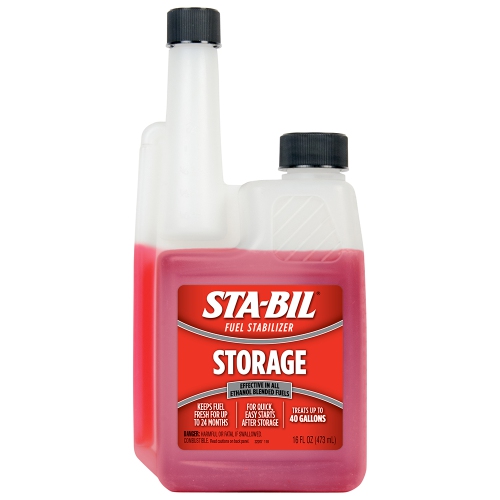 Your price for this item is $30.54
 -
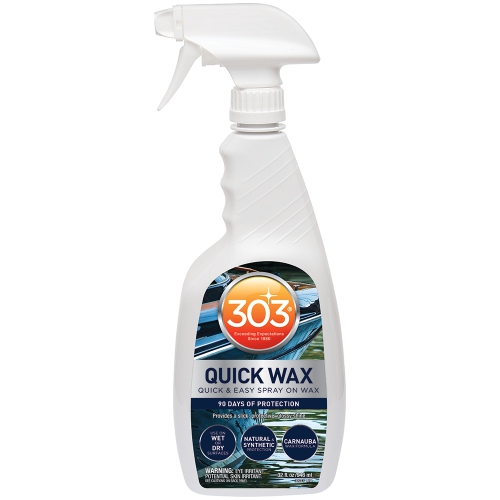 Your price for this item is $38.85
 -
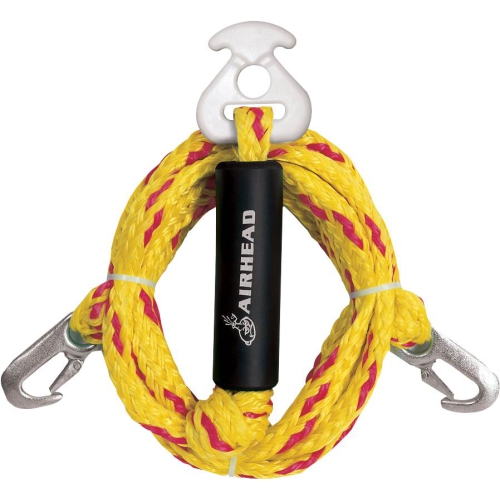 Your price for this item is $92.99
 -
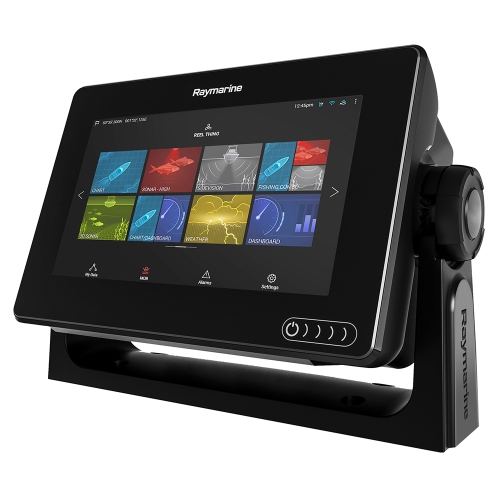 Your price for this item is $844.91
 -
 Your price for this item is $909.33
 -
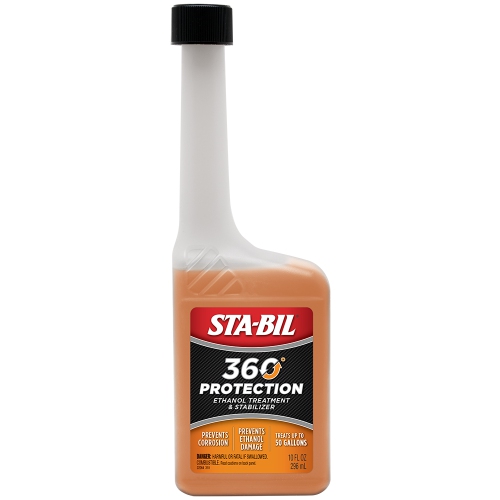 Your price for this item is $31.46
 -
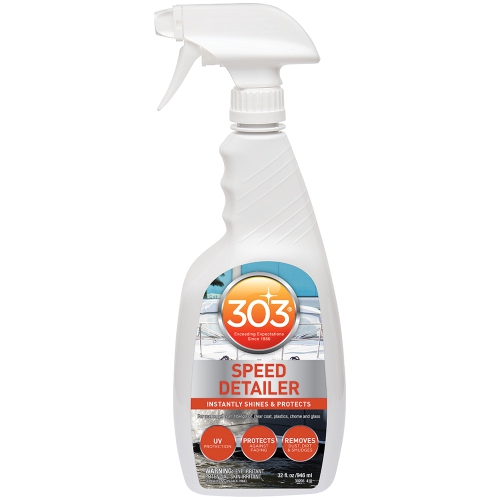 Your price for this item is $35.35
Discover more categories related to Fit Boat Covers
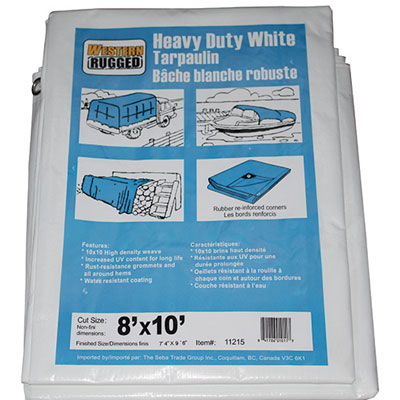
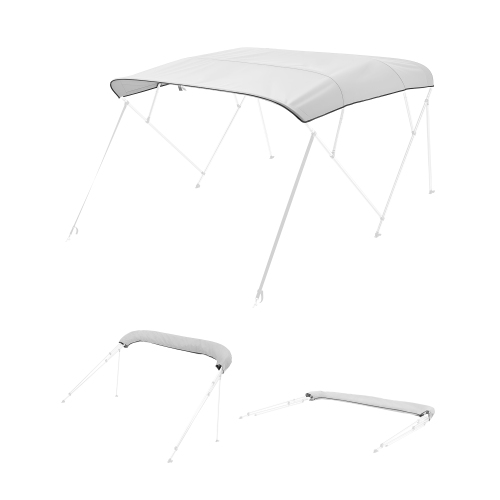
Top Collections:
Pokemon Centers, Kindle Devices, Apple iPhones 16, Samsung Galaxy Phones, Canon G7X Cameras, iPhone 15 Apple, Flip Phones, Apple Wired Earphones, Best Budget Office Chairs, Refurbished Apple Laptops
Some products may be subject to Environmental Handling Fees
(EHF) depending on your province.
Learn more about EHFs.