Kids Climbers
This kids' climber selection offers a variety of fun and engaging options for children to climb, slide, and play to their heart's content. Designed with safety and durability in mind, these climbers are perfect for indoor or outdoor use, providing hours of entertainment while helping kids develop their motor skills and coordination. Explore this range of kids' climbers to find the perfect addition to your child's play area.
Sort








Climbing play that meets children at their own level
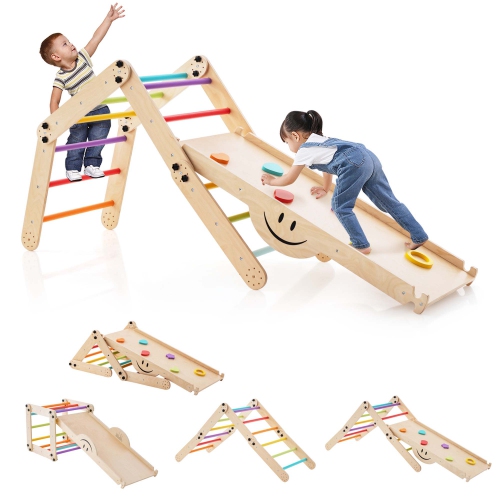
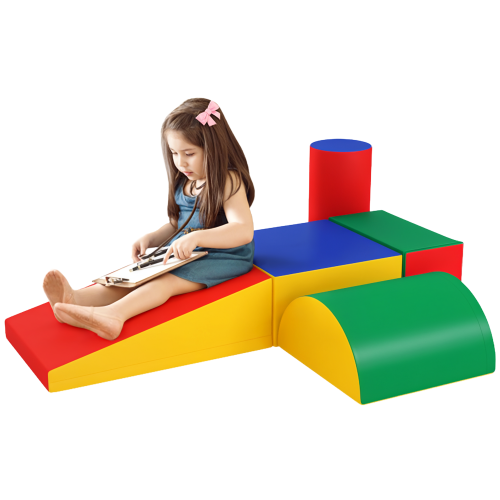
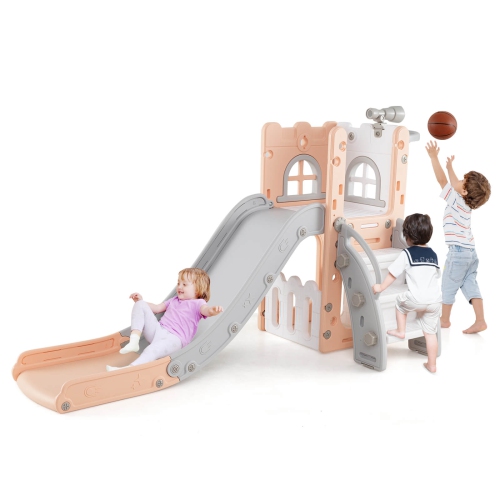
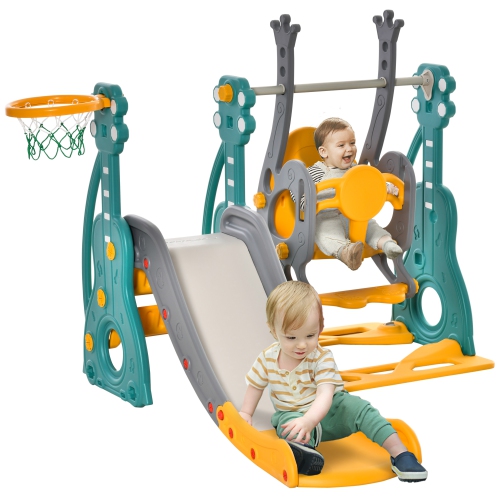
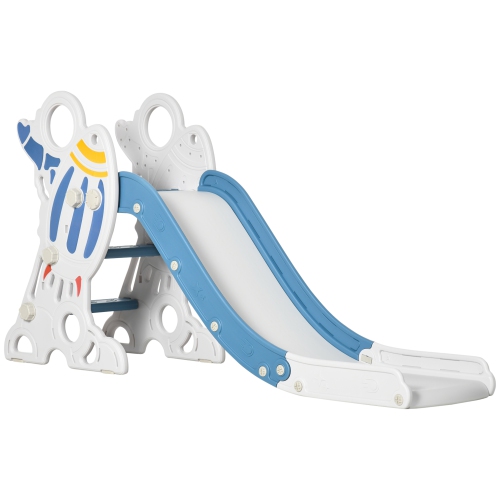
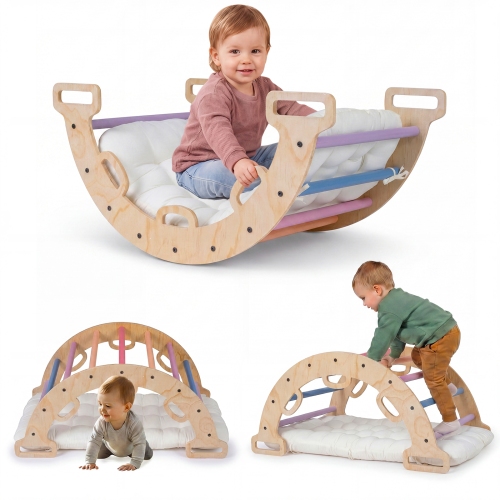
Kids climbers are play structures that give children places to climb, crawl, balance, and explore movement at a height and level of difficulty suited to their abilities. Common styles include wooden climbing triangles and arches for indoor play, moulded plastic climbers with steps and slides, and metal dome climbers designed for outdoor spaces. Each offers a different kind of activity: closely spaced rungs let a young child practise moving one foot at a time, while a geometric dome gives a more experienced climber several routes to follow. Some structures include platforms, tunnels, or ramps that add variety without requiring a large collection of separate toys. Indoor kids climbers can make a playroom more inviting during the cooler months, while outdoor climbing frames create a dedicated spot for active backyard play when conditions are suitable. The right match depends on the manufacturer's age range, the child's physical readiness, and the space needed for safe use—not simply whether a structure looks appealing. A toddler who is still finding their balance has different needs from a school-aged child who confidently climbs playground ladders. Age labels are a starting point, but rung spacing, platform height, grip size, and the route back down also matter. Children need to be able to reach the intended handholds and footholds without stretching beyond their control. Climbing play gives them opportunities to practise coordination, judge distances, and work through small physical challenges at their own pace. One child might spend several play sessions stepping onto the lowest rung and back down; another might enjoy planning a path across a frame. Neither needs to reach the top for the activity to be worthwhile. For families exploring related play equipment, Children's Climbing Toys covers the broader theme of movement-focused toys. Whether the setting is a family room or a backyard, a well-matched climber should suit everyday routines as much as a child's enthusiasm for climbing.
Materials influence how a kids climber feels, where it can be used, and how much care it needs. Wooden climbing frames often have a smooth finish and a simple appearance that fits comfortably alongside indoor furniture. Check for properly finished edges, secure joints, and surfaces free from splinters or cracks, especially around rungs and frequently handled parts. Wood should only be used outdoors when the manufacturer explicitly allows it; an indoor frame is not necessarily protected against dampness just because it feels sturdy. Moulded plastic climbers commonly feature broad steps, rounded shapes, and wipe-clean surfaces, making them practical for younger children's everyday play. Outdoor suitability still depends on the stated use, and plastic should be checked for cracks, distortion, or rough areas as it ages. Metal dome climbers and larger frames offer a different layout, with interconnected bars and handholds that may suit children ready for more involved climbing. Their upkeep includes checking fasteners, protective finishes, and any exposed areas where rust could develop. No material removes the need for regular inspection, and durability depends on correct assembly, appropriate use, and care as well as construction. Before choosing a size, measure the full assembled footprint and the clearance required around it, including the space at the bottom of a slide or beside an access ladder. A climber that physically fits between a sofa and a wall may still lack the clear space needed for play. Ceiling height, light fittings, windows, stairs, and nearby furniture deserve attention indoors; fences, branches, hard borders, and other obstacles matter outdoors. Follow the manufacturer's requirements for a level base, anchoring, and impact-absorbing surfacing appropriate to the equipment's fall height. Carpet or a thin play mat should not be assumed to provide adequate fall protection, and grass alone may not meet the stated surfacing requirements. Weight limits also need careful reading: a total structure limit is not the same as a per-child limit, and some frames permit only one user at a time. For siblings sharing a play area, check both the number of permitted users and whether the layout suits their different abilities.
Day-to-day use is often where the smaller design details become most important. A low entry point can make a structure more approachable for a cautious beginner, while clearly defined steps may be easier to navigate than an open network of bars. Ramps, arches, and reversible panels can change how a compatible climbing set is used, but attachments should only be fitted in the positions and combinations approved by the manufacturer. A foldable frame may help a shared room return to its usual purpose after play, provided an adult handles folding and checks that the locking mechanism is fully engaged before each use. Keep children away from hinges and moving sections during setup, and store folded equipment securely so it cannot tip or become an unintended climbing surface. Adult supervision remains necessary, even for children who know the structure well. Letting a child choose a manageable route, rather than lifting them onto a level they cannot reach independently, helps keep play within their demonstrated abilities. Clothing should allow easy movement without loose cords or dangling accessories, and footwear should follow the equipment's instructions. Outdoor bars and slides need a surface check before play: moisture, frost, and ice can make grips and footholds slippery, while direct sun can heat exposed surfaces. During colder weather, follow any temperature restrictions and storage directions rather than assuming all outdoor climbers can be used year-round. Routine care can be straightforward: clean surfaces using the approved method, dry them as directed, and check joints and fittings at the intervals stated in the manual. Stop using the structure if a part is loose, damaged, or missing, and use approved replacement components rather than improvised repairs. As a gift, a kids climber is best planned with the child's parent or caregiver so its dimensions, assembly needs, and intended location are settled in advance. A thoughtfully chosen frame can become a familiar part of active play, offering room to practise, pause, and try again without demanding that every child climb in the same way.
Top selling and popular products
-
 Your price for this item is $219.97
-
 Your price for this item is $64
-
 Your price for this item is $57.99
-
 Your price for this item is $57.99
-
 Your price for this item is $28.98
-
 Your price for this item is $152.98
-
 Your price for this item is $95.19
-
 Your price for this item is $32.99
Discover more categories related to Kids Climbers

Top Collections:
Pokemon Centers, Kindle Devices, Best Budget Office Chairs, Canon G7X Cameras, Apple iPhones 16, Samsung Galaxy Phones, Refurbished Apple Laptops, Laptops for Students, iPhone 15 Apple, Budget Smartphones
Some products may be subject to Environmental Handling Fees
(EHF) depending on your province.
Learn more about EHFs.