Learning Resources Cash Registers
The Learning Resources Cash Register offers a fun and engaging way to introduce children to basic money concepts and imaginative play. Perfect for classrooms, playrooms, or at-home learning, these cash registers help encourage interactive learning while sparking creativity. Whether you're shopping for educational tools or looking to enhance pretend play experiences, the Learning Resources Cash Register is designed to support hands-on activities that make learning enjoyable for kids of all ages. Explore options that bring excitement and practicality to every play session.
Sort
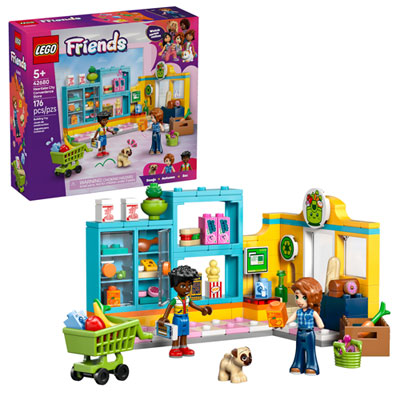
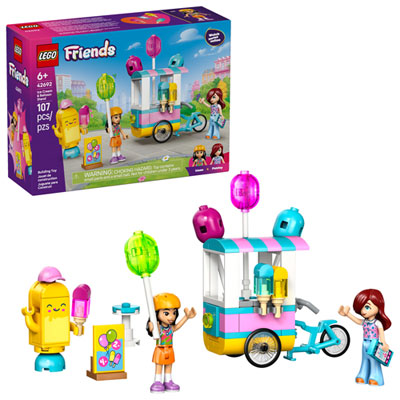
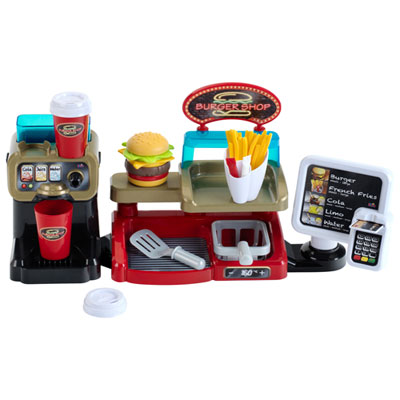
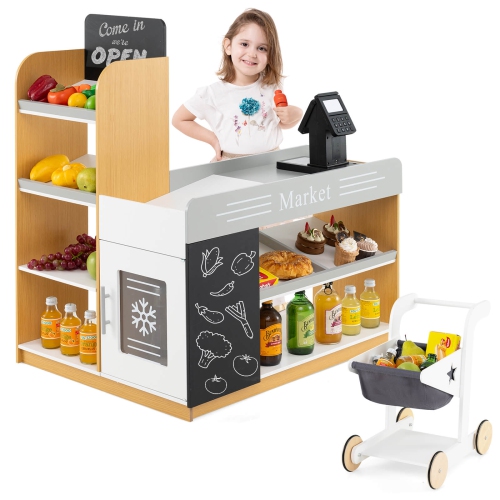
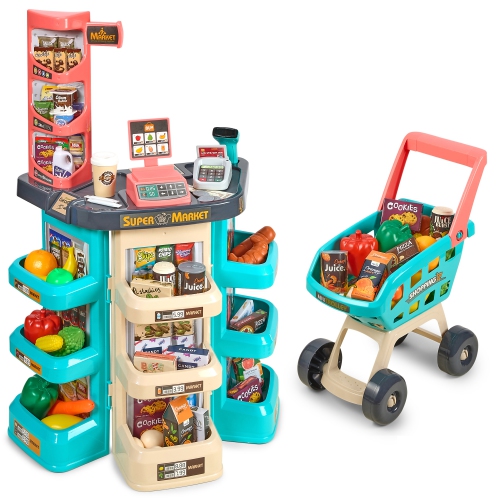
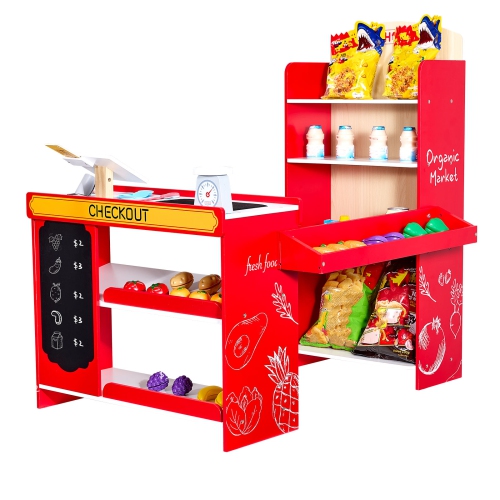
Pretend checkout play gives early maths a practical purpose
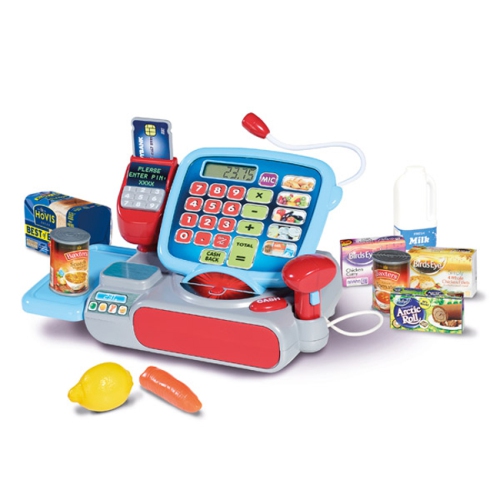
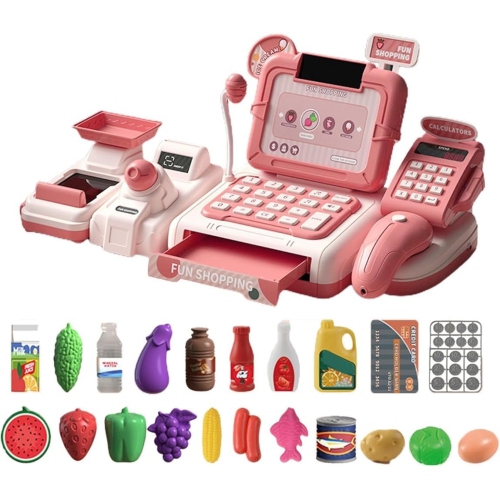
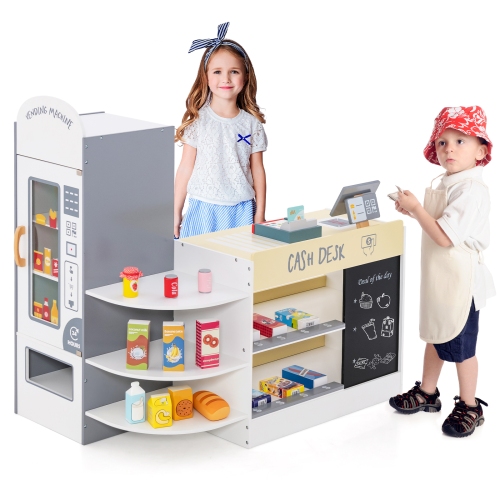
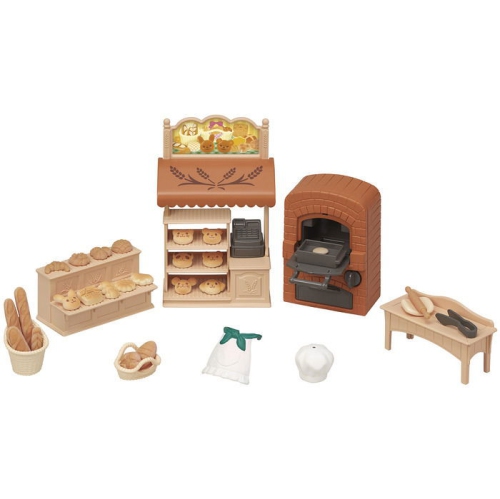
Learning cash registers bring counting, sorting, and imaginative play together in a familiar setting: a small shop where children can take turns serving customers and filling a basket. These educational toys give early maths a practical purpose, whether a child is counting out pretend coins, matching a numeral on a button, or working out how many pieces of play food belong in an order. A register can become the centre of a pretend grocery shop, bakery, or café, with stuffed animals waiting in line and handwritten signs marking different departments. For younger children, the appeal may be as simple as pressing large keys and opening the cash drawer. As number skills develop, the same setup can support addition, subtraction, sorting by denomination, and making change. Versions with Canadian play money are particularly relevant for children learning to distinguish Canadian coins and banknotes, although the currency supplied varies by model. Recognizing a coin by its appearance is a different skill from understanding its value, so both kinds of practice have a place in everyday play. A child might first group matching coins into separate compartments, then count a small handful, and later explore how different combinations can represent the same amount. Alongside these number activities, pretend checkout play encourages conversation, patience, and cooperation. The cashier listens to an order, the customer explains what they need, and both practise taking turns. Parents, caregivers, and educators can join in without turning every transaction into a test; a simple request to count three apples or find two matching coins often keeps the activity moving naturally. For families exploring a broader assortment of Cash Register Toys, the main distinction is between registers designed chiefly for open-ended role-play and those that also offer structured number activities. Both can support meaningful play, but they suit different interests, attention spans, and stages of learning.
The most useful features are those a child can comfortably understand and operate. Large, clearly marked buttons can make number entry easier, while a readable display helps children connect the keys they press with the numerals that appear. Some learning registers include a working calculator; others add spoken prompts, lights, sound effects, or built-in activities. These features are not universal, and a register with a scanner-shaped accessory does not necessarily read barcodes or identify objects. A pretend scale may also serve mainly as a role-play prop rather than provide accurate measurements. Understanding those distinctions helps match the toy to the way it will be used. A child who enjoys inventing stories may spend most of a play session arranging a shop and greeting customers, while another may prefer following number prompts or checking simple sums. Where electronic activities are included, adjustable sound and straightforward controls can make shared play more comfortable, especially in a busy classroom or a quieter home. Power requirements differ, so battery type, whether batteries are included, and any automatic shut-off function are practical details worth checking in the product description. Physical fit matters too: the register needs a stable spot on a play table, with enough room in front for the drawer to open fully and space beside it for a basket or play money. Button spacing, drawer resistance, and the size of accessories can affect how independently a child plays. The manufacturer's age recommendation and small-parts warnings are important, particularly when younger siblings share the space. Coins, cards, and other loose accessories require suitable supervision and storage away from children who still mouth objects. A manageable set of pieces can be more inviting than an overflowing checkout station. Setting out a few pretend groceries and a small selection of money gives children room to explore, with additional accessories introduced as their confidence and interest grow.
Materials and construction influence how well a learning cash register handles repeated use. Many toy registers have moulded plastic housings that are relatively light and easy to move between a shelf and a play surface. Smooth edges, clearly printed keys, and a drawer that opens and closes without catching are useful qualities for a toy likely to see plenty of enthusiastic button pressing. Play money may be made from paper, card, or plastic, depending on the set. Paper notes can feel familiar and are easy to sort, but they may crease or tear with frequent handling; thicker pieces may better suit repeated group use, though care needs still vary by material. Keeping notes flat and collecting coins after play helps preserve the set and makes the next shop setup easier. For cleaning, follow the manufacturer's directions, particularly around electronic displays, speakers, and battery compartments. A lightly dampened cloth may be suitable for some hard surfaces, but electronic parts should not be immersed, and loose accessories may need a different cleaning method. Regular checks for cracked pieces, damaged cords where present, and a secure battery cover are sensible when a toy is shared. At home, a shallow tray or labelled container can keep money and cards together; in a classroom, separate compartments can also turn tidying up into a sorting activity. These registers can suit family playrooms, early learning settings, and supervised small-group activities where children have time to exchange roles. They can also make thoughtful gifts for children who enjoy shopkeeping stories, number games, or copying familiar daily routines, provided the age rating and accessory sizes are appropriate. During the cooler months, a pretend shop offers an indoor activity that can change without needing an entirely new setup: a grocery counter can become a bookshop simply by swapping the objects on the table. Children can draw shopping lists, arrange empty food cartons, or make signs for different sections. The register provides a recognisable starting point, while the surrounding play leaves room for language, problem-solving, and creativity. Its lasting usefulness often comes from that flexibility, allowing a simple counting activity to grow into a more detailed exchange as a child's skills develop.
The most useful features are those a child can comfortably understand and operate. Large, clearly marked buttons can make number entry easier, while a readable display helps children connect the keys they press with the numerals that appear. Some learning registers include a working calculator; others add spoken prompts, lights, sound effects, or built-in activities. These features are not universal, and a register with a scanner-shaped accessory does not necessarily read barcodes or identify objects. A pretend scale may also serve mainly as a role-play prop rather than provide accurate measurements. Understanding those distinctions helps match the toy to the way it will be used. A child who enjoys inventing stories may spend most of a play session arranging a shop and greeting customers, while another may prefer following number prompts or checking simple sums. Where electronic activities are included, adjustable sound and straightforward controls can make shared play more comfortable, especially in a busy classroom or a quieter home. Power requirements differ, so battery type, whether batteries are included, and any automatic shut-off function are practical details worth checking in the product description. Physical fit matters too: the register needs a stable spot on a play table, with enough room in front for the drawer to open fully and space beside it for a basket or play money. Button spacing, drawer resistance, and the size of accessories can affect how independently a child plays. The manufacturer's age recommendation and small-parts warnings are important, particularly when younger siblings share the space. Coins, cards, and other loose accessories require suitable supervision and storage away from children who still mouth objects. A manageable set of pieces can be more inviting than an overflowing checkout station. Setting out a few pretend groceries and a small selection of money gives children room to explore, with additional accessories introduced as their confidence and interest grow.
Materials and construction influence how well a learning cash register handles repeated use. Many toy registers have moulded plastic housings that are relatively light and easy to move between a shelf and a play surface. Smooth edges, clearly printed keys, and a drawer that opens and closes without catching are useful qualities for a toy likely to see plenty of enthusiastic button pressing. Play money may be made from paper, card, or plastic, depending on the set. Paper notes can feel familiar and are easy to sort, but they may crease or tear with frequent handling; thicker pieces may better suit repeated group use, though care needs still vary by material. Keeping notes flat and collecting coins after play helps preserve the set and makes the next shop setup easier. For cleaning, follow the manufacturer's directions, particularly around electronic displays, speakers, and battery compartments. A lightly dampened cloth may be suitable for some hard surfaces, but electronic parts should not be immersed, and loose accessories may need a different cleaning method. Regular checks for cracked pieces, damaged cords where present, and a secure battery cover are sensible when a toy is shared. At home, a shallow tray or labelled container can keep money and cards together; in a classroom, separate compartments can also turn tidying up into a sorting activity. These registers can suit family playrooms, early learning settings, and supervised small-group activities where children have time to exchange roles. They can also make thoughtful gifts for children who enjoy shopkeeping stories, number games, or copying familiar daily routines, provided the age rating and accessory sizes are appropriate. During the cooler months, a pretend shop offers an indoor activity that can change without needing an entirely new setup: a grocery counter can become a bookshop simply by swapping the objects on the table. Children can draw shopping lists, arrange empty food cartons, or make signs for different sections. The register provides a recognisable starting point, while the surrounding play leaves room for language, problem-solving, and creativity. Its lasting usefulness often comes from that flexibility, allowing a simple counting activity to grow into a more detailed exchange as a child's skills develop.
Top selling and popular products
-
 Your price for this item is $57.99
 -
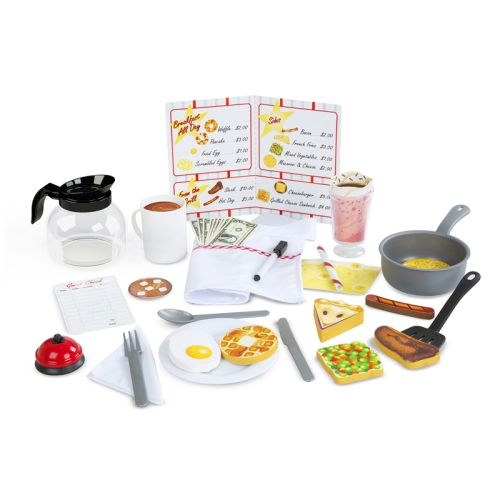 Your price for this item is $57.99
 -
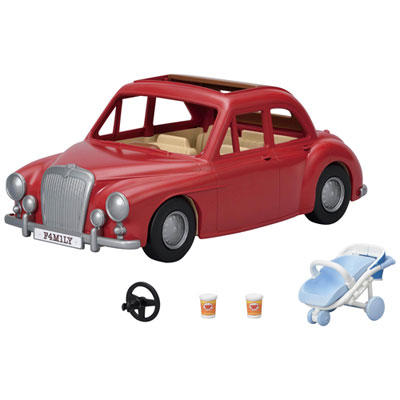 Your price for this item is $28.98
 -
 Your price for this item is $152.98
 -
 Your price for this item is $95.19
 -
 Your price for this item is $85.99
 -
 Your price for this item is $32.99
 -
 Your price for this item is $136.46
Discover more categories related to Learning Resources Cash Registers
Top Collections:
Pokemon Centers, Kindle Devices, Best Budget Office Chairs, Apple iPhones 16, Best Laptops for Writers, iPhone 15 Apple, Canon G7X Cameras, Refurbished Apple Laptops, Alarm Clock, Motorola Razr Phones
Some products may be subject to Environmental Handling Fees
(EHF) depending on your province.
Learn more about EHFs.