Glass TV Consoles
A glass TV console is a great way to add storage and style to your living room. It provides a clean, modern look that will match almost any decor. It can also be used as a coffee table, so you can put your feet up and store magazines and books in its drawers. Here are some of our favorites.
Sort
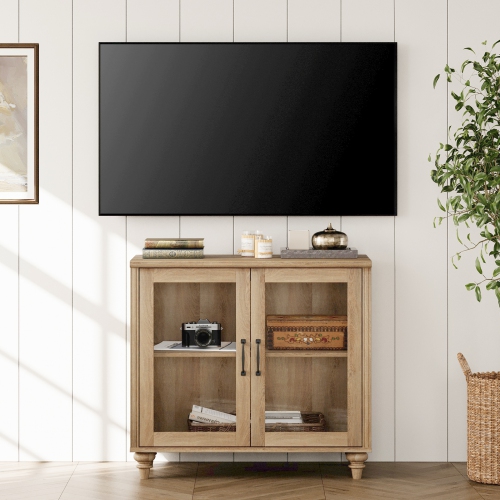
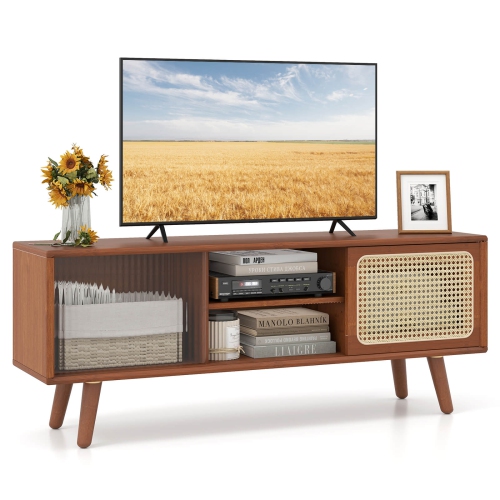
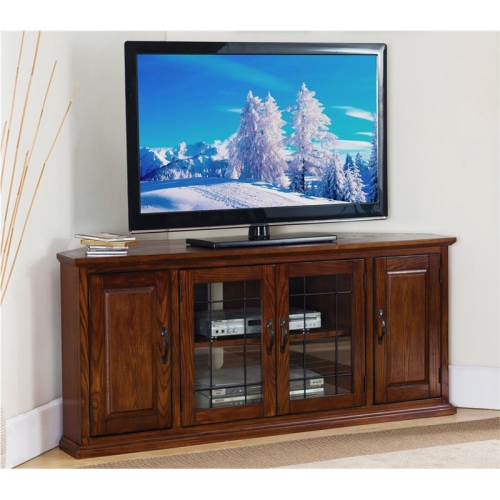
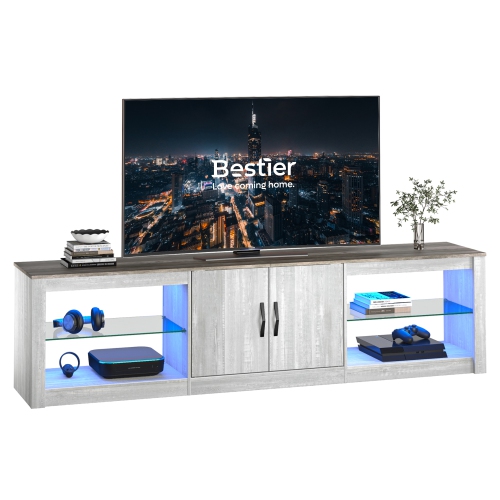
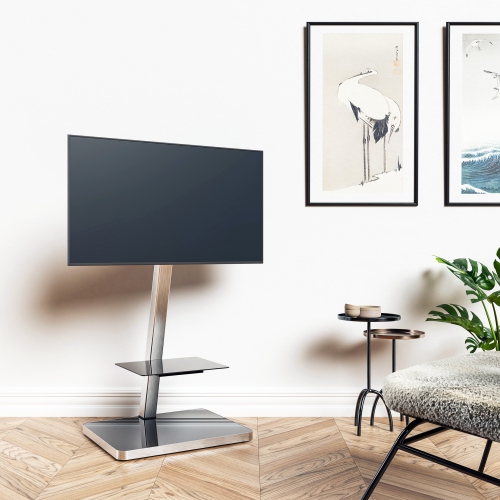
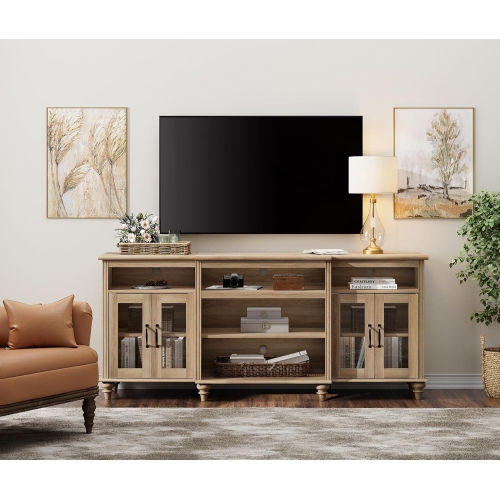
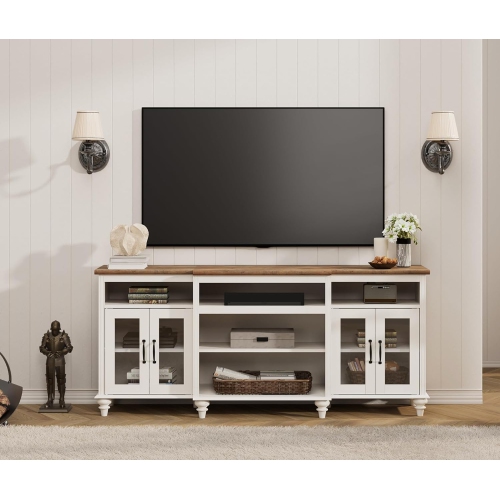
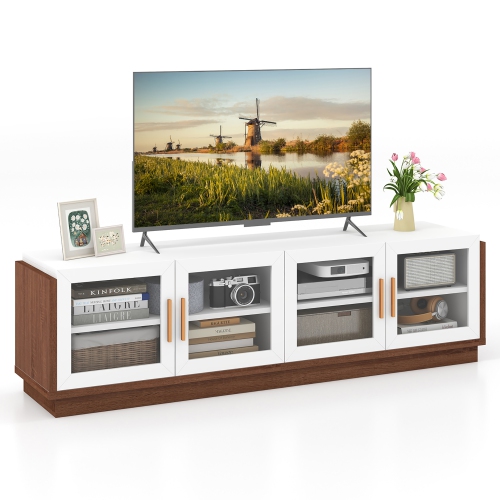
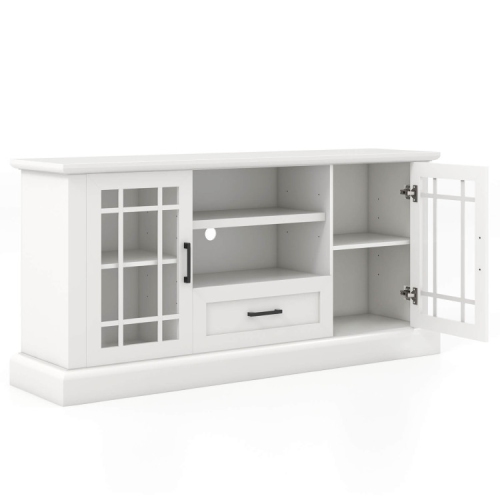

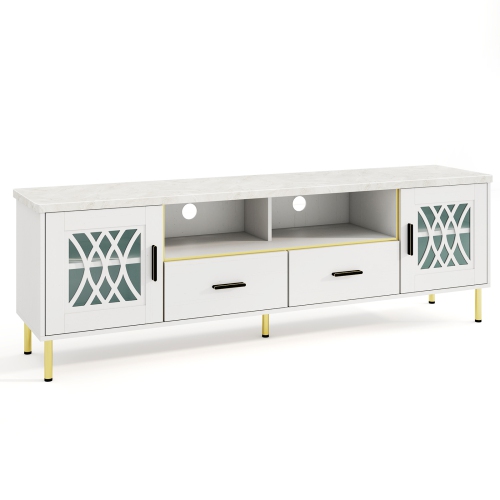
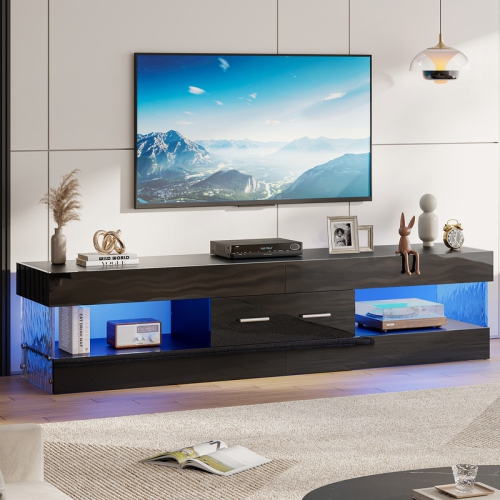
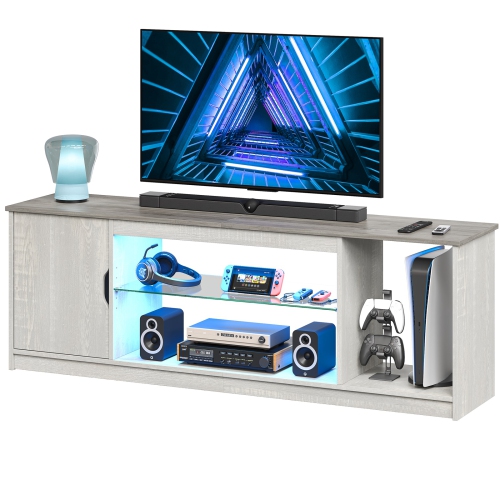
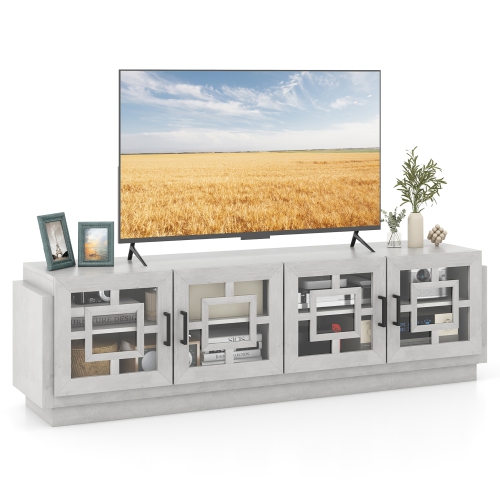
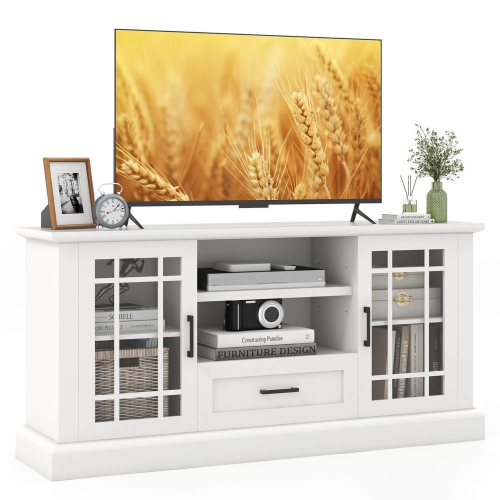
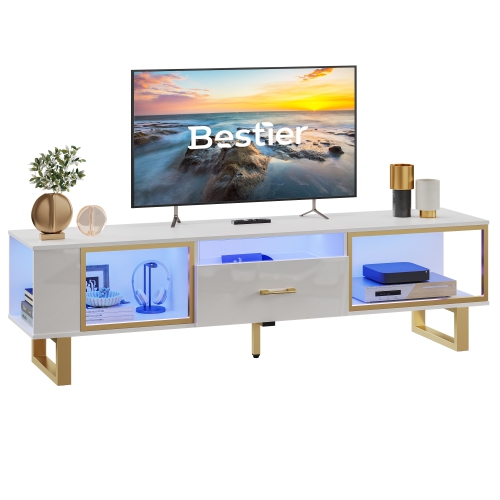

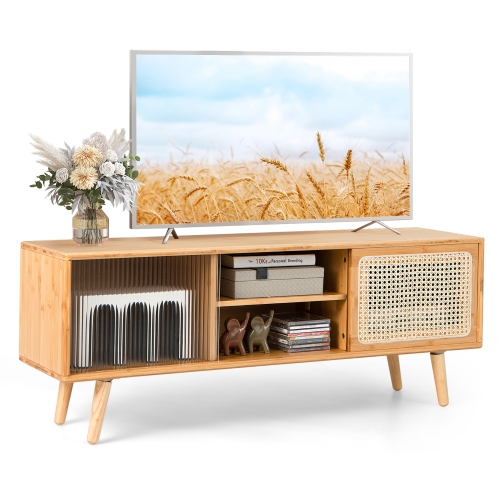

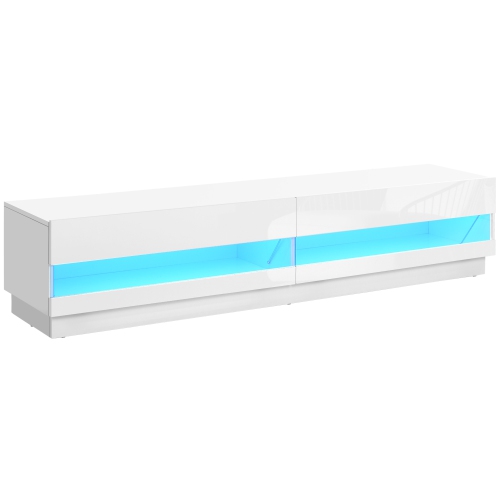
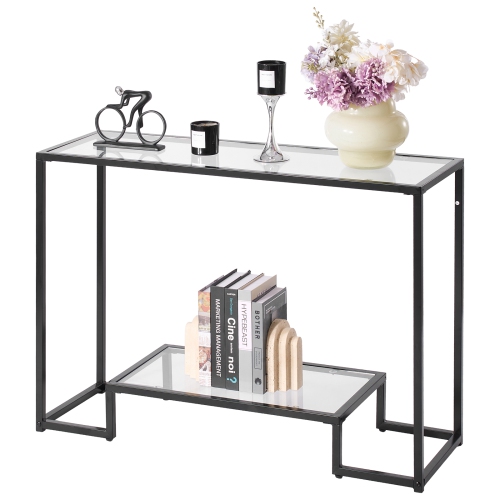
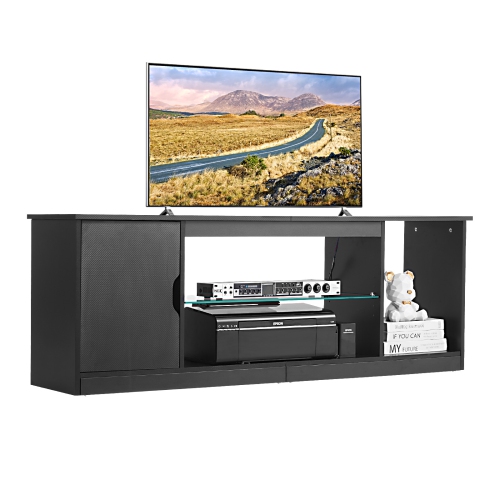
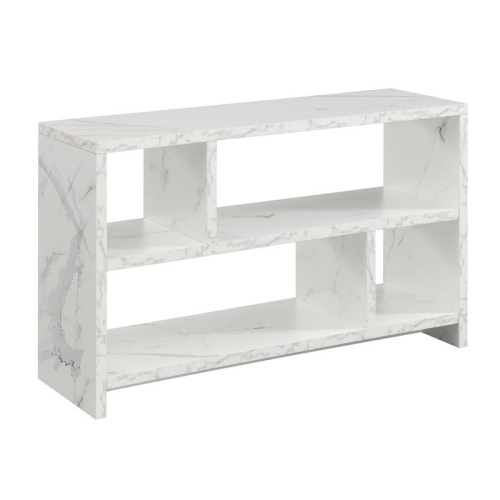
Media storage that leaves your room feeling open
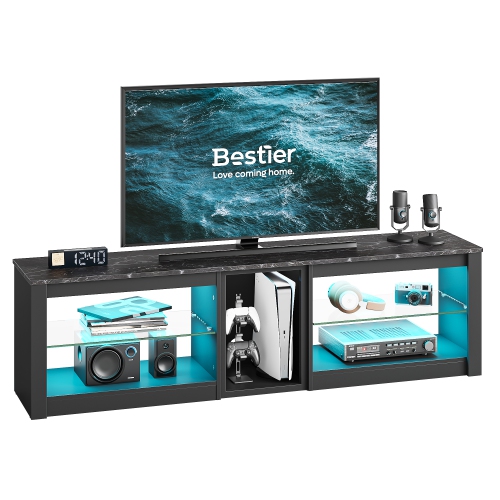
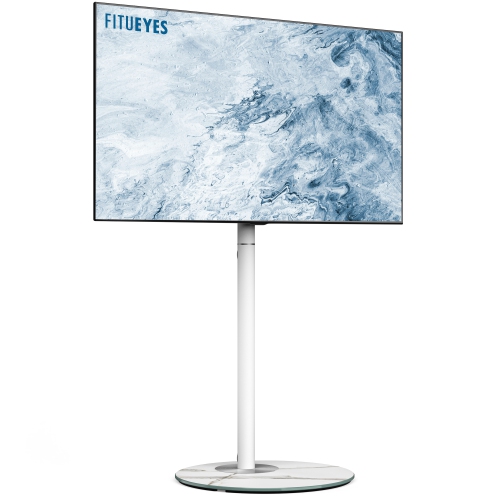
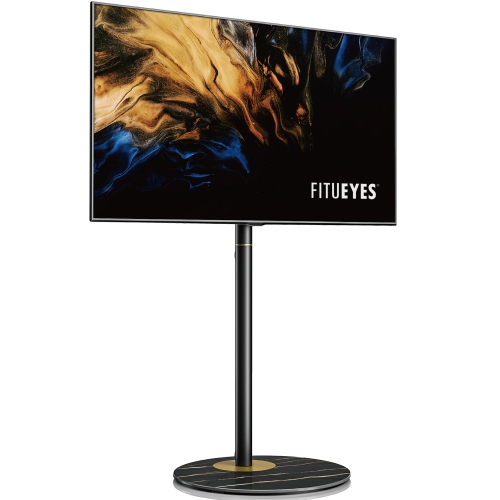
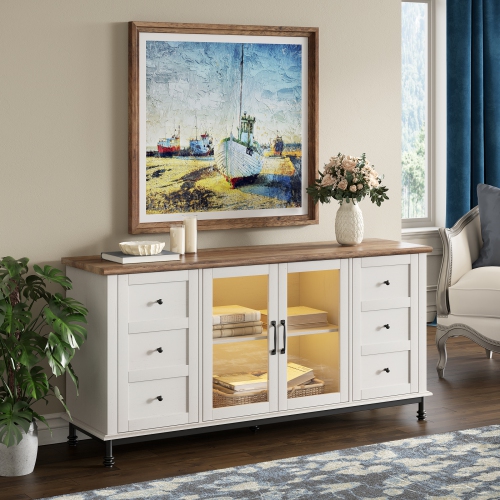
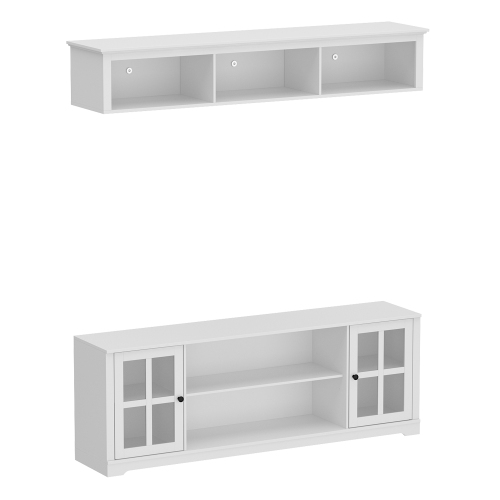
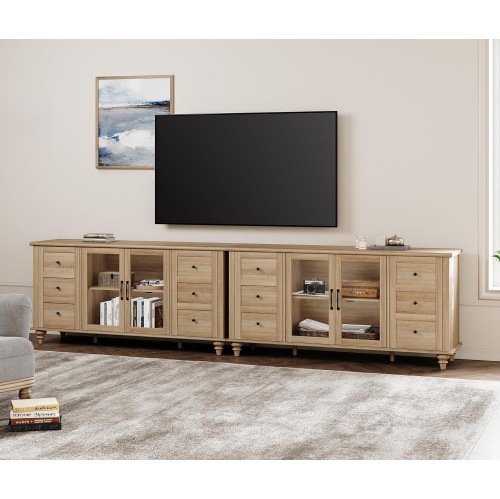
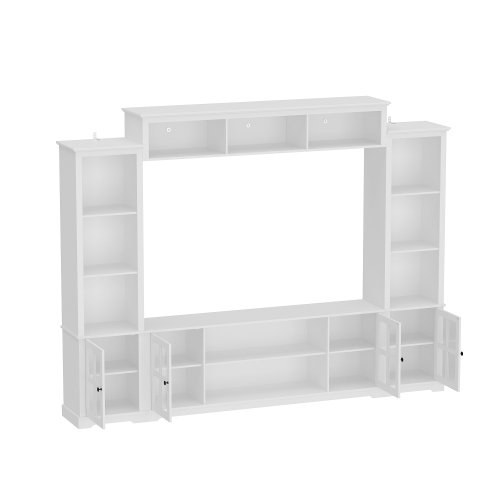
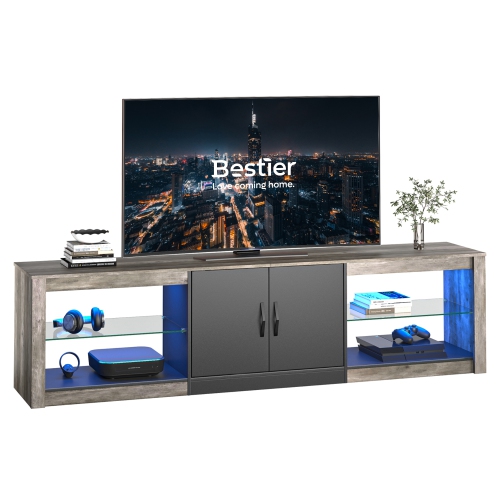
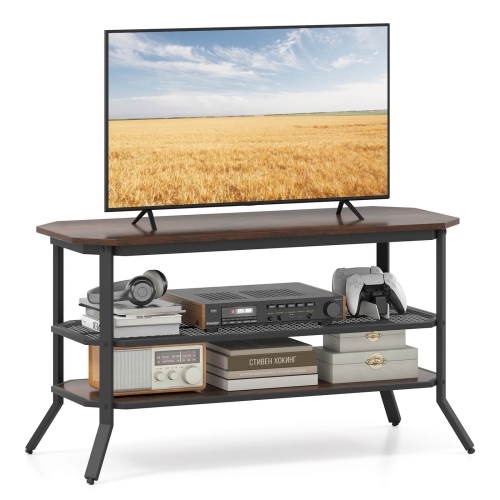
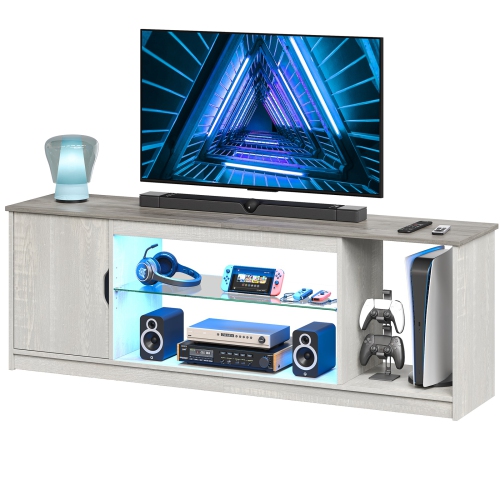
Glass TV consoles bring together a stable television surface, practical media storage, and the light, open appearance of glass. Their transparent or translucent panels let more of the wall and floor remain visible, making them a natural fit for living rooms where a solid cabinet might feel visually heavy. The category includes open glass shelving supported by metal frames, mixed-material consoles with glass tops, and wood or wood-look cabinets fitted with glass doors. Each construction creates a different balance between display and concealed storage. Clear glass puts connected devices and decorative objects in view, while tinted or frosted glass softens their outlines without creating the same effect as an opaque door. A black metal frame can echo the finish of a television and speakers; polished metal adds reflection, and wood tones bring a warmer contrast to smooth glass surfaces. These details matter in everyday spaces: a narrow console against a pale wall can keep an apartment lounge feeling uncluttered, while a broader unit can anchor a large screen opposite a sectional. Glass television furniture also suits dedicated media rooms, bedrooms, and shared living areas where the same piece may hold a streaming device, gaming hardware, and a small collection of favourite films. Open, multi-tier designs keep frequently used equipment easy to reach, whereas glass-front cabinets offer a more enclosed display with some protection from dust. Related Glass Television Stands offer another way to explore this style of television furniture, with the same attention to screen support, shelving, and room fit. The most useful distinction is not the name alone, but how the furniture is built and arranged. A low, wide console creates a horizontal line beneath a screen, while a taller, compact stand uses less floor width and places equipment on several levels. Either approach can look considered when its proportions complement the television, nearby seating, and the other furniture in the room.
Fit depends on more than the television’s advertised screen size. A screen measurement is taken diagonally, but the console must accommodate the actual width and depth of its base or the spacing of its feet. Televisions with two widely separated feet need sufficient usable surface beneath both supports, with no overhang, while a central pedestal requires enough depth for its entire footprint. The stated maximum television size and weight capacity both matter, and a top panel’s load rating should not be assumed to apply to the shelves below it. A heavy receiver, for example, may need a stronger shelf than a lightweight streaming box. Shelf spacing also determines whether equipment fits comfortably rather than simply squeezing into place. Receivers and gaming systems need the ventilation clearance specified by their manufacturers, including space around vents and behind the unit for connections. Open glass shelves can make access and airflow easier, but a tightly packed arrangement can still trap heat. Enclosed cabinets need suitable ventilation, and glass doors may need to remain open during use if the furniture or device instructions require it. Depth is especially easy to underestimate: plugs, cable bends, and rear connections take up space beyond the equipment casing. A console that holds a device flush with its front edge may leave too little room for those connections at the back. Cable openings, channels, or clips help route power and signal cables neatly, which is particularly useful when transparent shelves leave the area behind them visible. For a soundbar placed beneath the television, the layout should leave room without covering the screen or blocking its remote sensor. Viewing height deserves similar attention. The position of the screen should feel comfortable from the usual seat, rather than requiring an upward tilt of the head. Beneath a wall-mounted television, a glass media console can instead serve mainly as equipment storage, with its width, shelf layout, and cable routing helping the screen and furniture read as a coordinated arrangement.
Glass quality, frame construction, and day-to-day care all influence how well a TV console holds up. Tempered glass is commonly used in television furniture because it is stronger than ordinary untreated glass and, if broken, generally breaks into small fragments rather than long, sharp shards. It is not unbreakable, and impacts at exposed edges or corners can still cause damage. Glass thickness alone does not establish a safe weight capacity; the panel’s span, supports, fittings, and overall construction also play a part. Proper assembly, securely fitted supports, and an even floor help keep the unit stable. Adjustable feet, where included, can address minor floor unevenness, while rounded corners may be useful near walking routes. In homes with children or pets, keeping climbing temptations off the upper shelves and securing the television and furniture as directed by their manufacturers are important considerations. A glass shelf should never be used as a step or seat. For ordinary cleaning, a soft microfibre cloth removes fingerprints and dust without the abrasion of a rough pad. Any cleaner should be suitable for the glass finish, and nearby metal coatings, wood surfaces, and cable connections need protection from excess liquid. Spraying onto the cloth rather than towards connected equipment helps control where moisture goes. Tinted, frosted, or coated panels may have specific care requirements, so the supplied instructions remain the best reference. Felt pads or other manufacturer-approved protective supports beneath decorative objects can reduce scratching, provided they do not interfere with equipment stability or ventilation. Everyday storage choices make a difference, too. A small tray keeps remotes from spreading across the top, lower shelving can hold controllers within easy reach, and a closed compartment can hide accessories that would otherwise be visible through the glass. Leaving some space between components preserves the open appearance that makes this furniture appealing. For film fans, frequent gamers, or households sharing one main television, a well-proportioned glass TV console offers a useful combination of accessible equipment storage and a clean-lined focal point without turning every device and cable into the centre of attention.
Fit depends on more than the television’s advertised screen size. A screen measurement is taken diagonally, but the console must accommodate the actual width and depth of its base or the spacing of its feet. Televisions with two widely separated feet need sufficient usable surface beneath both supports, with no overhang, while a central pedestal requires enough depth for its entire footprint. The stated maximum television size and weight capacity both matter, and a top panel’s load rating should not be assumed to apply to the shelves below it. A heavy receiver, for example, may need a stronger shelf than a lightweight streaming box. Shelf spacing also determines whether equipment fits comfortably rather than simply squeezing into place. Receivers and gaming systems need the ventilation clearance specified by their manufacturers, including space around vents and behind the unit for connections. Open glass shelves can make access and airflow easier, but a tightly packed arrangement can still trap heat. Enclosed cabinets need suitable ventilation, and glass doors may need to remain open during use if the furniture or device instructions require it. Depth is especially easy to underestimate: plugs, cable bends, and rear connections take up space beyond the equipment casing. A console that holds a device flush with its front edge may leave too little room for those connections at the back. Cable openings, channels, or clips help route power and signal cables neatly, which is particularly useful when transparent shelves leave the area behind them visible. For a soundbar placed beneath the television, the layout should leave room without covering the screen or blocking its remote sensor. Viewing height deserves similar attention. The position of the screen should feel comfortable from the usual seat, rather than requiring an upward tilt of the head. Beneath a wall-mounted television, a glass media console can instead serve mainly as equipment storage, with its width, shelf layout, and cable routing helping the screen and furniture read as a coordinated arrangement.
Glass quality, frame construction, and day-to-day care all influence how well a TV console holds up. Tempered glass is commonly used in television furniture because it is stronger than ordinary untreated glass and, if broken, generally breaks into small fragments rather than long, sharp shards. It is not unbreakable, and impacts at exposed edges or corners can still cause damage. Glass thickness alone does not establish a safe weight capacity; the panel’s span, supports, fittings, and overall construction also play a part. Proper assembly, securely fitted supports, and an even floor help keep the unit stable. Adjustable feet, where included, can address minor floor unevenness, while rounded corners may be useful near walking routes. In homes with children or pets, keeping climbing temptations off the upper shelves and securing the television and furniture as directed by their manufacturers are important considerations. A glass shelf should never be used as a step or seat. For ordinary cleaning, a soft microfibre cloth removes fingerprints and dust without the abrasion of a rough pad. Any cleaner should be suitable for the glass finish, and nearby metal coatings, wood surfaces, and cable connections need protection from excess liquid. Spraying onto the cloth rather than towards connected equipment helps control where moisture goes. Tinted, frosted, or coated panels may have specific care requirements, so the supplied instructions remain the best reference. Felt pads or other manufacturer-approved protective supports beneath decorative objects can reduce scratching, provided they do not interfere with equipment stability or ventilation. Everyday storage choices make a difference, too. A small tray keeps remotes from spreading across the top, lower shelving can hold controllers within easy reach, and a closed compartment can hide accessories that would otherwise be visible through the glass. Leaving some space between components preserves the open appearance that makes this furniture appealing. For film fans, frequent gamers, or households sharing one main television, a well-proportioned glass TV console offers a useful combination of accessible equipment storage and a clean-lined focal point without turning every device and cable into the centre of attention.
Top selling and popular products
-
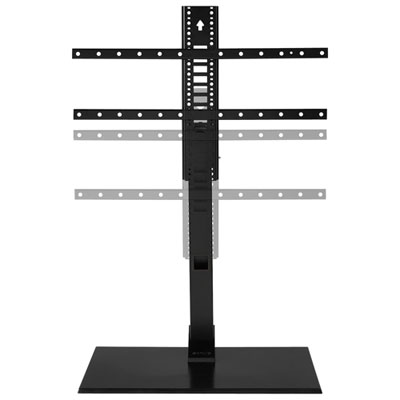 Your price for this item is $249.99
 -
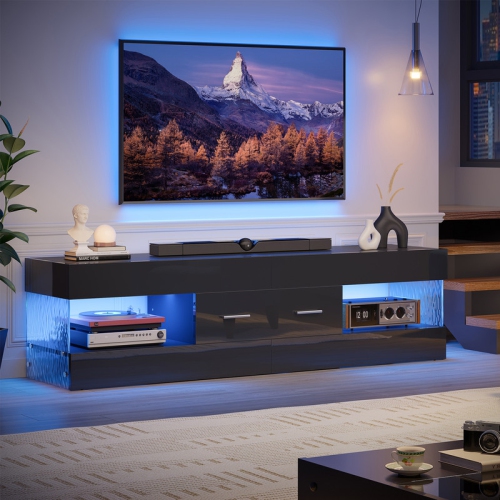 Your price for this item is $179.99
 -
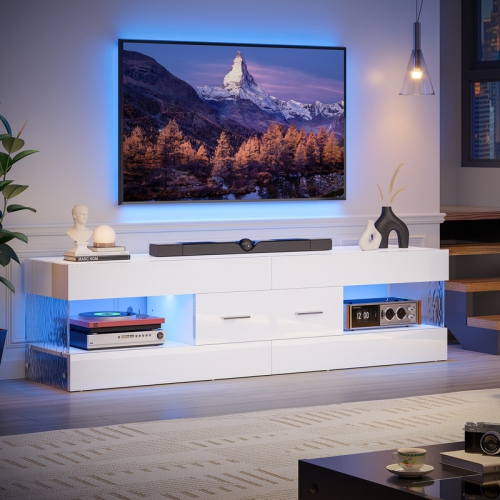 Your price for this item is $149.99
 -
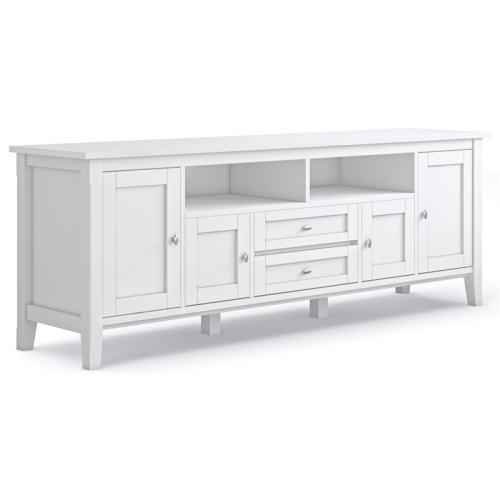 Your price for this item is $1522.15
 -
 Your price for this item is $1535.26
 -
 Your price for this item is $1505.85
 -
 Your price for this item is $689.99
 -
 Your price for this item is $1522.01
Discover more categories related to Glass TV Consoles
Top Collections:
Pokemon Centers, Kindle Devices, Best Budget Office Chairs, Apple iPhones 16, Best Laptops for Writers, iPhone 15 Apple, Canon G7X Cameras, Refurbished Apple Laptops, Alarm Clock, Motorola Razr Phones
Some products may be subject to Environmental Handling Fees
(EHF) depending on your province.
Learn more about EHFs.