3D Filament Storage and Dryer Boxes
Keep your 3D printing filament dry and organized with 3D filament storage and dryer boxes. Explore options for storing spools between prints or drying filament before use, and compare spool capacity, filament compatibility, and drying controls to find a fit for your printing setup.
FAQ
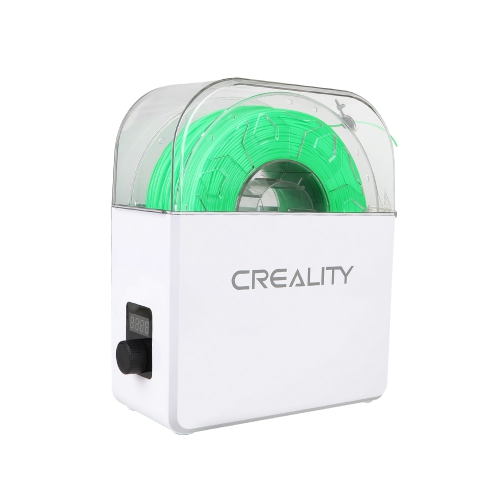
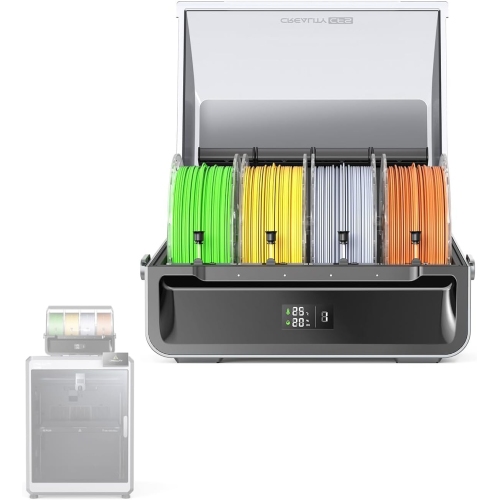
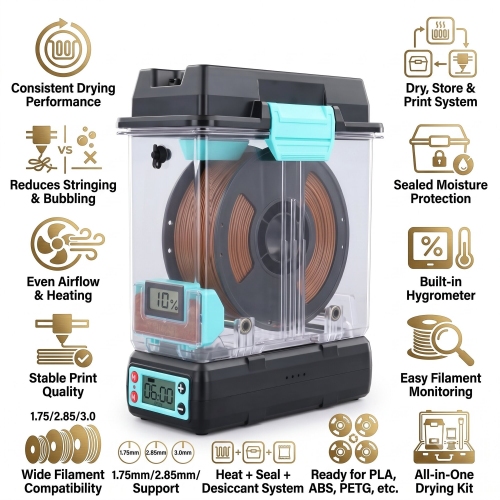
A filament storage box is an enclosure for keeping 3D printer filament between uses, often with a sealed lid and a compartment for desiccant. A filament dryer box adds powered heating and may include a fan, timer and temperature controls. Some designs combine drying, storage and filament feeding in one unit.
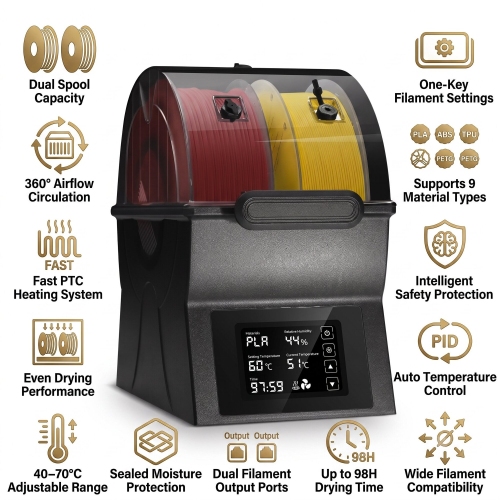
Compatibility depends on the dryer’s supported temperature settings and the filament manufacturer’s care instructions. PLA, PETG, ABS, TPU and nylon can have different drying requirements. Check the documentation for both the filament and the dryer rather than assuming one setting applies to every material.
Depending on the model, a filament dryer box may offer adjustable temperature settings, a drying timer, material presets and a digital display. Some displays show chamber temperature, relative humidity or remaining cycle time. Connected models may also provide app-based controls.
A feed-through port is an opening that lets filament travel from a spool inside the box to a 3D printer. Designs may include guide tubing, spool rollers or port plugs. If you plan to print directly from the box, check whether it supports that setup and how its filament path connects to your printer.
Label each spool or box with the material, colour and date opened. Keep the original filament label for reference, and record drying dates if you track filament care. Grouping spools by material or project can make your collection easier to navigate.
Top selling and popular products
Discover more categories related to 3D Filament Storage and Dryer Boxes
Some products may be subject to Environmental Handling Fees (EHF) depending on your province. Learn more about EHFs.