Stroller Organizers
Keep all your baby essentials organized and within reach with our selection of stroller organizers. From diapers and wipes to bottles and snacks, these handy accessories are designed to make on-the-go parenting a breeze. With multiple compartments, cup holders, and easy-to-attach straps, our stroller organizers are both practical and stylish, ensuring you have everything you need while out and about with your little one. Say goodbye to rummaging through your diaper bag and hello to convenience with our range of stroller organizers.
Sort
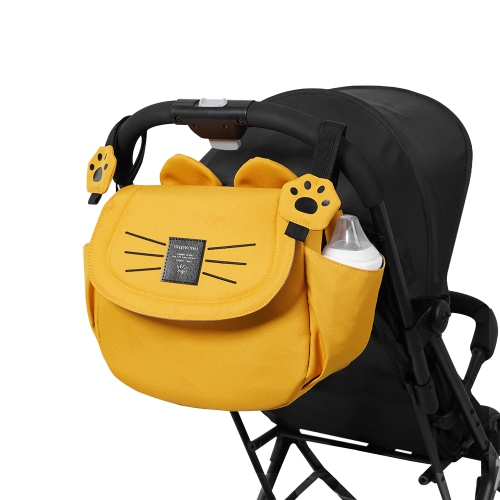
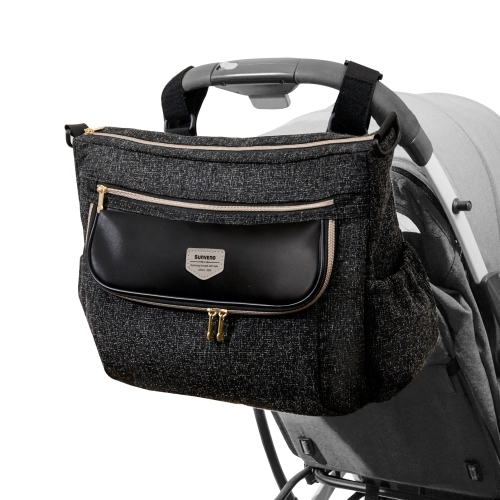
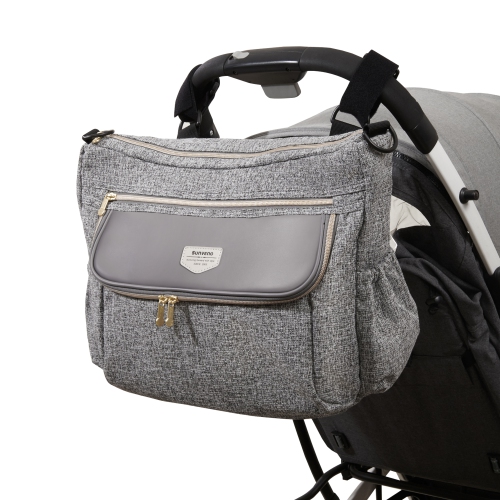
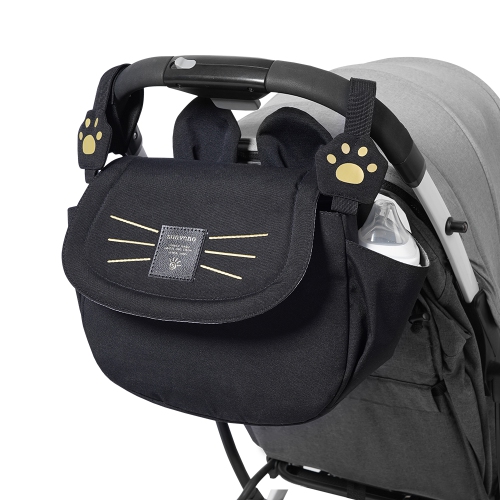
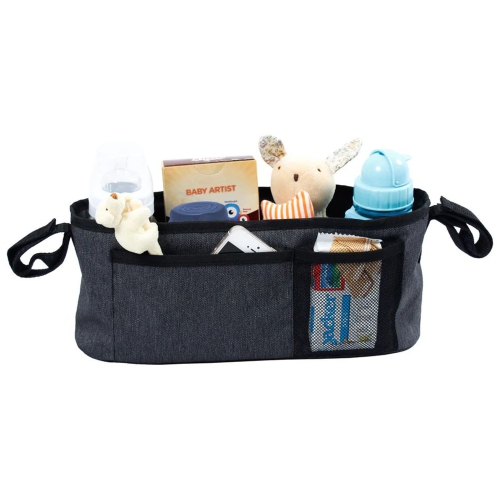
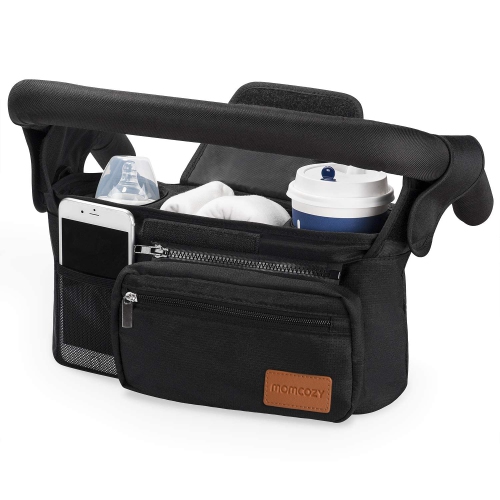
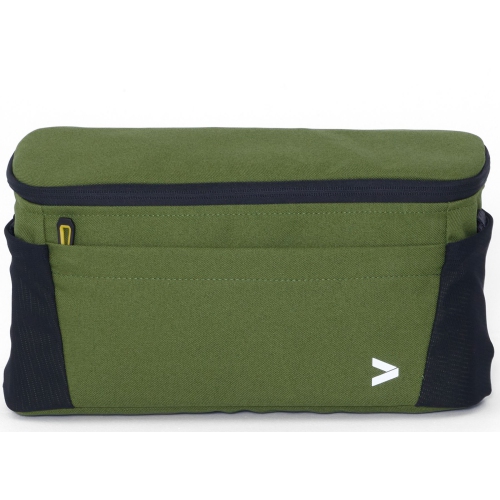
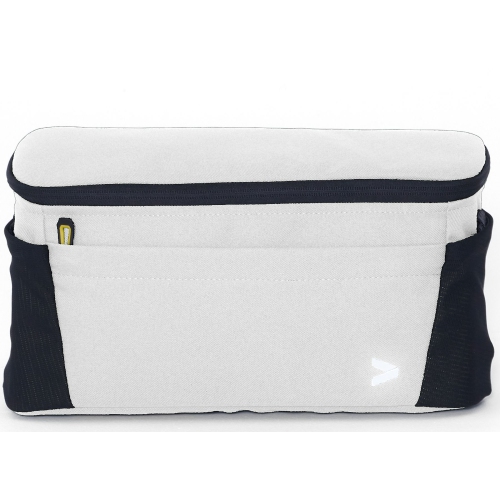
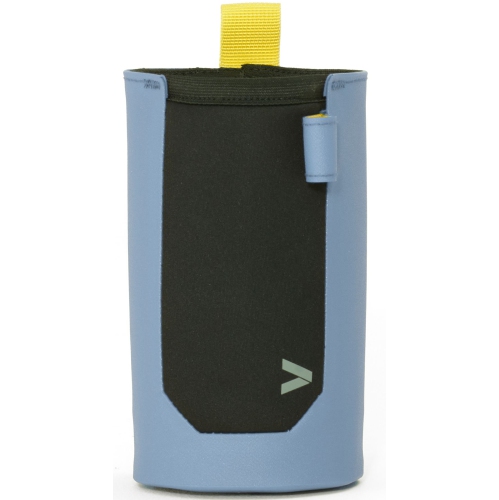
Everyday essentials within reach without filling the stroller basket
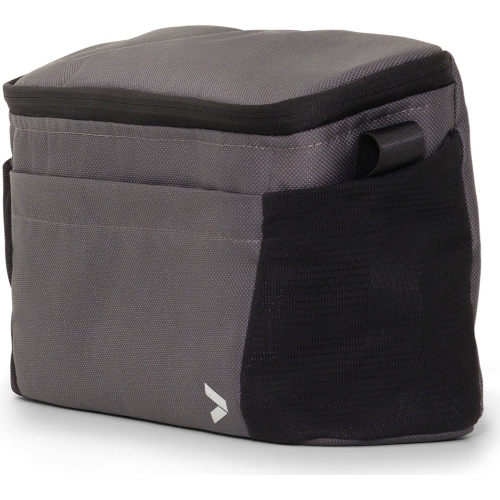
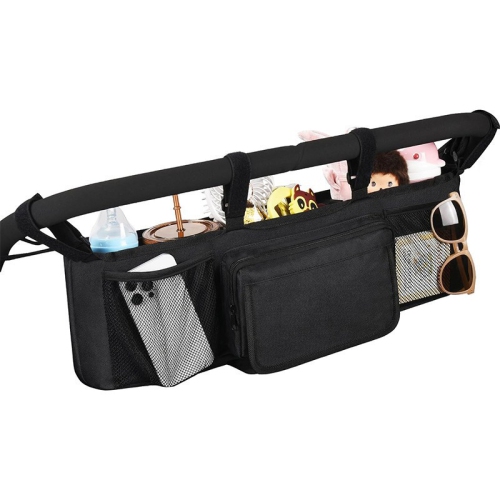
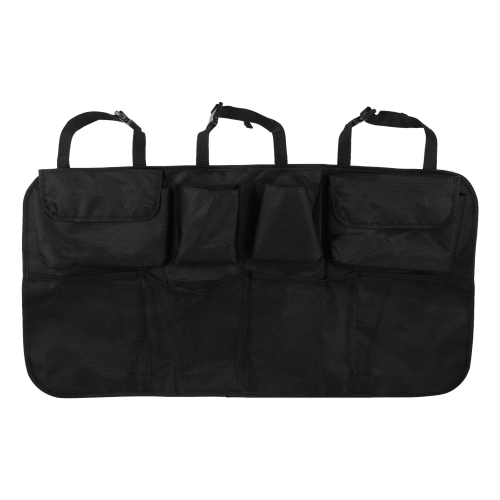
Stroller organizers are compact storage caddies that attach near a stroller’s handlebar, keeping everyday essentials within easy reach without taking up space in the basket below. Separate compartments give a phone, keys, wipes, bottles, and small baby necessities their own place, so a quick stop does not mean searching through a packed diaper bag. For parents and caregivers heading to a playgroup, walking to daycare, or spending an afternoon out with a baby, that arrangement can make frequent little tasks easier. An open centre compartment offers quick access to a cloth or spare bib, while a zippered pocket helps keep smaller belongings contained. Some designs include a detachable pouch or wristlet that can hold valuables when the stroller is parked; others focus on deeper storage sections or dedicated bottle pockets. The most useful layout depends less on the number of pockets than on what goes into them. Someone carrying a phone, keys, and a water bottle may prefer a slim caddy, while a caregiver managing outings with more than one child may appreciate clearly divided sections for each child’s small essentials. A stroller organizer generally works best as a place for lightweight, frequently used belongings rather than as a replacement for a diaper bag. Spare clothing, a full supply of diapers, and heavier necessities are usually better suited to the stroller’s designated storage area, within its stated limits. Pocket openings also influence daily convenience: a wide opening makes it easier to retrieve a packet of wipes, whereas a secure closure helps prevent loose contents from slipping out when the organizer is removed. Interior colour can make a practical difference, too, with a lighter lining making small objects easier to spot. For shared caregiving, a simple arrangement that stays consistent from one outing to the next helps everyone find what they need without unpacking the whole caddy.
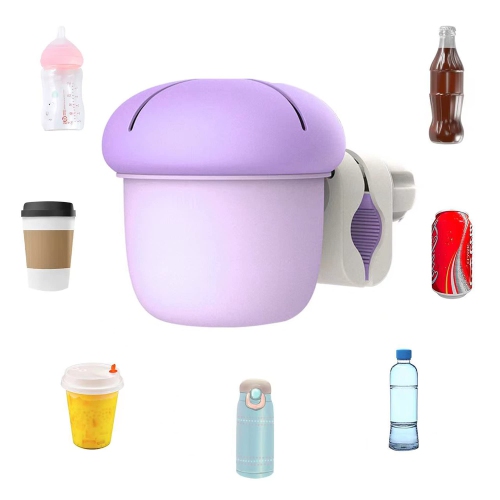
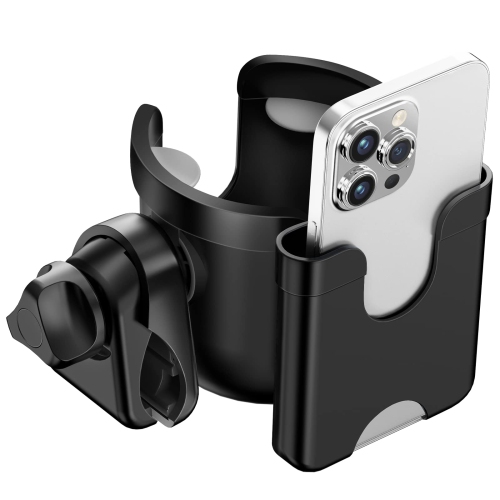
Fit is one of the most important considerations for a stroller organizer because handlebar shape, width, angle, and adjustment mechanisms vary. Universal stroller organizers typically use adjustable straps or hook-and-loop fasteners to accommodate a range of configurations, but a universal label does not guarantee compatibility with every stroller. Model-specific organizers are designed around particular stroller layouts and attachment points; compatibility still needs to match the exact model and any applicable version details. Before choosing a size, compare the organizer’s dimensions and attachment method with the usable space around the handle. A continuous handlebar presents a different mounting layout from two separate handles, and centre-mounted controls, brake cables, or folding releases can affect where straps sit. The caddy should attach securely without covering controls, interfering with steering, or hanging where it could contact the child. Handle height matters as well: an organizer that sits comfortably for one caregiver may need checking after the handle is adjusted for another. Follow both the stroller manufacturer’s accessory guidance and the organizer’s loading instructions, since extra weight at the handle can affect stability even when the storage compartment has room to spare. Keep the load light and balanced, and avoid treating empty pocket space as an invitation to carry more. Bottle and cup compartments deserve the same attention to fit. A pocket that holds a narrow bottle snugly may not accommodate a broad travel tumbler, and a deep sleeve can make a short container awkward to retrieve. Insulated compartments may help slow changes in a drink’s temperature, but they do not replace appropriate feeding and food-storage practices. Keep hot drinks away from children and follow the stroller manufacturer’s guidance on carrying beverages. For a setup focused mainly on carrying a drink rather than several small essentials, stroller cup holders provide a related accessory category to consider, with their own mounting, container-size, and weight requirements. Whatever the layout, pockets should remain clear of a child’s reach as their height and mobility change.
Materials and construction influence how a stroller organizer holds its shape, handles daily use, and cleans up after the inevitable crumbs or leaking bottle. Woven polyester and nylon are common choices for lightweight fabric storage, while neoprene designs can offer a softer, more flexible structure. Performance varies with the fabric, lining, seams, and overall construction rather than the material name alone. A structured base can help compartments remain open and easier to use, while a softer organizer may be simpler to remove and pack away. Reinforced stitching around attachment straps is worth examining because those areas carry the load whenever the stroller moves. Secure seams, smoothly operating zippers, and firmly attached pocket dividers also contribute to everyday durability. Mesh sections make contents visible, though small crumbs can collect along their lower edges; lined compartments may be easier to wipe out if their shape allows access to the corners. Care instructions should determine whether the organizer can be machine washed, hand washed, or spot cleaned. A wipe-clean surface does not necessarily mean the whole accessory can be soaked, particularly if it contains internal supports or several different materials. Emptying pockets regularly, clearing debris from hook-and-loop fasteners, and letting cleaned fabric dry fully before use help keep the organizer ready for the next outing. Folding compatibility is another practical detail: some setups require the caddy to be removed before the stroller folds, and even a flexible organizer may need to be emptied first. Nothing should obstruct the folding mechanism or prevent the frame from locking properly. For families who frequently move between a stroller and another bag, a removable compartment can make transferring essentials less fiddly. Stroller organizers can also be thoughtful baby shower gifts or useful additions for grandparents and other regular caregivers, especially when the recipient’s stroller model and storage preferences are known. A well-matched organizer keeps the small necessities of an outing orderly, accessible, and separate from bulkier supplies, whether the next stop is a library visit, an appointment, or a stroll around the neighbourhood.
Fit is one of the most important considerations for a stroller organizer because handlebar shape, width, angle, and adjustment mechanisms vary. Universal stroller organizers typically use adjustable straps or hook-and-loop fasteners to accommodate a range of configurations, but a universal label does not guarantee compatibility with every stroller. Model-specific organizers are designed around particular stroller layouts and attachment points; compatibility still needs to match the exact model and any applicable version details. Before choosing a size, compare the organizer’s dimensions and attachment method with the usable space around the handle. A continuous handlebar presents a different mounting layout from two separate handles, and centre-mounted controls, brake cables, or folding releases can affect where straps sit. The caddy should attach securely without covering controls, interfering with steering, or hanging where it could contact the child. Handle height matters as well: an organizer that sits comfortably for one caregiver may need checking after the handle is adjusted for another. Follow both the stroller manufacturer’s accessory guidance and the organizer’s loading instructions, since extra weight at the handle can affect stability even when the storage compartment has room to spare. Keep the load light and balanced, and avoid treating empty pocket space as an invitation to carry more. Bottle and cup compartments deserve the same attention to fit. A pocket that holds a narrow bottle snugly may not accommodate a broad travel tumbler, and a deep sleeve can make a short container awkward to retrieve. Insulated compartments may help slow changes in a drink’s temperature, but they do not replace appropriate feeding and food-storage practices. Keep hot drinks away from children and follow the stroller manufacturer’s guidance on carrying beverages. For a setup focused mainly on carrying a drink rather than several small essentials, stroller cup holders provide a related accessory category to consider, with their own mounting, container-size, and weight requirements. Whatever the layout, pockets should remain clear of a child’s reach as their height and mobility change.
Materials and construction influence how a stroller organizer holds its shape, handles daily use, and cleans up after the inevitable crumbs or leaking bottle. Woven polyester and nylon are common choices for lightweight fabric storage, while neoprene designs can offer a softer, more flexible structure. Performance varies with the fabric, lining, seams, and overall construction rather than the material name alone. A structured base can help compartments remain open and easier to use, while a softer organizer may be simpler to remove and pack away. Reinforced stitching around attachment straps is worth examining because those areas carry the load whenever the stroller moves. Secure seams, smoothly operating zippers, and firmly attached pocket dividers also contribute to everyday durability. Mesh sections make contents visible, though small crumbs can collect along their lower edges; lined compartments may be easier to wipe out if their shape allows access to the corners. Care instructions should determine whether the organizer can be machine washed, hand washed, or spot cleaned. A wipe-clean surface does not necessarily mean the whole accessory can be soaked, particularly if it contains internal supports or several different materials. Emptying pockets regularly, clearing debris from hook-and-loop fasteners, and letting cleaned fabric dry fully before use help keep the organizer ready for the next outing. Folding compatibility is another practical detail: some setups require the caddy to be removed before the stroller folds, and even a flexible organizer may need to be emptied first. Nothing should obstruct the folding mechanism or prevent the frame from locking properly. For families who frequently move between a stroller and another bag, a removable compartment can make transferring essentials less fiddly. Stroller organizers can also be thoughtful baby shower gifts or useful additions for grandparents and other regular caregivers, especially when the recipient’s stroller model and storage preferences are known. A well-matched organizer keeps the small necessities of an outing orderly, accessible, and separate from bulkier supplies, whether the next stop is a library visit, an appointment, or a stroll around the neighbourhood.
Top selling and popular products
-
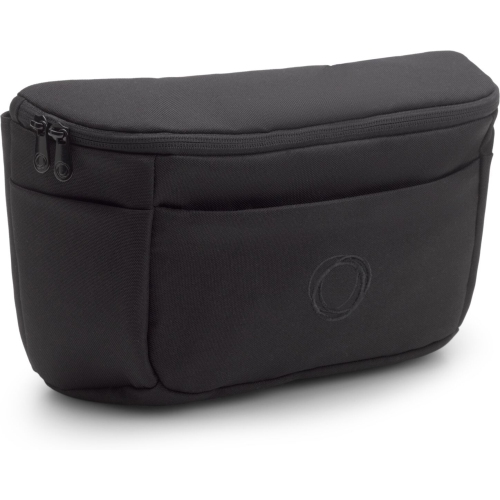 Your price for this item is $59.95
 -
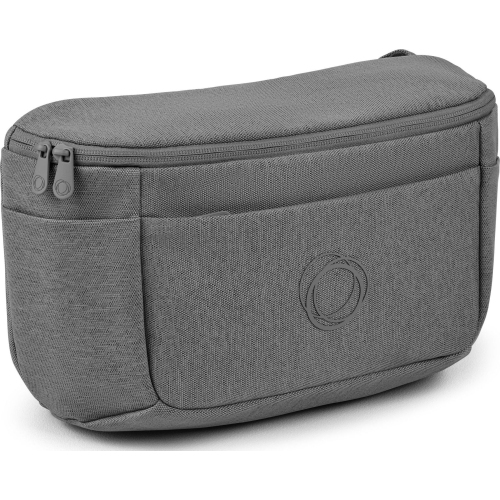 Your price for this item is $59.95
 -
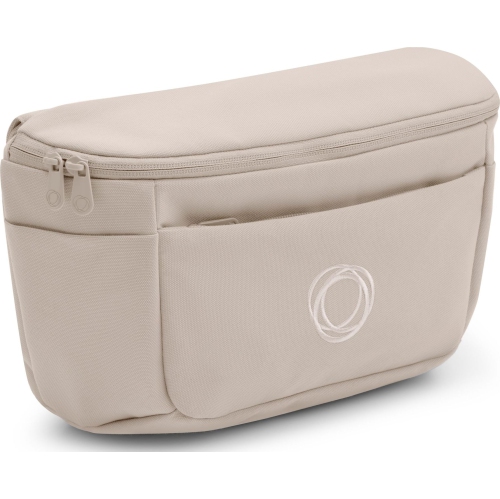 Your price for this item is $59.95
 -
 Your price for this item is $239.99
 -
 Your price for this item is $59.99
 -
 Your price for this item is $89.99
 -
 Your price for this item is $78.69
 -
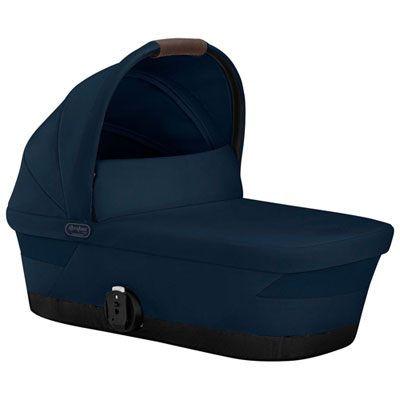 Your price for this item is $399.99
Discover more categories related to Stroller Organizers
Top Collections:
Pokemon Centers, Budget 4K TVs, Kindle Devices, Canon G7X Cameras, Apple iPhones 16, iPhone 15 Apple, Laptops for Business Work, Flip Phones, Xiaomi Phones, Refurbished Apple Laptops
Some products may be subject to Environmental Handling Fees
(EHF) depending on your province.
Learn more about EHFs.