LED Nail Lamps
Achieve salon-quality results at home with the right tools by exploring our selection of LED nail lamps. Whether you’re a DIY enthusiast or a professional, LED nail lamps offer a convenient way to cure gel polish quickly and efficiently. Find options suited for every skill level and style, designed to help you create flawless manicures and pedicures from the comfort of your own space. Discover the perfect LED nail lamp to elevate your nail care routine today.
Sort




Why gel compatibility matters more than lamp wattage
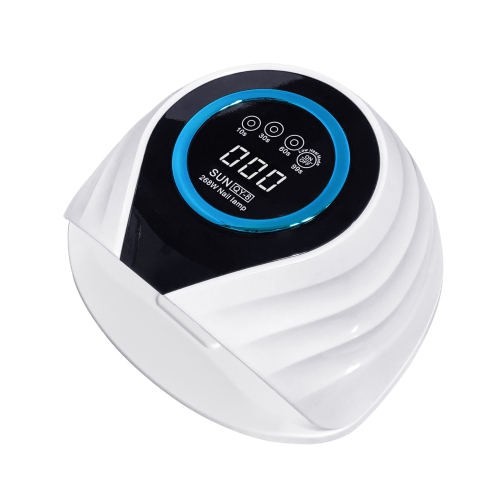
LED nail lamps are curing devices that use light-emitting diodes to harden compatible gel nail products, including certain base coats, gel colours, top coats, and builder gels. Unlike regular nail polish, which dries as solvents evaporate, light-cured gel relies on a chemical reaction triggered by particular wavelengths of light. Many LED nail lamps operate around 365 and 405 nanometres, although the wavelengths and curing requirements vary between gel systems. That makes compatibility between the lamp and the gel more important than wattage alone: a higher wattage does not automatically mean a faster, more complete, or longer-lasting cure. For a home manicure, a lamp provides a dedicated space to set each layer before the next is applied; in a salon, it supports a repeatable process across manicure appointments and nail art services. LED curing can suit everything from a sheer, natural-looking finish to richly pigmented colour and layered designs, provided the gel is formulated for the lamp being used. Cure times depend on the gel, layer thickness, lamp output, and manufacturer’s directions, rather than a single setting that works for every manicure. A surface that feels hard is not proof that the gel has cured fully underneath, and some systems leave a tacky layer that requires a specified finishing step. The distinction between LED and UV nail lamps can also be confusing because many LED models emit UVA light; LED describes the light source, not an absence of ultraviolet exposure. The related category UV Lamps for Nails covers another common term shoppers encounter when looking for gel-curing equipment. Whatever the terminology, a lamp’s stated compatibility and the gel manufacturer’s recommended equipment are the most useful starting points. Ordinary air-drying polish does not become a light-cured gel when placed beneath a nail lamp, so these devices are intended for a different manicure process than a conventional polish-and-dry routine.
The physical design of an LED nail lamp affects how comfortably it fits into that process. A roomy opening gives fingers space to rest without brushing freshly applied gel against the housing, while a clearly defined hand position can help keep nails within the intended curing area. The placement of the LEDs matters alongside the size of the chamber: curved nails, thumbs, and longer extensions need appropriate light coverage, and some designs or gel systems call for thumbs to be cured separately. A full-hand format may suit someone who regularly completes gel manicures at a dressing table, whereas a compact lamp may be easier to store in a drawer or carry with nail supplies. Small, targeted curing lights can help hold compatible tips or nail art elements in position during a preliminary cure, but that step is not necessarily a substitute for the complete cure required by the gel system. For pedicures, an opening that comfortably accommodates the foot and a removable base can make positioning and cleaning simpler, where the device is designed for that use. Smooth plastic housings are common, and a stable base, neatly finished edges, and easy-to-reach controls contribute to everyday handling. Preset timers reduce the need to watch a separate clock, digital displays make the remaining time visible, and hand sensors can start a cycle without touching a button with wet gel on the nails. These conveniences are most useful when their settings match the required cure time. Some lamps offer a gradual-output or low-heat mode intended to reduce the sensation of heat during curing, but it still needs to be used according to the gel and lamp instructions. Cord length, adaptor placement, and the amount of clear tabletop space also matter in practice. Rechargeable designs reduce reliance on a nearby outlet during use, while corded designs avoid charging interruptions; either format needs a suitable power supply and enough space for relaxed, consistent hand placement.
An LED nail lamp can be a useful addition to the routine of someone who enjoys doing gel manicures at home, practises nail art, or works with compatible professional nail systems. As a gift, it is particularly suited to a recipient who already uses gel products and knows which lamp specifications those products require. Someone who prefers traditional lacquer may have little use for a curing lamp, while an experienced gel user may place greater value on chamber space, dependable timers, or a base that is easy to clean. Durability depends on more than the outer shell: a secure power connection, reliable controls, and a design that can be maintained as instructed all affect long-term usability. Although LEDs generally have a long service life, curing performance should not be judged solely by whether the lights still switch on. Any concerns about uneven curing, damaged components, or changing performance warrant attention before further use. Routine care usually involves disconnecting the power and cleaning accessible surfaces as directed, without immersing the device or allowing liquid into electrical openings. Gel spills are easier to manage before they build up around the base or controls, but harsh solvents may damage plastic, finishes, or sensors. For shared use, cleaning and disinfection need to follow the manufacturer’s directions and applicable salon hygiene requirements; a curing lamp is not a sterilizer. Careful application is equally important to the finished manicure. Thin layers, accurate positioning, and the prescribed exposure time help support proper curing, while uncured gel should be kept off surrounding skin because contact can contribute to allergic reactions. Nail lamps that emit UVA are not UV-free, and exposure can be reduced with opaque, UV-protective fingerless gloves or broad-spectrum sunscreen used as directed without interfering with nail preparation. Anyone with a photosensitivity condition or medication-related light sensitivity should seek medical advice before use. Used with a compatible gel system and appropriate precautions, an LED nail lamp supports a controlled curing process for glossy colour, detailed nail art, and other gel finishes.
Top selling and popular products
-
 Your price for this item is $279.99
-
 Your price for this item is $67
-
 Your price for this item is $42
-
 Your price for this item is $399.99
-
 Your price for this item is $35
-
 Your price for this item is $80
-
 Your price for this item is $33
-
 Your price for this item is $38
Discover more categories related to LED Nail Lamps


Top Collections:
Pokemon Centers, Best Black Friday Deals This Year, Best Black Friday Deals On Electronics, Kindle Devices, Best Budget Office Chairs, Best Black Friday Deals On Apple Products, Best Cameras for Sports Photography, Pokémon 30th Celebration Cards, Dyson Airwrap, Canon G7X Cameras
Some products may be subject to Environmental Handling Fees
(EHF) depending on your province.
Learn more about EHFs.