Best Disposable Cameras
Capture candid moments with the best disposable cameras, ranked by customer review ratings. Whether you’re snapping photos at a wedding, heading on a trip, or enjoying a day with friends, these easy-to-use cameras bring the charm of film photography to any occasion. Explore the top-rated options to find the right fit for your next photo-worthy adventure.
What to look for in disposable cameras
1. Film Type and Speed
2. Built-in Flash
3. Number of Exposures
4. Processing and Digital Scans
-
1
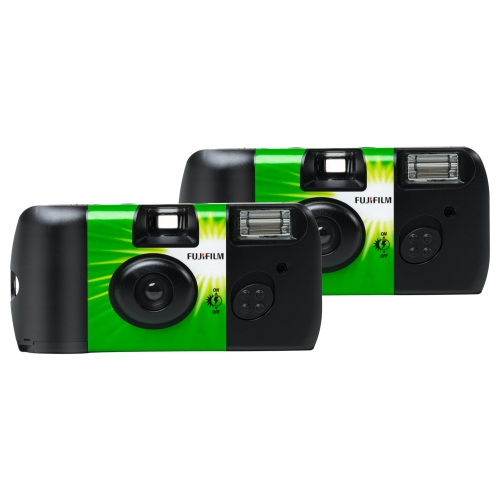
FUJIFILM Quicksnap Flash 400 Single-Use Camera With Flash (2 Pack, 54 Exp)
About this product
A convenient single-use camera pre-loaded with 400 speed film and built-in flash for sharp photos anywhere.
(0)$58.99Your price for this item is $58.99SAVE $7 -
2
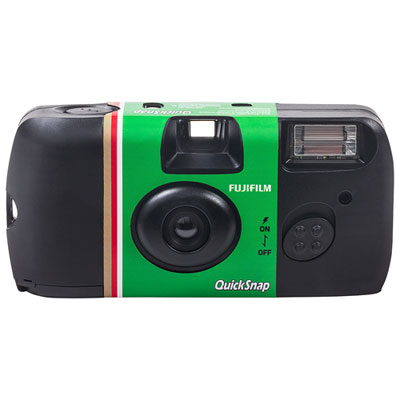
Fuji QuickSnap 400 27-Photos One-Time-Use Camera
About this product
A disposable camera pre-loaded with Superia 400 film and built-in flash for vibrant indoor or outdoor photos.
What customers like
(166)$28.99 Your price for this item is $28.99 -
3
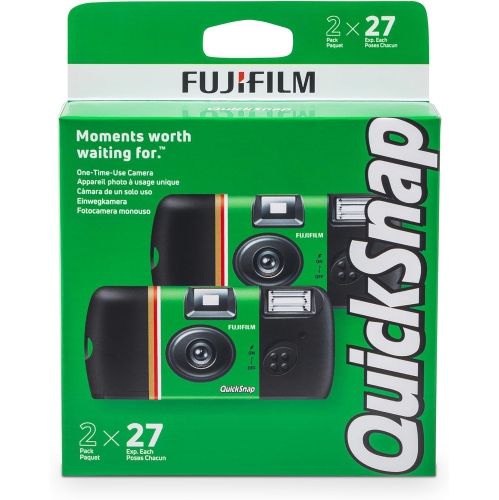
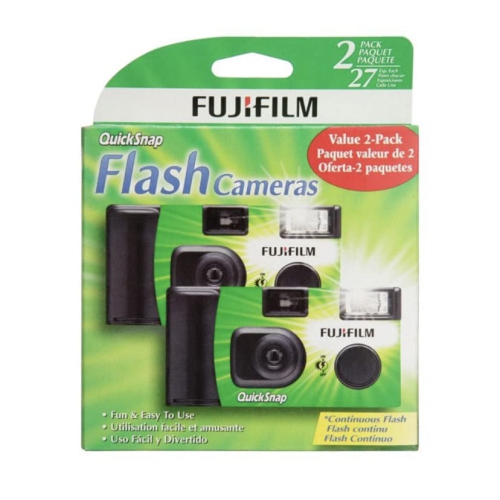
FUJIFILM Quicksnap Flash 400 One-Time-Use Camera - 2 Pack
About this product
A convenient disposable camera pack with built-in flash, perfect for capturing memories on the go.
(10)$56.99 Your price for this item is $56.99 -
4
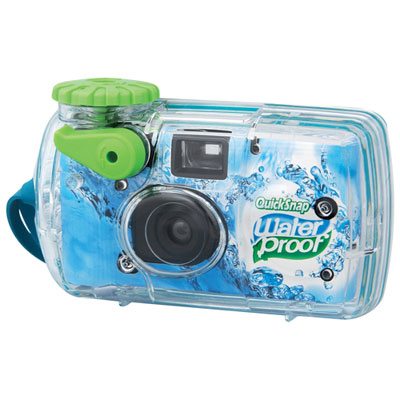
Fuji Quicksnap Waterproof One-Time-Use Camera
About this product
A waterproof disposable camera designed for easy underwater photography up to 35 feet deep.
What customers like
(27)$36.99 Your price for this item is $36.99
FAQ
A disposable camera is a single-use film camera with film already loaded. Most models have a fixed-focus lens, a manual film advance wheel and a shutter button. Once all exposures are used, you take the entire camera to a film-processing service rather than loading another roll.
Disposable cameras are available with colour or black-and-white film. Colour film captures the hues of your subject, while black-and-white film creates images in shades of grey. The film type is set when you buy the camera and is listed on the packaging.
The number of photos depends on the camera’s exposure count. Common options include 27 or 36 exposures, with each exposure allowing one photo. Check the packaging for the total and use the camera’s frame counter to track your remaining shots.
Take the entire camera to a photo lab or another service that processes its film type. The lab removes and develops the film, then provides prints, digital scans or both, depending on the service you select. Leave the camera closed so the undeveloped film is not exposed to light.
Yes. Many photo labs can scan the developed film and provide digital files for downloading, sharing or saving to your phone or computer. Ask whether scans are included and whether your negatives will be provided, as service options vary.
Top selling and popular products
Discover more categories related to Best Disposable Cameras
Some products may be subject to Environmental Handling Fees (EHF) depending on your province. Learn more about EHFs.