Best Value Inkjet Printers for Small Businesses
Finding the right inkjet printer for your small business means balancing upfront cost, everyday performance, and ongoing ink expenses. Explore the best value inkjet printers, ranked by user review ratings, to compare options for your budget and workload. From sharp documents to colourful marketing materials, find a printer that helps keep your business moving.

Read More

What to look for in best value inkjet printers for small businesses

1. Total Cost of Ownership

Compare the purchase price with replacement ink costs and estimated page yields to assess long-term value. Refillable ink tank printers can offer lower ink costs per page, while cartridge models may cost less upfront.

2. Print Speed and Volume

Look for print speeds that suit your workload, checking both black-and-white and colour ratings. Match the recommended monthly print volume and paper tray capacity to your business’s typical needs.

3. Print Quality and Paper Handling

Choose a printer that delivers clear text for documents and good colour quality for presentations or promotional materials. Automatic two-sided printing can reduce paper costs, while support for envelopes, labels, and different paper sizes adds versatility.

4. Connectivity and Office Features

Wi-Fi, Ethernet, and mobile printing support can make it easier for your team to share a printer. If you regularly copy or scan documents, look for an all-in-one model with an automatic document feeder and check whether it supports two-sided scanning.
Citrus catapult arrow
  1. 1

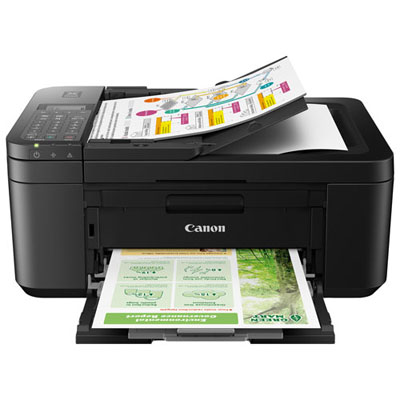
    Canon PIXMA TR4720 Wireless All-In-One Inkjet Printer - White

    About this product

    A versatile white wireless inkjet printer offering fast, high-quality printing and easy operation for any task.

    What customers like

    • Easy setup and installation
    • Affordable price and good value
    • Versatile all-in-one features
    • Good print and photo quality
    • Compact size and small footprint
    (127)
    $79.99 Your price for this item is $79.99
  2. 2

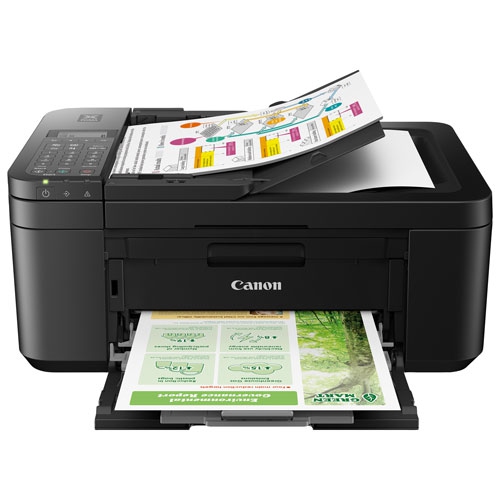
    Open Box - Canon PIXMA TR4720 Wireless All-In-One Inkjet Printer

    About this product

    A versatile black wireless inkjet printer offering high-quality prints and easy setup via mobile app.

    $63.99
    SAVE $56
    Your price for this item is $63.99
  3. 3

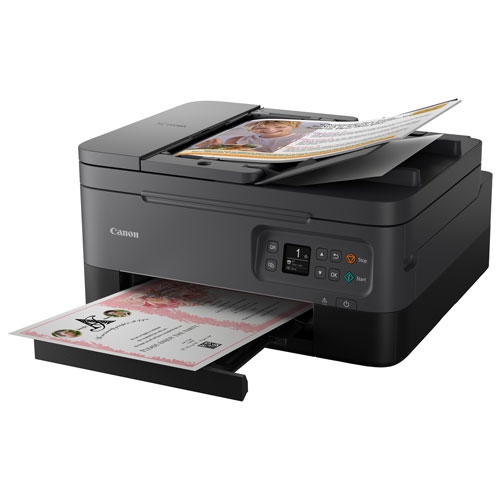
    CANON Refurbished (Good) - Pixma Tr7020A Wireless All-In-One Inkjet Printer - In Black

    About this product

    A wireless all-in-one inkjet printer in black with 4800 x 1200 DPI resolution and OLED display.

    $94.97
    SAVE $35
    Your price for this item is $94.97
  4. 4

    CANON Refurbished (Fair) - Pixma Tr4720 Wireless All-In-One Inkjet Printer

    About this product

    A compact and versatile wireless all-in-one inkjet printer with high-quality black and color prints.

    $44.99
    SAVE $35
    Your price for this item is $44.99
  5. 5

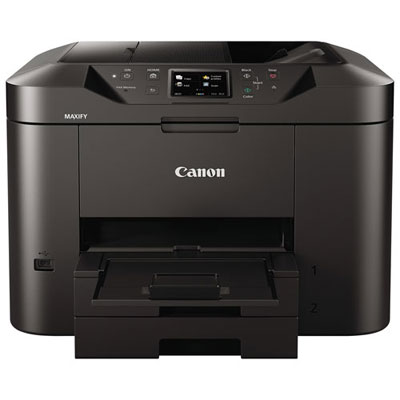
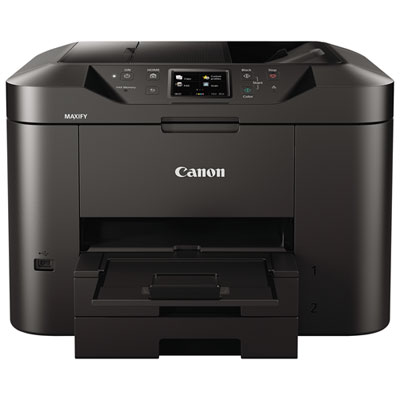
    Open Box - Canon MAXIFY MB2720 Office and Business Wireless All-In-One Inkjet Printer

    About this product

    An efficient wireless all-in-one inkjet printer with fast print speeds, large 500-sheet capacity, and Wi-Fi connectivity.

    $79.99
    SAVE $60
    Your price for this item is $79.99

Printer value starts with the work you do

The best value inkjet printers for small businesses combine clear document output, ink capacity suited to everyday workloads, and practical features that keep routine tasks moving. Value depends on how well a printer fits the work: a consultant printing occasional proposals has different needs from a busy office preparing appointment sheets, invoices, and colour handouts throughout the day. Inkjet technology places tiny droplets of ink onto paper, making it useful for both sharp text and colour graphics when the ink, paper, and print settings are matched to the job. For many small businesses, that versatility supports everything from internal spreadsheets to customer-facing presentations without needing separate devices for each task. All-in-one designs bring printing, copying, and scanning together in a single workspace, while some also include fax capability for organizations that still use it. Automatic two-sided printing is particularly useful for contracts, training materials, and longer reports, reducing the need to turn and reload sheets manually. A built-in scanner can turn signed forms into digital files, and an automatic document feeder makes multipage paperwork easier to process than placing each sheet on the glass. These features are not universal, so the strongest fit depends on which tasks happen regularly rather than which model has the longest feature list. A home-based bookkeeper may prioritize crisp black text and reliable scanning, while a design studio may need more attention to colour reproduction and support for presentation paper. Inkjet models within the broader selection of printers for small businesses can serve sole proprietors, shared offices, reception desks, and small teams that handle a mix of administrative and creative work. A useful match balances document quality, straightforward operation, and enough capacity for typical workloads, with room for occasional larger assignments. Consistent results on the paper used most often usually matter more than a headline specification that rarely applies to the business.

Ink delivery and paper handling play a large part in how smoothly an inkjet printer fits a working day. Cartridge-based designs and refillable ink tank designs meet different needs, with the right choice influenced by printing frequency, page coverage, and the balance of black-and-white and colour work. Separate colour cartridges allow each colour to be replaced individually, while combined colour cartridges contain multiple colours in one unit. Refillable tanks hold ink that is replenished from compatible bottles and can suit businesses that print regularly in larger quantities. Published page yields offer a useful comparison, but actual results vary with document content, print settings, cleaning cycles, and other operating conditions. A page of dense colour charts uses ink differently from a short letter, so yield figures should not be treated as a fixed promise for every workload. The recommended monthly print volume is another helpful specification because it describes the workload the printer is intended to handle routinely; a maximum duty cycle is not the same as a recommended everyday target. Print speed also needs context. Black text and colour output may have different rated speeds, and draft-mode figures do not necessarily reflect the quality settings used for client documents. In an office that prints one invoice at a time, the delay before the first page appears may be more noticeable than the speed of a long print run. Paper tray capacity matters when several people share the device or when larger batches are common. Adjustable guides help keep supported paper sizes aligned, while a separate rear feed or multipurpose tray, where included, can make occasional envelopes or heavier media more convenient. Support for cardstock, labels, photo paper, and borderless printing varies by model, including limits on paper weight and dimensions. Inkjet-compatible media and the correct paper setting help produce cleaner text, more even colour, and reliable feeding. For businesses preparing menus, appointment cards, or presentation covers, those details can matter as much as the printer’s basic resolution.

A printer’s physical fit and everyday usability become especially important in smaller offices, where one device may sit beside a laptop, filing cabinet, or customer service counter. Desktop dimensions tell only part of the story: output trays need space to extend, scanner lids need clearance to open, and cartridge or tank access should remain convenient after installation. An enclosed paper tray can help keep sheets tidy between jobs, while accessible controls make copying a form or checking ink levels less disruptive. Many desktop inkjet printers use moulded plastic housings; long-term practicality depends more on suitable workload capacity, dependable paper handling, and service support than on casing appearance alone. Connectivity should match the devices and network used by the team. USB supports a direct connection to a compatible computer, Wi-Fi allows supported devices to print across a network, and Ethernet, where included, provides a wired network option. Wireless capabilities differ, including supported frequency bands, so compatibility with the office router deserves attention. Mobile printing and scanning can be useful for staff working from phones or tablets, but available functions depend on the printer, operating system, and required software. For shared use, clear setup procedures and appropriate access controls help keep everyday printing manageable. Scanning features also deserve a closer look when paperwork is a major part of the business. An automatic document feeder does not necessarily scan both sides automatically, and automatic two-sided printing does not guarantee two-sided scanning. A flatbed remains useful for receipts, bound materials, and documents that should not pass through a feeder. Routine care supports dependable results: paper should be stored flat and dry, spills kept away from the device, and cleaning performed according to the manufacturer’s directions. Inkjet printers can need printhead maintenance after extended periods without use, making regular printing and correct shutdown procedures worthwhile habits. Together, sensible maintenance, compatible supplies, and features matched to actual office tasks help an inkjet printer remain a useful part of a small business’s daily workflow.
Read More

FAQ

Some products may be subject to Environmental Handling Fees (EHF) depending on your province. Learn more about EHFs.