Dark Grey Duvet Covers

Find dark grey duvet covers to give your bedding a neutral base that pairs easily with light sheets or deeper accent colours. Compare each cover’s dimensions with your duvet, and check care instructions and closure details to choose an option that suits your bedroom and routine.
How undertones and texture give grey bedding depth

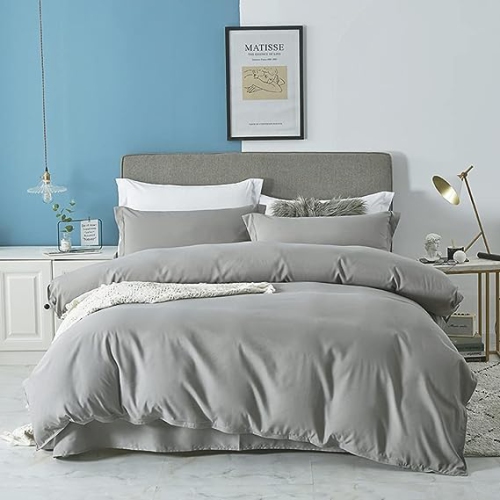
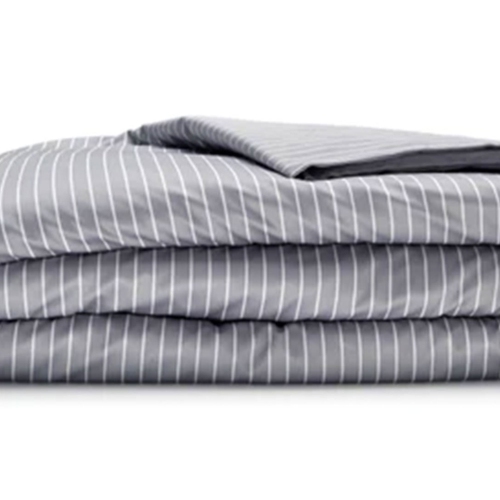
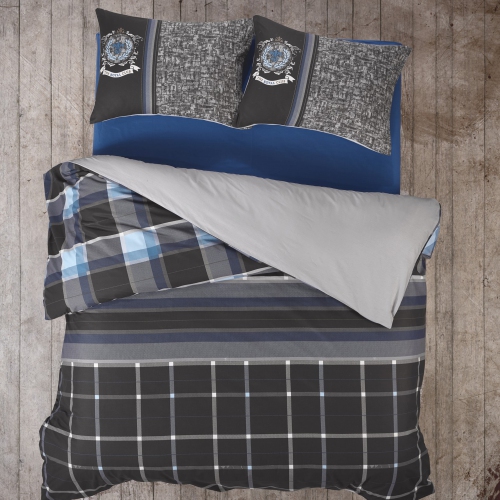
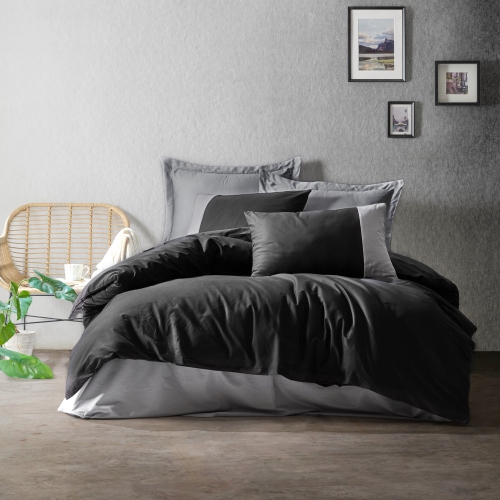
Dark grey duvet covers give a bed a defined, grounded look without the stark contrast of black. The colour can sit quietly beside cream walls and pale wood, or add depth to a room with a walnut bed frame, brass lamps, and richly coloured cushions. Within the dark grey family, charcoal shades tend to feel bold and architectural, while softer, washed greys have a more relaxed appearance. Undertones make a difference: a grey with a blue cast can look quite different beside an upholstered headboard than a grey with a brown cast. Daylight and bedside lighting can also change how the fabric appears, so colour descriptions and close-up images are useful when coordinating existing bedding. A plain dark grey cover creates a clean backdrop for patterned pillowcases, while narrow stripes, subtle checks, or woven patterns add detail without making the bed feel busy. Texture offers another way to vary the look. A smooth surface gives the colour a more uniform finish, whereas a slubbed weave or gently rumpled fabric creates small shifts in light and shade. On a bed that occupies much of the room, those details can shape the overall feel of the space. White sheets bring a crisp contrast, muted pink or clay accents soften the palette, and navy or forest green can create a layered, deeper-toned arrangement. Dark grey also works well in shared bedrooms where a neutral foundation leaves room for different tastes in cushions, throws, and bedside accessories. For related looks across the colour family, explore Best Gray Duvet Covers. Beyond its appearance, a duvet cover serves a practical purpose: it encloses a separate duvet insert, providing a removable outer layer that can be laundered according to its care instructions without washing the entire insert each time.

Fabric and construction influence how a dark grey duvet cover feels in daily use and how its surface changes with washing. Cotton is a familiar option, but the weave can make two cotton covers feel noticeably different. Percale generally has a crisp, matte finish, while sateen usually feels smoother and has a slight sheen that can give charcoal fabric added depth. Linen has a more pronounced texture and a relaxed drape, with creases that form part of its appearance rather than something that always needs pressing away. Polyester microfibre often has a soft, closely woven surface and can be less prone to creasing, although its feel varies with the fabric and finishing. Blended fabrics combine different fibres, so the fibre percentages are more informative than a broad description such as “cotton blend.” For anyone sensitive to the feel of bedding, a smooth weave may be preferable to raised stitching, puckered fabric, or heavily textured panels. Thread count is only one detail and does not, on its own, establish softness or durability; fibre quality, yarn construction, weave, and finishing also matter. The stitching around the edges and opening deserves attention because these areas are handled whenever the insert is removed or replaced. Reinforced buttonholes, securely attached fastenings, and neatly finished seams can support repeated use. Buttons create a traditional closure, concealed zippers offer a streamlined edge, and envelope-style openings avoid separate fastenings, though each design has its own handling requirements. Internal corner ties or loops, when compatible with the insert, help limit movement inside the cover. That can be particularly useful for someone who turns frequently in bed or dislikes finding the filling gathered at one end. Households with pets may also prefer a relatively smooth, closely woven surface over loose decorative threads that claws could catch. Dark grey can disguise some marks, but pale pet hair and lint may stand out against it.

Fit is as important as fabric, especially when a dark grey duvet cover is intended to create a neat, even outline across the bed. Size names such as twin, double, queen, and king are useful starting points, but the listed measurements provide a clearer comparison because dimensions can differ between manufacturers. The cover should be checked against the duvet insert, not just the mattress size. Too much extra fabric can leave loose edges, while a cover that is too small may compress the insert or prevent it from lying evenly. Mattress depth and bed height also affect the finished appearance: a deeper mattress may leave less fabric hanging down the sides than expected. In a shared bed, the preferred amount of side coverage matters as much as the label on the package. Set contents deserve the same attention, since some covers are sold alone and others include pillowcases or shams, which may have different dimensions or purposes. For everyday care, the sewn-in label should determine washing, drying, and ironing methods. Separating a dark cover from pale fabrics, avoiding overloading the machine, and using detergent as directed can help maintain its finish. Bleach and stain treatments should only be used when permitted by the care instructions, and thorough rinsing helps prevent visible detergent residue on deeper colours. Drying requirements vary by fibre and construction; removing the cover promptly when the recommended cycle is complete can reduce creasing, while complete drying before storage helps keep folded bedding fresh. A spare cover can make laundry routines easier in a busy household or a frequently used guest room, allowing one to be washed while another is on the bed. Dark grey duvet covers can also make thoughtful housewarming or wedding gifts when the recipient’s duvet dimensions, fabric preferences, and existing bedroom colours are known. For a first apartment, an established primary bedroom, or a guest bed, the appeal lies in a versatile colour paired with the right feel and fit. Those practical details help the cover remain comfortable to use, straightforward to care for, and easy to coordinate as other bedroom furnishings change.

FAQ

Some products may be subject to Environmental Handling Fees (EHF) depending on your province. Learn more about EHFs.