Electric Sit-Stand Desk Converters

Electric sit-stand desk converters add powered height adjustment to your existing desk, helping you switch between seated and standing work. Compare desktop risers by height range, platform dimensions, and weight capacity to find an option that suits your equipment and available desk space.
Sort

Powered height adjustment without replacing your existing desk

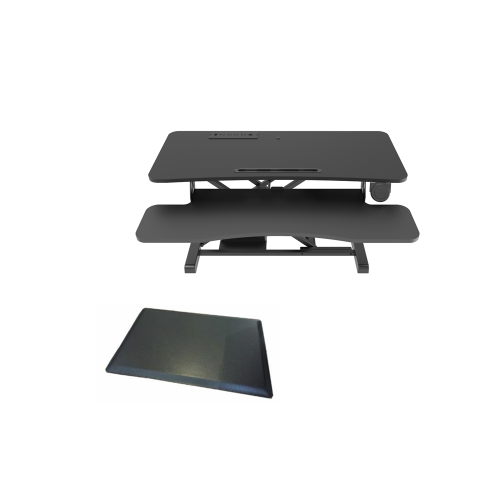
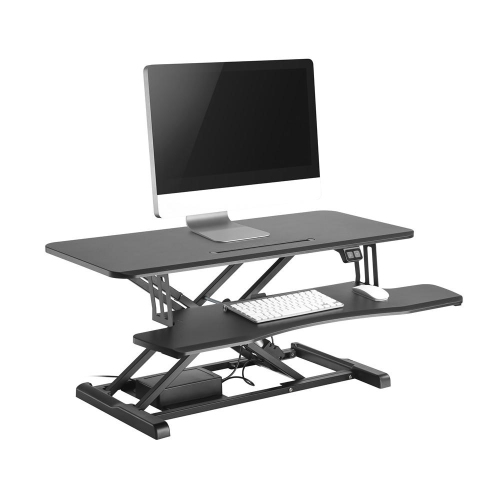
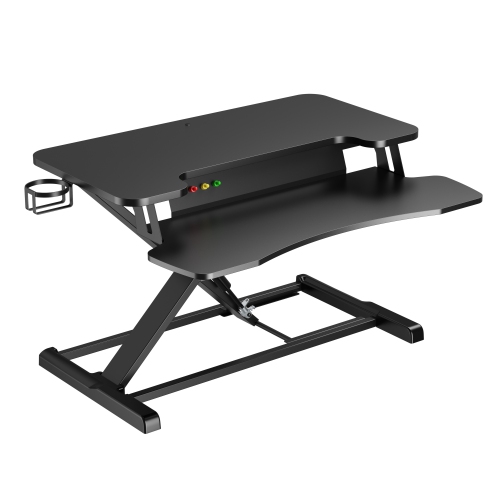
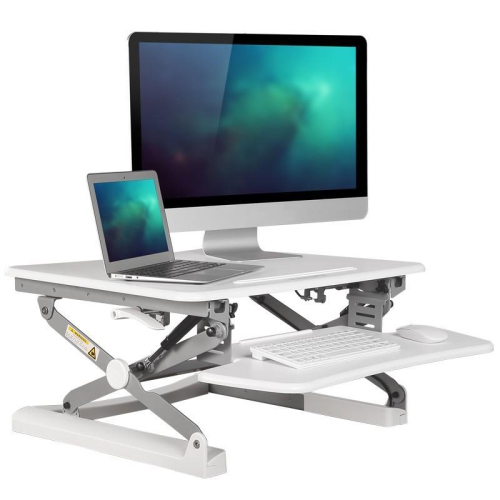
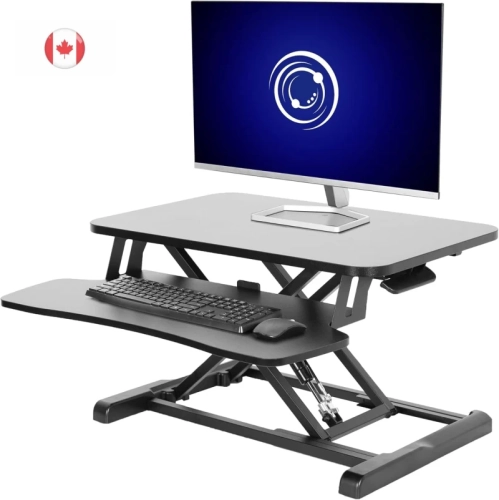
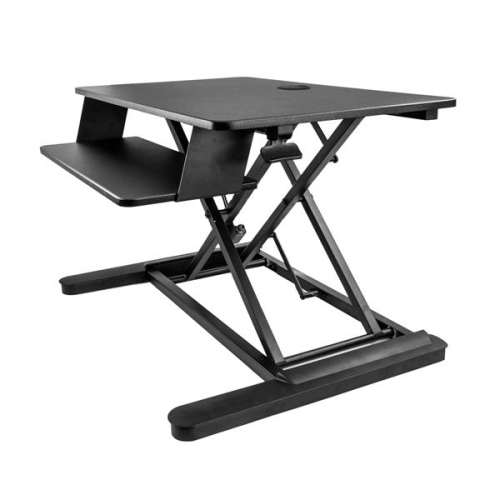
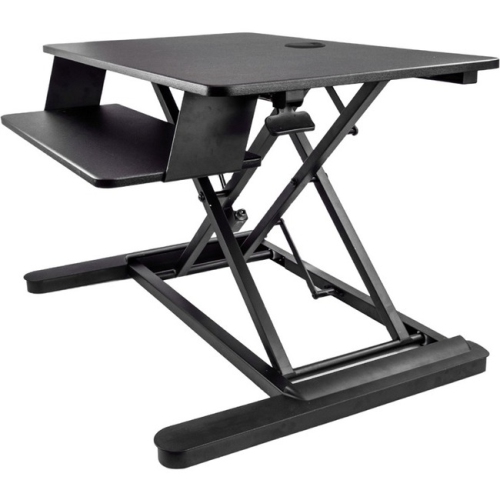
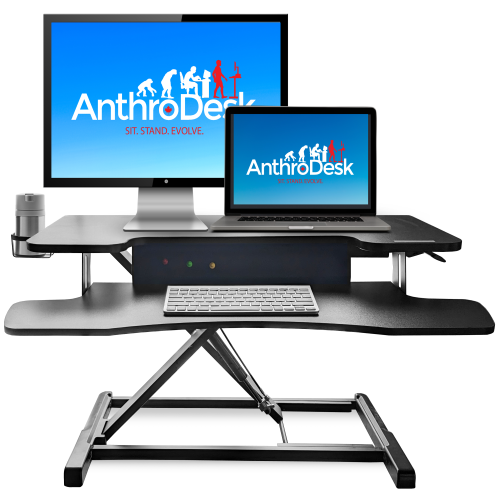
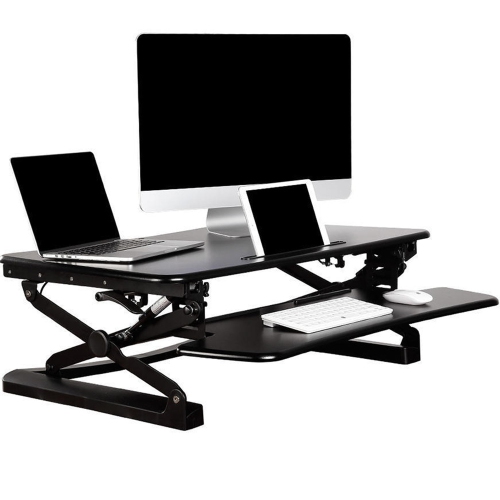
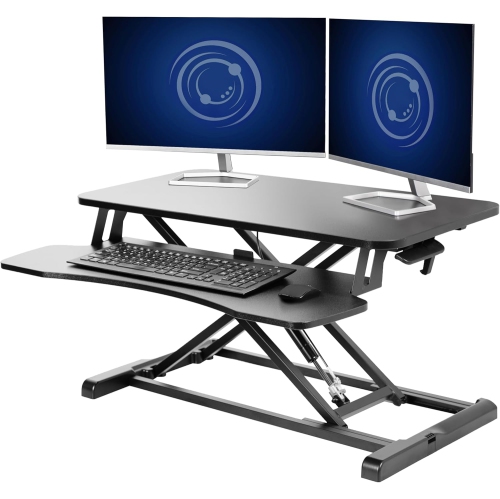
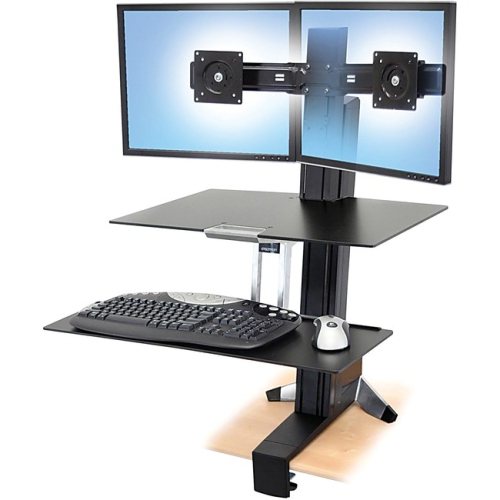
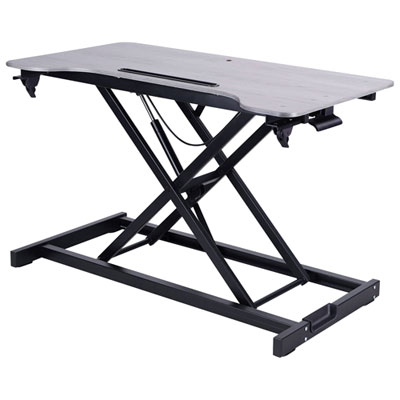
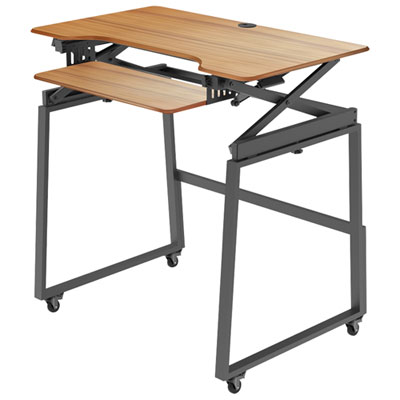
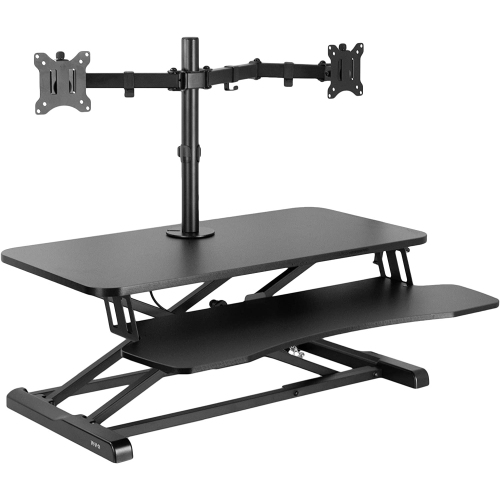
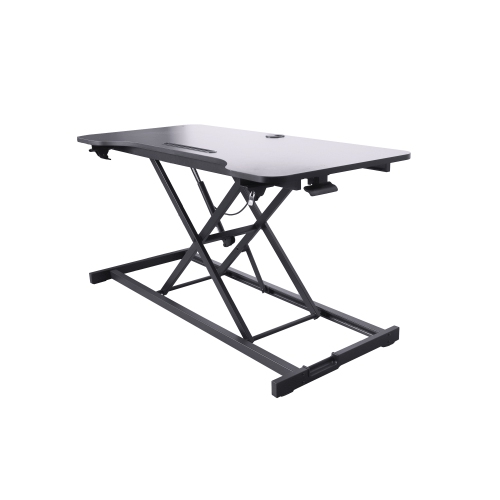
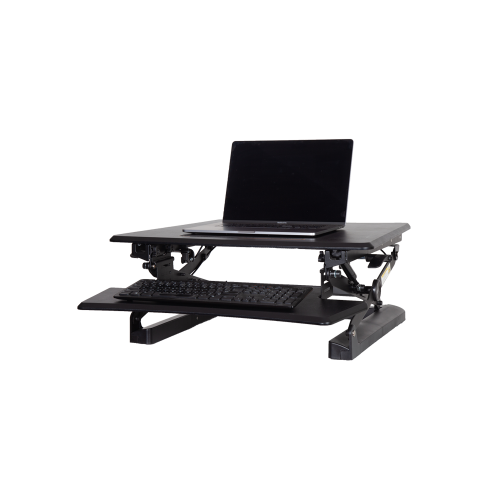
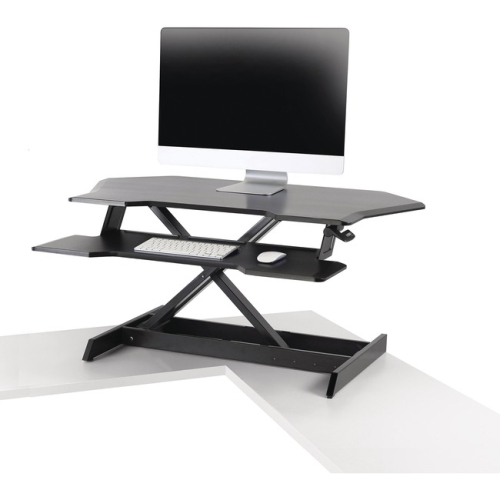
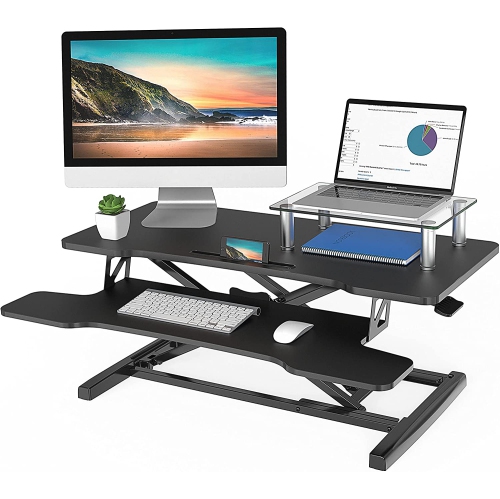
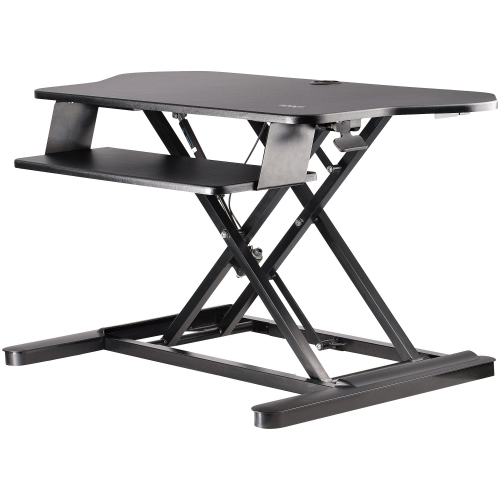
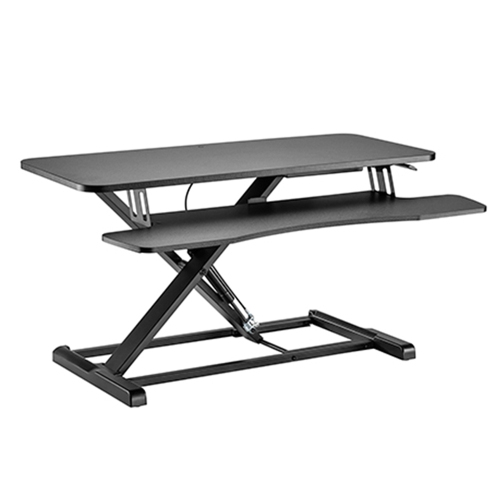
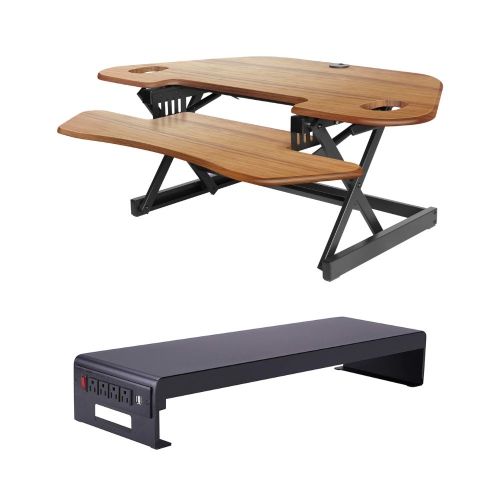
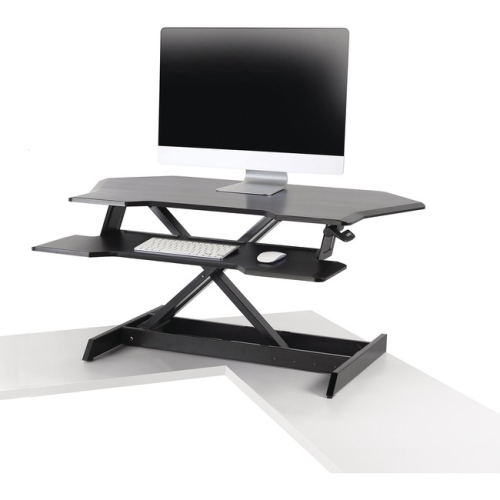
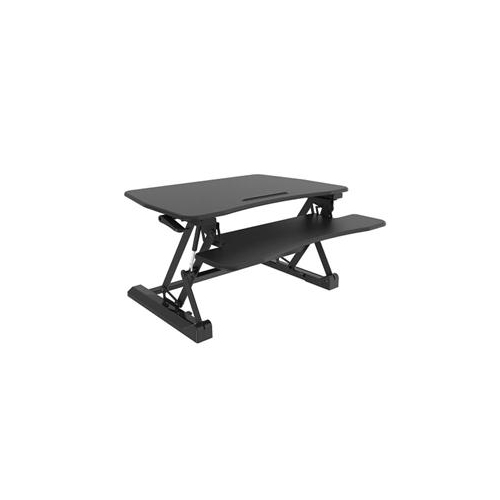
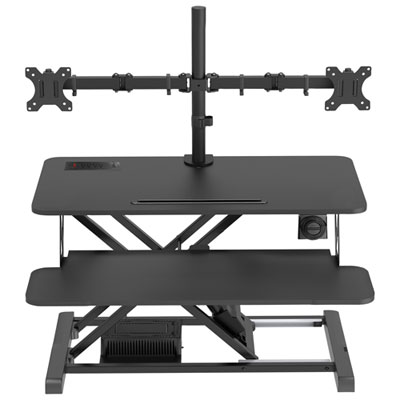
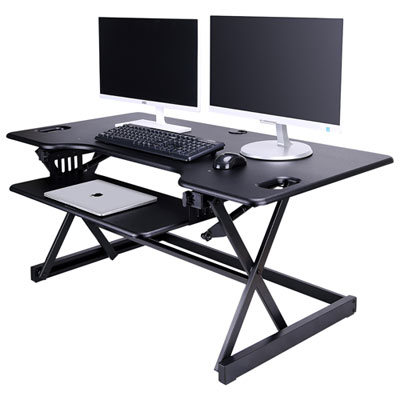
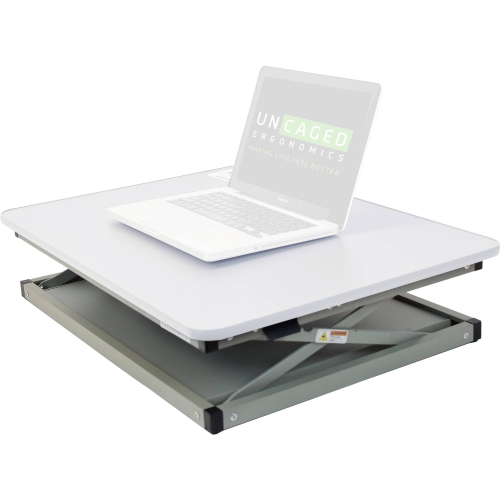
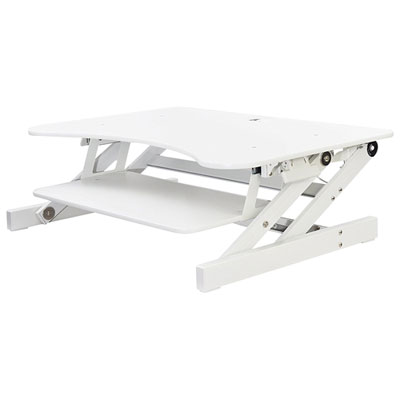
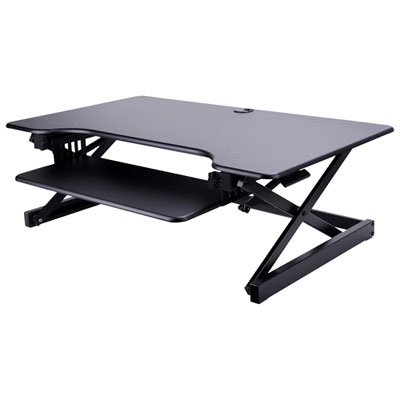
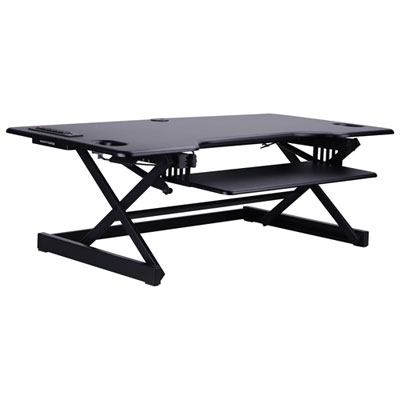
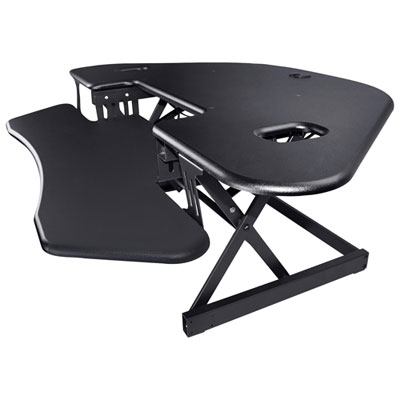
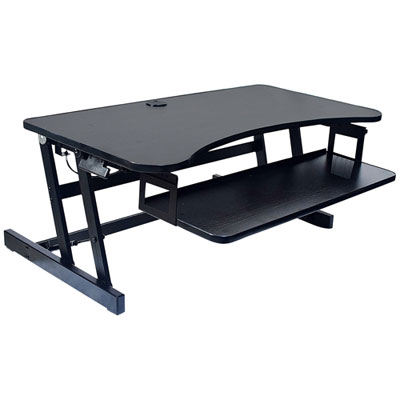
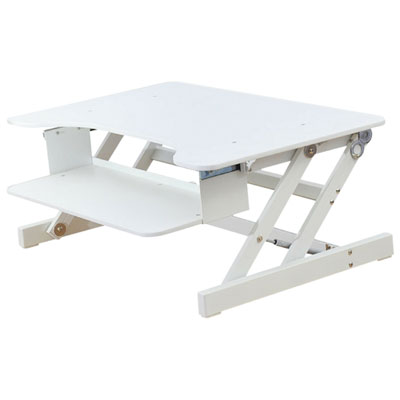
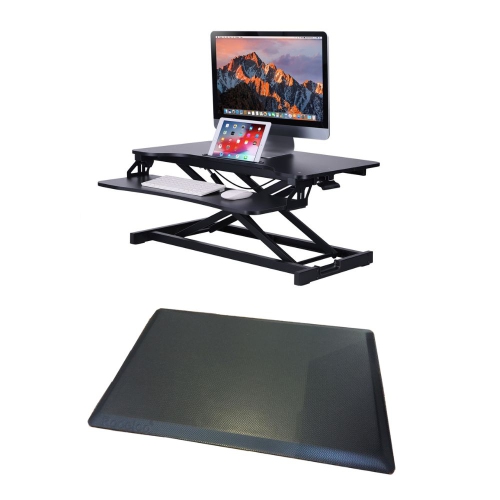
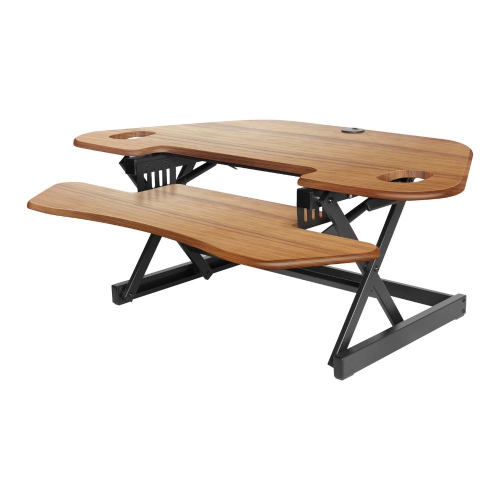
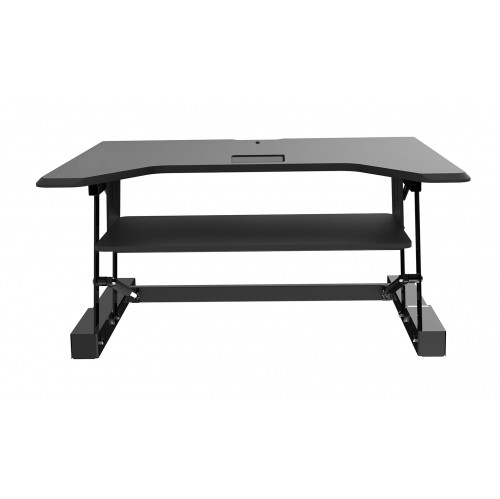
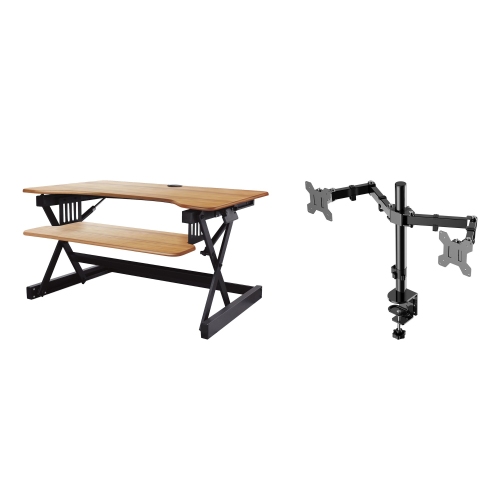
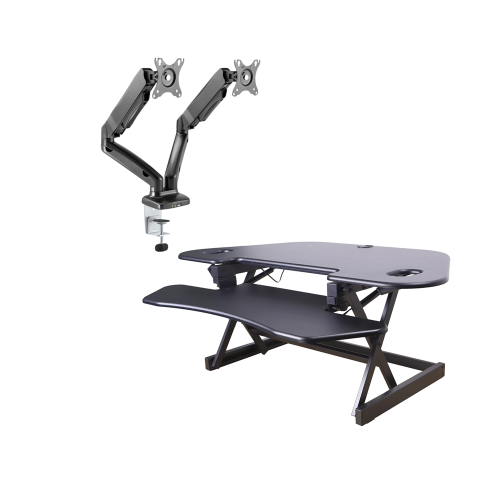
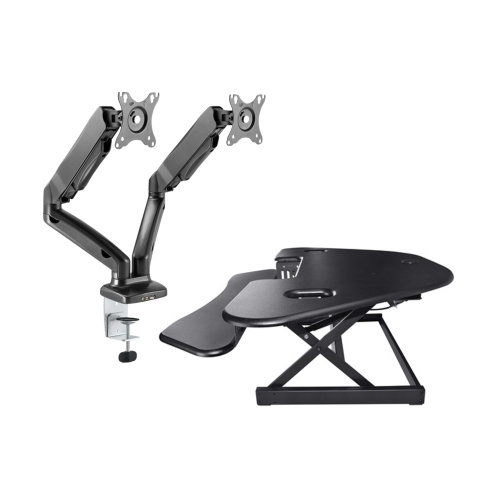
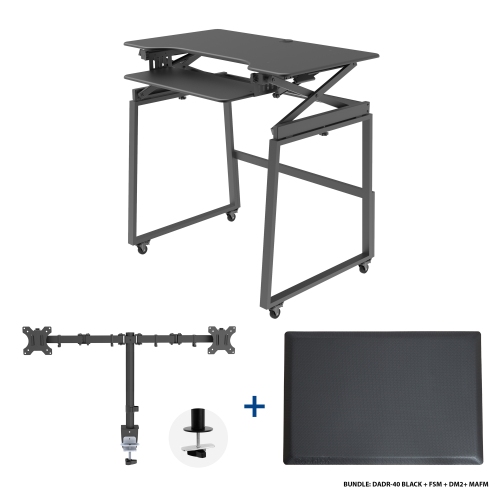
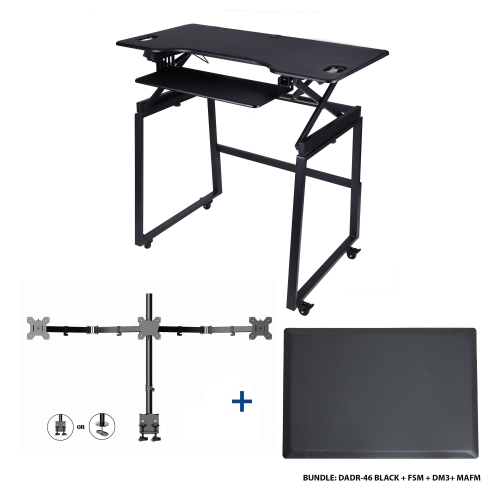
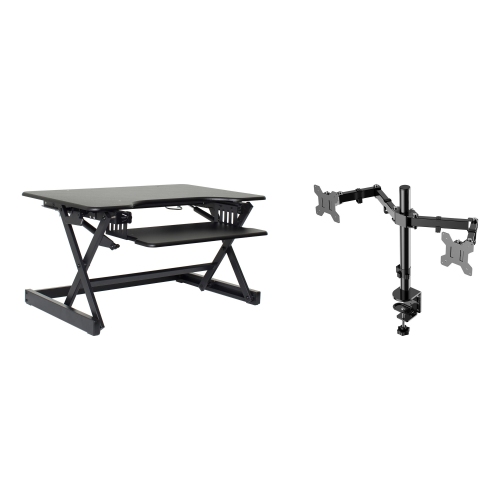
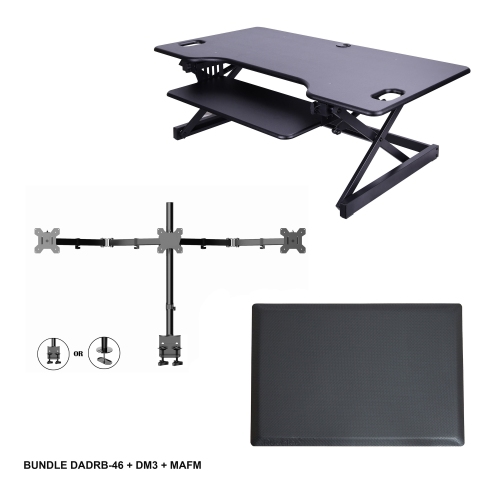
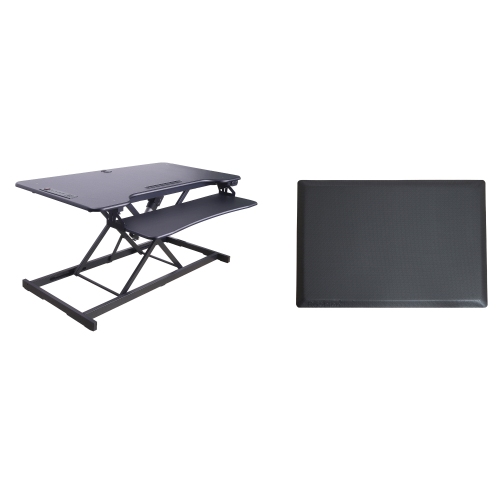
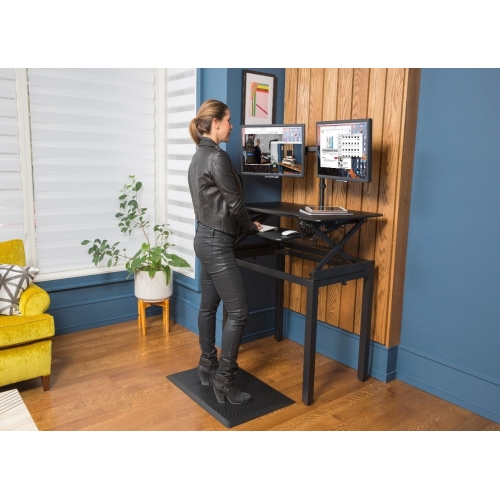
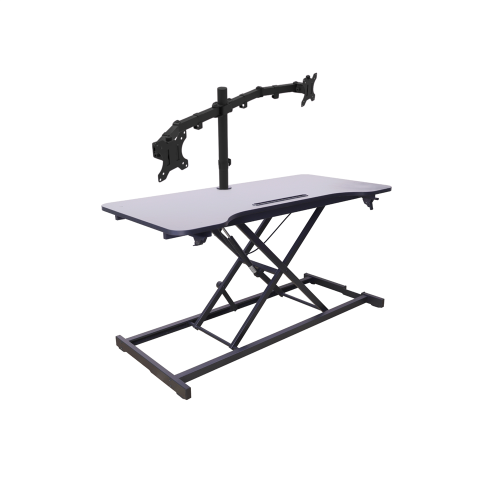
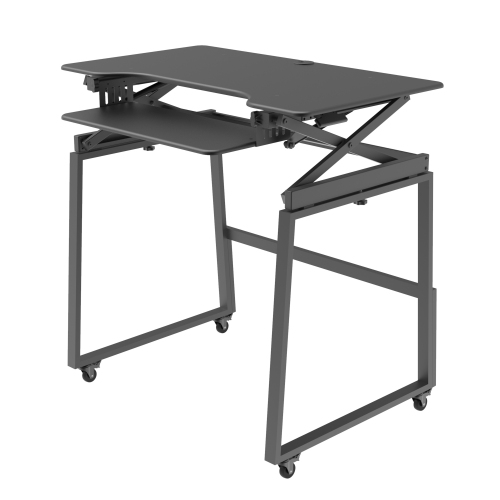
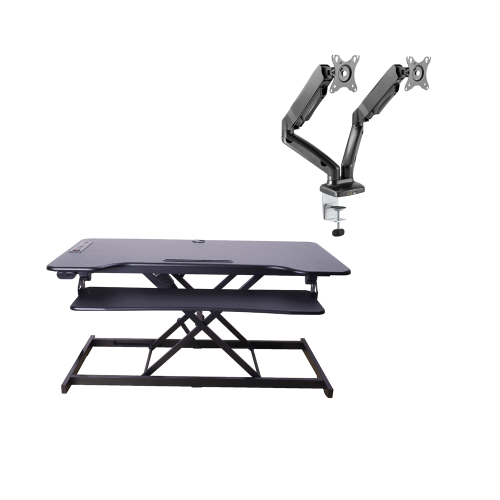
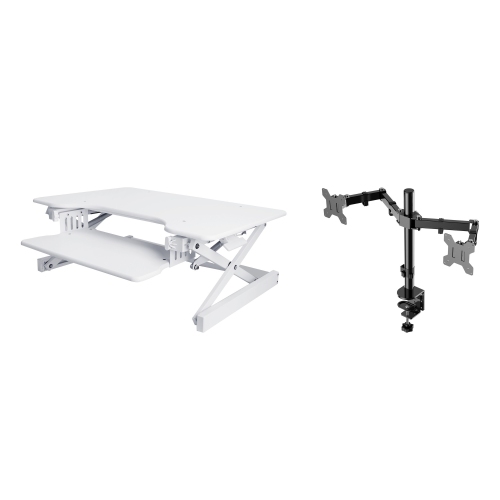
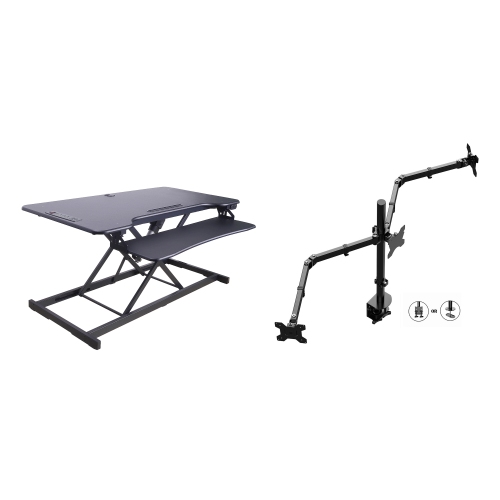
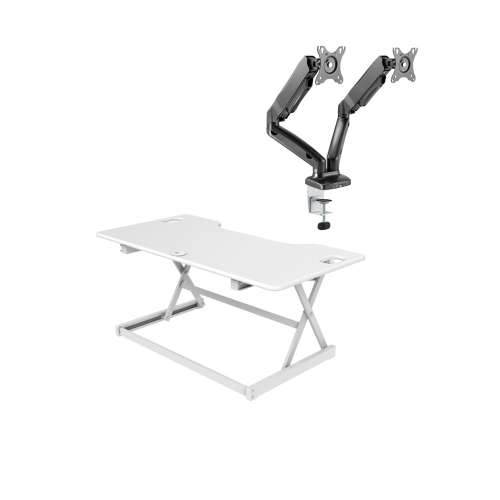
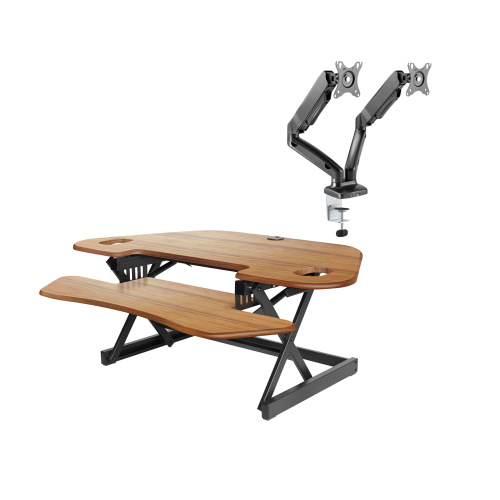
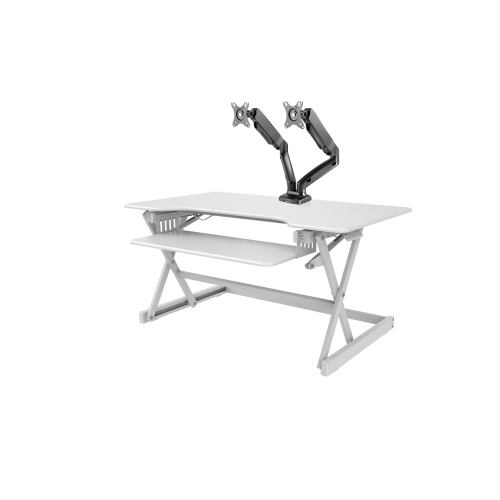
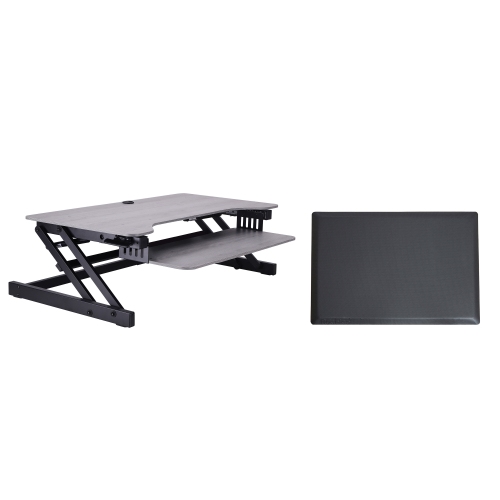
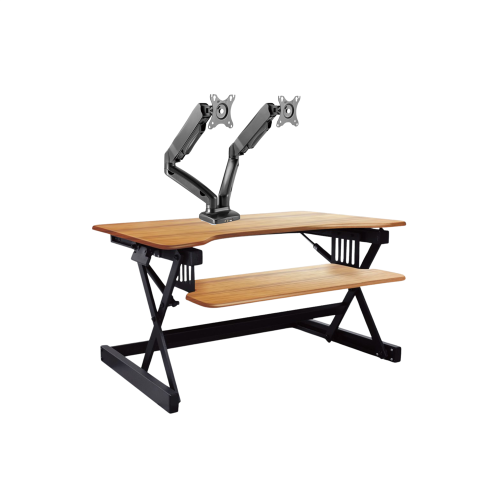
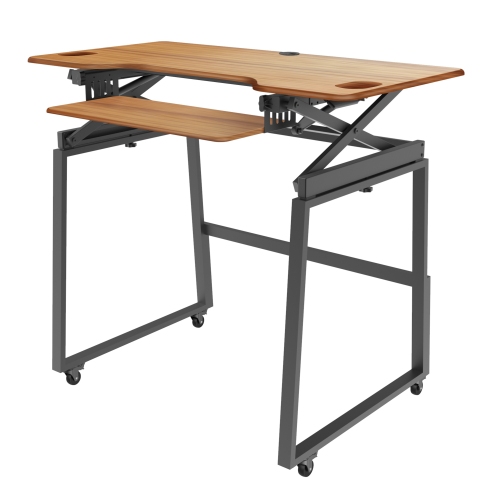
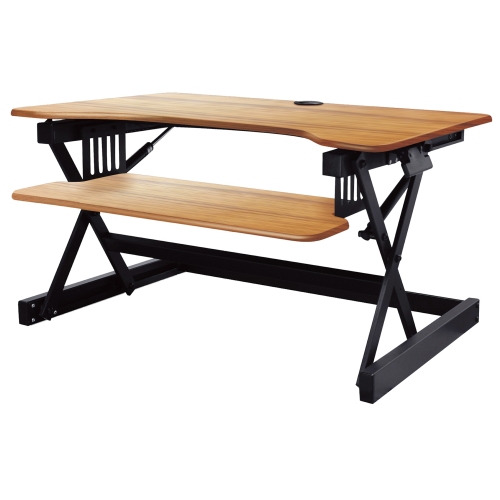
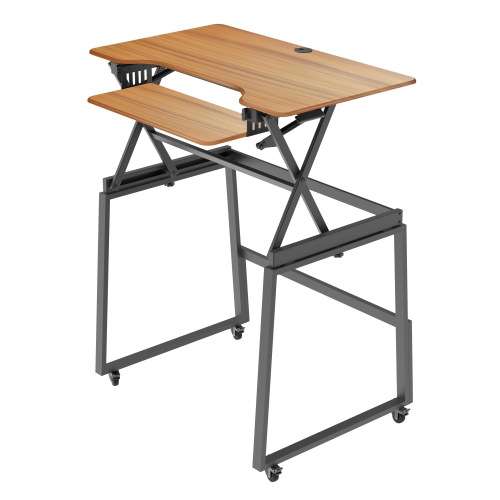
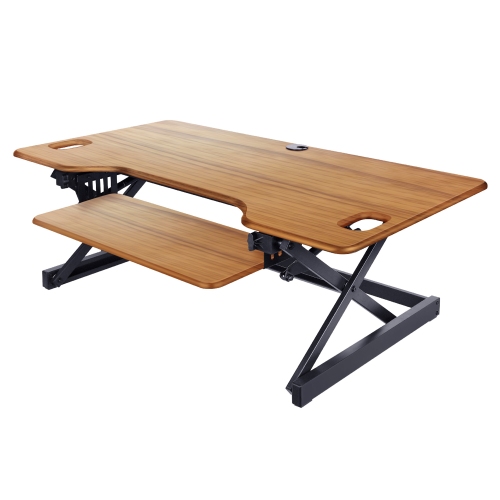
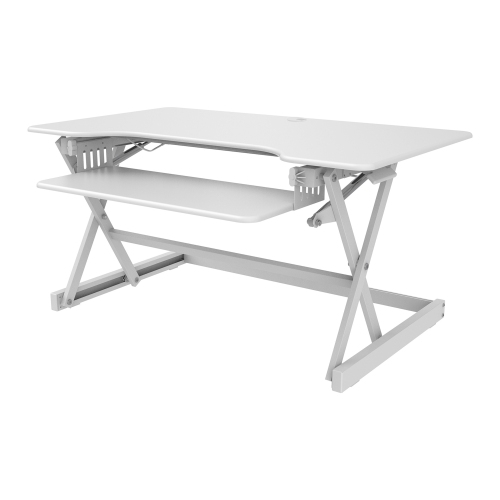
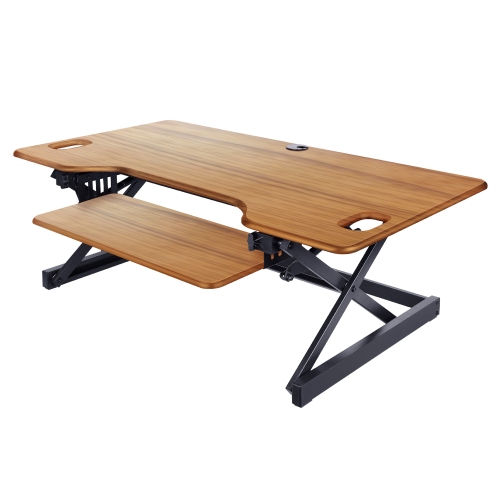
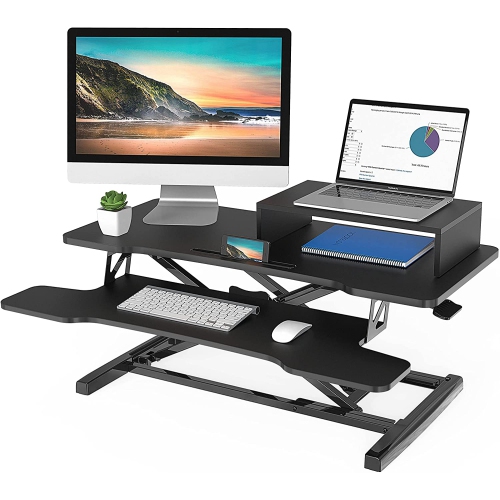
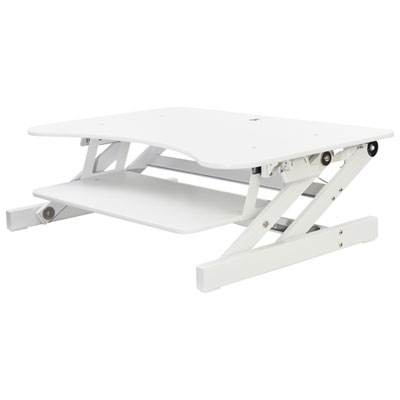
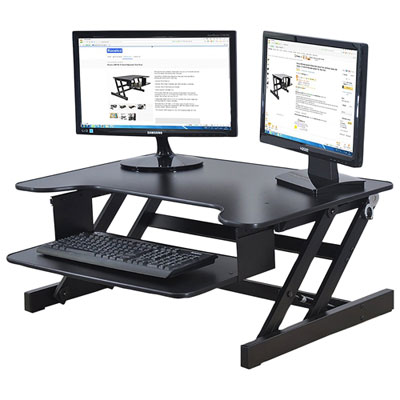
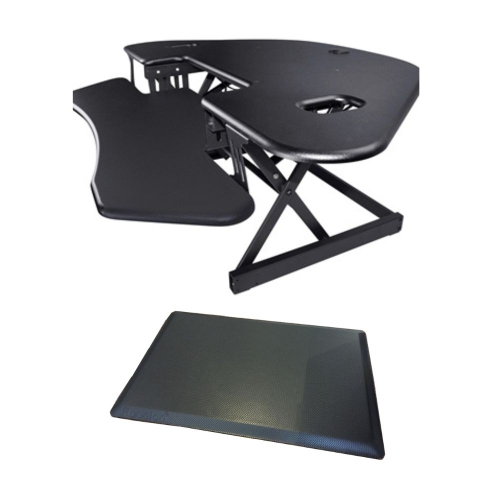
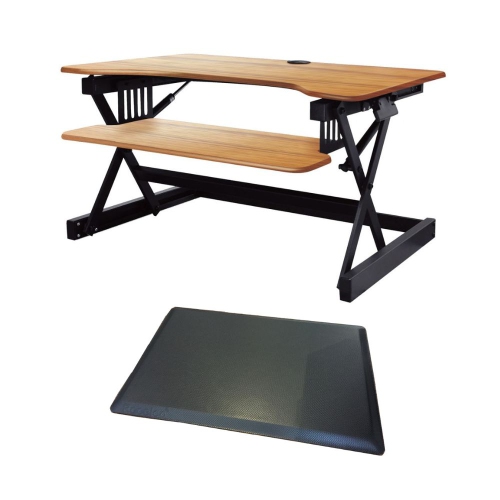
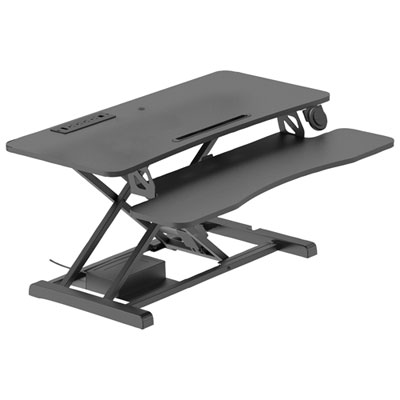
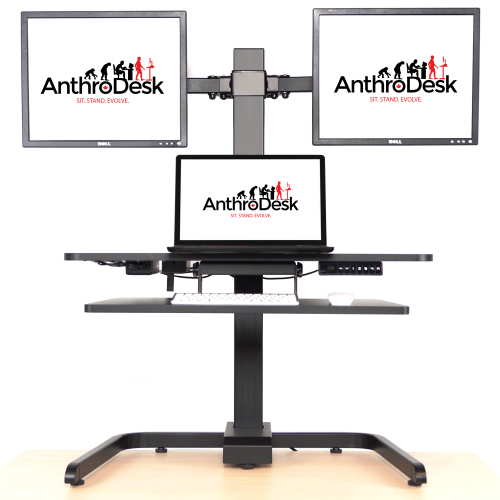
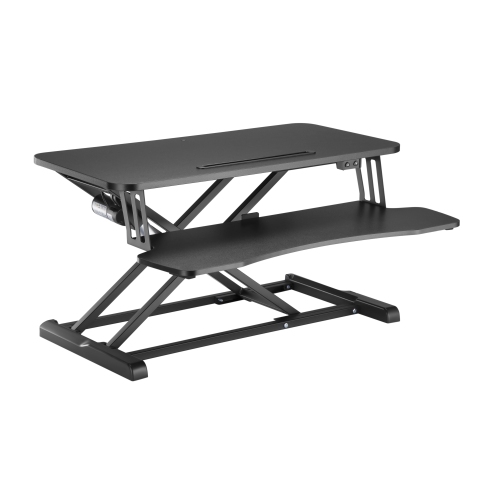
Electric sit-stand desk converters add powered height adjustment to an existing desk, creating a workspace that can move between seated and standing positions without replacing the furniture underneath. A motor raises and lowers the work surface through a control button or panel, keeping the adjustment within easy reach while working. For someone who spends part of the day writing reports, joining video calls, or reviewing spreadsheets, that movement can make it easier to vary position between tasks. The converter sits on top of a suitable desktop, with space for a laptop, monitor, keyboard, or other equipment according to its layout and weight capacity. Some designs use a single platform, while others have a separate keyboard tray below the main surface. A two-level arrangement can help place the keyboard closer to elbow height while keeping the screen higher, although the right fit depends on the user’s height, monitor setup, and starting desk height. Electric operation is especially useful when the platform carries equipment that would be awkward to lift manually, but the motor’s rated capacity still needs to accommodate everything that moves with it. These converters suit home offices, study spaces, and shared workstations where keeping an existing desk is a priority. They can also make sense on a spacious work surface used for both computer tasks and paperwork, provided enough room remains for writing and everyday essentials. A converter does not necessarily replace the full desktop: it creates a raised working area within it. That distinction matters when a desk also holds reference books, a printer, or a charging station. Within the broader range of Adjustable Desk Converters, electric designs offer powered movement rather than relying solely on a hand-operated lifting mechanism. The practical appeal is a workstation that changes height while retaining the desk, storage, and room layout already in place.
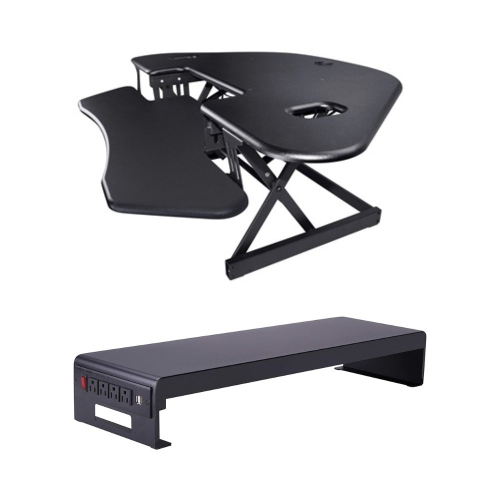
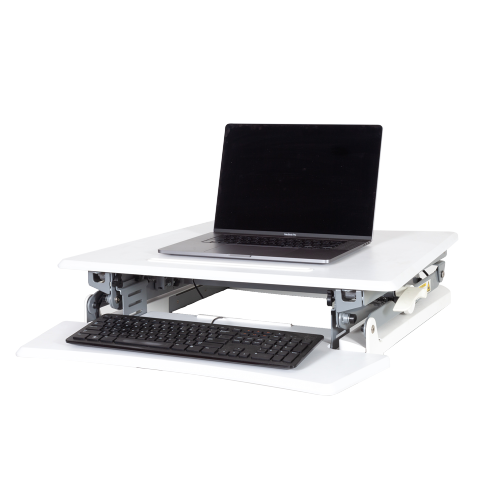
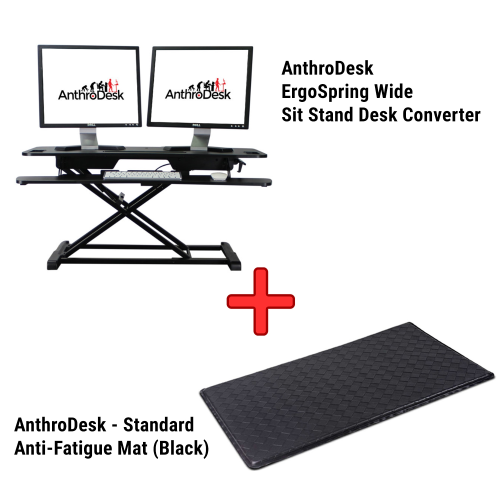
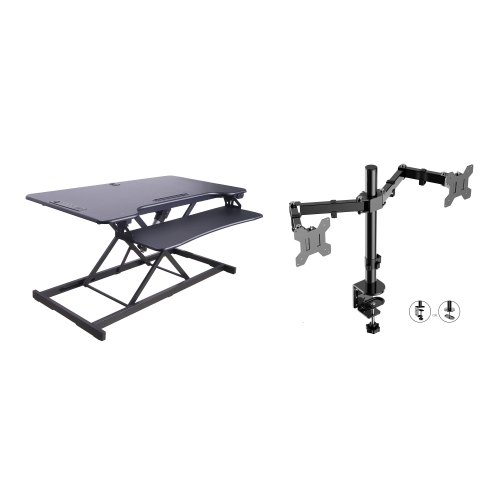
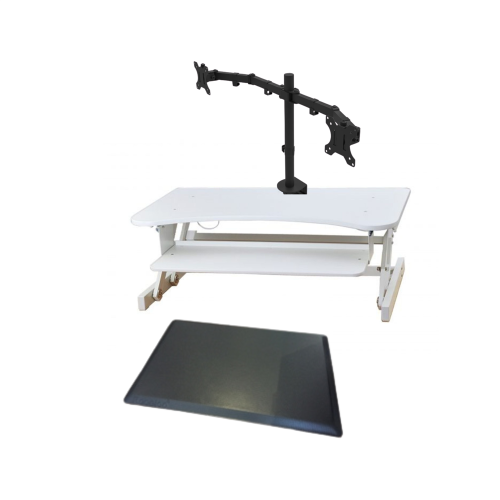
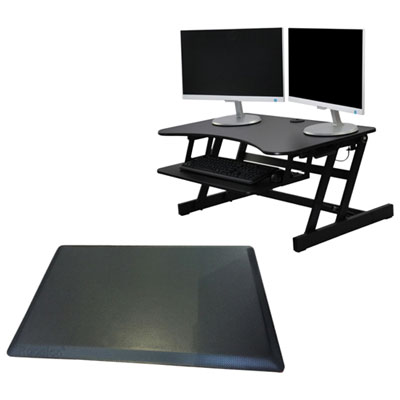
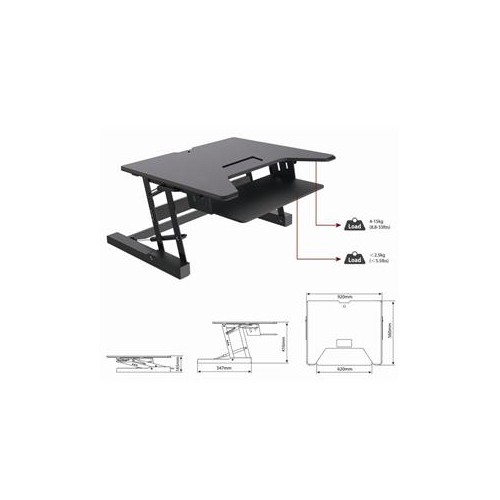
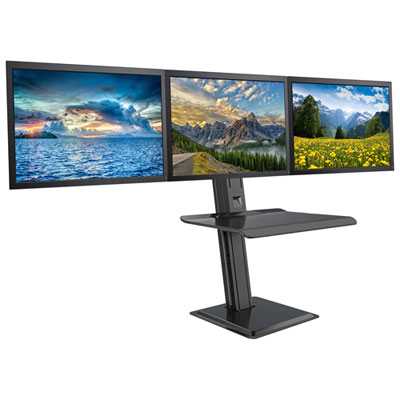
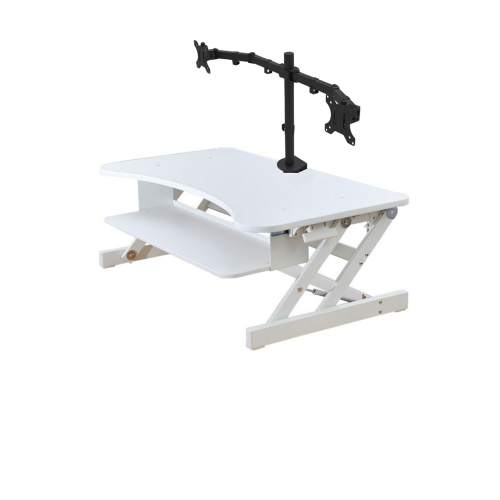
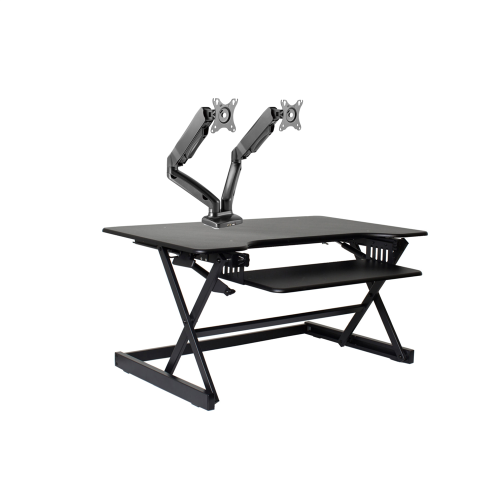
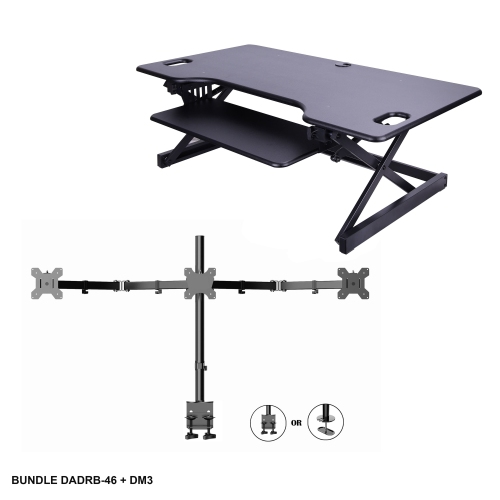
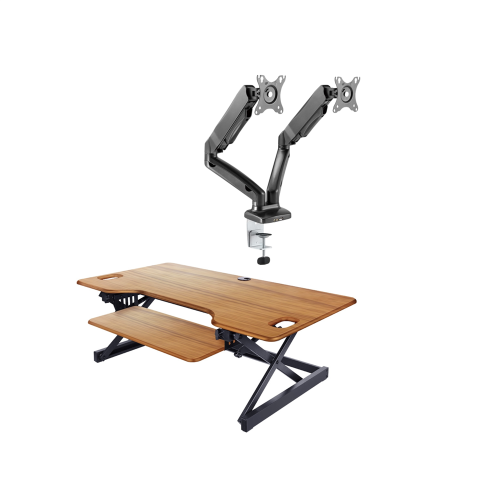
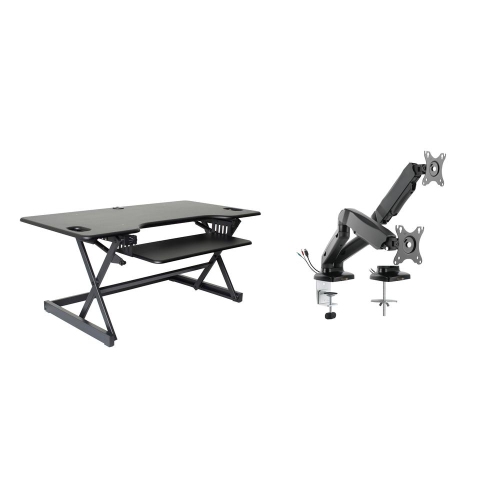
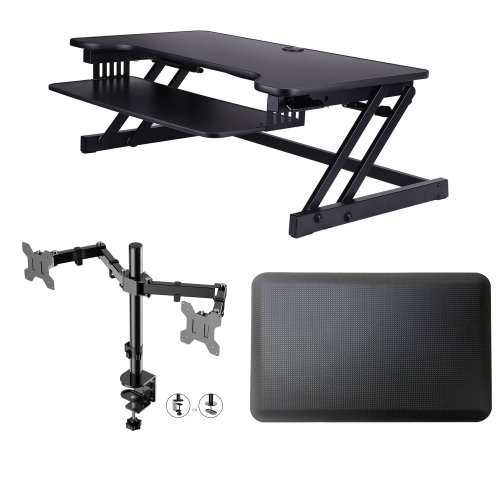
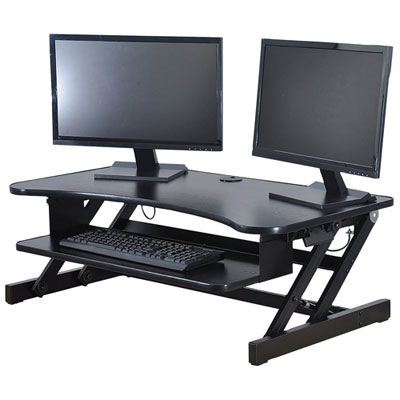
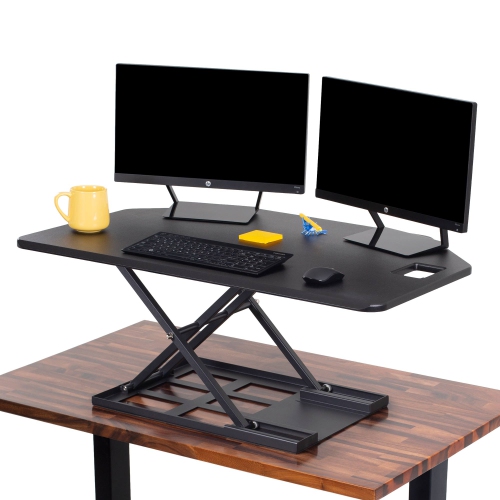
Fit involves more than whether the converter’s platform is wide enough for a screen. Its base needs a flat, stable surface with adequate support, and its footprint should sit within the usable desktop area specified for installation. A narrow writing desk, a rounded front edge, or a raised shelf at the back can affect how comfortably the converter fits. The lowest keyboard position is particularly important because adding a converter can raise the typing surface even when the mechanism is fully lowered. Someone whose existing desk already feels high may need to consider chair adjustment and foot support alongside the converter’s dimensions. At standing height, the usable range should allow relaxed shoulders and comfortably bent elbows rather than forcing hands upward. Screen placement also matters: a laptop resting directly on the platform may put its display lower than desired, while an external keyboard and a compatible monitor support can offer more flexibility. For a dual-monitor arrangement, surface width, screen weight, and the position of the monitor stands all influence the layout. Any monitor arm attachment needs to be compatible with the platform’s thickness, mounting area, and stated limits; a thin edge or obstructed underside may not accept a clamp. Lift paths vary, too. Some mechanisms travel mostly upward, while others move forward as they rise, changing the distance between the user and the desk. Clearance beneath shelves and around nearby furniture needs to accommodate that full movement. Materials affect both appearance and everyday use. Steel supports can provide a rigid base, while desktop platforms may use engineered wood, laminates, or other finished surfaces. Rounded edges, a comfortable keyboard-tray depth, and a finish that is easy to wipe clean can matter as much in daily use as colour. A compact base leaves more of the original desk accessible, but it still needs to provide stable support for the intended load.
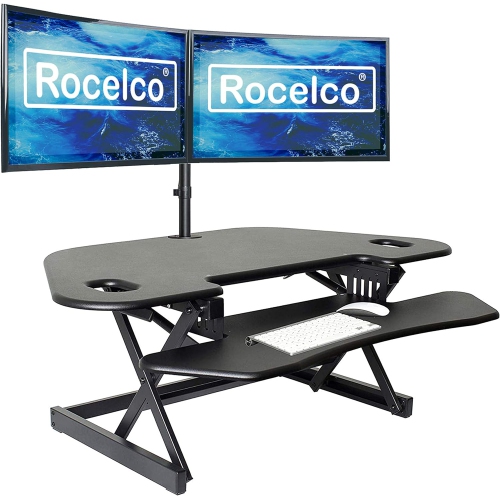
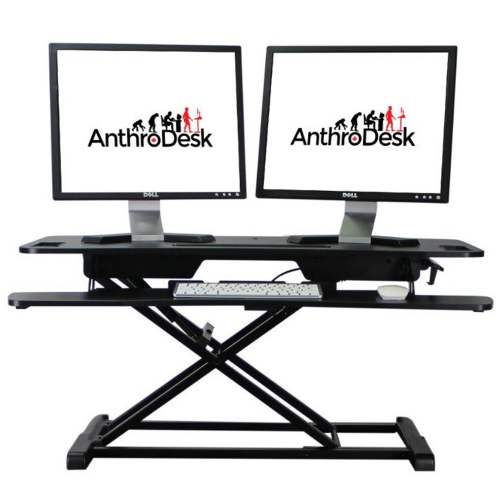
The details of the lifting system shape how an electric sit-stand desk converter feels over time. Smooth travel, responsive controls, and a stable platform help keep the transition between positions manageable, especially when a screen and keyboard move together. Motor sound may be a consideration in a shared room or during calls, although powered movement should not be assumed to be silent. Where included, programmable height settings can make repeated adjustments more convenient for a regular user or for people sharing a workstation. Control placement also deserves attention: a button tucked behind a keyboard or close to a chair arm can be awkward to reach. Cable routing is another everyday consideration. Monitor leads, laptop charging cables, and the converter’s power cord need enough slack for the full lifting range without hanging where they can catch on moving parts. A nearby outlet makes placement simpler, while securing cables away from the mechanism helps keep the desk organized. Any stated load limit applies to the combined moving load, including screens, stands, accessories, and equipment on the keyboard tray where applicable. Leaning heavily on a raised platform adds force it may not be intended to support. For regular care, the manufacturer’s cleaning directions take priority; a soft cloth and a suitable gentle cleaner are often appropriate for finished surfaces, without letting moisture reach controls or electrical components. Disconnecting power before cleaning around the mechanism and checking accessible fasteners as directed can support reliable use. Durability depends on the construction, the lifting system, and how closely everyday use stays within the stated limits. A well-matched converter should also leave room for ordinary habits: setting down a notebook, moving a mouse freely, and bringing a chair close enough when seated. Standing is best treated as another working position rather than a requirement to remain upright all day. For a remote worker, student, or someone updating a long-used office, the most useful electric converter is one that fits their equipment, body dimensions, and available work surface without making routine tasks more complicated.

FAQ

Some products may be subject to Environmental Handling Fees (EHF) depending on your province. Learn more about EHFs.