Silver Diamond Bands for Women
Elevate your jewelry collection with Silver Diamond Bands for Women, designed to add a touch of elegance to any look. These stunning bands offer a timeless appeal, making them perfect for daily wear or special occasions. Whether you're searching for a meaningful gift or a sparkling addition to your own accessory lineup, discover a wide selection of Silver Diamond Bands for Women that blend classic style with modern sophistication. Explore options to find the ideal piece that complements your unique taste and personal style.
Sort
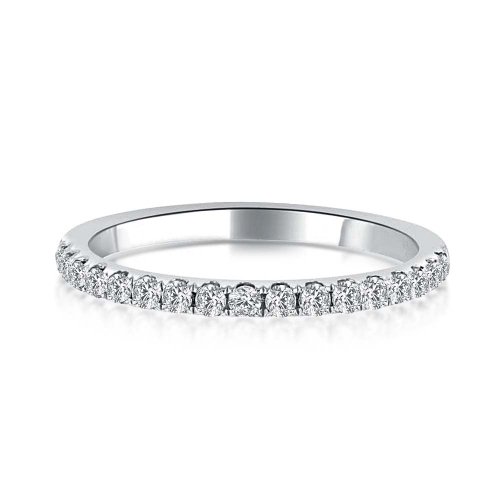
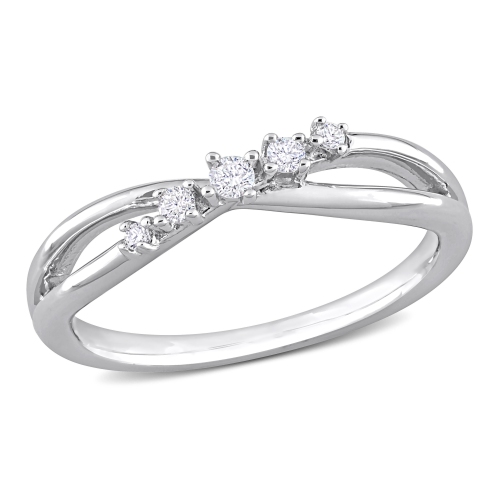
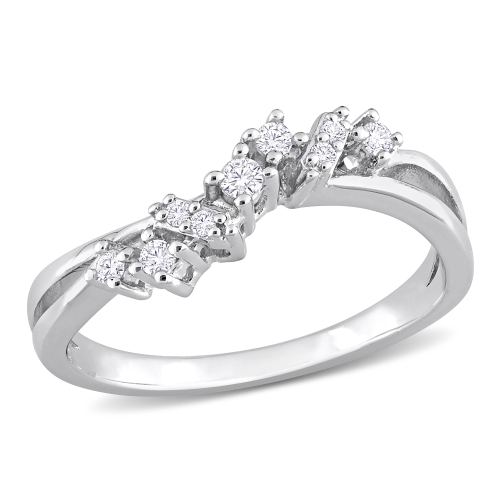
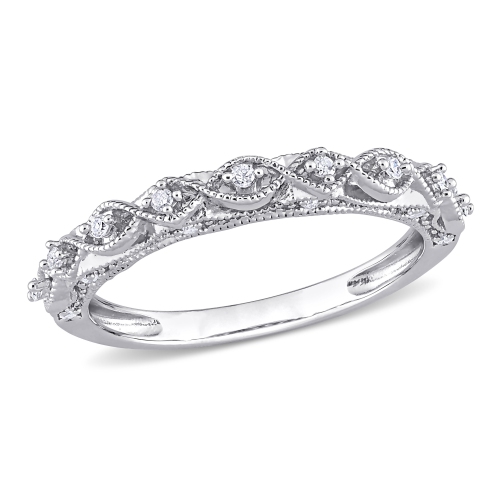
How silver finishes and diamond settings shape your band
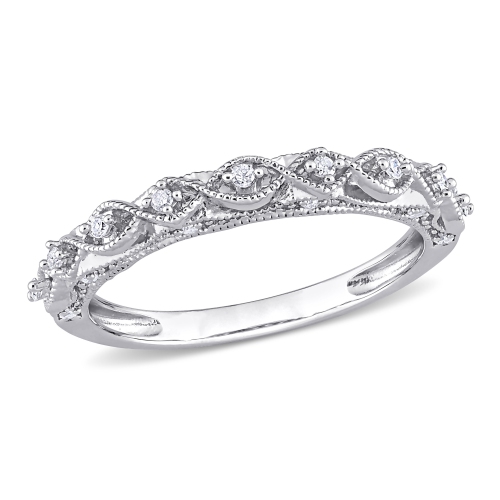
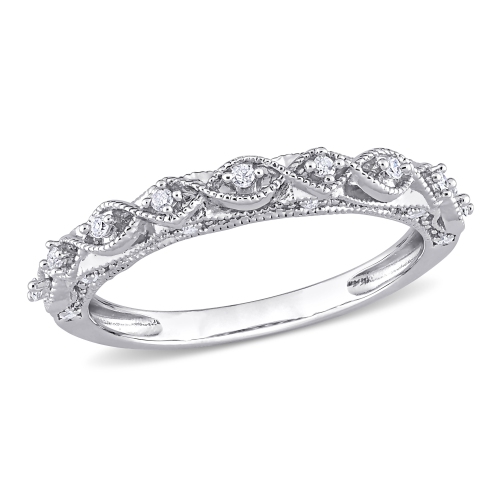
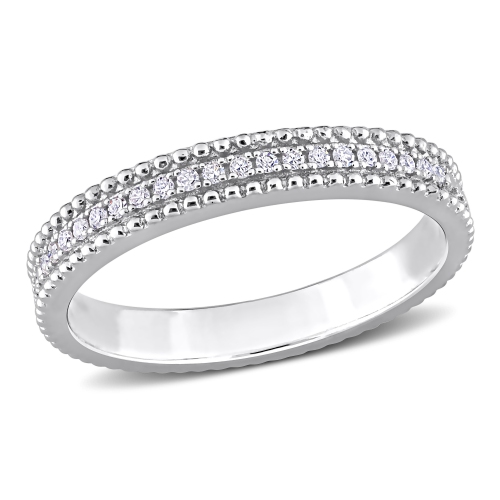
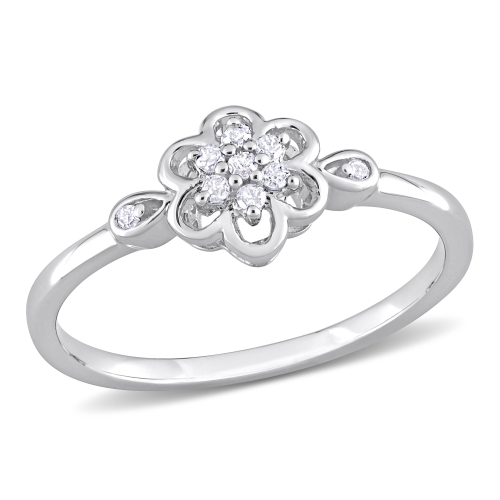
Silver diamond bands for women pair the cool lustre of silver with the light-catching detail of diamonds, creating rings that can mark a commitment, celebrate a milestone, or add a little sparkle to everyday outfits. Their appeal lies in the contrast between polished metal and small flashes of light: a narrow band can look understated on its own, while several rows of diamonds create a broader, more noticeable presence. Sterling silver is a common material for this type of jewellery and contains 92.5% silver, with other metals added to improve its strength. A 925 stamp indicates sterling silver content, although the material description remains important for distinguishing solid sterling silver from silver-plated metal or another metal with a silver-coloured finish. Some sterling silver rings have rhodium plating, which provides a bright surface and helps limit tarnishing while the coating remains intact. That finish can wear with use and may eventually need professional attention. Design details make just as much difference as the metal itself. A straight band has a clean outline that can sit neatly beside another ring, while a curved or contoured band may leave space for an engagement ring’s centre setting. Crossover shapes introduce movement, and textured edges can give a simple silhouette more definition. Closely set small diamonds create a fine ribbon of sparkle; separated stones let more of the silver show through. A high-polish finish reflects light sharply, whereas a brushed finish gives the metal a softer appearance without changing the diamonds’ natural character. For someone who prefers minimal jewellery, a slim band can be enough to finish an outfit without dominating the hand. A wider design may suit someone who likes a single statement ring rather than a layered arrangement. Neither approach is limited to bridal jewellery: silver diamond bands can be worn as wedding rings, anniversary rings, right-hand rings, or personal keepsakes chosen simply for their design.
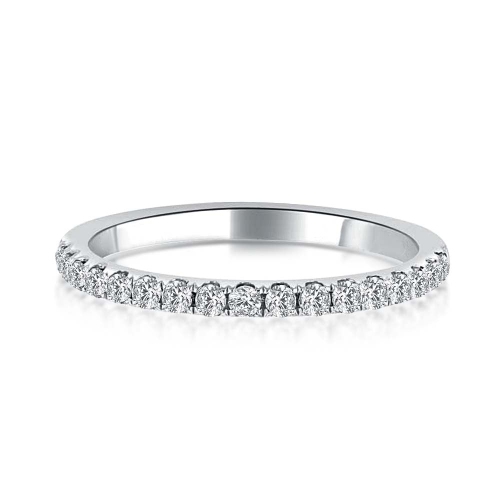
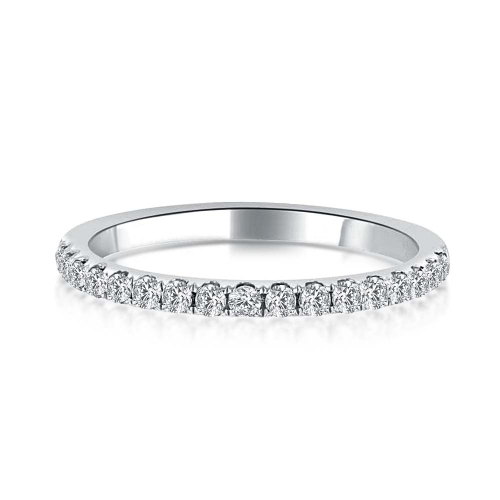
The placement and setting of the diamonds influence both appearance and how a band feels during daily wear. Prong settings hold stones with small metal claws and leave portions of each diamond exposed, while channel settings position diamonds between parallel edges of metal. Bezel settings surround individual stones with a metal rim, creating a defined outline that can feel smooth against neighbouring fingers. Pavé designs use many small diamonds held closely together for a surface with concentrated sparkle. A low-profile band may be more comfortable for someone who types frequently or prefers jewellery that is less likely to catch on clothing, though the smoothness of the setting matters as much as its height. Half-eternity styles place diamonds across part of the ring, leaving a plain section beneath the finger; full-eternity styles continue the stones around the circumference. For a continuous circle of sparkle, Silver Diamond Eternity Bands offer a related style often associated with lasting commitment. Diamonds along the underside of a ring can receive more contact when gripping handles or carrying bags, so the intended use deserves attention alongside the visual effect. Diamond descriptions also help clarify what gives a band its character. Total carat weight refers to the combined weight of all its diamonds, not the weight of each individual stone. The number, size, cut, colour, and clarity of those diamonds all contribute to the finished appearance. Natural and laboratory-grown diamonds share the same essential chemical composition and crystal structure, but their origin differs and should be clearly identified. Diamond simulants, such as cubic zirconia, are different materials. When a ring is intended as a gift, the recipient’s existing jewellery can offer useful clues: someone who wears delicate chains and small studs may enjoy a fine band, while someone drawn to bold cuffs might prefer more width. An anniversary, graduation, or personal achievement can give the ring meaning without requiring a bridal design or matching set.
Fit and care help determine whether a silver diamond band remains comfortable and attractive over time. Ring size alone does not tell the whole story: a broad band often feels snugger than a narrow one in the same size because it covers more of the finger. A rounded inner surface may feel different from a flatter profile, and several stacked rings can fit more tightly together than any one ring worn alone. A comfortable band generally passes over the knuckle with slight resistance and rests securely without pinching. Measuring the intended finger, rather than relying on the size of a ring worn on another hand, gives a more useful starting point. Resizing depends on the construction, diamond placement, plating, and amount of adjustment required; sterling silver is not inherently impossible to resize. Full-eternity bands and intricate settings can be difficult or impractical to alter, making an accurate fit especially important. When pairing a diamond band with an engagement ring, the two settings should sit without pressing against exposed stones or rubbing delicate metalwork. Sterling silver can develop scratches, dents, and tarnish through ordinary use, while diamond settings can loosen after repeated knocks. Diamonds resist scratching exceptionally well, but they can still chip if struck at a vulnerable edge. Removing a band before weight training, household cleaning, or tasks involving abrasive materials helps protect both the silver and its stones. For routine cleaning, a little mild dish soap in lukewarm water and a very soft brush can lift residue from accessible areas, provided the ring’s care instructions allow it. Thorough rinsing and gentle drying with a soft, lint-free cloth help keep the finish clear. Silver dips, abrasive pastes, and ultrasonic cleaners are not suitable for every finish or setting, and rhodium-plated surfaces require particular care to avoid wearing away the coating. Separate storage in a soft pouch or lined compartment reduces contact with other jewellery. A snagging prong, a stone that moves, or a sudden change in how the band sits is a reason to stop wearing it until a jeweller checks the setting. These small habits help preserve the details that make a silver diamond band distinctive, from its smooth inner edge to the sparkle across its surface.
The placement and setting of the diamonds influence both appearance and how a band feels during daily wear. Prong settings hold stones with small metal claws and leave portions of each diamond exposed, while channel settings position diamonds between parallel edges of metal. Bezel settings surround individual stones with a metal rim, creating a defined outline that can feel smooth against neighbouring fingers. Pavé designs use many small diamonds held closely together for a surface with concentrated sparkle. A low-profile band may be more comfortable for someone who types frequently or prefers jewellery that is less likely to catch on clothing, though the smoothness of the setting matters as much as its height. Half-eternity styles place diamonds across part of the ring, leaving a plain section beneath the finger; full-eternity styles continue the stones around the circumference. For a continuous circle of sparkle, Silver Diamond Eternity Bands offer a related style often associated with lasting commitment. Diamonds along the underside of a ring can receive more contact when gripping handles or carrying bags, so the intended use deserves attention alongside the visual effect. Diamond descriptions also help clarify what gives a band its character. Total carat weight refers to the combined weight of all its diamonds, not the weight of each individual stone. The number, size, cut, colour, and clarity of those diamonds all contribute to the finished appearance. Natural and laboratory-grown diamonds share the same essential chemical composition and crystal structure, but their origin differs and should be clearly identified. Diamond simulants, such as cubic zirconia, are different materials. When a ring is intended as a gift, the recipient’s existing jewellery can offer useful clues: someone who wears delicate chains and small studs may enjoy a fine band, while someone drawn to bold cuffs might prefer more width. An anniversary, graduation, or personal achievement can give the ring meaning without requiring a bridal design or matching set.
Fit and care help determine whether a silver diamond band remains comfortable and attractive over time. Ring size alone does not tell the whole story: a broad band often feels snugger than a narrow one in the same size because it covers more of the finger. A rounded inner surface may feel different from a flatter profile, and several stacked rings can fit more tightly together than any one ring worn alone. A comfortable band generally passes over the knuckle with slight resistance and rests securely without pinching. Measuring the intended finger, rather than relying on the size of a ring worn on another hand, gives a more useful starting point. Resizing depends on the construction, diamond placement, plating, and amount of adjustment required; sterling silver is not inherently impossible to resize. Full-eternity bands and intricate settings can be difficult or impractical to alter, making an accurate fit especially important. When pairing a diamond band with an engagement ring, the two settings should sit without pressing against exposed stones or rubbing delicate metalwork. Sterling silver can develop scratches, dents, and tarnish through ordinary use, while diamond settings can loosen after repeated knocks. Diamonds resist scratching exceptionally well, but they can still chip if struck at a vulnerable edge. Removing a band before weight training, household cleaning, or tasks involving abrasive materials helps protect both the silver and its stones. For routine cleaning, a little mild dish soap in lukewarm water and a very soft brush can lift residue from accessible areas, provided the ring’s care instructions allow it. Thorough rinsing and gentle drying with a soft, lint-free cloth help keep the finish clear. Silver dips, abrasive pastes, and ultrasonic cleaners are not suitable for every finish or setting, and rhodium-plated surfaces require particular care to avoid wearing away the coating. Separate storage in a soft pouch or lined compartment reduces contact with other jewellery. A snagging prong, a stone that moves, or a sudden change in how the band sits is a reason to stop wearing it until a jeweller checks the setting. These small habits help preserve the details that make a silver diamond band distinctive, from its smooth inner edge to the sparkle across its surface.
Top selling and popular products
-
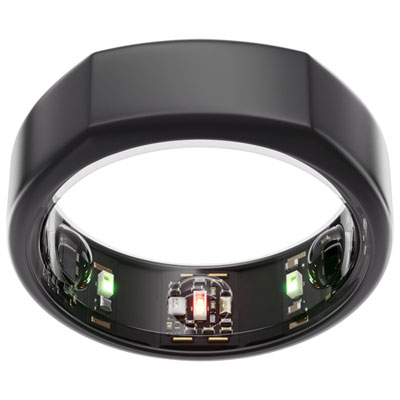 Your price for this item is $369.99
 -
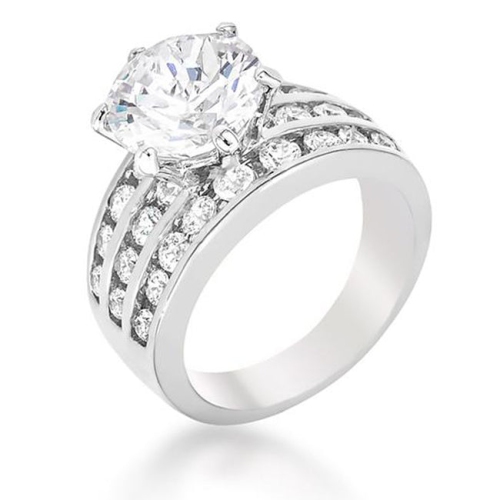 Your price for this item is $151.05
 -
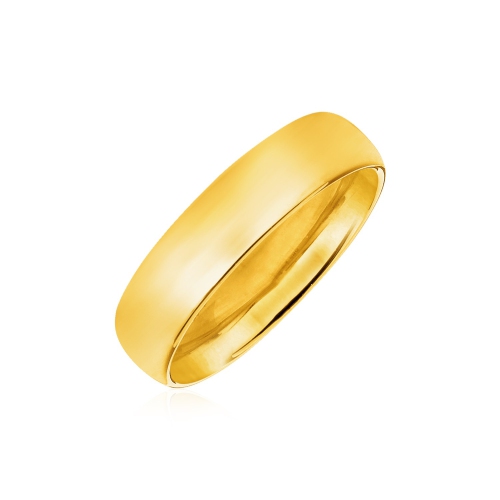 Your price for this item is $486.49
 -
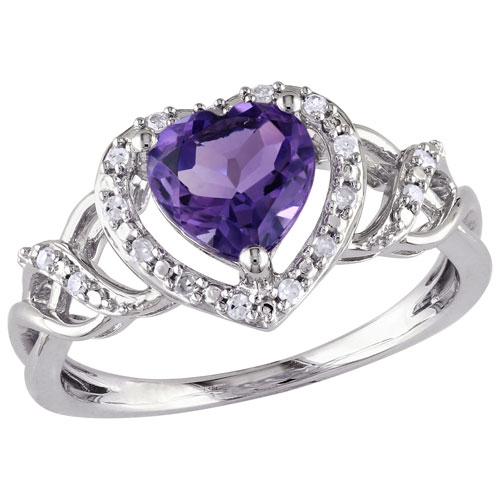 Your price for this item is $95
 -
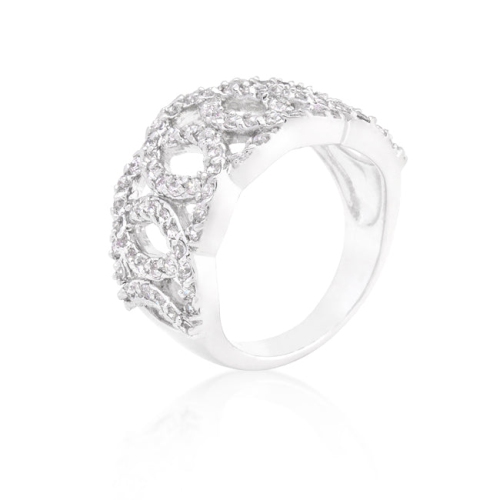 Your price for this item is $145.95
 -
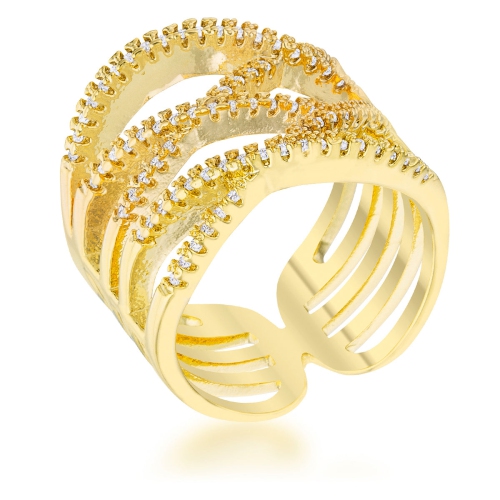 Your price for this item is $158.7
 -
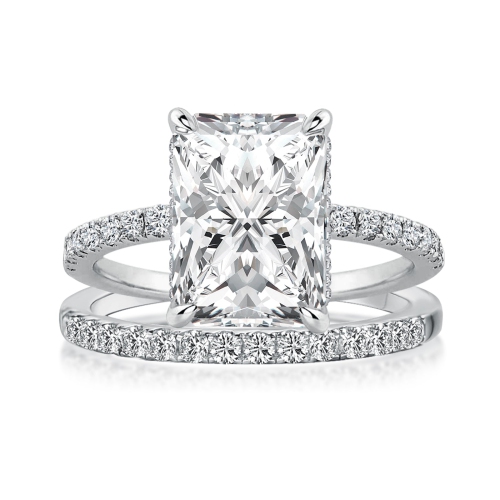 Your price for this item is $801.45
 -
 Your price for this item is $139.99
Discover more categories related to Silver Diamond Bands for Women
Top Collections:
Pokemon Centers, Budget 4K TVs, Kindle Devices, Canon G7X Cameras, Apple iPhones 16, iPhone 15 Apple, Laptops for Business Work, Flip Phones, Xiaomi Phones, Refurbished Apple Laptops
Some products may be subject to Environmental Handling Fees
(EHF) depending on your province.
Learn more about EHFs.