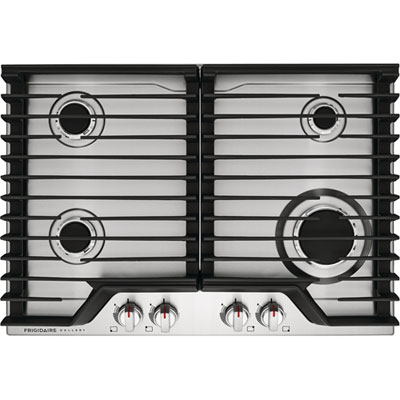
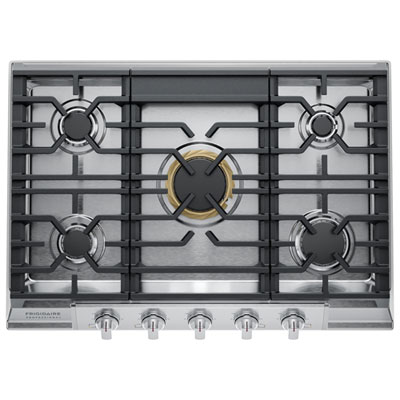
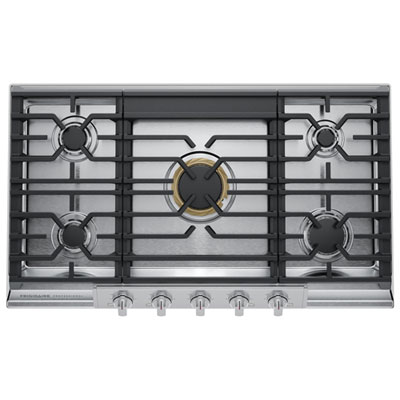
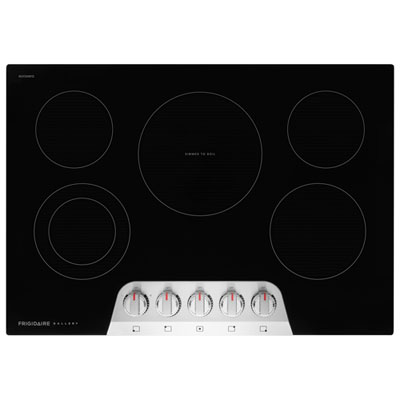
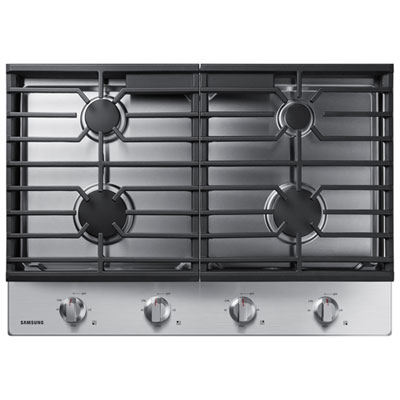
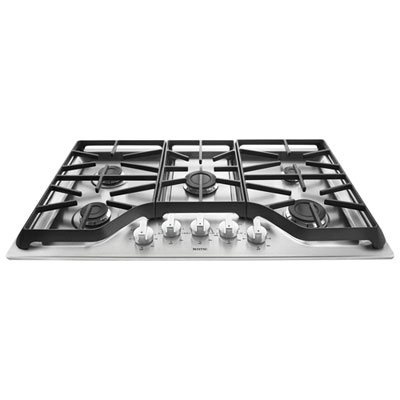
Frigidaire Gas Cooktops

Shop Frigidaire gas cooktops for a kitchen upgrade or a replacement for your current cooking surface. As you compare models, check cooktop dimensions, countertop cutout requirements, burner layouts, and control placement to find an option that fits your space and cooking routine.
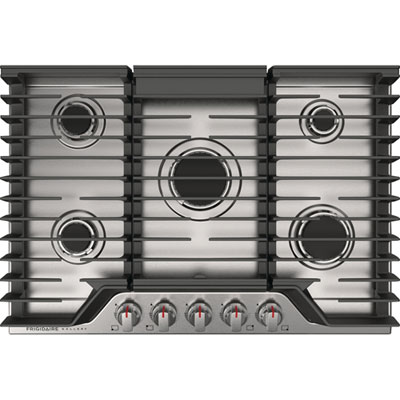
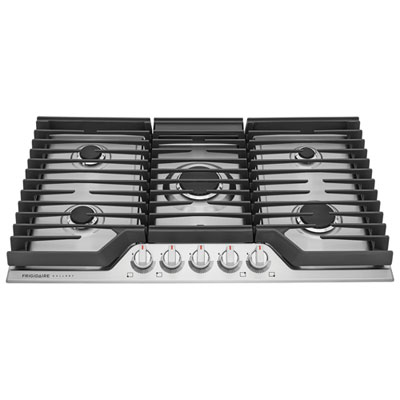
Read More

Responsive flame control from a boil to a simmer

Gas cooktops bring responsive flame control to everyday cooking, with common 30-inch and 36-inch formats suited to different kitchen layouts. Four- and five-burner configurations provide space for anything from a small saucepan of gravy to a stockpot of pasta, while a mix of burner outputs helps accommodate different tasks. Some designs include a higher-output burner rated up to 18,000 BTUs for demanding jobs such as bringing a large pot of water to a boil. Lower-output burners are useful for gentler cooking, including keeping soup at a quiet simmer or warming a sauce without an aggressive bubble. Heat output is only part of the experience, though. The spacing between burners affects how comfortably a frying pan, a Dutch oven, and a saucepan can share the cooking surface. A wider layout can offer more room between cookware handles, while a compact arrangement may suit a kitchen where counter space needs to accommodate food preparation as well as cooking. Gas flames respond quickly when the control is adjusted, giving the cook a visible reference when moving from a vigorous boil to a steady simmer. That direct feedback appeals to experienced home cooks, busy households preparing several dishes at once, and anyone who prefers adjusting heat by sight. Stainless steel surfaces offer a familiar finish that coordinates with many kitchen appliances, while porcelain-enamel surfaces, where used, have their own care requirements. Cast-iron grates provide a substantial cooking platform, and continuous grate designs can make repositioning cookware across the surface easier. Stability depends on both the grate design and the cookware: a small butter warmer needs secure support just as much as a large, filled pot. Flat-bottomed pans of an appropriate diameter help keep cooking predictable, and flames should remain beneath the base rather than extend up the sides. Together, burner placement, grate coverage, and control layout shape how naturally a cooktop fits into daily meal preparation.

Fit involves more than the width stated in a cooktop’s name. A 30-inch or 36-inch designation describes a general size category, not a universal countertop opening, so the actual appliance dimensions and required cutout dimensions need to match the kitchen plan. This distinction matters when replacing an older built-in unit, since two cooktops with the same nominal width can have different opening requirements, corner details, or depth below the counter. Countertop material and thickness also influence installation, particularly around stone surfaces that may require specialized cutting or support. Space underneath the cooking surface must accommodate the appliance body, gas connection, regulator, and any other components identified in the installation documentation. A drawer or cabinet below cannot be assumed to fit without checking the required clearances. Overhead and side clearances are equally important, including the relationship between the cooktop, cabinetry, and range hood. Appropriate ventilation helps remove cooking odours, airborne grease, and combustion by-products; an open-looking kitchen layout does not replace the need for ventilation planned around the appliance. Gas type is another essential consideration. Natural gas and propane require the correct appliance configuration, and conversion should only be considered where the manufacturer permits it and specifies the necessary parts and procedure. Installation and any permitted conversion belong with a qualified professional working to applicable local requirements. Many gas cooktops also need an electrical connection for ignition, so the location and specifications of the receptacle matter even though gas supplies the cooking heat. Controls deserve attention as well: front-mounted and side-mounted knobs create different working arrangements, especially when reaching around larger pans. Clearly marked settings and controls that are comfortable to grip can make frequent adjustments less awkward. For a related selection, Samsung Gas Cooktops offers another point of comparison, with fit, gas compatibility, and installation requirements assessed separately for each design rather than assumed to be interchangeable.

Care and durability are closely connected on a gas cooking surface because spills can reach more than the visible countertop-level panel. A pot that boils over may leave residue around burner caps, beneath grates, and near ignition components, making accessible, removable parts useful for routine cleaning. Once the burners are off and the surface has cooled, a soft cloth and a cleaner approved for the finish can address everyday splashes without unnecessarily wearing the surface. Stainless steel generally benefits from wiping with the grain and avoiding abrasive pads, while enamel needs cleaning methods that protect its finish from chips and scratches. Grates may have separate washing instructions, and dishwasher suitability should never be assumed. Burner caps and other removable components need to be returned to their correct positions and dried thoroughly before use; incorrect seating or lingering moisture can interfere with ignition and flame quality. Openings around the burners also need to remain clear according to the manufacturer’s care directions. Heavy cookware deserves careful handling, particularly when being moved near the edges of enamel surfaces or neighbouring counters. These practical details matter in a household where the cooktop handles breakfast eggs, lunchtime leftovers, and a full evening meal on the same day. For frequent batch cooking, generous spacing and a useful mix of burner strengths may matter more than an extra burner that rarely gets used. For smaller households, a straightforward layout with easy-to-reach controls can be a better everyday match than a crowded cooking surface. People who regularly cook with wide sauté pans may value usable room around a powerful burner, while those making custards or delicate sauces may place greater importance on dependable low-heat performance. A gas cooktop is best considered as a long-term kitchen fixture rather than an isolated appliance purchase: its materials, service access, cleaning demands, and installation all contribute to how well it supports the way meals are actually prepared.
Read More

FAQ

Some products may be subject to Environmental Handling Fees (EHF) depending on your province. Learn more about EHFs.