Pill Dispensers
Pill dispensers offer a convenient and organized way to manage medication schedules, ensuring you never miss a dose. Ideal for individuals with busy lifestyles or those managing multiple prescriptions, these handy devices simplify the process of keeping track of daily medications. With various designs available, from simple daily organizers to advanced electronic systems, pill dispensers cater to a wide range of needs and preferences. Explore our selection to find the perfect solution that fits seamlessly into your routine, promoting health and peace of mind.
Sort
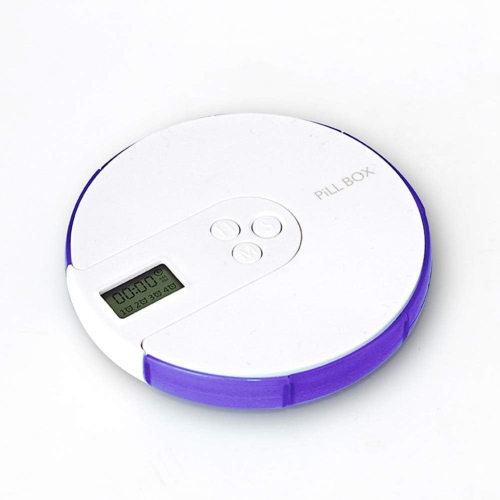
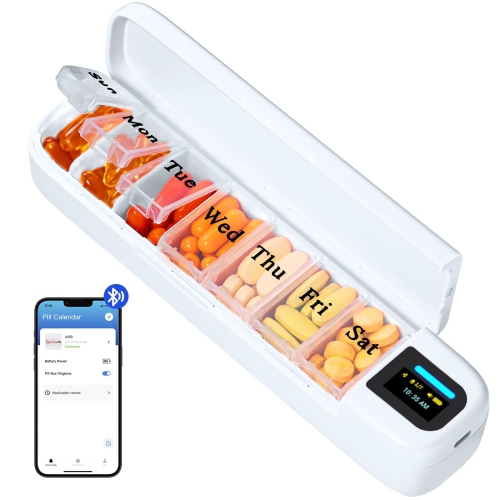
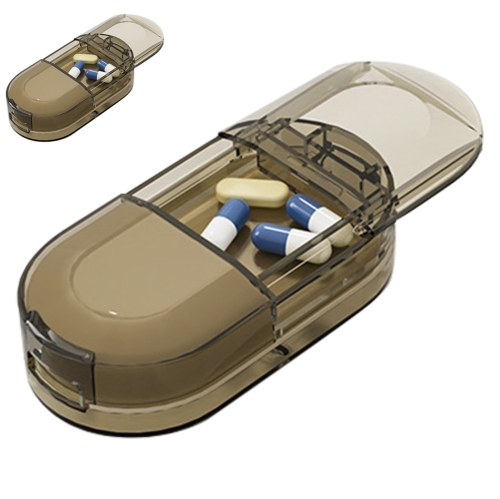
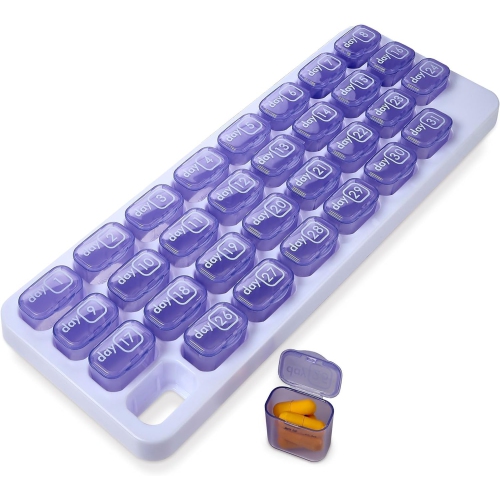
From weekly sorting to reminders for scheduled doses
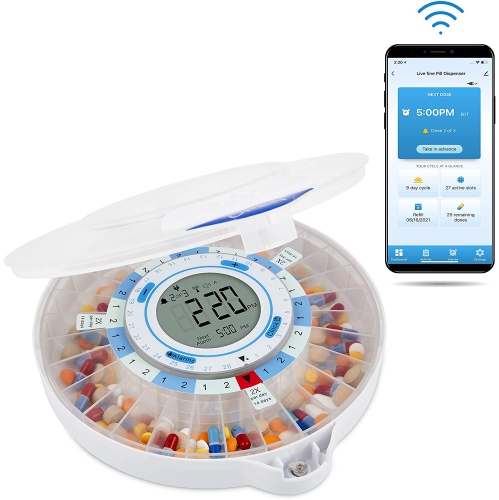
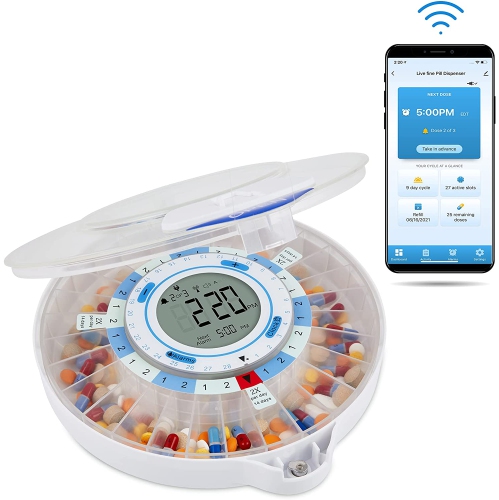
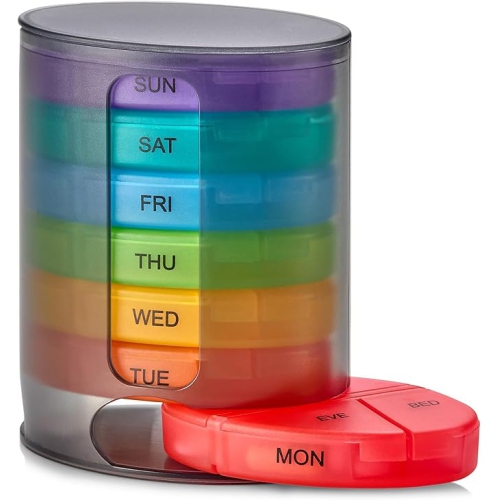
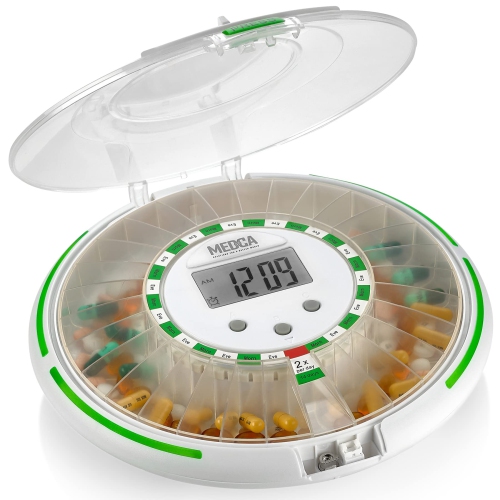
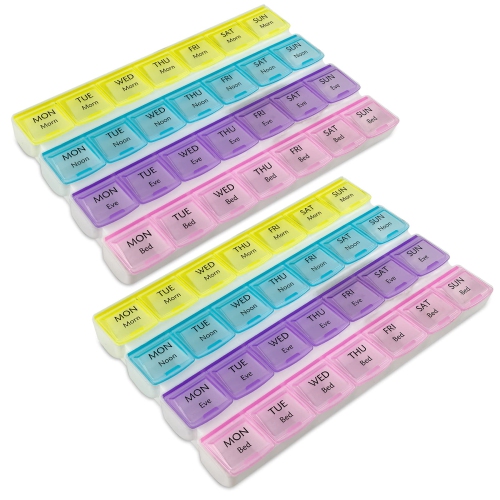
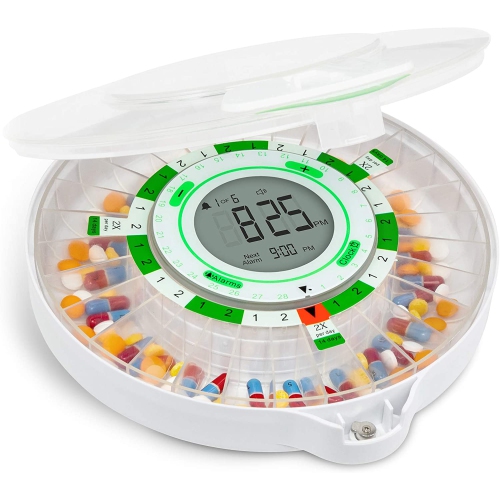
Pill dispensers organize medication into scheduled doses, helping make a daily routine easier to follow and check. The category ranges from manual containers with separate compartments to automatic pill dispensers that present a dose at a programmed time. A basic weekly organizer keeps tablets and capsules sorted by day, while layouts with morning, midday, evening, and bedtime sections accommodate more frequent schedules. Automatic models may use a rotating tray, a timed opening, or another dispensing mechanism to make the intended compartment accessible. Smart pill dispensers add connected functions, which can include app notifications, dose-access records, and alerts for a designated caregiver. These differences matter in everyday use: someone taking a single daily tablet may value a compact container with clear lettering, while someone managing several scheduled doses may need more compartments and reminders. For straightforward sorting without electronic features, Pill Boxes offer a related way to keep daily portions separate. A dispenser can support organization, but it does not determine the correct medication, dose, or timing, and it cannot confirm that a released dose was swallowed. Prescription directions and advice from a pharmacist remain the basis of the routine. Not every medicine is suitable for transfer out of its original packaging, particularly when it requires specific protection from moisture or light. Checking suitability before filling a dispenser helps preserve the storage conditions each medicine needs. Intended use also extends beyond the number of tablets: a unit used independently at home has different practical requirements from one filled by a family member or carried between home and work. The most useful design fits the existing routine rather than adding unnecessary steps. Clearly marked compartments, an understandable schedule, and a consistent place for the dispenser can make it easier to distinguish a prepared dose from one that has already been accessed. For households managing more than one person's medication, separate, clearly identified organizers help keep each routine distinct.
Capacity, construction, and accessibility shape how comfortably a pill dispenser fits into daily life. The number of compartments indicates how many separate doses it can hold, not necessarily how many days it will cover. A tray with multiple sections may accommodate a longer period for once-daily use but need refilling sooner when medication is scheduled several times a day. Compartment dimensions matter just as much as the total count. Several small tablets occupy space differently from large capsules, and an overfilled section can make a lid difficult to close or interfere with a dispensing mechanism. Smooth plastic compartments are common because they are lightweight and easy to wipe, while outer housings, hinges, catches, and removable trays determine how well a unit stands up to repeated handling. Clear lids can make contents visible at a glance; opaque compartments may offer more privacy, though neither feature alone establishes that a medicine's storage requirements are met. For someone with stiff fingers or limited grip strength, a broad opening tab or a dose cup that lifts out easily may be more practical than a small, tight catch. Large day labels, high-contrast markings, and a readable display can help users distinguish sections without relying on colour alone. A stable base is useful when a person needs to operate the dispenser with one hand. Portability introduces different considerations, including secure closures, overall weight, and whether removable daily sections stay closed inside a bag. A slim organizer may suit a brief outing, while a larger countertop dispenser may be better suited to a fixed routine. Care should follow the manufacturer's directions, especially for electronic units that cannot be immersed in water. Where washing is permitted, compartments need to be completely dry before refilling. Checking for cracked lids, loose hinges, worn labels, and residue helps identify when cleaning or replacement is needed. Medicines should remain identifiable through their original labelled packaging or an accurate medication list, particularly when someone else helps prepare the dispenser.
Reminders and access controls can add structure, but their usefulness depends on the person using them and the support around them. An audible alarm may suit someone who wants a clear prompt while moving around the home, whereas a flashing indicator can provide an additional cue for someone who does not reliably hear a beep. Adjustable volume, alarm duration, and an easy-to-understand acknowledgement button all affect daily operation. For a person who finds multiple menus confusing, a simple local alarm may be more manageable than an app-based system. Connected dispensers may use Wi-Fi or Bluetooth, with functions that vary by device and app. Some can notify a designated contact when a dose has not been accessed within a set period; others primarily provide reminders to the user. An access record shows an interaction with the dispenser, not proof that medication was taken correctly. Connectivity requirements, phone compatibility, notification permissions, and any dependence on an internet connection are therefore important distinctions. Power arrangements also matter: battery indicators, backup power, and retained schedule settings can affect what happens after batteries run low or household power is interrupted. Locking lids and timed access may limit access to compartments, but they should not be assumed to prevent every dosing error or provide child-resistant storage unless specifically verified for that purpose. Medication still needs to be kept securely away from children, pets, and anyone for whom it was not prescribed. Older adults, people with reduced dexterity, adults balancing medication with a busy workday, and family caregivers may each value different combinations of these features. If memory difficulties are involved, the dispenser needs to fit an appropriate level of supervision rather than replace it. A practical arrangement also makes refilling straightforward, with clear compartment markings and a schedule that can be checked against current prescription directions. When a dose is missed, instructions from a pharmacist or prescriber—not the dispenser itself—should determine what happens next. The value of a pill dispenser lies in making an established medication routine clearer, more organized, and easier to support.
Capacity, construction, and accessibility shape how comfortably a pill dispenser fits into daily life. The number of compartments indicates how many separate doses it can hold, not necessarily how many days it will cover. A tray with multiple sections may accommodate a longer period for once-daily use but need refilling sooner when medication is scheduled several times a day. Compartment dimensions matter just as much as the total count. Several small tablets occupy space differently from large capsules, and an overfilled section can make a lid difficult to close or interfere with a dispensing mechanism. Smooth plastic compartments are common because they are lightweight and easy to wipe, while outer housings, hinges, catches, and removable trays determine how well a unit stands up to repeated handling. Clear lids can make contents visible at a glance; opaque compartments may offer more privacy, though neither feature alone establishes that a medicine's storage requirements are met. For someone with stiff fingers or limited grip strength, a broad opening tab or a dose cup that lifts out easily may be more practical than a small, tight catch. Large day labels, high-contrast markings, and a readable display can help users distinguish sections without relying on colour alone. A stable base is useful when a person needs to operate the dispenser with one hand. Portability introduces different considerations, including secure closures, overall weight, and whether removable daily sections stay closed inside a bag. A slim organizer may suit a brief outing, while a larger countertop dispenser may be better suited to a fixed routine. Care should follow the manufacturer's directions, especially for electronic units that cannot be immersed in water. Where washing is permitted, compartments need to be completely dry before refilling. Checking for cracked lids, loose hinges, worn labels, and residue helps identify when cleaning or replacement is needed. Medicines should remain identifiable through their original labelled packaging or an accurate medication list, particularly when someone else helps prepare the dispenser.
Reminders and access controls can add structure, but their usefulness depends on the person using them and the support around them. An audible alarm may suit someone who wants a clear prompt while moving around the home, whereas a flashing indicator can provide an additional cue for someone who does not reliably hear a beep. Adjustable volume, alarm duration, and an easy-to-understand acknowledgement button all affect daily operation. For a person who finds multiple menus confusing, a simple local alarm may be more manageable than an app-based system. Connected dispensers may use Wi-Fi or Bluetooth, with functions that vary by device and app. Some can notify a designated contact when a dose has not been accessed within a set period; others primarily provide reminders to the user. An access record shows an interaction with the dispenser, not proof that medication was taken correctly. Connectivity requirements, phone compatibility, notification permissions, and any dependence on an internet connection are therefore important distinctions. Power arrangements also matter: battery indicators, backup power, and retained schedule settings can affect what happens after batteries run low or household power is interrupted. Locking lids and timed access may limit access to compartments, but they should not be assumed to prevent every dosing error or provide child-resistant storage unless specifically verified for that purpose. Medication still needs to be kept securely away from children, pets, and anyone for whom it was not prescribed. Older adults, people with reduced dexterity, adults balancing medication with a busy workday, and family caregivers may each value different combinations of these features. If memory difficulties are involved, the dispenser needs to fit an appropriate level of supervision rather than replace it. A practical arrangement also makes refilling straightforward, with clear compartment markings and a schedule that can be checked against current prescription directions. When a dose is missed, instructions from a pharmacist or prescriber—not the dispenser itself—should determine what happens next. The value of a pill dispenser lies in making an established medication routine clearer, more organized, and easier to support.
Top selling and popular products
-
 Your price for this item is $295
 -
 Your price for this item is $42.34
 -
 Your price for this item is $22.99
 -
 Your price for this item is $39.99
 -
 Your price for this item is $249.99
 -
 Your price for this item is $249.99
 -
 Your price for this item is $21.99
 -
 Your price for this item is $139.99
Discover more categories related to Pill Dispensers
Top Collections:
Pokemon Centers, Kindle Devices, Best Budget Office Chairs, Apple iPhones 16, Canon G7X Cameras, iPhone 15 Apple, Alarm Clock, Refurbished Apple Laptops, Flip Phones, Best Laptops for Writers
Some products may be subject to Environmental Handling Fees
(EHF) depending on your province.
Learn more about EHFs.