BBQ Spatulas
If you're looking to up your grilling game this summer, look no further than these BBQ spatulas. These versatile tools are an essential addition to almost any outdoor cooking arsenal, allowing you to flip burgers, turn steaks, and handle delicate fish with ease. Designed with durable materials and ergonomic handles, these BBQ spatulas provide the perfect combination of strength and comfort. Whether you're a seasoned grill master or just starting out, these spatulas are sure to become your go-to tool for achieving perfectly grilled dishes every time.
Sort
Why blade shape and balance matter at the grill
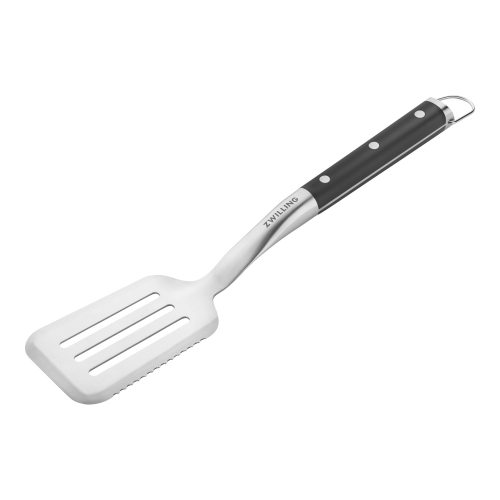
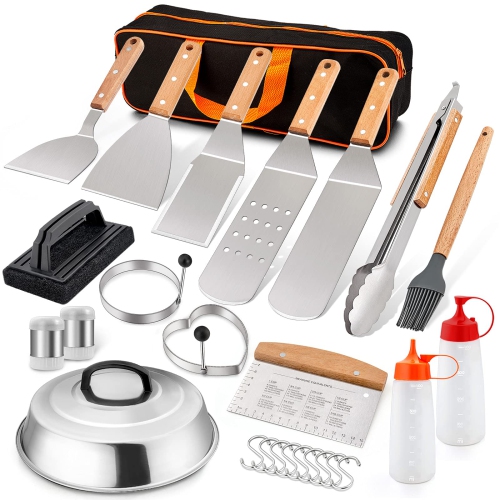
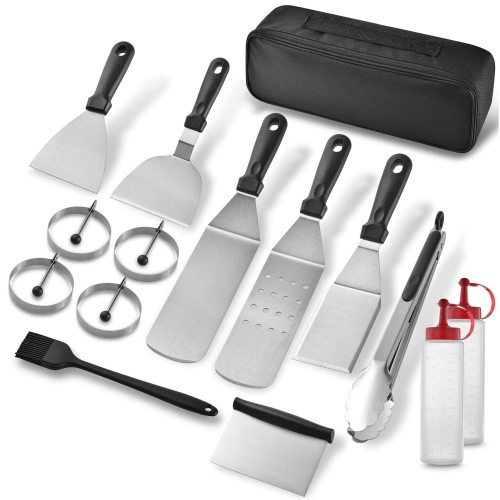
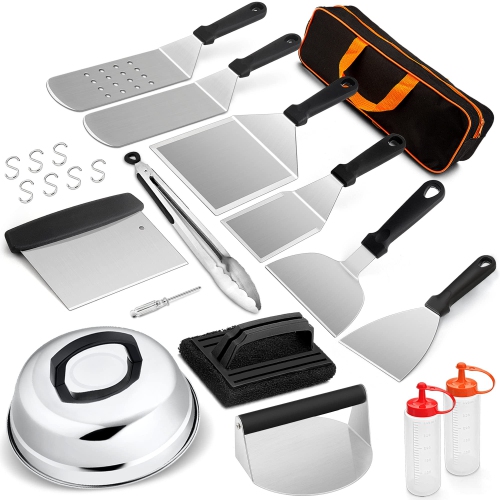
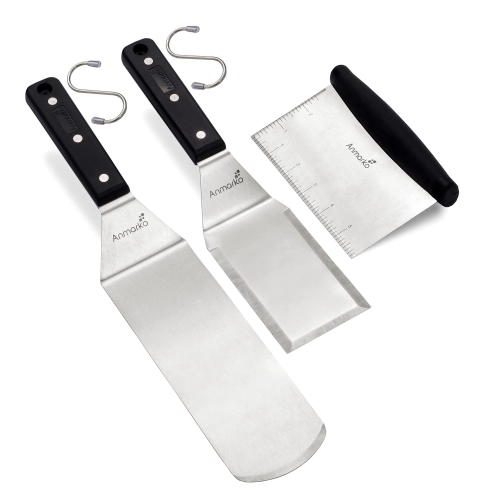
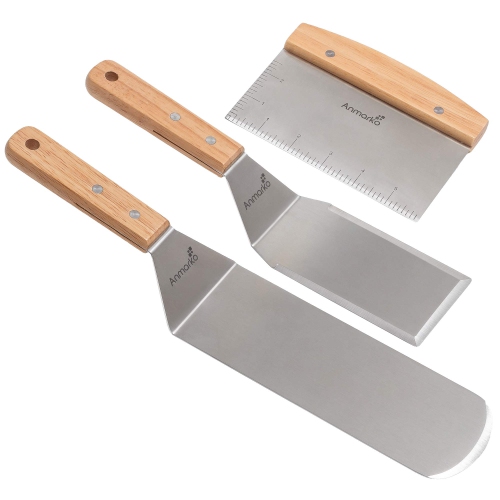
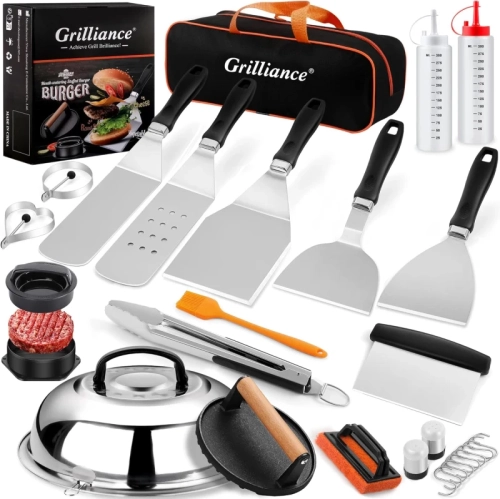
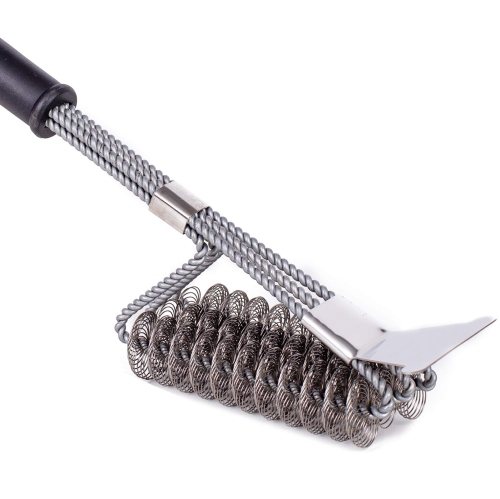
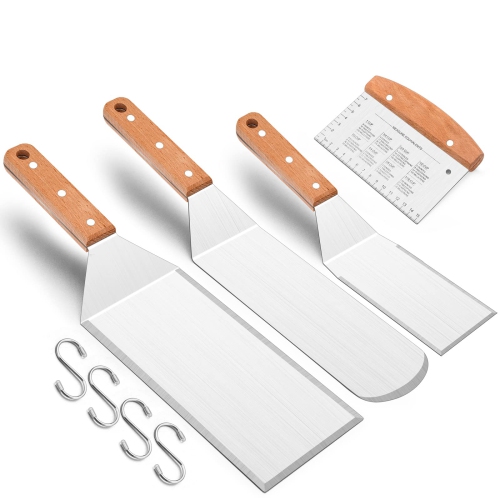
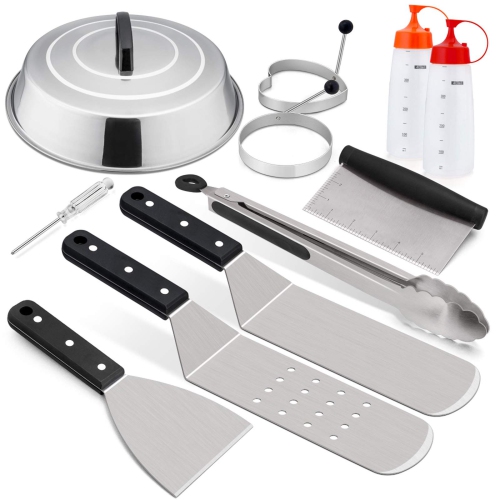
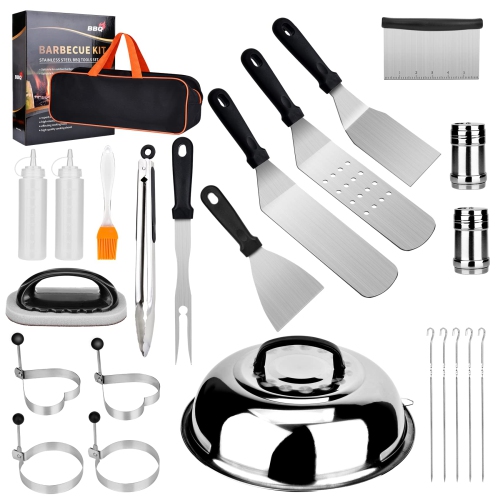
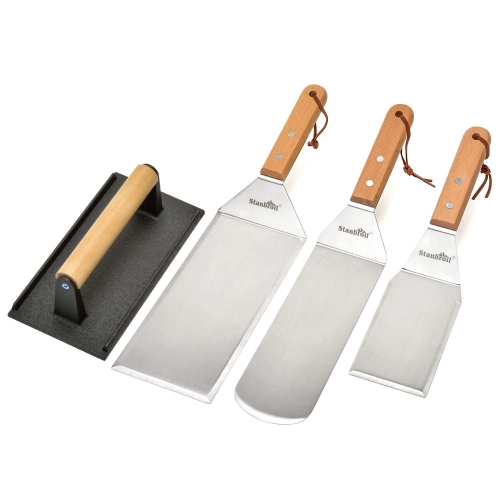
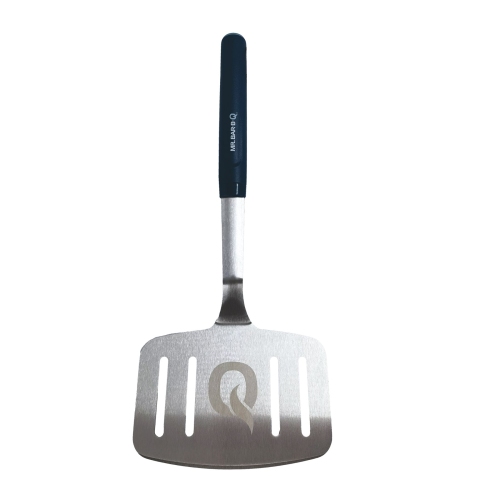
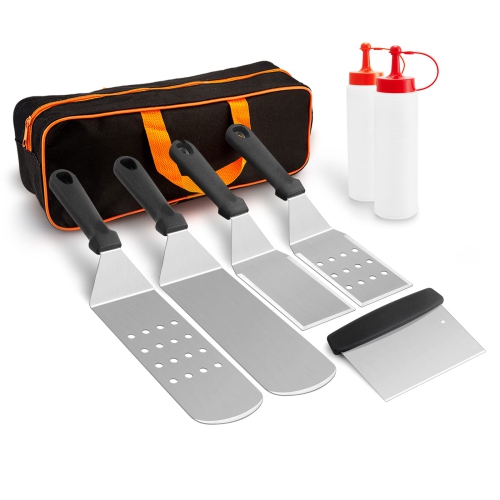
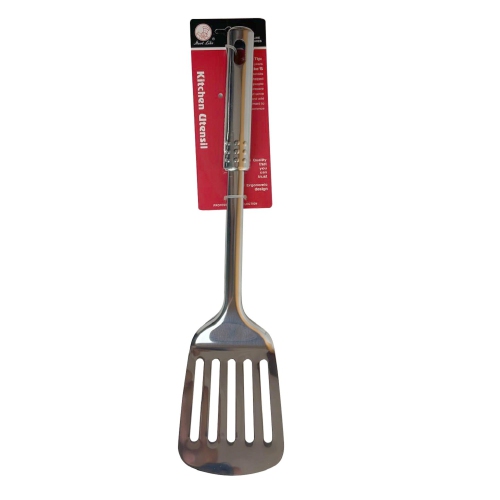
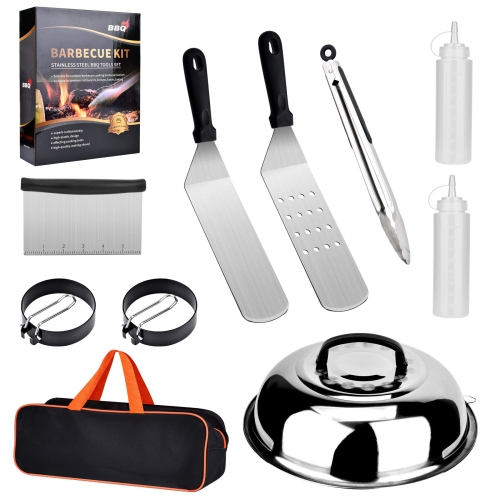
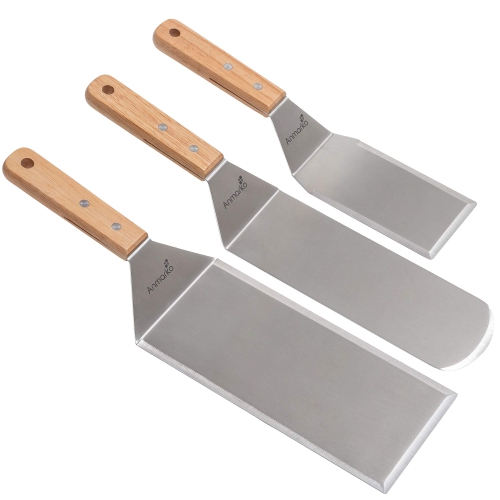
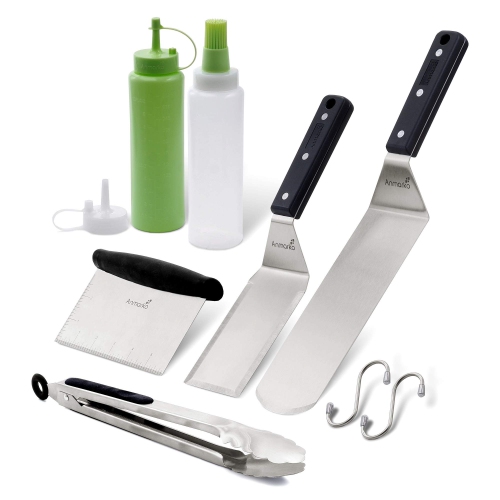
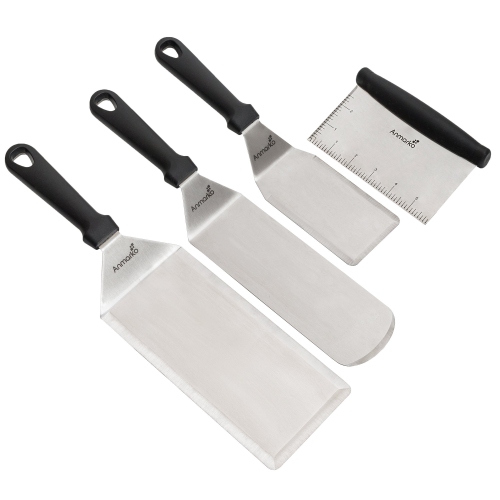
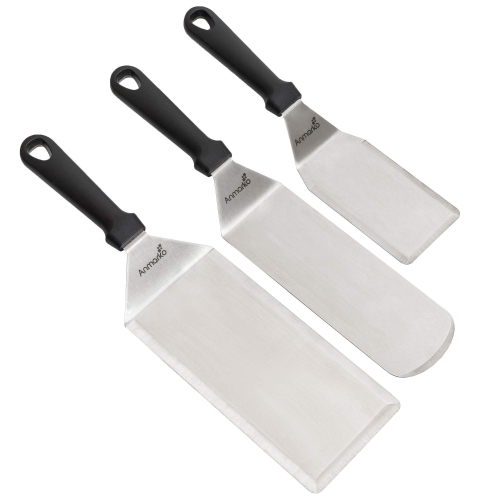
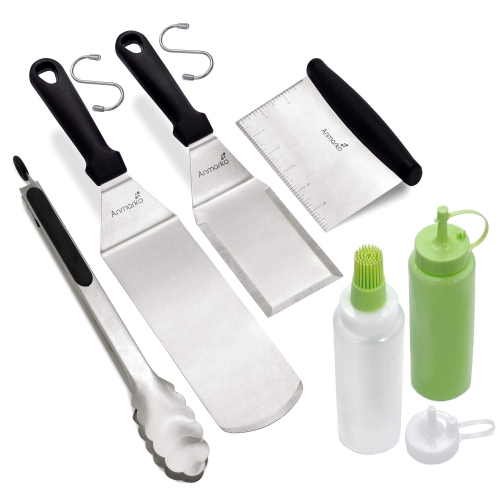
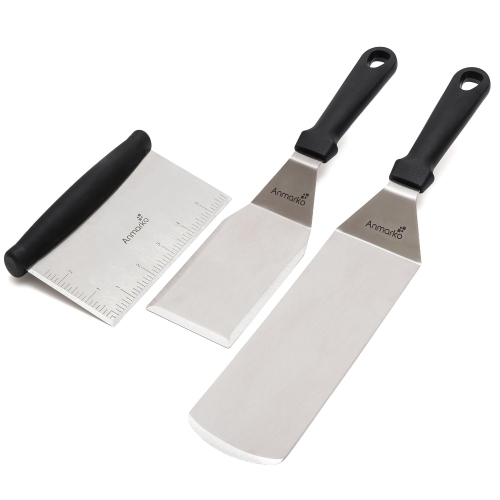
BBQ spatulas are grilling tools designed to lift, turn, and transfer food while giving the cook more reach than a typical kitchen turner. A good BBQ spatula combines a sturdy blade, an edge that slips beneath food easily, and a handle that feels balanced when supporting a full burger or a thick portion of fish. Stainless steel is a common blade material because it resists corrosion, tolerates grilling heat, and cleans up readily after contact with grease and sauces. Blade shape makes a noticeable difference at the grill: a broad head supports larger portions, while a narrower head fits more easily between closely spaced patties or vegetables. A thin, bevelled leading edge helps get beneath a browned crust without tearing it away, particularly when food has had enough time to release from the cooking surface. Slotted blades let some grease and juices drain away as food is lifted; solid blades provide continuous support for softer foods and work well for many flat-top tasks. Neither style suits every meal better than the other. A firm blade is useful for heavier cuts and dense burgers, whereas a little flexibility can make it easier to slide beneath delicate fillets. Too much flex, however, can leave a loaded spatula feeling unsteady. Handle length also affects control. Extra reach helps keep hands farther from the cooking surface, but a very long handle can feel awkward on a compact barbecue or when moving food onto a nearby plate. The most comfortable fit depends on the depth of the grill, the weight of the food, and the space around the cooking area. For everyday grilling, the aim is a tool that reaches the back row of food without making each turn feel like a balancing act. A secure grip and a blade that supports the whole portion can make that movement smoother, whether the meal is a few veggie burgers or a full grill of mixed favourites.
Materials and construction influence how a barbecue spatula feels after repeated use, not just how it looks hanging beside the grill. Stainless steel blades vary in thickness and stiffness, so a substantial appearance alone does not tell the whole story. A well-finished edge should slide beneath food, and the connection between the blade and handle should remain steady under a normal lifting load. One-piece metal construction eliminates a separate blade-to-handle joint, while securely fastened handles can offer a comfortable grip in a different material. Wood provides a familiar feel and benefits from gentle washing and thorough drying. Moulded handles may offer textured surfaces that are easier to hold with greasy hands, although their heat limits depend on the material and construction. Metal handles are straightforward to wipe clean but can become hot when left near the cooking surface. No handle should be assumed to stay cool, and a spatula should not be left resting over a burner or against hot grill components. Handle shape matters as much as material: a grip that fills the palm comfortably can make turning several batches less tiring, while a bulky grip may be difficult for smaller hands to manage. Balance matters, too. A heavy head paired with a light handle can pull at the wrist, especially when the tool is held out at arm’s length. Hanging loops and hooks help keep tools within reach, provided they fit the grill’s storage points and sit clear of hot areas. Some spatulas include serrated edges or built-in bottle openers, but those extras are secondary to reliable lifting and turning. A cutting edge also calls for care around coated cooking surfaces. Bare metal blades may scratch non-stick finishes, so compatibility with the grill plate or griddle should be checked before use. For coated surfaces, a turner specifically approved for the coating and cooking heat is a better match than choosing by appearance alone.
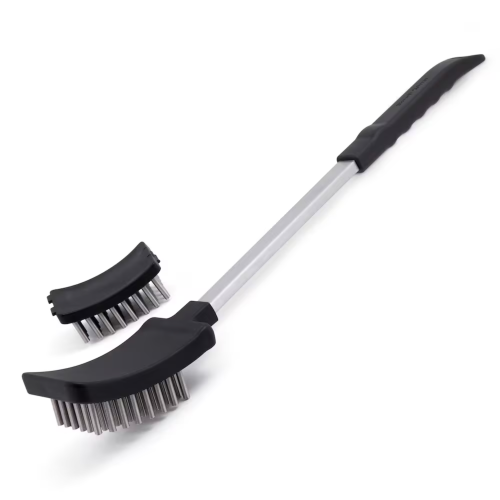
The right BBQ spatula also depends on what tends to land on the grill. Burgers benefit from a blade wide enough to support the patty without folding its edges, while fish needs gentle handling and enough surface area underneath to prevent it from breaking during the turn. Long vegetables and slices of grilled fruit can be easier to lift with a broad blade, although tongs remain useful for foods that need a secure grip rather than support from below. On a flat-top griddle, a straight leading edge can help lift eggs, pancakes, and chopped vegetables; pressing burgers requires a rigid tool intended for that task rather than a flexible fish turner. A pronounced offset between the blade and handle can help keep knuckles farther above the cooking surface, though it does not replace careful handling or suitable heat protection. For households cooking several kinds of food, separate utensils can help manage dietary preferences and reduce cross-contact. A utensil that has touched raw meat should be thoroughly cleaned before it handles cooked food ready to serve. Routine care is otherwise simple: remove food residue, wash according to the manufacturer’s directions, and dry the tool before putting it away. Dishwasher suitability varies, particularly with wooden handles, mixed materials, and decorative finishes. Prolonged soaking can damage wood, and trapped moisture around joints can contribute to wear. Inspecting the handle connection and blade periodically helps identify looseness, cracks, or rough edges before they interfere with use. Cooking-surface cleaning is a separate job, and BBQ grill scrapers provide a dedicated option for removing residue when matched to the grate material and used as directed. Keeping the spatula for food handling helps protect its working edge from unnecessary strain. As a gift, a thoughtfully chosen grilling spatula suits a new barbecue owner, an enthusiastic home cook, or someone furnishing a first home. Matching it to the recipient’s grill and favourite meals makes it more useful than choosing extra features they may rarely use.
Materials and construction influence how a barbecue spatula feels after repeated use, not just how it looks hanging beside the grill. Stainless steel blades vary in thickness and stiffness, so a substantial appearance alone does not tell the whole story. A well-finished edge should slide beneath food, and the connection between the blade and handle should remain steady under a normal lifting load. One-piece metal construction eliminates a separate blade-to-handle joint, while securely fastened handles can offer a comfortable grip in a different material. Wood provides a familiar feel and benefits from gentle washing and thorough drying. Moulded handles may offer textured surfaces that are easier to hold with greasy hands, although their heat limits depend on the material and construction. Metal handles are straightforward to wipe clean but can become hot when left near the cooking surface. No handle should be assumed to stay cool, and a spatula should not be left resting over a burner or against hot grill components. Handle shape matters as much as material: a grip that fills the palm comfortably can make turning several batches less tiring, while a bulky grip may be difficult for smaller hands to manage. Balance matters, too. A heavy head paired with a light handle can pull at the wrist, especially when the tool is held out at arm’s length. Hanging loops and hooks help keep tools within reach, provided they fit the grill’s storage points and sit clear of hot areas. Some spatulas include serrated edges or built-in bottle openers, but those extras are secondary to reliable lifting and turning. A cutting edge also calls for care around coated cooking surfaces. Bare metal blades may scratch non-stick finishes, so compatibility with the grill plate or griddle should be checked before use. For coated surfaces, a turner specifically approved for the coating and cooking heat is a better match than choosing by appearance alone.
The right BBQ spatula also depends on what tends to land on the grill. Burgers benefit from a blade wide enough to support the patty without folding its edges, while fish needs gentle handling and enough surface area underneath to prevent it from breaking during the turn. Long vegetables and slices of grilled fruit can be easier to lift with a broad blade, although tongs remain useful for foods that need a secure grip rather than support from below. On a flat-top griddle, a straight leading edge can help lift eggs, pancakes, and chopped vegetables; pressing burgers requires a rigid tool intended for that task rather than a flexible fish turner. A pronounced offset between the blade and handle can help keep knuckles farther above the cooking surface, though it does not replace careful handling or suitable heat protection. For households cooking several kinds of food, separate utensils can help manage dietary preferences and reduce cross-contact. A utensil that has touched raw meat should be thoroughly cleaned before it handles cooked food ready to serve. Routine care is otherwise simple: remove food residue, wash according to the manufacturer’s directions, and dry the tool before putting it away. Dishwasher suitability varies, particularly with wooden handles, mixed materials, and decorative finishes. Prolonged soaking can damage wood, and trapped moisture around joints can contribute to wear. Inspecting the handle connection and blade periodically helps identify looseness, cracks, or rough edges before they interfere with use. Cooking-surface cleaning is a separate job, and BBQ grill scrapers provide a dedicated option for removing residue when matched to the grate material and used as directed. Keeping the spatula for food handling helps protect its working edge from unnecessary strain. As a gift, a thoughtfully chosen grilling spatula suits a new barbecue owner, an enthusiastic home cook, or someone furnishing a first home. Matching it to the recipient’s grill and favourite meals makes it more useful than choosing extra features they may rarely use.
Top selling and popular products
-
 Your price for this item is $40.99
 -
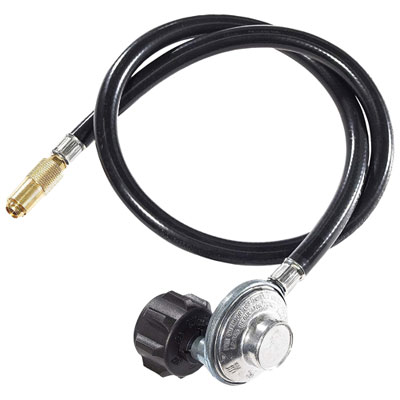 Your price for this item is $49.99
 -
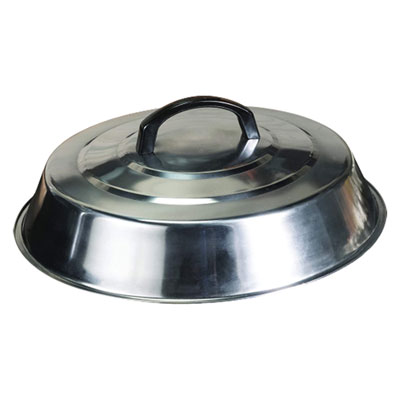 Your price for this item is $49.99
 -
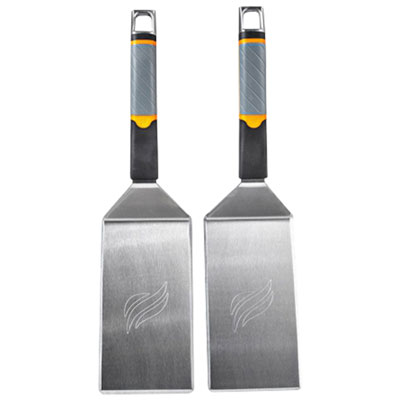 Your price for this item is $47.99
 -
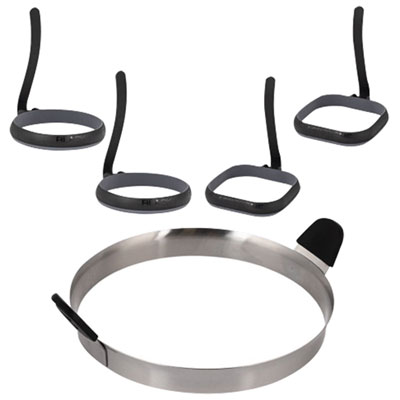 Your price for this item is $64.99
 -
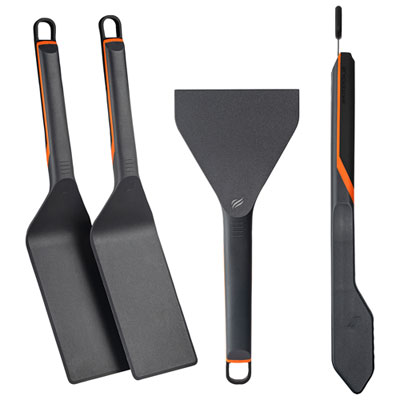 Your price for this item is $59.99
 -
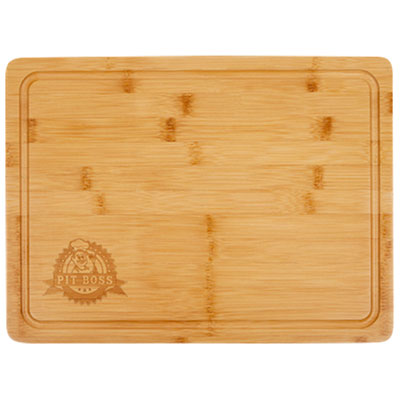 Your price for this item is $39.99
 -
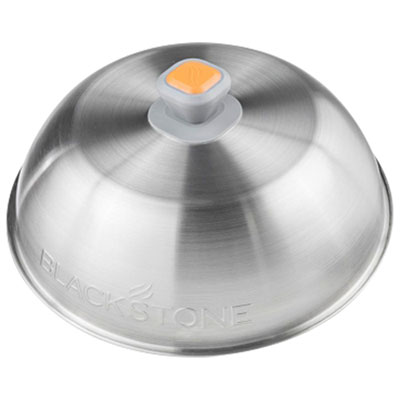 Your price for this item is $59.99
Discover more categories related to BBQ Spatulas
Top Collections:
Pokemon Centers, Kindle Devices, Best Budget Office Chairs, Apple iPhones 16, Best Laptops for Writers, iPhone 15 Apple, Canon G7X Cameras, Refurbished Apple Laptops, Alarm Clock, Motorola Razr Phones
Some products may be subject to Environmental Handling Fees
(EHF) depending on your province.
Learn more about EHFs.