Black And Gold Ottomans
Add a touch of elegance and sophistication to your living space with our stunning black and gold ottomans. Whether you're looking to add a statement piece to your home or simply want to enhance your relaxation time, our black and gold ottomans are the perfect choice. Discover the perfect blend of style and functionality today.
Sort
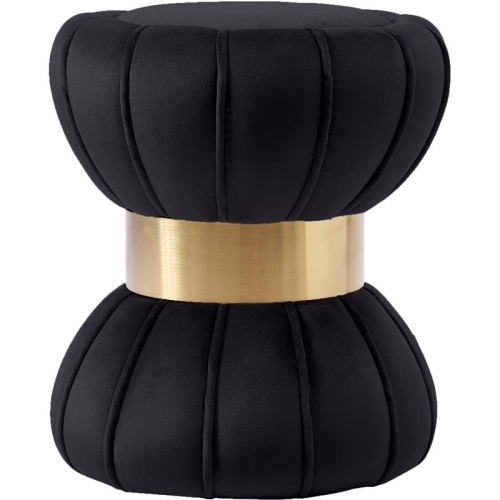
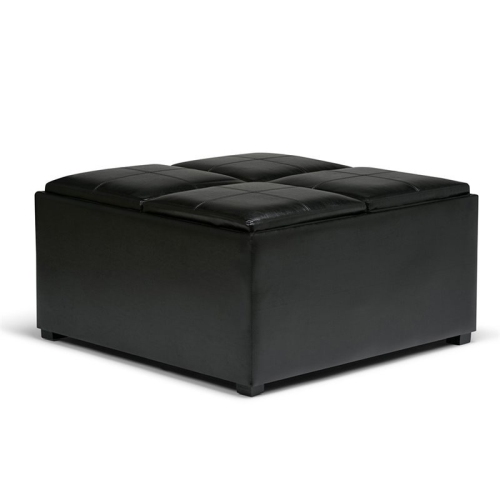
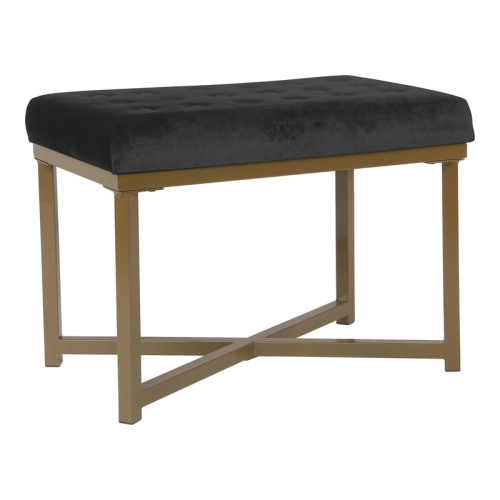
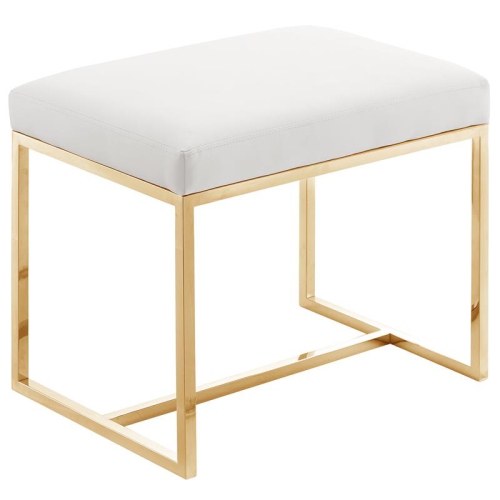
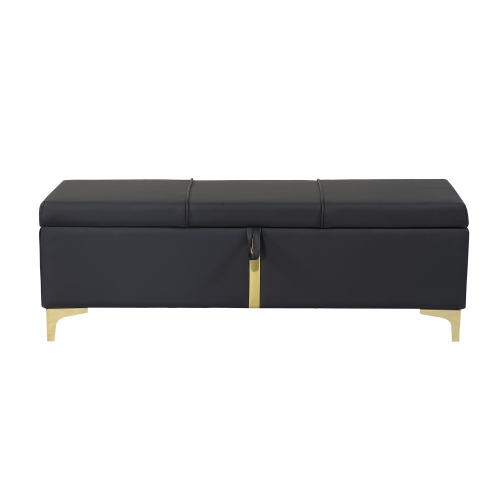
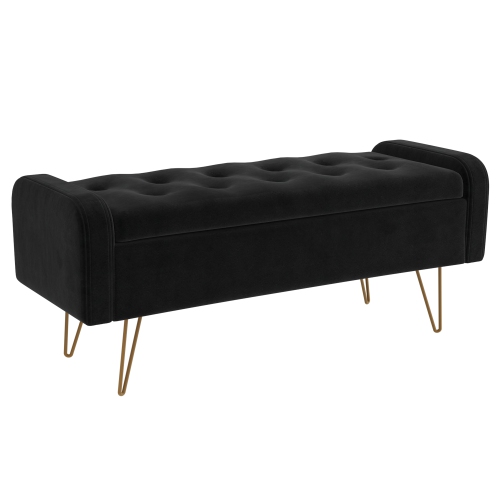
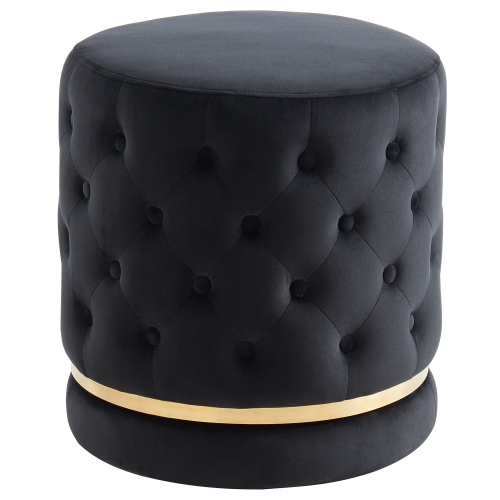
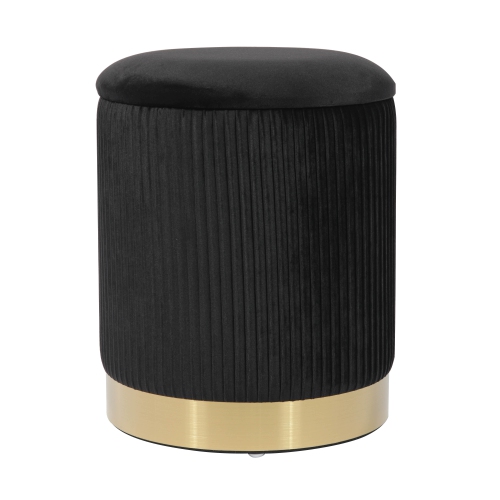
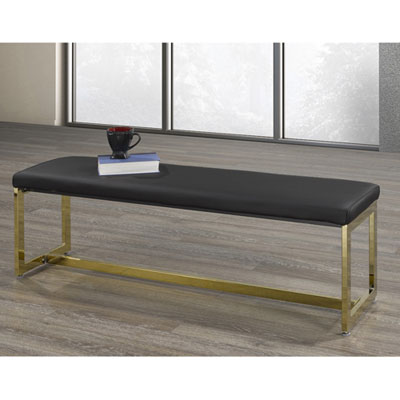
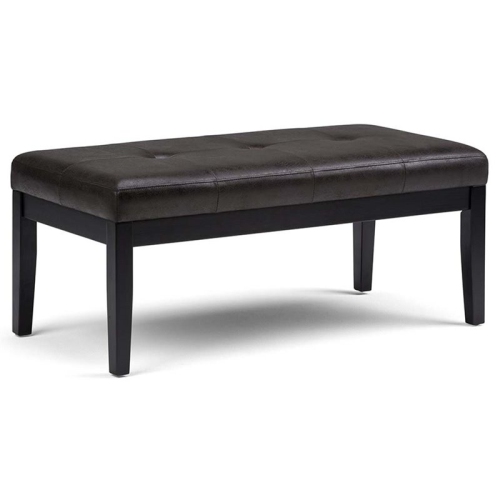
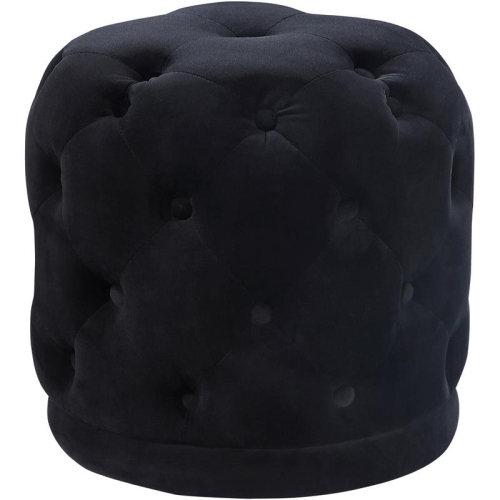
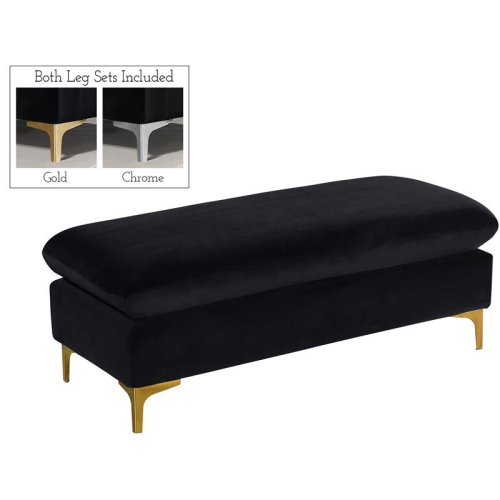
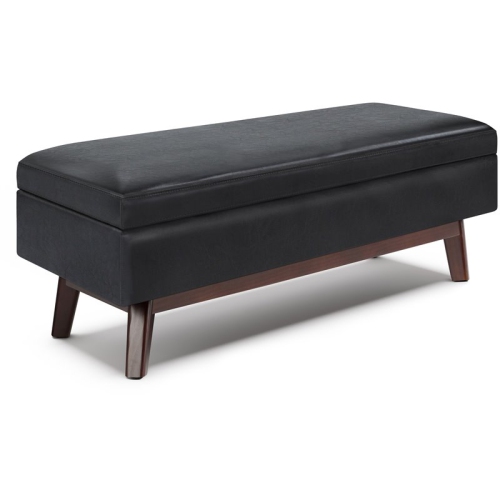
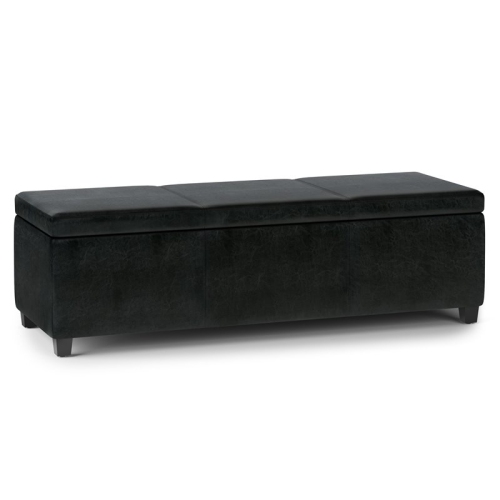

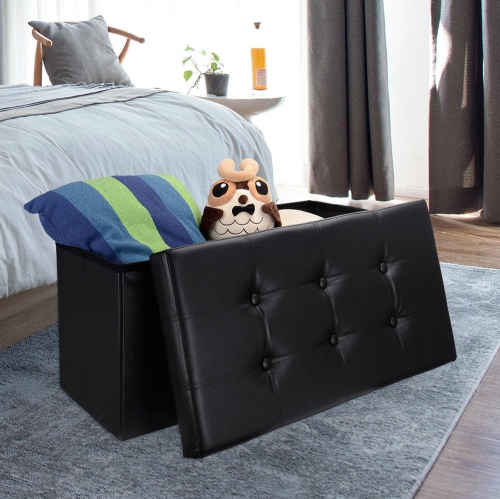
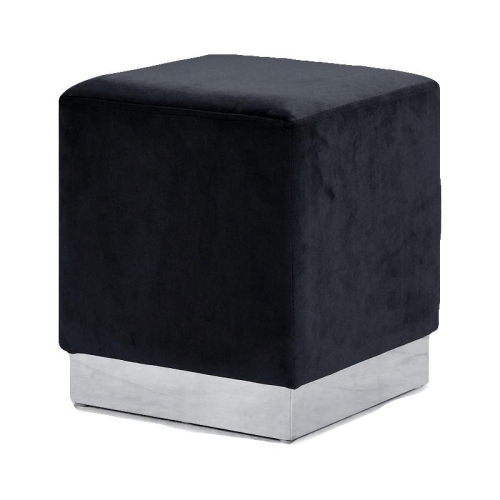
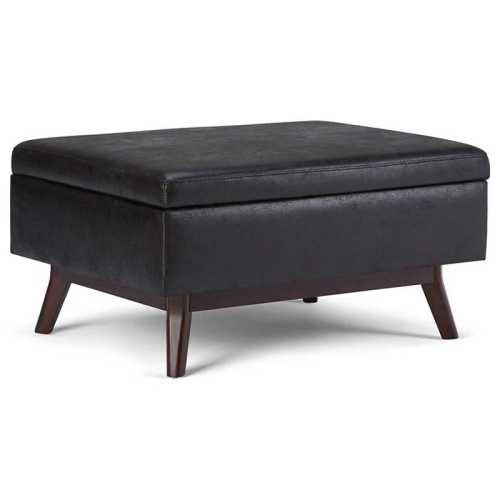
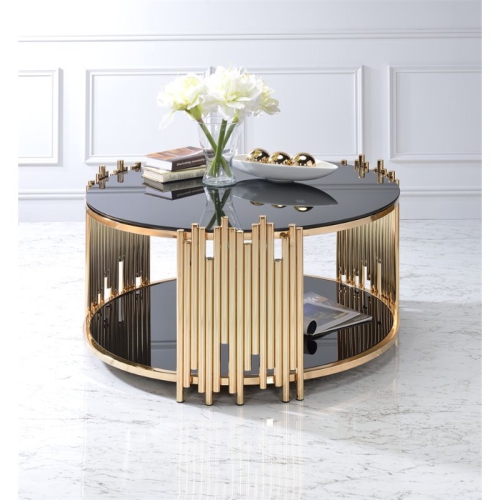

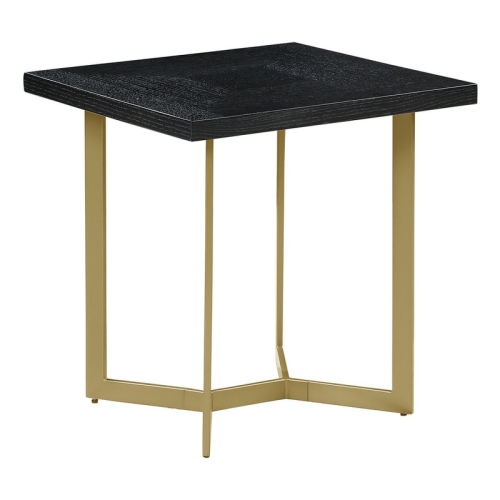
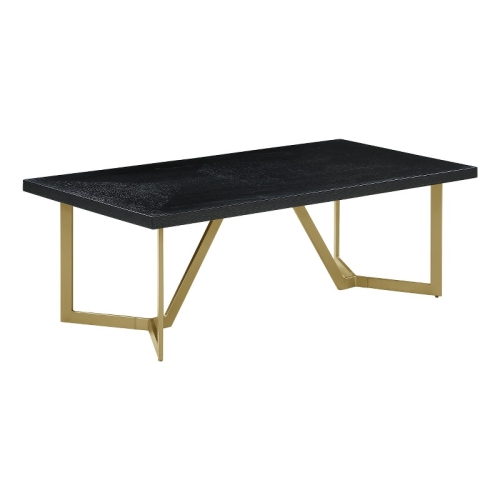
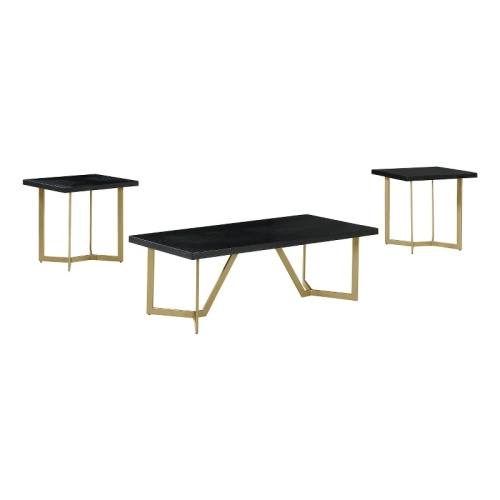
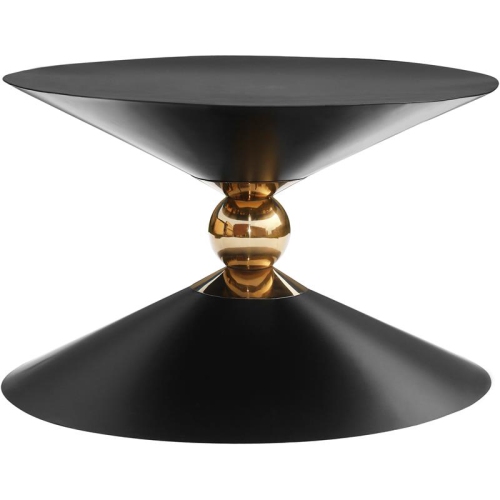
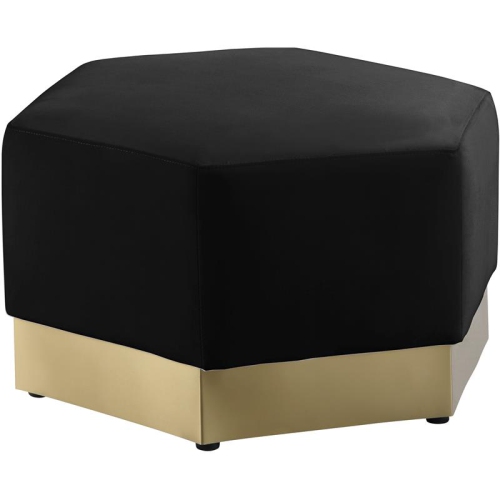
Gold-toned details give practical footrests a distinctive presence
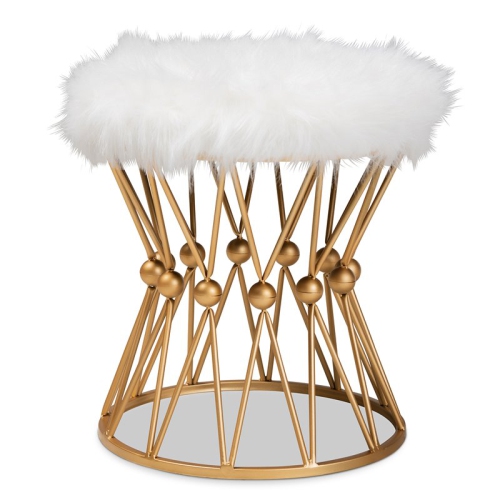
Black and gold ottomans are upholstered accent furnishings that pair black fabric or leather-look surfaces with gold-toned legs, bases, frames, or trim. The contrast gives a practical footrest or occasional seat a more distinctive presence: black adds visual depth, while a metallic finish catches the light without requiring a large piece of furniture. Common shapes include compact round ottomans, square cubes, rectangular benches, and wider cushioned designs that can anchor a seating area. Each shape brings a different feel to a room. A round ottoman softens the straight lines of a sofa and media stand, while a square design sits neatly beside an armchair or beneath an open console when measurements allow. A long bench can span the foot of a bed or provide a place to sit while putting on shoes, provided it is designed and rated for seating. The gold detailing also changes the overall effect. Slender metal legs leave more of the floor visible and give the piece a lighter appearance, whereas a broad gold-toned plinth creates a more substantial silhouette. Brushed finishes have a softer sheen than highly polished surfaces, which can reflect nearby lamps and furnishings. Black velvet paired with gold often suits richly layered rooms, while smooth upholstery and a simple frame work well with pared-back interiors. Button tufting, vertical channels, piping, and stitched panels add texture without introducing another colour. These details can complement a patterned rug, balance a pale sofa, or repeat the finish of a nearby lamp. For a quieter contrast without metallic accents, Black And White Ottomans offer another way to bring black into a seating arrangement. Either approach works best when the ottoman relates to a few existing features rather than matching every surface. A gold-toned base beside a wood coffee table, for example, can feel intentional when a picture frame or reading lamp carries a similar finish.
The most useful black and gold ottoman is one whose proportions and construction suit its everyday role. For a footrest, a cushioned top around the height of the sofa seat, or slightly lower, generally supports a relaxed position without lifting the legs too high. A deep lounge chair may call for a broader top than a compact accent chair, especially when the ottoman will be shared. Leave enough space to walk comfortably through the room, open nearby drawers, and move around the furniture without stepping sideways. In a smaller living room, a lightweight design can be easier to reposition when guests arrive, although it still needs a stable base. A larger ottoman can act as a central upholstered surface; a suitable tray may hold a remote or book, but soft cushions are not a dependable surface for uncovered drinks. Storage ottomans add another function by keeping throws, games, or spare cushion covers out of sight. Their usefulness depends on the interior dimensions, not just the exterior footprint, because thick padding and framing can reduce the usable compartment. Lift-off lids need somewhere to rest while the compartment is open, while hinged lids need clearance behind or above them. In homes with children, lid supports, hinge construction, and the manufacturer's safety information deserve particular attention, as moving lids can create pinch points. For an entryway or bedroom bench, seat height and firmness matter more than they would for a piece used mainly to rest feet. Anyone who plans to sit on an ottoman should check that seating is an intended use and follow its stated weight capacity; a footrest is not automatically suitable as an extra chair. Couples furnishing a condo, students arranging a first apartment, and households needing flexible seating may all appreciate this combination of compact form and practical function. As a housewarming gift, an ottoman makes the most sense when the recipient's room measurements, preferred upholstery, and storage needs are already known.
Materials and care requirements help distinguish an ottoman that simply looks right from one that remains comfortable and presentable through regular use. Velvet brings a soft surface and a changing appearance as its pile catches the light; brushing against it may leave temporary shading or pressure marks. Woven fabrics can offer a more textured look, although their resistance to snagging and wear depends on the fibre, weave, and construction. Faux leather provides a smooth finish that can be convenient for wiping away light surface marks when the care instructions permit, but some coverings may crack or peel with wear, heat exposure, or unsuitable cleaning products. Genuine leather has its own care needs and may develop creases and variation over time. Black upholstery can make pale lint, pet hair, and dust easy to notice, so a fabric suited to the household's cleaning routine is often more practical than choosing by appearance alone. Gentle vacuuming with an appropriate attachment can help remove loose debris from compatible fabrics, including seams and tufted areas where crumbs collect. Spills should be blotted promptly rather than rubbed, and any cleaner should match the upholstery's care label and be tested in an inconspicuous area first. Gold-toned components also need suitable treatment: the colour usually describes a finish rather than solid gold, and abrasive pads or harsh chemicals may scratch or dull it. A soft cloth and the manufacturer's specified cleaning method help protect that surface. Beneath the upholstery, frame quality, secure joints, cushion support, and stable legs contribute to durability. Firmer padding may hold its shape better for sitting or supporting a tray, while a softer top can feel more inviting as a footrest. Protective feet suited to the flooring can help limit scratches, and checking fasteners periodically is sensible when assembly instructions call for it. Placement matters as well: keeping upholstery away from direct heat and prolonged strong sunlight can help reduce material damage or fading. With the right scale, a comfortable surface, and manageable care needs, a black and gold ottoman can serve as a useful everyday furnishing while adding a clear, polished accent to the room.
The most useful black and gold ottoman is one whose proportions and construction suit its everyday role. For a footrest, a cushioned top around the height of the sofa seat, or slightly lower, generally supports a relaxed position without lifting the legs too high. A deep lounge chair may call for a broader top than a compact accent chair, especially when the ottoman will be shared. Leave enough space to walk comfortably through the room, open nearby drawers, and move around the furniture without stepping sideways. In a smaller living room, a lightweight design can be easier to reposition when guests arrive, although it still needs a stable base. A larger ottoman can act as a central upholstered surface; a suitable tray may hold a remote or book, but soft cushions are not a dependable surface for uncovered drinks. Storage ottomans add another function by keeping throws, games, or spare cushion covers out of sight. Their usefulness depends on the interior dimensions, not just the exterior footprint, because thick padding and framing can reduce the usable compartment. Lift-off lids need somewhere to rest while the compartment is open, while hinged lids need clearance behind or above them. In homes with children, lid supports, hinge construction, and the manufacturer's safety information deserve particular attention, as moving lids can create pinch points. For an entryway or bedroom bench, seat height and firmness matter more than they would for a piece used mainly to rest feet. Anyone who plans to sit on an ottoman should check that seating is an intended use and follow its stated weight capacity; a footrest is not automatically suitable as an extra chair. Couples furnishing a condo, students arranging a first apartment, and households needing flexible seating may all appreciate this combination of compact form and practical function. As a housewarming gift, an ottoman makes the most sense when the recipient's room measurements, preferred upholstery, and storage needs are already known.
Materials and care requirements help distinguish an ottoman that simply looks right from one that remains comfortable and presentable through regular use. Velvet brings a soft surface and a changing appearance as its pile catches the light; brushing against it may leave temporary shading or pressure marks. Woven fabrics can offer a more textured look, although their resistance to snagging and wear depends on the fibre, weave, and construction. Faux leather provides a smooth finish that can be convenient for wiping away light surface marks when the care instructions permit, but some coverings may crack or peel with wear, heat exposure, or unsuitable cleaning products. Genuine leather has its own care needs and may develop creases and variation over time. Black upholstery can make pale lint, pet hair, and dust easy to notice, so a fabric suited to the household's cleaning routine is often more practical than choosing by appearance alone. Gentle vacuuming with an appropriate attachment can help remove loose debris from compatible fabrics, including seams and tufted areas where crumbs collect. Spills should be blotted promptly rather than rubbed, and any cleaner should match the upholstery's care label and be tested in an inconspicuous area first. Gold-toned components also need suitable treatment: the colour usually describes a finish rather than solid gold, and abrasive pads or harsh chemicals may scratch or dull it. A soft cloth and the manufacturer's specified cleaning method help protect that surface. Beneath the upholstery, frame quality, secure joints, cushion support, and stable legs contribute to durability. Firmer padding may hold its shape better for sitting or supporting a tray, while a softer top can feel more inviting as a footrest. Protective feet suited to the flooring can help limit scratches, and checking fasteners periodically is sensible when assembly instructions call for it. Placement matters as well: keeping upholstery away from direct heat and prolonged strong sunlight can help reduce material damage or fading. With the right scale, a comfortable surface, and manageable care needs, a black and gold ottoman can serve as a useful everyday furnishing while adding a clear, polished accent to the room.
Top selling and popular products
-
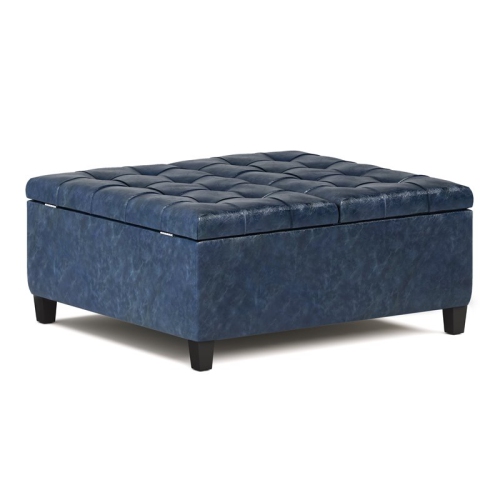 Your price for this item is $1016.33
 -
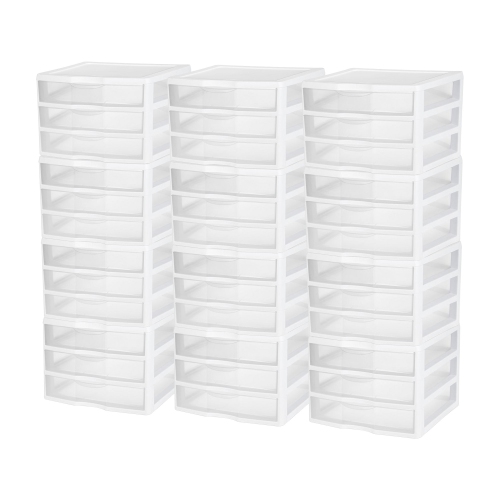 Your price for this item is $530.99
 -
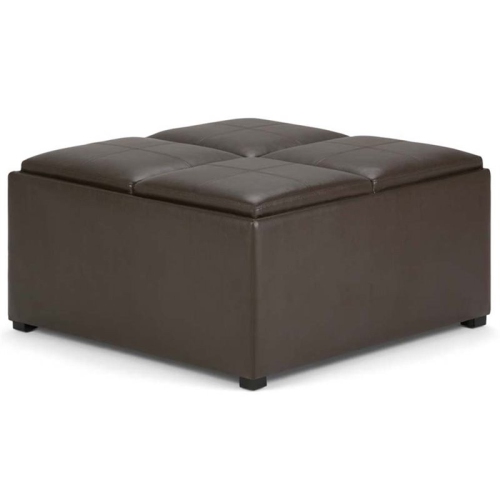 Your price for this item is $1109.94
 -
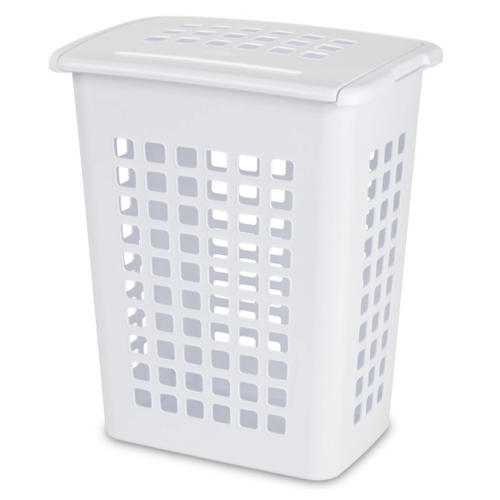 Your price for this item is $1403.99
 -
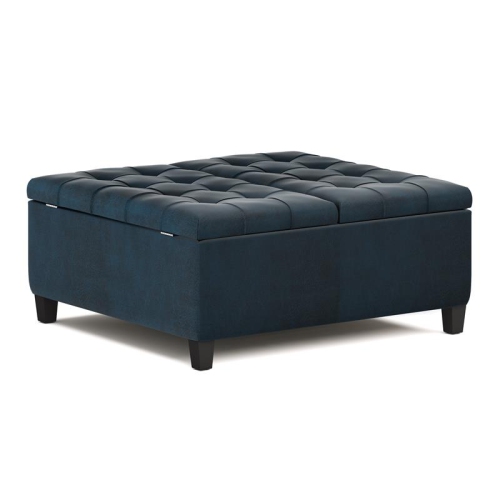 Your price for this item is $1018.38
 -
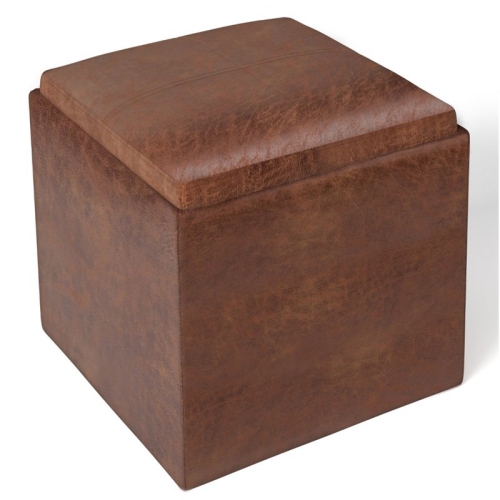 Your price for this item is $339.24
 -
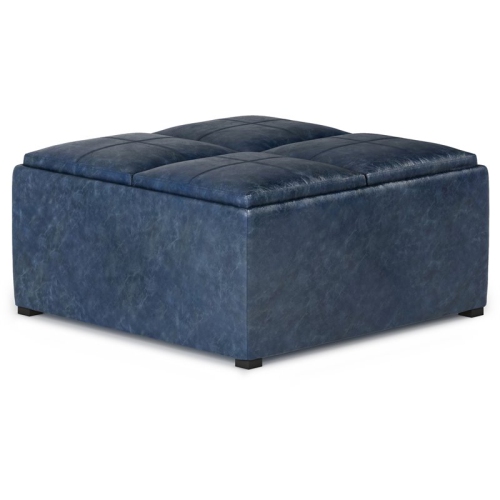 Your price for this item is $1174.21
 -
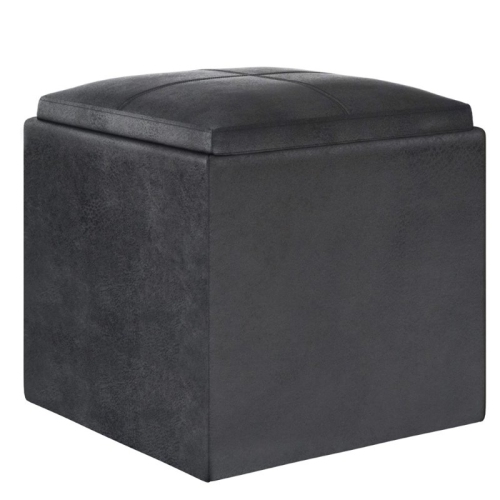 Your price for this item is $346.6
Discover more categories related to Black And Gold Ottomans

Top Collections:
Pokemon Centers, Kindle Devices, Best Budget Office Chairs, Apple iPhones 16, Best Laptops for Writers, iPhone 15 Apple, Canon G7X Cameras, Refurbished Apple Laptops, Alarm Clock, Motorola Razr Phones
Some products may be subject to Environmental Handling Fees
(EHF) depending on your province.
Learn more about EHFs.