Chef Knife Sharpeners
If you're looking to enhance your culinary skills and achieve precise, effortless cuts in the kitchen, look no further than these chef knife sharpeners. A sharp knife is an essential tool for any aspiring chef or home cook, and with this range of top-quality sharpeners, you can ensure that your blades are always in optimal condition. Whether you're a professional chef or simply enjoy preparing delicious meals at home, these chef knife sharpeners will help you maintain the sharpness and precision of your knives, making every slice a breeze.
Sort




Why blade compatibility matters more than sharpener format
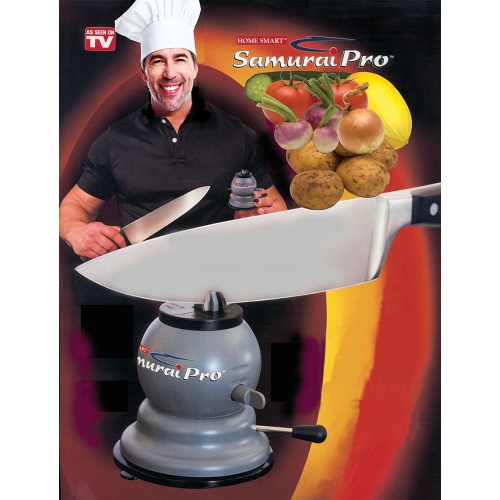
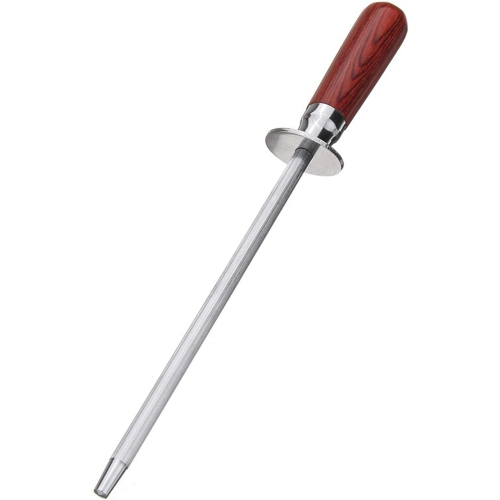
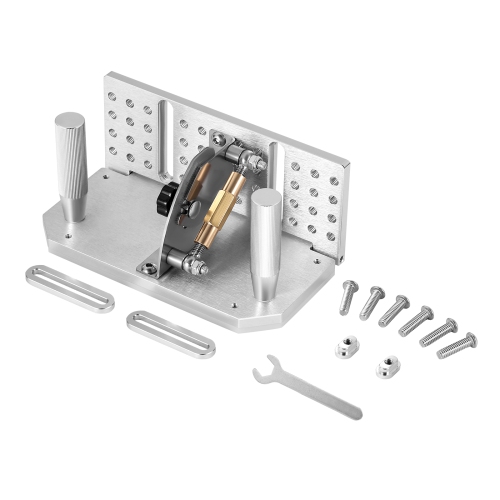
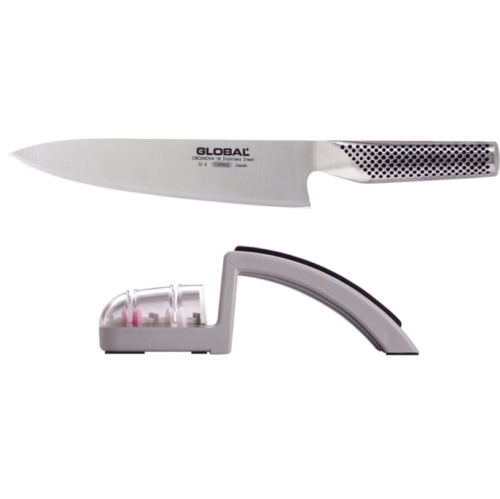
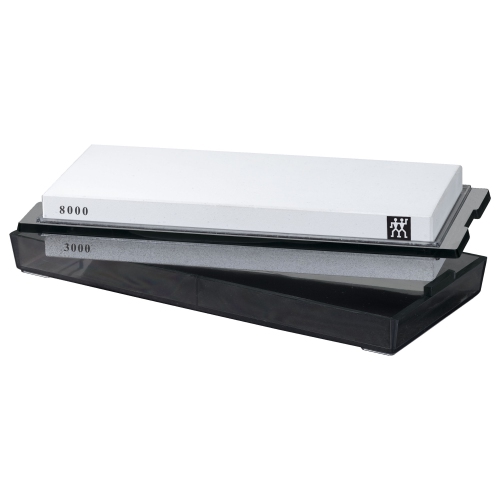
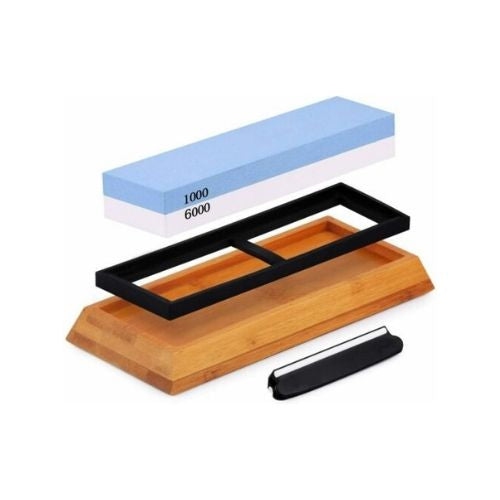
Chef knife sharpeners help maintain the cutting edge of one of the hardest-working tools in a kitchen. A well-maintained chef’s knife slices through tomato skins without crushing the flesh, cuts onions with less resistance, and makes repetitive chopping feel more controlled. Sharpening removes a small amount of blade material to restore the edge, while honing generally straightens or refines an existing edge between sharpening sessions. The distinction matters because a honing rod cannot always restore a genuinely dull knife, and a coarse sharpener is not necessary for every touch-up. Chef knife sharpeners include electric machines, manual pull-through designs, whetstones, guided systems, and rolling sharpeners, each offering a different balance of convenience, control, and hands-on involvement. The right fit depends on the knife’s steel, edge geometry, and intended use rather than the sharpener’s format alone. Many Western-style kitchen knives have double-bevel edges, with an angle on each side, while some Japanese knives use narrower angles or specialized single-bevel designs. Although 15-degree and 20-degree settings are common, neither should be assumed from a knife’s country of origin; the blade manufacturer’s specifications provide a more reliable reference. An angle listed for a sharpener usually refers to one side of the edge, so matching those specifications helps preserve the knife’s intended cutting characteristics. Compatibility also extends beyond angle. A sharpener designed for straight-edged steel blades may not suit serrated knives, ceramic blades, or thick cleavers. Ceramic knives require equipment expressly rated for that material, while single-bevel knives need a method that preserves their asymmetrical shape. For a home cook preparing vegetables most evenings, straightforward maintenance may matter most. For someone working with several blade styles or practising precise cuts, adjustable angles and a wider choice of abrasives can be more useful. These differences make knife compatibility a central consideration, whether the sharpener is for a first kitchen or a well-used cooking space.
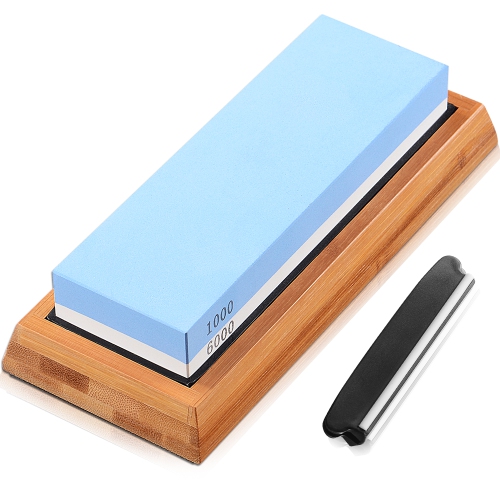
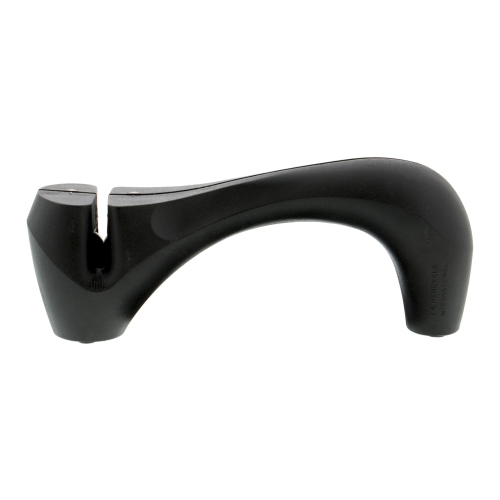
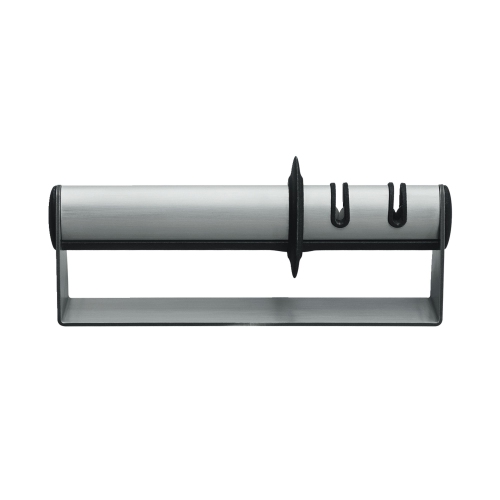
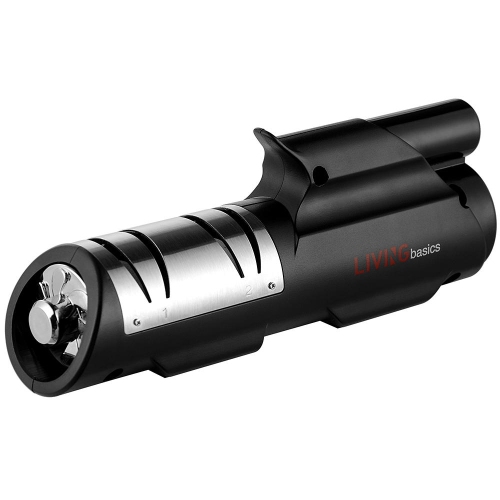
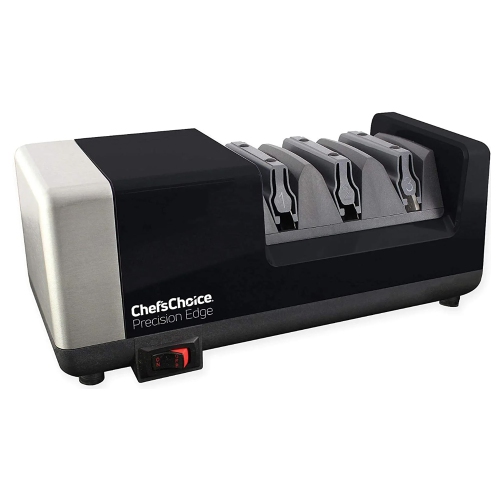
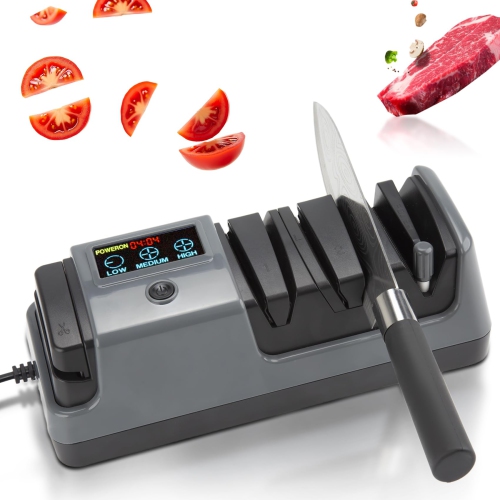
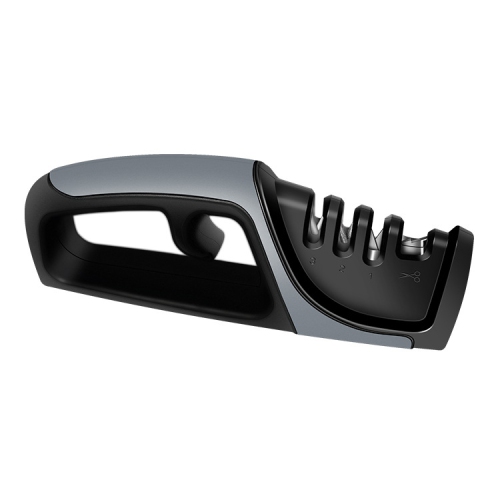
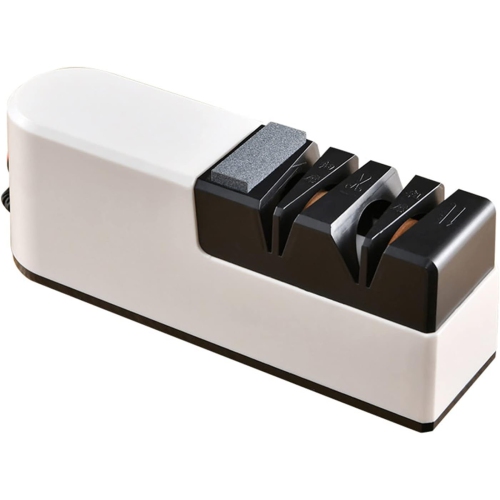
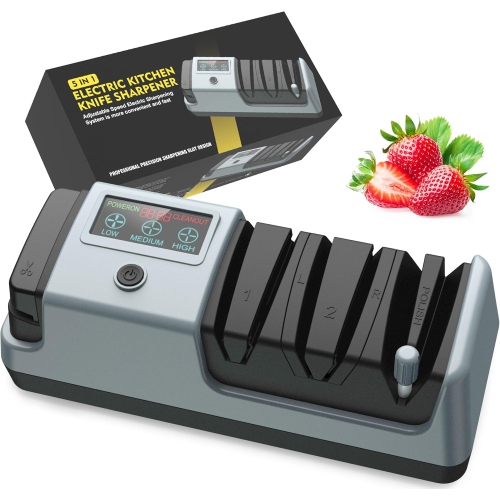
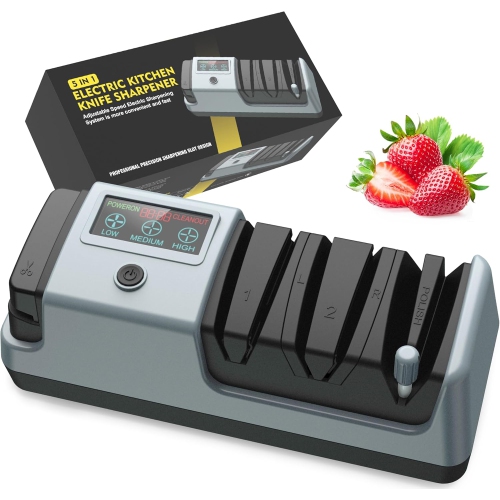
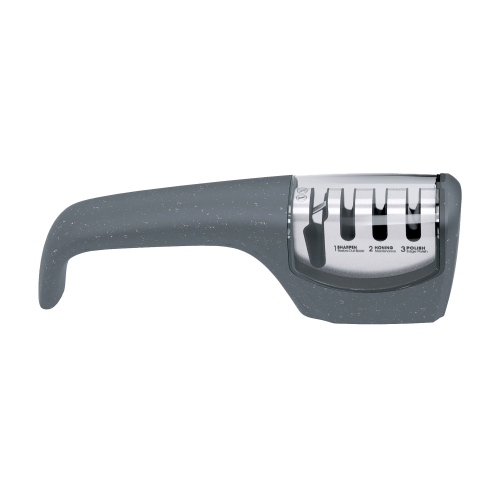
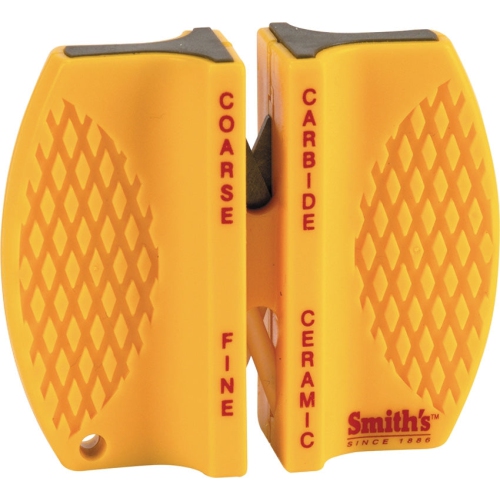
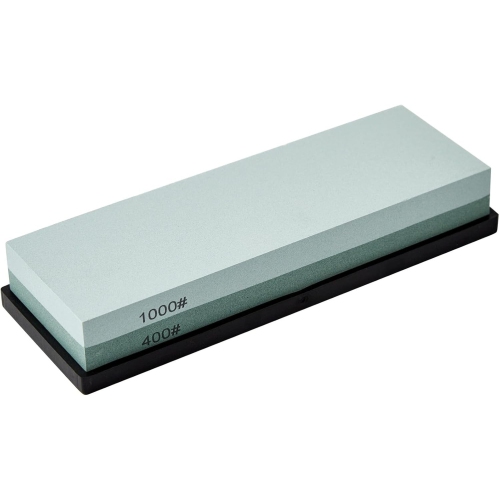
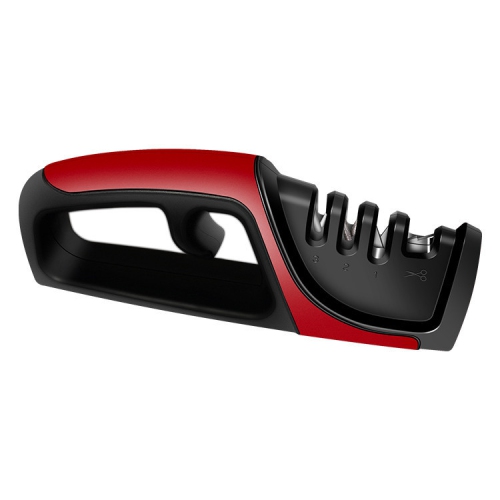
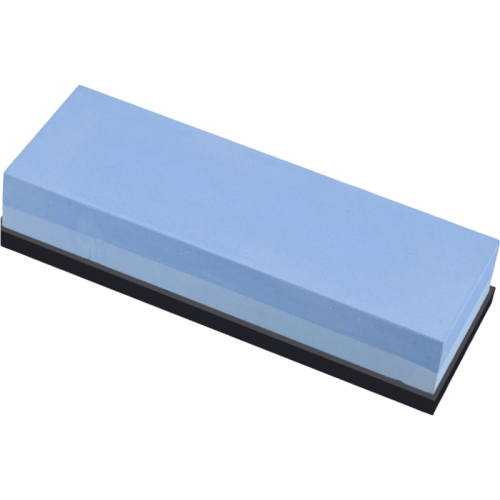
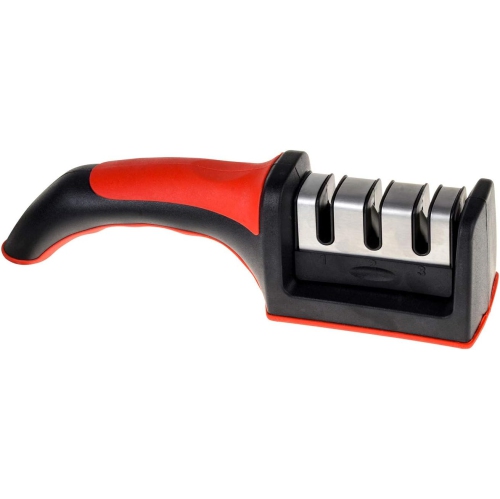
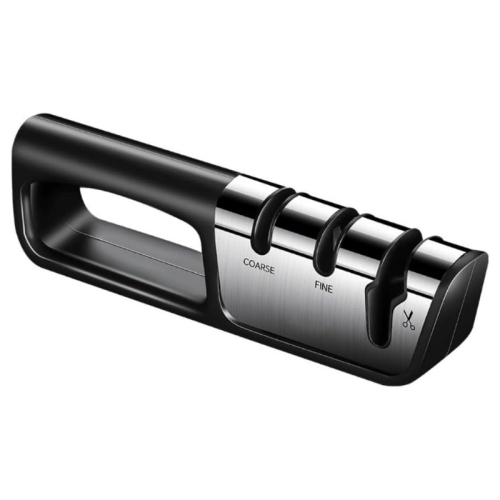
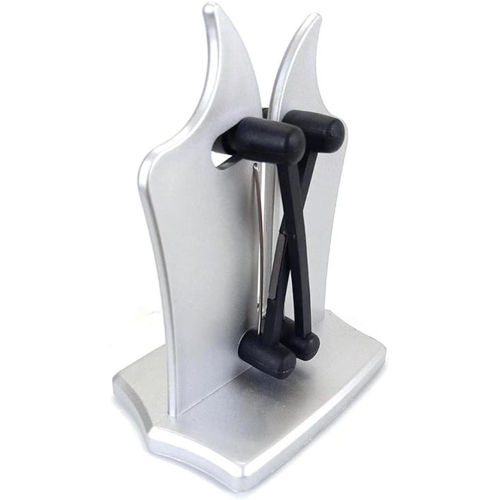
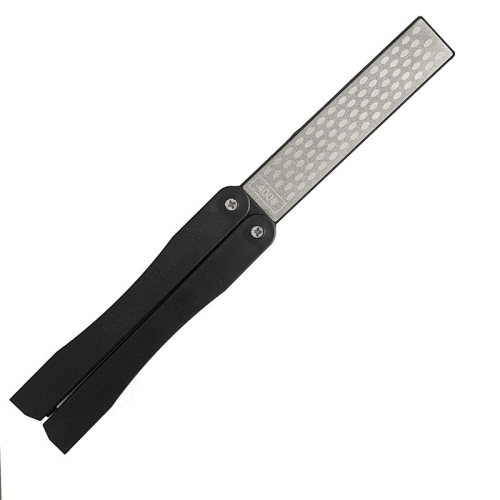
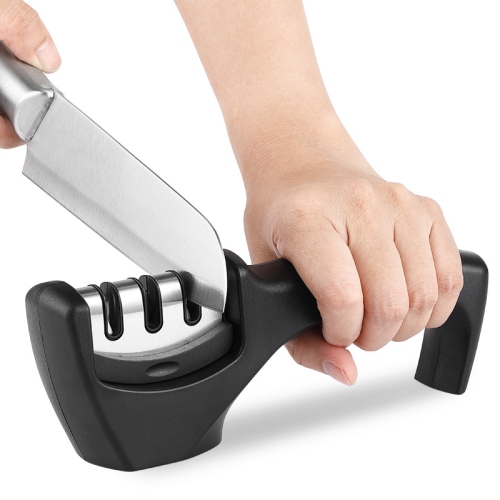
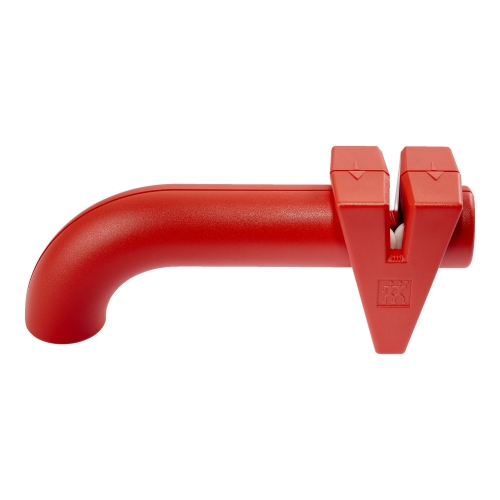
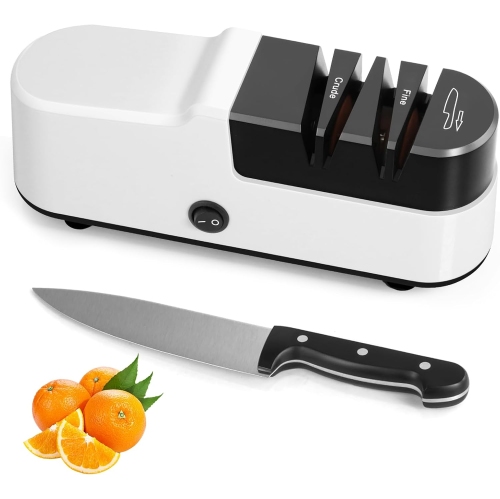
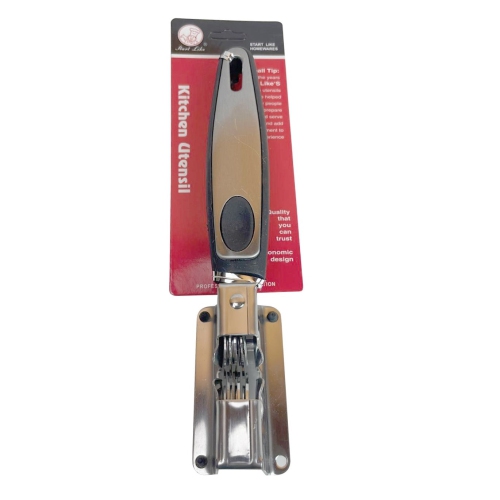
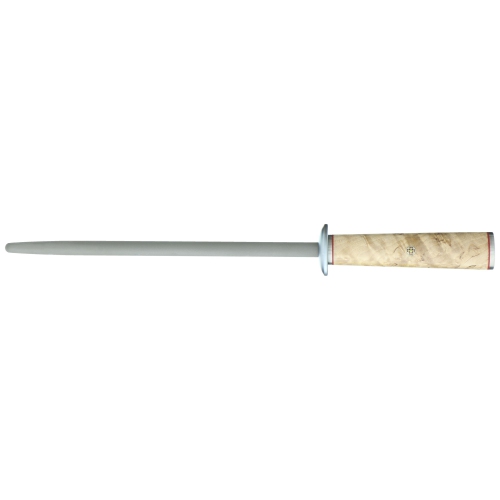
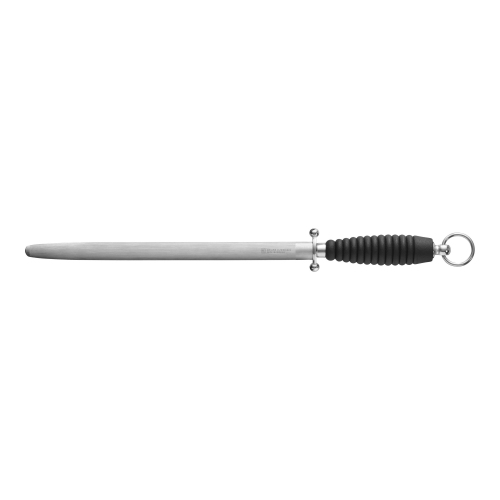
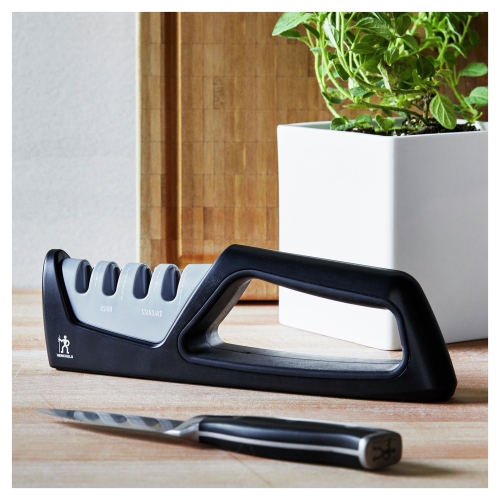
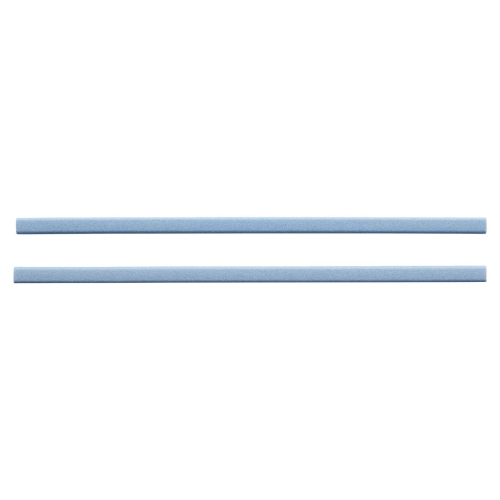
The main sharpener formats suit different routines. The Electric Knife Sharpeners category centres on powered sharpening, often with guides that help position the blade as it passes through successive stages. Depending on the design, those stages may shape a dull edge, refine it, and finish it with a finer abrasive. This approach can appeal to busy households that value a repeatable process, although results still depend on compatible blade geometry, appropriate pressure, and following the operating directions. Powered sharpening is not automatically gentler or more aggressive than manual sharpening; abrasive type, speed, technique, and time spent on the blade all affect material removal. Manual pull-through sharpeners offer a compact alternative, often with a handle and a small number of clearly separated slots. Their simplicity suits occasional maintenance, but fixed-angle designs provide less flexibility, and coarse carbide stages can remove material quickly. Whetstones offer more freedom over angle and contact along the blade, which can be helpful for maintaining the curved belly and tip of a chef’s knife. That freedom comes with a learning curve: consistent results depend on steady positioning and even work along the edge. Stones may use water, oil, or another specified preparation, and those requirements are not interchangeable. Rolling sharpeners typically combine an angle support with a rolling abrasive disc, helping maintain a set relationship between blade and abrasive. Their suitability depends partly on blade height, length, and how securely the knife rests against the support. Guided sharpening systems use supports, clamps, or angle controls to reduce some of the variation of freehand work, though setup and clearance differ between designs. Across these formats, diamond abrasives provide efficient cutting, ceramic abrasives are often used for refinement, and bonded abrasive stones come in a range of grits. Coarser abrasives address more substantial dullness, while finer abrasives refine an established edge. A fine finish is useful only after the underlying edge has been properly formed, so the number of stages alone does not establish sharpening quality.
Practical details make a noticeable difference when a sharpener becomes part of regular kitchen care. A stable base, comfortable grip, and adequate hand clearance help keep the task controlled, particularly when handling a long chef’s knife. Compact manual designs can fit into a utensil drawer, while powered machines need suitable counter space and access to an outlet. Stones and guided systems may require room for a holder, accessories, and cleanup, making storage arrangements worth considering alongside sharpening performance. Blade clearance matters too: a pronounced bolster or an unusually thick spine can prevent some slots or guides from reaching the entire cutting edge. Durable housings, secure supports, and firmly seated abrasive components contribute to consistent use, while replaceable stones or discs can make ongoing maintenance more practical where the design supports them. Care requirements vary by material and mechanism. Some sharpening stones need flattening as their surfaces wear, diamond plates generally need cleaning to clear residue, and powered machines may have a designated area for collecting metal particles. Electrical components should stay dry, and abrasive surfaces should be cleaned only by the method specified for them. After sharpening, washing and drying the knife helps remove residue before food preparation. The edge also benefits from everyday habits: a suitable wood or plastic cutting board is kinder to it than glass or stone, and protected storage prevents it from knocking against loose utensils. How often sharpening is needed depends on cutting frequency, blade steel, board surface, and maintenance habits rather than a fixed schedule. A knife that starts slipping across a pepper’s skin or compressing soft herbs may need attention, while visible chips can call for more specialized repair. As a gift, a chef knife sharpener is most useful when it matches the recipient’s knives and preferred level of involvement. A keen cook who enjoys maintaining tools may appreciate a hands-on format, while someone focused on getting dinner prepared may prefer guided operation with fewer adjustments. In either case, compatibility and comfortable handling matter more than extra features that do not suit the kitchen routine.
The main sharpener formats suit different routines. The Electric Knife Sharpeners category centres on powered sharpening, often with guides that help position the blade as it passes through successive stages. Depending on the design, those stages may shape a dull edge, refine it, and finish it with a finer abrasive. This approach can appeal to busy households that value a repeatable process, although results still depend on compatible blade geometry, appropriate pressure, and following the operating directions. Powered sharpening is not automatically gentler or more aggressive than manual sharpening; abrasive type, speed, technique, and time spent on the blade all affect material removal. Manual pull-through sharpeners offer a compact alternative, often with a handle and a small number of clearly separated slots. Their simplicity suits occasional maintenance, but fixed-angle designs provide less flexibility, and coarse carbide stages can remove material quickly. Whetstones offer more freedom over angle and contact along the blade, which can be helpful for maintaining the curved belly and tip of a chef’s knife. That freedom comes with a learning curve: consistent results depend on steady positioning and even work along the edge. Stones may use water, oil, or another specified preparation, and those requirements are not interchangeable. Rolling sharpeners typically combine an angle support with a rolling abrasive disc, helping maintain a set relationship between blade and abrasive. Their suitability depends partly on blade height, length, and how securely the knife rests against the support. Guided sharpening systems use supports, clamps, or angle controls to reduce some of the variation of freehand work, though setup and clearance differ between designs. Across these formats, diamond abrasives provide efficient cutting, ceramic abrasives are often used for refinement, and bonded abrasive stones come in a range of grits. Coarser abrasives address more substantial dullness, while finer abrasives refine an established edge. A fine finish is useful only after the underlying edge has been properly formed, so the number of stages alone does not establish sharpening quality.
Practical details make a noticeable difference when a sharpener becomes part of regular kitchen care. A stable base, comfortable grip, and adequate hand clearance help keep the task controlled, particularly when handling a long chef’s knife. Compact manual designs can fit into a utensil drawer, while powered machines need suitable counter space and access to an outlet. Stones and guided systems may require room for a holder, accessories, and cleanup, making storage arrangements worth considering alongside sharpening performance. Blade clearance matters too: a pronounced bolster or an unusually thick spine can prevent some slots or guides from reaching the entire cutting edge. Durable housings, secure supports, and firmly seated abrasive components contribute to consistent use, while replaceable stones or discs can make ongoing maintenance more practical where the design supports them. Care requirements vary by material and mechanism. Some sharpening stones need flattening as their surfaces wear, diamond plates generally need cleaning to clear residue, and powered machines may have a designated area for collecting metal particles. Electrical components should stay dry, and abrasive surfaces should be cleaned only by the method specified for them. After sharpening, washing and drying the knife helps remove residue before food preparation. The edge also benefits from everyday habits: a suitable wood or plastic cutting board is kinder to it than glass or stone, and protected storage prevents it from knocking against loose utensils. How often sharpening is needed depends on cutting frequency, blade steel, board surface, and maintenance habits rather than a fixed schedule. A knife that starts slipping across a pepper’s skin or compressing soft herbs may need attention, while visible chips can call for more specialized repair. As a gift, a chef knife sharpener is most useful when it matches the recipient’s knives and preferred level of involvement. A keen cook who enjoys maintaining tools may appreciate a hands-on format, while someone focused on getting dinner prepared may prefer guided operation with fewer adjustments. In either case, compatibility and comfortable handling matter more than extra features that do not suit the kitchen routine.
Top selling and popular products
-
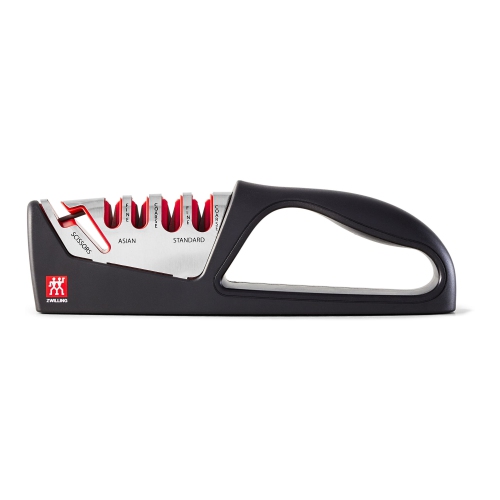 Your price for this item is $59.99
 -
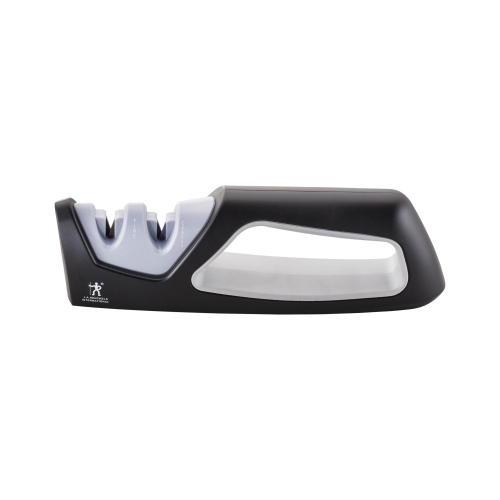 Your price for this item is $34.99
 -
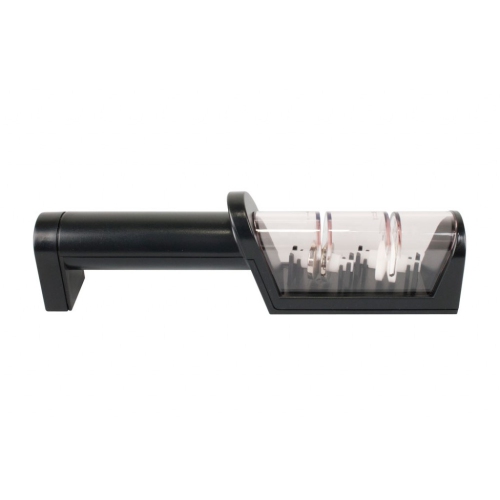 Your price for this item is $70.13
 -
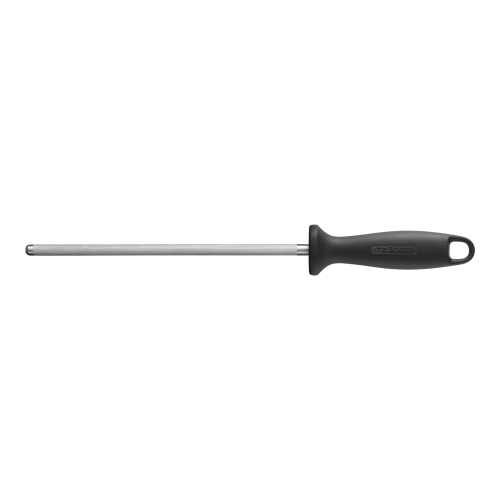 Your price for this item is $44.99
 -
 Your price for this item is $369.99
 -
 Your price for this item is $104.99
 -
 Your price for this item is $49.99
 -
 Your price for this item is $19.99
Discover more categories related to Chef Knife Sharpeners
Top Collections:
Pokemon Centers, Kindle Devices, Best Budget Office Chairs, Apple iPhones 16, Canon G7X Cameras, iPhone 15 Apple, Alarm Clock, Refurbished Apple Laptops, Flip Phones, Best Laptops for Writers
Some products may be subject to Environmental Handling Fees
(EHF) depending on your province.
Learn more about EHFs.