Gas Leaf Blowers

Gas leaf blowers help clear leaves and yard debris without a power cord, making them a practical option for larger outdoor spaces. Compare models by air speed, airflow, weight, and fuel requirements to find a blower suited to your yard and comfortable to carry through seasonal cleanup.
Read More

Sort

Clearing larger yards takes more than raw power

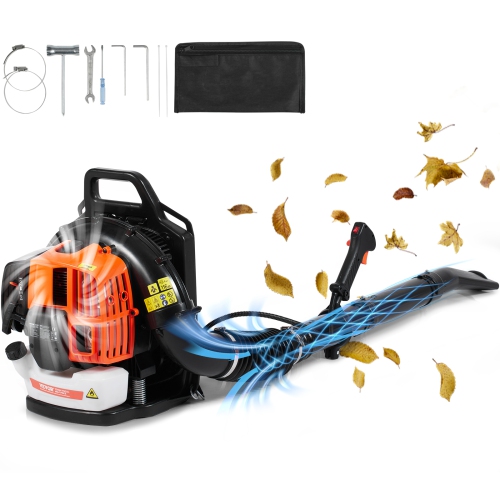
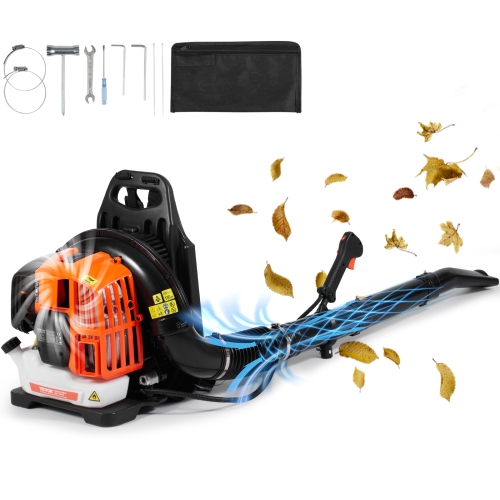
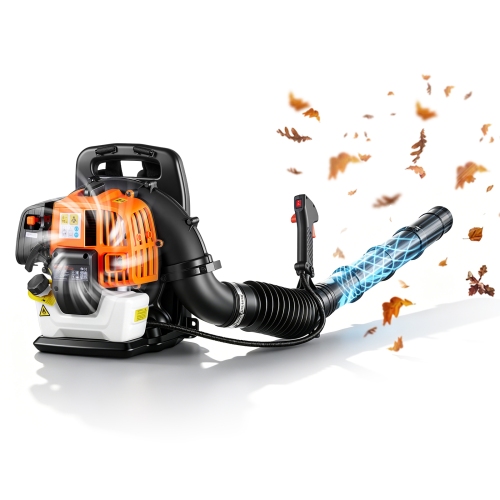
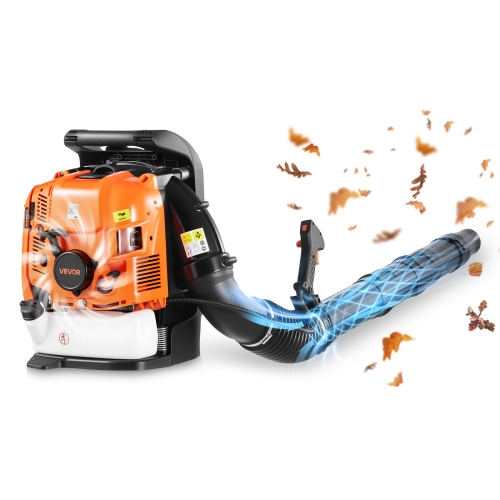
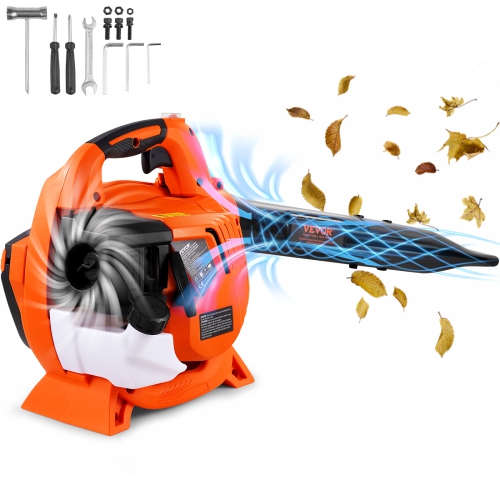
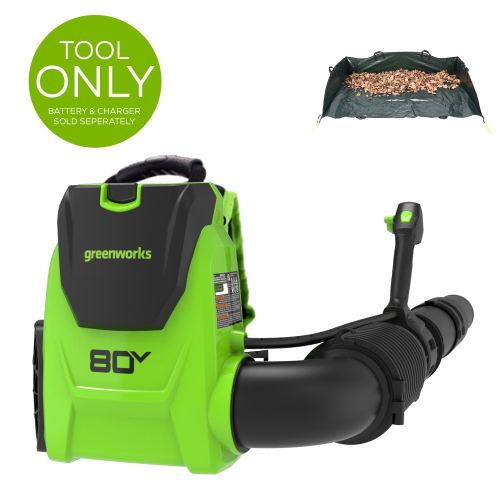
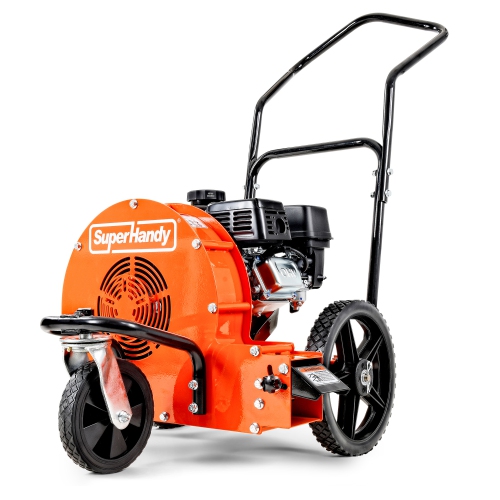
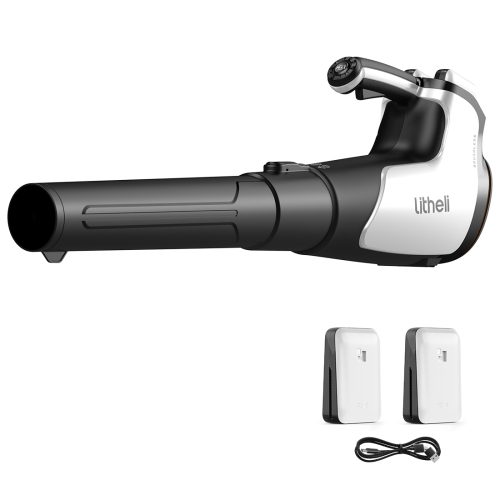
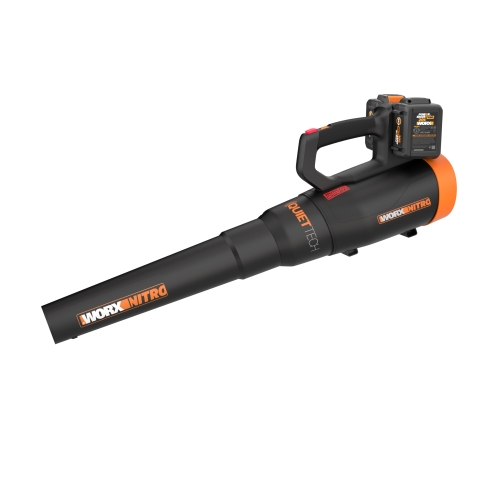
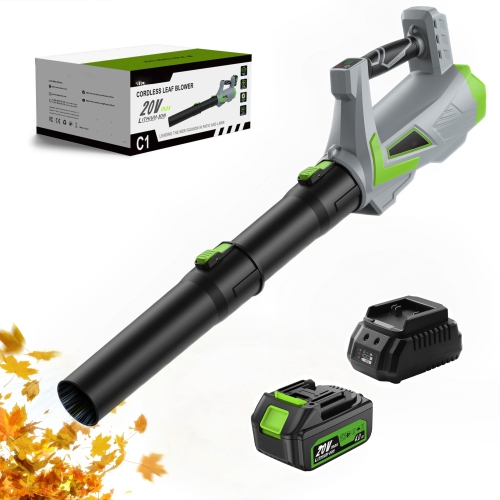
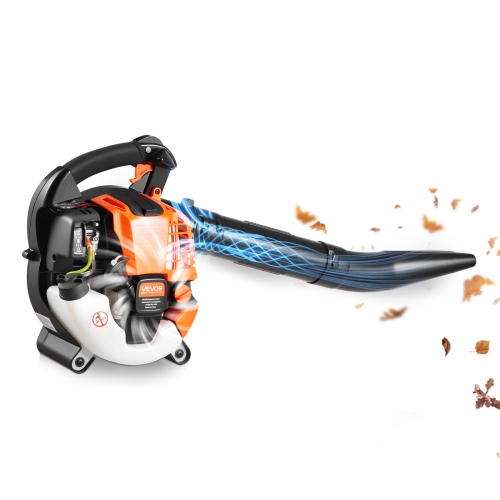
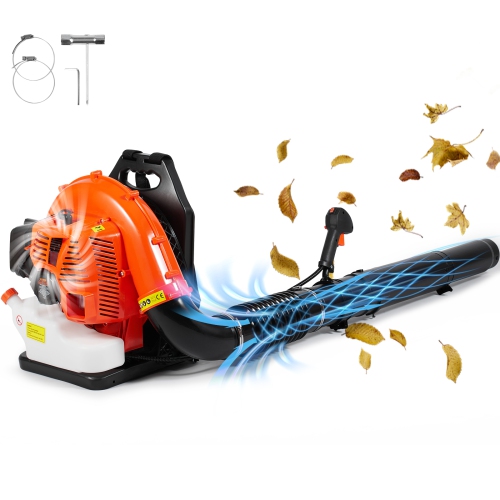
Gas leaf blowers are petrol-powered outdoor tools that use a concentrated stream of air to gather fallen leaves, grass clippings, and loose yard debris into manageable piles. Their cordless operation suits properties where cleanup extends beyond a patio or front walk to long driveways, fence lines, and stretches of lawn. For homeowners with several mature trees, a gas-powered leaf blower can make repeated leaf clearing more manageable during the cooler months, particularly when leaves collect around shrubs or spread across a broad yard. Handheld gas leaf blowers keep the engine and controls in one portable unit, making them a practical choice for shorter sessions and jobs that involve moving between separate areas. Backpack gas leaf blowers place the engine on a harness, distributing its weight across the shoulders and back while a flexible tube directs airflow. That layout often suits larger properties and longer stretches of work, though total weight, harness fit, and vibration still affect comfort. The difference is noticeable when comparing a quick sweep of dry leaves from a walkway with clearing a lawn bordered by maples: the first calls for easy handling and precise control, while the latter puts greater emphasis on sustained airflow and carrying comfort. Gas models also suit property caretakers and landscaping crews who need to move between outdoor work areas without access to an electrical outlet. Their usefulness depends on the task, however, and more power is not always better beside mulch, gravel, or delicate plantings. Adjustable throttle control helps match the air stream to the surface, easing scattered leaves out of a garden edge without unnecessarily shifting the material beneath them. For household cleanup needs across different power types and carrying styles, Residential Leaf Blowers provides a related category to explore. Within the gas category, the most meaningful distinctions are engine design, air output, operating weight, and how comfortably the blower handles the work expected of it.

Gas leaf blower performance is commonly described using air volume, measured in cubic feet per minute, or CFM, and air speed, often listed in miles per hour or kilometres per hour. CFM describes how much air moves through the blower, while air speed describes how quickly that air travels. Higher air volume generally helps move larger quantities of leaves, while a fast, focused air stream can help loosen debris caught along pavement edges. Neither figure tells the whole story on its own, because nozzle shape, testing conditions, and the nature of the debris all influence results. A broad layer of dry leaves behaves differently from a damp, compacted patch beneath a hedge, and wet leaves may still need loosening with a rake. Engine displacement, expressed in cubic centimetres, describes engine size rather than providing a direct measure of clearing performance. Two-stroke gas leaf blowers typically require gasoline mixed with two-stroke oil at the ratio specified by the manufacturer. Many four-stroke designs use gasoline and a separate engine-oil reservoir, although some engines with a four-stroke operating cycle still require premixed fuel. The stated fuel and lubrication requirements therefore matter more than the engine label alone. Starting arrangements also vary, with combinations of pull cords, primer bulbs, chokes, and assisted-start mechanisms affecting the starting routine. Features such as a throttle lock can make a steady clearing pass more comfortable, while an accessible stop switch and well-positioned controls support straightforward operation. Tube length and nozzle design deserve attention alongside engine specifications: a tube that reaches a useful working position without excessive bending can make a noticeable difference along a lengthy driveway. For handheld designs, balance at the grip matters as much as the listed weight. For backpack designs, adjustable padded straps and a supportive back panel help establish a secure fit. Anyone expecting to share the blower with another household member benefits from adjustments that accommodate different heights and reaches without forcing an awkward wrist angle or posture.

Durability in a gas leaf blower comes from both its construction and its upkeep. These tools commonly combine moulded polymer housings and blower tubes with metal engine components, providing a balance of manageable weight and strength for regular outdoor use. Secure tube connections, sturdy handles, protected controls, and accessible service points are useful details when a blower will be carried through a gate, loaded for transport, or stored alongside other yard equipment. Air intakes need to remain clear of leaves and loose clothing, and the air filter requires attention according to the manufacturer’s maintenance schedule, especially after dusty work. Spark plug checks, inspection of fuel lines, and cleaning around cooling openings also help support dependable operation. Fresh fuel that meets the engine’s requirements is important, as gasoline left sitting for extended periods can contribute to starting and running problems. Fuel stabilizer, tank draining, and storage procedures should follow the instructions for the particular engine rather than a single routine applied to every blower. Refuelling belongs outdoors with the engine stopped and cooled, using an approved fuel container away from ignition sources. Because gas engines produce exhaust containing carbon monoxide, operation is for outdoor spaces, never inside a garage or shed, even with the door open. Hearing protection, safety glasses, sturdy footwear, and fitted clothing are sensible essentials, and the air stream should stay directed away from people, pets, vehicles, and windows. A low throttle setting is often enough on a hard surface, reducing scattered grit and giving better control near corners. Local noise rules and permitted operating hours can also affect whether a gas blower is suitable for a residential property. Before longer storage, removing accumulated debris, checking for damage, and allowing the engine to cool helps keep the tool ready for its next use. A dry, secure storage location and careful attention to fuel handling matter particularly when yard work becomes less frequent. For regular users, the strongest fit is a blower whose carrying style, controls, and maintenance needs match the property and the person doing the clearing, rather than one chosen on engine size alone.
Read More

FAQ

Some products may be subject to Environmental Handling Fees (EHF) depending on your province. Learn more about EHFs.