Half Patio Umbrellas
Transform your outdoor space with our collection of half patio umbrellas. Perfect for small balconies or cozy corners, these unique umbrellas provide just the right amount of shade and style. Whether you're looking to add a pop of color or a touch of elegance, our selection offers a variety of sizes, colors, and materials to suit your personal taste and complement your outdoor decor. Say goodbye to harsh sun rays and hello to relaxing moments under the partial shade of our half patio umbrellas.
Sort

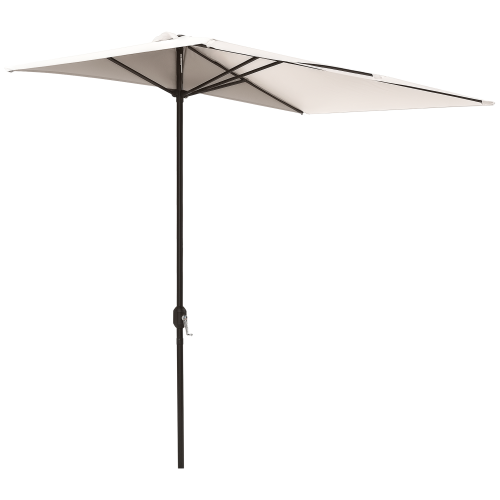
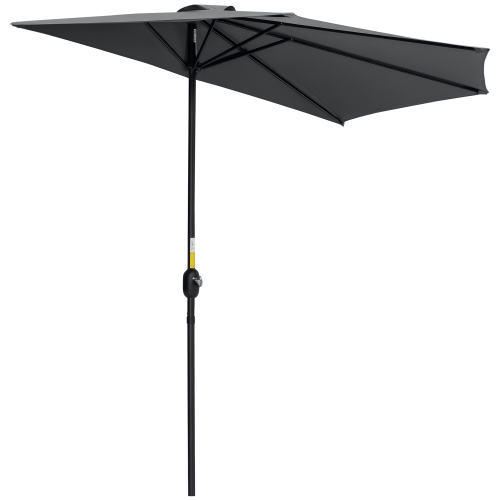
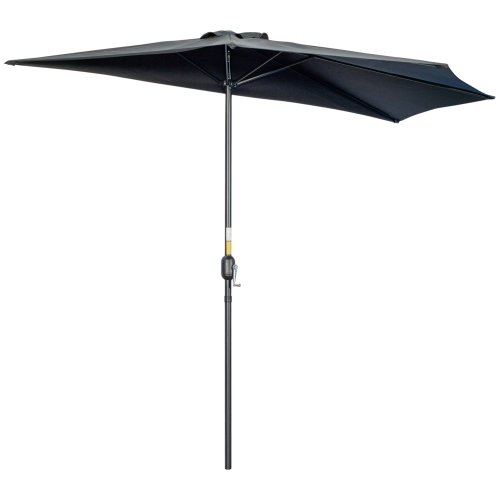
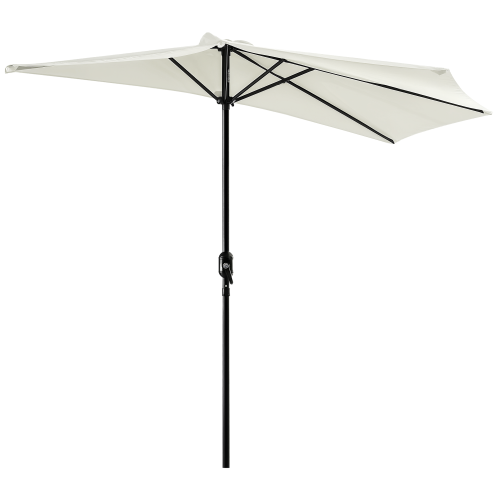

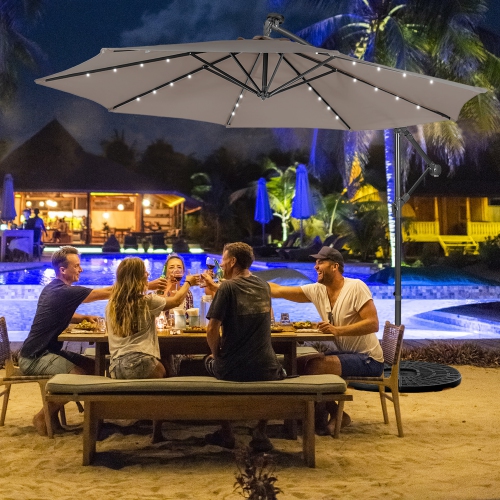
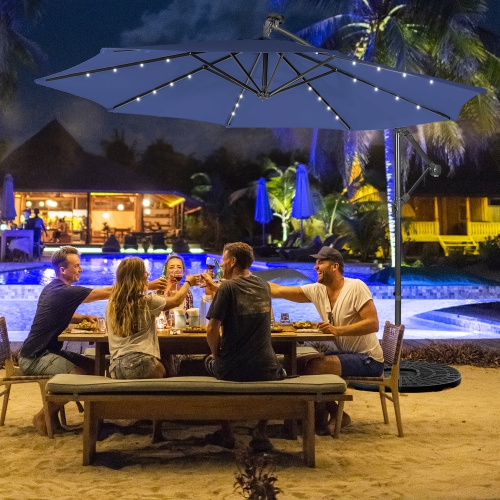
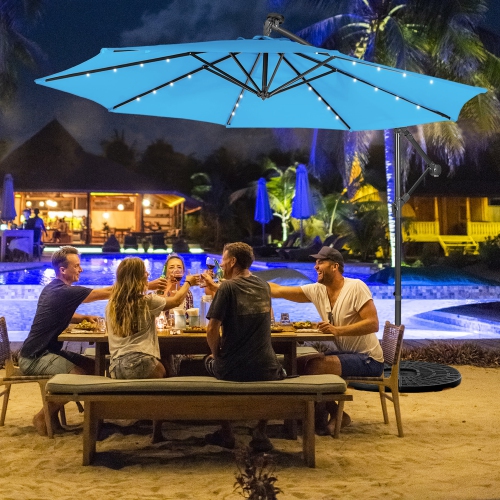
Wall-side shade with more room to move
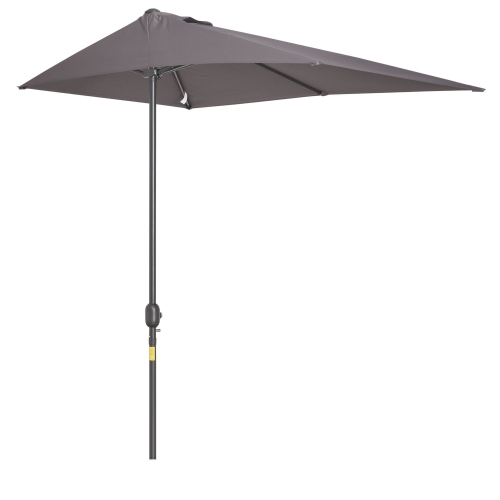
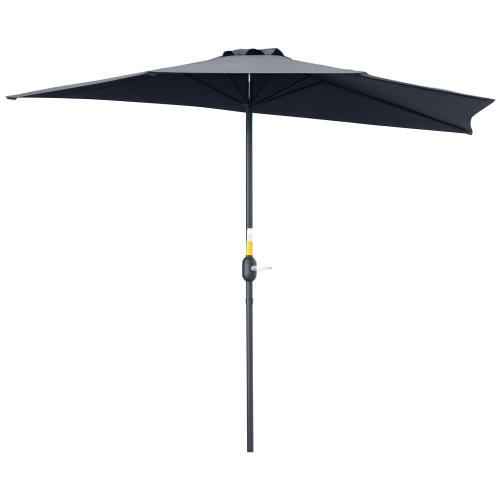
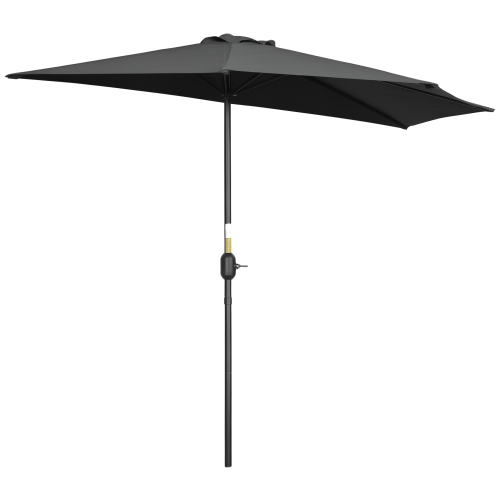
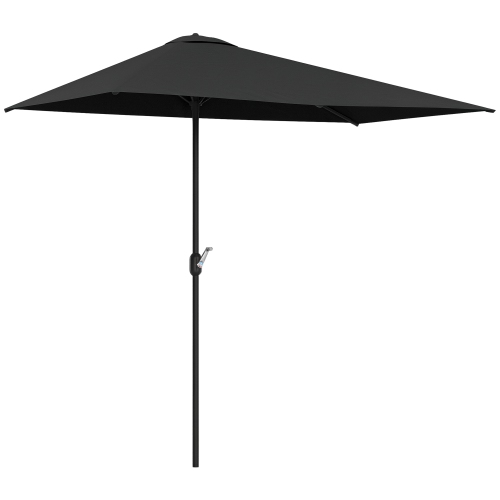
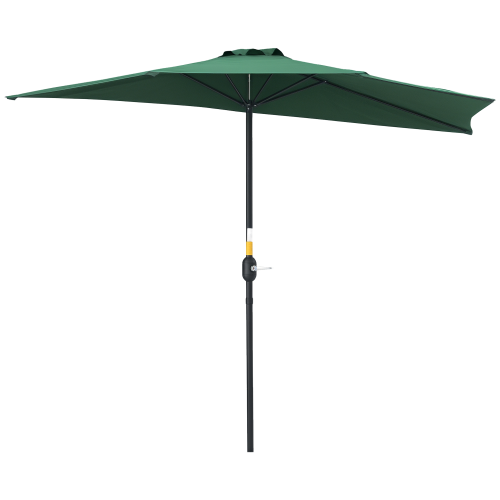
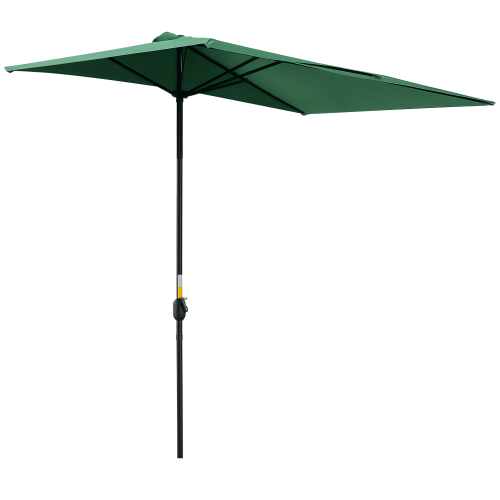
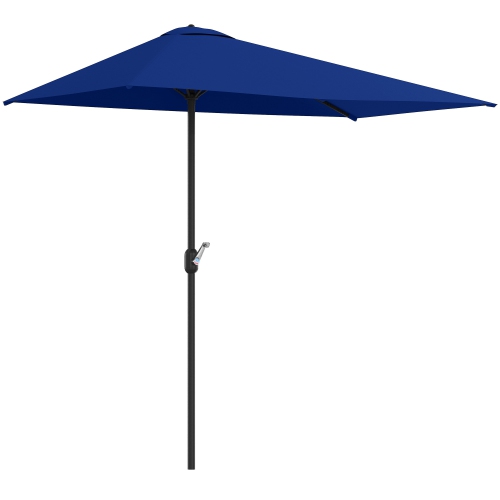
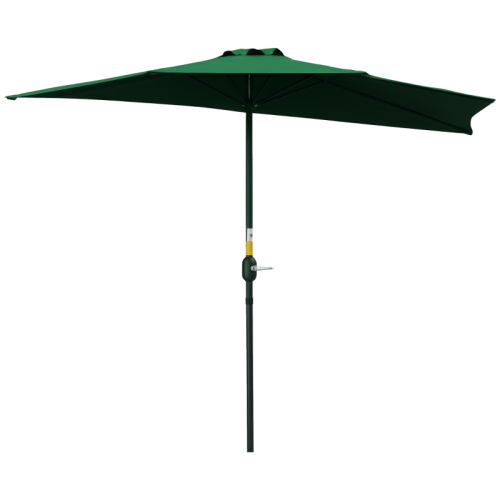
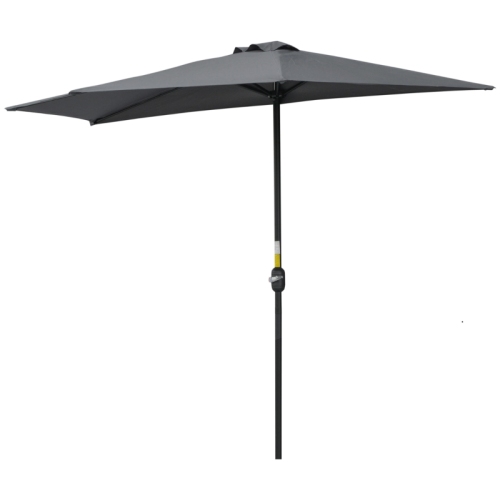
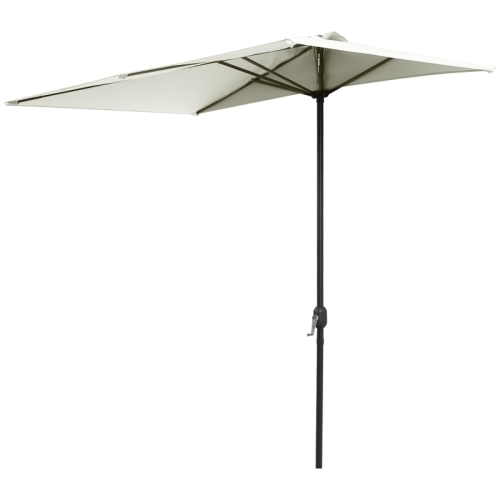
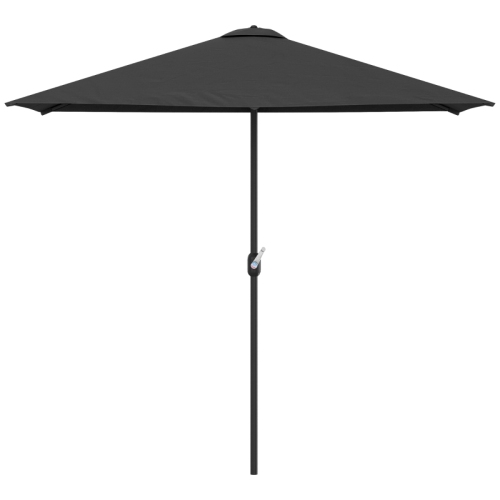
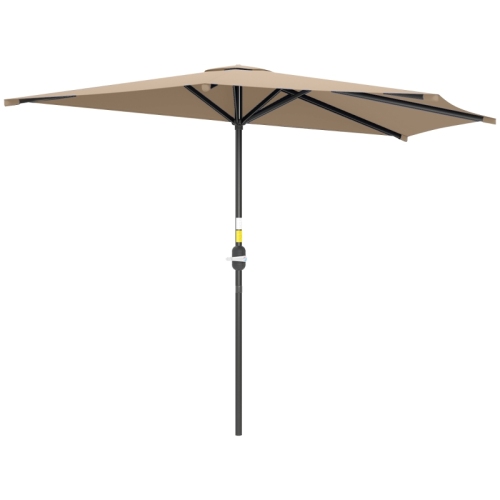
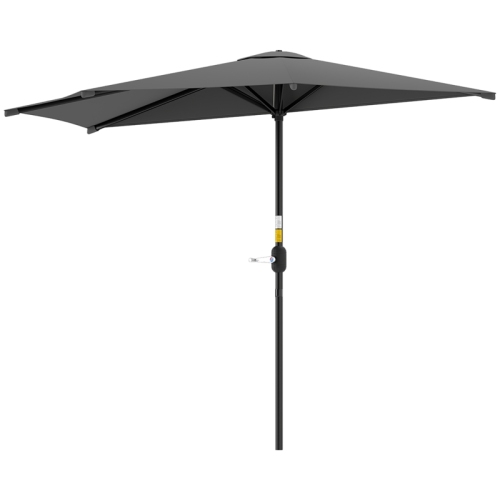
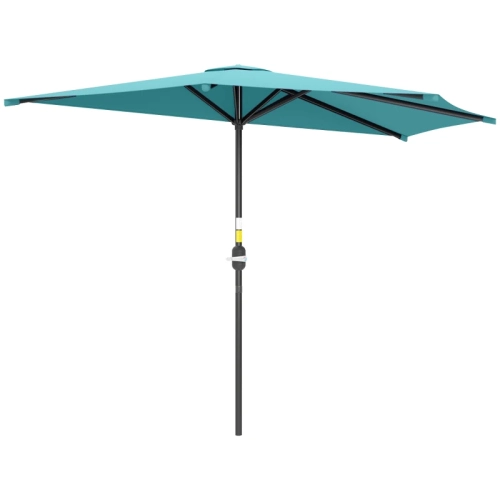
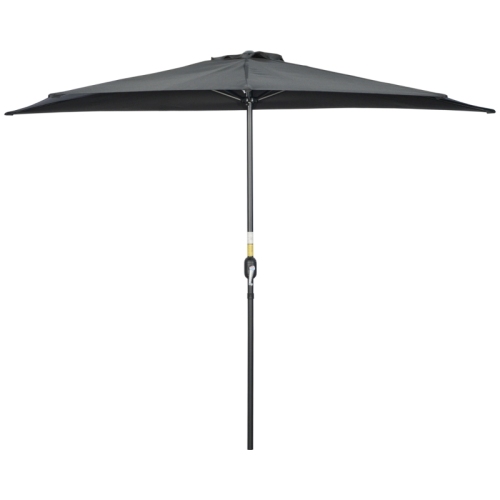
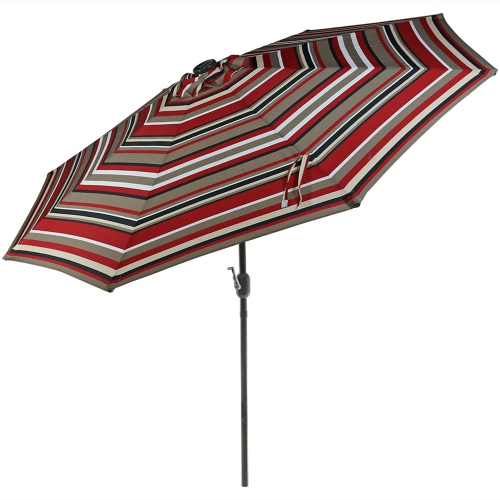
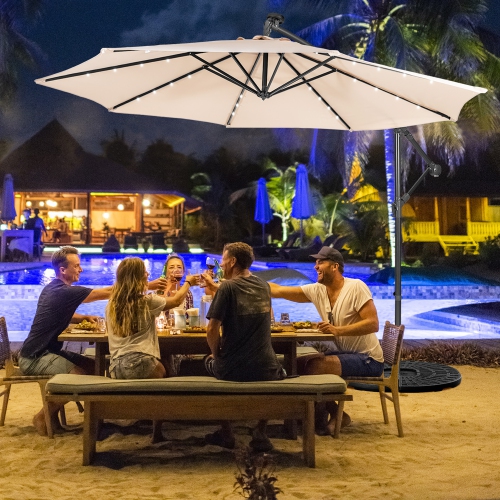
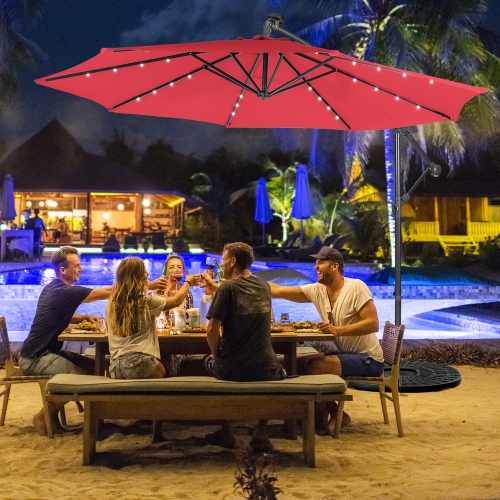
Half patio umbrellas are freestanding outdoor shade umbrellas with a straight back edge designed to sit close to a wall or another suitable vertical surface. Their canopy projects outward over a seating area rather than extending equally in every direction, making them useful for narrow balconies, compact decks, and patios where a full round umbrella would take up too much room. The shape creates a sheltered spot for a bistro table, a reading chair, or a small bench while leaving more of the surrounding area open for movement. On an apartment balcony, for example, a half umbrella can shade two chairs beside the building without placing a broad canopy across the entire space. Along a townhouse patio, it can define a quiet seating nook against a brick wall. Although often described as half-round umbrellas, canopy outlines vary, so both the width along the straight edge and the depth extending away from it matter when assessing fit. Overall height is equally important beneath an overhang or near an outward-opening window. A canopy’s stated width does not describe the footprint of its base, the clearance needed to operate its lift, or the exact patch of shade it will cast. The sun’s angle changes throughout the day, and a placement that shades a breakfast table may leave the same seats exposed later. Thinking about when the area gets used helps match the umbrella’s position to everyday routines. The flat side is intended to sit near a surface; it does not mean the umbrella attaches to that surface or gains structural support from it. Room is still needed for the fabric and frame to open without scraping siding, glass, or a balcony railing. For spaces that do not have a suitable wall beside the seating area, Small Patio Umbrellas offer another compact shade format to consider. Half patio umbrellas are particularly well suited to layouts where the seating already follows the edge of the building and shade is needed over a defined area rather than across the whole patio.
Canopy fabric and frame construction influence how a half patio umbrella looks, handles regular use, and stands up to outdoor exposure. Polyester is a common canopy material, while some umbrellas use acrylic or other outdoor fabrics. Fabric type alone does not establish performance: a stated ultraviolet protection rating, water-repellent treatment, and documented resistance to fading provide more useful details about a canopy’s intended use. Shade can make an outdoor seat more comfortable, but an umbrella does not block all reflected or indirect ultraviolet exposure. Likewise, water-repellent fabric may shed a brief light shower without making the umbrella suitable as a rain shelter. Water should not be allowed to pool on the canopy. Reinforced rib pockets, neatly finished seams, and securely attached fabric help the canopy maintain its shape through repeated opening and closing. Frame materials also involve practical trade-offs. Aluminium is relatively light and resists rust, making it convenient when an umbrella needs to be moved into storage. Steel can provide a sturdy frame, though its protective finish needs attention if it becomes scratched or chipped. Rib construction, joint quality, and the condition of fasteners matter alongside the pole material. A vented canopy allows some air to pass through, but it does not make the umbrella safe to leave open in strong wind. Hand-crank lifts are common and can make opening a canopy easier than pushing it upward manually; the crank still needs enough clearance for a comfortable turn when the pole is close to a wall. Where a tilt function is included, its direction of movement matters because the building may limit how far the canopy can angle. Colour adds another practical and visual consideration. A pale neutral can blend with light siding and cushions, while a deeper shade can frame a seating area against stone or wood. Fabric fading resistance matters regardless of the colour chosen, especially on an exposed balcony. For someone furnishing a first apartment or refreshing a small outdoor sitting area, these details can make a half umbrella a thoughtful gift, provided the dimensions, base requirements, and building rules are known in advance.
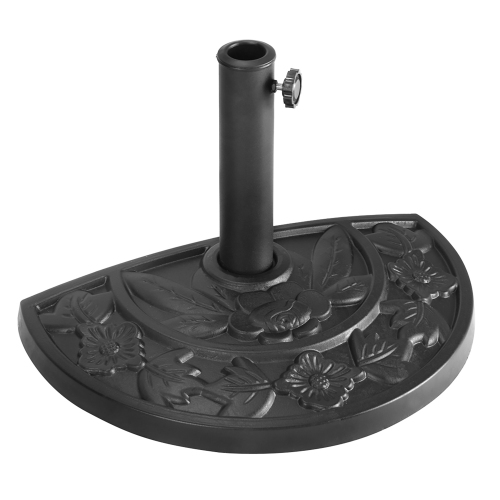
A compatible base is essential to the fit and safe use of a half patio umbrella. The flat-backed canopy does not balance itself against a wall, and a base that looks proportionate may still be too light for the umbrella. Some half umbrellas are paired with a matching base, while others require one separately. Half-round or flat-backed bases can keep the support close to a wall, but compatibility depends on the pole diameter, the base’s receiving tube, and the umbrella manufacturer’s specified support requirements. There is no single base weight suitable for every half umbrella; canopy size, construction, placement, and the manufacturer’s instructions all affect the required setup. A retaining knob or collar should secure the pole as directed, and the base should sit on a firm, level surface rather than rocking across uneven pavers. Its position also needs to leave clear access to doors, seating, and walking routes. A sliding door may not swing outward, but it still needs an unobstructed entrance, and an umbrella should never interfere with an exit. On balconies, building or condominium rules may place limits on outdoor furnishings, umbrella placement, or anything extending beyond the railing. Exposed and elevated locations can experience sudden gusts, so closing the canopy when it is unattended or when wind increases is an important part of routine care. For cleaning, gentle removal of loose dirt followed by the fabric maker’s suggested washing method helps avoid unnecessary wear; mild soap and water are often suitable, while abrasive scrubbing and harsh cleaners can damage finishes or treatments. The canopy should dry fully before being covered or stored to reduce the chance of mildew. Periodic checks of ribs, seams, crank operation, and base fittings help catch wear before the next use. During extended periods without use, particularly when snow or ice is expected, dry indoor storage protects the fabric and moving parts. With a suitable footprint, secure support, and straightforward care, a half patio umbrella can make a modest outdoor seating area more comfortable without crowding it.
Canopy fabric and frame construction influence how a half patio umbrella looks, handles regular use, and stands up to outdoor exposure. Polyester is a common canopy material, while some umbrellas use acrylic or other outdoor fabrics. Fabric type alone does not establish performance: a stated ultraviolet protection rating, water-repellent treatment, and documented resistance to fading provide more useful details about a canopy’s intended use. Shade can make an outdoor seat more comfortable, but an umbrella does not block all reflected or indirect ultraviolet exposure. Likewise, water-repellent fabric may shed a brief light shower without making the umbrella suitable as a rain shelter. Water should not be allowed to pool on the canopy. Reinforced rib pockets, neatly finished seams, and securely attached fabric help the canopy maintain its shape through repeated opening and closing. Frame materials also involve practical trade-offs. Aluminium is relatively light and resists rust, making it convenient when an umbrella needs to be moved into storage. Steel can provide a sturdy frame, though its protective finish needs attention if it becomes scratched or chipped. Rib construction, joint quality, and the condition of fasteners matter alongside the pole material. A vented canopy allows some air to pass through, but it does not make the umbrella safe to leave open in strong wind. Hand-crank lifts are common and can make opening a canopy easier than pushing it upward manually; the crank still needs enough clearance for a comfortable turn when the pole is close to a wall. Where a tilt function is included, its direction of movement matters because the building may limit how far the canopy can angle. Colour adds another practical and visual consideration. A pale neutral can blend with light siding and cushions, while a deeper shade can frame a seating area against stone or wood. Fabric fading resistance matters regardless of the colour chosen, especially on an exposed balcony. For someone furnishing a first apartment or refreshing a small outdoor sitting area, these details can make a half umbrella a thoughtful gift, provided the dimensions, base requirements, and building rules are known in advance.
A compatible base is essential to the fit and safe use of a half patio umbrella. The flat-backed canopy does not balance itself against a wall, and a base that looks proportionate may still be too light for the umbrella. Some half umbrellas are paired with a matching base, while others require one separately. Half-round or flat-backed bases can keep the support close to a wall, but compatibility depends on the pole diameter, the base’s receiving tube, and the umbrella manufacturer’s specified support requirements. There is no single base weight suitable for every half umbrella; canopy size, construction, placement, and the manufacturer’s instructions all affect the required setup. A retaining knob or collar should secure the pole as directed, and the base should sit on a firm, level surface rather than rocking across uneven pavers. Its position also needs to leave clear access to doors, seating, and walking routes. A sliding door may not swing outward, but it still needs an unobstructed entrance, and an umbrella should never interfere with an exit. On balconies, building or condominium rules may place limits on outdoor furnishings, umbrella placement, or anything extending beyond the railing. Exposed and elevated locations can experience sudden gusts, so closing the canopy when it is unattended or when wind increases is an important part of routine care. For cleaning, gentle removal of loose dirt followed by the fabric maker’s suggested washing method helps avoid unnecessary wear; mild soap and water are often suitable, while abrasive scrubbing and harsh cleaners can damage finishes or treatments. The canopy should dry fully before being covered or stored to reduce the chance of mildew. Periodic checks of ribs, seams, crank operation, and base fittings help catch wear before the next use. During extended periods without use, particularly when snow or ice is expected, dry indoor storage protects the fabric and moving parts. With a suitable footprint, secure support, and straightforward care, a half patio umbrella can make a modest outdoor seating area more comfortable without crowding it.
Top selling and popular products
-
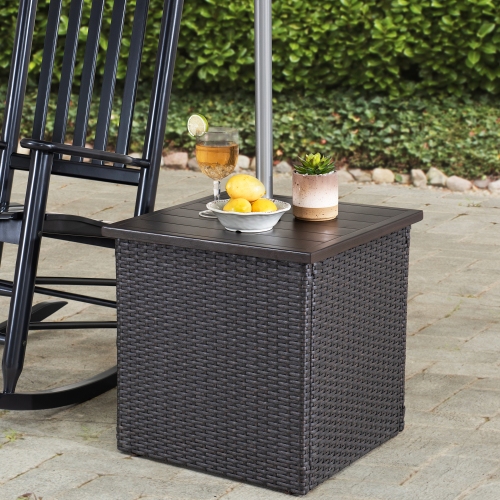 Your price for this item is $160.99
 -
 Your price for this item is $146.95
 -
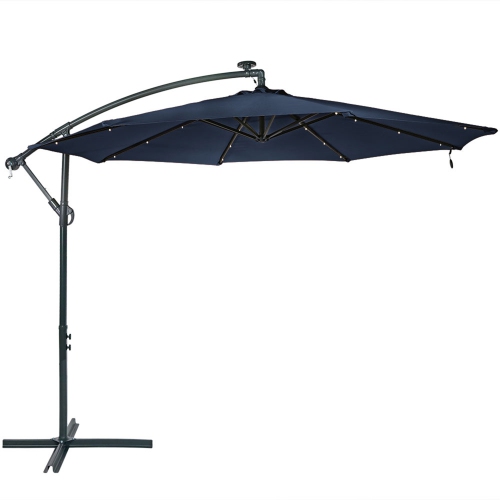 Your price for this item is $248.55
 -
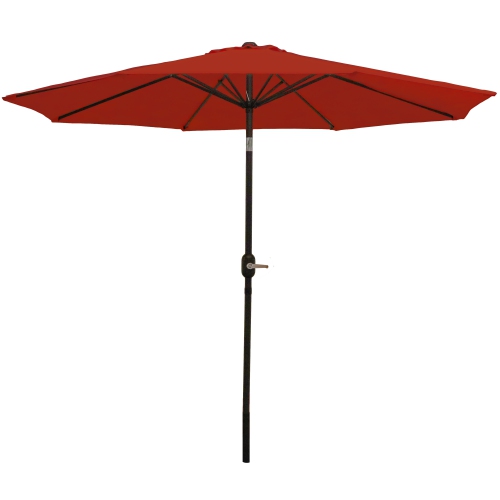 Your price for this item is $146.95
 -
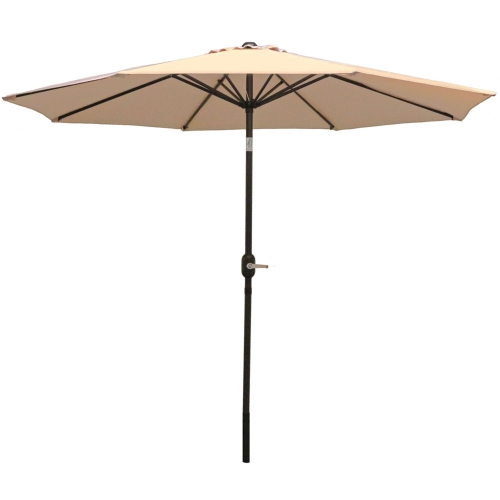 Your price for this item is $146.95
 -
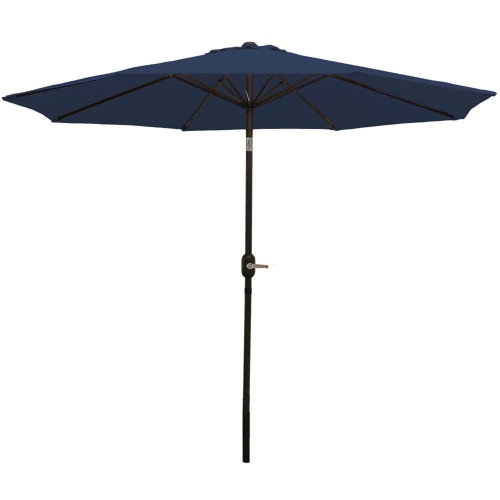 Your price for this item is $146.95
 -
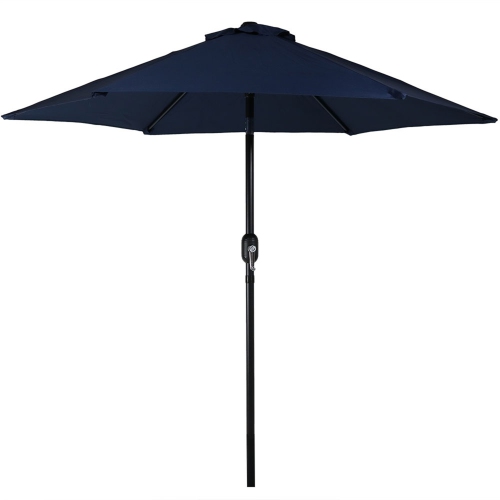 Your price for this item is $146.95
 -
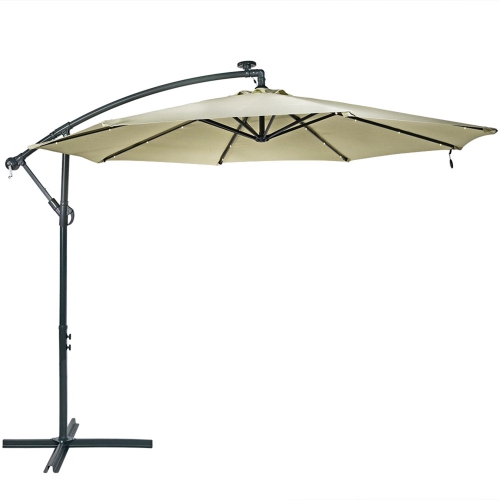 Your price for this item is $248.55
Discover more categories related to Half Patio Umbrellas
Top Collections:
Pokemon Centers, Kindle Devices, Best Budget Office Chairs, Apple iPhones 16, Canon G7X Cameras, iPhone 15 Apple, Alarm Clock, Refurbished Apple Laptops, Flip Phones, Best Laptops for Writers
Some products may be subject to Environmental Handling Fees
(EHF) depending on your province.
Learn more about EHFs.