Icing Piping Bags
Looking to take your baking skills to the next level? Our selection of icing piping bags is a must-have for any aspiring pastry chef or avid home baker. Whether you're decorating a cake for a special occasion or adding intricate details to your cookies and cupcakes, these versatile tools provide precision and control to help you achieve professional-looking results every time. With a variety of sizes and materials to choose from, our icing piping bags are designed to make your baking experience easier and more enjoyable.
Sort


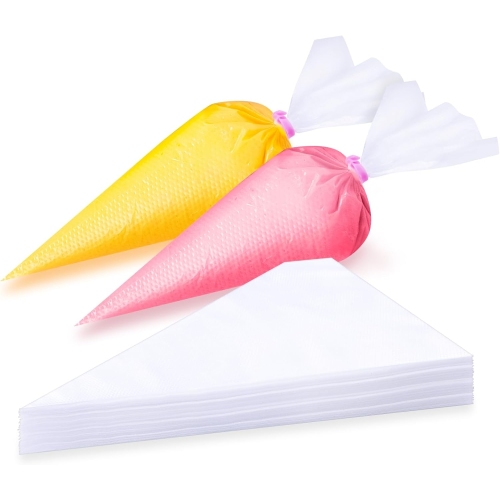
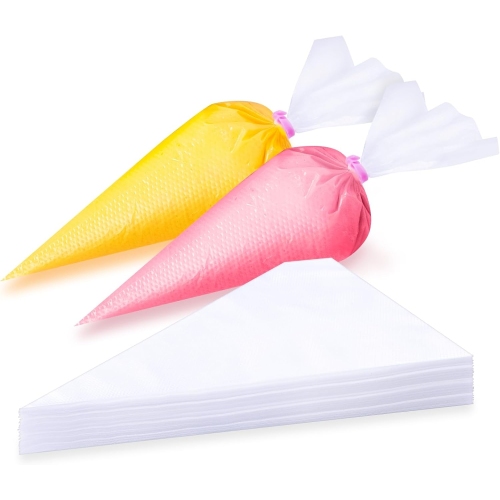
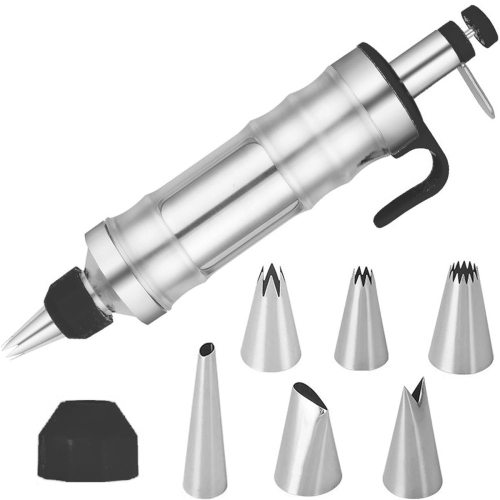
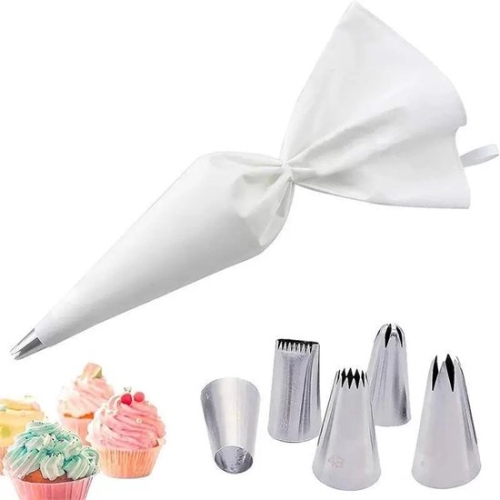
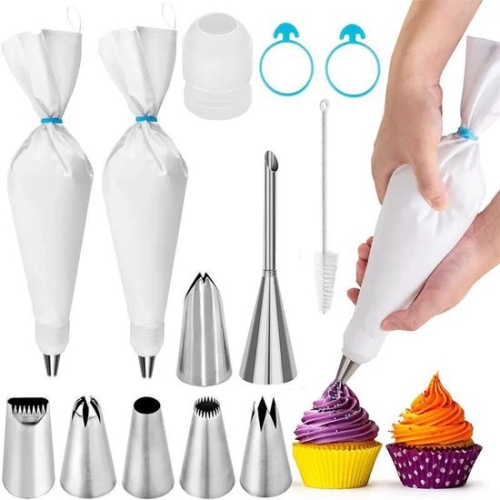


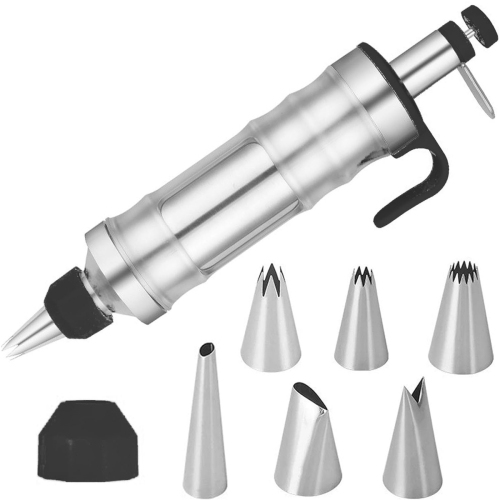
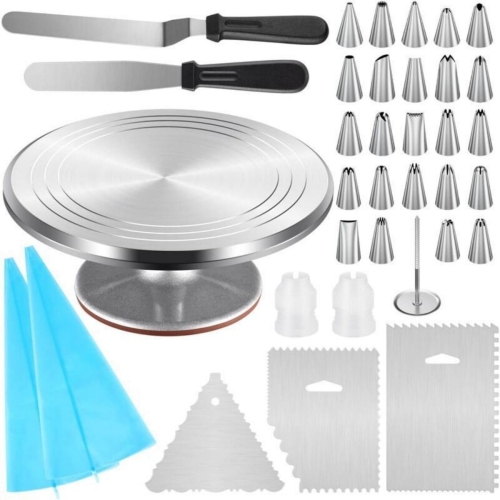
How bag size and tip fit shape decorating control
Icing piping bags are cone-shaped baking tools that hold icing, frosting, or other soft mixtures and direct them through a narrow opening for controlled decorating. Paired with a suitable piping tip, they can create buttercream rosettes, shell borders, delicate lettering, and neat rows of stars; without a tip, some bags can be trimmed to pipe simple lines or fill pastries. Their appeal goes beyond elaborate celebration cakes. A swirl on a cupcake, a fine outline around a sugar cookie, or evenly portioned filling between sandwich cookies can give everyday baking a more finished appearance. The right bag depends on the mixture, the amount being piped, and the level of detail involved. Small bags are easier to manoeuvre for names, dots, and intricate cookie designs, while larger bags hold more frosting for repeated cupcake swirls or broad cake borders. A 12-inch bag is a common choice for smaller decorating tasks, while 16-inch to 18-inch bags suit larger batches and more generous fillings. Those measurements describe the bag’s length rather than a fixed filling capacity, which varies with its shape. Comfort matters as much as volume: a large bag filled heavily with dense buttercream can be tiring to squeeze, particularly during detailed work. Leaving space at the wide end allows the bag to be twisted closed and held securely without frosting escaping over the top. For someone decorating a few birthday cupcakes, a manageable bag with a familiar round or star tip may be more useful than an oversized setup. Bakers working with several icing colours often benefit from separate bags, keeping each shade ready for alternating petals, leaves, and borders. Clear bags make the contents easy to identify, while a flexible body helps the hand maintain steady pressure. These practical differences influence how comfortably a bag handles everything from a single line of lettering to a full tray of matching decorations.
Materials help determine how icing piping bags feel, how well they withstand pressure, and how they fit into a baking routine. Disposable plastic bags offer a fresh bag for each task and reduce washing between colours or mixtures. They are particularly convenient for projects involving several small portions of royal icing, where keeping colours separate makes the work more organized. Film thickness and seam strength matter: a very thin bag may be less comfortable with stiff frosting, while a sturdier bag can provide greater confidence under sustained pressure. Reusable piping bags are commonly made from silicone or coated fabric, with flexibility and construction varying by design. Silicone can offer a supple feel and a grippy surface, while coated fabric bags may provide a structured feel suited to repeated filling and squeezing. Food-contact suitability is important regardless of material, and any stated limits on heat or dishwasher use should be checked rather than assumed. The inside surface also deserves attention because smooth linings are generally easier to clear of greasy buttercream than textured areas or folds that hold residue. At the narrow end, fit depends on the bag opening, the piping tip, and whether a coupler is being used. A coupler holds a compatible tip in place and allows tips to be changed while the same icing remains in the bag, which is useful when one colour appears in both lettering and borders. Standard and large couplers are not interchangeable across every tip, so matching dimensions is more reliable than assuming all decorating accessories fit together. Tipless piping bags are intended to work through a trimmed opening, making them useful for fine cookie outlines and small details when their material and seam design support that use. For a coordinated decorating setup, Cake Icing Tools can complement piping bags with accessories for shaping, smoothing, and finishing. Bag texture, tip compatibility, and enough room for a secure grip all contribute to control without making the setup unnecessarily complicated.
The intended filling is another important consideration, since a bag that feels effortless with soft whipped cream may behave differently with firm buttercream or thick choux paste. Royal icing used for cookie outlines needs a small, controlled opening, while a generous cupcake swirl requires a tip and bag opening wide enough to let the frosting pass smoothly. Fine openings can clog if a mixture contains lumps or particles, and extra hand pressure is not a reliable substitute for a suitable consistency. Strong seams and a secure tip fit are especially valuable for denser mixtures, although every bag has limits. Piping bags also have uses beyond decorative icing, including portioning meringues, filling cream puffs, and placing smooth savoury fillings into small pastry shells. Suitability depends on the bag’s construction and the manufacturer’s directions, particularly for warm preparations. For reusable bags, prompt cleaning helps prevent frosting from drying around the narrow end and keeps fats and colour residue from building up along seams. Thorough washing with an appropriate detergent, careful rinsing, and complete drying before storage support regular use; dishwasher cleaning is suitable only when specified by the manufacturer. Disposable bags are intended for single use rather than repeated washing. Reusable bags should be checked for splitting, damaged coatings, lingering odours, or weakened seams, since these signs can affect cleanliness or performance. Dry bags stored without heavy creases through vulnerable areas are easier to keep ready for the next baking project, and tips and couplers are best kept where small parts will not be lost. For beginners, a comfortable size and straightforward fit can make practice more enjoyable, whether the goal is evenly spaced stars or a readable birthday message. More experienced home bakers may prefer several bag sizes to move between fine details and batch work. As a gift, piping bags make a practical addition to a baking set for someone who enjoys cake decorating, cookie art, or filled pastries. Their lasting usefulness comes from matching the bag to the baker’s hands, favourite mixtures, and usual projects rather than choosing size or material alone.
Top selling and popular products
-
 Your price for this item is $26.99
-
 Your price for this item is $24
-
 Your price for this item is $21.88
-
 Your price for this item is $23
-
 Your price for this item is $29.78
-
 Your price for this item is $79.6
-
 Your price for this item is $95
-
 Your price for this item is $47.35
Discover more categories related to Icing Piping Bags


Top Collections:
Best Black Friday Deals This Year, Best Black Friday Deals On Electronics, Kindle Devices, Pokemon Centers, Best Black Friday Deals On Apple Products, Best Cameras for Sports Photography, Dyson Airwrap, Pokémon 30th Celebration Cards, Apple iPhone 17 Pro, Canon G7X Cameras
Some products may be subject to Environmental Handling Fees
(EHF) depending on your province.
Learn more about EHFs.