King Size Memory Foam Mattresses
Transform your sleep experience with a king size memory foam mattress, designed to provide unparalleled comfort and support. Perfect for those who crave ample space and a restful night's sleep, these mattresses conform to your body's unique shape, ensuring pressure relief and proper alignment. Whether you're upgrading your bedroom or furnishing a new home, discover the luxurious feel that a king size memory foam mattress can bring to your nightly routine. Explore our selection to find the ideal fit for your lifestyle and enjoy the benefits of improved sleep quality.
Sort
![VISCOLOGIC [] Fusion-Gel 12" Thick Gel-Infused Cool Memory Foam Mattress (King)](https://multimedia.bbycastatic.ca/multimedia/products/500x500/138/13898/13898470.jpeg)

More room to stretch with body-contouring comfort
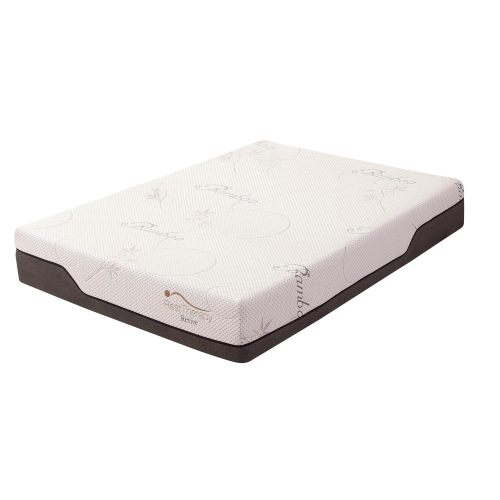
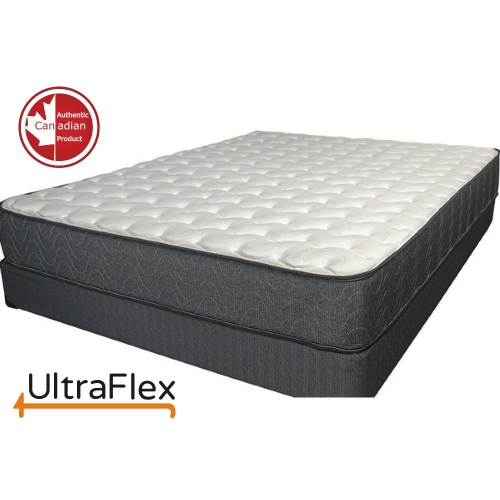
King-size memory foam mattresses offer a broad, body-contouring sleep surface for couples, people who like room to stretch out, and anyone furnishing a spacious main bedroom. A standard king mattress measures approximately 76 inches wide by 80 inches long, giving two sleepers about 38 inches of width each without adding length compared with a standard queen. That extra width can make a noticeable difference when one person sleeps curled on their side and the other prefers to spread out. Memory foam is a viscoelastic material that gradually responds to weight and body heat, allowing the surface to contour around areas such as the shoulders and hips. In an all-foam mattress, the memory foam comfort layers usually sit above a firmer polyurethane foam support core, sometimes with a transition layer between them to soften the change in feel. This layered construction helps distribute body weight while providing a stable base. Memory foam also absorbs movement rather than readily transferring it across the bed, which can reduce disturbance when a partner changes position or gets up. The degree of motion isolation depends on the construction, and it does not mean every movement will go unnoticed. Mattresses with memory foam over a coil support system are hybrids and generally feel different from all-foam designs, often offering more bounce. For shoppers drawn to the close, cushioned feel associated with memory foam, the depth and responsiveness of the upper layers matter as much as the overall mattress height. Some surfaces let the body settle into a pronounced cradle; others provide gentler contouring with less sink. A king-size bed can suit a shared bedroom particularly well, but it also works for a solo sleeper who values generous space. Its appeal is not simply its size: the combination of room to move, pressure-relieving cushioning, and reduced motion transfer makes this mattress type a practical option for a range of everyday sleep preferences.
Comfort depends on how a king-size memory foam mattress responds to the person using it, not just whether its firmness is labelled soft, medium, or firm. Those labels are not standardized across manufacturers, and the same surface can feel firmer to a lighter sleeper than to someone with a heavier build. Side sleepers often appreciate enough cushioning for the shoulder and hip to settle without feeling compressed, while back sleepers may prefer a balance of contouring and support beneath the waist and pelvis. Stomach sleepers generally need a surface that limits excessive sinking at the midsection. People who change positions frequently may find a more responsive foam easier to move on than a deeply cradling, slow-response surface. These are useful starting points rather than rules, since body shape and personal preference also influence comfort. Thickness is another consideration, but a taller mattress is not automatically firmer, more supportive, or more durable. Overall height reflects the combined depth of the comfort, transition, and support layers, and two equally thick mattresses can feel quite different. For shoppers considering a moderate-profile design, 10 Inch Memory Foam Mattresses offer another way to explore mattress construction alongside the king-size dimensions needed for the room. Foam density, where provided, describes the amount of material within a given volume and can help inform durability expectations; it is not the same measurement as firmness. Sleepers who dislike a close, heat-retaining feel may also want to consider breathable covers, open-cell foam structures, or gel-infused comfort layers. These features are intended to influence airflow or heat transfer, but they do not guarantee a consistently cool sleep surface. Sheets, mattress protectors, bedding, and the amount of body contact all affect the experience. Edge support deserves attention too, particularly for someone who sits at the bedside to put on socks or sleeps close to the perimeter. Some all-foam edges compress more noticeably under concentrated weight, so a reinforced edge can be a meaningful construction detail.
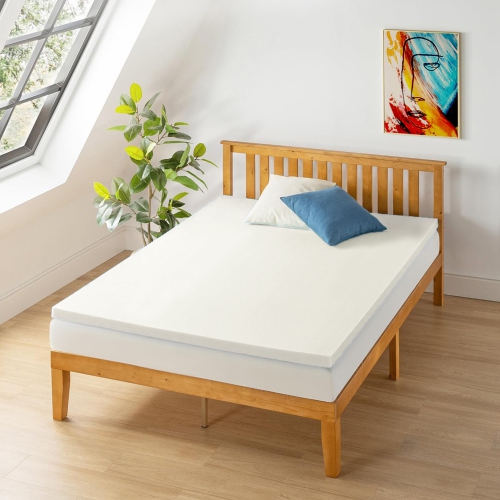
A comfortable king-size setup starts with matching the mattress to both the room and its foundation. The standard 76-inch by 80-inch dimensions describe the mattress itself, not the full footprint of a bed frame, upholstered surround, or headboard. Leaving usable space beside the bed makes everyday routines easier, from opening drawers to changing sheets without squeezing between furniture. A California king is a different size, typically 72 inches wide by 84 inches long, so its frames and fitted sheets are not interchangeable with standard king bedding. A split king commonly consists of two twin XL mattresses placed side by side, creating approximately the same overall footprint as a standard king while allowing separate mattress choices or compatible independent adjustments. For a one-piece king memory foam mattress, the base should provide the even support specified by its manufacturer. A platform or slatted foundation may be suitable, but slat spacing, centre support, and weight capacity all matter; an older box spring is not automatically an appropriate match. Adjustable-base compatibility also needs to be confirmed for the particular mattress construction. Finished bed height includes the frame, foundation, and mattress, so a thick mattress on a tall base may make getting in and out less comfortable. Fitted-sheet pocket depth should accommodate the mattress and any topper. Day-to-day care is generally straightforward: a well-fitting protector helps guard against spills, while cleaning should follow the cover and mattress care labels. A removable cover is not necessarily machine washable. Foam should not be saturated during spot cleaning, and any damp area should dry fully before bedding is replaced. Many layered memory foam mattresses are designed for one-sided use and should not be flipped; rotation is appropriate only where the manufacturer permits it. For compressed mattresses, unpacking and expansion times vary, making the supplied setup directions important. With suitable support, careful handling, and routine protection, a king-size memory foam mattress can provide a generous, comfortable foundation for daily rest. Persistent sagging, uneven support, or a clear change in comfort can indicate that its useful life is ending, regardless of its age.
Comfort depends on how a king-size memory foam mattress responds to the person using it, not just whether its firmness is labelled soft, medium, or firm. Those labels are not standardized across manufacturers, and the same surface can feel firmer to a lighter sleeper than to someone with a heavier build. Side sleepers often appreciate enough cushioning for the shoulder and hip to settle without feeling compressed, while back sleepers may prefer a balance of contouring and support beneath the waist and pelvis. Stomach sleepers generally need a surface that limits excessive sinking at the midsection. People who change positions frequently may find a more responsive foam easier to move on than a deeply cradling, slow-response surface. These are useful starting points rather than rules, since body shape and personal preference also influence comfort. Thickness is another consideration, but a taller mattress is not automatically firmer, more supportive, or more durable. Overall height reflects the combined depth of the comfort, transition, and support layers, and two equally thick mattresses can feel quite different. For shoppers considering a moderate-profile design, 10 Inch Memory Foam Mattresses offer another way to explore mattress construction alongside the king-size dimensions needed for the room. Foam density, where provided, describes the amount of material within a given volume and can help inform durability expectations; it is not the same measurement as firmness. Sleepers who dislike a close, heat-retaining feel may also want to consider breathable covers, open-cell foam structures, or gel-infused comfort layers. These features are intended to influence airflow or heat transfer, but they do not guarantee a consistently cool sleep surface. Sheets, mattress protectors, bedding, and the amount of body contact all affect the experience. Edge support deserves attention too, particularly for someone who sits at the bedside to put on socks or sleeps close to the perimeter. Some all-foam edges compress more noticeably under concentrated weight, so a reinforced edge can be a meaningful construction detail.
A comfortable king-size setup starts with matching the mattress to both the room and its foundation. The standard 76-inch by 80-inch dimensions describe the mattress itself, not the full footprint of a bed frame, upholstered surround, or headboard. Leaving usable space beside the bed makes everyday routines easier, from opening drawers to changing sheets without squeezing between furniture. A California king is a different size, typically 72 inches wide by 84 inches long, so its frames and fitted sheets are not interchangeable with standard king bedding. A split king commonly consists of two twin XL mattresses placed side by side, creating approximately the same overall footprint as a standard king while allowing separate mattress choices or compatible independent adjustments. For a one-piece king memory foam mattress, the base should provide the even support specified by its manufacturer. A platform or slatted foundation may be suitable, but slat spacing, centre support, and weight capacity all matter; an older box spring is not automatically an appropriate match. Adjustable-base compatibility also needs to be confirmed for the particular mattress construction. Finished bed height includes the frame, foundation, and mattress, so a thick mattress on a tall base may make getting in and out less comfortable. Fitted-sheet pocket depth should accommodate the mattress and any topper. Day-to-day care is generally straightforward: a well-fitting protector helps guard against spills, while cleaning should follow the cover and mattress care labels. A removable cover is not necessarily machine washable. Foam should not be saturated during spot cleaning, and any damp area should dry fully before bedding is replaced. Many layered memory foam mattresses are designed for one-sided use and should not be flipped; rotation is appropriate only where the manufacturer permits it. For compressed mattresses, unpacking and expansion times vary, making the supplied setup directions important. With suitable support, careful handling, and routine protection, a king-size memory foam mattress can provide a generous, comfortable foundation for daily rest. Persistent sagging, uneven support, or a clear change in comfort can indicate that its useful life is ending, regardless of its age.
Top selling and popular products
-
 Your price for this item is $1195
 -
 Your price for this item is $1395
 -
 Your price for this item is $945
 -
 Your price for this item is $1095
 -
 Your price for this item is $1199
 -
 Your price for this item is $1395
 -
 Your price for this item is $895
 -
 Your price for this item is $920
Discover more categories related to King Size Memory Foam Mattresses
Top Collections:
Pokemon Centers, Kindle Devices, Best Budget Office Chairs, Apple iPhones 16, Canon G7X Cameras, iPhone 15 Apple, Alarm Clock, Refurbished Apple Laptops, Flip Phones, Best Laptops for Writers
Some products may be subject to Environmental Handling Fees
(EHF) depending on your province.
Learn more about EHFs.