Kitchen Faucets for Granite Countertops
Elevate your kitchen’s style and functionality with kitchen faucets for granite countertops, designed to complement the sleek look and durability of your workspace. Whether you’re updating your current setup or completing a new kitchen design, finding the right faucet is essential for both everyday convenience and visual appeal. Explore a wide selection of options that blend seamlessly with granite surfaces, helping you create a space that’s as practical as it is beautiful.
Sort





Why faucet fit matters more than countertop material
Kitchen faucets for granite countertops are defined less by the stone itself than by the way the faucet fits the countertop, sink, and plumbing beneath it. Granite does not require a special faucet style, but a compatible mounting arrangement matters: the faucet may sit directly on the stone behind an undermount sink or mount through the rim of a drop-in sink. The number and spacing of existing holes, the thickness of the mounting surface, and the room available below the counter all affect the fit. A single-hole faucet combines the spout and handle in one opening, while other configurations use separate openings for handles or accessories. Some single-hole designs include a deck plate that can cover unused holes, provided its dimensions match the existing layout. For a faucet mounted through granite, the threaded mounting shank must accommodate the countertop thickness and leave enough length for secure fastening underneath. Additional layers, brackets, or reinforcement beneath the mounting area can also affect that measurement. These details are especially relevant when replacing a faucet without altering the countertop, since an attractive fixture is only a practical choice if it works with the openings already in place. Sink dimensions deserve equal attention. Spout reach determines where the water lands, while spout height influences clearance for filling a stockpot or rinsing a tall vase. A stream that falls too close to the back wall of the bowl can make washing awkward, and a poorly matched reach can contribute to splashing. Clearance behind the handle matters too, particularly where a backsplash or window ledge sits close to the faucet. Any new drilling or changes to granite are best assessed by a qualified professional, as misplaced holes or excessive pressure can damage the stone. The most suitable options bring these practical dimensions together without crowding the sink area or complicating everyday use.
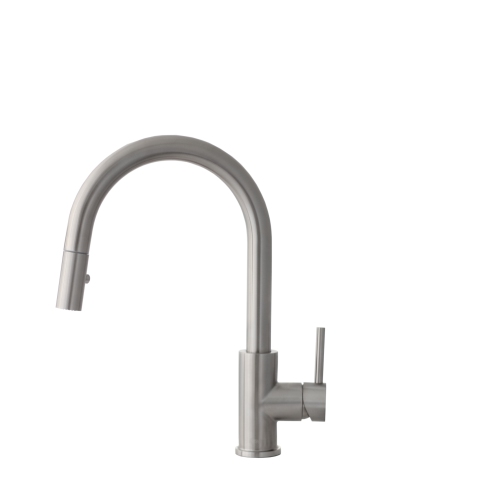
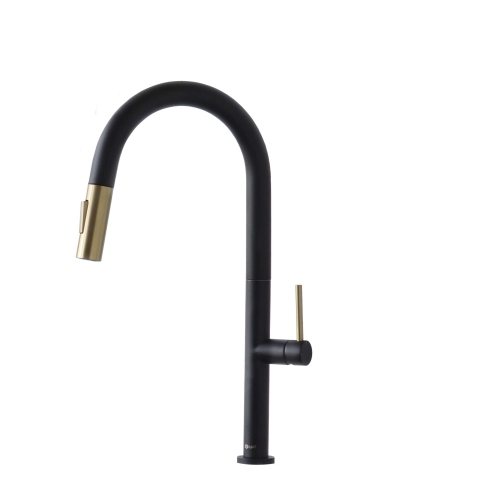
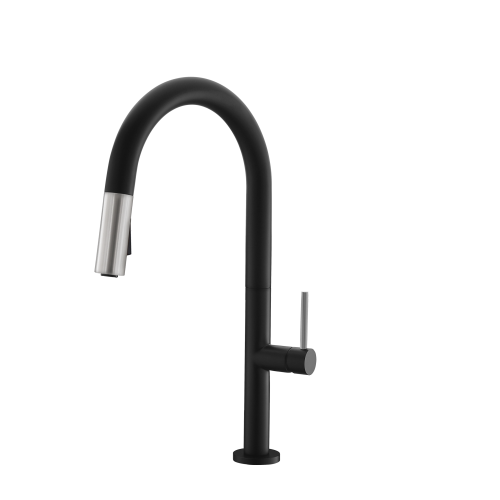
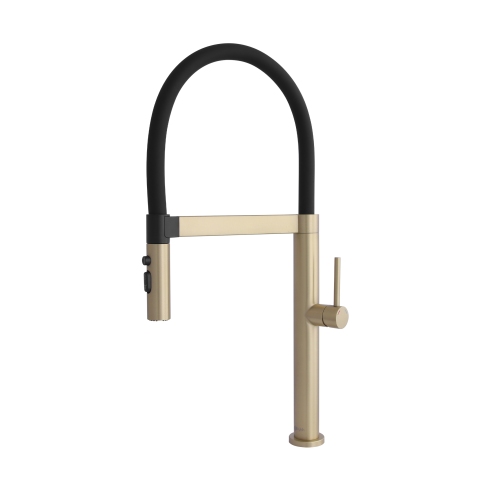
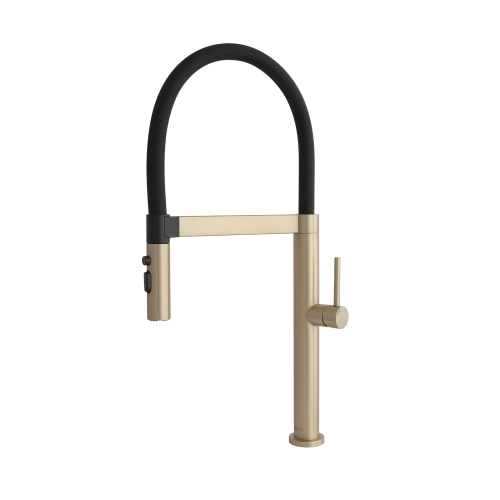
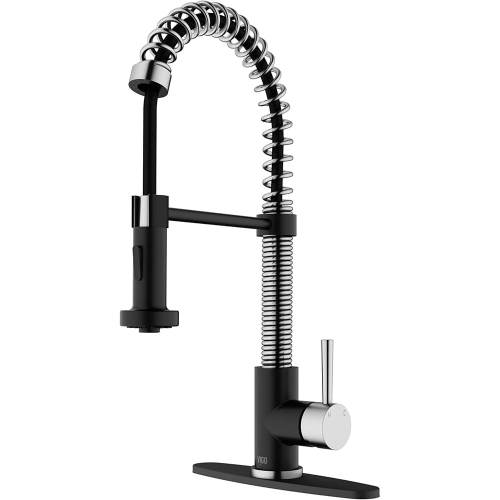
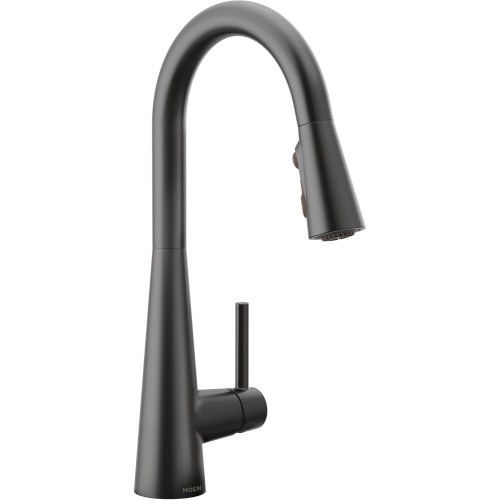
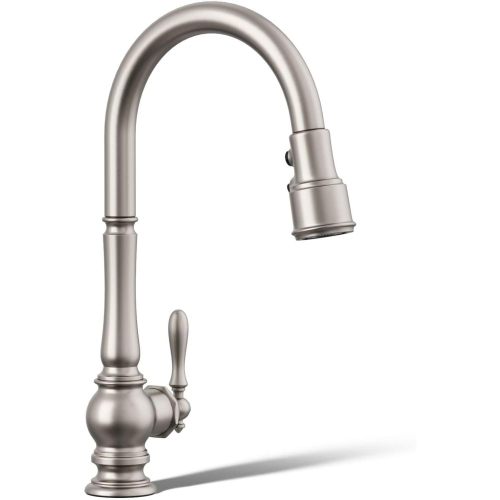
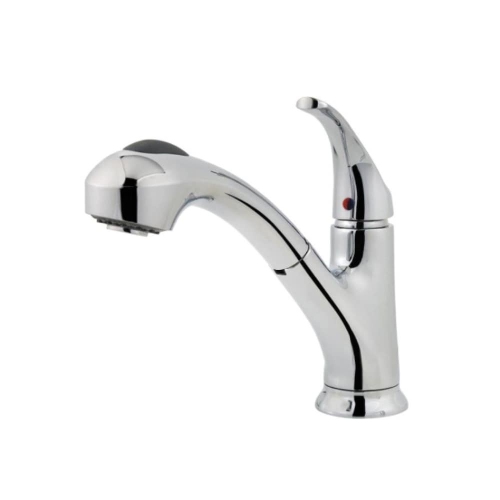
Different faucet shapes and spray functions suit different kitchen routines, even when the countertop material stays the same. A high-arc spout creates working space above the sink, making it useful for households that regularly wash roasting pans, fill pasta pots, or rinse bulky mixing bowls. A lower-profile design can feel more proportionate beneath a window or in a compact kitchen where an oversized faucet would dominate the counter. Pull-down faucets bring the spray head towards dishes and produce, while pull-out designs typically offer a lower silhouette with a head that extends away from the spout. In either case, hose movement and spray-head docking influence how comfortable the faucet feels after repeated use. A hose also needs a clear path below the sink, away from stored cleaning supplies, plumbing connections, and other obstructions. Stream and spray settings offer different kinds of control: a steady stream suits filling containers, while a broader spray helps rinse food from dishes or wash the corners of a large bowl. Single-handle controls make it possible to adjust flow and water temperature with one hand, which can be helpful when the other is holding a heavy pot. Separate handles offer a different look and feel, particularly in kitchens with traditional cabinetry or detailed hardware. Touchless designs can reduce the need to reach for a handle with flour-covered hands, although their power requirements and sensor placement vary by design. Deep apron-front basins introduce their own proportions, and Kitchen Faucets for Farmhouse Sinks provides a related focus for that sink style. Across sink types, the relationship between the spout outlet, bowl depth, and usual washing tasks matters more than appearance alone. A faucet should feel comfortable during the small, repeated movements that make up meal preparation and cleanup, from rinsing berries to washing a cutting board.
Materials, finish quality, and serviceable components help determine how a kitchen faucet holds up beside a granite countertop. Brass and stainless steel are common body materials, although construction can vary across the body, handle, spray head, and internal parts. A finish name describes the appearance rather than necessarily identifying the material underneath, so those details are worth distinguishing. Chrome brings a bright, reflective accent, brushed finishes create a softer appearance, and dark finishes provide a stronger outline against pale stone. Granite often contains several colours within its pattern, giving a faucet more than one visual connection to the room. A brushed finish might pick up a grey vein in the slab, while a warmer metallic tone can relate to cabinet pulls or lighting. An exact match across every surface is not essential; consistent undertones and balanced proportions can create a cohesive result without making the kitchen feel overly coordinated. Beyond the surface, the quality of the cartridge, mounting hardware, hose, and connections contributes to dependable operation. Ceramic disc cartridges are commonly used to control flow, while accessible replacement parts can make future maintenance more straightforward. For a busy family kitchen, a comfortable handle and a spray head that returns securely to its resting position may be more valuable than an elaborate silhouette. Care also involves both the fixture and the surrounding stone. A soft cloth and a mild cleaner approved for the faucet finish can remove everyday marks without unnecessary abrasion. Acidic descalers and harsh cleaning products may be unsuitable for the finish, the granite, or its sealer, so compatibility with both surfaces matters. Wiping away standing water around the base helps limit residue and makes a developing leak easier to notice. Where mineral deposits occur, the manufacturer’s cleaning recommendations offer a safer basis for treatment than a general-purpose remedy. With suitable dimensions, secure mounting, and manageable upkeep, a faucet can complement granite while remaining comfortable to use through years of cooking, washing, and daily household activity.
Top selling and popular products
-
 Your price for this item is $130
-
 Your price for this item is $150
-
 Your price for this item is $150
-
 Your price for this item is $109.99
-
 Your price for this item is $79.99
-
 Your price for this item is $87.99
-
 Your price for this item is $100
-
 Your price for this item is $120
Discover more categories related to Kitchen Faucets for Granite Countertops
Top Collections:
Best Black Friday Deals This Year, Best Black Friday Deals On Electronics, Kindle Devices, Dyson Airwrap, Best Cameras for Sports Photography, Best Budget Office Chairs, Canon G7X Cameras, PS5 Pro Consoles, Best Black Friday Deals On Apple Products, XBOX One S Consoles
Some products may be subject to Environmental Handling Fees
(EHF) depending on your province.
Learn more about EHFs.