Mid Century Style Sofas
Add a touch of timeless elegance to your living space with our collection of mid-century-style sofas. Whether you're a fan of the iconic tufted backrests or prefer the clean and simple silhouettes, our mid-century-style sofas offer both comfort and style. Discover a range of colors and sizes to choose from, so you can find the perfect piece to suit your decor.
Sort
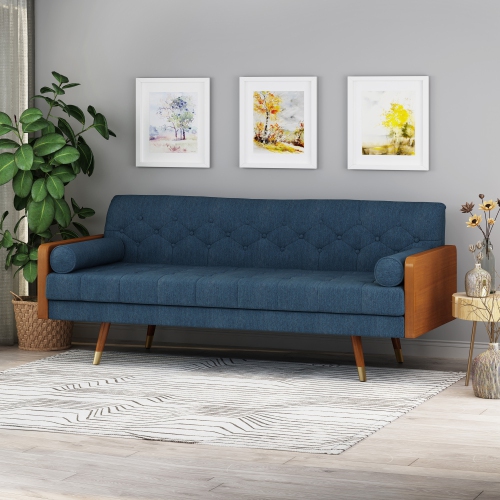
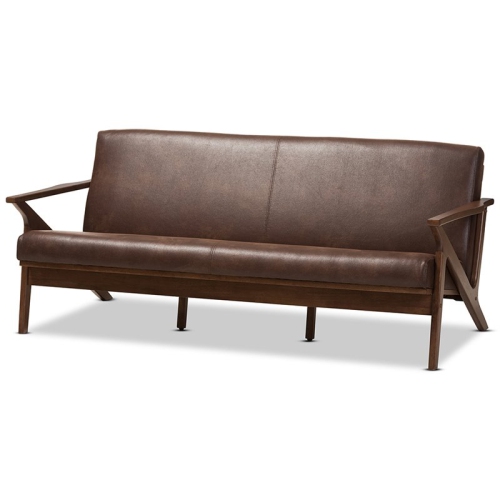
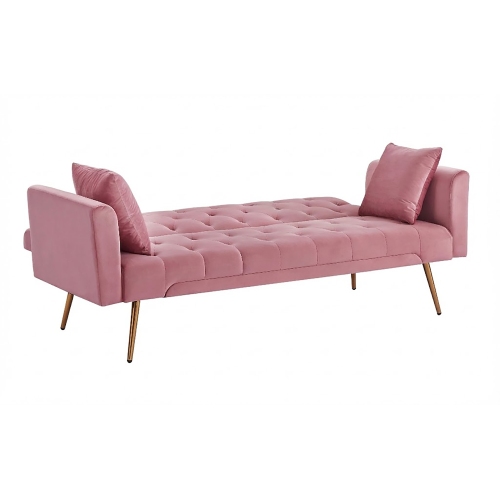
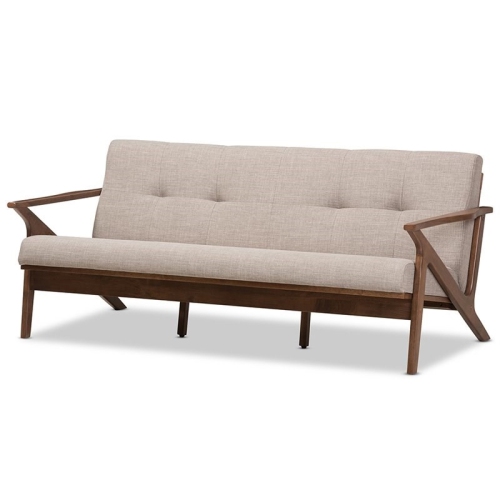
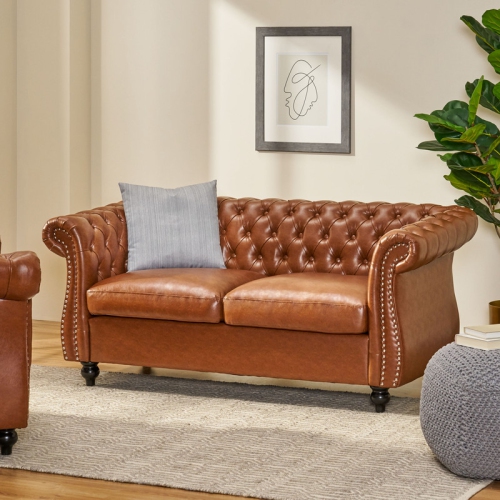
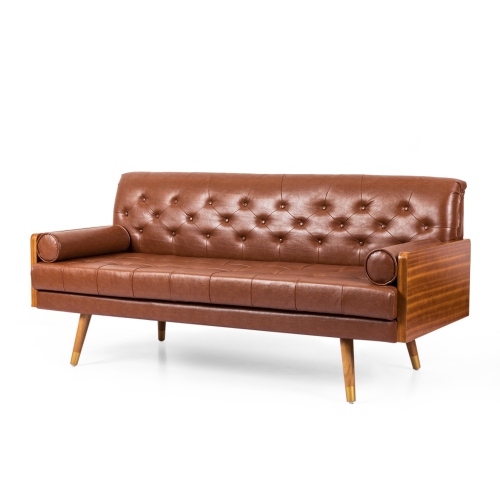
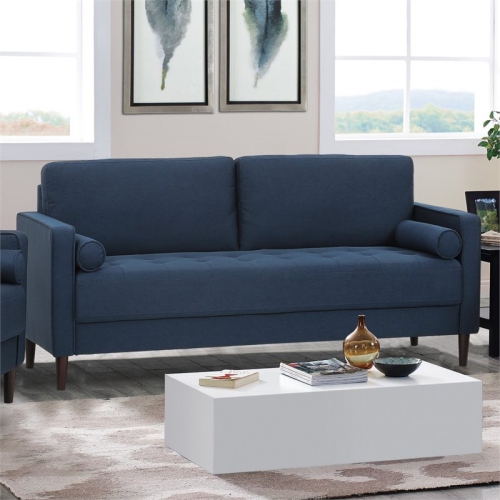
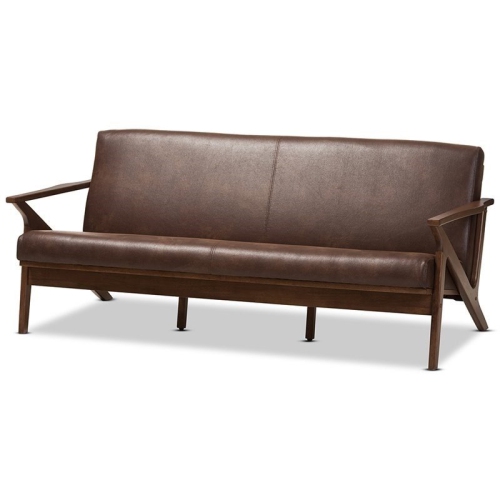
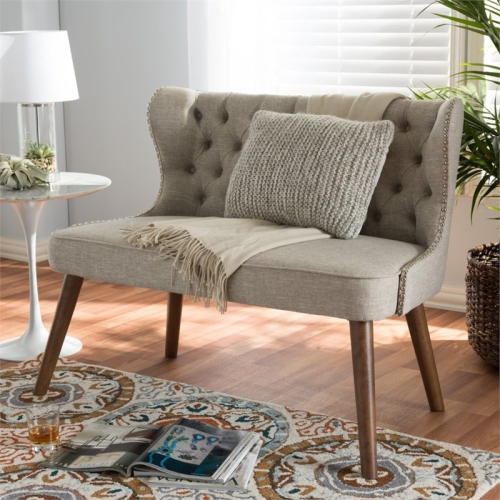
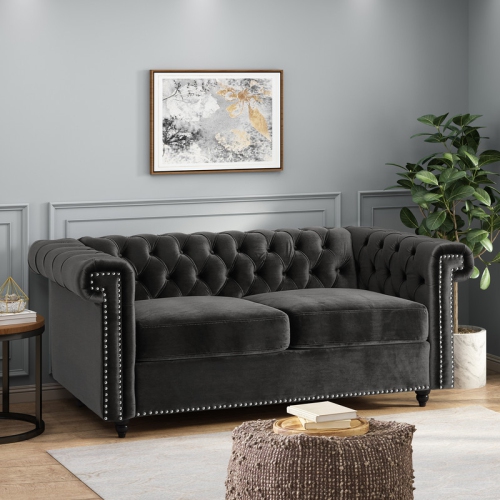
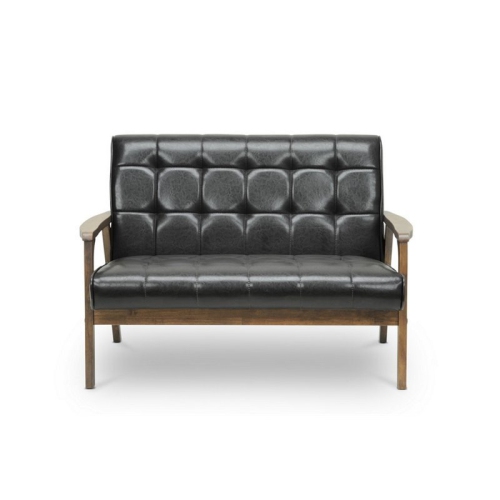
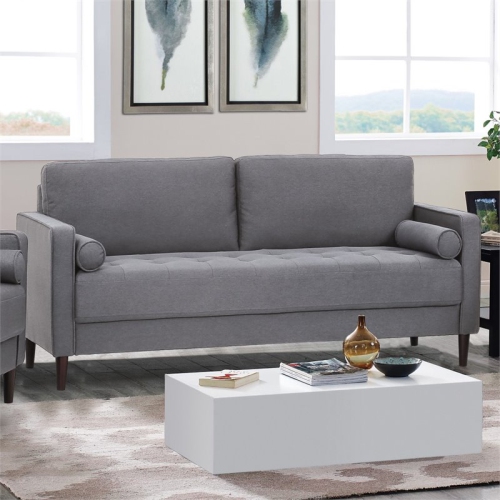
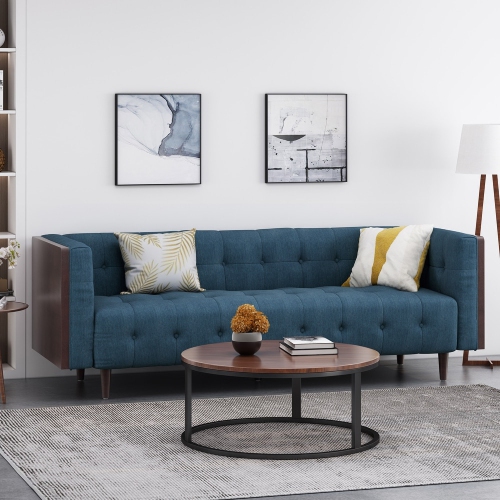
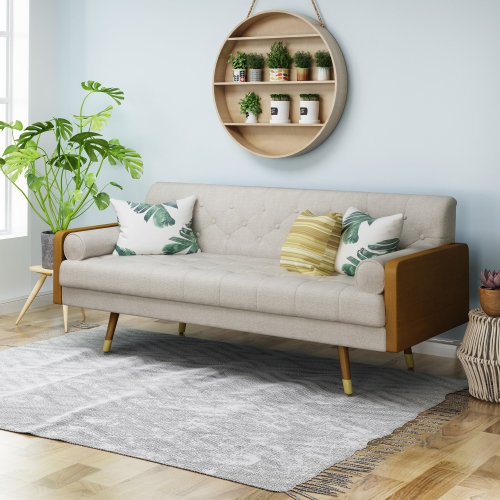
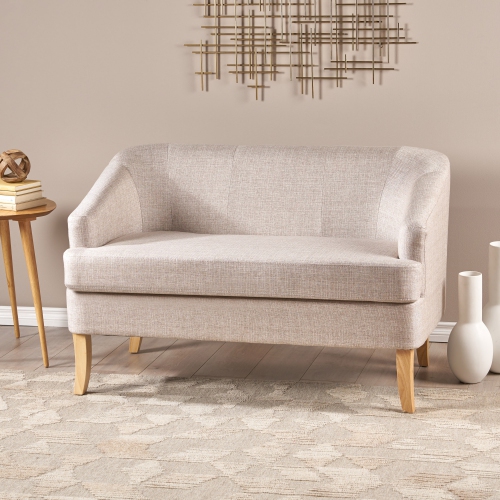
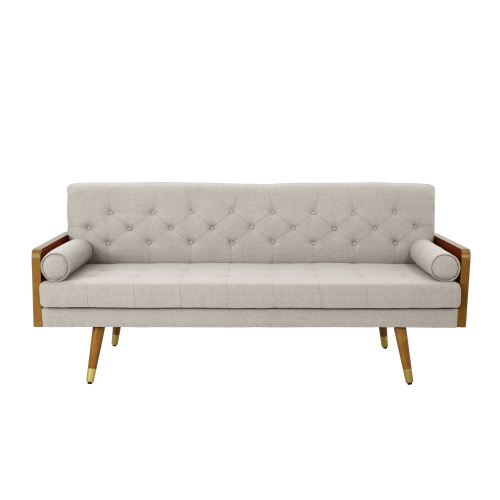
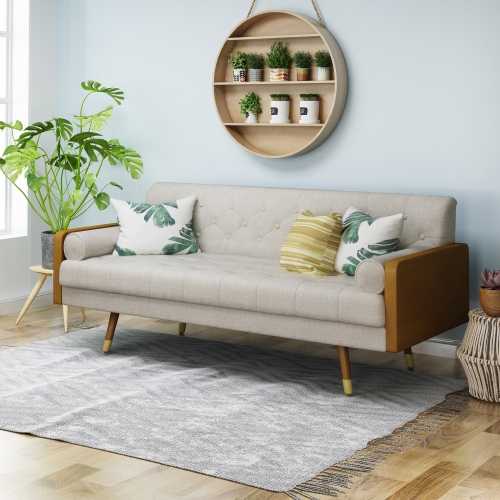
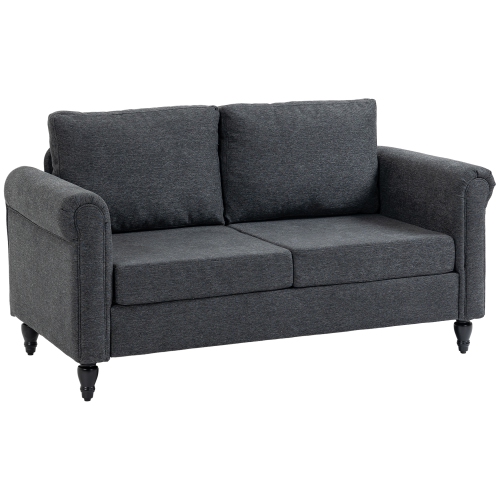
Raised legs give generous seating a lighter look
Mid-century style sofas bring clean lines, balanced proportions, and warm wood accents to living rooms, apartments, and open-plan spaces. Inspired by furniture design from the middle of the twentieth century, particularly the 1950s and 1960s, the style typically features a low-profile frame, slim arms, and tapered legs that lift the upholstered body above the floor. That visible space beneath the seat gives even a generously sized sofa a lighter appearance, helping a room feel less crowded without sacrificing a comfortable place to sit. Some designs keep the upholstery smooth and simple, while others add button tufting, shallow channel stitching, or piping along the cushions. A single bench cushion creates an uninterrupted line across the seat; separate cushions give each sitting position a more defined shape. Wood finishes ranging from pale oak tones to deeper walnut shades add warmth, whether paired with neutral upholstery or richer colours such as olive, rust, and navy. These details distinguish mid-century inspired seating from bulkier, floor-hugging silhouettes, but the look is flexible enough to sit alongside newer furniture. A tailored sofa can feel at home beside a round coffee table, a reading lamp, and a textured rug without turning the room into a period setting. Mid-century style sofas also overlap with Modern Style Sofas through their emphasis on simple forms and practical everyday seating, although mid-century designs tend to draw more visibly on vintage proportions and wood detailing. Their appeal extends beyond a particular age group or household: a compact loveseat can anchor a first apartment, while a longer sofa can provide the main gathering spot in a family living room. During the cooler months, the same streamlined frame works well with a wool throw and a few soft cushions, adding comfort while leaving the sofa’s distinctive shape visible. The result is seating with a clear design identity that does not require every surrounding piece to match.
Upholstery and construction shape how a mid-century style sofa feels as much as how it looks. Woven fabric can offer a soft, familiar surface for daily lounging, and a textured weave adds visual depth to an otherwise simple frame. Tightly woven upholstery may be more practical than a loose, looped texture in a home where pet claws or clothing fasteners could catch on the surface, though performance depends on the particular fabric. Velvet gives curved arms and tufted backs a richer appearance, with a pile that changes shade as it catches the light; it can also show pressure marks and requires care suited to its fibres. Leather brings a different character, often developing creases and changes in appearance with use. Leather types and finishes vary, so softness, scratch visibility, and cleaning needs are not the same across every leather sofa. Faux leather offers a similar visual direction but has its own care requirements and wear characteristics. Beneath the upholstery, a well-built frame, secure joints, supportive suspension, and suitable cushion filling all contribute to durability. Solid wood and quality plywood can both serve as frame materials, depending on how the sofa is constructed. Foam cushions tend to offer a more defined shape, while fibre or feather blends can feel softer and may need regular fluffing. Seat comfort also depends on the combination of cushion firmness, seat depth, and back angle rather than any one material alone. Everyday care is usually most manageable when it fits the household routine: gentle vacuuming helps remove crumbs and dust from seams, spills should be blotted promptly rather than rubbed, and cleaning products should follow the upholstery care label. Removable cushion covers are not necessarily machine washable. Keeping upholstery away from prolonged direct sunlight and heating vents can help limit fading or drying, while rotating reversible cushions, where permitted, helps distribute wear. For a sofa used daily for reading, conversation, and television, these practical details matter just as much as tufting or the angle of its wooden legs.
Size and seating position determine whether a mid-century style sofa works comfortably in its intended room. Slim arms can leave more usable sitting space within a modest overall width, making them useful in condos and smaller living rooms. A loveseat may suit a den or a shared home office, while a three-seat sofa offers more room for family members or visitors. Mid-century inspired sectionals extend the same low, horizontal lines into a layout with a chaise or additional seats, though their footprint needs careful consideration. Overall width, depth, and height should be weighed against the room’s walkways, nearby furniture, and the space needed to open doors or drawers. A sofa that looks compact in a photograph may still have a deep seat or a wide frame. Seat height deserves particular attention: a low silhouette can look inviting, but a somewhat higher, firmer seat may be easier for someone who finds standing up from soft furniture difficult. Shallower seating often suits upright conversation, whereas a deeper seat leaves more room to curl up with a book. Taller people may prefer extra seat depth, while shorter people may find a shallower cushion more comfortable with their feet on the floor. Back height matters too, especially when the sofa will be used for long evenings of television rather than occasional sitting. Delivery access is another part of fit, including doorway openings, stair turns, lift dimensions, and any narrow hallway leading to the room. Removable legs can sometimes help with clearance, but this should be confirmed rather than assumed. In an open-plan space, a neatly finished back allows the sofa to face into the room instead of sitting against a wall. Raised legs can also make the floor beneath easier to reach for cleaning, depending on their clearance. Whether furnishing a quiet reading corner or the main living area, mid-century style sofas are most satisfying when their crisp outline is matched by supportive seating, suitable upholstery, and proportions that leave everyday life enough room.
Upholstery and construction shape how a mid-century style sofa feels as much as how it looks. Woven fabric can offer a soft, familiar surface for daily lounging, and a textured weave adds visual depth to an otherwise simple frame. Tightly woven upholstery may be more practical than a loose, looped texture in a home where pet claws or clothing fasteners could catch on the surface, though performance depends on the particular fabric. Velvet gives curved arms and tufted backs a richer appearance, with a pile that changes shade as it catches the light; it can also show pressure marks and requires care suited to its fibres. Leather brings a different character, often developing creases and changes in appearance with use. Leather types and finishes vary, so softness, scratch visibility, and cleaning needs are not the same across every leather sofa. Faux leather offers a similar visual direction but has its own care requirements and wear characteristics. Beneath the upholstery, a well-built frame, secure joints, supportive suspension, and suitable cushion filling all contribute to durability. Solid wood and quality plywood can both serve as frame materials, depending on how the sofa is constructed. Foam cushions tend to offer a more defined shape, while fibre or feather blends can feel softer and may need regular fluffing. Seat comfort also depends on the combination of cushion firmness, seat depth, and back angle rather than any one material alone. Everyday care is usually most manageable when it fits the household routine: gentle vacuuming helps remove crumbs and dust from seams, spills should be blotted promptly rather than rubbed, and cleaning products should follow the upholstery care label. Removable cushion covers are not necessarily machine washable. Keeping upholstery away from prolonged direct sunlight and heating vents can help limit fading or drying, while rotating reversible cushions, where permitted, helps distribute wear. For a sofa used daily for reading, conversation, and television, these practical details matter just as much as tufting or the angle of its wooden legs.
Size and seating position determine whether a mid-century style sofa works comfortably in its intended room. Slim arms can leave more usable sitting space within a modest overall width, making them useful in condos and smaller living rooms. A loveseat may suit a den or a shared home office, while a three-seat sofa offers more room for family members or visitors. Mid-century inspired sectionals extend the same low, horizontal lines into a layout with a chaise or additional seats, though their footprint needs careful consideration. Overall width, depth, and height should be weighed against the room’s walkways, nearby furniture, and the space needed to open doors or drawers. A sofa that looks compact in a photograph may still have a deep seat or a wide frame. Seat height deserves particular attention: a low silhouette can look inviting, but a somewhat higher, firmer seat may be easier for someone who finds standing up from soft furniture difficult. Shallower seating often suits upright conversation, whereas a deeper seat leaves more room to curl up with a book. Taller people may prefer extra seat depth, while shorter people may find a shallower cushion more comfortable with their feet on the floor. Back height matters too, especially when the sofa will be used for long evenings of television rather than occasional sitting. Delivery access is another part of fit, including doorway openings, stair turns, lift dimensions, and any narrow hallway leading to the room. Removable legs can sometimes help with clearance, but this should be confirmed rather than assumed. In an open-plan space, a neatly finished back allows the sofa to face into the room instead of sitting against a wall. Raised legs can also make the floor beneath easier to reach for cleaning, depending on their clearance. Whether furnishing a quiet reading corner or the main living area, mid-century style sofas are most satisfying when their crisp outline is matched by supportive seating, suitable upholstery, and proportions that leave everyday life enough room.
Top selling and popular products
-
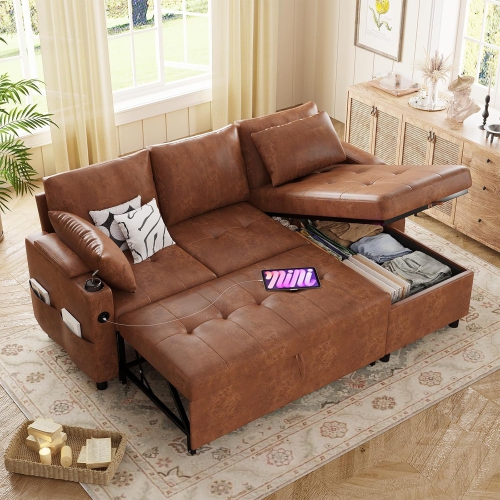 Your price for this item is $679.99
 -
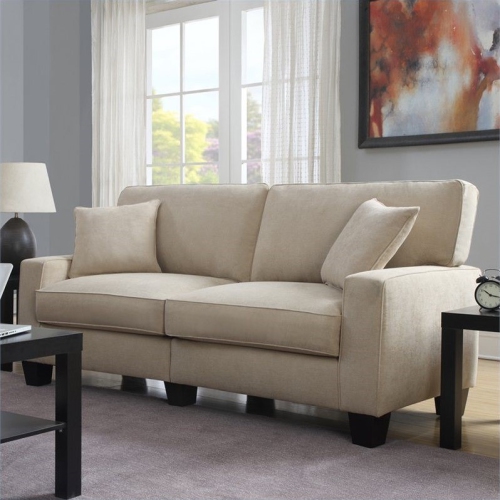 Your price for this item is $1520.22
 -
 Your price for this item is $264.99
 -
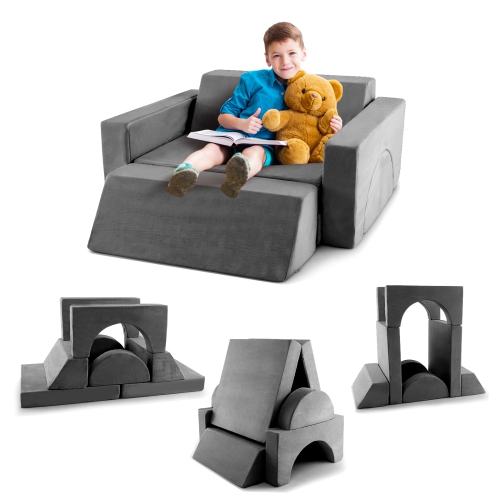 Your price for this item is $166.99
 -
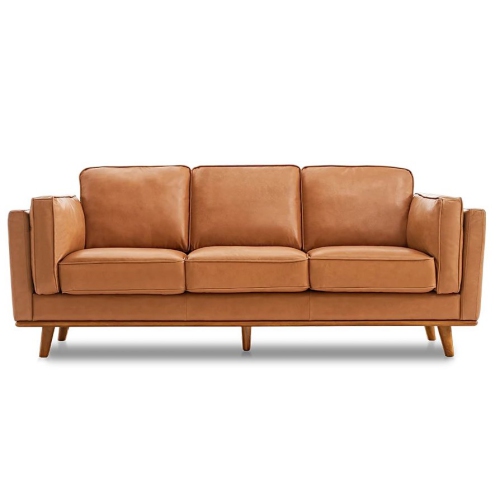 Your price for this item is $2399.99
 -
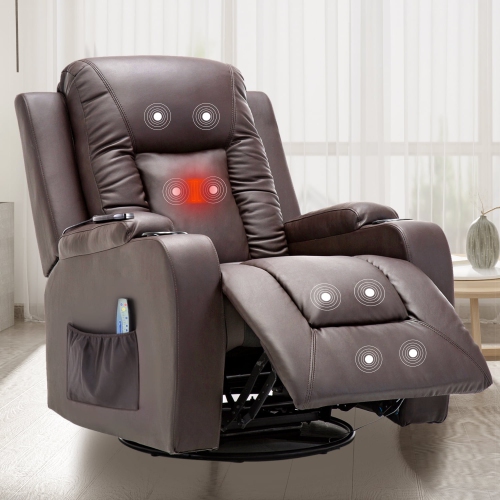 Your price for this item is $599.99
 -
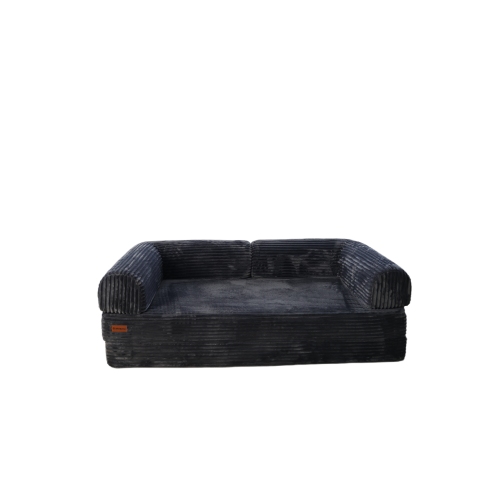 Your price for this item is $599.97
 -
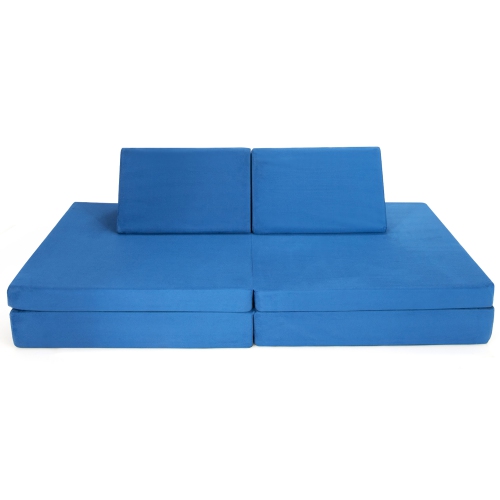 Your price for this item is $166.99
Discover more categories related to Mid Century Style Sofas

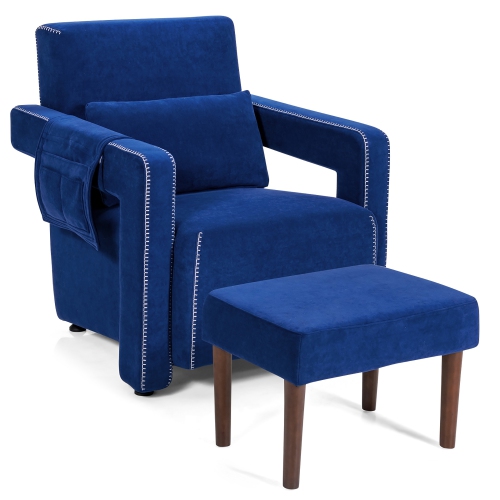
Top Collections:
Pokemon Centers, Budget 4K TVs, Best Budget Office Chairs, Kindle Devices, Canon G7X Cameras, Apple iPhones 16, iPhone 15 Apple, Laptops for Business Work, Xiaomi Phones, Flip Phones
Some products may be subject to Environmental Handling Fees
(EHF) depending on your province.
Learn more about EHFs.