Quilted Mattress Protectors
Protect your mattress investment with this range of quilted mattress protectors. Designed to provide an extra layer of comfort and defense against spills, stains, dust mites, and allergens, these mattress protectors are a must-have addition to any bedroom. The quilted design not only adds a touch of luxury but also ensures that your mattress stays in top condition for years to come. Explore this selection of quilted mattress protectors to find the perfect fit for your bed and enjoy a peaceful night's sleep knowing your mattress is well-protected.
Sort

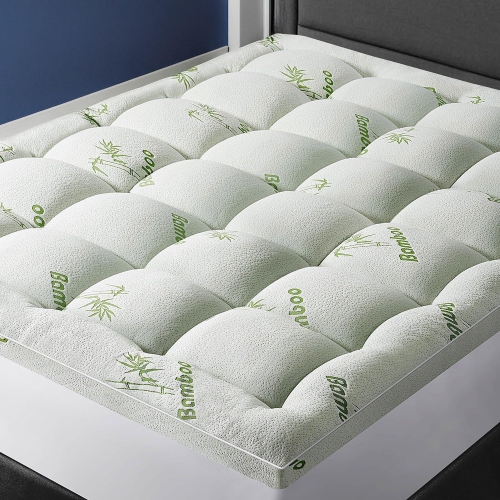
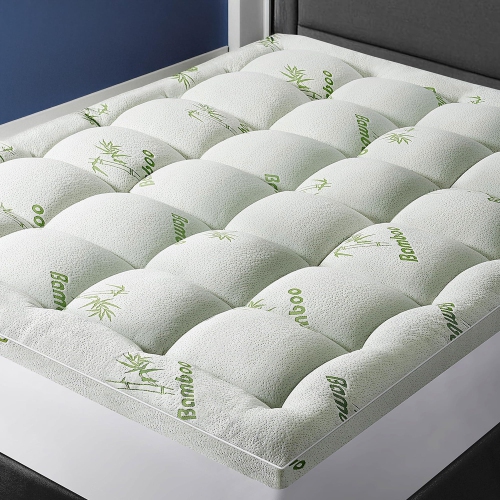
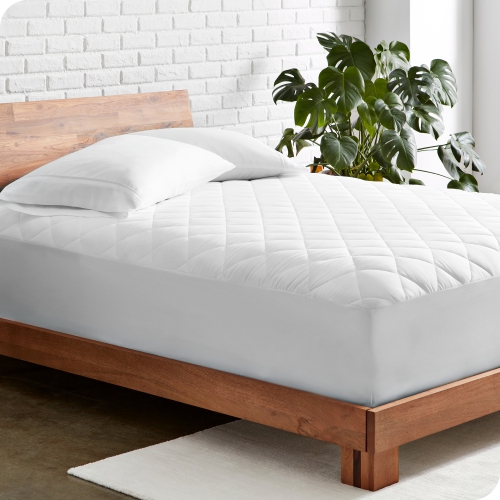
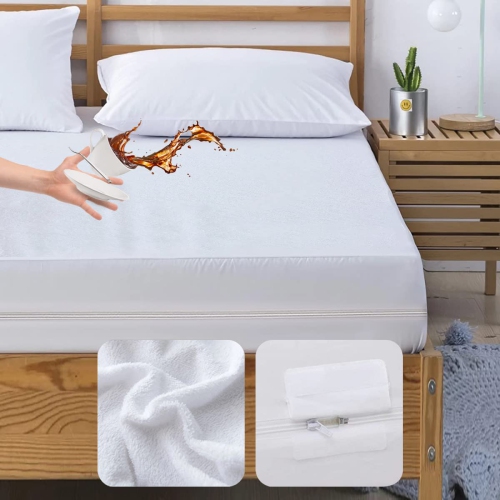

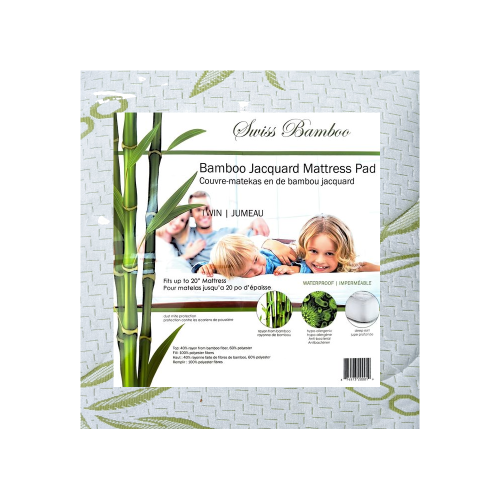
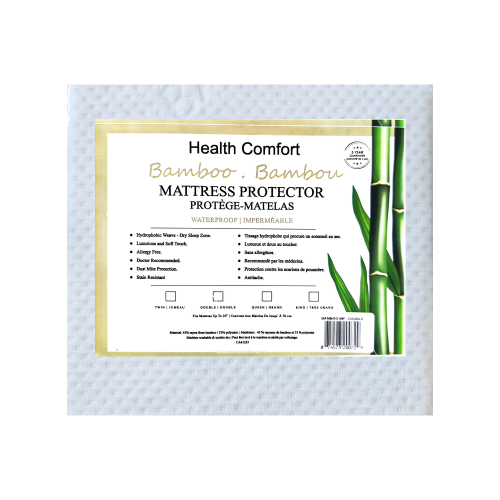
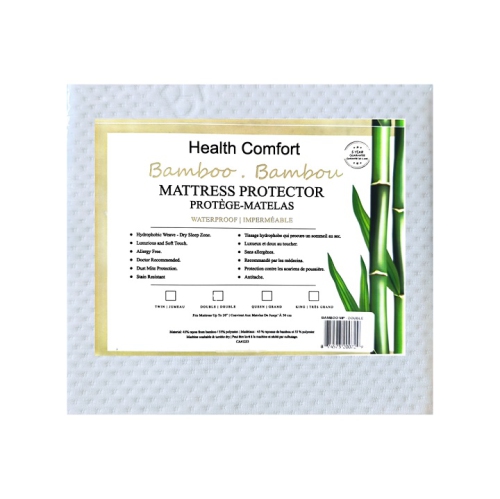
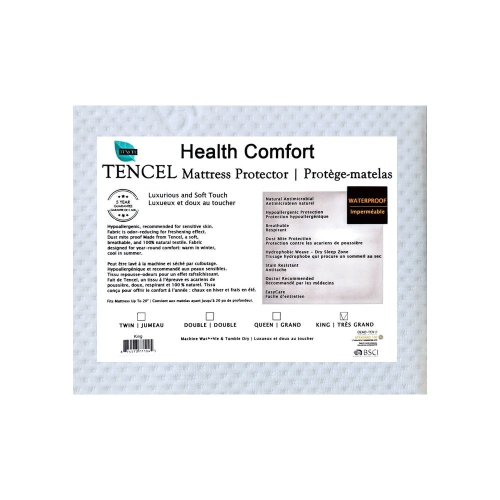
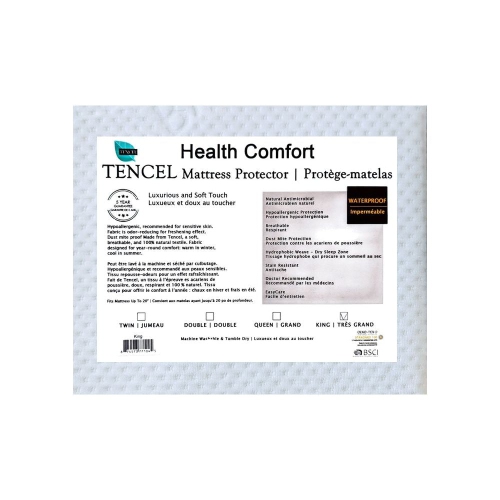
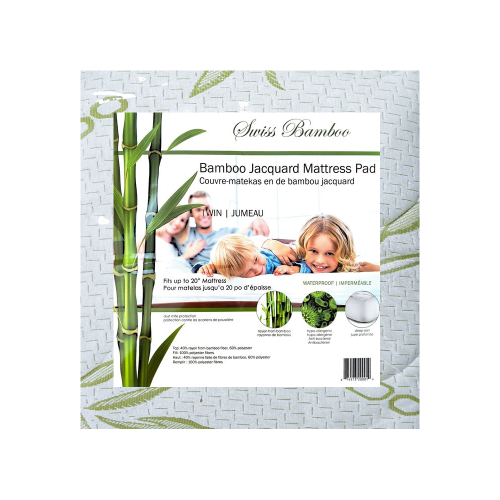
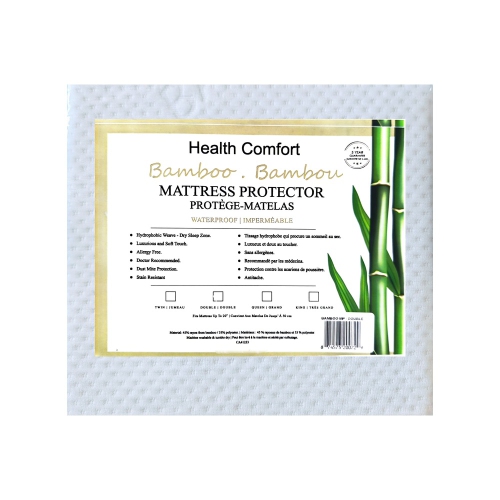
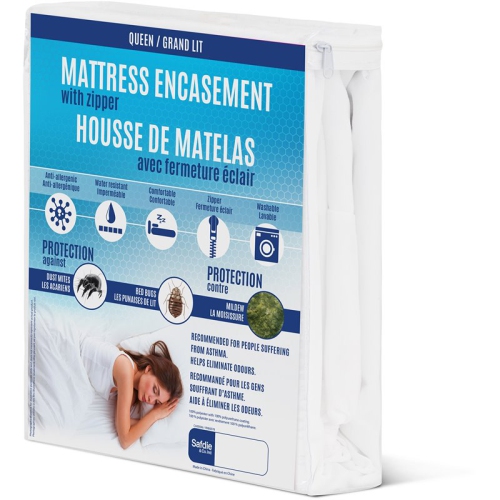
A softer sleep surface without a thick topper
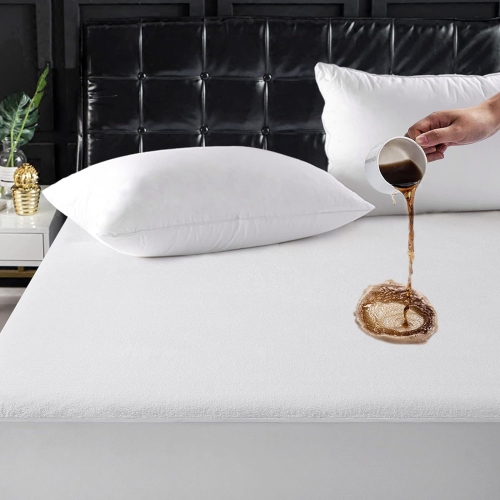
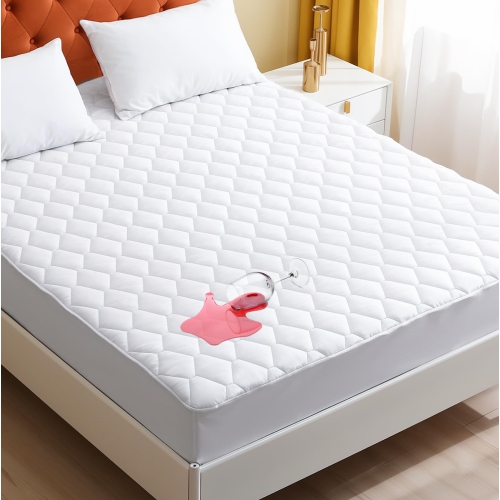
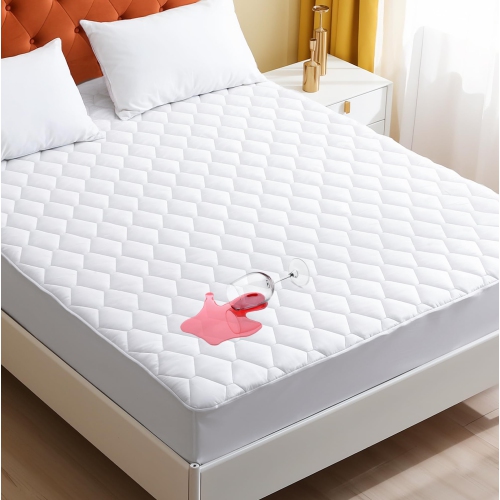
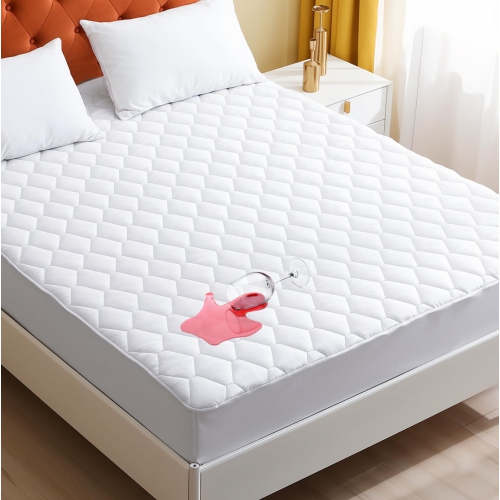
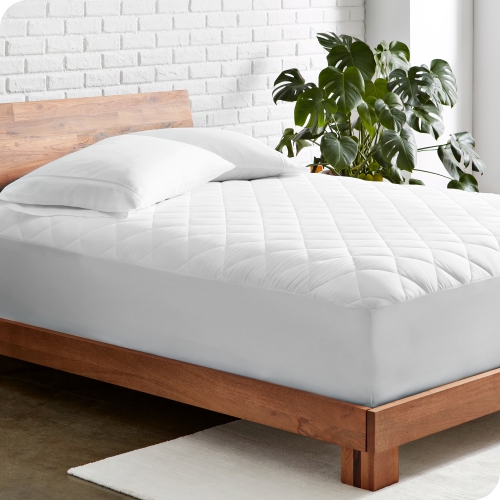
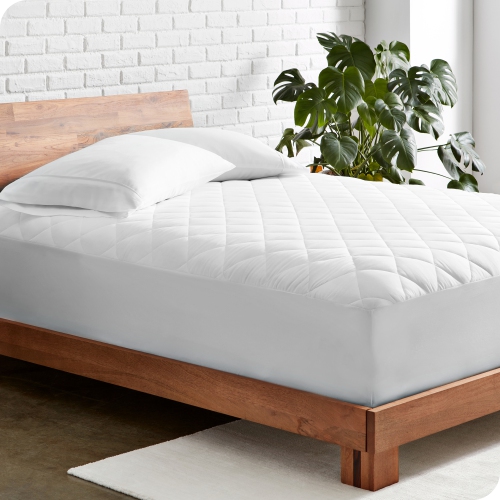
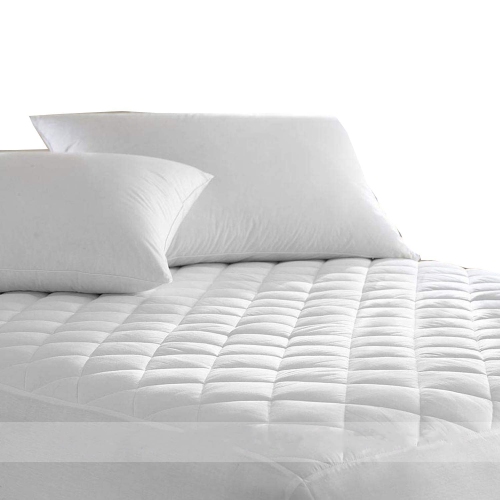
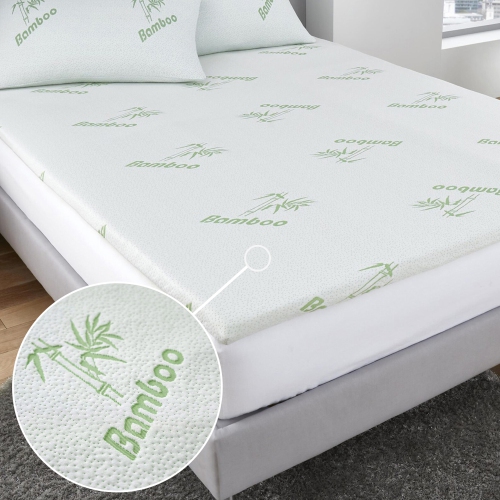
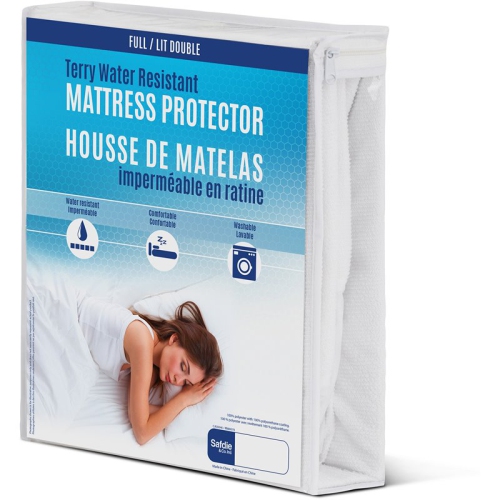
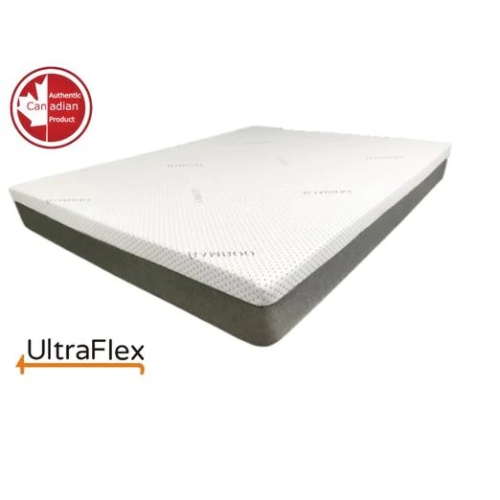
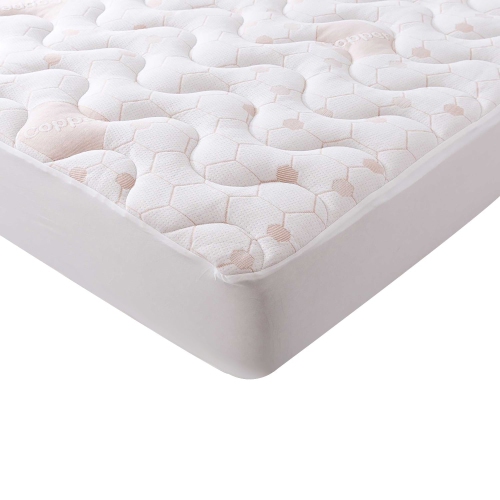
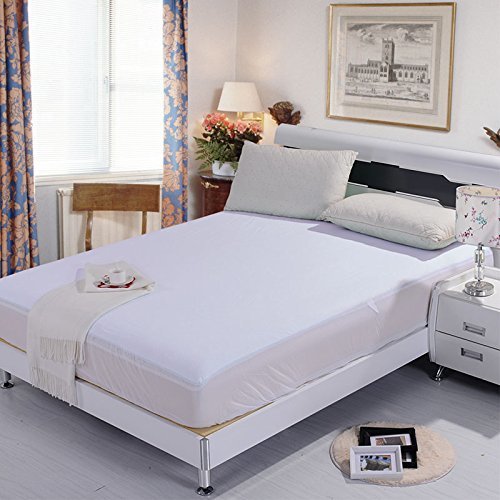
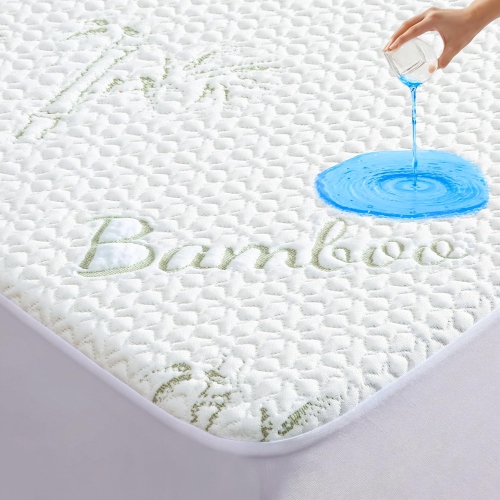
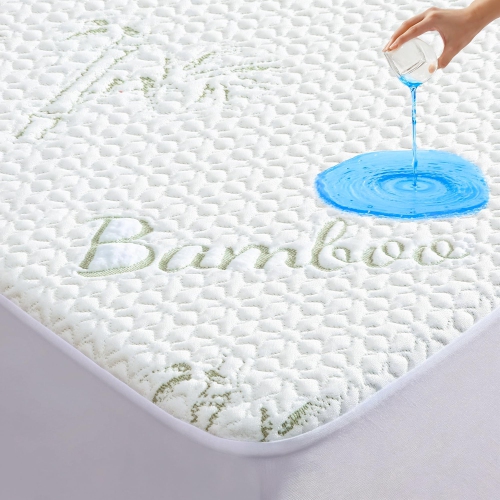
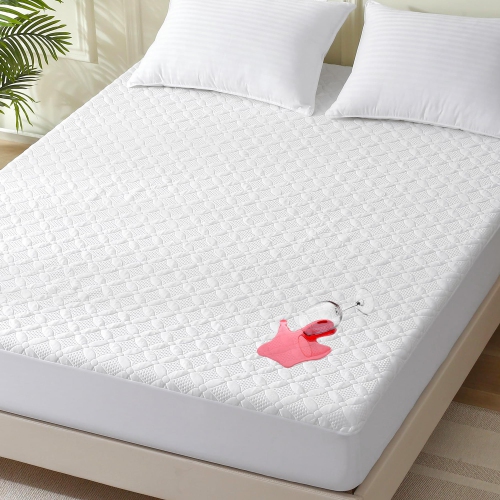
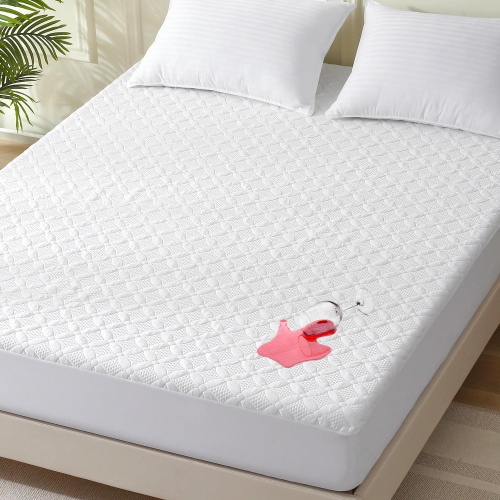
Quilted mattress protectors add a lightly padded layer between a mattress and its fitted sheet, helping shield the sleep surface from everyday wear, perspiration, and small marks while adding a softer feel. Their stitched construction holds filling in separate sections, often in square, diamond, or channel patterns, so the padding stays more evenly distributed across the bed. The result is a cushioned surface rather than the substantial change in support associated with a thick mattress topper. A quilted protector can smooth the feel of a mattress cover or add a little softness beneath crisp sheets, but it will not correct sagging or replace the support of a sound mattress. The outer fabric, filling, and backing each contribute something different. Cotton surfaces are valued for their familiar softness and ability to absorb moisture, while polyester and microfibre surfaces can offer a smooth finish and straightforward care. Cotton-polyester blends combine characteristics of both fibres, and some protectors use lyocell blends for a soft, moisture-absorbing surface. These qualities depend on the full construction, not simply the fibre named on the label. Filling weight also matters: a thin quilted layer keeps the mattress feel more apparent, while fuller padding adds a more noticeable cushion. For sleepers who like the feel of their mattress and simply want a washable layer over it, a lower-profile protector can be a practical match. Quilting itself does not make a mattress protector waterproof. Liquid protection requires a purpose-built barrier, such as a polyurethane membrane, and should be confirmed in the product specifications. A quilted fabric surface without that barrier may absorb a spill while still allowing moisture to reach the mattress. Where drink spills, bedwetting, or pet accidents are a concern, Waterproof Mattress Protectors provide a related category to explore. Some waterproof designs also have quilted tops, combining padding with a liquid-resistant backing, though the extent of coverage varies by construction.
The fit of a quilted mattress protector affects both comfort and how neatly the bed stays made. Mattress size is the starting point, but depth is just as important, particularly for pillow-top mattresses or beds with an added topper. A queen protector needs to match the mattress footprint, while its skirt or pocket must also accommodate the full height of the layers it wraps around. Measuring from the bottom edge of the mattress to the top of any topper gives a more useful fit measurement than relying on the mattress name alone. Labels such as deep pocket are not a universal sizing standard, so the stated dimensions and maximum mattress depth provide a clearer comparison. A protector stretched beyond its intended fit can pull at the corners or compress its padding; an overly loose one may gather into folds beneath the fitted sheet. Fitted-style protectors typically use a fabric skirt with elastic to hold the padded top in place. Corner-strap designs attach at the corners and leave more of the mattress sides exposed, while zippered encasements surround the mattress more completely. These attachment styles serve different needs, and a quilted top should not be mistaken for full mattress coverage. For a child moving into a larger bed, secure fit and appropriate liquid protection can help make everyday cleanups more manageable. In a guest room, a washable quilted layer adds a fresh bedding surface between visits without substantially altering the mattress feel. Adults who prefer a little cushioning without a thick topper may appreciate the same balance of softness and simplicity. On an adjustable bed, suitability for a moving base matters because the protector needs to bend with the mattress without tugging loose. A split setup generally needs each moving mattress section fitted separately. Any added padding also takes up space beneath the fitted sheet, so sheet pocket depth deserves attention when several bedding layers are used together.
Care requirements are an important part of living with a quilted mattress protector, especially on beds that need frequent linen changes. Many are machine washable, but the care label determines the suitable wash setting, detergent restrictions, and drying method. The fabric, filling, elastic, and any waterproof backing may have different tolerances, making assumptions based on the top fabric alone unreliable. Excessive drying heat can damage some protective membranes or elastic components, while bleach and fabric softener may be unsuitable for particular constructions. A roomy washer allows water and detergent to move through the padded sections; an overfilled drum can leave bulky bedding poorly rinsed. Thorough drying before the protector returns to the bed helps prevent trapped dampness, particularly along thicker quilted seams and folded edges. A spare protector is useful when one needs a longer drying cycle or an unexpected wash, allowing the bed to be remade without rushing the care process. Durability depends on more than fabric thickness. Even stitching, securely finished edges, resilient elastic, and filling that remains evenly spread all contribute to a protector that holds its shape through repeated use. Loose threads, persistent bunching, or corners that no longer stay anchored can indicate wear. With waterproof versions, visible cracking, peeling, or damage to the backing warrants attention because the padded surface may still look intact even when the liquid barrier is compromised. A quilted protector can intercept some everyday debris and keep it away from the mattress surface, but it is not automatically a dust-mite barrier or an allergy treatment. Those needs call for specifically stated barrier features, often associated with fully enclosing designs. For everyday use, the most useful balance is enough padding to suit the sleeper, a fit that stays smooth, and care requirements that work with the household laundry routine. Together, those details make a quilted mattress protector a practical part of a well-kept bed rather than simply another layer beneath the sheets.
The fit of a quilted mattress protector affects both comfort and how neatly the bed stays made. Mattress size is the starting point, but depth is just as important, particularly for pillow-top mattresses or beds with an added topper. A queen protector needs to match the mattress footprint, while its skirt or pocket must also accommodate the full height of the layers it wraps around. Measuring from the bottom edge of the mattress to the top of any topper gives a more useful fit measurement than relying on the mattress name alone. Labels such as deep pocket are not a universal sizing standard, so the stated dimensions and maximum mattress depth provide a clearer comparison. A protector stretched beyond its intended fit can pull at the corners or compress its padding; an overly loose one may gather into folds beneath the fitted sheet. Fitted-style protectors typically use a fabric skirt with elastic to hold the padded top in place. Corner-strap designs attach at the corners and leave more of the mattress sides exposed, while zippered encasements surround the mattress more completely. These attachment styles serve different needs, and a quilted top should not be mistaken for full mattress coverage. For a child moving into a larger bed, secure fit and appropriate liquid protection can help make everyday cleanups more manageable. In a guest room, a washable quilted layer adds a fresh bedding surface between visits without substantially altering the mattress feel. Adults who prefer a little cushioning without a thick topper may appreciate the same balance of softness and simplicity. On an adjustable bed, suitability for a moving base matters because the protector needs to bend with the mattress without tugging loose. A split setup generally needs each moving mattress section fitted separately. Any added padding also takes up space beneath the fitted sheet, so sheet pocket depth deserves attention when several bedding layers are used together.
Care requirements are an important part of living with a quilted mattress protector, especially on beds that need frequent linen changes. Many are machine washable, but the care label determines the suitable wash setting, detergent restrictions, and drying method. The fabric, filling, elastic, and any waterproof backing may have different tolerances, making assumptions based on the top fabric alone unreliable. Excessive drying heat can damage some protective membranes or elastic components, while bleach and fabric softener may be unsuitable for particular constructions. A roomy washer allows water and detergent to move through the padded sections; an overfilled drum can leave bulky bedding poorly rinsed. Thorough drying before the protector returns to the bed helps prevent trapped dampness, particularly along thicker quilted seams and folded edges. A spare protector is useful when one needs a longer drying cycle or an unexpected wash, allowing the bed to be remade without rushing the care process. Durability depends on more than fabric thickness. Even stitching, securely finished edges, resilient elastic, and filling that remains evenly spread all contribute to a protector that holds its shape through repeated use. Loose threads, persistent bunching, or corners that no longer stay anchored can indicate wear. With waterproof versions, visible cracking, peeling, or damage to the backing warrants attention because the padded surface may still look intact even when the liquid barrier is compromised. A quilted protector can intercept some everyday debris and keep it away from the mattress surface, but it is not automatically a dust-mite barrier or an allergy treatment. Those needs call for specifically stated barrier features, often associated with fully enclosing designs. For everyday use, the most useful balance is enough padding to suit the sleeper, a fit that stays smooth, and care requirements that work with the household laundry routine. Together, those details make a quilted mattress protector a practical part of a well-kept bed rather than simply another layer beneath the sheets.
Top selling and popular products
-
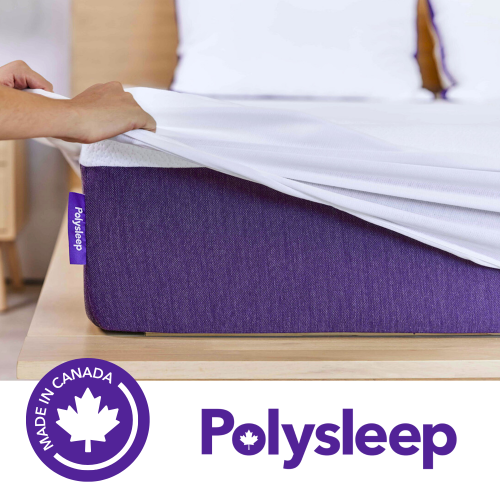 Your price for this item is $260
 -
 Your price for this item is $230
 -
 Your price for this item is $260
 -
 Your price for this item is $240
 -
 Your price for this item is $270
 -
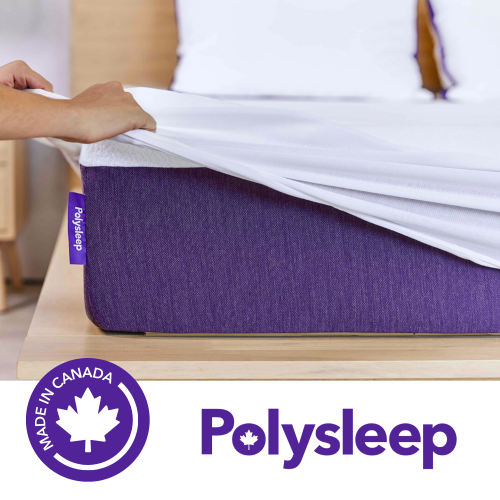 Your price for this item is $270
 -
 Your price for this item is $250
 -
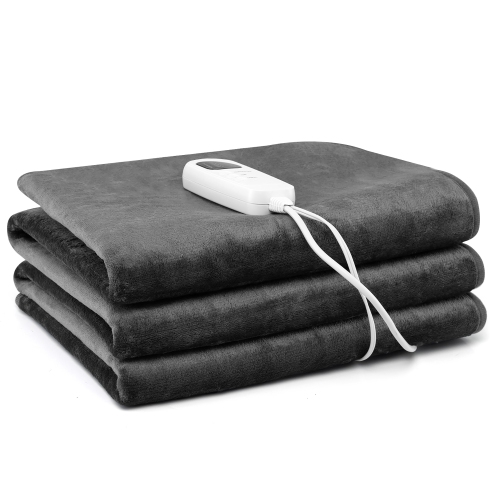 Your price for this item is $65.99
Discover more categories related to Quilted Mattress Protectors
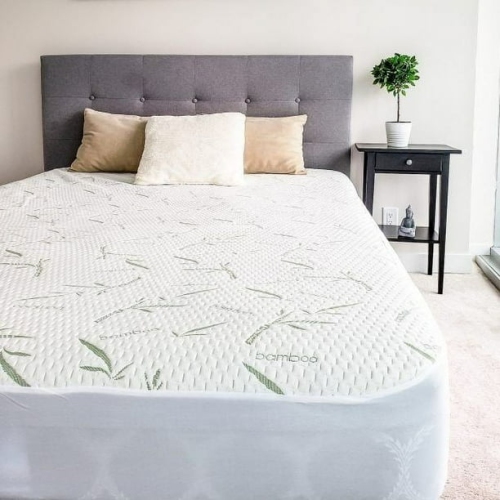
Top Collections:
Pokemon Centers, Kindle Devices, Best Budget Office Chairs, Apple iPhones 16, Best Laptops for Writers, iPhone 15 Apple, Canon G7X Cameras, Refurbished Apple Laptops, Alarm Clock, Motorola Razr Phones
Some products may be subject to Environmental Handling Fees
(EHF) depending on your province.
Learn more about EHFs.