Large Mailers
Large mailers are an essential solution for safely packaging and sending oversized documents, catalogs, or bulky items. Perfect for both personal and business use, these spacious envelopes help ensure your important materials arrive at their destination securely and in great condition. Explore a selection of large mailers designed to accommodate a variety of shipping and mailing needs, making it easier than ever to manage your correspondence and deliveries with confidence.
Sort

Large Mailers
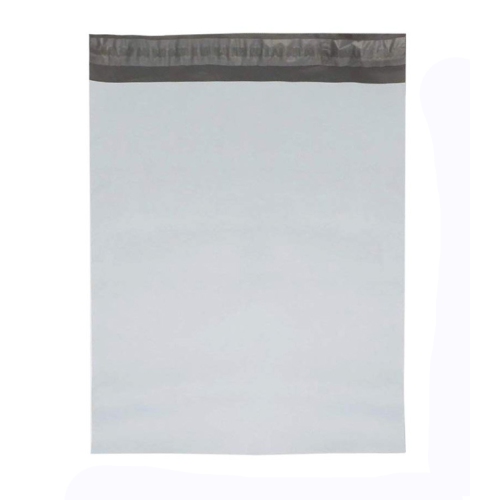
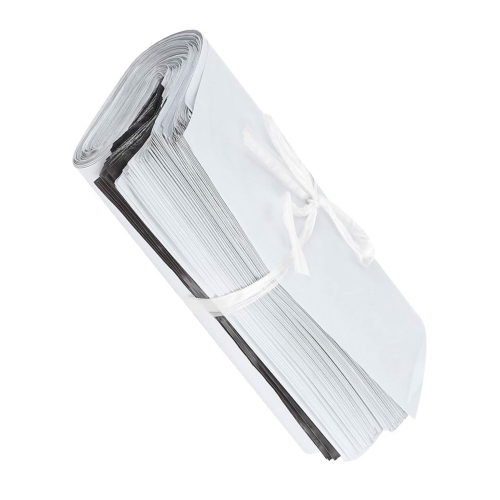
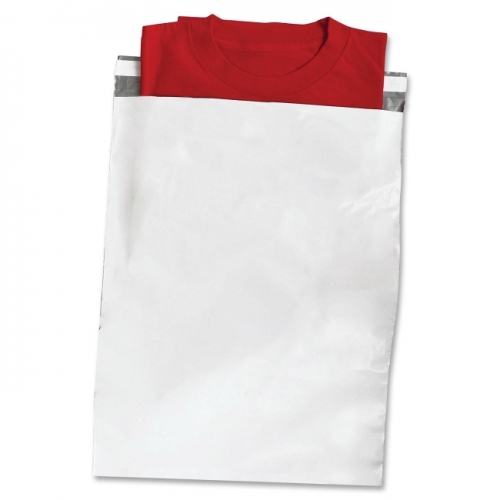
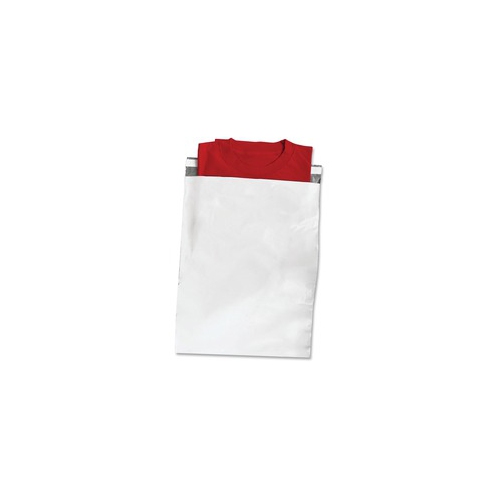
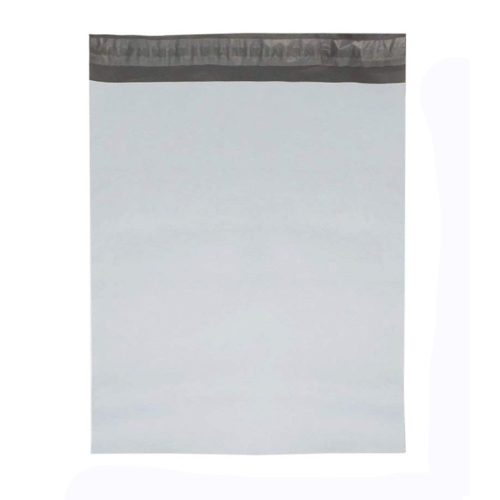
Large mailers provide a practical way to send broad, bulky, or easily creased items without folding them into a smaller envelope or placing them in an unnecessarily large box. Depending on the contents, a large mailer may be a flexible poly bag, a padded bubble envelope, a kraft paper mailer, or a rigid cardboard fold-over mailer. Common sizes begin around 14.5 x 19 inches and extend through extra-large formats such as 19 x 24 inches, 24 x 24 inches, and 24 x 36 inches. A medium-large mailer can accommodate boxed shoes, thick clothing bundles, craft materials, or several documents together, while an oversized or jumbo mailer is better suited to posters, blueprints, maps, artwork, charts, and other flat materials that need to remain smooth. The right format depends on how much protection the contents need and whether they can bend. Poly mailers are lightweight and flexible, making them useful for clothing, linens, soft accessories, and other items that are not easily damaged by moderate handling. Padded mailers add a layer of cushioning for books, framed prints, small electronics in suitable protective packaging, or other semi-fragile items. Rigid mailers help preserve the shape of documents and artwork, especially when a crease, curled edge, or bent corner would affect the finished result. They are also useful for home offices, schools, studios, small businesses, online sellers, and anyone preparing a parcel for a move, return, presentation, or long-distance delivery. For a broader selection of related formats and supplies, explore Office Mailers.
Choosing a large mailer starts with measuring the item rather than relying on its description alone. Record the length, width, and thickest point, then compare those measurements with the mailer's usable interior space. A flat poster may fit comfortably in a 24 x 36-inch mailer, while a folded sweater or stack of catalogues may need more room than its laid-flat dimensions suggest. Flexible mailers can lose interior capacity as the contents become thicker, so stepping up to the next size often makes packing easier and reduces strain on the seams. Leave enough space for the opening to close fully without stretching, and avoid forcing rigid corners into a soft envelope. When the contents have sharp edges, wrap them or place a protective layer around them before sealing. For documents, keep pages aligned and consider adding a stiff insert to reduce bending during handling. For clothing and textiles, compress the bundle neatly, remove excess air where appropriate, and use a closure that remains firmly sealed through sorting and transport. A padded interior can help absorb everyday knocks, but it is not a substitute for careful packing of fragile or valuable items. Check the mailer's closure, seams, flap, and adhesive before sending, particularly when a parcel will travel through several handling points. It is also worth checking the size, thickness, weight, and dimensional rules of Canada Post or the preferred courier, since an oversized parcel may incur additional charges or require a different service. Keeping the item within the carrier's accepted measurements can make shipping more predictable and helps prevent delays at the counter or during pickup.
Large mailers are useful well beyond ordinary parcel shipping. A creative professional can use a rigid format to send presentation boards, sketches, photographs, or unframed prints to a client while keeping the work flat. A teacher or student may need a broad mailer for classroom posters, visual aids, project sheets, or certificates. A home office can use padded or rigid envelopes for contracts, reports, manuals, and other paperwork that should arrive clean and orderly. Online sellers often choose flexible mailers for apparel and other soft goods because the lighter format is easy to store, prepare, and hand over to a carrier. Families may use them when sending seasonal clothing, children’s artwork, books, or keepsakes to relatives during the cooler months, while people preparing for a move can sort flat, lightweight belongings into labelled mailers instead of mixing them into crowded boxes. They can also be handy for returns when the original packaging is no longer available, provided the replacement mailer is large enough and offers suitable protection. As the weather warms or cools, water-resistant outer materials may provide extra reassurance when a parcel is exposed briefly during delivery, although contents should still be sealed and protected individually where needed. For the neatest result, place the item in the centre, smooth out excess material, close the flap along its full width, and add clear addressing information in a visible location. Select the largest practical size rather than the largest available one: a close fit helps limit movement, while sufficient room prevents bulging and torn closures. With the right combination of dimensions, material, cushioning, and closure, large mailers make it easier to send flat and bulky items with a tidy presentation and dependable everyday protection.
Choosing a large mailer starts with measuring the item rather than relying on its description alone. Record the length, width, and thickest point, then compare those measurements with the mailer's usable interior space. A flat poster may fit comfortably in a 24 x 36-inch mailer, while a folded sweater or stack of catalogues may need more room than its laid-flat dimensions suggest. Flexible mailers can lose interior capacity as the contents become thicker, so stepping up to the next size often makes packing easier and reduces strain on the seams. Leave enough space for the opening to close fully without stretching, and avoid forcing rigid corners into a soft envelope. When the contents have sharp edges, wrap them or place a protective layer around them before sealing. For documents, keep pages aligned and consider adding a stiff insert to reduce bending during handling. For clothing and textiles, compress the bundle neatly, remove excess air where appropriate, and use a closure that remains firmly sealed through sorting and transport. A padded interior can help absorb everyday knocks, but it is not a substitute for careful packing of fragile or valuable items. Check the mailer's closure, seams, flap, and adhesive before sending, particularly when a parcel will travel through several handling points. It is also worth checking the size, thickness, weight, and dimensional rules of Canada Post or the preferred courier, since an oversized parcel may incur additional charges or require a different service. Keeping the item within the carrier's accepted measurements can make shipping more predictable and helps prevent delays at the counter or during pickup.
Large mailers are useful well beyond ordinary parcel shipping. A creative professional can use a rigid format to send presentation boards, sketches, photographs, or unframed prints to a client while keeping the work flat. A teacher or student may need a broad mailer for classroom posters, visual aids, project sheets, or certificates. A home office can use padded or rigid envelopes for contracts, reports, manuals, and other paperwork that should arrive clean and orderly. Online sellers often choose flexible mailers for apparel and other soft goods because the lighter format is easy to store, prepare, and hand over to a carrier. Families may use them when sending seasonal clothing, children’s artwork, books, or keepsakes to relatives during the cooler months, while people preparing for a move can sort flat, lightweight belongings into labelled mailers instead of mixing them into crowded boxes. They can also be handy for returns when the original packaging is no longer available, provided the replacement mailer is large enough and offers suitable protection. As the weather warms or cools, water-resistant outer materials may provide extra reassurance when a parcel is exposed briefly during delivery, although contents should still be sealed and protected individually where needed. For the neatest result, place the item in the centre, smooth out excess material, close the flap along its full width, and add clear addressing information in a visible location. Select the largest practical size rather than the largest available one: a close fit helps limit movement, while sufficient room prevents bulging and torn closures. With the right combination of dimensions, material, cushioning, and closure, large mailers make it easier to send flat and bulky items with a tidy presentation and dependable everyday protection.
Top selling and popular products
-
 Your price for this item is $22.99
 -
 Your price for this item is $6.99
 -
 Your price for this item is $25.99
 -
 Your price for this item is $30.99
 -
 Your price for this item is $3.99
 -
 Your price for this item is $26.99
 -
 Your price for this item is $34.99
 -
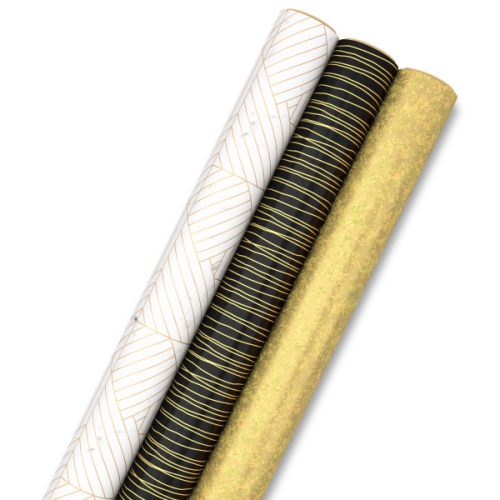 Your price for this item is $19.99
Discover more categories related to Large Mailers
Top Collections:
Pokemon Centers, Kindle Devices, Budget Smartphones, Budget 4K TVs, Apple iPhones 16, Canon G7X Cameras, iPhone 15 Apple, Alarm Clock, Budget-Friendly Wireless Earbuds, iPhone 14 256GB
Some products may be subject to Environmental Handling Fees
(EHF) depending on your province.
Learn more about EHFs.