Spiral Bound Notebooks
Whether you're a student, professional, or creative enthusiast, spiral-bound notebooks are an essential tool for capturing your thoughts, ideas, and inspirations. With their convenient design and versatility, these notebooks offer a practical solution for note-taking, sketching, journaling, and more. Available in various sizes, colors, and paper types, these spiral-bound notebooks are designed to cater to your unique needs and preferences.
Sort
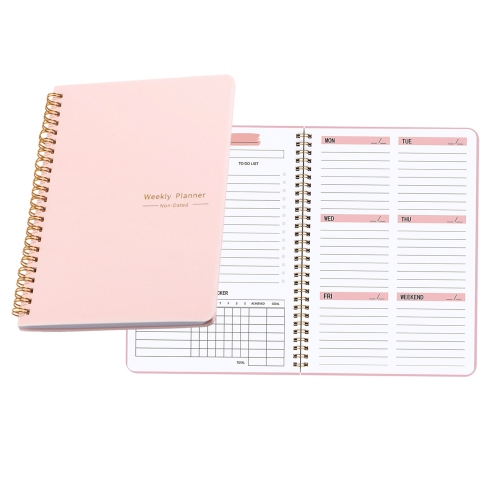
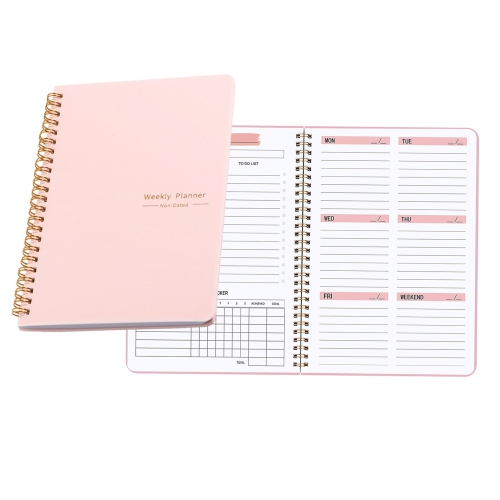
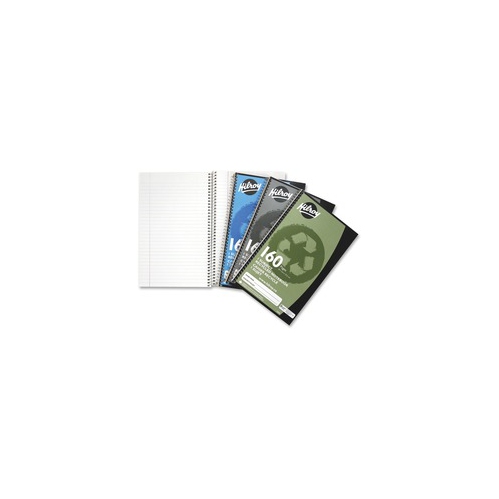
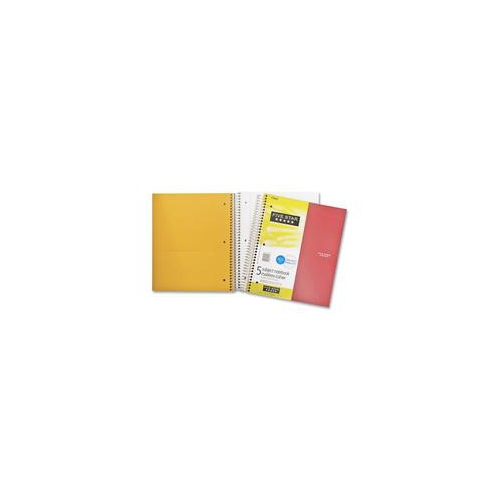
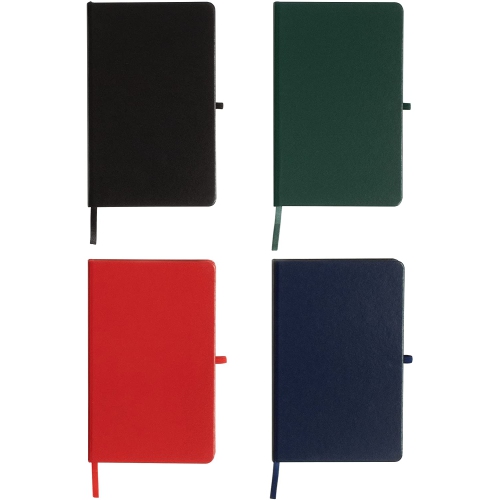
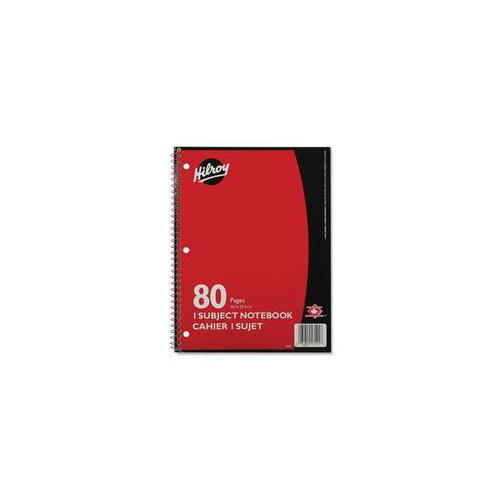
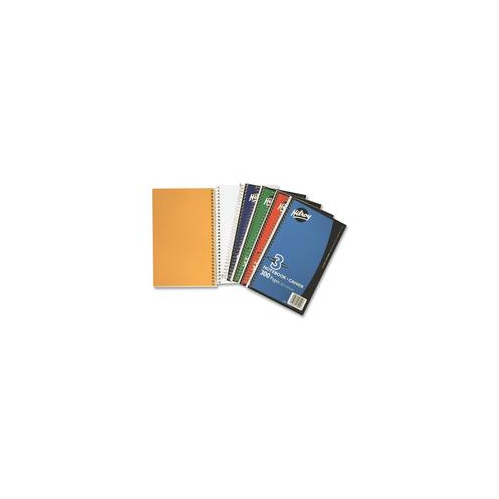
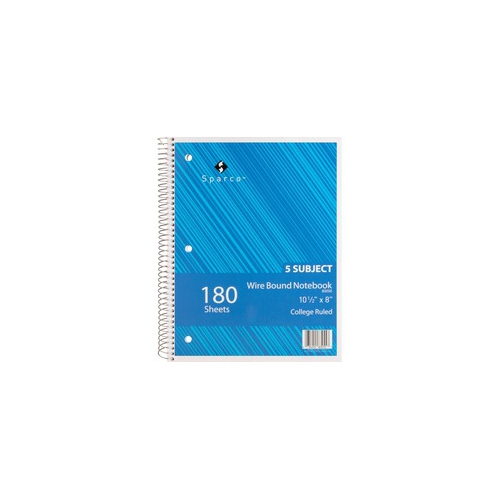
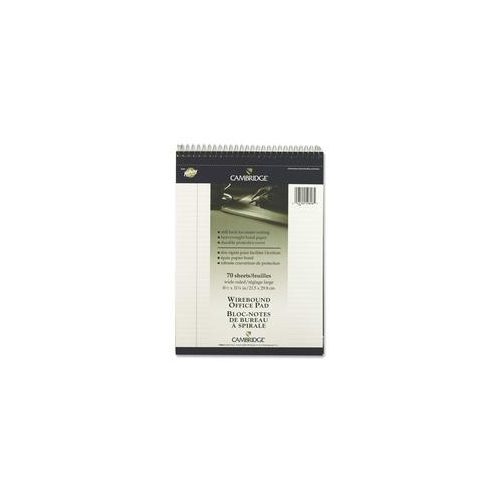
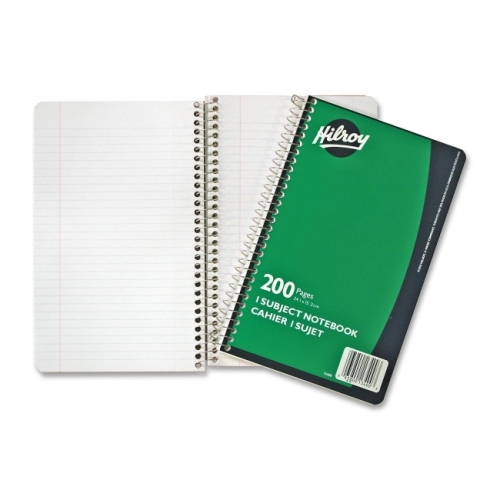
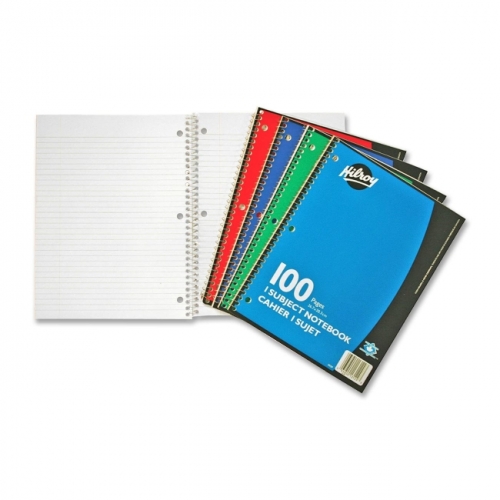
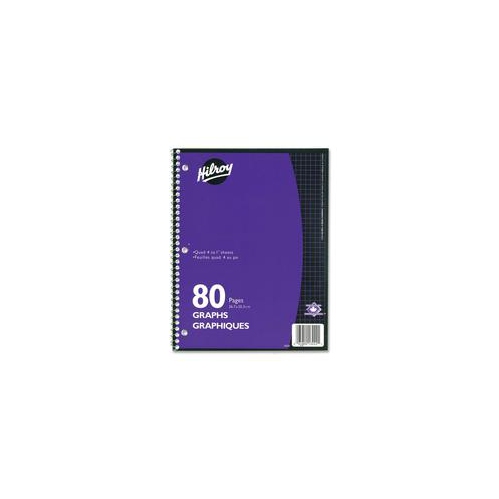
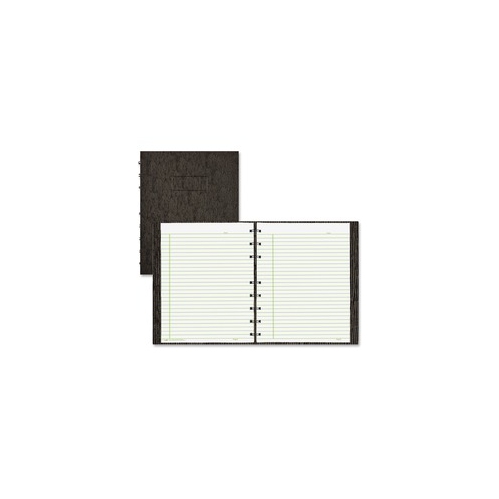
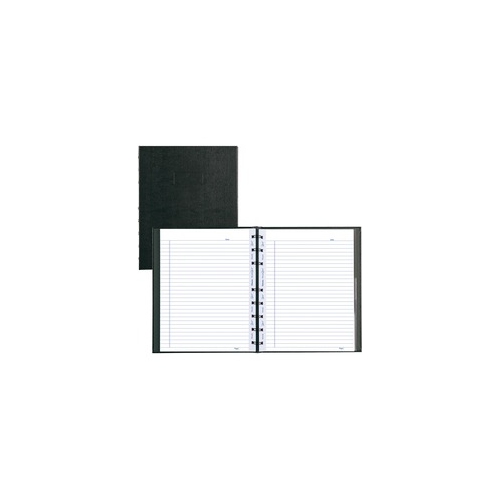
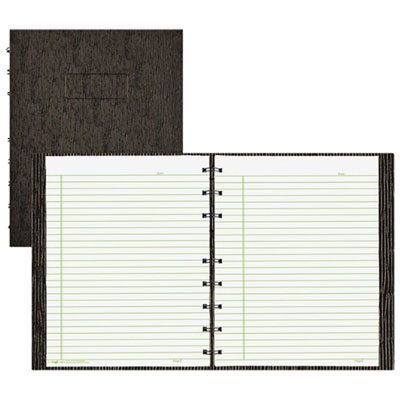
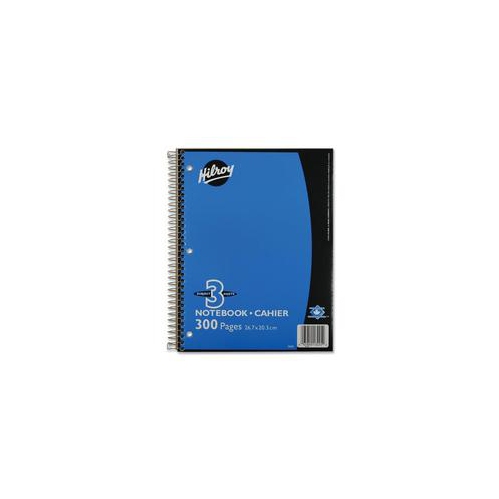
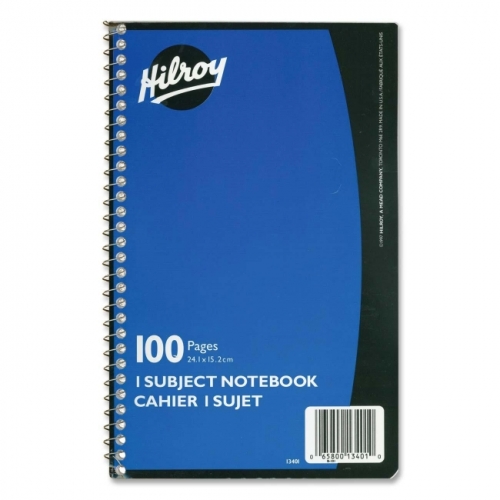
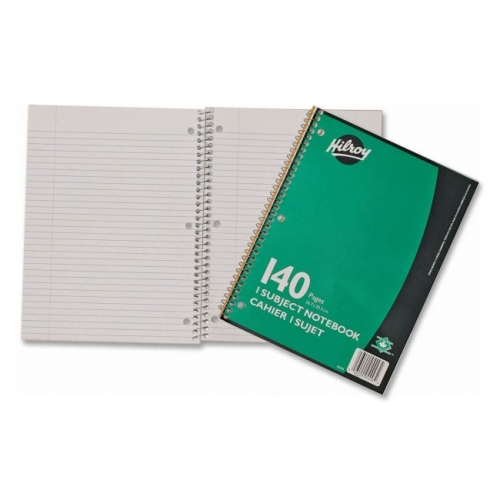
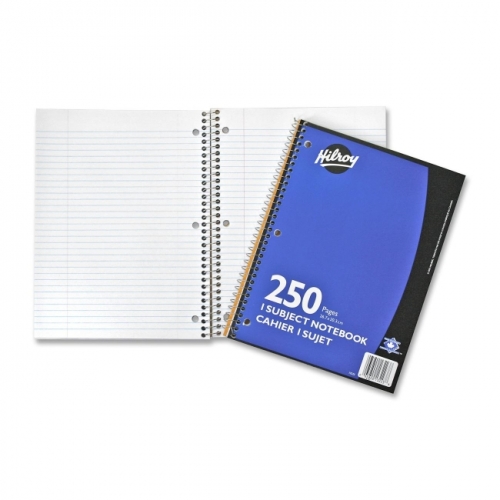
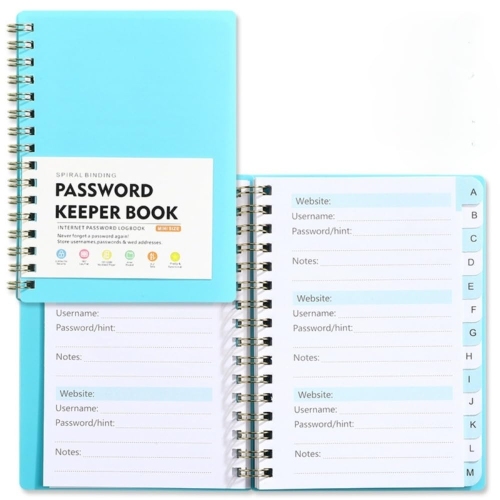
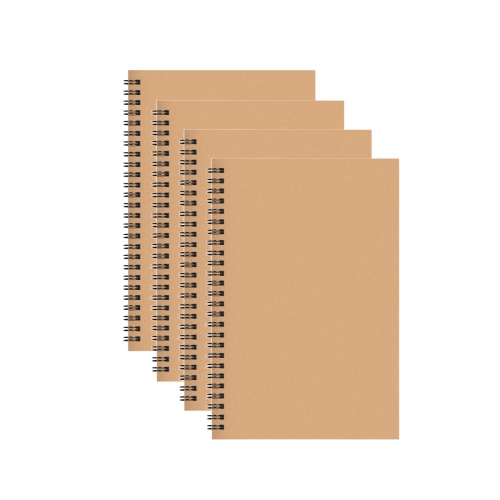
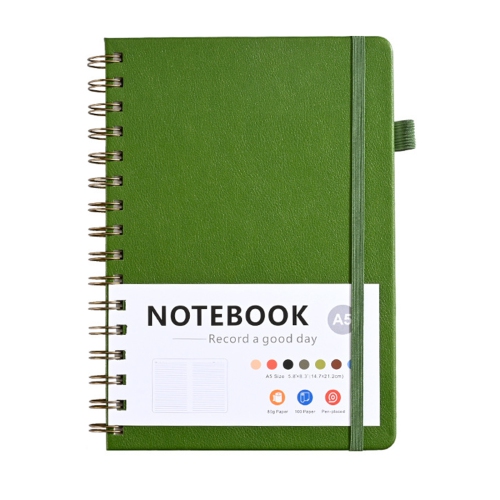
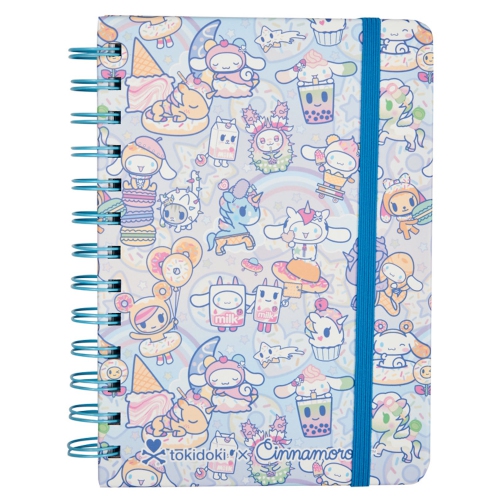
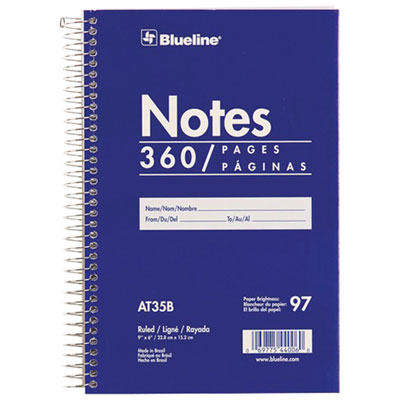

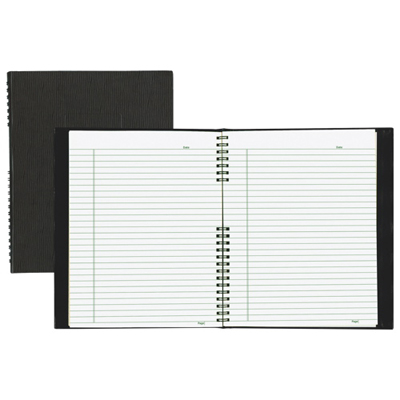
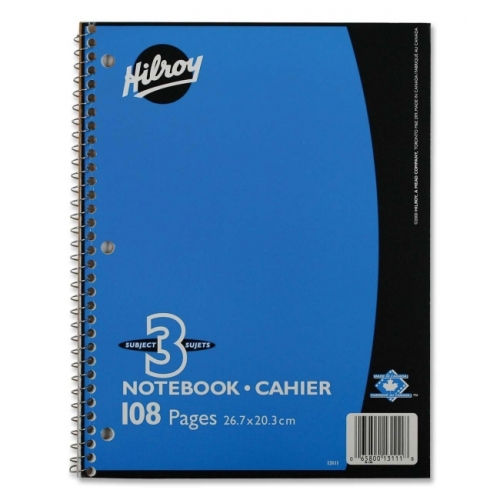
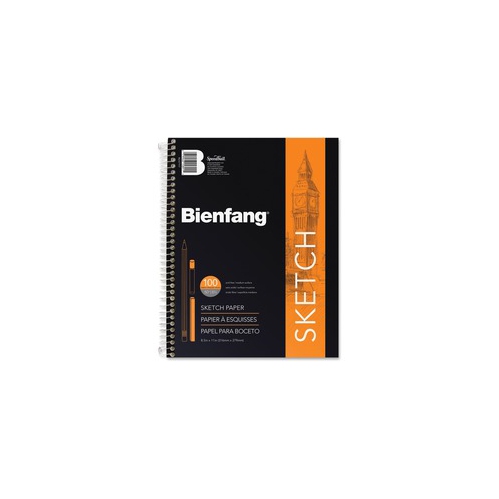
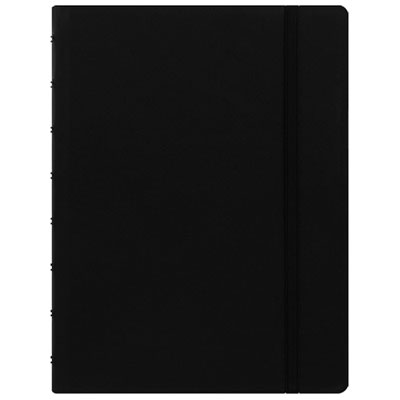
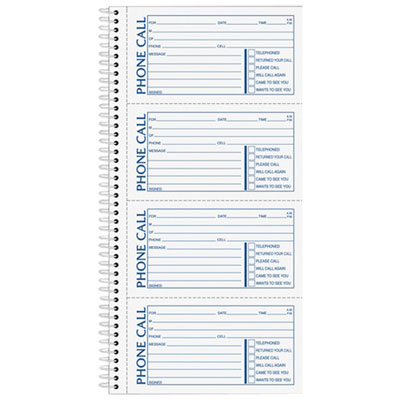
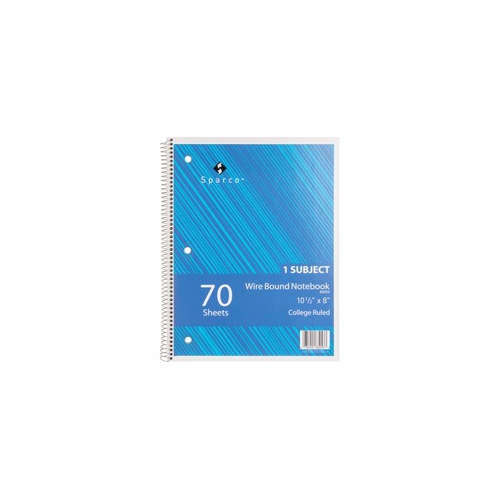

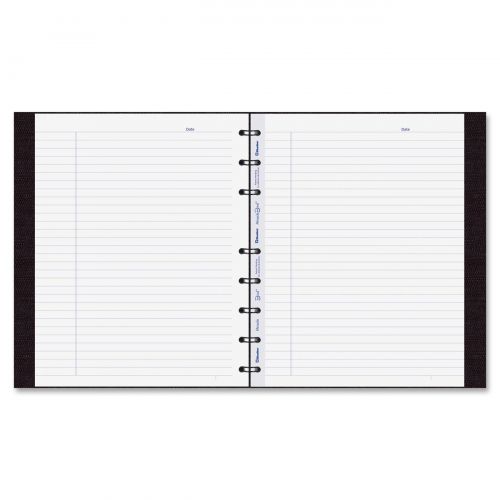
Fold-back pages leave more room on busy desks
Spiral bound notebooks bring a simple, practical structure to handwritten work, from lecture notes and meeting minutes to rough sketches and everyday reminders. Their defining feature is a coil that passes through holes along the edge of the pages, allowing the cover and sheets to turn freely. Many can fold back on themselves, leaving a single page exposed on a crowded desk, a classroom table, or a small counter beside a phone. That compact working footprint is useful when a laptop, textbook, or calculator also needs room. The binding position makes a difference to comfort: a side-bound notebook has a familiar book-like layout, while a top-bound format keeps the coil away from either hand during writing. Left-handed writers may find the latter especially comfortable, although page size, writing angle, and personal habits matter too. Larger formats provide space for diagrams, lengthy explanations, and notes with wide margins; smaller formats suit brief lists, measurements, appointment details, and thoughts captured away from a desk. For students, a notebook that fits beside an open textbook can make it easier to move between reading and writing. For someone taking notes while standing, a firm backing offers more support than a thin, flexible cover. Page count also affects how the notebook feels in use. A slim volume takes up less space in a bag and can keep one project contained, while a thicker notebook provides room for an extended course or a series of ongoing meetings. Extra sheets add weight and bulk, so capacity is most useful when it matches the amount of writing expected. A notebook carried between classrooms has different demands from one kept in a desk drawer, and those everyday routines help explain the range of sizes, covers, and binding styles within this familiar stationery category.
The paper inside shapes the writing experience as much as the cover outside. Ruled pages support orderly handwriting, with wider spacing giving larger letters room to breathe and narrower spacing fitting more text onto each sheet. Grid paper provides reference lines for calculations, charts, measured drawings, and layouts, while dotted pages offer a lighter framework for combining text with small illustrations or planning sections. Unruled sheets leave the whole surface open for sketches, mind maps, and visual thinking. A clear margin can separate main notes from follow-up tasks, and a dedicated space for a date or subject helps distinguish one session from the next. Paper weight, surface texture, and opacity deserve attention, particularly when both sides of a sheet will be used. Heavier paper often feels more substantial, but weight alone does not determine how well it handles ink. The paper’s finish and the type of pen also influence feathering, bleed-through, and drying time. Ballpoint pens and pencils generally place fewer demands on ordinary writing paper than wetter inks or broad markers. For fountain pens, highlighting, or frequent sketching, paper described as suitable for the intended medium offers a better starting point than thickness alone. A small test near the back can show how a favourite pen behaves before several pages of notes are written. Perforated sheets are useful when a page needs to be handed in, shared, or filed separately, though they are designed to detach rather than remain as secure as an unperforated sheet. Punched filing holes can make that transition easier when their spacing matches the receiving binder. In multi-subject formats, dividers help keep separate courses, clients, or projects from running together, and pockets can hold a few loose reference sheets. These details are especially useful during a busy meeting or class, when a handout needs a temporary home and there is little time to reorganize everything. Clear section labels and consistent page dates can turn a notebook full of handwriting into material that is easier to find and use again.
Cover materials and binding construction influence how well a spiral bound notebook stands up to regular handling. Flexible card covers are lightweight and easy to slip into a folder, while thicker board adds support and helps protect page corners. Plastic covers can tolerate minor surface splashes and wipe clean more easily than uncoated card, but the paper and exposed page edges still need protection from liquids. A rigid cover is useful for writing without a full desk underneath, whether that means noting measurements beside a shelving unit or keeping a task list close during a household project. For those who prefer a firm cover in a different binding format, Hardcover Notebooks offer another way to keep handwritten material together. With spiral formats, a neatly formed coil and securely finished ends help pages turn smoothly and reduce the chance of catching on a bag lining. Metal coils can bend under pressure, so a notebook usually travels better beside flat books or inside a separate sleeve than loose beneath heavy objects. Keeping the cover closed during transport also limits folded corners and scuffed sheets. Routine care is straightforward: clean the cover according to its material, keep drinks away from open pages, and avoid forcing more loose papers into the binding than it can comfortably hold. Sticky tabs can make frequently used sections easier to reach without repeatedly bending page corners. Beyond school and office work, these notebooks suit language practice, hobby notes, household planning, and the early stages of creative projects. A cook might keep adjustments to favourite recipes on ruled pages, while a hobbyist could use a grid layout for dimensions and parts lists. As a gift, a notebook feels more considered when its size, ruling, and cover reflect the recipient’s habits. A compact format suits someone who carries only a small bag; a roomy page suits someone who thinks through drawings and detailed notes. The most useful choice is often the one that fits naturally into the places, tools, and routines already involved in putting ideas on paper.
The paper inside shapes the writing experience as much as the cover outside. Ruled pages support orderly handwriting, with wider spacing giving larger letters room to breathe and narrower spacing fitting more text onto each sheet. Grid paper provides reference lines for calculations, charts, measured drawings, and layouts, while dotted pages offer a lighter framework for combining text with small illustrations or planning sections. Unruled sheets leave the whole surface open for sketches, mind maps, and visual thinking. A clear margin can separate main notes from follow-up tasks, and a dedicated space for a date or subject helps distinguish one session from the next. Paper weight, surface texture, and opacity deserve attention, particularly when both sides of a sheet will be used. Heavier paper often feels more substantial, but weight alone does not determine how well it handles ink. The paper’s finish and the type of pen also influence feathering, bleed-through, and drying time. Ballpoint pens and pencils generally place fewer demands on ordinary writing paper than wetter inks or broad markers. For fountain pens, highlighting, or frequent sketching, paper described as suitable for the intended medium offers a better starting point than thickness alone. A small test near the back can show how a favourite pen behaves before several pages of notes are written. Perforated sheets are useful when a page needs to be handed in, shared, or filed separately, though they are designed to detach rather than remain as secure as an unperforated sheet. Punched filing holes can make that transition easier when their spacing matches the receiving binder. In multi-subject formats, dividers help keep separate courses, clients, or projects from running together, and pockets can hold a few loose reference sheets. These details are especially useful during a busy meeting or class, when a handout needs a temporary home and there is little time to reorganize everything. Clear section labels and consistent page dates can turn a notebook full of handwriting into material that is easier to find and use again.
Cover materials and binding construction influence how well a spiral bound notebook stands up to regular handling. Flexible card covers are lightweight and easy to slip into a folder, while thicker board adds support and helps protect page corners. Plastic covers can tolerate minor surface splashes and wipe clean more easily than uncoated card, but the paper and exposed page edges still need protection from liquids. A rigid cover is useful for writing without a full desk underneath, whether that means noting measurements beside a shelving unit or keeping a task list close during a household project. For those who prefer a firm cover in a different binding format, Hardcover Notebooks offer another way to keep handwritten material together. With spiral formats, a neatly formed coil and securely finished ends help pages turn smoothly and reduce the chance of catching on a bag lining. Metal coils can bend under pressure, so a notebook usually travels better beside flat books or inside a separate sleeve than loose beneath heavy objects. Keeping the cover closed during transport also limits folded corners and scuffed sheets. Routine care is straightforward: clean the cover according to its material, keep drinks away from open pages, and avoid forcing more loose papers into the binding than it can comfortably hold. Sticky tabs can make frequently used sections easier to reach without repeatedly bending page corners. Beyond school and office work, these notebooks suit language practice, hobby notes, household planning, and the early stages of creative projects. A cook might keep adjustments to favourite recipes on ruled pages, while a hobbyist could use a grid layout for dimensions and parts lists. As a gift, a notebook feels more considered when its size, ruling, and cover reflect the recipient’s habits. A compact format suits someone who carries only a small bag; a roomy page suits someone who thinks through drawings and detailed notes. The most useful choice is often the one that fits naturally into the places, tools, and routines already involved in putting ideas on paper.
Top selling and popular products
-
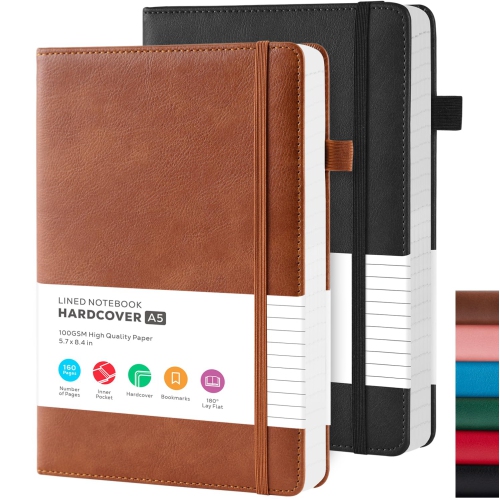 Your price for this item is $44.99
 -
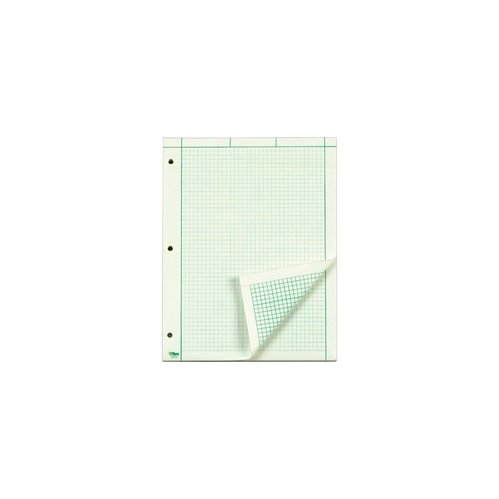 Your price for this item is $29.99
 -
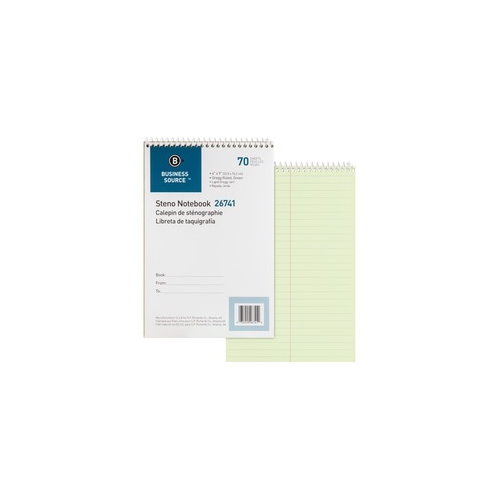 Your price for this item is $2.99
 -
 Your price for this item is $7.99
 -
 Your price for this item is $3.99
 -
 Your price for this item is $46.99
 -
 Your price for this item is $9.99
 -
 Your price for this item is $1.99
Discover more categories related to Spiral Bound Notebooks
Top Collections:
Pokemon Centers, Kindle Devices, Best Budget Office Chairs, Apple iPhones 16, Best Laptops for Writers, iPhone 15 Apple, Canon G7X Cameras, Refurbished Apple Laptops, Alarm Clock, Motorola Razr Phones
Some products may be subject to Environmental Handling Fees
(EHF) depending on your province.
Learn more about EHFs.