Best NVIDIA RTX Graphics Cards for Custom Builds
Build a PC that matches your ambitions with top-rated graphics cards for gaming, content creation, and demanding workloads. Ranked by user review ratings, this selection helps you compare options for your custom build. Explore features such as ray tracing, AI-enhanced performance, and advanced cooling, while keeping your case dimensions, power supply, and budget in mind.

Read More

What to look for in NVIDIA RTX graphics cards for custom builds

1. Performance and Resolution

Match the GPU to your target resolution, frame rate, and most demanding games or creative applications. Compare benchmarks at your preferred settings, including ray tracing performance, and check which NVIDIA DLSS features each card supports.

2. Video Memory

Higher-resolution textures, complex 3D scenes, and video editing can require more video memory, also called VRAM. Check the requirements of your games and applications to choose a capacity that suits your workload.

3. Case Fit and Cooling

Check the card’s length, height, and slot thickness against your case specifications, allowing room for power cables, fans, and radiators. Compare cooler designs and noise levels, and ensure your case has enough airflow to handle the card’s heat output.

4. Power and Connections

Check the card manufacturer’s recommended power supply wattage and required power connectors, accounting for the rest of your build. Confirm motherboard slot compatibility and make sure the card’s display outputs support your monitors’ resolution and refresh rate.
Citrus catapult arrow
  1. 1

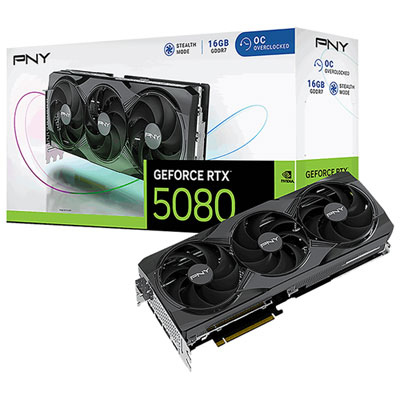
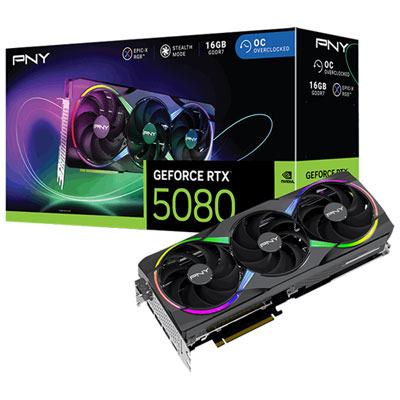
    PNY NVIDIA GeForce RTX 5080 16GB GDDR7 Video Card

    About this product

    A high-performance video card with 16GB GDDR7 memory and AI-powered DLSS 4 for stunning graphics.

    What customers like

    • Strong overclocking capability
    • Reliable build quality and brand
    • Excellent performance and high framerates
    • Great value for money at MSRP
    • Runs cool and quiet even under load
    (387)
    $2,399.99 Your price for this item is $2399.99
  2. 2

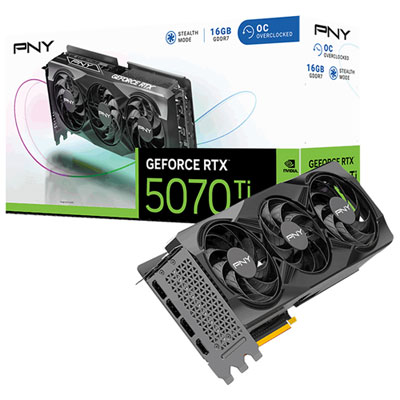
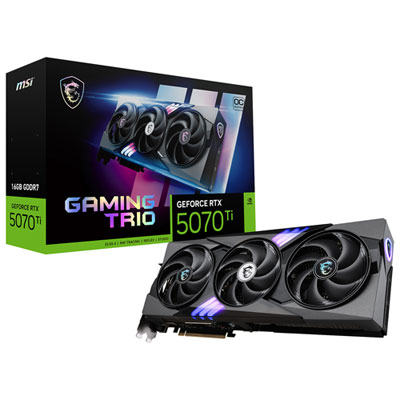
    PNY GeForce RTX 5070 Ti OC Triple Fan 16GB GDDR7 Video Card

    About this product

    A high-performance video card with 16GB GDDR7, triple fans, and advanced ray tracing for immersive visuals.

    What customers like

    • Great value and affordable price
    • Easy installation and stable operation
    • Excellent performance and FPS gains
    • Runs cool and quiet with triple fan design
    • Strong overclocking and undervolting potential
    (352)
    $1,769.99 Your price for this item is $1769.99
  3. 3

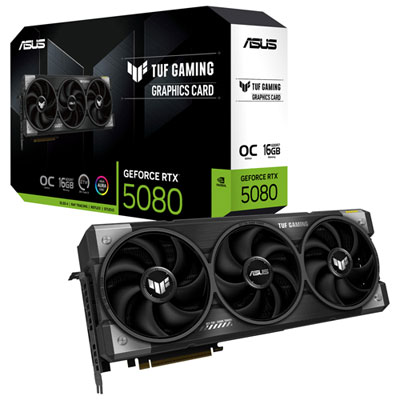
    ASUS TUF Gaming GeForce RTX 5080 OC Edition 16GB GDDR7 Video Card

    About this product

    A high-performance 16GB GDDR7 video card with advanced cooling and military-grade durability for gaming rigs.

    What customers like

    • Excellent cooling and temperature control
    • High build quality and durability
    • Quiet operation
    • Strong gaming and 4K performance
    • Good overclocking potential
    (268)
    $2,649.99 Your price for this item is $2649.99
  4. 4

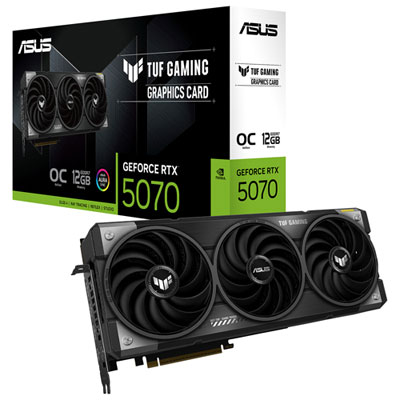
    ASUS TUF Gaming GeForce RTX 5070 OC 12GB GDDR7 Video Card

    About this product

    A high-performance GDDR7 video card with advanced cooling and NVIDIA Blackwell architecture for stunning graphics.

    What customers like

    • Good value for the price
    • Solid build quality and design
    • Efficient cooling and low temperatures
    • Quiet and stable operation
    • Excellent gaming performance
    (165)
    $1,329.99 Your price for this item is $1329.99
  5. 5

    PNY NVIDIA GeForce RTX 5080 ARGB 16GB GDDR7 Video Card

    About this product

    A high-performance video card with 16GB GDDR7 memory and AI-powered DLSS 4 for stunning graphics.

    What customers like

    • Sturdy build quality with no GPU sag
    • Good value and affordable price close to MSRP
    • Quiet and cool operation with effective thermal management
    • Excellent performance for gaming and 4K resolution
    • Attractive RGB lighting and compact design
    (48)
    $2,499.98 Your price for this item is $2499.98
  6. 6

    PNY GeForce RTX 5070 Ti ARGB Epic-X RGB OC Triple-Fan 16GB GDDR7 Video Card

    About this product

    A high-performance video card with 16GB GDDR7, triple-fan cooling, ARGB lighting, and advanced ray tracing.

    What customers like

    • Quiet and effective cooling
    • Attractive ARGB lighting and design
    • Easy installation and setup
    • Excellent performance and speed
    • Great value for money
    (26)
    $1,899.99 Your price for this item is $1899.99
  7. 7

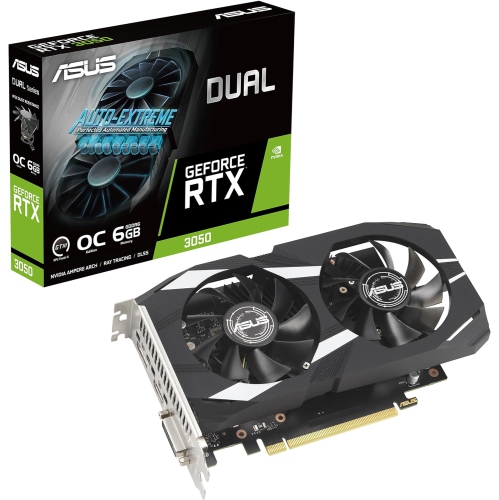
    ASUS Dual Nvidia Geforce Rtx 3050 6GB Oc Edition Gaming Graphics Card - PCie 4.0, 6GB Gddr6 Memory, HDMI 2.1, Displayport 1.4A

    About this product

    A powerful gaming graphics card with 6GB GDDR6 memory, PCIe 4.0, HDMI 2.1, and DisplayPort 1.4a.

    What customers like

    • Low power consumption
    • Great value for the price
    • Easy installation
    • Strong performance for 1080p gaming
    • Smooth build quality
    (22)
    $485.70
    SAVE $48
    Your price for this item is $485.70
  8. 8

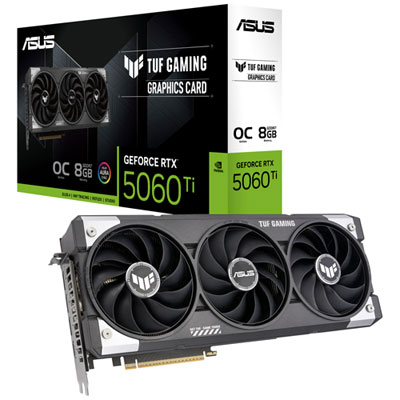
    ASUS TUF Gaming GeForce RTX 5060 Ti OC 8GB GDDR7 Video Card

    About this product

    A high-performance graphics card featuring 8GB GDDR7 memory, boosted clock speed, and advanced cooling technology.

    (4)
    $949.99 Your price for this item is $949.99
  9. 9

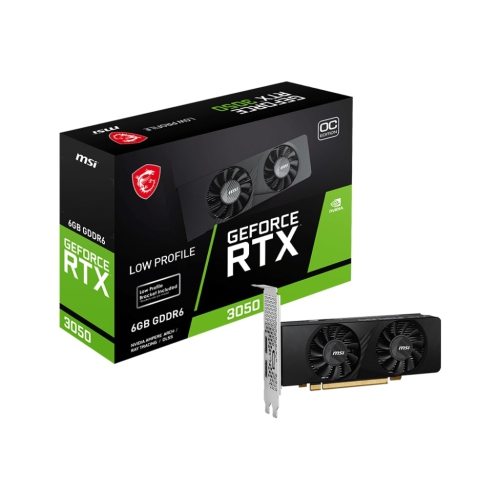
    MSI Rtx 3050 Low Profile Dual Fan Video Card, 6GB Gddr6, 1492 Mhz Boost / 14 GBps, PCie 4.0 X 16 (Uses X8), 96-Bit, HDMI X 1, Display Port X 3, Rtx

    About this product

    A low-profile dual fan graphics card with 6GB GDDR6, 1492 MHz boost, HDMI, and triple DisplayPort outputs.

    $404.99 Your price for this item is $404.99
  10. 10

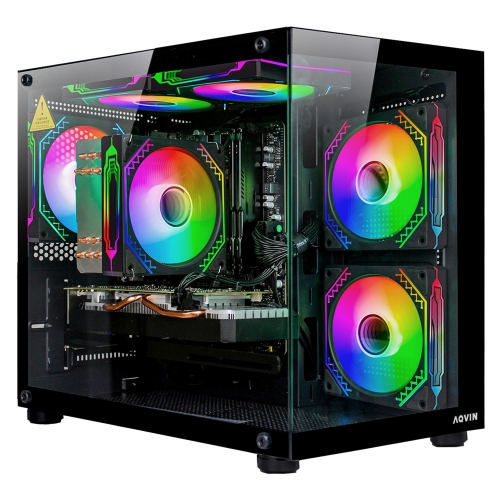
    AQVIN Neon Gaming PC - Rtx 3050 6GB, Intel Core I7, 16GB Memory, 1Tb SSD, Win 11, RGB - Only At Best Buy

    About this product

    A high-performance gaming desktop with RGB lighting, Intel Core i7, 32GB RAM, and RTX 3050 graphics.

    $1,879.99 Your price for this item is $1879.99

The right graphics card fits more than your case

The best RTX graphics cards for custom builds are the ones that match the display, the workload, and the space inside the PC. A system built for fast-paced gaming at 1080p has different demands from a desktop driving a detailed 4K game or rendering a complex 3D scene. At 1440p, a well-matched graphics card can deliver a satisfying balance of sharp detail and responsive play, while 4K places substantially greater demands on graphics processing and video memory. Ray tracing adds realistic lighting, shadows, and reflections in supported games, but its performance demands vary with the effects and settings selected. AI-assisted upscaling can improve frame rates by reconstructing a higher-resolution image from a lower-resolution render, while frame generation can make supported games appear smoother. These features depend on the graphics card generation and the software, and generated frames do not replace a strong base frame rate or guarantee faster input response. For competitive players tracking movement across a high-refresh-rate monitor, consistent frame delivery and low latency often matter more than turning every visual setting to its maximum. For players exploring richly detailed worlds, texture quality, lighting, and resolution may take priority. Dedicated video memory, often called VRAM, holds assets such as textures and rendering data close to the graphics processor. More capacity can help with demanding games, larger creative projects, and certain local AI workloads, although memory capacity alone does not determine overall speed. Processing capability, memory bandwidth, cooling, and application support also shape the experience. A balanced custom build pairs the graphics card with a capable processor and sufficient system memory; a powerful card cannot eliminate every slowdown elsewhere in the system. Display connections matter, too. The card’s outputs, the monitor’s inputs, and the connecting cable all need to support the intended resolution and refresh rate. For a desk shared between gaming and creative work, support for the desired multi-monitor arrangement can be just as useful as peak gaming performance.

Physical fit is a defining consideration for custom PC graphics cards, especially when the build includes a front-mounted radiator, several expansion cards, or a compact case. Card length is only one measurement: height, thickness, and the space needed for power cables can determine whether installation is practical. A cooler that occupies several expansion slots may cover neighbouring motherboard connections or leave little room above a case floor. A tall card can also place its power connector close to the side panel, making cable clearance important even when the listed length fits comfortably. Case specifications provide a starting point, but usable clearance can change once fans, radiators, and drive cages are installed. Compact builds benefit from carefully matched dimensions and a clear airflow path rather than the assumption that any shorter card will run quietly in a small enclosure. Cooling assemblies commonly combine aluminium heatsink fins with copper heat pipes or a vapour chamber to move heat away from the graphics processor. Fan size, heatsink design, and case ventilation work together to influence temperature and sound. A larger cooler may operate quietly under load when it has enough fresh air, while a restricted intake can make even a substantial cooling assembly work harder. Open-air designs typically release much of their heat inside the case, where intake and exhaust fans help carry it away. Fan count alone is not a reliable measure of cooling quality. Power compatibility deserves equally close attention: the power supply needs adequate capacity for the complete system, the appropriate connections, and cables suited to the intended installation. Connector requirements differ between cards, so manufacturer specifications are more useful than assumptions based on appearance. Fully seated connections and cable routing that avoids strain near the plug are important parts of a sound build. Heavy cards may also benefit from a compatible support bracket to limit sag without obstructing fans. Together, these details help a graphics card fit as a working component, not simply as an object that clears the side panel.

RTX graphics cards also suit custom desktops used for video editing, animation, architectural visualisation, streaming, and other graphics-intensive tasks. Hardware acceleration can improve playback, effects processing, encoding, or rendering when the application supports the card’s capabilities. A creator working through layered footage may value smooth timeline interaction and sufficient video memory, while someone building detailed 3D scenes may place greater emphasis on rendering performance and the size of projects that fit into VRAM. Local AI applications introduce their own requirements for memory capacity, supported software, and processing features, so gaming results do not tell the whole story for those workloads. For a student combining coursework with evening gaming, or a hobbyist editing footage between multiplayer sessions, versatility can be more valuable than a card chosen around a single performance figure. Streamers may benefit from supported hardware encoding that handles video compression separately from much of the game-rendering work, though image quality and performance still depend on settings and platform support. Long-term ownership involves practical details beyond the first successful startup. Accessible dust filters, unobstructed fans, and tidy cable routing make routine upkeep easier. With the computer powered off and unplugged, dust can be removed using methods specified by the component manufacturer; fans should not be allowed to spin freely under a strong blast of air. Stable operating temperatures and secure mounting support dependable use, while regular driver updates can bring application fixes and compatibility improvements. Metal backplates and reinforced structures can add rigidity, but neither guarantees durability on its own. Warranty terms, installation requirements, and the quality of the overall build remain meaningful considerations. As a gift for an experienced PC builder, a graphics card is most useful when the recipient’s case dimensions, power connections, display, and preferred applications are already known. For households weighing a component-by-component project against a complete desktop, Best RTX-Powered Gaming PCs offers a related category to explore. Whether the finished machine sits beside a gaming monitor or anchors a creative workspace, the strongest match is a graphics card whose performance, cooling, connections, and dimensions work comfortably with the rest of the system.
Read More

FAQ

Some products may be subject to Environmental Handling Fees (EHF) depending on your province. Learn more about EHFs.