Reusable Ice Packs for Lunch Bags

Reusable ice packs for lunch bags help keep packed meals and snacks cool on the go. Compare pack dimensions with the space inside your lunch bag or lunch box to find a fit that leaves room for food and containers.
Sort

Why ice pack fit matters for packed lunches

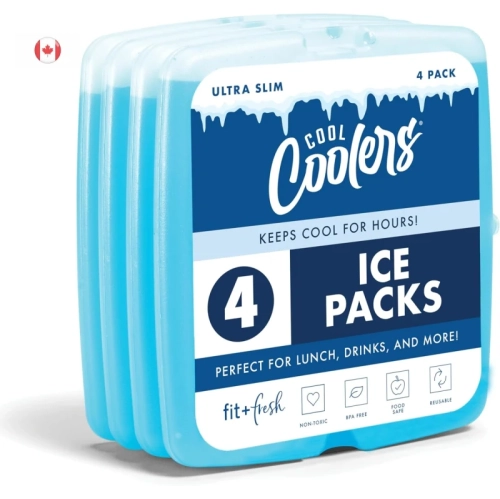
Reusable ice packs for lunch bags help keep packed meals cold without the loose water left behind by melting ice cubes. Their sealed construction makes them a practical companion for school lunches, office meals, snacks between classes, and food carried during a commute. An insulated bag slows heat transfer, while a frozen pack provides the cooling source; neither replaces the other. Matching ice packs with insulated Lunch Bags starts with the space left after the food containers, drink bottle, and cutlery are packed. A broad, flat pack can sit beside a sandwich container, while smaller packs can fit around separate snack tubs. Slim designs, including some less than 1 inch thick, take up less room in compact bags, although thickness alone does not indicate cooling performance. Overall dimensions, weight, and the amount of cooling material also matter. Rigid plastic packs hold their shape and offer a smooth surface that is generally straightforward to clean. Soft-sided packs can fit into narrower spaces, but their flexibility after freezing varies with the filling and construction. Some gel packs remain pliable, while others freeze firm, so a soft outer pouch does not always mean the pack will bend around a container. Rounded edges can make packing easier in a closely fitted bag, and a flatter profile can help prevent a lunch box from tilting against a drink bottle. For a child carrying lunch alongside school supplies, a lighter combination may be more comfortable than one large, heavy pack. For an adult carrying several meal containers, multiple smaller packs may offer more placement options. The most useful size is one that leaves enough room for the meal while allowing the bag to close properly, without stretching its seams or putting constant pressure on the zipper. Checking the usable interior dimensions is more helpful than relying on the bag’s outer measurements, particularly when thick insulation or a separate compartment reduces the main packing space.

Cooling performance depends on more than the ice pack itself. The amount of food, its starting temperature, the bag’s insulation, how often it is opened, and the time before refrigeration all affect how cold a packed lunch stays. Perishable foods such as yogurt, cheese, egg salad, and cooked leftovers should remain at 4°C or below. An ice pack helps maintain that temperature, but a pack that still feels cool is not proof that every container in the bag has stayed cold enough. A small food thermometer can provide a more useful check than touch alone, especially when testing a new packing arrangement for a long day away from a refrigerator. Food that is already chilled places less demand on the frozen packs than a freshly prepared warm meal. Reusable packs are intended to help maintain cold food, rather than rapidly cool hot food inside a closed lunch bag. Where space permits, placing cooling sources above and below perishable food can provide more even coverage than leaving a single small pack in an outer pocket. Close contact with sealed containers also makes better use of the available space. A wide container of pasta salad and a narrow cup of yogurt have different shapes, so pack placement can matter as much as choosing a larger size. Freezing time varies by design, filling, freezer setting, and pack thickness; following the manufacturer’s directions helps ensure the pack is fully prepared before use. Advertised cooling durations should be read in context because test conditions may differ from a crowded school bag or a lunch carried through several stops. Access to a refrigerator at the destination remains useful, even when the meal travels with frozen packs. Keeping the lunch bag closed between meals and separating frequently accessed snacks from the main chilled compartment can also limit unnecessary opening. For routines that involve packing more than one meal, the overall chilled space and time away from refrigeration deserve particular attention.

Materials, seals, and everyday care influence how well reusable ice packs hold up to repeated freezing and handling. Hard shells should feel sturdy, with intact seams and no cracks, while flexible pouches benefit from secure edges and an outer surface suited to regular contact with lunch containers. Labels stating that a shell is BPA-free or that a filling is non-toxic describe particular material properties; they do not mean the contents are edible or that a damaged pack is suitable for continued use. Ice packs belong alongside properly sealed food, not mixed into drinks or placed in direct contact with unpackaged ingredients unless specifically designed for that purpose. Children’s lunch arrangements benefit from packs that are easy to handle and do not invite opening, with adult help appropriate to the child’s age. A smooth shell can simplify cleaning after a yogurt spill, while textured surfaces, fabric coverings, and stitched edges may need closer attention. Cleaning methods vary, so dishwasher use, soaking, and strong cleaning products should not be assumed safe. A gentle wash or wipe with mild soap, followed by drying as directed, is often part of routine care. Moisture on the outside can be condensation rather than a leak, but sticky residue, an unexplained loss of filling, or a damaged seam warrants inspection and removal from use. Drying the lunch bag and pack after use helps prevent lingering odours and damp corners. Protective sleeves can help manage surface moisture when they are compatible with the pack, although they take up additional room and need cleaning too. Durability also depends on avoiding sharp utensils, forced bending of frozen packs, and repeated pressure from an overfilled bag. Packs that store neatly in the freezer are easier to keep ready for a regular lunch routine, and a spare set can be useful when one set is still freezing or being cleaned. Paired with a well-fitting lunch bag and food containers, reusable ice packs can also make a thoughtful, practical gift for someone starting a new job, attending classes, or preparing lunches for a household.

FAQ

Some products may be subject to Environmental Handling Fees (EHF) depending on your province. Learn more about EHFs.