Carbon Dioxide Monitors
Carbon dioxide monitors are essential devices designed to ensure the safety and well-being of your home or workplace. These innovative devices are equipped with advanced sensors that accurately detect and measure carbon dioxide levels in the air, providing you with real-time data to help you maintain a healthy indoor environment. Whether you're concerned about air quality, ventilation, or simply want peace of mind, carbon dioxide monitors offer a reliable solution. With a range of features and options available, finding the right carbon dioxide monitor for your needs has never been easier.
Sort
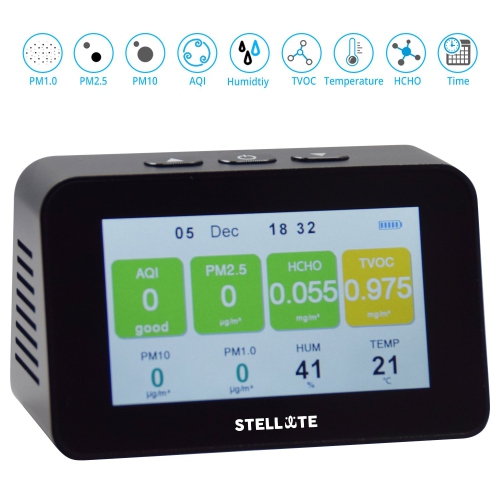
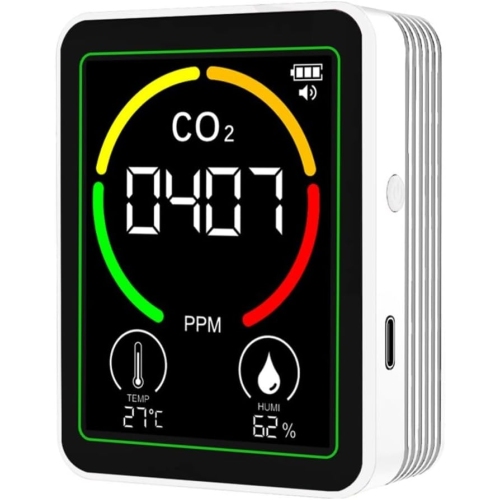
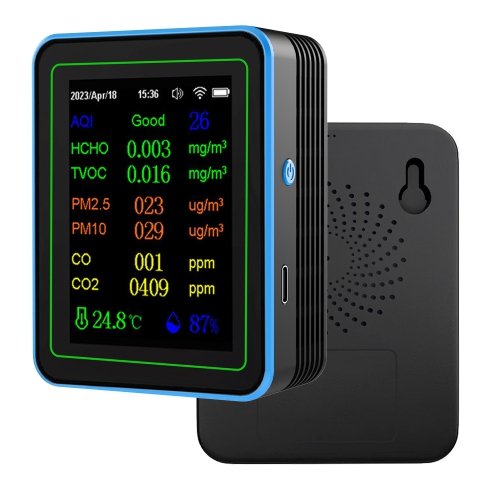
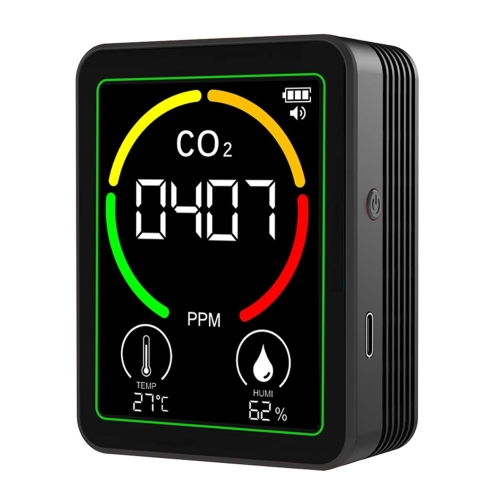
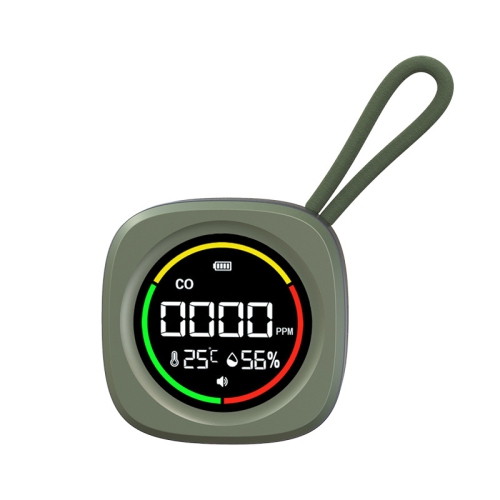
What rising CO2 readings reveal about your room
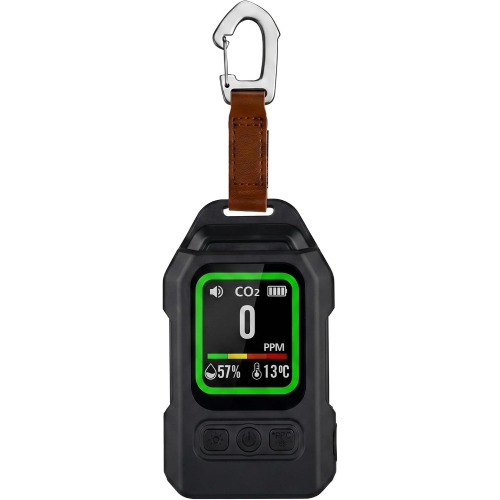
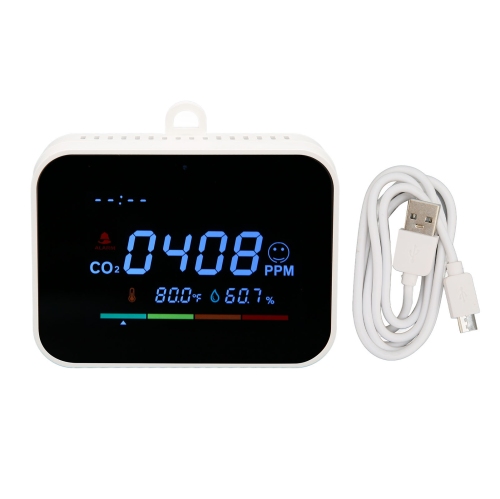
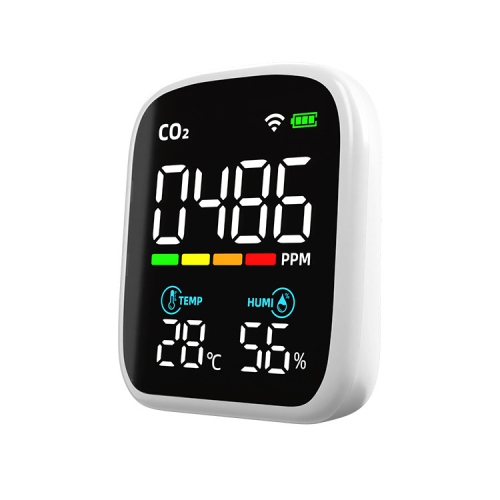
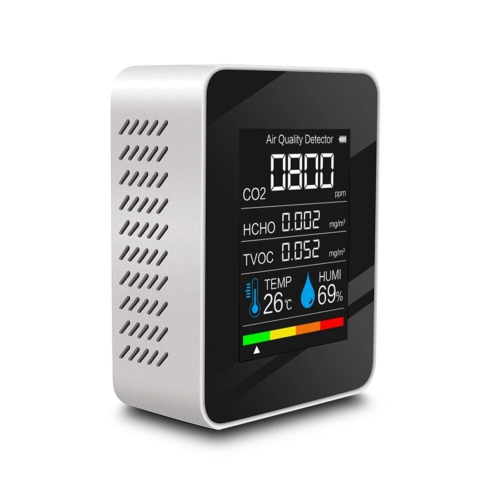
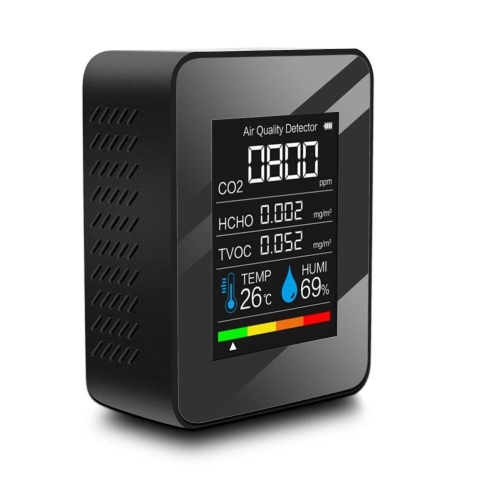
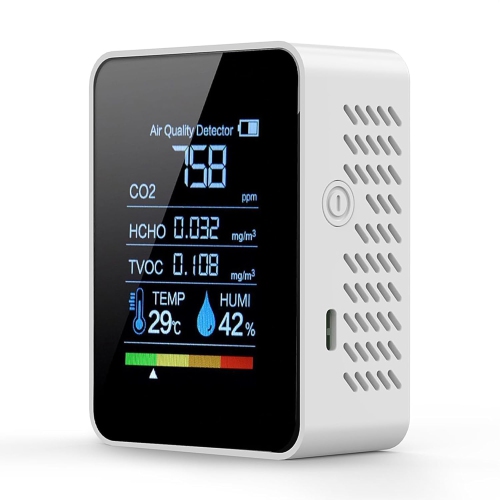
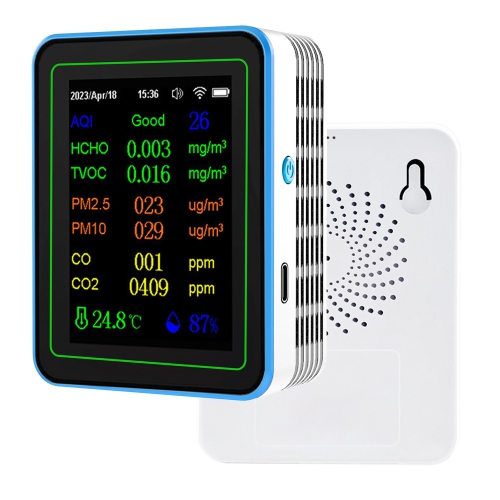
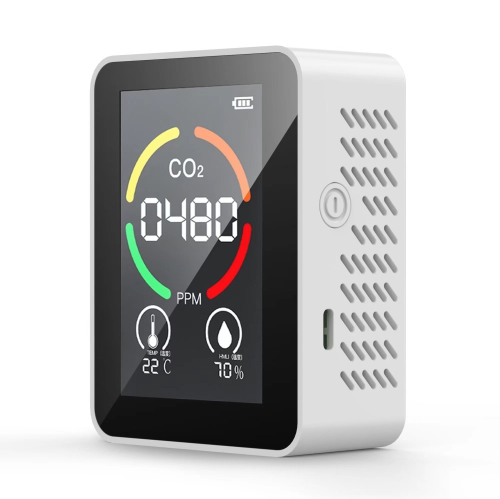
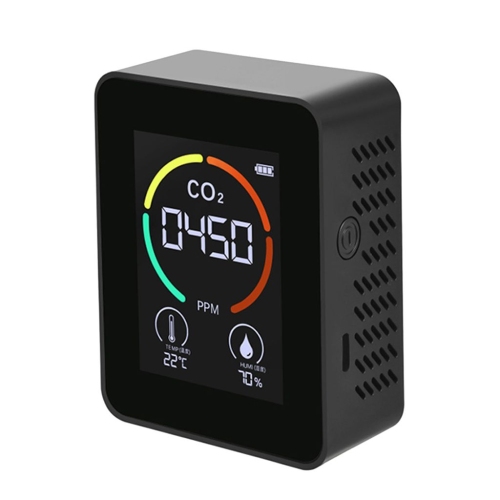
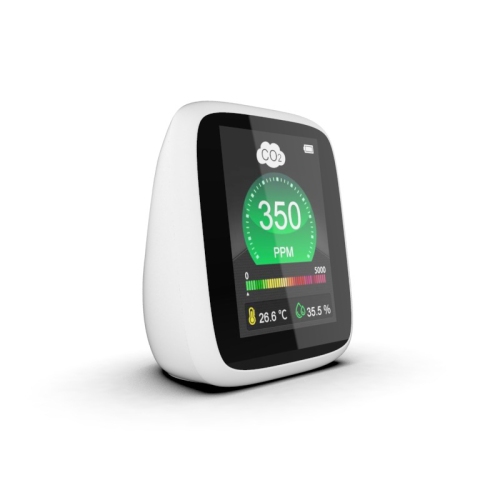
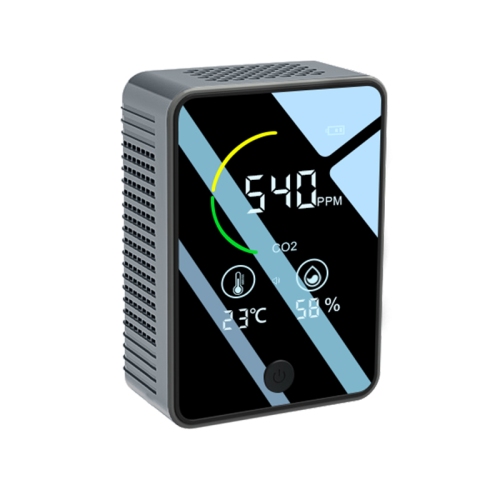
Carbon dioxide monitors measure the concentration of carbon dioxide, or CO2, in the surrounding air and display it in parts per million (ppm). In occupied indoor spaces, people release CO2 as they breathe, so readings can help show how effectively fresh air is being supplied relative to the number of people present. These devices are useful in home offices, bedrooms, classrooms, meeting rooms, and other shared spaces where air can become stuffy without an obvious visual clue. A room that feels comfortable when empty may show a steady rise in CO2 during a long video call, a study session, or a gathering around the dining table. Seeing that pattern makes it easier to identify when additional ventilation may be helpful, whether through an appropriate window opening or adjustments to a mechanical ventilation system. The number on the screen needs context, though: a CO2 monitor does not measure every aspect of indoor air quality, and a single reading cannot establish that a room is safe or unsafe. Occupancy, room size, airflow, placement, and the time elapsed since people entered all influence the result. Trends over a typical day often reveal more than a quick spot check. Carbon dioxide monitors are also different from carbon monoxide alarms. Carbon monoxide, or CO, is a separate gas associated with incomplete combustion; a CO2 monitor does not replace the certified smoke and carbon monoxide alarms required for a home. For households interested in tracking other airborne substances, Home Air Quality Monitors may include devices that measure particles or other indicators alongside CO2. Each measurement serves a different purpose. For example, a particle filter can capture airborne particles without lowering carbon dioxide levels, so a lower particle reading does not necessarily mean that ventilation has improved. Understanding that distinction helps make the information on a monitor more useful without expecting one sensor to tell the whole story.
Sensor technology is an important difference between carbon dioxide monitors. Non-dispersive infrared, usually shortened to NDIR, is a widely used method that measures CO2 through its absorption of infrared light. A stated CO2 sensor type and published accuracy specification provide more useful information than a colourful display alone. Some air quality devices show an estimated carbon dioxide value, often labelled eCO2, calculated from other sensor measurements rather than a direct CO2 measurement. That estimate should not be treated as interchangeable with a dedicated carbon dioxide sensor. Measurement range, accuracy, resolution, and response time also describe different capabilities: a screen that changes in increments of one ppm is not necessarily accurate to within one ppm. For everyday use, an easy-to-read display can matter as much as a lengthy feature list. Large digits are helpful on a shelf across the room, while adjustable brightness or a display that can be dimmed suits a bedroom. Colour indicators make changes easy to notice at a glance, but their thresholds vary between devices and should not be interpreted as universal health limits. Adjustable alerts can be useful in a busy workspace where nobody is watching the screen continuously. Some monitors also display humidity and temperature, adding context about room comfort without turning those measurements into substitutes for CO2 data. Data logging lets users see whether readings climb during recurring meetings or settle after a room has been vacated. App-connected models may provide graphs, notifications, or exported records, depending on their features. Wi-Fi connectivity can support remote access, while Bluetooth connections generally require a nearby compatible device unless another connection method is provided. Details such as account requirements, phone compatibility, and whether historical readings remain accessible without a subscription affect everyday convenience. A standalone display can be a simpler fit for someone who wants a visible reading without managing another app, while stored data suits people interested in comparing patterns across several days.
The physical design of a carbon dioxide monitor shapes where and how it can be used. Compact, lightweight housings are practical for carrying between a home office and a shared workspace, while a stable base or suitable wall-mounting option makes more sense for a device that will stay in one room. Rechargeable batteries reduce the need for a nearby outlet during portable use, but runtime depends on the sensor, sampling frequency, display, and wireless features. USB-powered designs suit longer-term placement when a cable can be routed safely and the required power source is provided. Durable casing, secure buttons, and a clear screen are useful everyday details, especially when a monitor travels in a work bag. Sensor openings must remain unobstructed, so decorative covers, tight storage pockets, and crowded shelves can interfere with measurements. Placement should follow the manufacturer's directions and reflect the air people actually breathe, away from direct exhaled breath, open windows, supply vents, and other sources that can skew a reading. Moving a monitor from room to room also calls for enough settling time before comparing results. Care is usually straightforward: keep the housing clean with the specified method, avoid spraying cleaners into the sensor openings, and protect the device from moisture unless it is explicitly rated for that use. Calibration deserves particular attention. Some monitors use automatic baseline calibration, which assumes the sensor is periodically exposed to air near an outdoor baseline. In continuously occupied spaces, that assumption may not hold, and an unsuitable calibration setting can cause readings to drift. Models with manual calibration or configurable baseline settings offer different options, but the correct procedure remains specific to the device. Homeowners, renters, teachers, and people working in shared offices may all find these monitors useful for noticing ventilation patterns. They can also make a practical gift for someone who enjoys tracking household conditions, provided the setup and display suit that person's preferences. For greenhouses, workshops, or other settings with unusually high CO2 concentrations, measurement range and intended use require closer attention; an ordinary household monitor is not a substitute for a purpose-built occupational gas safety system.
Sensor technology is an important difference between carbon dioxide monitors. Non-dispersive infrared, usually shortened to NDIR, is a widely used method that measures CO2 through its absorption of infrared light. A stated CO2 sensor type and published accuracy specification provide more useful information than a colourful display alone. Some air quality devices show an estimated carbon dioxide value, often labelled eCO2, calculated from other sensor measurements rather than a direct CO2 measurement. That estimate should not be treated as interchangeable with a dedicated carbon dioxide sensor. Measurement range, accuracy, resolution, and response time also describe different capabilities: a screen that changes in increments of one ppm is not necessarily accurate to within one ppm. For everyday use, an easy-to-read display can matter as much as a lengthy feature list. Large digits are helpful on a shelf across the room, while adjustable brightness or a display that can be dimmed suits a bedroom. Colour indicators make changes easy to notice at a glance, but their thresholds vary between devices and should not be interpreted as universal health limits. Adjustable alerts can be useful in a busy workspace where nobody is watching the screen continuously. Some monitors also display humidity and temperature, adding context about room comfort without turning those measurements into substitutes for CO2 data. Data logging lets users see whether readings climb during recurring meetings or settle after a room has been vacated. App-connected models may provide graphs, notifications, or exported records, depending on their features. Wi-Fi connectivity can support remote access, while Bluetooth connections generally require a nearby compatible device unless another connection method is provided. Details such as account requirements, phone compatibility, and whether historical readings remain accessible without a subscription affect everyday convenience. A standalone display can be a simpler fit for someone who wants a visible reading without managing another app, while stored data suits people interested in comparing patterns across several days.
The physical design of a carbon dioxide monitor shapes where and how it can be used. Compact, lightweight housings are practical for carrying between a home office and a shared workspace, while a stable base or suitable wall-mounting option makes more sense for a device that will stay in one room. Rechargeable batteries reduce the need for a nearby outlet during portable use, but runtime depends on the sensor, sampling frequency, display, and wireless features. USB-powered designs suit longer-term placement when a cable can be routed safely and the required power source is provided. Durable casing, secure buttons, and a clear screen are useful everyday details, especially when a monitor travels in a work bag. Sensor openings must remain unobstructed, so decorative covers, tight storage pockets, and crowded shelves can interfere with measurements. Placement should follow the manufacturer's directions and reflect the air people actually breathe, away from direct exhaled breath, open windows, supply vents, and other sources that can skew a reading. Moving a monitor from room to room also calls for enough settling time before comparing results. Care is usually straightforward: keep the housing clean with the specified method, avoid spraying cleaners into the sensor openings, and protect the device from moisture unless it is explicitly rated for that use. Calibration deserves particular attention. Some monitors use automatic baseline calibration, which assumes the sensor is periodically exposed to air near an outdoor baseline. In continuously occupied spaces, that assumption may not hold, and an unsuitable calibration setting can cause readings to drift. Models with manual calibration or configurable baseline settings offer different options, but the correct procedure remains specific to the device. Homeowners, renters, teachers, and people working in shared offices may all find these monitors useful for noticing ventilation patterns. They can also make a practical gift for someone who enjoys tracking household conditions, provided the setup and display suit that person's preferences. For greenhouses, workshops, or other settings with unusually high CO2 concentrations, measurement range and intended use require closer attention; an ordinary household monitor is not a substitute for a purpose-built occupational gas safety system.
Top selling and popular products
-
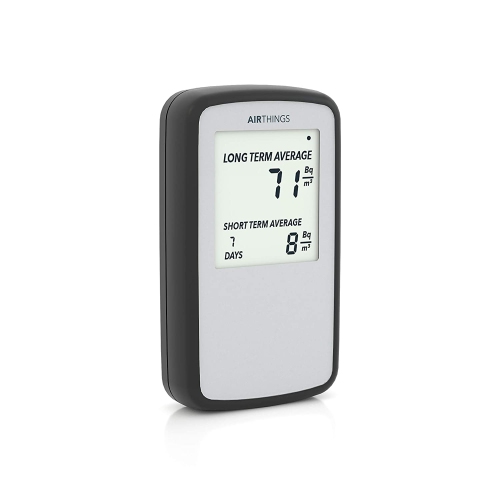 Your price for this item is $301.99
 -
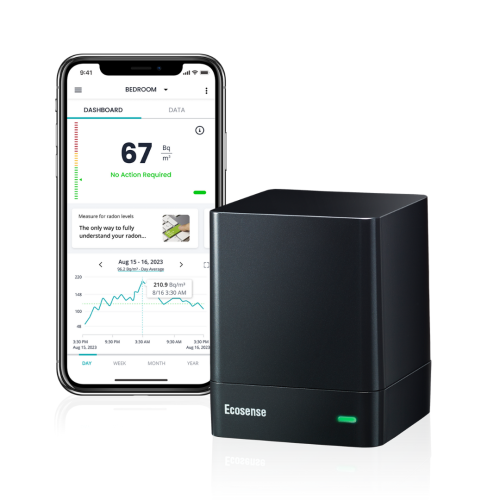 Your price for this item is $197
 -
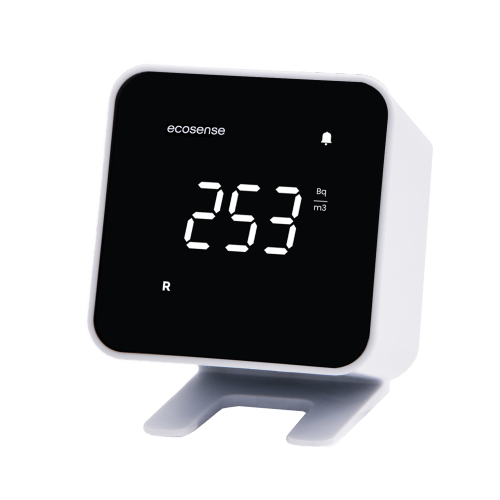 Your price for this item is $165
 -
 Your price for this item is $255.89
 -
 Your price for this item is $207.68
 -
 Your price for this item is $429.99
 -
 Your price for this item is $165
 -
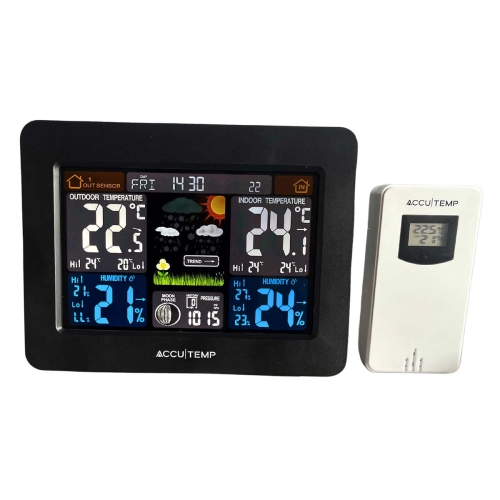 Your price for this item is $66.46
Discover more categories related to Carbon Dioxide Monitors
Top Collections:
Pokemon Centers, Kindle Devices, Best Budget Office Chairs, Apple iPhones 16, Best Laptops for Writers, iPhone 15 Apple, Canon G7X Cameras, Refurbished Apple Laptops, Alarm Clock, Motorola Razr Phones
Some products may be subject to Environmental Handling Fees
(EHF) depending on your province.
Learn more about EHFs.