Sprinkler Timers
A sprinkler timer offers a convenient way to manage your lawn and garden watering schedule with ease. Whether you're looking to streamline your daily routine or keep your outdoor spaces vibrant, these devices help you take control of your irrigation system. Explore a range of sprinkler timer options designed to make watering more efficient and hassle-free, so you can enjoy a lush landscape all season long.
Sort

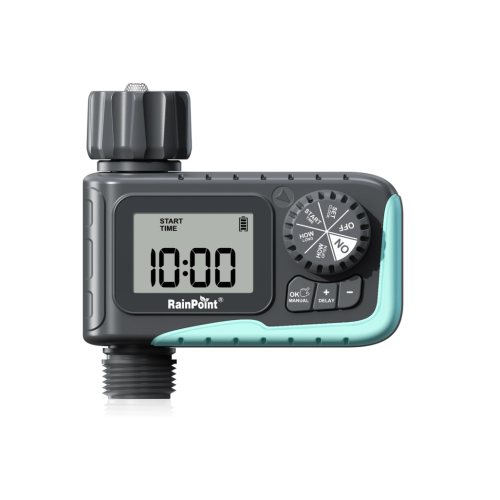
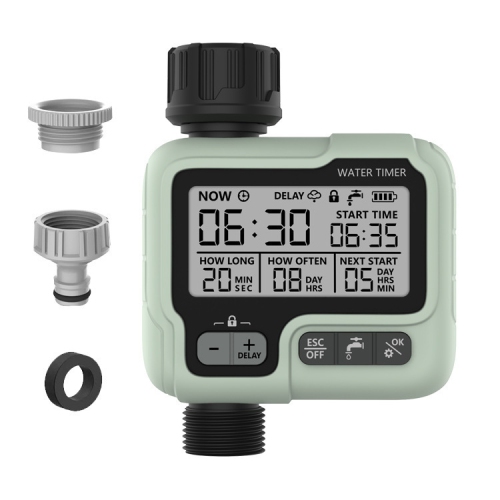
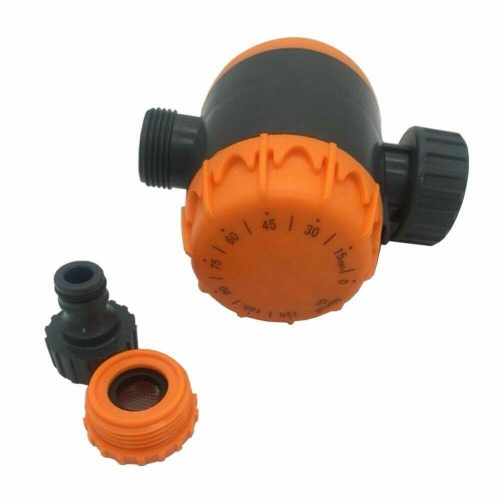
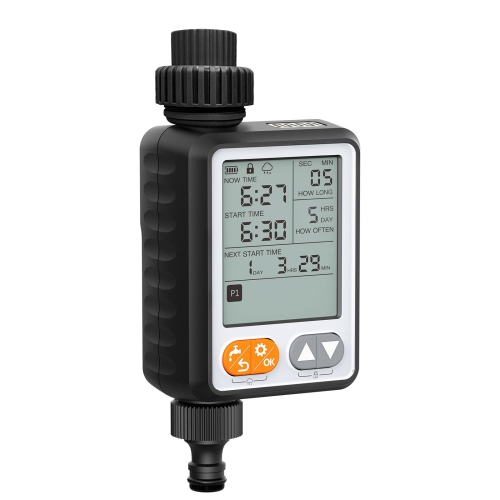
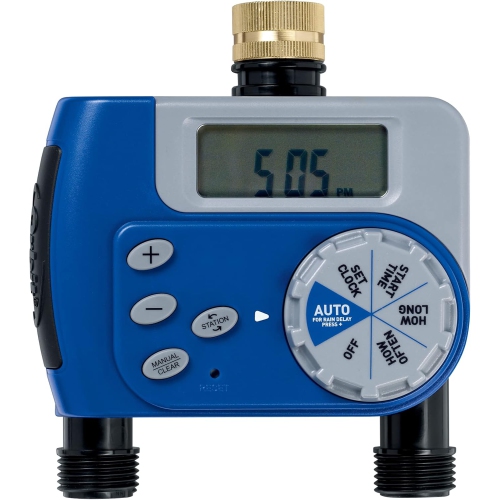
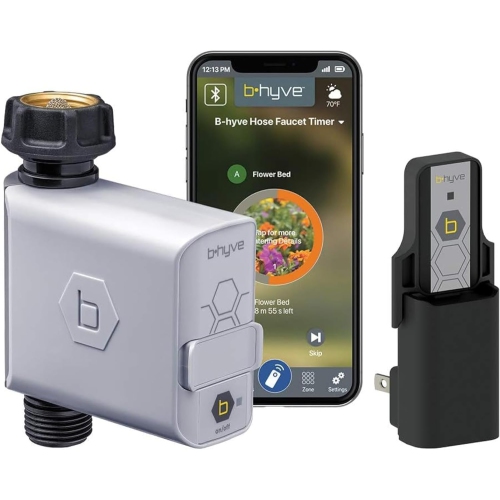
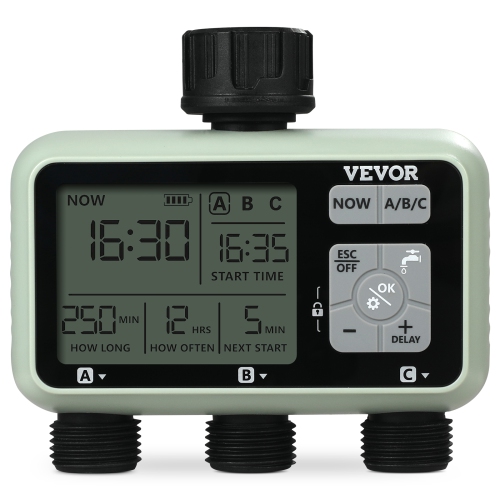
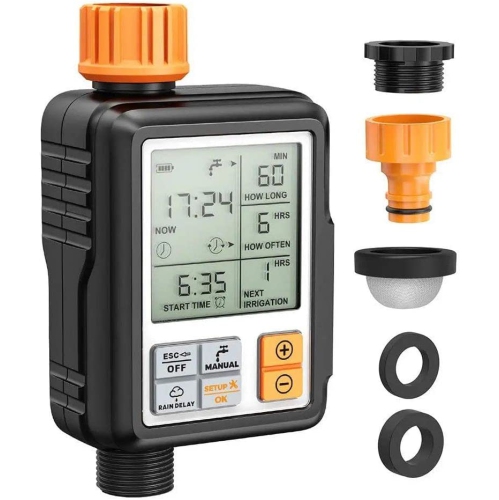
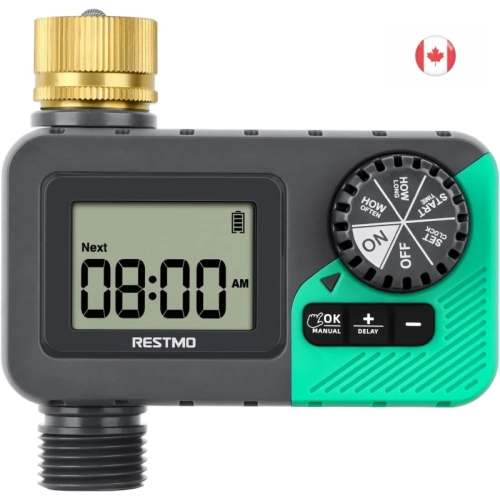
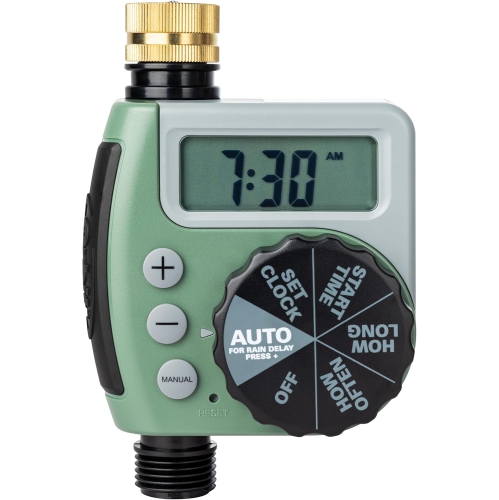
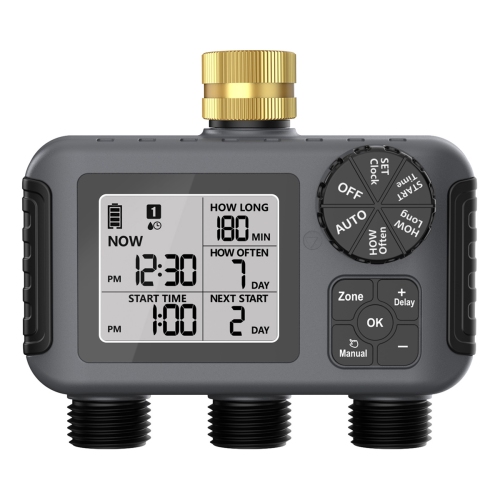
Automatic watering that fits your yard’s setup
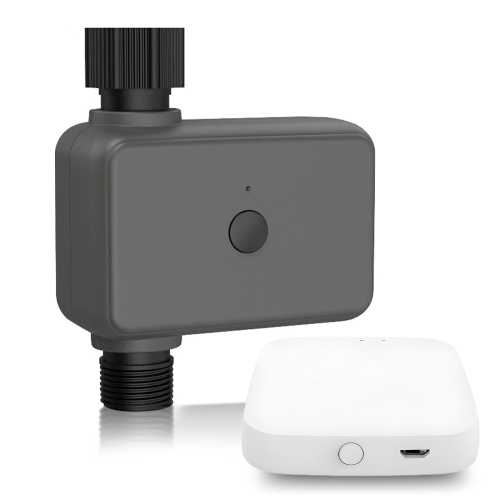
Sprinkler timers automate watering by controlling when an attached sprinkler or irrigation zone turns on and how long it runs. They bring a predictable routine to lawn care, flowerbeds, vegetable gardens, and planted borders, whether watering involves a single hose beside the patio or an in-ground system serving several parts of a property. A hose-end timer connects directly to an outdoor tap and sits between the tap and the garden hose, making it a practical option for homes without permanent irrigation piping. A single-outlet design suits one sprinkler or soaker hose, while a multi-outlet timer can supply separate hose runs with different schedules, depending on its controls. Wall-mounted irrigation controllers serve a different purpose: they connect to compatible electrically operated valves that manage individual watering zones. This arrangement allows a front lawn, a narrow side yard, and a group of established shrubs to receive different run times rather than sharing one setting. Mechanical countdown timers are useful for supervised watering sessions because they stop the flow after a selected duration; many do not offer recurring schedules. Digital timers typically add a clock, programmed start times, and watering intervals, while connected models may offer control through a phone app. The right format depends on the watering setup as much as the size of the yard. A small courtyard with several containers may need more scheduling flexibility than a larger lawn with one sprinkler. For households juggling work, school, and outdoor chores, recurring schedules can make watering less dependent on someone remembering to turn off the tap. They can also help maintain an established routine during time away, provided the system has been tested and someone can check for leaks or other problems. A timer controls delivery, but it does not establish how much moisture every planting needs. Soil type, shade, drainage, and the sprinkler’s coverage still shape the schedule, and a timer works best with hoses, fittings, and watering equipment suited to the space.
Scheduling features determine how easily a sprinkler timer fits everyday use. Common controls include the time and day, one or more start times, run duration, and a choice of watering days or repeating intervals. Some controllers also support separate programmes, which can be useful when a lawn and a drip-irrigated bed require different routines. Multiple start times can divide watering into shorter sessions where longer runs would cause pooling, although the appropriate timing depends on the soil and watering equipment. Early-morning operation often suits lawns because temperatures tend to be lower and there is less wind than later in the day, but local watering rules and the needs of the planting should take priority. A manual watering function is especially handy when a newly planted pot needs attention outside the usual schedule; depending on the design, it can open the valve temporarily without erasing the saved programme. A rain-delay setting pauses scheduled watering for a selected period, while compatible rain sensors can interrupt operation when they detect rainfall. These are distinct from app-based weather adjustments, which use weather information and require supported features and a suitable connection. Smart sprinkler timers may use Bluetooth for nearby control or Wi-Fi for access through a home network, and those connection types are not interchangeable. For a tap behind a garage or a controller mounted near the edge of the property, signal reach deserves attention. Some connected hose timers require a separate hub or gateway, and supported wireless bands vary. Clear displays, readable button labels, and controls that remain accessible once the timer is attached matter just as much as app features. A tap close to the ground or tucked behind a planter can leave little room to read a screen or replace batteries. For broader household scheduling needs, Electric Timers cover a related category, but timers that switch power to appliances are not substitutes for devices designed to operate irrigation valves or control water at a tap.
Fit, construction, and care have a direct effect on how well sprinkler timers hold up outdoors. Hose-end models need compatible inlet and outlet threads, an intact sealing washer, and a water-pressure range that matches the supply. Thread standards can differ, so matching the actual connection is more dependable than judging by appearance. Drip lines and soaker hoses may also need their own pressure regulator or filter; a timer does not automatically provide either. Durable plastic housings keep many hose timers lightweight, while metal coupling components can add strength at connection points. Neither material removes the need to avoid cross-threading, overtightening, or leaving a heavy hose pulling sideways on the tap. A sound connection should seal without forcing the fitting, following the manufacturer’s installation directions. Outdoor exposure ratings matter for both hose timers and wall-mounted controllers: a controller intended for indoor installation needs a dry, protected location, while an outdoor-rated unit still requires correct mounting and properly secured covers. For in-ground systems, the controller’s station count, valve compatibility, power requirements, and any pump or master-valve connections must suit the existing installation. Battery-powered timers benefit from fresh batteries of the specified type, clean contacts, and a firmly closed battery compartment. Low-battery alerts are useful, but the valve’s behaviour when power runs low varies by design and should not be assumed. Occasional checks can catch a dripping coupling, a clogged inlet screen, or a hose that has shifted away from its intended coverage. During the cooler months, freezing temperatures become an important limit: water trapped inside a hose timer can damage its valve and housing. Removable timers generally need to be disconnected, drained, and stored as directed before freezing weather, and seasonal battery removal may be appropriate for storage. Pausing an irrigation controller does not drain buried pipes or replace proper winter preparation for the system. With suitable connections, accessible controls, and routine care, sprinkler timers can serve everyone from a balcony gardener tending hose-fed planters to a homeowner managing several lawn and garden zones. Their practical value lies in making a familiar outdoor task more consistent while keeping each watering area’s needs separate and manageable.
Scheduling features determine how easily a sprinkler timer fits everyday use. Common controls include the time and day, one or more start times, run duration, and a choice of watering days or repeating intervals. Some controllers also support separate programmes, which can be useful when a lawn and a drip-irrigated bed require different routines. Multiple start times can divide watering into shorter sessions where longer runs would cause pooling, although the appropriate timing depends on the soil and watering equipment. Early-morning operation often suits lawns because temperatures tend to be lower and there is less wind than later in the day, but local watering rules and the needs of the planting should take priority. A manual watering function is especially handy when a newly planted pot needs attention outside the usual schedule; depending on the design, it can open the valve temporarily without erasing the saved programme. A rain-delay setting pauses scheduled watering for a selected period, while compatible rain sensors can interrupt operation when they detect rainfall. These are distinct from app-based weather adjustments, which use weather information and require supported features and a suitable connection. Smart sprinkler timers may use Bluetooth for nearby control or Wi-Fi for access through a home network, and those connection types are not interchangeable. For a tap behind a garage or a controller mounted near the edge of the property, signal reach deserves attention. Some connected hose timers require a separate hub or gateway, and supported wireless bands vary. Clear displays, readable button labels, and controls that remain accessible once the timer is attached matter just as much as app features. A tap close to the ground or tucked behind a planter can leave little room to read a screen or replace batteries. For broader household scheduling needs, Electric Timers cover a related category, but timers that switch power to appliances are not substitutes for devices designed to operate irrigation valves or control water at a tap.
Fit, construction, and care have a direct effect on how well sprinkler timers hold up outdoors. Hose-end models need compatible inlet and outlet threads, an intact sealing washer, and a water-pressure range that matches the supply. Thread standards can differ, so matching the actual connection is more dependable than judging by appearance. Drip lines and soaker hoses may also need their own pressure regulator or filter; a timer does not automatically provide either. Durable plastic housings keep many hose timers lightweight, while metal coupling components can add strength at connection points. Neither material removes the need to avoid cross-threading, overtightening, or leaving a heavy hose pulling sideways on the tap. A sound connection should seal without forcing the fitting, following the manufacturer’s installation directions. Outdoor exposure ratings matter for both hose timers and wall-mounted controllers: a controller intended for indoor installation needs a dry, protected location, while an outdoor-rated unit still requires correct mounting and properly secured covers. For in-ground systems, the controller’s station count, valve compatibility, power requirements, and any pump or master-valve connections must suit the existing installation. Battery-powered timers benefit from fresh batteries of the specified type, clean contacts, and a firmly closed battery compartment. Low-battery alerts are useful, but the valve’s behaviour when power runs low varies by design and should not be assumed. Occasional checks can catch a dripping coupling, a clogged inlet screen, or a hose that has shifted away from its intended coverage. During the cooler months, freezing temperatures become an important limit: water trapped inside a hose timer can damage its valve and housing. Removable timers generally need to be disconnected, drained, and stored as directed before freezing weather, and seasonal battery removal may be appropriate for storage. Pausing an irrigation controller does not drain buried pipes or replace proper winter preparation for the system. With suitable connections, accessible controls, and routine care, sprinkler timers can serve everyone from a balcony gardener tending hose-fed planters to a homeowner managing several lawn and garden zones. Their practical value lies in making a familiar outdoor task more consistent while keeping each watering area’s needs separate and manageable.
Top selling and popular products
-
 Your price for this item is $169.99
 -
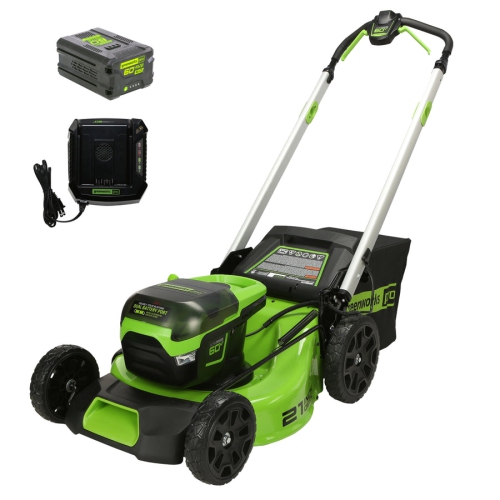 Your price for this item is $554.39
 -
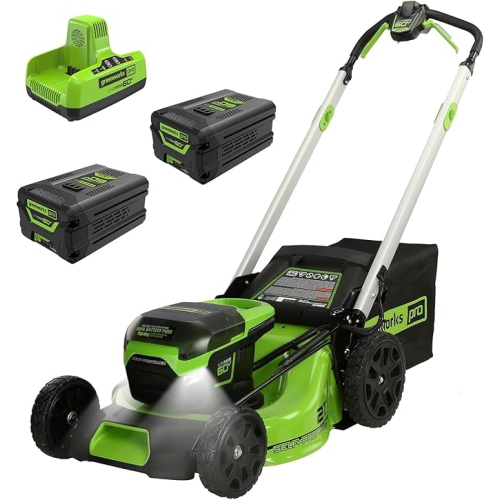 Your price for this item is $879.99
 -
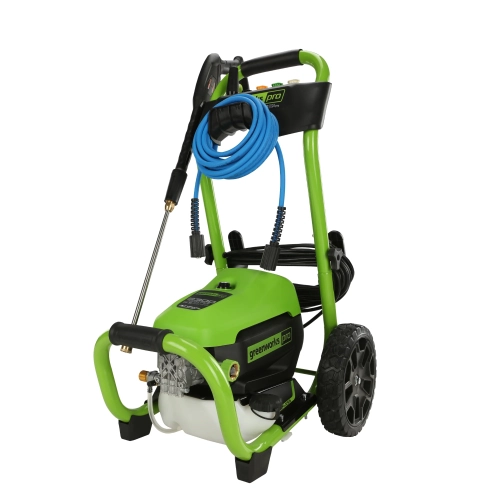 Your price for this item is $439.99
 -
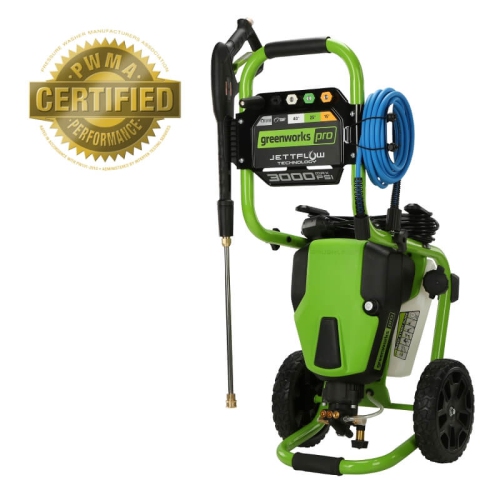 Your price for this item is $499
 -
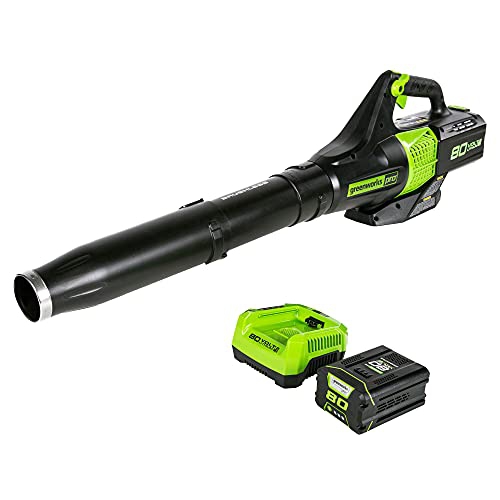 Your price for this item is $255
 -
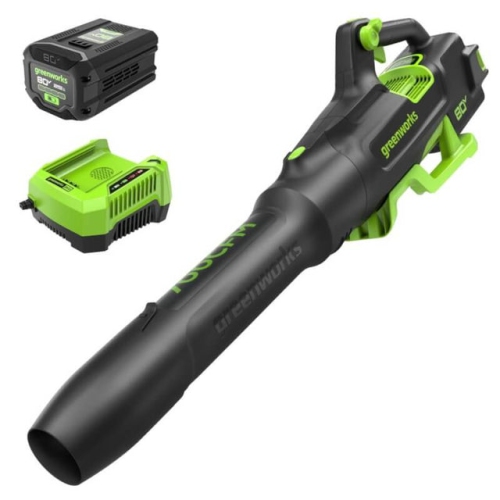 Your price for this item is $272
 -
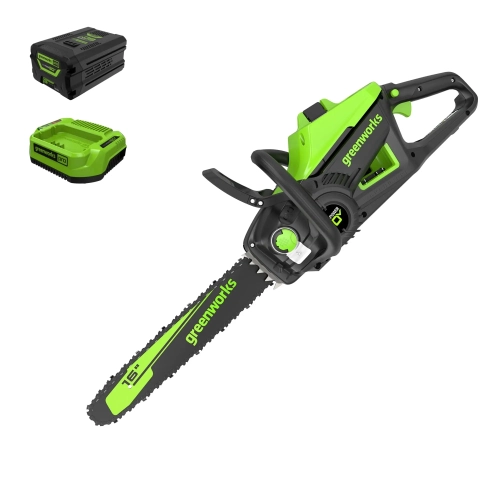 Your price for this item is $329.99
Discover more categories related to Sprinkler Timers
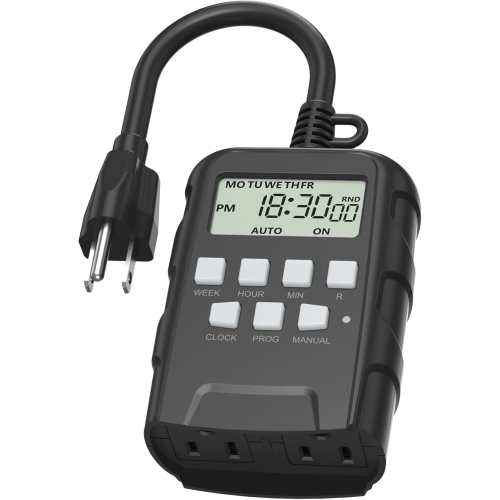
Top Collections:
Pokemon Centers, Kindle Devices, Best Budget Office Chairs, Apple iPhones 16, Best Laptops for Writers, iPhone 15 Apple, Canon G7X Cameras, Refurbished Apple Laptops, Alarm Clock, Motorola Razr Phones
Some products may be subject to Environmental Handling Fees
(EHF) depending on your province.
Learn more about EHFs.