Voice Controlled Smart Speakers
Voice Controlled Smart Speakers bring convenience and innovation to your home or office, offering a seamless way to enjoy music, manage tasks, and stay connected. With a variety of designs and capabilities, these speakers fit effortlessly into any space while providing hands-free control for everyday activities. Explore the latest Voice Controlled Smart Speakers to experience enhanced audio performance and intuitive interaction at your fingertips. Find the perfect option to match your needs and elevate your listening experience.
Sort


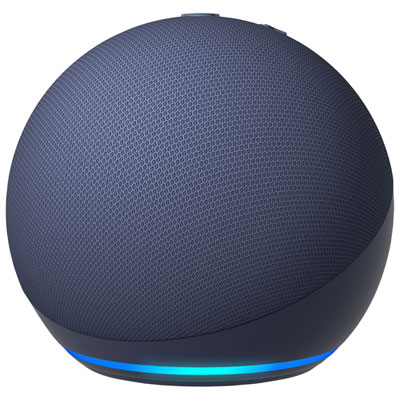
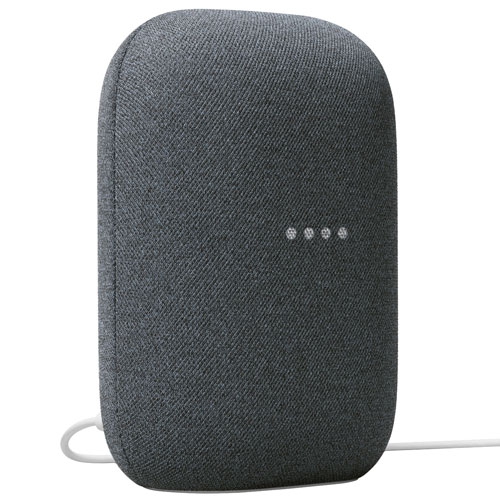
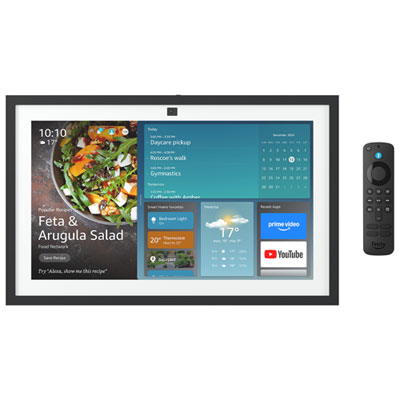
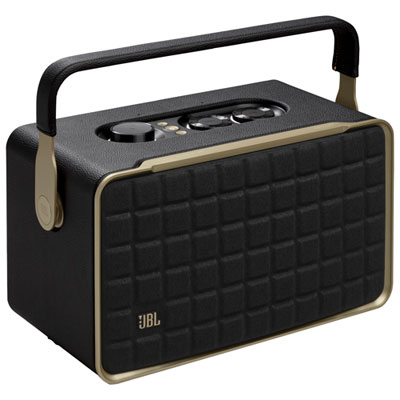
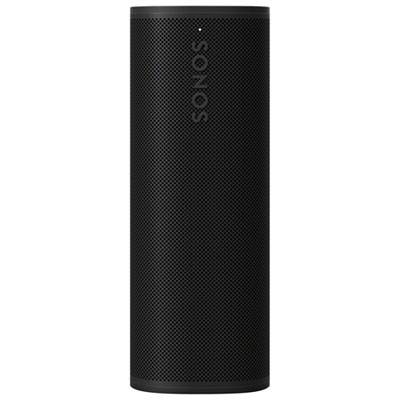
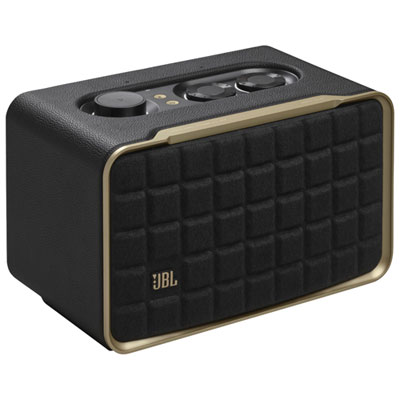
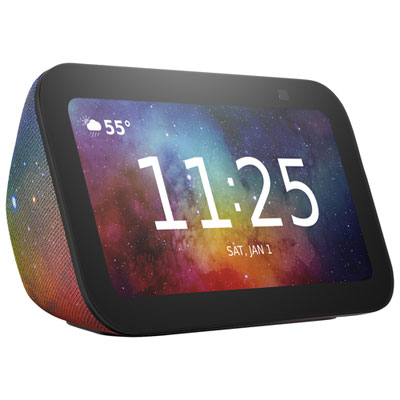
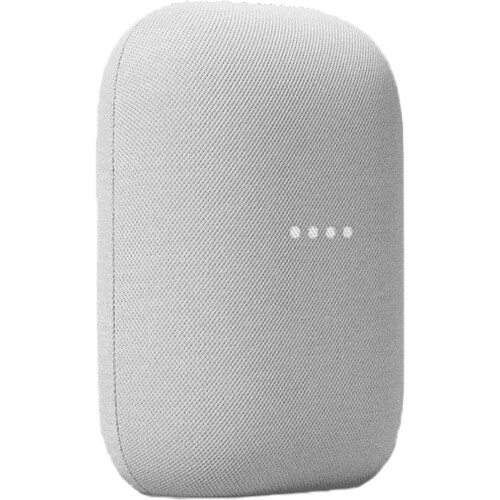
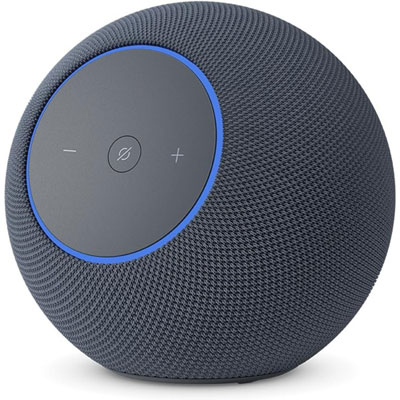
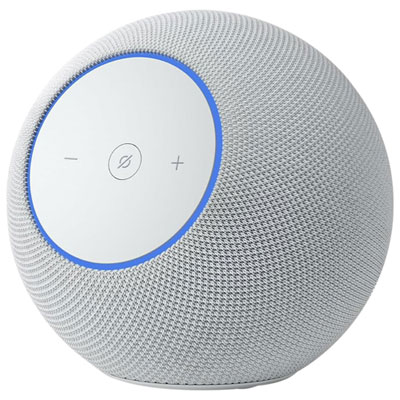
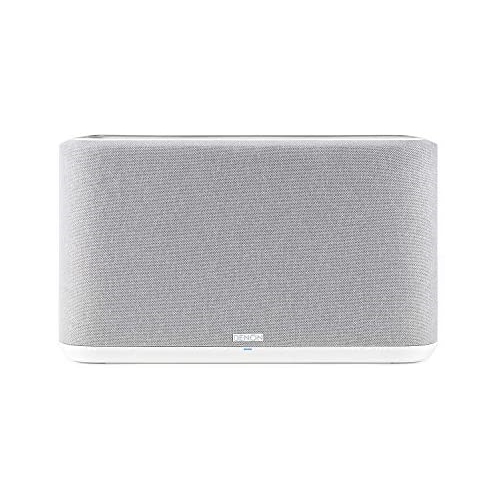
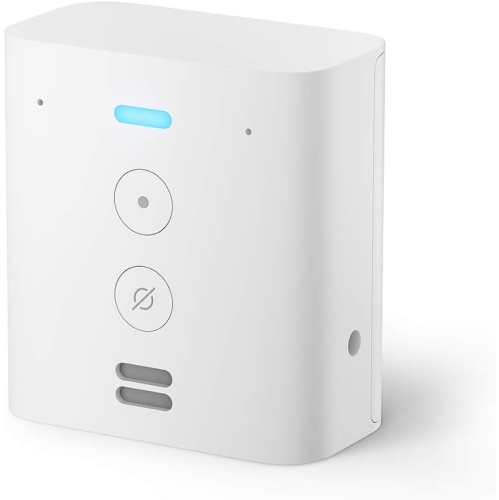
Hands-free help for dinner prep and bedtime routines
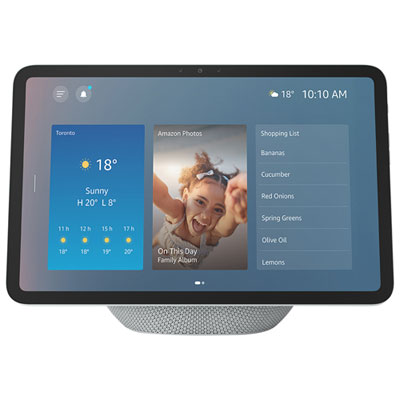
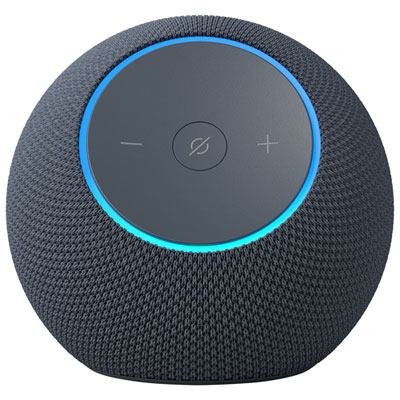
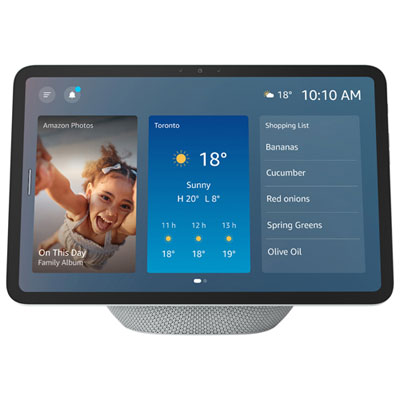
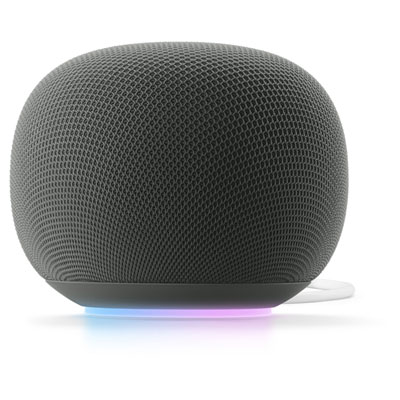
Voice controlled smart speakers combine a speaker, built-in microphones, and a digital voice assistant to play audio, answer everyday questions, set reminders, and operate compatible smart home devices through spoken requests. They make familiar tasks easier when a phone or remote is out of reach: setting a pasta timer with flour on your hands, lowering the music while serving dinner, or switching off a connected lamp from bed. Most models connect to a home Wi-Fi network and use an app for setup, account settings, and supported services. Many voice features require an internet connection, while Bluetooth playback and other functions vary by model. The voice assistant is an important part of the choice because it determines which requests, music services, and connected devices the speaker can support. A speaker that works with the services a household already uses is generally a more comfortable fit than one that requires changing familiar routines. Language support also matters, particularly in homes where people speak English and French; supported languages, bilingual responses, and regional features differ between platforms. For everyday listening, these speakers can bring music, radio, podcasts, and audiobooks into spaces where a full audio system would feel cumbersome. A compact speaker on a bedside table suits alarms and quiet listening, while a larger model may better fill a living room with clear vocals and fuller bass. Voice control can also be useful for people who find small touchscreen controls difficult to use, although recognition depends on speech, distance, background noise, and microphone performance. Families may appreciate shared timers and reminders, while someone living alone might value hands-free calls or announcements where those features are supported. As a housewarming or birthday gift, a smart speaker is most useful when its assistant, setup requirements, and services match the recipient’s phone, home network, and preferences. It is also worth considering whether they want a screen-free device focused on sound or a more visual way to interact.
Sound quality and physical fit help distinguish voice controlled smart speakers that otherwise offer similar everyday functions. Cabinet size, driver arrangement, and audio processing all affect how a speaker handles voices, instruments, and bass. Spoken-word listening benefits from clear midrange detail, while music with layered instruments can reveal differences in separation and balance. A larger enclosure can allow deeper bass, but size alone does not guarantee better sound. Some speakers offer room-tuning features that adjust playback for their placement, and selected models support spatial audio with compatible recordings and services. Those features are distinct from stereo pairing, which uses two compatible speakers as separate left and right channels. Multi-room audio serves another purpose: playing supported content across several rooms, either together or in separate groups. Pairing and grouping rules vary, so compatibility matters more than simply choosing speakers with similar shapes. In an open-plan living area, a speaker with broader sound coverage may make listening more even across a sofa, dining table, and kitchen counter. In a small bedroom or home office, a compact design with accessible volume controls may be the better fit. Placement affects both listening and voice pickup. Leaving space around the speaker, keeping microphone openings clear, and avoiding a position directly beside a loud television can help it perform as intended. Shelves and corners can reinforce bass, sometimes making voices sound less distinct. Fabric-covered grilles, moulded housings, and metal accents offer different looks and care requirements; colour and finish can help a speaker blend into a bookcase or stand out on a side table. Dimensions, weight, base stability, and the location of the power connection are practical details, especially on narrow furniture. Most home smart speakers need continuous mains power, so a nearby outlet and a tidy cable route are part of the setup. Models with rechargeable batteries offer more flexibility, but battery operation does not automatically mean voice features work away from Wi-Fi. Moisture resistance is also model-specific; a kitchen placement should stay clear of sinks and splashes unless the manufacturer explicitly permits that use.
Smart home control adds another role beyond listening, allowing a compatible voice controlled smart speaker to adjust lights, operate plugs, or change supported thermostat settings. Some models include a built-in smart home hub, while others rely on separate hubs, manufacturer apps, or online services. Support for a shared connection standard can help devices work together, but it does not guarantee that every feature of every accessory will be accessible by voice. Device compatibility, network requirements, and supported commands all deserve attention when adding a speaker to an existing setup. Clear room and device names can make everyday requests easier to understand, particularly when several lamps or speakers share a space. Supported routines can combine actions under one phrase, such as dimming a reading lamp and starting a playlist, though the available actions depend on the assistant and connected devices. Privacy controls are another meaningful consideration for a device designed to listen for a wake word. A physical microphone-off control, visible status lights, voice-history settings, and options for managing recordings can help household members understand and manage its operation. Where voice profiles are supported, they may personalize results, but they should not be treated as a substitute for account security. Shared households may also want purchase restrictions, child settings, and clear limits on access to personal calendars or messages. For visual timers, supported video calls, or compatible camera views, Voice-Activated Smart Displays offer a screen-based alternative to an audio-only speaker. Whichever format suits the space, straightforward care helps preserve its finish and performance. Follow the manufacturer’s cleaning directions, disconnect power before cleaning when instructed, and avoid spraying liquid directly onto fabric, controls, or microphone openings. A stable surface, protected cable, and regular software updates support dependable everyday use. The most useful choice balances sound, voice recognition, privacy controls, and compatibility with the tasks the household actually wants to handle hands-free.
Sound quality and physical fit help distinguish voice controlled smart speakers that otherwise offer similar everyday functions. Cabinet size, driver arrangement, and audio processing all affect how a speaker handles voices, instruments, and bass. Spoken-word listening benefits from clear midrange detail, while music with layered instruments can reveal differences in separation and balance. A larger enclosure can allow deeper bass, but size alone does not guarantee better sound. Some speakers offer room-tuning features that adjust playback for their placement, and selected models support spatial audio with compatible recordings and services. Those features are distinct from stereo pairing, which uses two compatible speakers as separate left and right channels. Multi-room audio serves another purpose: playing supported content across several rooms, either together or in separate groups. Pairing and grouping rules vary, so compatibility matters more than simply choosing speakers with similar shapes. In an open-plan living area, a speaker with broader sound coverage may make listening more even across a sofa, dining table, and kitchen counter. In a small bedroom or home office, a compact design with accessible volume controls may be the better fit. Placement affects both listening and voice pickup. Leaving space around the speaker, keeping microphone openings clear, and avoiding a position directly beside a loud television can help it perform as intended. Shelves and corners can reinforce bass, sometimes making voices sound less distinct. Fabric-covered grilles, moulded housings, and metal accents offer different looks and care requirements; colour and finish can help a speaker blend into a bookcase or stand out on a side table. Dimensions, weight, base stability, and the location of the power connection are practical details, especially on narrow furniture. Most home smart speakers need continuous mains power, so a nearby outlet and a tidy cable route are part of the setup. Models with rechargeable batteries offer more flexibility, but battery operation does not automatically mean voice features work away from Wi-Fi. Moisture resistance is also model-specific; a kitchen placement should stay clear of sinks and splashes unless the manufacturer explicitly permits that use.
Smart home control adds another role beyond listening, allowing a compatible voice controlled smart speaker to adjust lights, operate plugs, or change supported thermostat settings. Some models include a built-in smart home hub, while others rely on separate hubs, manufacturer apps, or online services. Support for a shared connection standard can help devices work together, but it does not guarantee that every feature of every accessory will be accessible by voice. Device compatibility, network requirements, and supported commands all deserve attention when adding a speaker to an existing setup. Clear room and device names can make everyday requests easier to understand, particularly when several lamps or speakers share a space. Supported routines can combine actions under one phrase, such as dimming a reading lamp and starting a playlist, though the available actions depend on the assistant and connected devices. Privacy controls are another meaningful consideration for a device designed to listen for a wake word. A physical microphone-off control, visible status lights, voice-history settings, and options for managing recordings can help household members understand and manage its operation. Where voice profiles are supported, they may personalize results, but they should not be treated as a substitute for account security. Shared households may also want purchase restrictions, child settings, and clear limits on access to personal calendars or messages. For visual timers, supported video calls, or compatible camera views, Voice-Activated Smart Displays offer a screen-based alternative to an audio-only speaker. Whichever format suits the space, straightforward care helps preserve its finish and performance. Follow the manufacturer’s cleaning directions, disconnect power before cleaning when instructed, and avoid spraying liquid directly onto fabric, controls, or microphone openings. A stable surface, protected cable, and regular software updates support dependable everyday use. The most useful choice balances sound, voice recognition, privacy controls, and compatibility with the tasks the household actually wants to handle hands-free.
Top selling and popular products
-
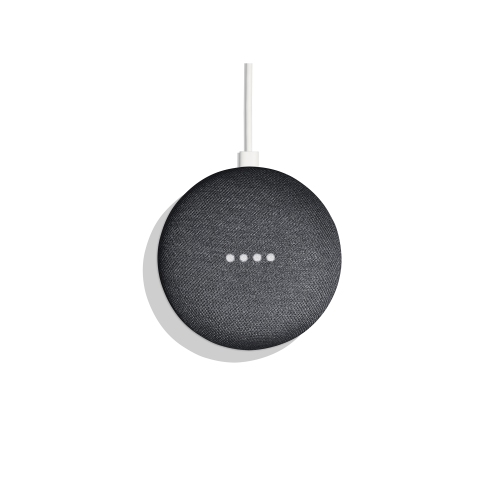 Your price for this item is $229.99
 -
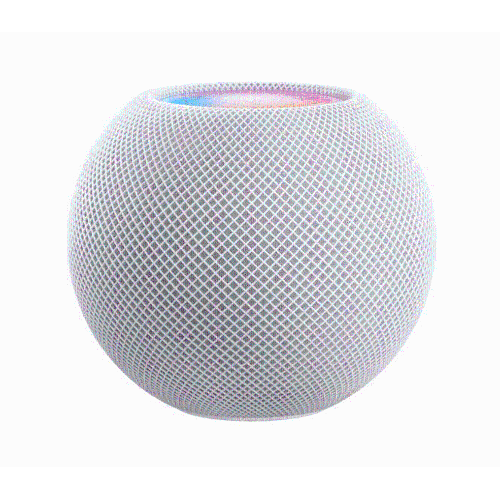 Your price for this item is $359.99
 -
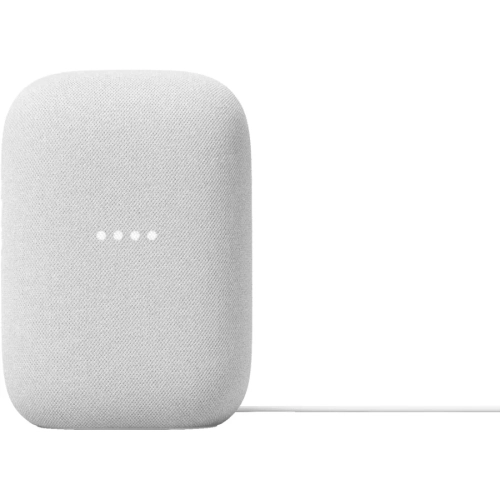 Your price for this item is $219
 -
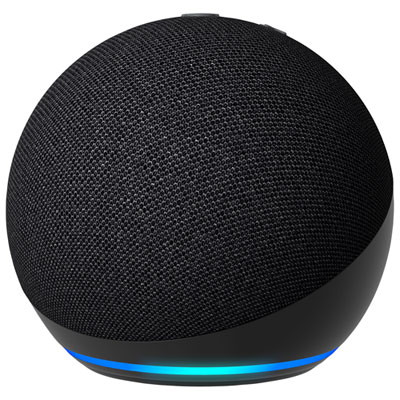 Your price for this item is $54.99
 -
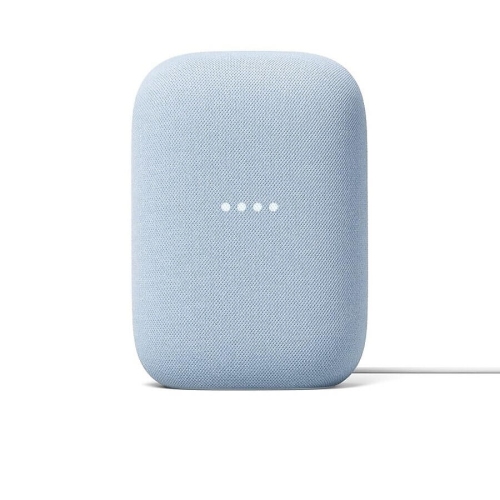 Your price for this item is $259.99
 -
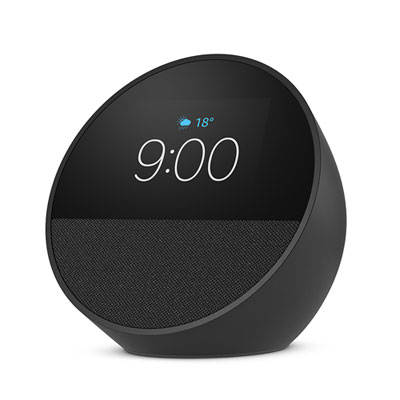 Your price for this item is $74.99
 -
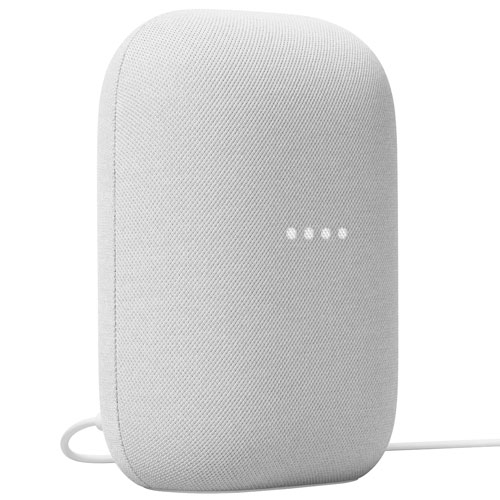 Your price for this item is $199
 -
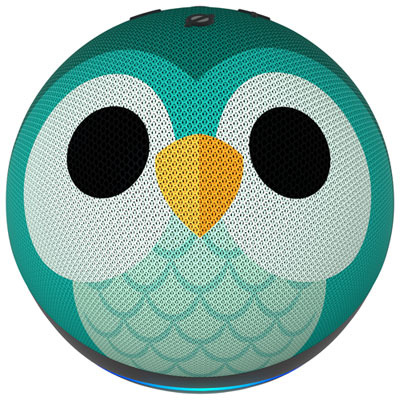 Your price for this item is $54.99
Discover more categories related to Voice Controlled Smart Speakers
Top Collections:
Pokemon Centers, Kindle Devices, Best Budget Office Chairs, Apple iPhones 16, Best Laptops for Writers, iPhone 15 Apple, Canon G7X Cameras, Refurbished Apple Laptops, Alarm Clock, Motorola Razr Phones
Some products may be subject to Environmental Handling Fees
(EHF) depending on your province.
Learn more about EHFs.