Beach Surfboards
Looking to catch some waves this summer? Look no further than our collection of beach surfboards. Whether you're a seasoned pro or just starting out, these surfboards are designed to provide you with the ultimate surfing experience. With a variety of sizes, shapes, and materials available, you'll be able to find the perfect board to suit your style and skill level. So grab your wetsuit, wax up your board, and get ready to ride the waves like never before with our selection of beach surfboards.
Sort








How board shape and size affect your ride
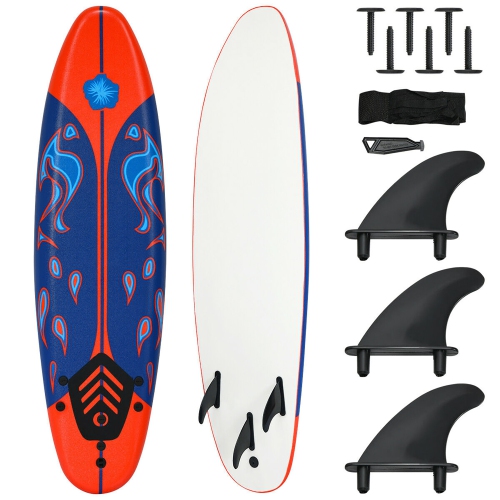
Beach surfboards are designed for catching and riding breaking waves, with shapes and constructions suited to different riders, abilities, and surf conditions. Common options include soft-top surfboards, longboards, mid-length boards, and shortboards. Soft-top boards have a cushioned deck that can make early practice more forgiving, while longer, fuller shapes generally provide a steadier platform for paddling, sitting, and learning to stand. Longboards are known for their glide and ability to catch smaller waves; mid-length boards balance paddling ease with more responsive handling. Shortboards typically suit experienced surfers who want tighter turns and greater control on steeper waves, rather than beginners looking for their first successful ride. The right fit depends on more than a rider’s height. Body weight, paddling strength, experience, board volume, and the intended waves all influence how a surfboard feels in the water. Volume, usually expressed in litres, describes the space within the board and helps indicate its buoyancy, but two boards with similar volume can behave differently because of their outlines and how that volume is distributed. A wider nose and fuller middle can offer useful stability when a new surfer moves from lying down to standing. A narrower outline may feel more responsive under an experienced rider’s feet but leave less room for small balance corrections. For someone practising in gentle, broken waves close to shore, easy paddling and predictable handling usually matter more than a performance-focused shape. A confident surfer catching unbroken waves may place more emphasis on turning response and the way the board holds its line. Children, teens, and adults all need a board matched to their size and ability; a shorter board is not automatically a beginner board simply because it looks easier to carry. Manufacturer sizing guidance and any stated rider weight limit are useful starting points, alongside advice from a qualified surf instructor who understands the intended beach and conditions.
Construction affects a surfboard’s weight, feel, durability, and care requirements. Many soft-top surfboards combine a foam core with a softer deck and a smooth, denser bottom surface that helps the board move across the water. Internal stringers or other reinforcements can add stiffness, although construction varies between designs. The cushioned surface can be welcome during repeated attempts to pop up, when knees, elbows, and feet often land in slightly different places. It does not make a board impact-proof or remove the need to keep a safe distance from other people. Hard surfboards commonly use a foam core covered with fibreglass cloth and resin. Epoxy and polyester refer to resin systems, not separate alternatives to fibreglass; the finished board’s characteristics depend on the complete construction, including the core and reinforcement. Hard boards can offer a precise feel, but dents, cracks, and punctures need attention before water gets inside. Shape matters just as much as materials. Rocker, the curve of the board from nose to tail, influences how it paddles and fits the face of a wave. A flatter profile often helps with glide in smaller surf, while more curve can help a suitable board negotiate steeper sections. Rails, the edges along the sides, affect how the board grips and releases through turns. Fins add directional control, and their size, placement, and configuration influence stability and turning feel. Removable fins can make transport and replacement easier, provided the replacements match the board’s fin system. Deck traction also deserves attention: some surfaces need surf wax, while others use a textured finish or traction pad. Following the board maker’s instructions helps avoid applying wax unnecessarily or using an unsuitable cleaning product. For a developing surfer, a comfortable paddling position, dependable grip, and a shape that catches the intended waves are usually more useful than features designed for highly technical manoeuvres.
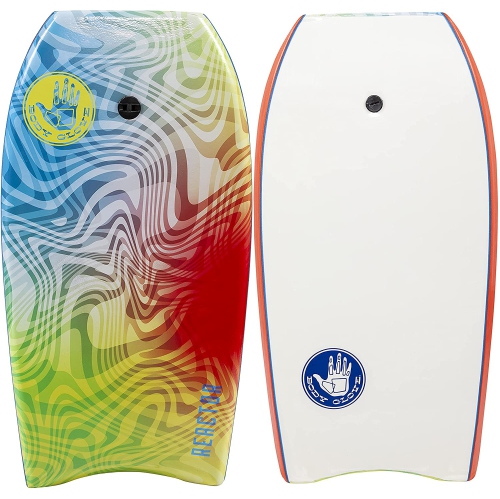
A surfboard also needs to fit the practical details of a beach visit, from carrying it across a car park to storing it safely at home. A longer board may be reassuring in the water yet awkward on stairs or difficult to fit inside a vehicle, so overall dimensions and transport arrangements deserve a check before choosing. A padded board bag can help protect against minor knocks, while a suitable vehicle rack and properly secured straps reduce movement during travel. Avoid overtightening straps against the rails, and follow the rack and board manufacturers’ transport instructions. After use, rinse away salt and sand with fresh water, paying attention to fin fittings and leash attachments, then let the board dry before putting it away. Keep it out of prolonged direct sunlight and away from excessive heat, including inside a parked vehicle, where heat can damage foam and laminated construction. Check regularly for loose fins, damaged fittings, peeling surfaces, or cracks. A hard board with a damaged outer skin should stay out of the water until it has been assessed and repaired appropriately; covering a crack with wax is not a dependable repair. When choosing a surfboard as a gift, knowing the recipient’s experience, body size, preferred riding style, and transport space is more helpful than choosing by colour or graphics alone. For a child, an appropriately sized board should be paired with close adult supervision and instruction suited to their swimming ability. Anyone who prefers riding waves while lying down may find Surfing Bodyboards a better match than a stand-up surfboard; the riding position and equipment needs are different. Whatever the board style, swimming ability, awareness of currents, suitable conditions, and respect for other beach users remain essential. A correctly fitted surf leash suited to the board and local conditions can help keep the board close after a fall, but it is not a flotation device or a substitute for instruction. Choosing manageable waves and a designated surfing area gives riders more room to practise without putting swimmers in their path.
Top selling and popular products
-
 Your price for this item is $220.99
-
 Your price for this item is $169.99
-
 Your price for this item is $55.99
-
 Your price for this item is $65.99
-
 Your price for this item is $58.99
-
 Your price for this item is $61.99
-
 Your price for this item is $47.99
-
 Your price for this item is $39.99
Discover more categories related to Beach Surfboards
Top Collections:
Pokemon Centers, Kindle Devices, Best Budget Office Chairs, Canon G7X Cameras, Apple iPhones 16, Samsung Galaxy Phones, Refurbished Apple Laptops, Laptops for Students, iPhone 15 Apple, Budget Smartphones
Some products may be subject to Environmental Handling Fees
(EHF) depending on your province.
Learn more about EHFs.