Camping Shelters
Explore our collection of camping shelters designed to enhance your outdoor adventures. Whether you're planning a weekend camping trip, a music festival getaway, or simply seeking shelter from the sun at the beach, we have a variety of options to suit your needs. From spacious tents for family camping to compact and lightweight shelters for solo treks, find the perfect shelter to keep you comfortable and protected in the great outdoors. Browse our selection of high-quality camping shelters to make your next outdoor experience unforgettable.
Sort
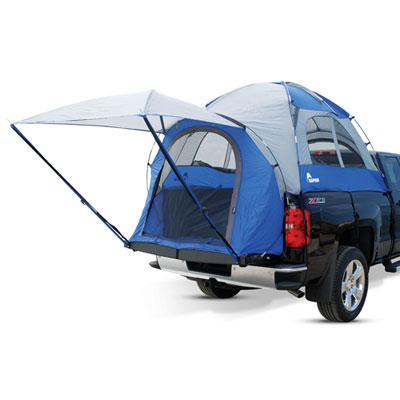
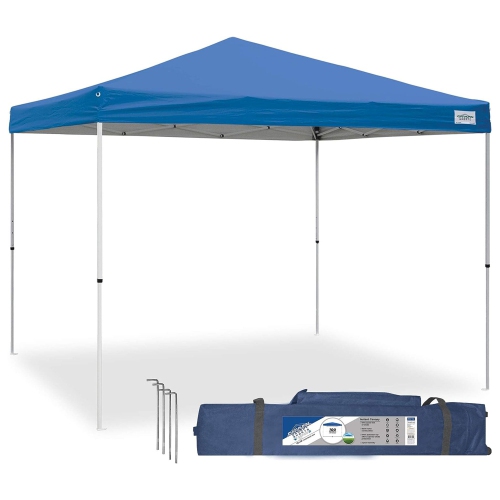
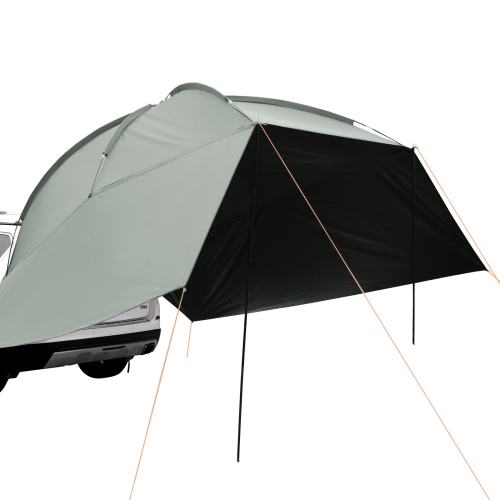
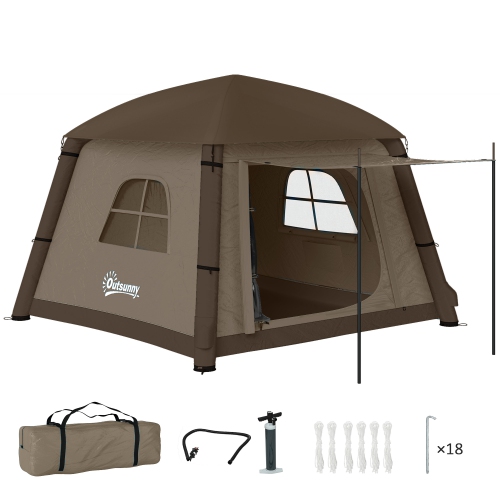

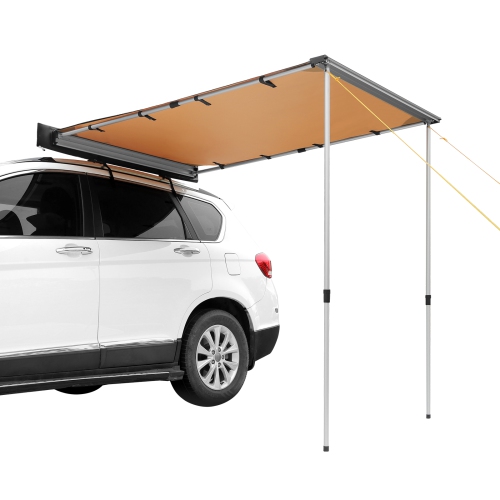
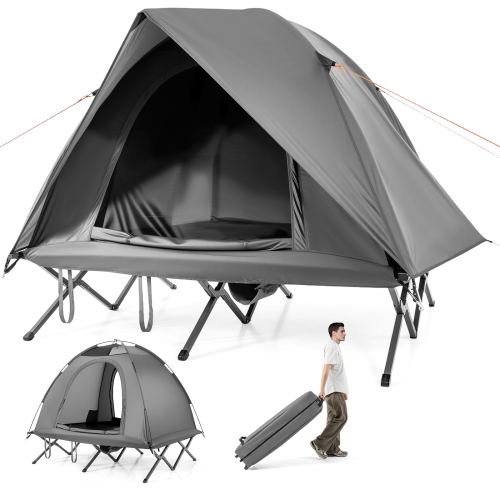
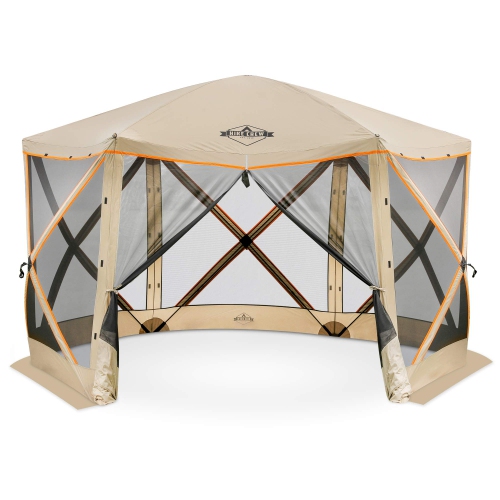
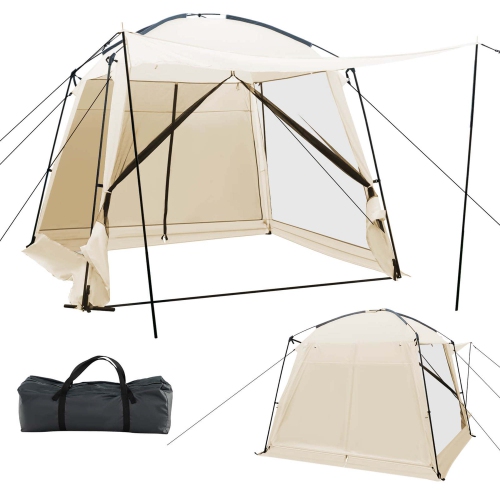
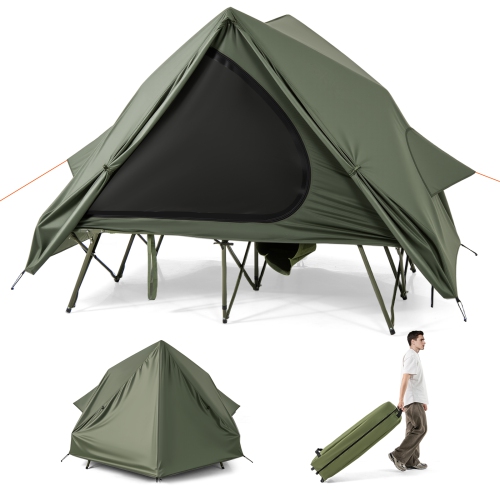
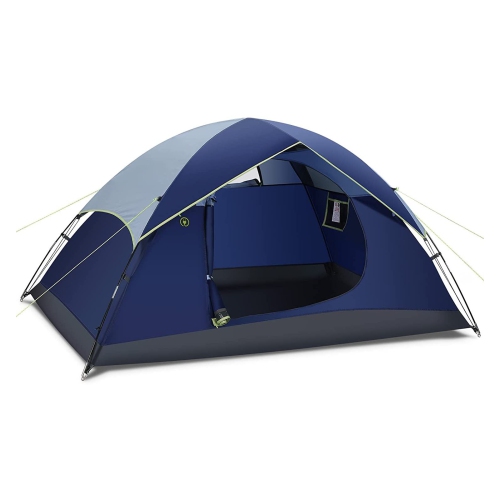
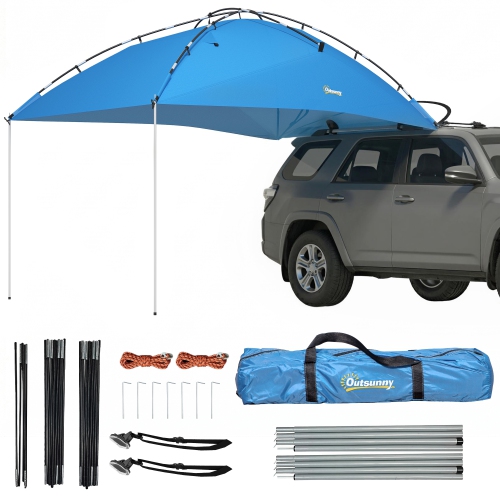
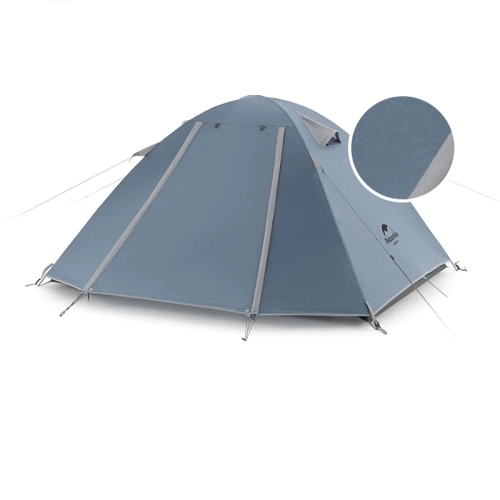
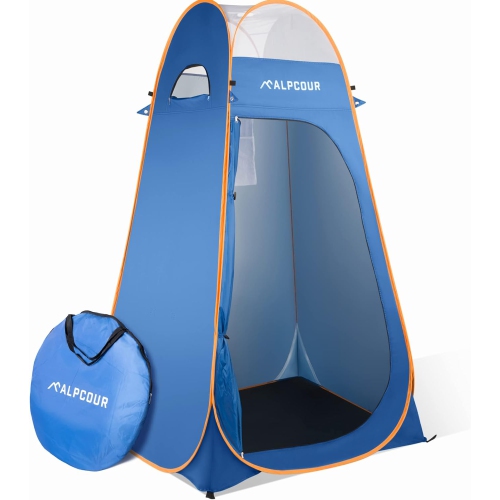
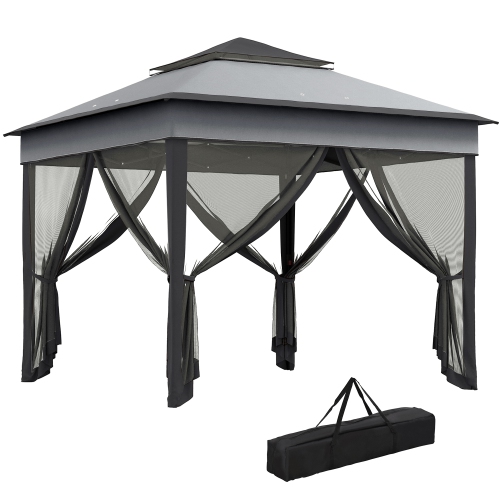
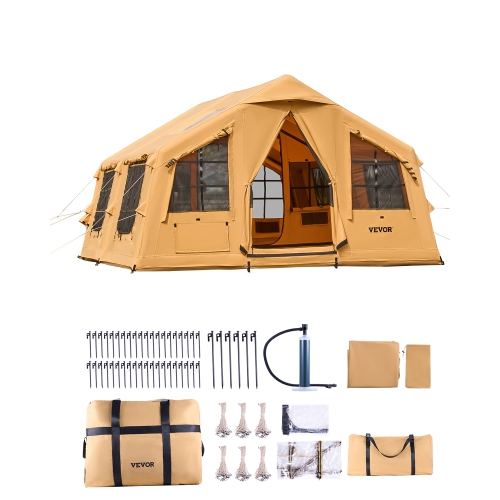
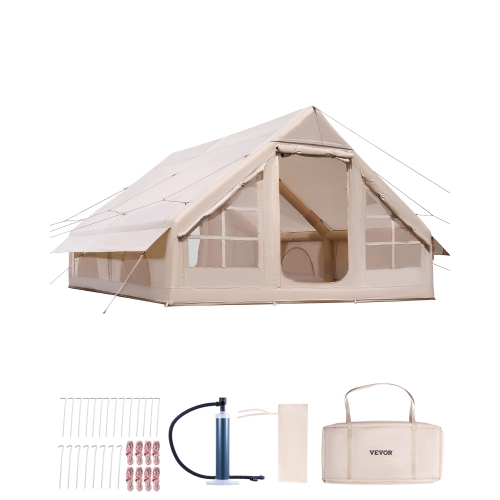
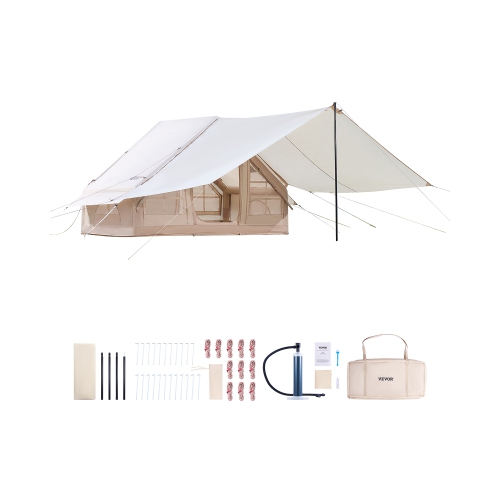
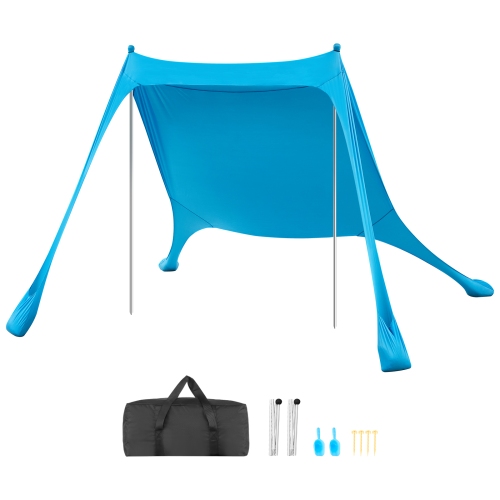
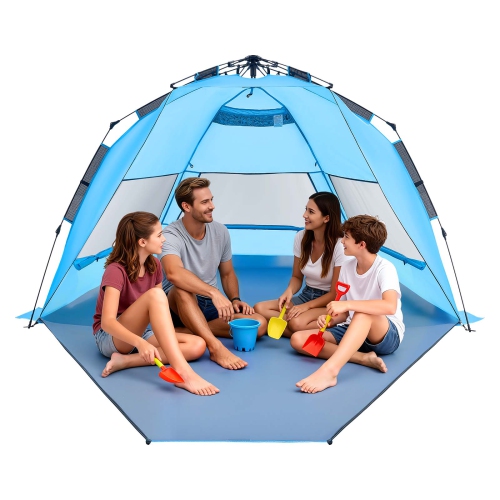
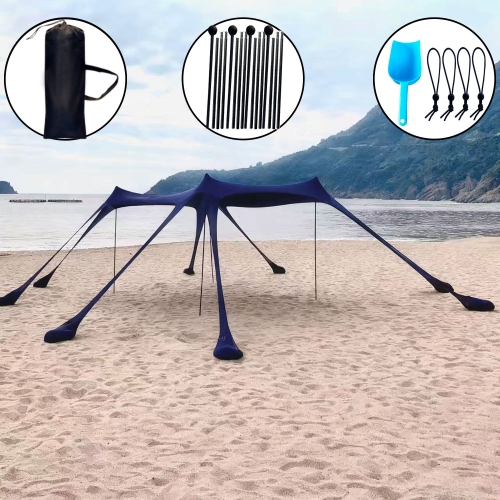
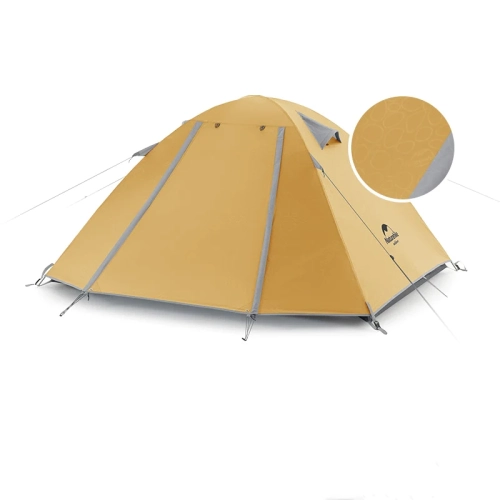
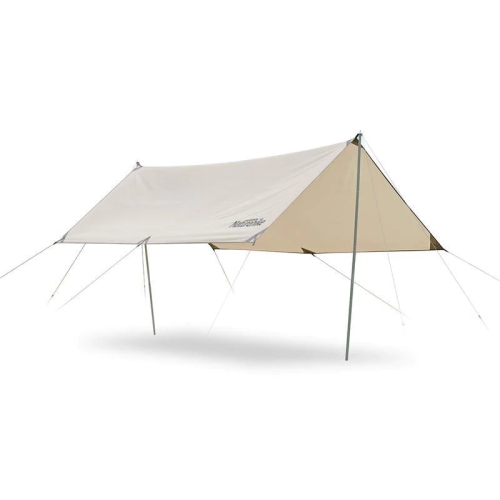
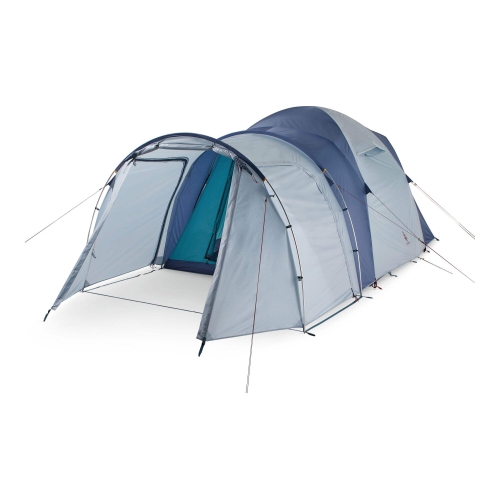
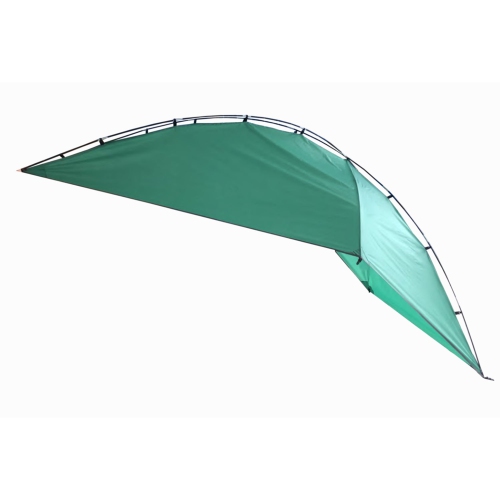
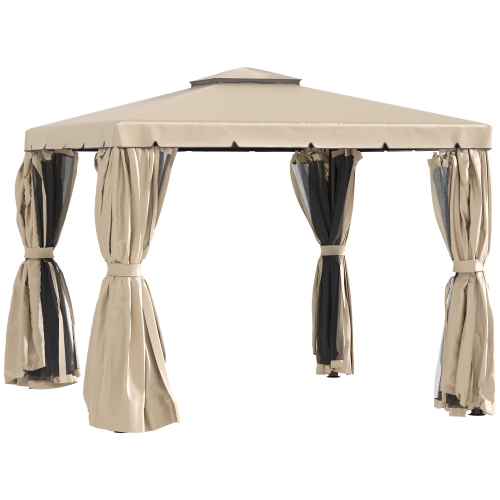
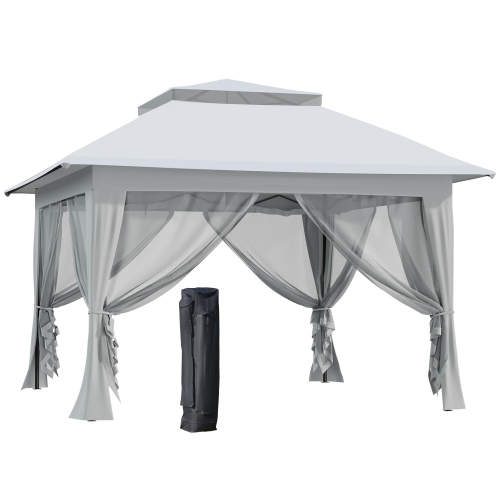
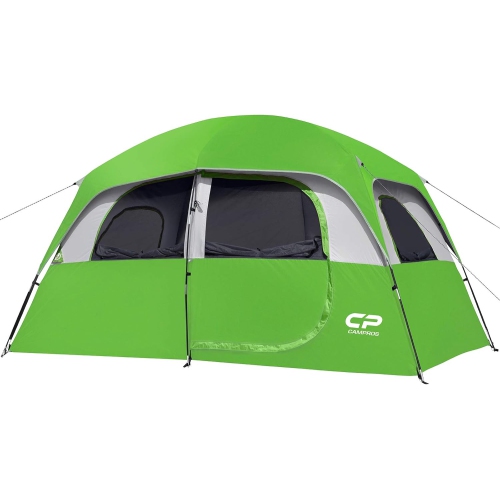
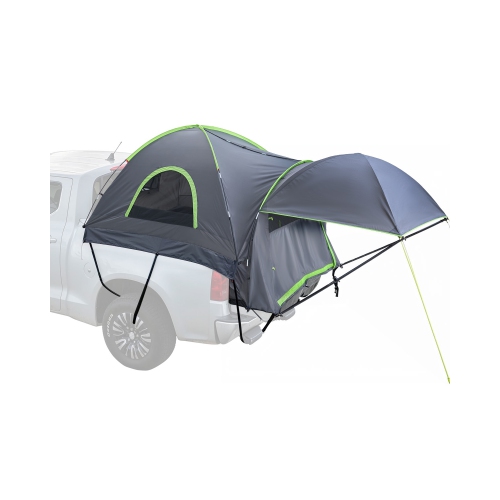
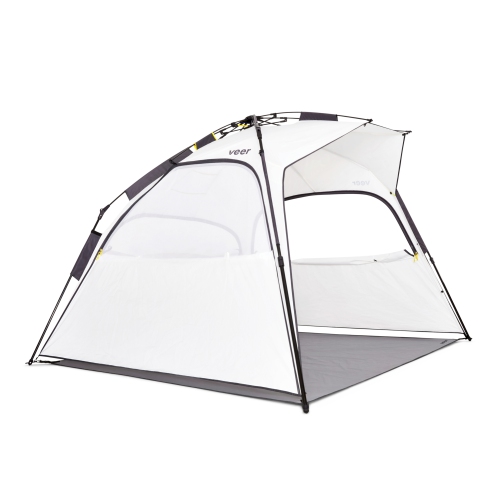
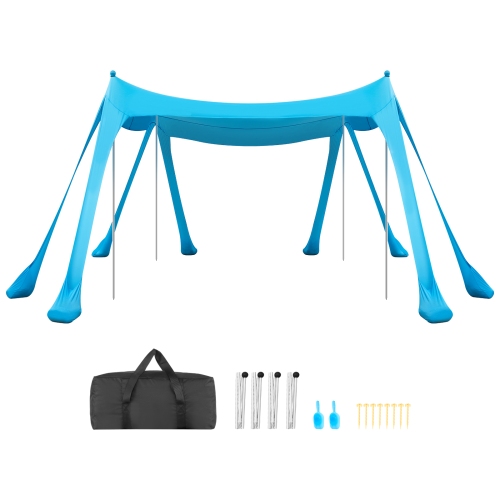
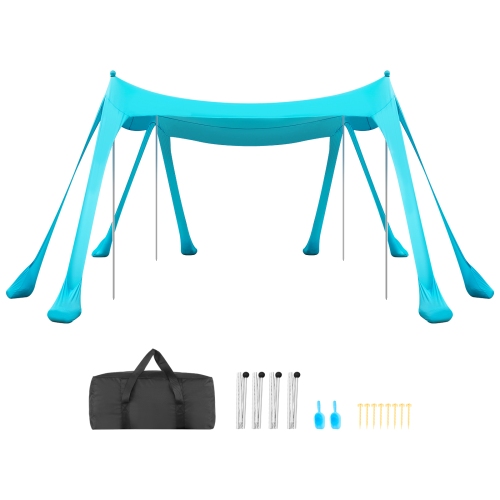
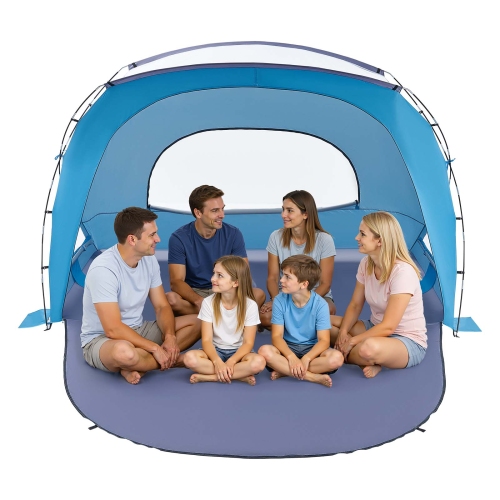
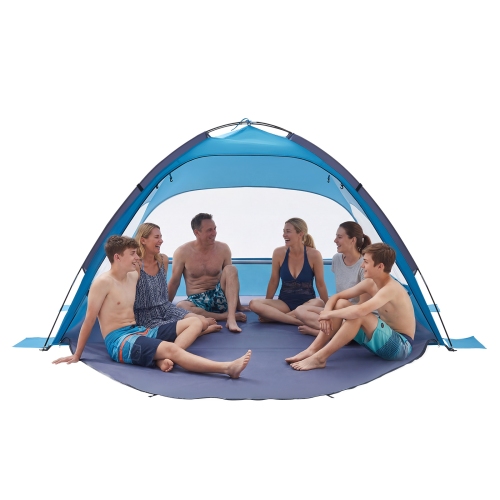
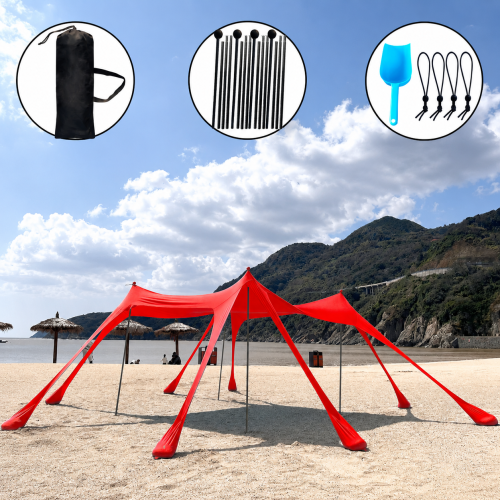
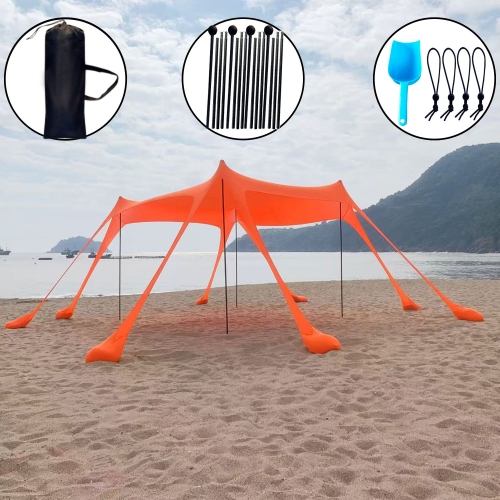
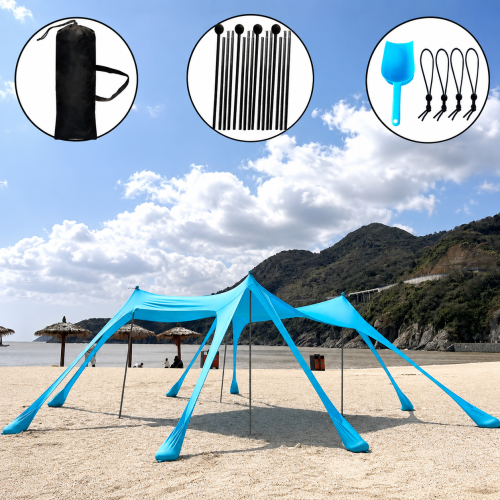
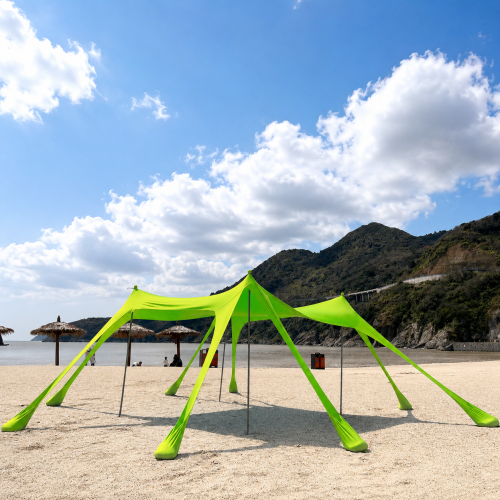
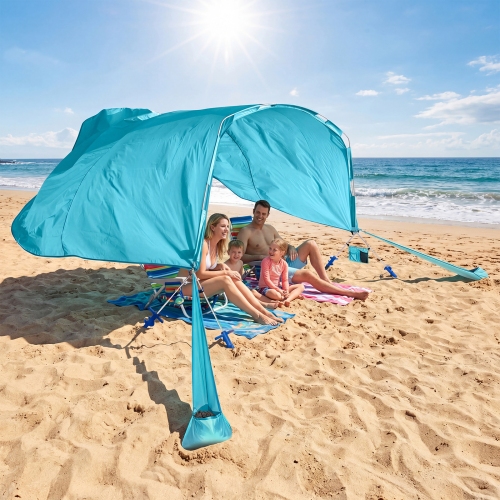
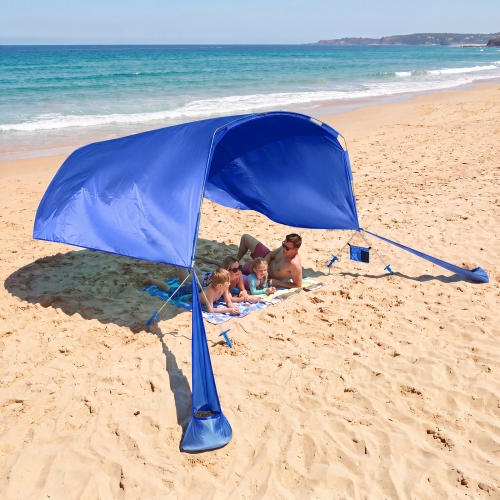
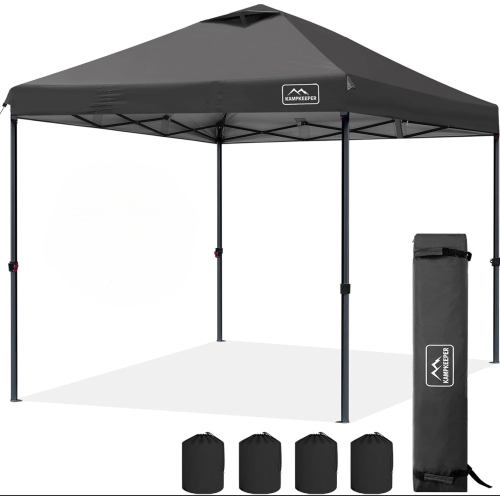
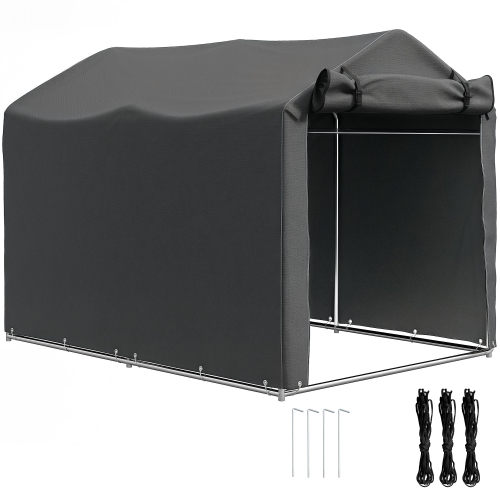
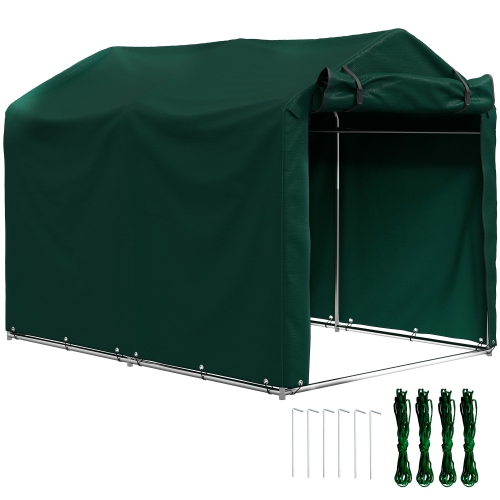
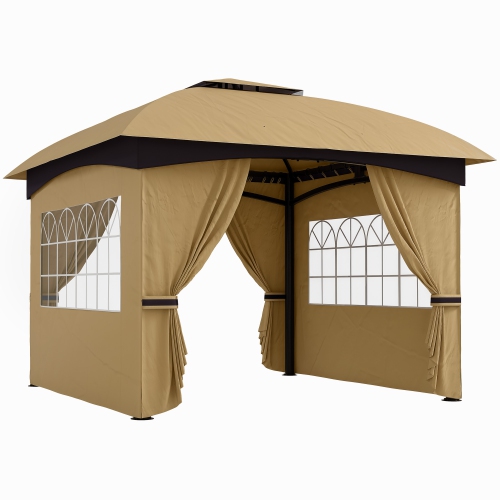
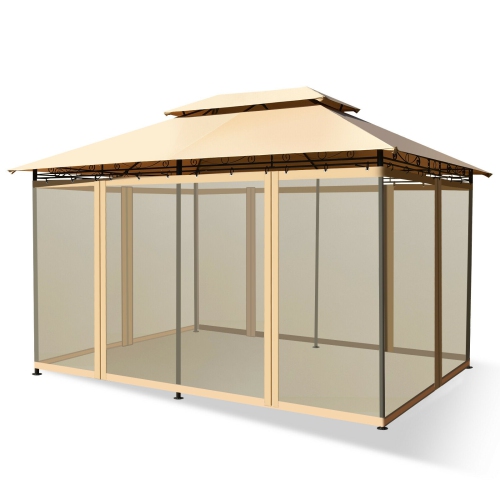
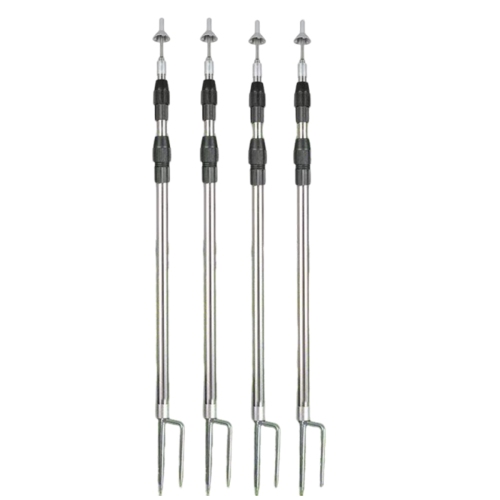
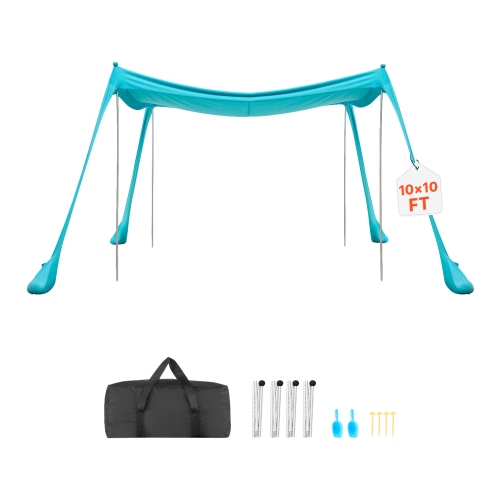
The right shelter balances coverage, comfort and campsite practicality
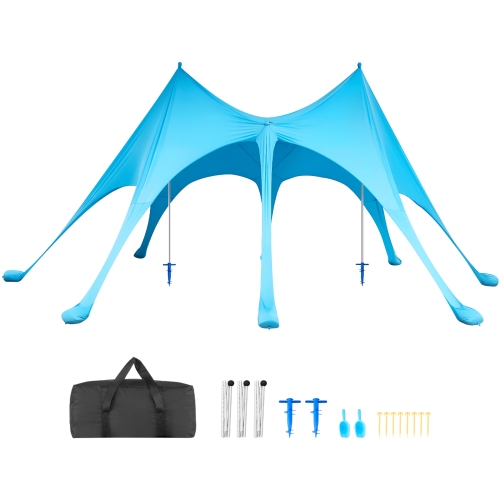
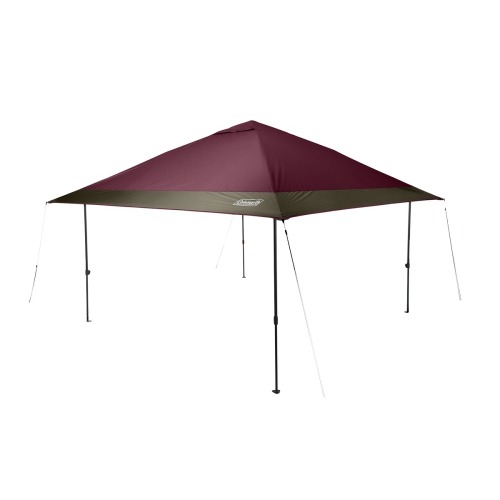
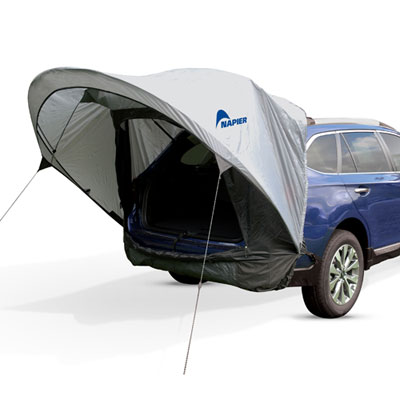
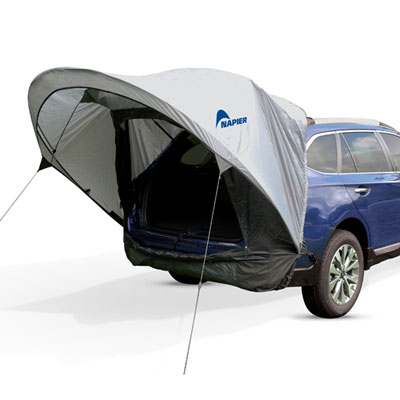
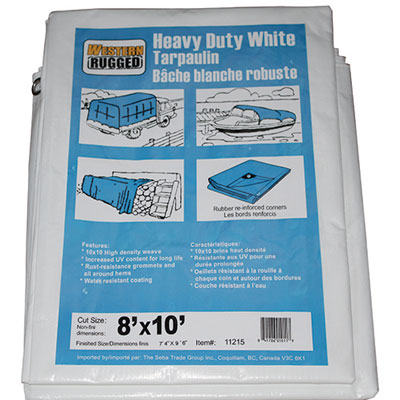
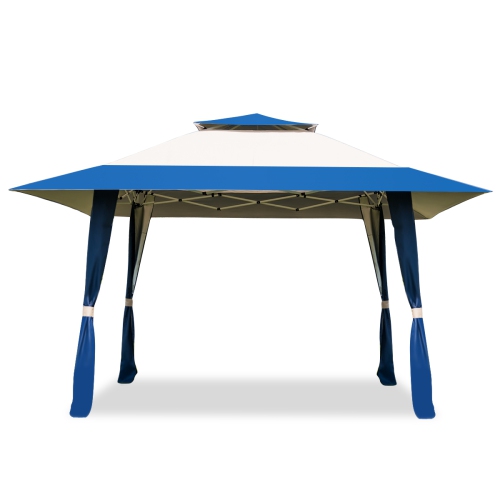
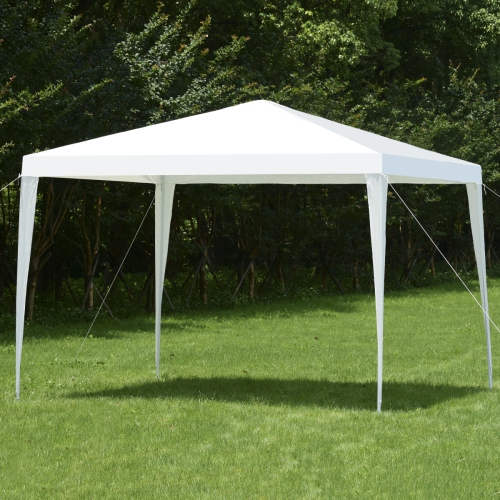
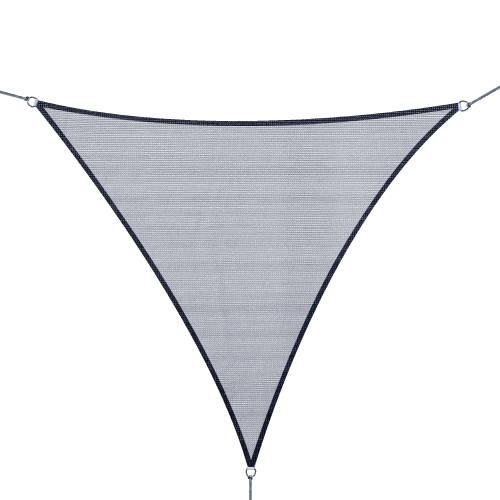
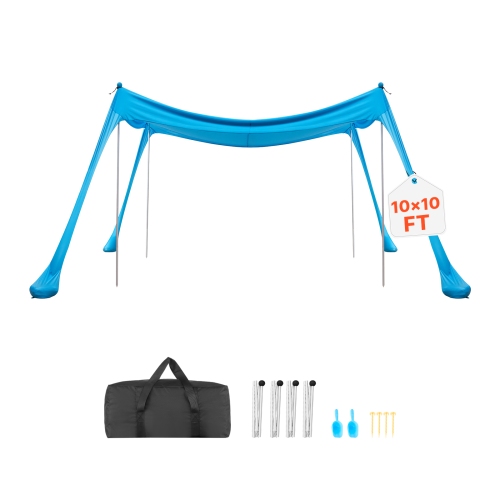
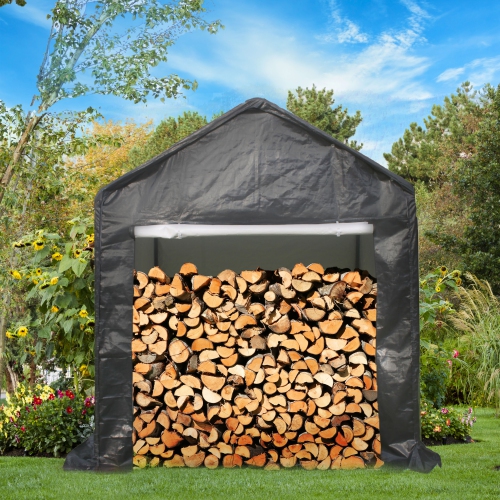
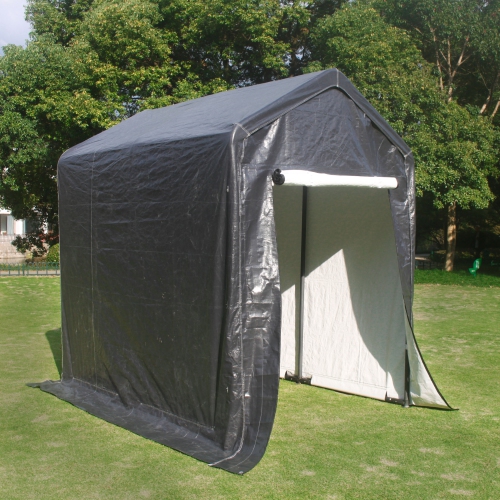
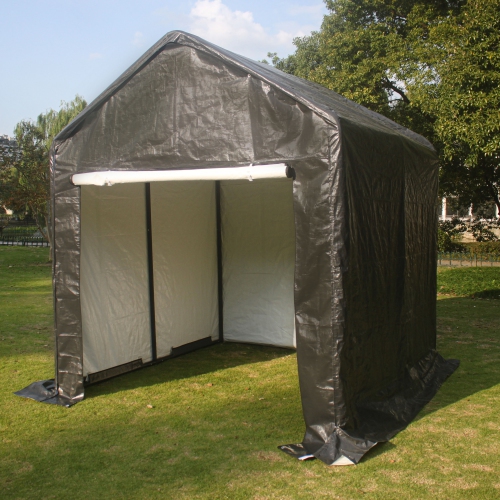
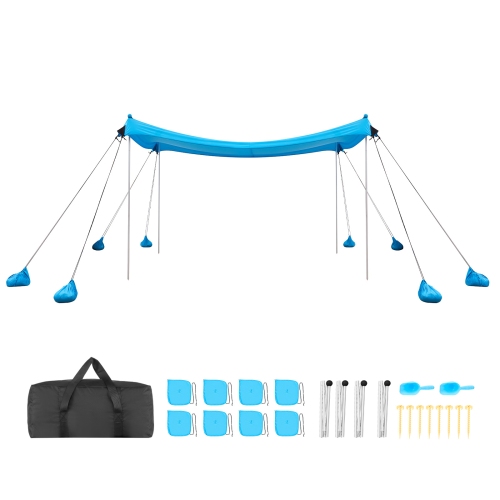
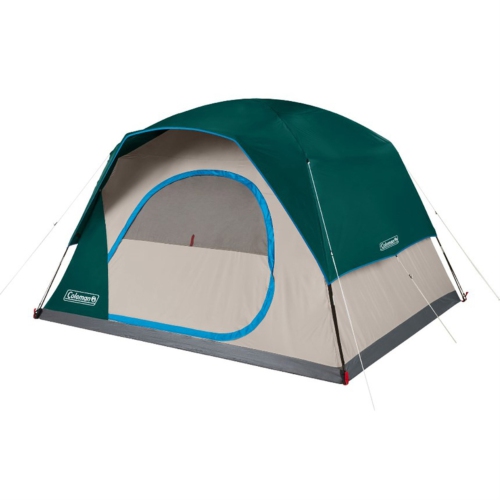
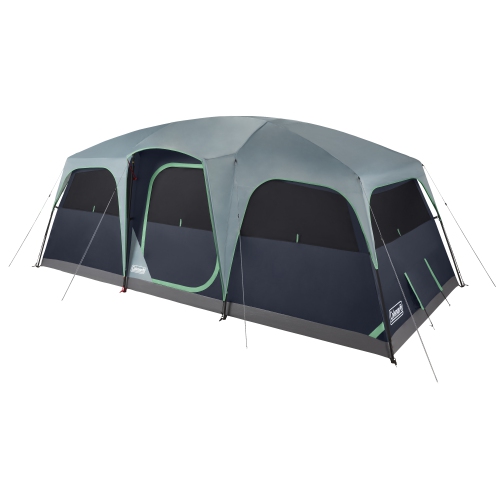
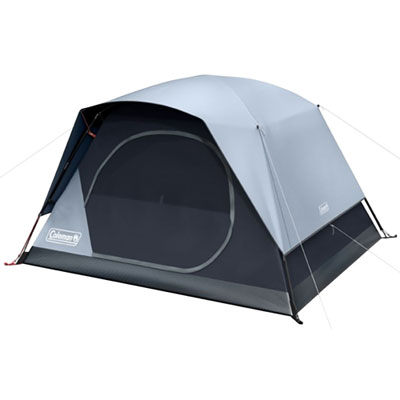
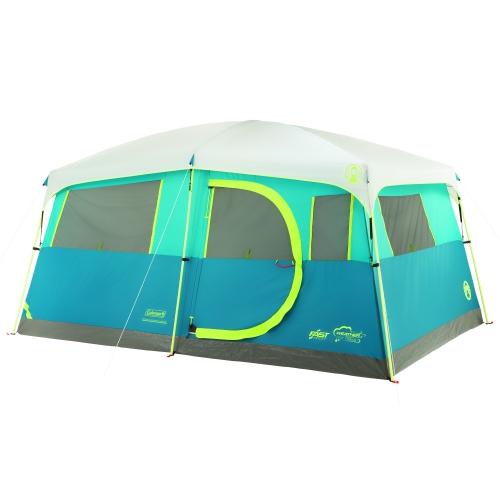
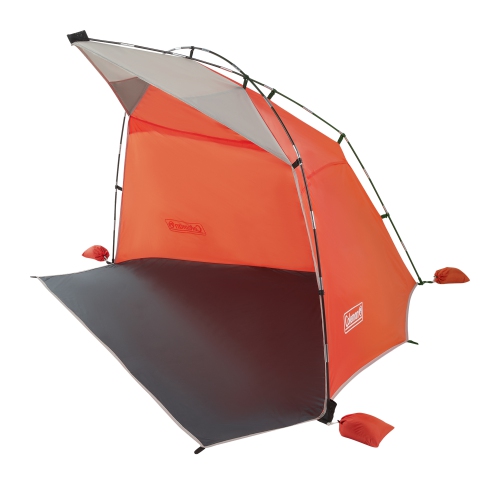
Camping shelters create a comfortable outdoor living area between the open sky and the rest of your campsite. While a tent is designed primarily for sleeping, a camping shelter can serve as a covered kitchen, dining room, gear station, changing area or shared lounge. It can help shield a picnic table from bright sun, provide a dry place to prepare food when light rain moves through, and offer a more inviting spot to gather during the cooler months. The right shelter depends on the kind of camping you do, the number of people who will use it and how much equipment you are prepared to carry. Lightweight tarps and siltarps are popular with hikers, bike campers and minimalist campers because they pack down small and can be arranged in several ways with poles, trees or guy lines. They can create shade over a cooking area, a windbreak beside a sleeping setup or an angled cover that directs rain away from camp. Their open design provides excellent ventilation and a clear view of the surrounding landscape, although setup requires some practice and careful attention to pitch, drainage and changing wind direction. For car camping, family trips and longer stays, larger shelters can provide more headroom and room to move around, making it easier to keep boots, coolers, chairs and cooking supplies organized instead of scattered around the campsite. A shelter with a raised centre height can feel especially comfortable when people are standing to prepare a meal or brush off wet jackets, while a more compact design may be easier to fit into a small campsite or transport in a crowded vehicle.
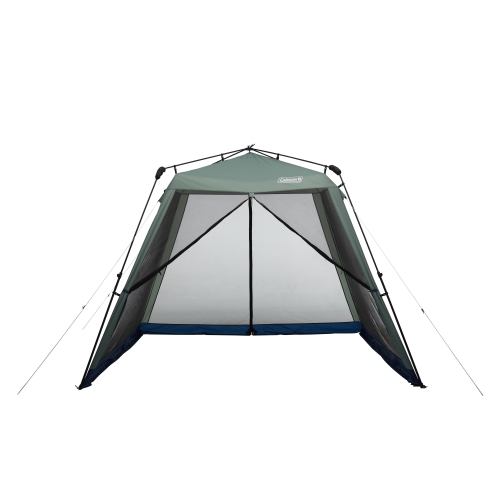
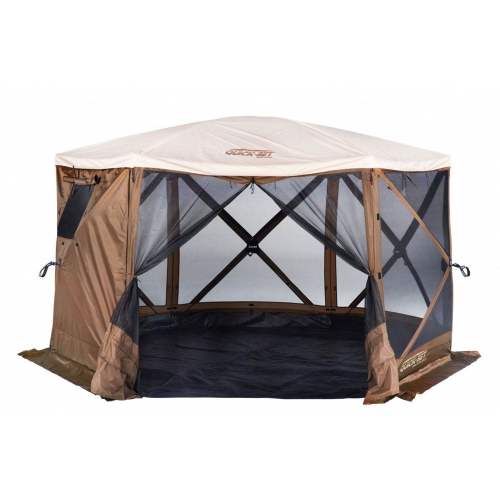
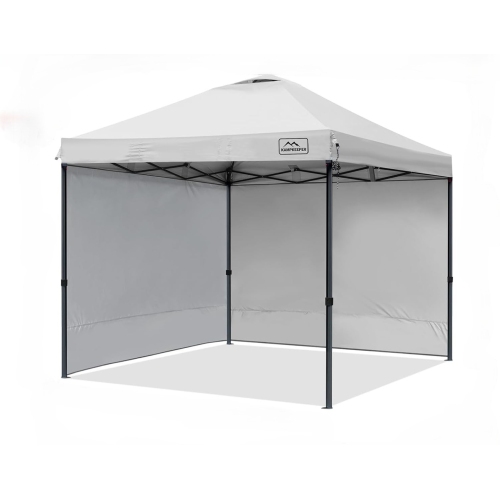
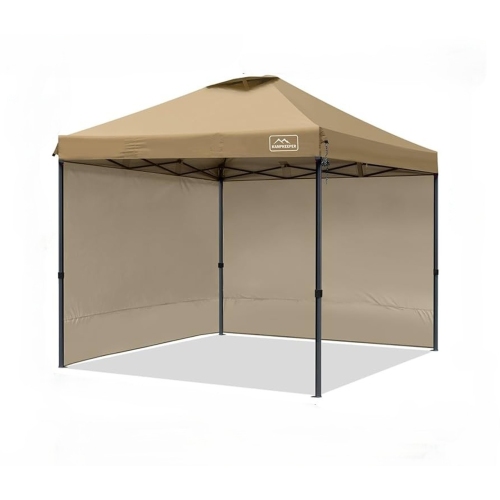
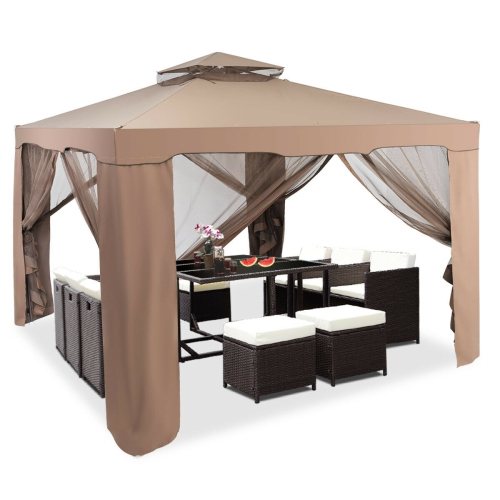
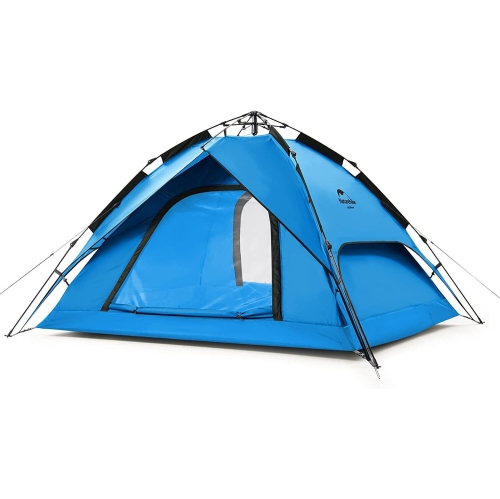
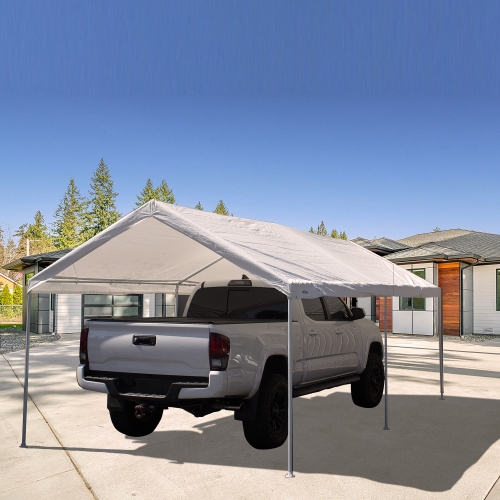
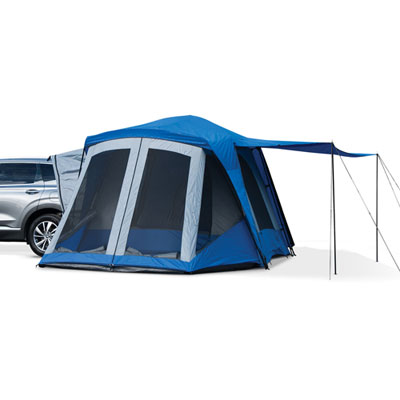
Screen houses and screened gazebos are useful when fresh air is welcome but insects are not. Mesh walls allow breezes to pass through while helping create a more comfortable place for meals, games and conversation, particularly near wooded campsites, lakes and other areas where mosquitoes and other flying insects are common. Some designs can be used in multiple configurations, such as an open sun shelter, a covered rain shelter or an enclosed screen room, giving campers more flexibility when conditions change throughout the day. Pop-up and instant-setup shelters are a practical choice for people who want shade or cover without spending a long time assembling poles and threading fabric. They can be convenient for family camping, tailgating, outdoor gatherings and trips where the shelter needs to go up quickly after arrival. When comparing a screen house or gazebo, look at the enclosed area, peak height, door style, ventilation and the way the mesh attaches to the frame. A wide opening may make it easier to carry in a cooler or folding chair, while zippered panels can offer greater control over insects and wind. Also consider the frame construction, included stakes, guy lines and carrying bag, since even a sturdy shelter needs to be anchored properly on grass, gravel or packed earth. Larger basecamp and kitchen shelters are well suited to extended campsites where comfort and organization matter more than minimal pack weight. These structures can create a defined place for meal preparation and dining, with enough coverage for several campers to sit together while keeping food, cookware and personal gear protected from light rain. They may be a thoughtful gift for a family that spends weekends at campgrounds, a couple setting up a more comfortable trailer-side campsite or an outdoor host who regularly gathers friends around a picnic table.
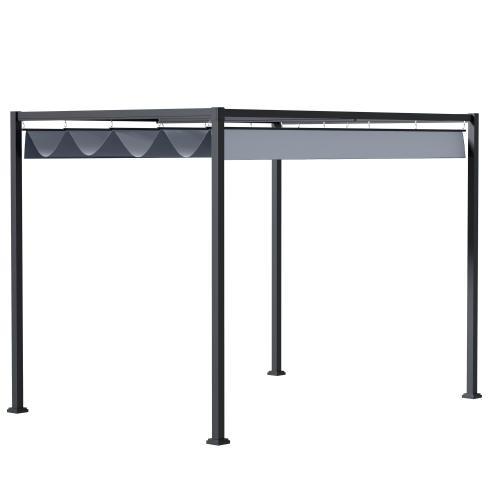
When choosing camping shelters, start with the conditions you expect rather than focusing on size alone. A backpacking shelter should be measured by packed weight, folded dimensions and how easily it can be carried over distance; a car-camping shelter can place greater emphasis on floor coverage, standing height and room for chairs. Water resistance is important for any covered outdoor space, so check for coated fabric, sealed or reinforced seams, a rainfly or roof design that encourages runoff and a construction suited to the expected weather. UV protection can help reduce the effects of prolonged sun exposure on the fabric, while strong attachment points and adjustable guy lines can improve stability when breezes pick up. No shelter should be treated as a substitute for safe weather judgement: avoid setting up under dead branches, leave adequate clearance around cooking equipment and follow the manufacturer’s guidance for wind, rain and temperature conditions. A shelter with a simple setup can be especially helpful for campers arriving near dusk or packing up in damp weather, when fewer steps mean less time handling wet fabric. Features such as removable walls, multiple doors, storage pockets, lantern loops and generous vestibule space can make a noticeable difference during a multi-day stay. Before buying, check the packed dimensions against your vehicle, storage space and existing camping equipment, and confirm that the shelter will fit the campsites you normally use. If your main goal is a shaded outdoor area for gatherings at home, the selection of Canopy Shelters may also be relevant, while camping-specific shelters are built with portability and campsite setup in mind. With the right balance of coverage, packability, weather protection and setup speed, a camping shelter can turn a bare picnic table into a welcoming base for hot coffee on a cool morning, a shared meal during a passing shower or an evening of stories under the trees.
Screen houses and screened gazebos are useful when fresh air is welcome but insects are not. Mesh walls allow breezes to pass through while helping create a more comfortable place for meals, games and conversation, particularly near wooded campsites, lakes and other areas where mosquitoes and other flying insects are common. Some designs can be used in multiple configurations, such as an open sun shelter, a covered rain shelter or an enclosed screen room, giving campers more flexibility when conditions change throughout the day. Pop-up and instant-setup shelters are a practical choice for people who want shade or cover without spending a long time assembling poles and threading fabric. They can be convenient for family camping, tailgating, outdoor gatherings and trips where the shelter needs to go up quickly after arrival. When comparing a screen house or gazebo, look at the enclosed area, peak height, door style, ventilation and the way the mesh attaches to the frame. A wide opening may make it easier to carry in a cooler or folding chair, while zippered panels can offer greater control over insects and wind. Also consider the frame construction, included stakes, guy lines and carrying bag, since even a sturdy shelter needs to be anchored properly on grass, gravel or packed earth. Larger basecamp and kitchen shelters are well suited to extended campsites where comfort and organization matter more than minimal pack weight. These structures can create a defined place for meal preparation and dining, with enough coverage for several campers to sit together while keeping food, cookware and personal gear protected from light rain. They may be a thoughtful gift for a family that spends weekends at campgrounds, a couple setting up a more comfortable trailer-side campsite or an outdoor host who regularly gathers friends around a picnic table.
When choosing camping shelters, start with the conditions you expect rather than focusing on size alone. A backpacking shelter should be measured by packed weight, folded dimensions and how easily it can be carried over distance; a car-camping shelter can place greater emphasis on floor coverage, standing height and room for chairs. Water resistance is important for any covered outdoor space, so check for coated fabric, sealed or reinforced seams, a rainfly or roof design that encourages runoff and a construction suited to the expected weather. UV protection can help reduce the effects of prolonged sun exposure on the fabric, while strong attachment points and adjustable guy lines can improve stability when breezes pick up. No shelter should be treated as a substitute for safe weather judgement: avoid setting up under dead branches, leave adequate clearance around cooking equipment and follow the manufacturer’s guidance for wind, rain and temperature conditions. A shelter with a simple setup can be especially helpful for campers arriving near dusk or packing up in damp weather, when fewer steps mean less time handling wet fabric. Features such as removable walls, multiple doors, storage pockets, lantern loops and generous vestibule space can make a noticeable difference during a multi-day stay. Before buying, check the packed dimensions against your vehicle, storage space and existing camping equipment, and confirm that the shelter will fit the campsites you normally use. If your main goal is a shaded outdoor area for gatherings at home, the selection of Canopy Shelters may also be relevant, while camping-specific shelters are built with portability and campsite setup in mind. With the right balance of coverage, packability, weather protection and setup speed, a camping shelter can turn a bare picnic table into a welcoming base for hot coffee on a cool morning, a shared meal during a passing shower or an evening of stories under the trees.
Top selling and popular products
-
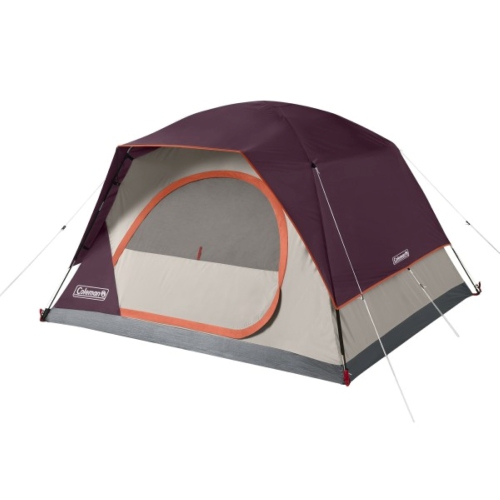 Your price for this item is $240.99
 -
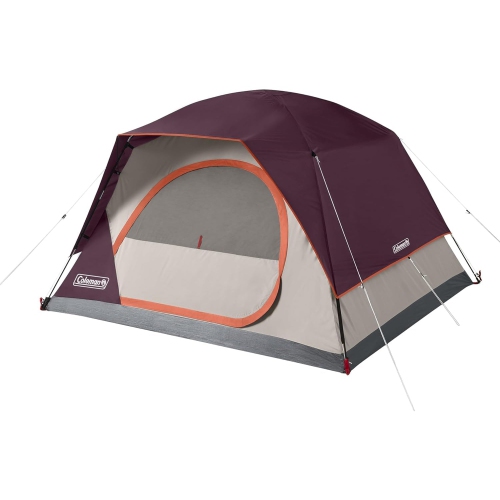 Your price for this item is $239.97
 -
 Your price for this item is $242.58
 -
 Your price for this item is $509.99
 -
 Your price for this item is $199.99
 -
 Your price for this item is $727.99
 -
 Your price for this item is $427.99
 -
 Your price for this item is $499.99
Discover more categories related to Camping Shelters
Top Collections:
Pokemon Centers, Kindle Devices, Best Budget Office Chairs, Apple iPhones 16, Canon G7X Cameras, iPhone 15 Apple, Alarm Clock, Refurbished Apple Laptops, Flip Phones, Best Laptops for Writers
Some products may be subject to Environmental Handling Fees
(EHF) depending on your province.
Learn more about EHFs.